
Solid Form Control and Design through Structural Informatics
- Slides: 18
Solid Form Control and Design through Structural Informatics Ghazala Sadiq Karachi, IYCr South Asia Summit Meeting, 2014 www. ccdc. cam. ac. uk 1
Outline • The Cambridge Crystallographic Data Centre • Structural informatics tools to guide solid form selection • Beyond hydrogen bonding • Conclusions www. ccdc. cam. ac. uk 2
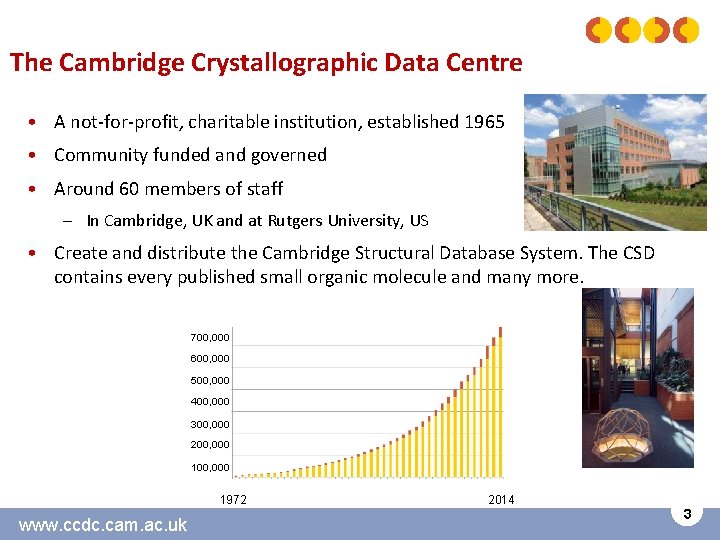
The Cambridge Crystallographic Data Centre • A not-for-profit, charitable institution, established 1965 • Community funded and governed • Around 60 members of staff – In Cambridge, UK and at Rutgers University, US • Create and distribute the Cambridge Structural Database System. The CSD contains every published small organic molecule and many more. 700, 000 600, 000 500, 000 400, 000 300, 000 200, 000 1972 www. ccdc. cam. ac. uk 2014 3
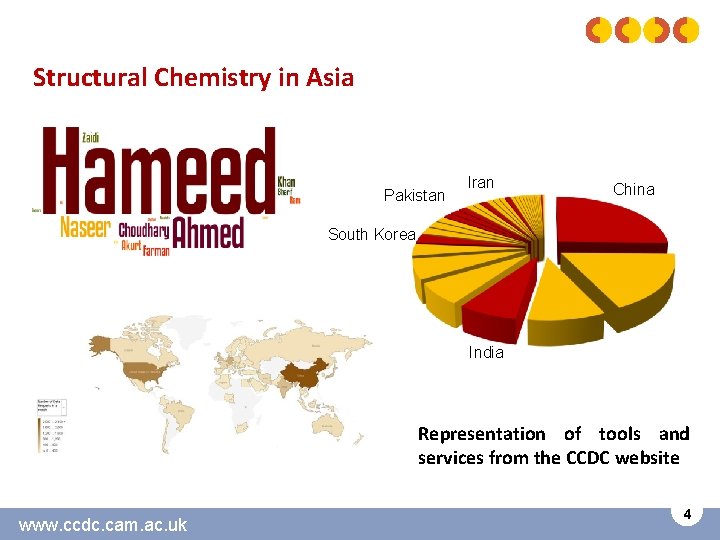
Structural Chemistry in Asia Pakistan Iran China South Korea India Representation of tools and services from the CCDC website www. ccdc. cam. ac. uk 4
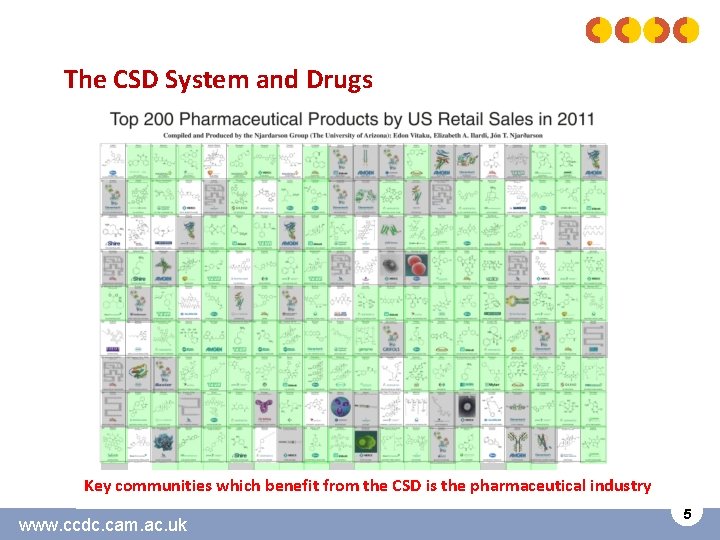
The CSD System and Drugs Key communities which benefit from the CSD is the pharmaceutical industry www. ccdc. cam. ac. uk 5
Drug discovery and development by design • “Drug discovery” – Identifying an API – Conformations – Interactions • “Drug development” – API to drug substance – Conformations – Interactions Crystal structures extremely useful for crystal engineering, drug discovery and drug development www. ccdc. cam. ac. uk 6
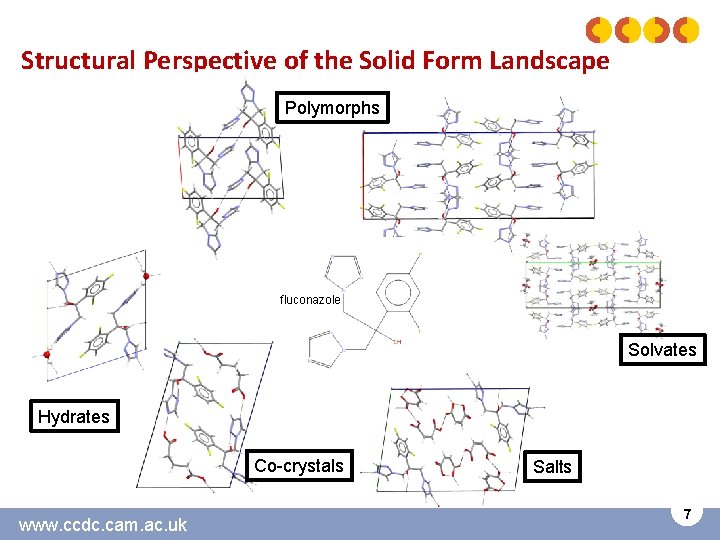
Structural Perspective of the Solid Form Landscape Polymorphs fluconazole Solvates Hydrates Co-crystals www. ccdc. cam. ac. uk Salts 7
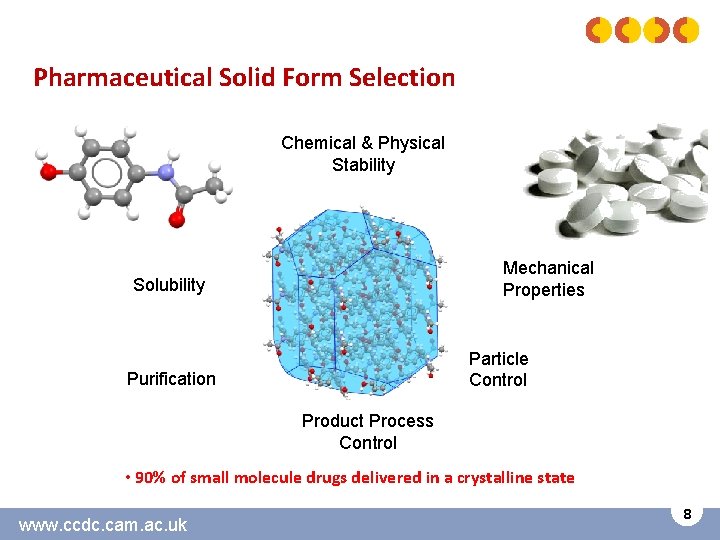
Pharmaceutical Solid Form Selection Chemical & Physical Stability Mechanical Properties Solubility Particle Control Purification Product Process Control • 90% of small molecule drugs delivered in a crystalline state www. ccdc. cam. ac. uk 8
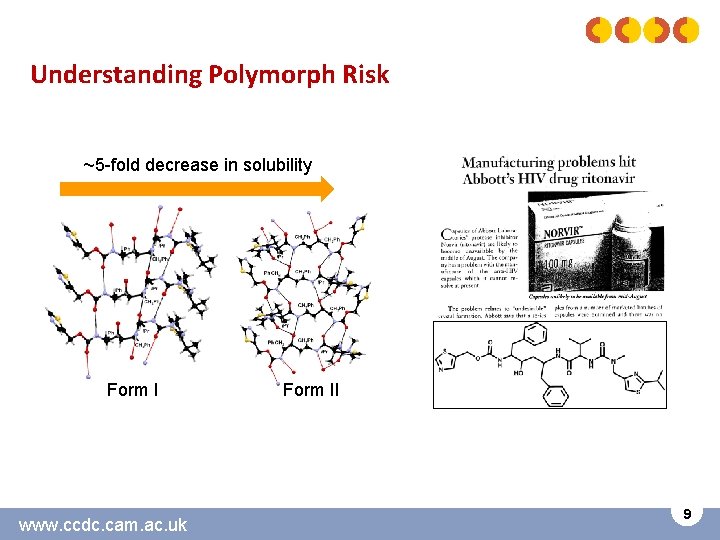
Understanding Polymorph Risk ~5 -fold decrease in solubility Form I www. ccdc. cam. ac. uk Form II 9
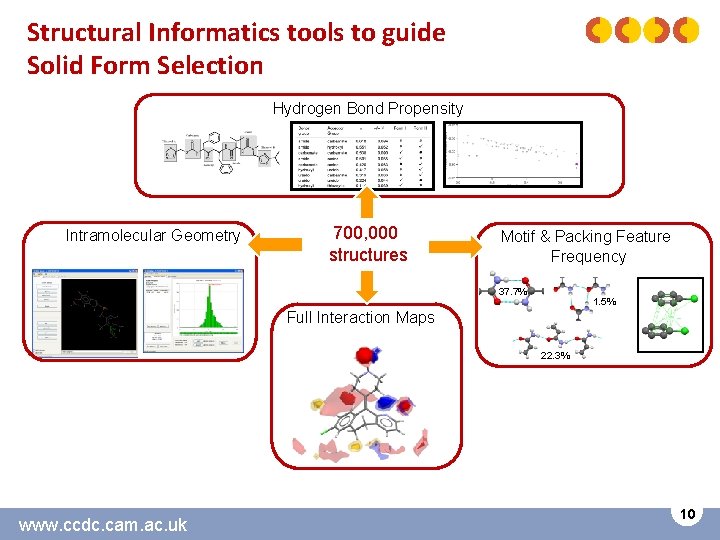
Structural Informatics tools to guide Solid Form Selection Hydrogen Bond Propensity Intramolecular Geometry 700, 000 structures Motif & Packing Feature Frequency 37. 7% 1. 5% Full Interaction Maps 22. 3% www. ccdc. cam. ac. uk 10
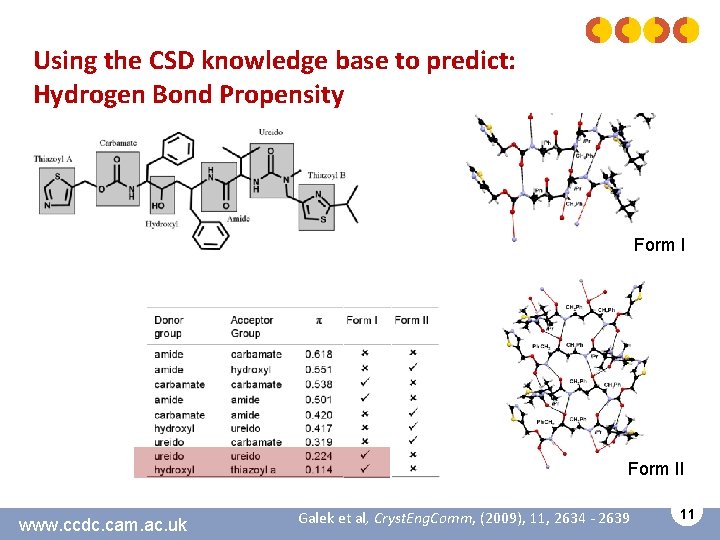
Using the CSD knowledge base to predict: Hydrogen Bond Propensity Form II www. ccdc. cam. ac. uk Galek et al, Cryst. Eng. Comm, (2009), 11, 2634 - 2639 11
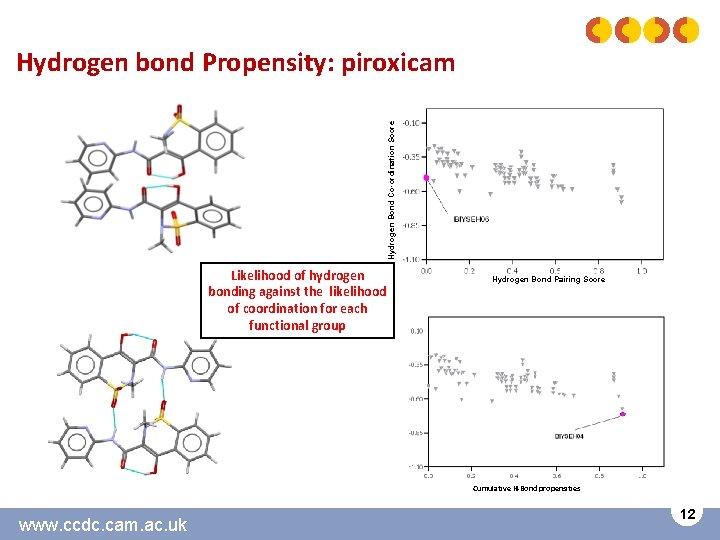
Hydrogen Bond Co-ordination Score Hydrogen bond Propensity: piroxicam Likelihood of hydrogen bonding against the likelihood of coordination for each functional group Hydrogen Bond Pairing Score Cumulative H-Bond propensities www. ccdc. cam. ac. uk 12
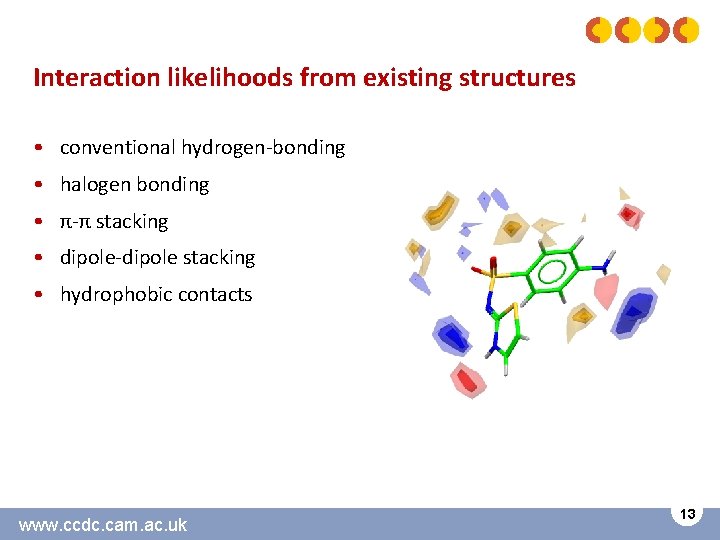
Interaction likelihoods from existing structures • conventional hydrogen-bonding • halogen bonding • π-π stacking • dipole-dipole stacking • hydrophobic contacts www. ccdc. cam. ac. uk 13
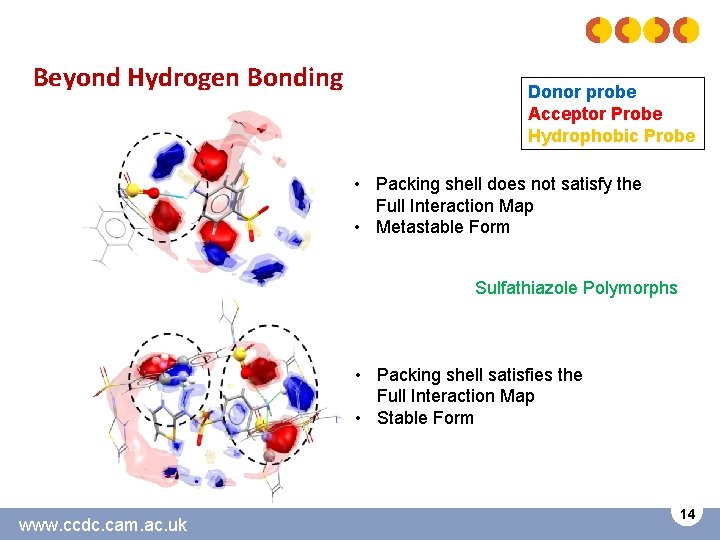
Beyond Hydrogen Bonding Donor probe Acceptor Probe Hydrophobic Probe • Packing shell does not satisfy the Full Interaction Map • Metastable Form Sulfathiazole Polymorphs • Packing shell satisfies the Full Interaction Map • Stable Form www. ccdc. cam. ac. uk 14
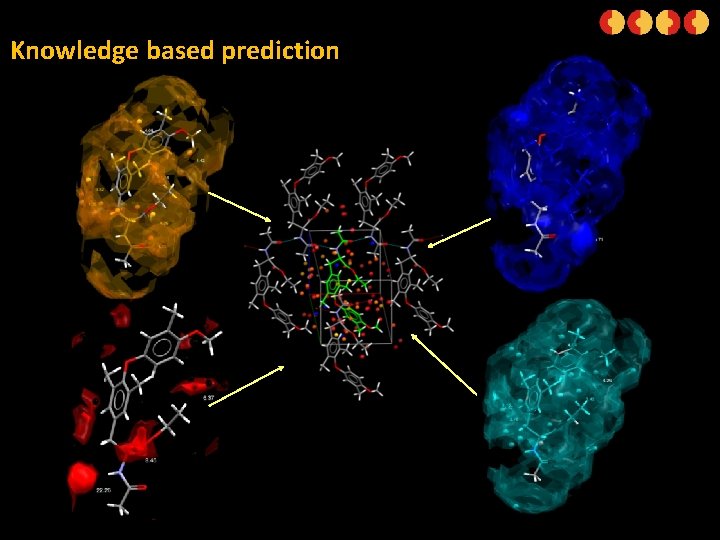
Knowledge based prediction www. ccdc. cam. ac. uk 15
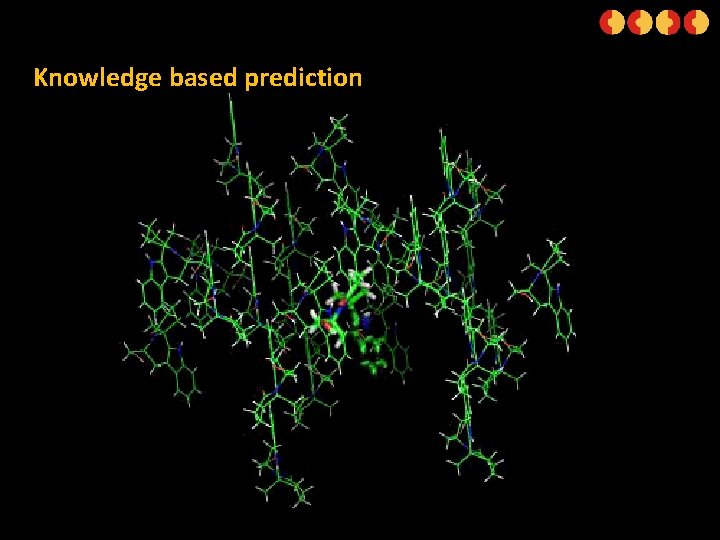
Knowledge based prediction www. ccdc. cam. ac. uk 16
Conclusions • Structural informatics – Using the 700, 000 crystal structures the community has generated – Helps understand predict interactions in the solid state • complements and guides experimental screening • These tools allow the scientist to validate & compare observed crystal forms • Allows us to understand control solid form behaviour • Allows us to begin to think about knowledge based crystal structure prediction www. ccdc. cam. ac. uk 17
Thank you for listening www. ccdc. cam. ac. uk 18