
Solar system Over the course of human history
- Slides: 10
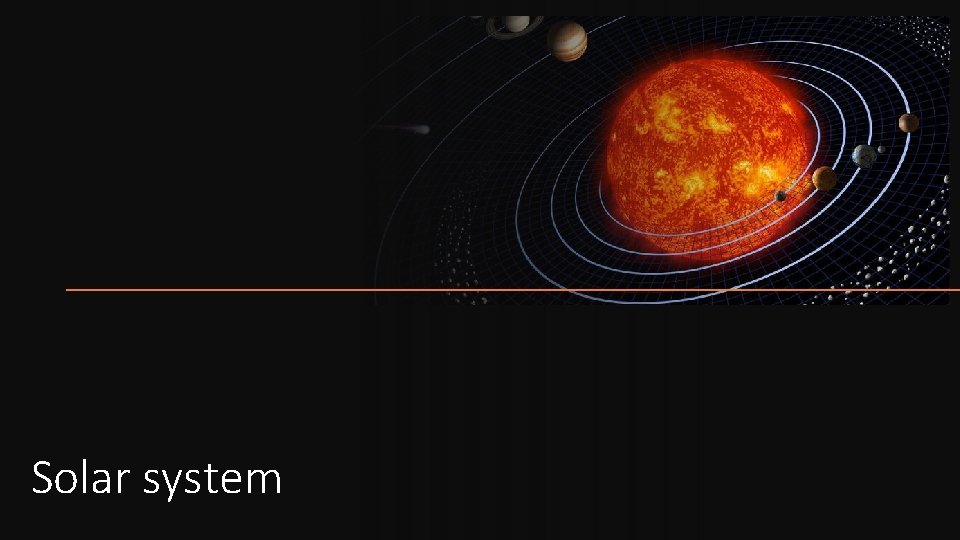
Solar system
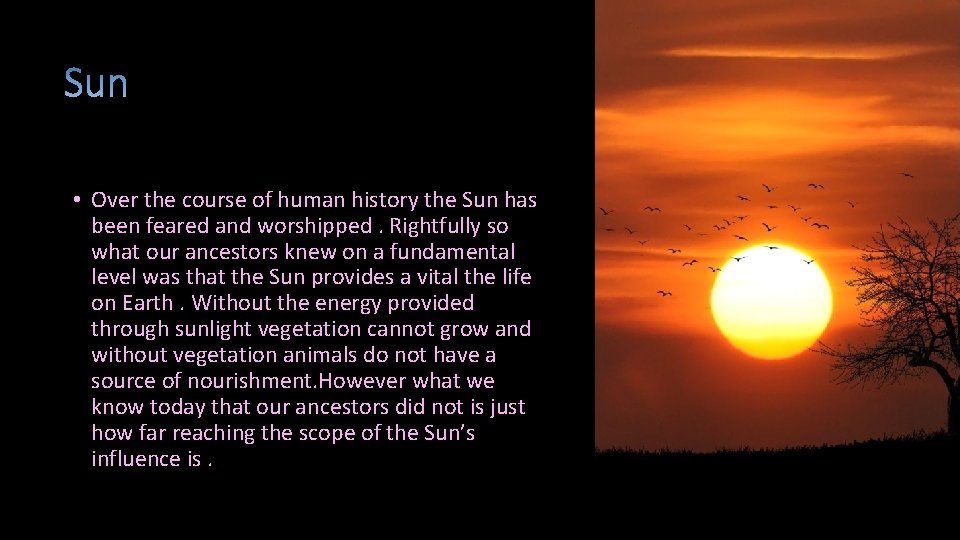
• Over the course of human history the Sun has been feared and worshipped. Rightfully so what our ancestors knew on a fundamental level was that the Sun provides a vital the life on Earth. Without the energy provided through sunlight vegetation cannot grow and without vegetation animals do not have a source of nourishment. However what we know today that our ancestors did not is just how far reaching the scope of the Sun’s influence is.
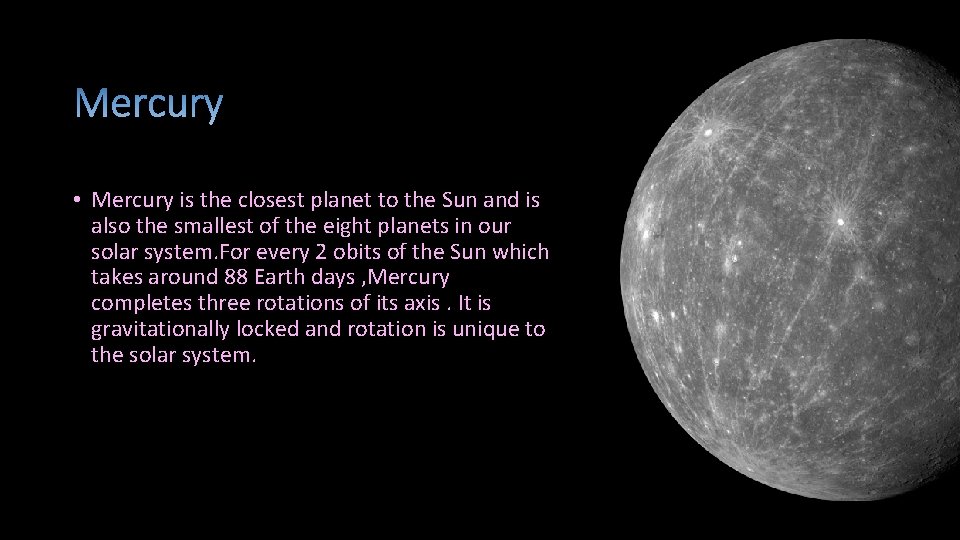
• Mercury is the closest planet to the Sun and is also the smallest of the eight planets in our solar system. For every 2 obits of the Sun which takes around 88 Earth days , Mercury completes three rotations of its axis. It is gravitationally locked and rotation is unique to the solar system.
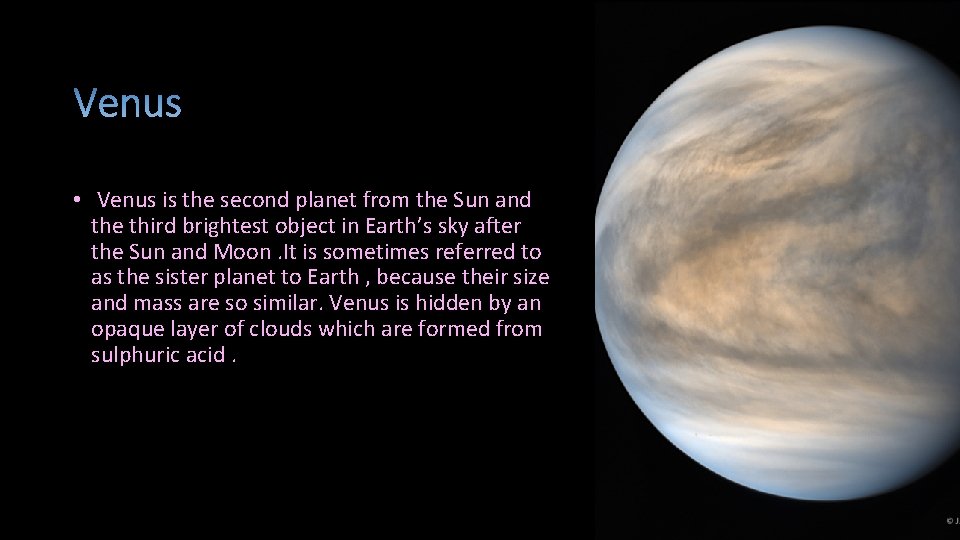
• Venus is the second planet from the Sun and the third brightest object in Earth’s sky after the Sun and Moon. It is sometimes referred to as the sister planet to Earth , because their size and mass are so similar. Venus is hidden by an opaque layer of clouds which are formed from sulphuric acid.
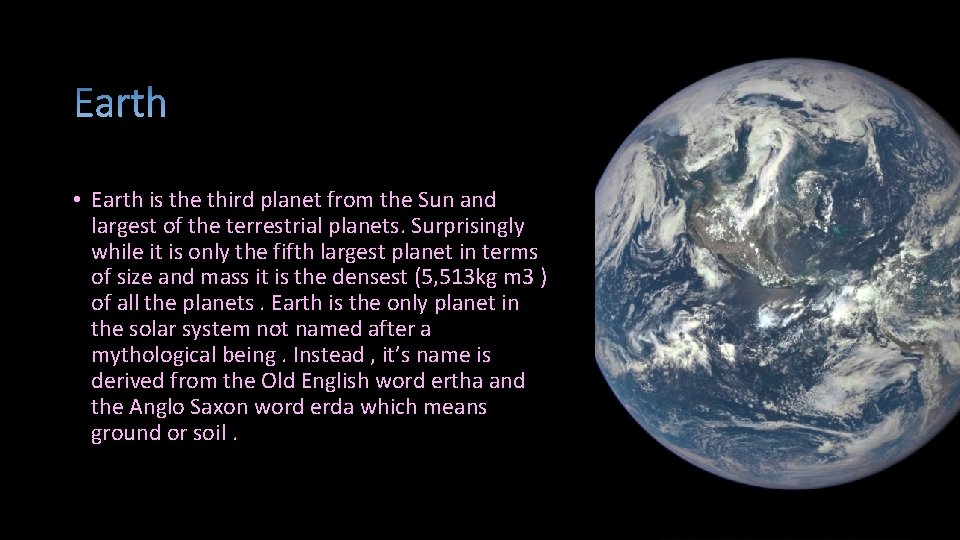
• Earth is the third planet from the Sun and largest of the terrestrial planets. Surprisingly while it is only the fifth largest planet in terms of size and mass it is the densest (5, 513 kg m 3 ) of all the planets. Earth is the only planet in the solar system not named after a mythological being. Instead , it’s name is derived from the Old English word ertha and the Anglo Saxon word erda which means ground or soil.
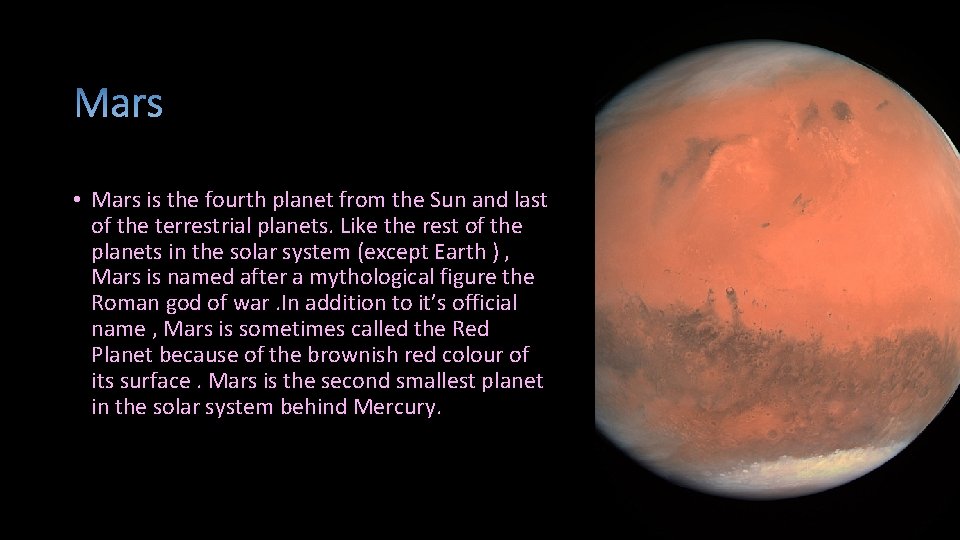
• Mars is the fourth planet from the Sun and last of the terrestrial planets. Like the rest of the planets in the solar system (except Earth ) , Mars is named after a mythological figure the Roman god of war. In addition to it’s official name , Mars is sometimes called the Red Planet because of the brownish red colour of its surface. Mars is the second smallest planet in the solar system behind Mercury.
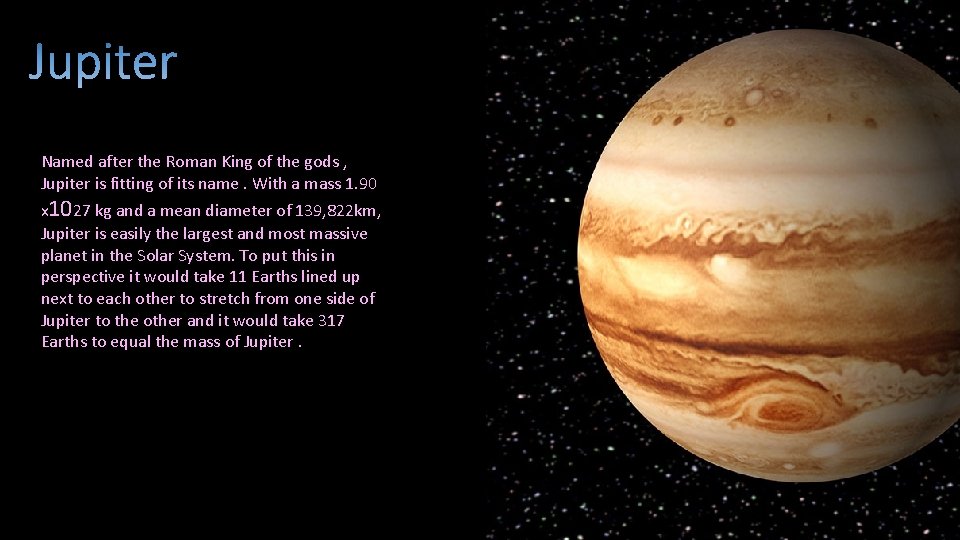
Named after the Roman King of the gods , Jupiter is fitting of its name. With a mass 1. 90 x 1027 kg and a mean diameter of 139, 822 km, Jupiter is easily the largest and most massive planet in the Solar System. To put this in perspective it would take 11 Earths lined up next to each other to stretch from one side of Jupiter to the other and it would take 317 Earths to equal the mass of Jupiter.
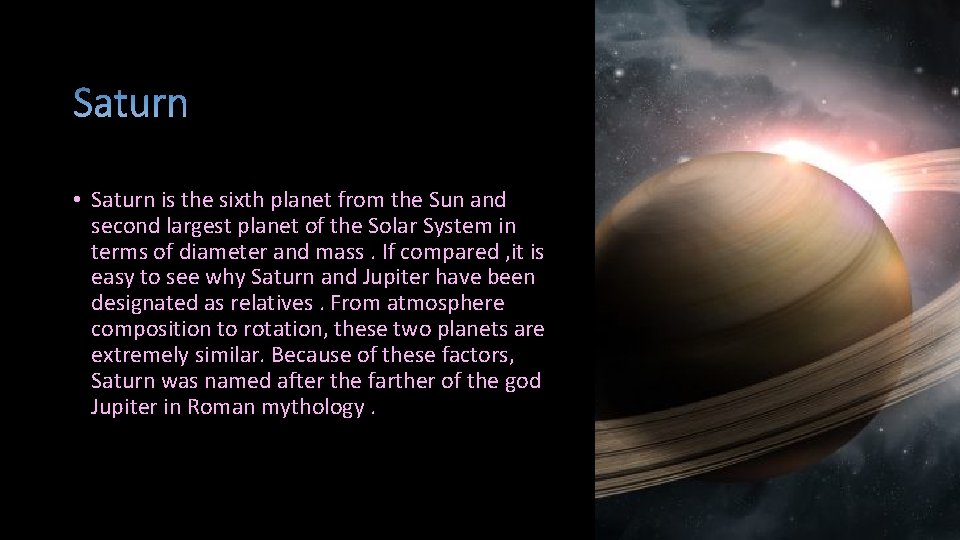
• Saturn is the sixth planet from the Sun and second largest planet of the Solar System in terms of diameter and mass. If compared , it is easy to see why Saturn and Jupiter have been designated as relatives. From atmosphere composition to rotation, these two planets are extremely similar. Because of these factors, Saturn was named after the farther of the god Jupiter in Roman mythology.
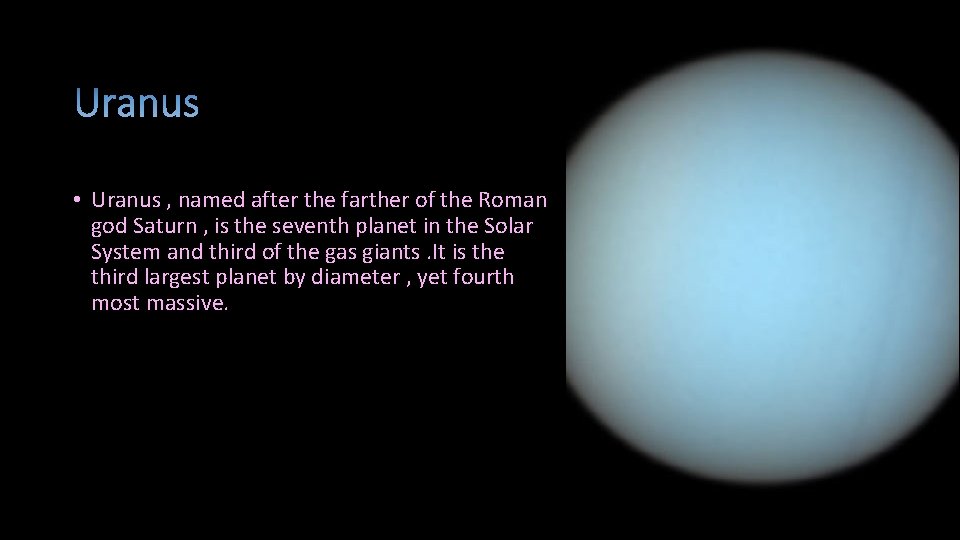
• Uranus , named after the farther of the Roman god Saturn , is the seventh planet in the Solar System and third of the gas giants. It is the third largest planet by diameter , yet fourth most massive.
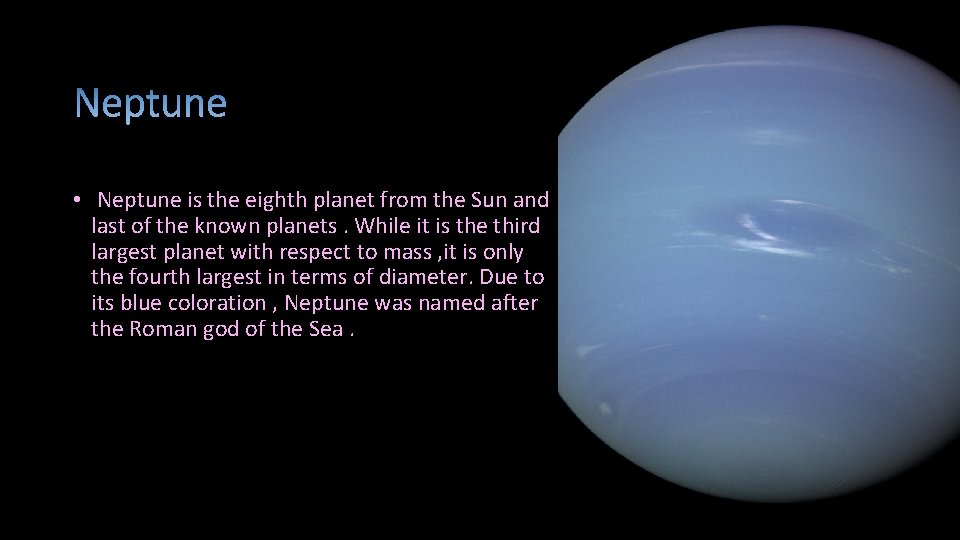
• Neptune is the eighth planet from the Sun and last of the known planets. While it is the third largest planet with respect to mass , it is only the fourth largest in terms of diameter. Due to its blue coloration , Neptune was named after the Roman god of the Sea.