
Solar System Notes 1 The Solar System The
- Slides: 19
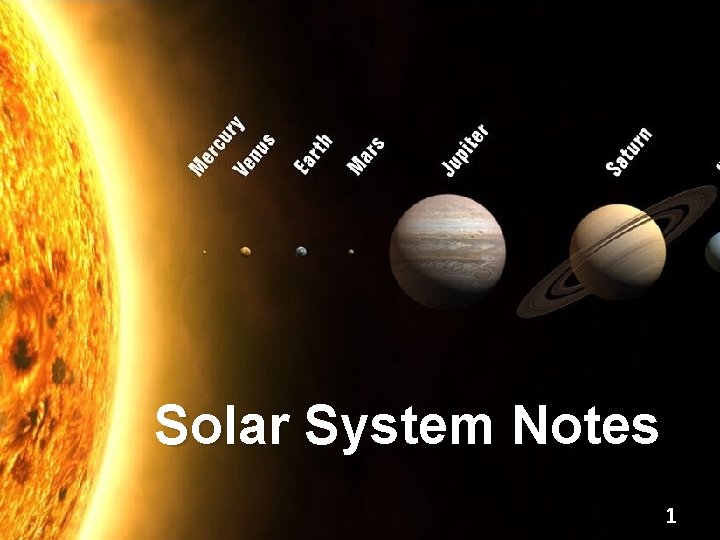
Solar System Notes 1
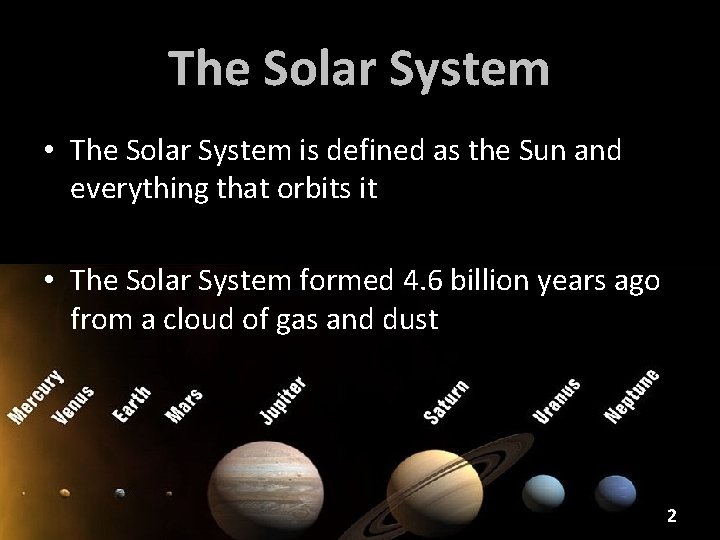
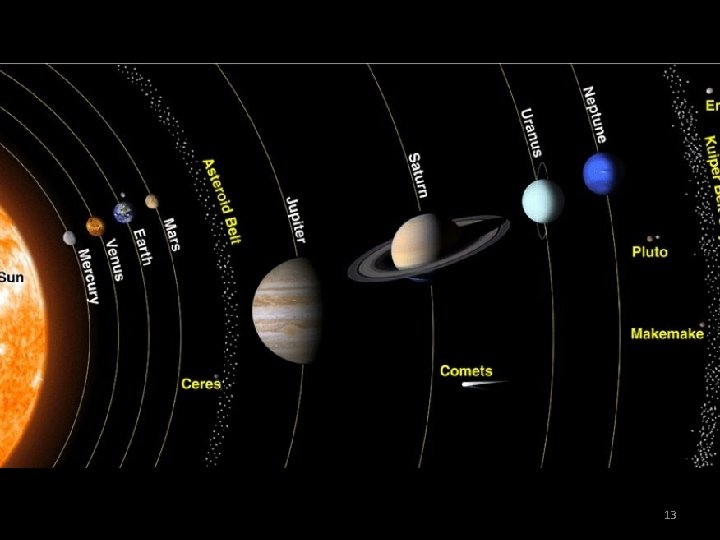
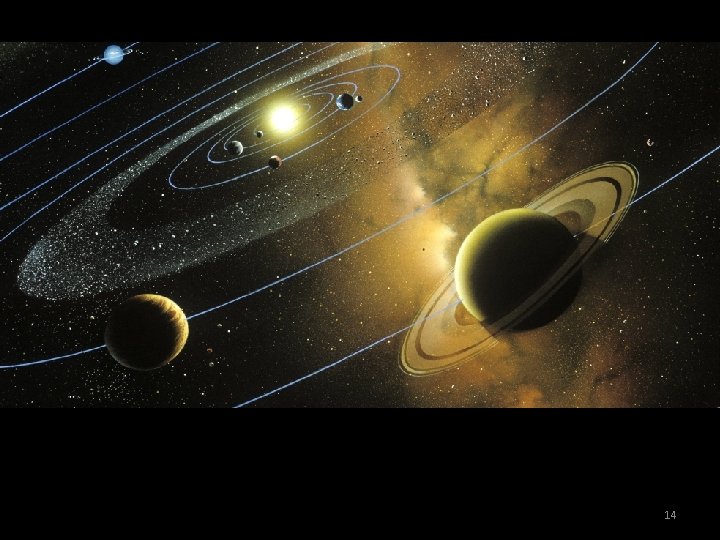
The Solar System • The Solar System is defined as the Sun and everything that orbits it • The Solar System formed 4. 6 billion years ago from a cloud of gas and dust 2
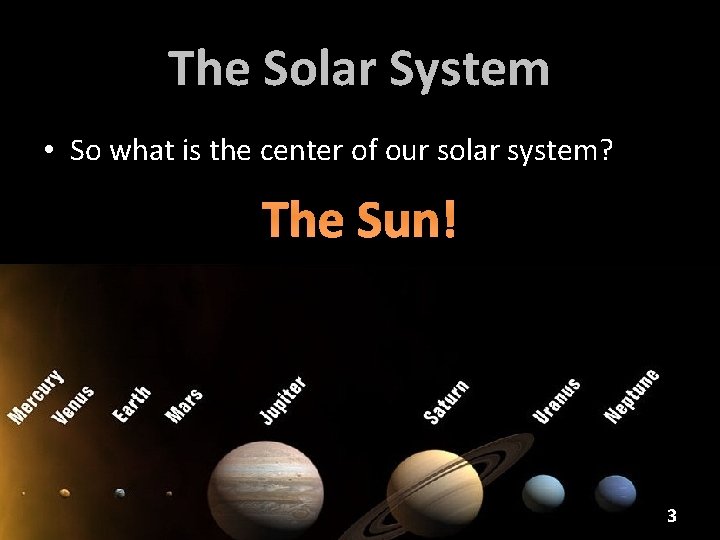
The Solar System • So what is the center of our solar system? The Sun! 3
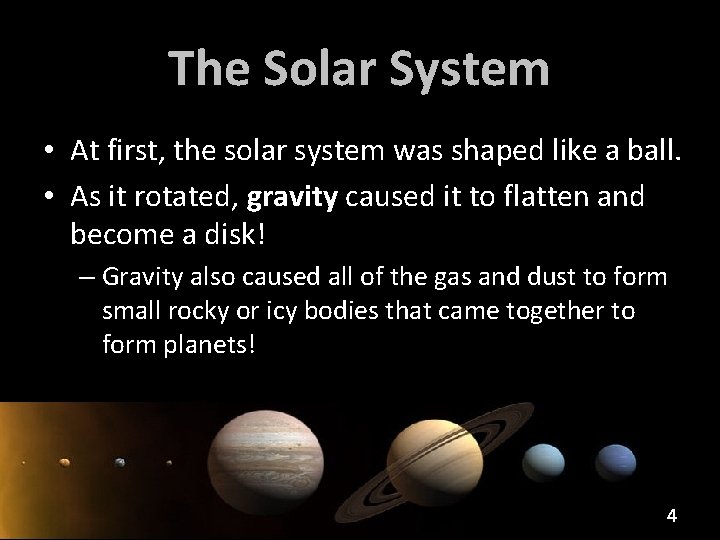
The Solar System • At first, the solar system was shaped like a ball. • As it rotated, gravity caused it to flatten and become a disk! – Gravity also caused all of the gas and dust to form small rocky or icy bodies that came together to form planets! 4
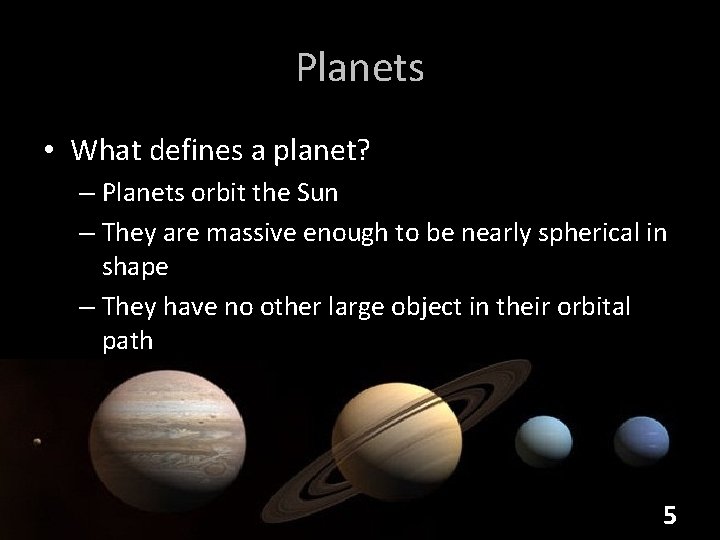
Planets • What defines a planet? – Planets orbit the Sun – They are massive enough to be nearly spherical in shape – They have no other large object in their orbital path 5
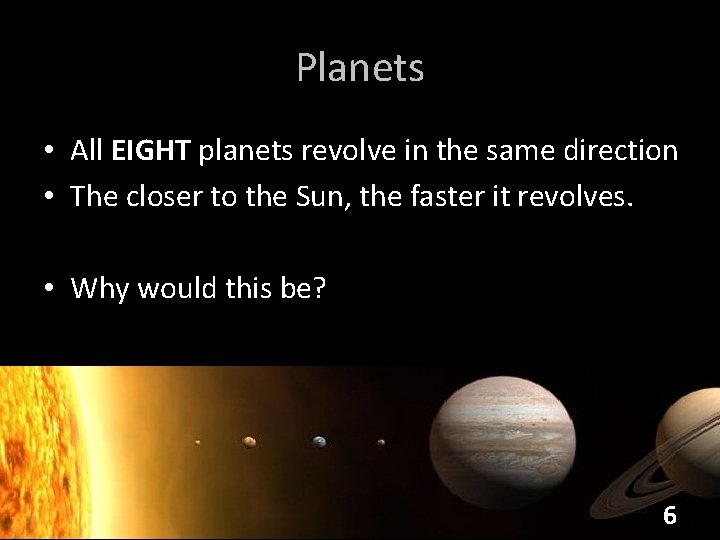
Planets • All EIGHT planets revolve in the same direction • The closer to the Sun, the faster it revolves. • Why would this be? 6
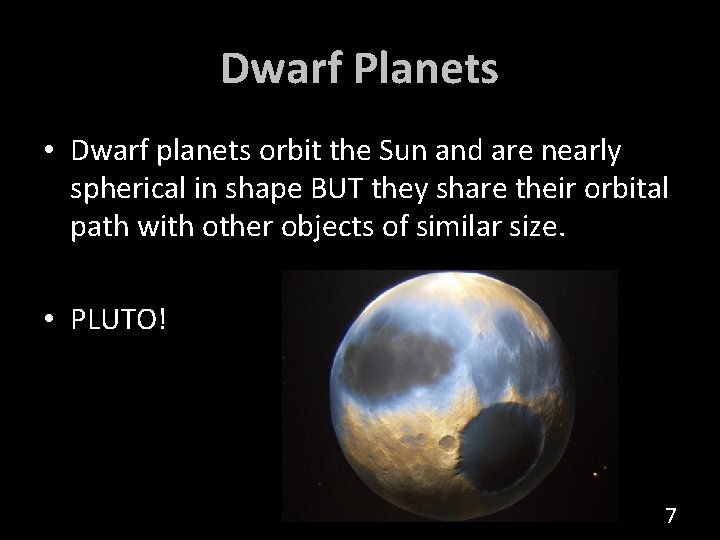
Dwarf Planets • Dwarf planets orbit the Sun and are nearly spherical in shape BUT they share their orbital path with other objects of similar size. • PLUTO! 7
Moons • Not all spherical bodies in the solar system are planets! • A moon is a natural satellite that orbits an object other than a star – A satelite is a body orbiting a planet 8
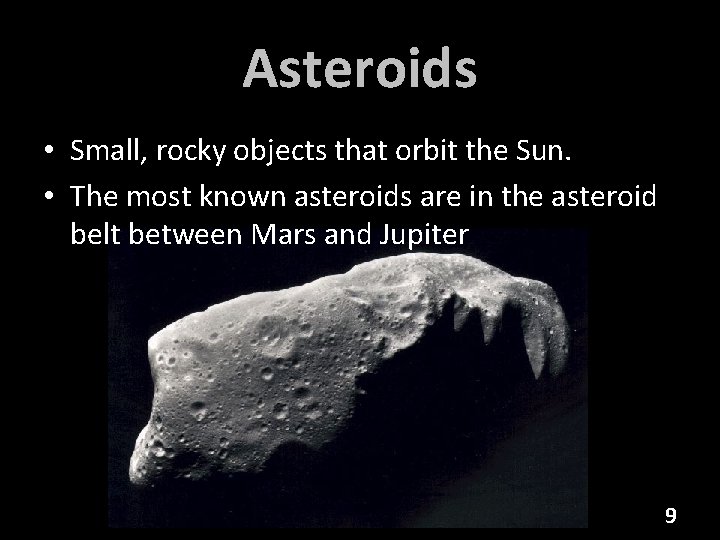
Asteroids • Small, rocky objects that orbit the Sun. • The most known asteroids are in the asteroid belt between Mars and Jupiter 9
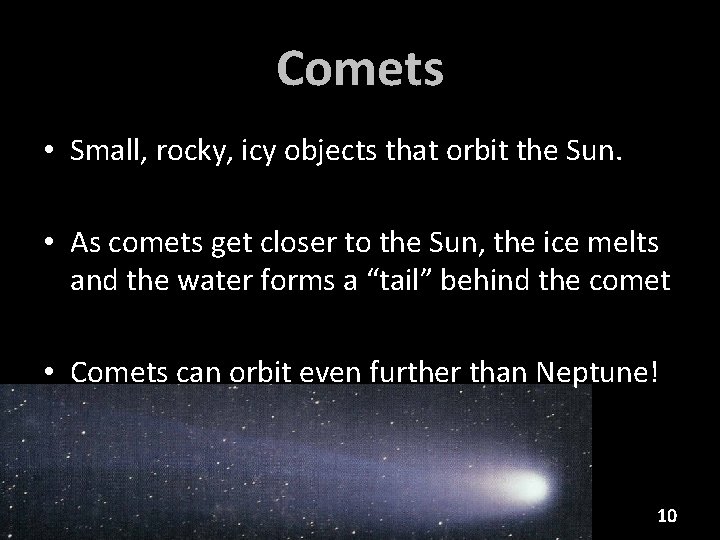
Comets • Small, rocky, icy objects that orbit the Sun. • As comets get closer to the Sun, the ice melts and the water forms a “tail” behind the comet • Comets can orbit even further than Neptune! 10
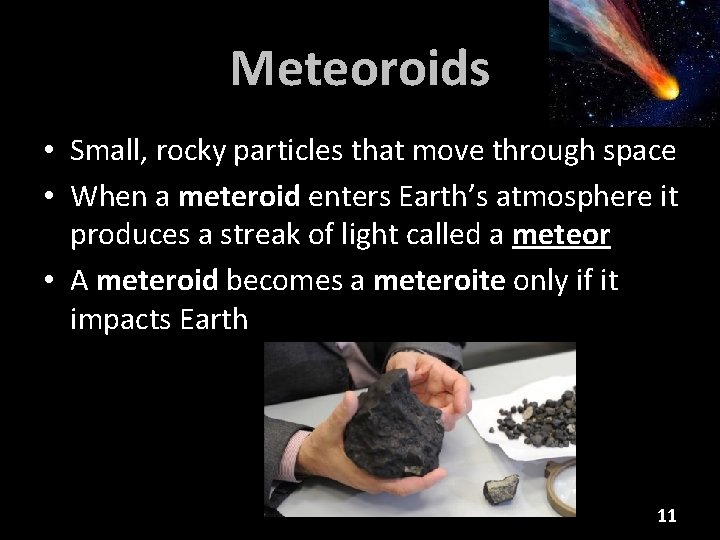
Meteoroids • Small, rocky particles that move through space • When a meteroid enters Earth’s atmosphere it produces a streak of light called a meteor • A meteroid becomes a meteroite only if it impacts Earth 11
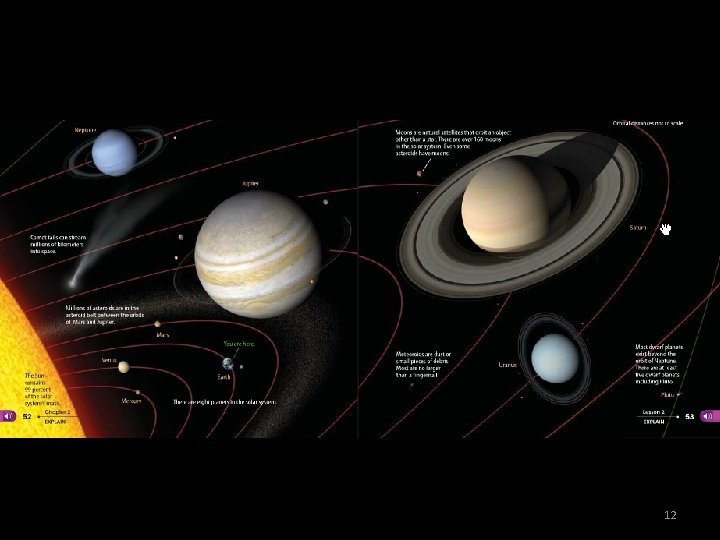
12
13
14
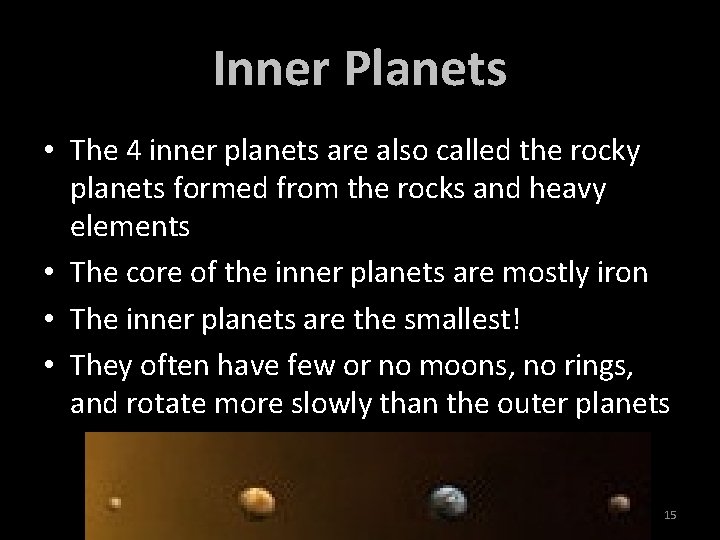
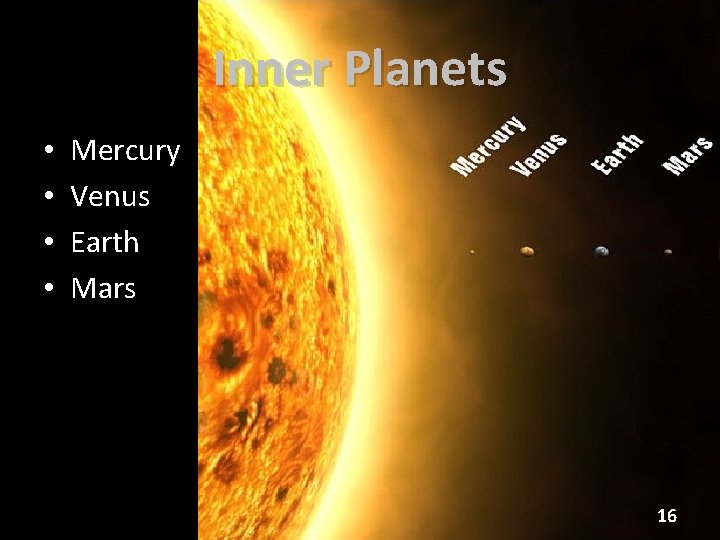
Inner Planets • The 4 inner planets are also called the rocky planets formed from the rocks and heavy elements • The core of the inner planets are mostly iron • The inner planets are the smallest! • They often have few or no moons, no rings, and rotate more slowly than the outer planets 15
Inner Planets • • Mercury Venus Earth Mars 16
Outer Planets • Formed from gases and other materials that escaped from area close to the Sun • The gas giants! • The outer planets are larger than the inner planets and rotate more quickly • They each have rings! (some are just barely visible) • Lots of Moons! • No solid surface – thick gassy atmospheres of hydrogen and helium 17
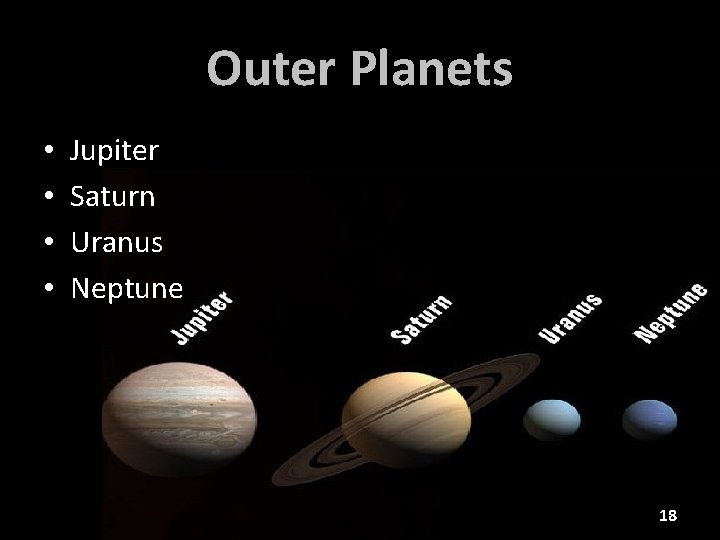
Outer Planets • • Jupiter Saturn Uranus Neptune 18
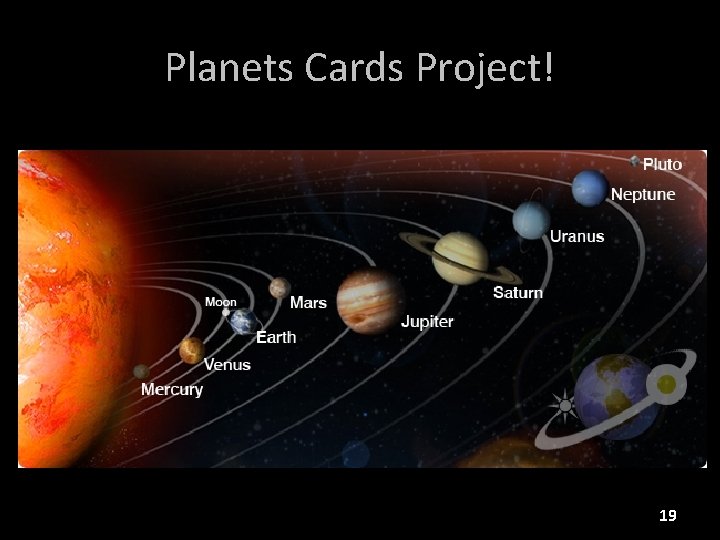
Planets Cards Project! 19