
SOLAR SYSTEM By Marlon B Salas Facts Solar
SOLAR SYSTEM By: Marlon B. Salas
Facts • • Solar System Sun Inner Planets Mercury Venus Earth Mars • • • Outer Planets Jupiter Saturn Neptune Uranus Galaxy Asteroids Comets Meteors
What is the Solar System?
Solar System • Known as the Sun’s Family • the collection of eight planets and their moons in orbit around the sun, together with smaller bodies in the form of asteroids, meteoroids, and comets.
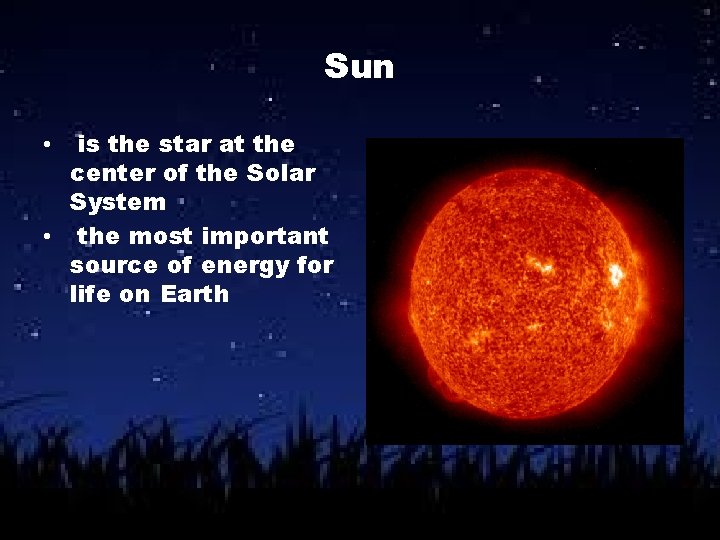
Sun is the star at the center of the Solar System • the most important source of energy for life on Earth •
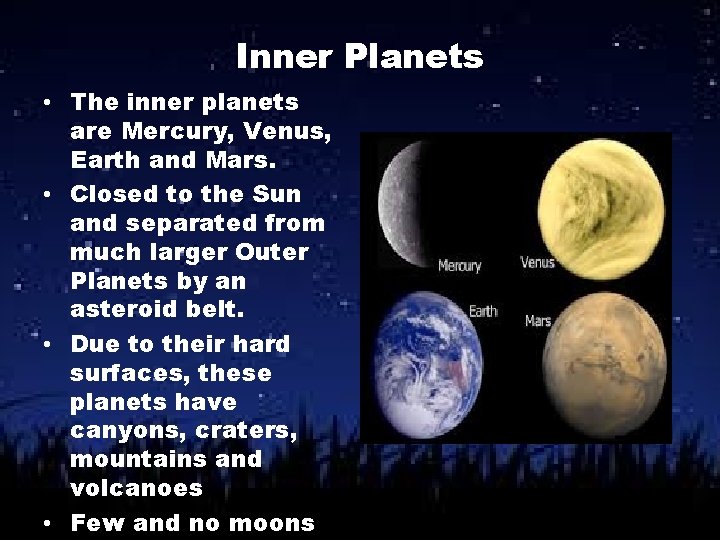
Inner Planets • The inner planets are Mercury, Venus, Earth and Mars. • Closed to the Sun and separated from much larger Outer Planets by an asteroid belt. • Due to their hard surfaces, these planets have canyons, craters, mountains and volcanoes • Few and no moons
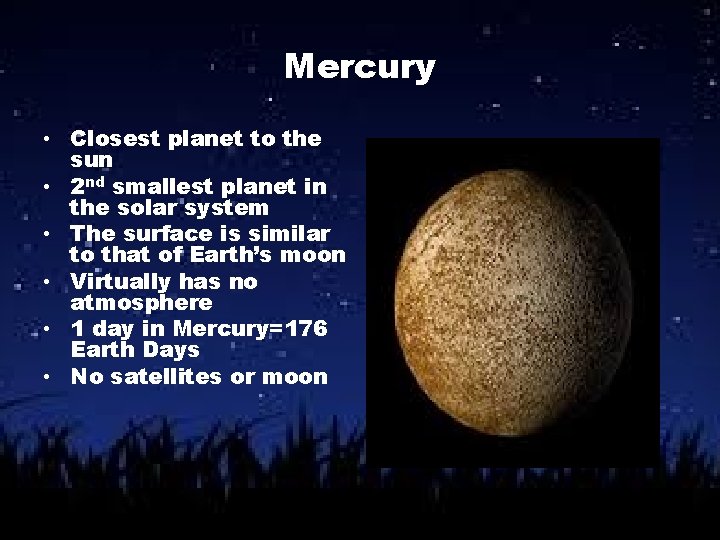
Mercury • Closest planet to the sun • 2 nd smallest planet in the solar system • The surface is similar to that of Earth’s moon • Virtually has no atmosphere • 1 day in Mercury=176 Earth Days • No satellites or moon
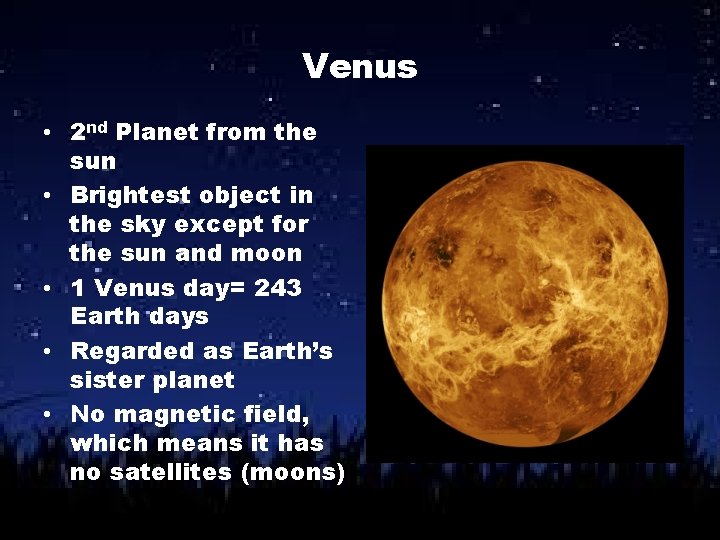
Venus • 2 nd Planet from the sun • Brightest object in the sky except for the sun and moon • 1 Venus day= 243 Earth days • Regarded as Earth’s sister planet • No magnetic field, which means it has no satellites (moons)
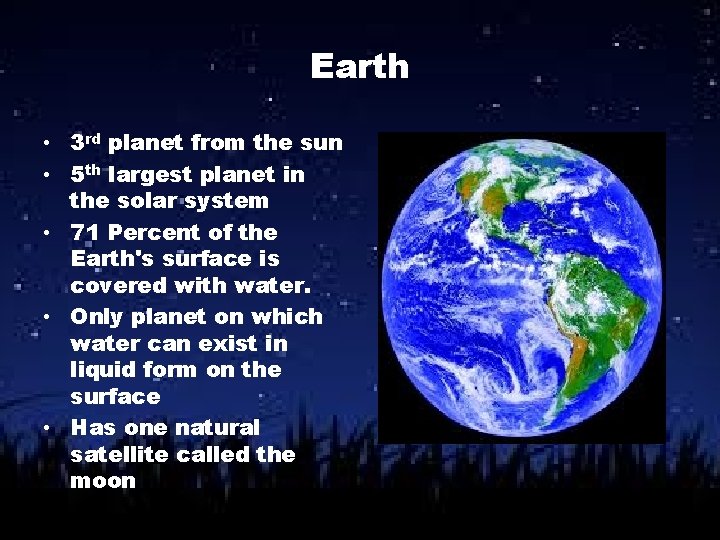
Earth • 3 rd planet from the sun • 5 th largest planet in the solar system • 71 Percent of the Earth's surface is covered with water. • Only planet on which water can exist in liquid form on the surface • Has one natural satellite called the moon
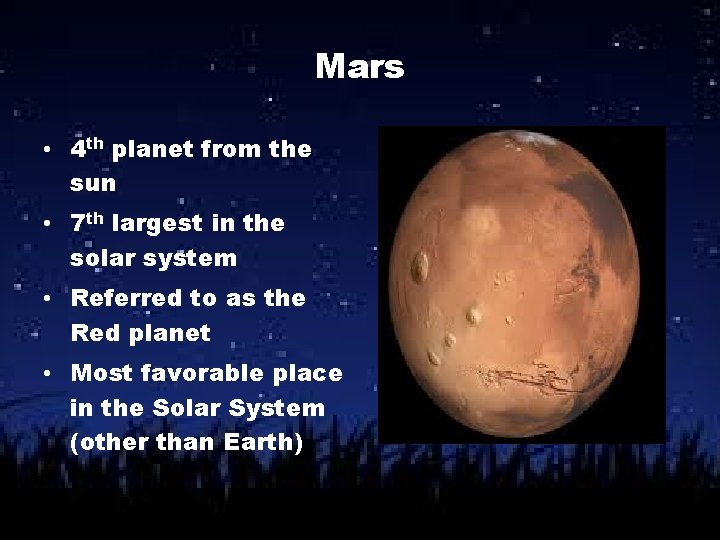
Mars • 4 th planet from the sun • 7 th largest in the solar system • Referred to as the Red planet • Most favorable place in the Solar System (other than Earth)
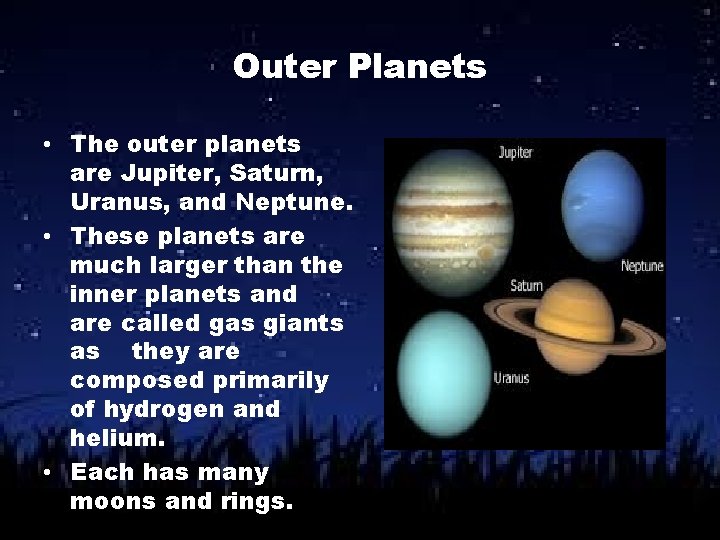
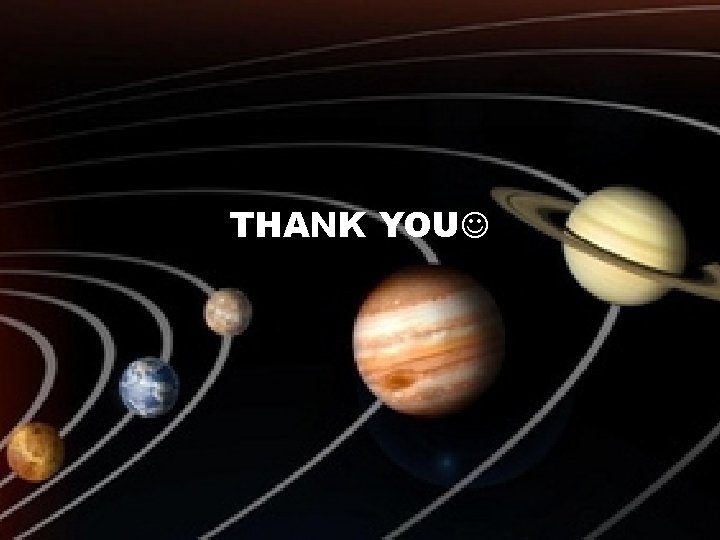
Outer Planets • The outer planets are Jupiter, Saturn, Uranus, and Neptune. • These planets are much larger than the inner planets and are called gas giants as they are composed primarily of hydrogen and helium. • Each has many moons and rings.
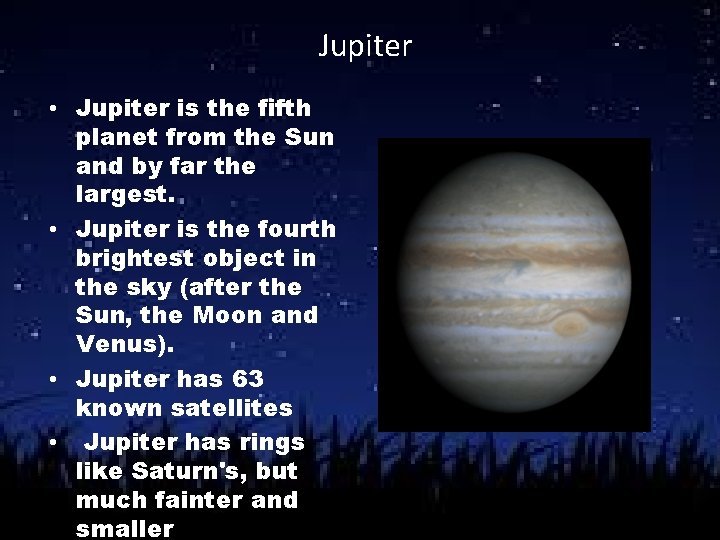
Jupiter • Jupiter is the fifth planet from the Sun and by far the largest. • Jupiter is the fourth brightest object in the sky (after the Sun, the Moon and Venus). • Jupiter has 63 known satellites • Jupiter has rings like Saturn's, but much fainter and smaller
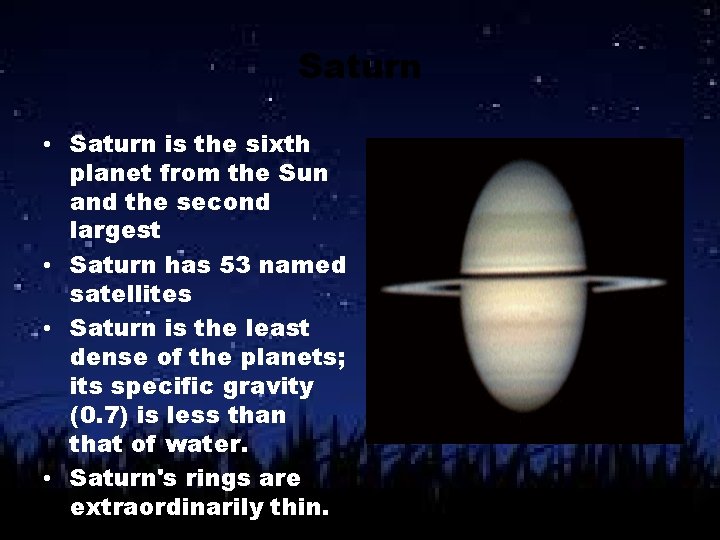
Saturn • Saturn is the sixth planet from the Sun and the second largest • Saturn has 53 named satellites • Saturn is the least dense of the planets; its specific gravity (0. 7) is less than that of water. • Saturn's rings are extraordinarily thin.
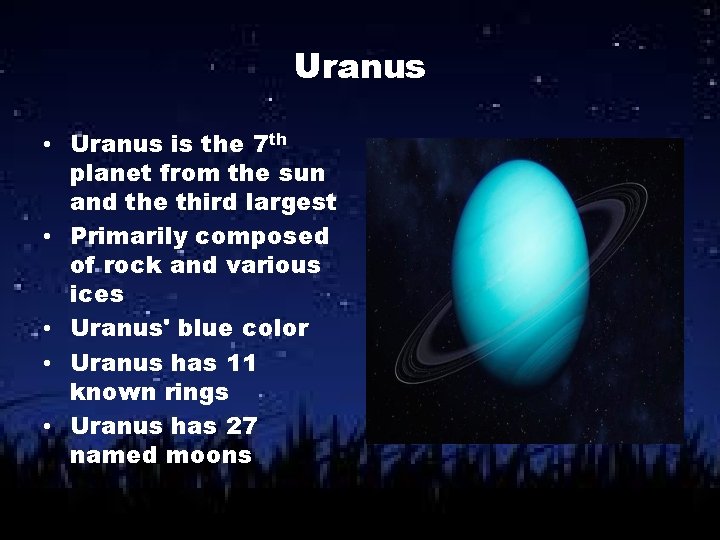
Uranus • Uranus is the 7 th planet from the sun and the third largest • Primarily composed of rock and various ices • Uranus' blue color • Uranus has 11 known rings • Uranus has 27 named moons
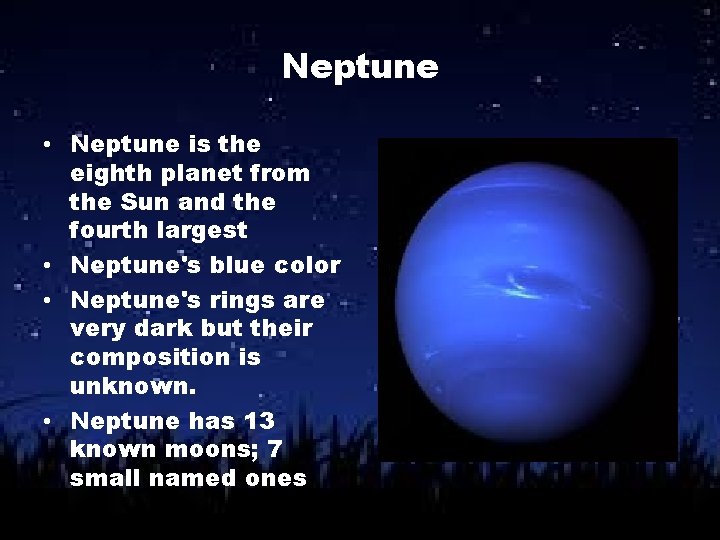
Neptune • Neptune is the eighth planet from the Sun and the fourth largest • Neptune's blue color • Neptune's rings are very dark but their composition is unknown. • Neptune has 13 known moons; 7 small named ones
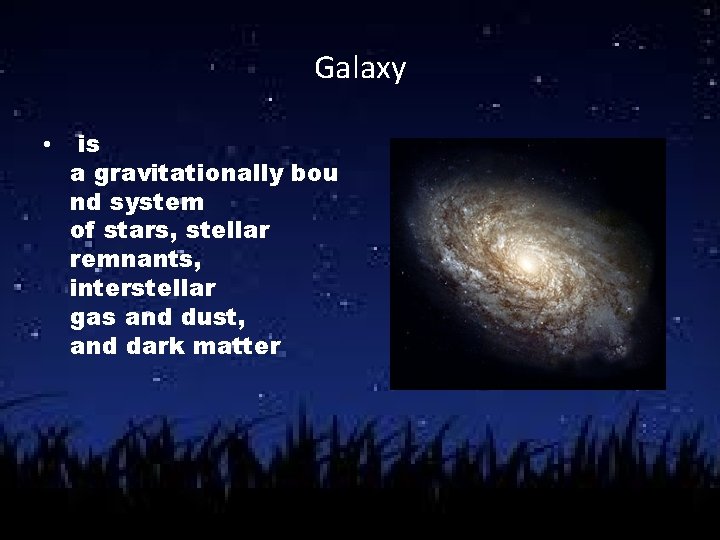
Galaxy • is a gravitationally bou nd system of stars, stellar remnants, interstellar gas and dust, and dark matter
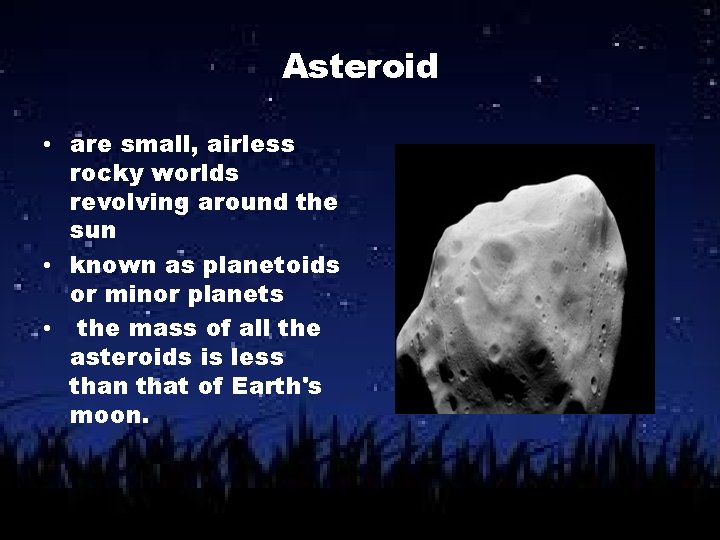
Asteroid • are small, airless rocky worlds revolving around the sun • known as planetoids or minor planets • the mass of all the asteroids is less than that of Earth's moon.
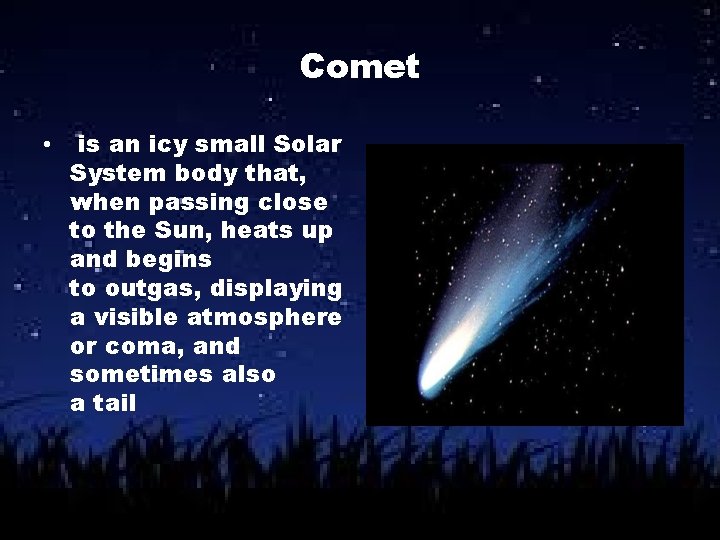
Comet • is an icy small Solar System body that, when passing close to the Sun, heats up and begins to outgas, displaying a visible atmosphere or coma, and sometimes also a tail
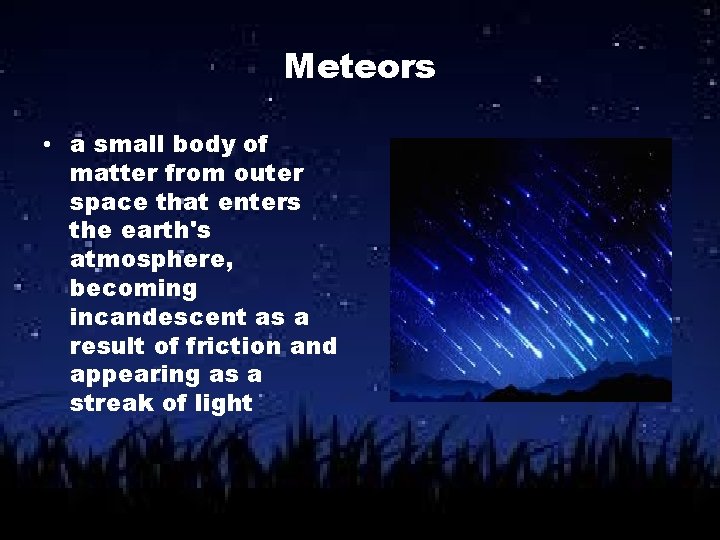
Meteors • a small body of matter from outer space that enters the earth's atmosphere, becoming incandescent as a result of friction and appearing as a streak of light
QUESTIONS?
THANK YOU
- Slides: 21