
Solar Powered Rechargeable Battery Pack with Controllable Voltage
Solar Powered Rechargeable Battery Pack with Controllable Voltage Output ECE 445 Senior Design, Spring 2018 Zihao Zhang & Zhuohang Cheng (Team 55)
Introduction ▪ This system have the ability to output different voltage levels to accord with different demand. ▪ This system provides user oriented battery with portability, flexibility, and endurable capacity for the increasing use of battery today. 2
Design Goals ▪ Self-recharged from both the mounted solar panel and wall plug. ▪ Output a range of DC power (5 V – 48 V ) at 1 A. ▪ Output 120 V AC power at 1 A. ▪ Display the voltage, current, and power on the LCD screen while charging or discharging. 3
System Overview ▪ ▪ Hardware • Lead-Acid Battery, AC Battery Charger • DC/DC Converter, DC/AC Inverter, Transformer • Microcontroller, Measurement System, User Interface, Display System Software • C 2000 microcontroller for PWM generation and control • Arduino for measurement and display system control 4
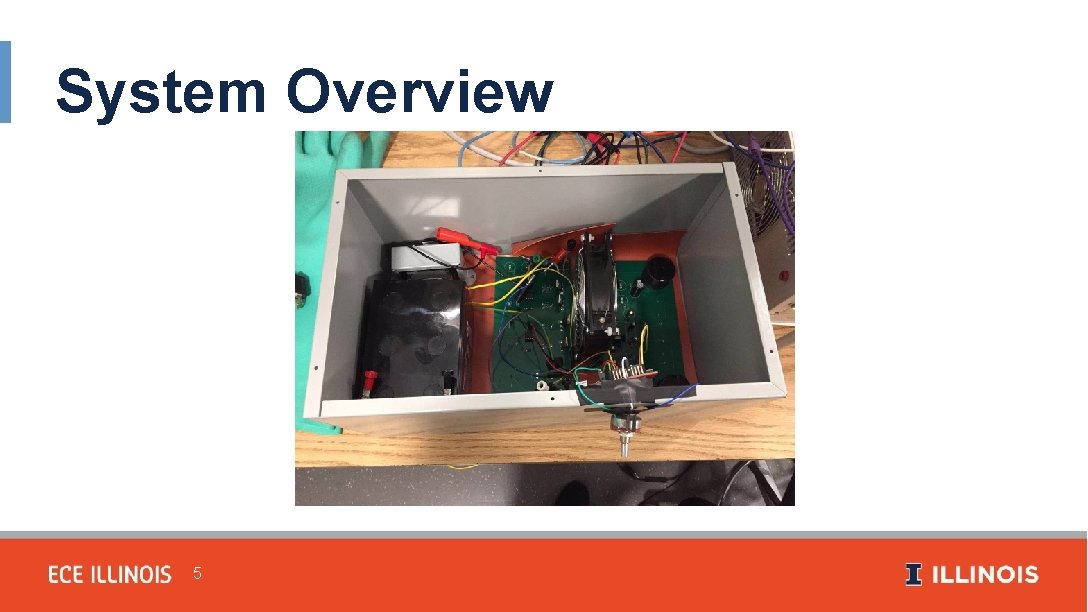
System Overview 5
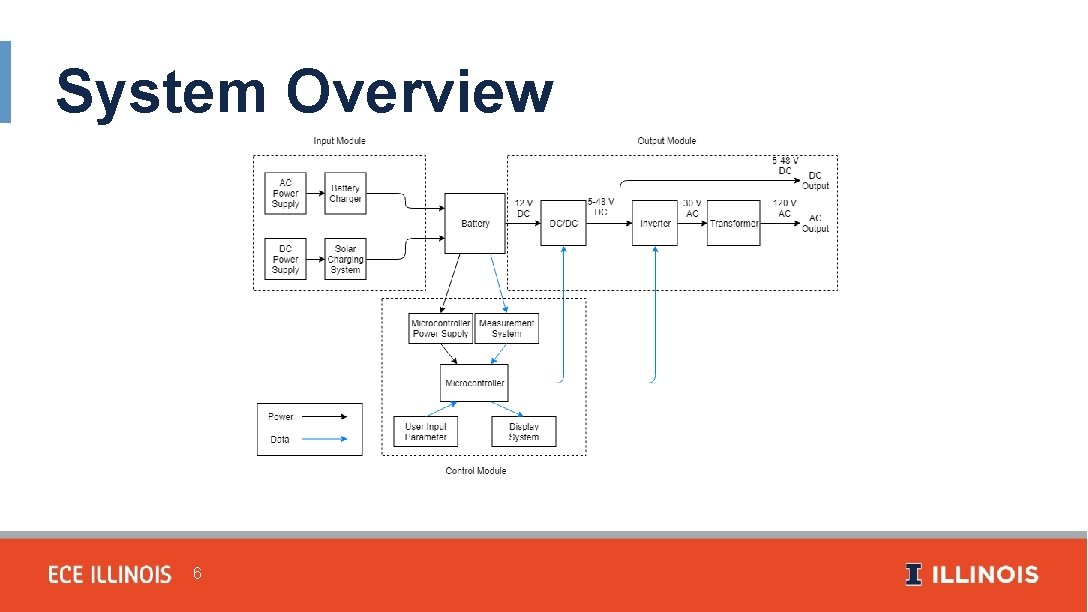
System Overview 6
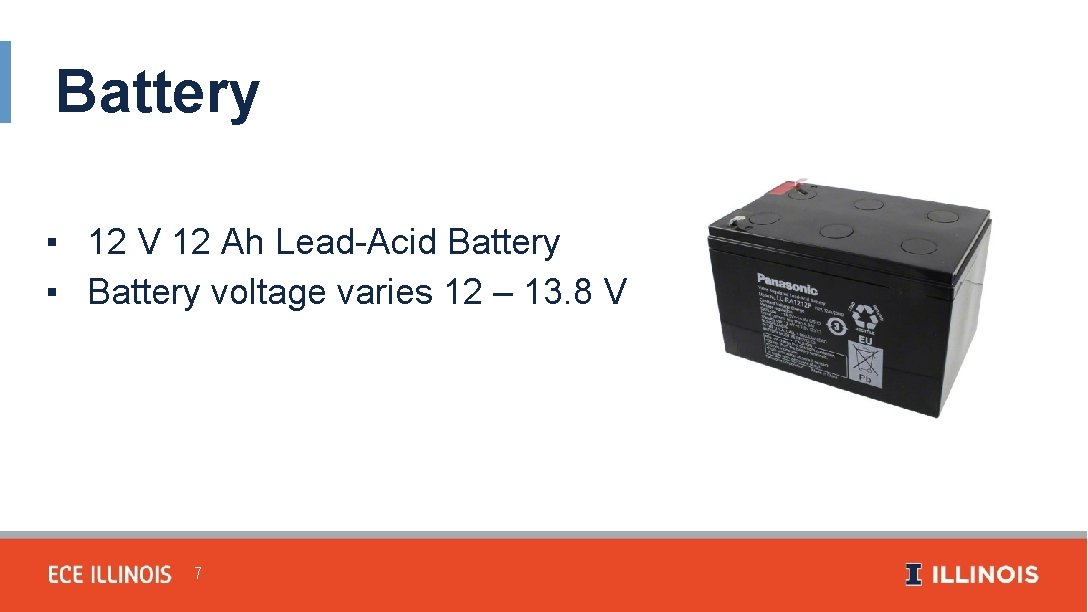
Battery ▪ 12 V 12 Ah Lead-Acid Battery ▪ Battery voltage varies 12 – 13. 8 V 7
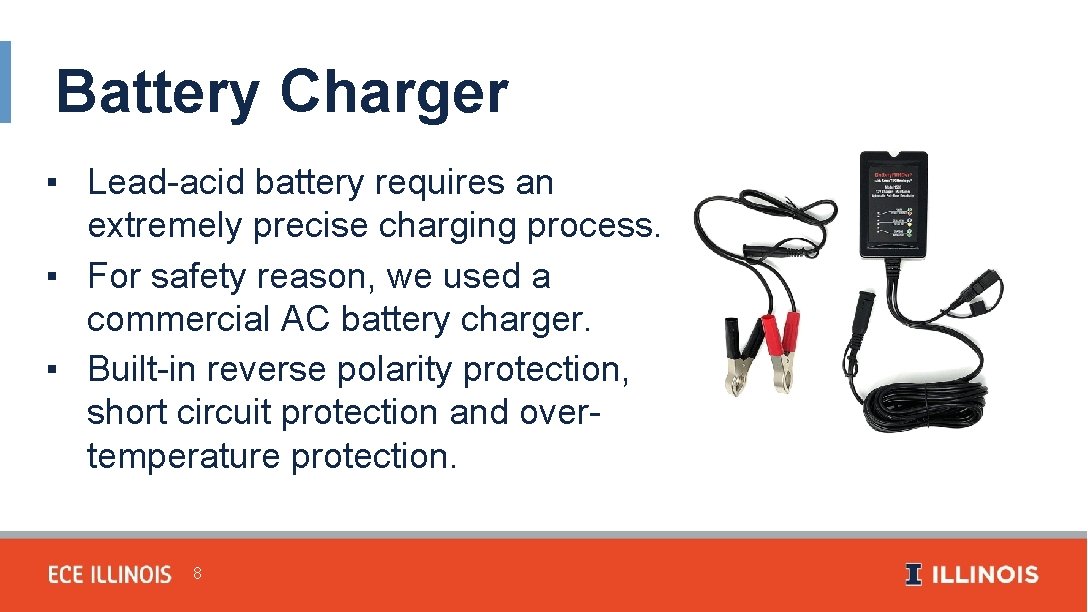
Battery Charger ▪ Lead-acid battery requires an extremely precise charging process. ▪ For safety reason, we used a commercial AC battery charger. ▪ Built-in reverse polarity protection, short circuit protection and overtemperature protection. 8
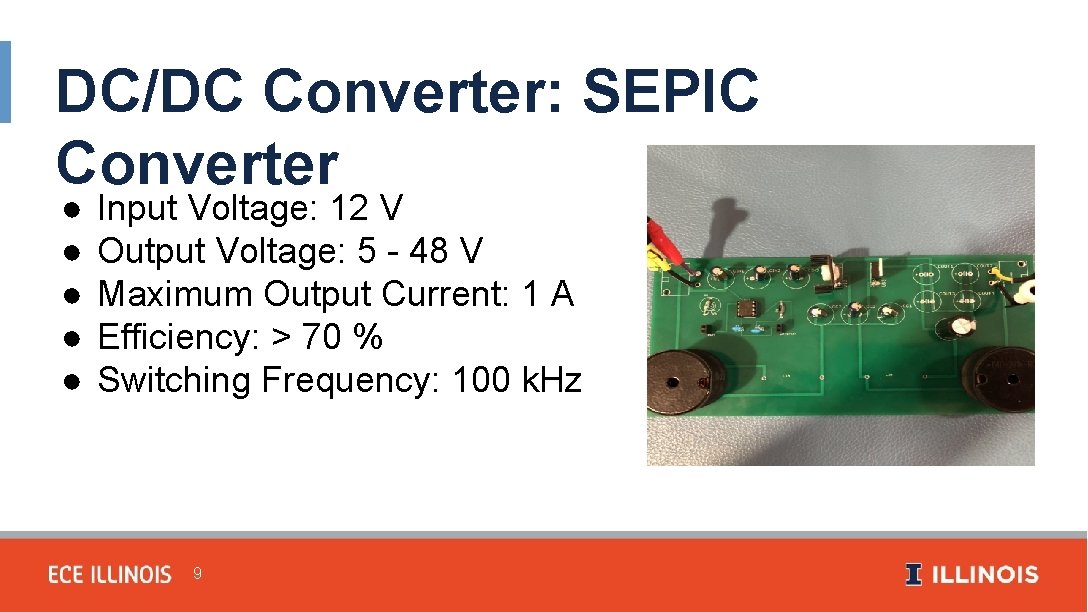
DC/DC Converter: SEPIC Converter ● ● ● Input Voltage: 12 V Output Voltage: 5 - 48 V Maximum Output Current: 1 A Efficiency: > 70 % Switching Frequency: 100 k. Hz 9
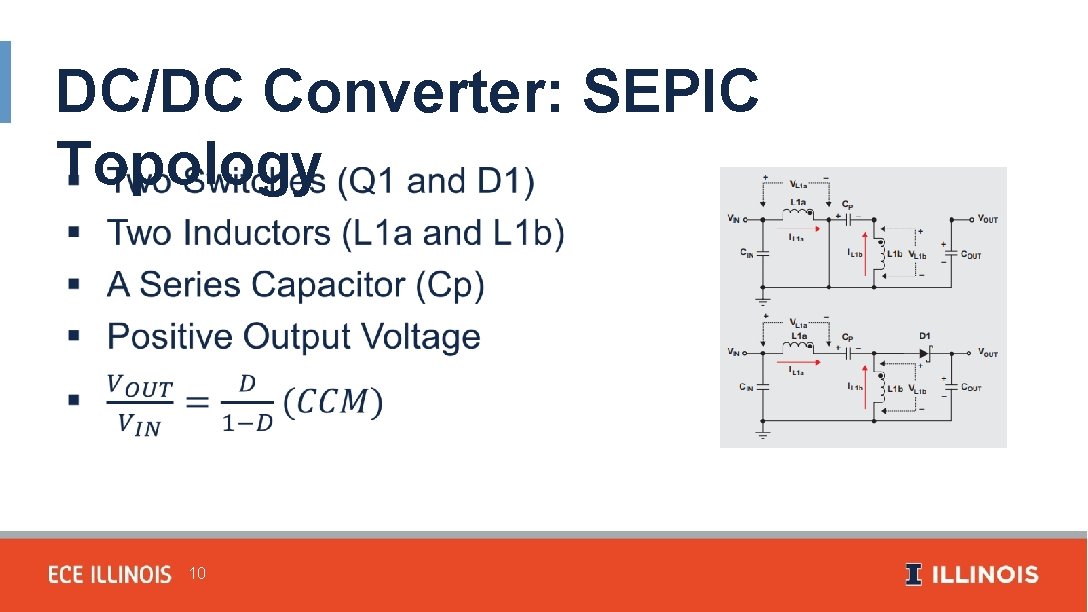
DC/DC Converter: SEPIC Topology 10
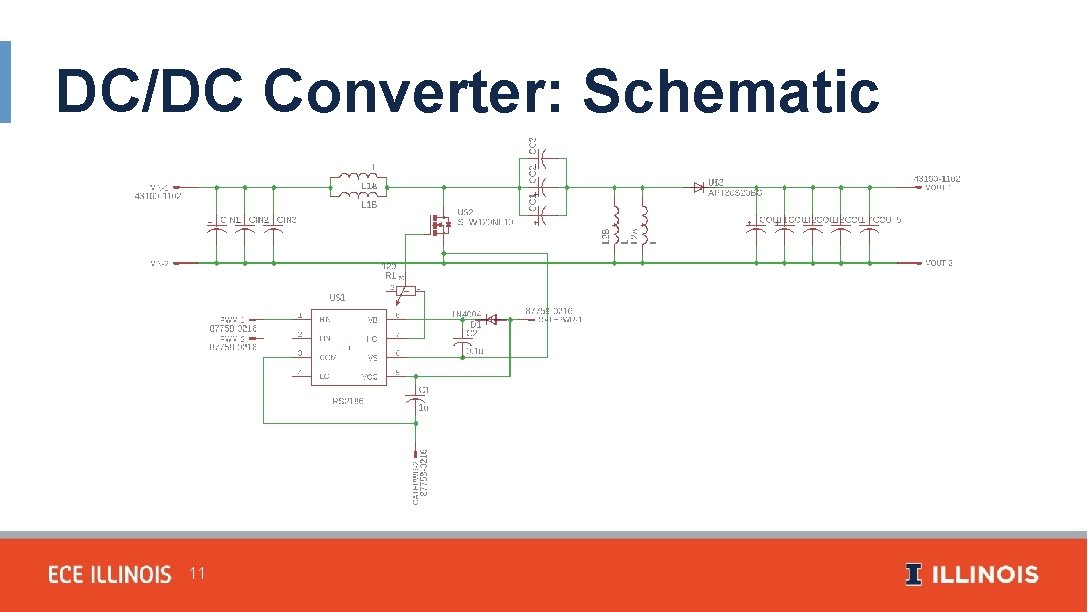
DC/DC Converter: Schematic 11
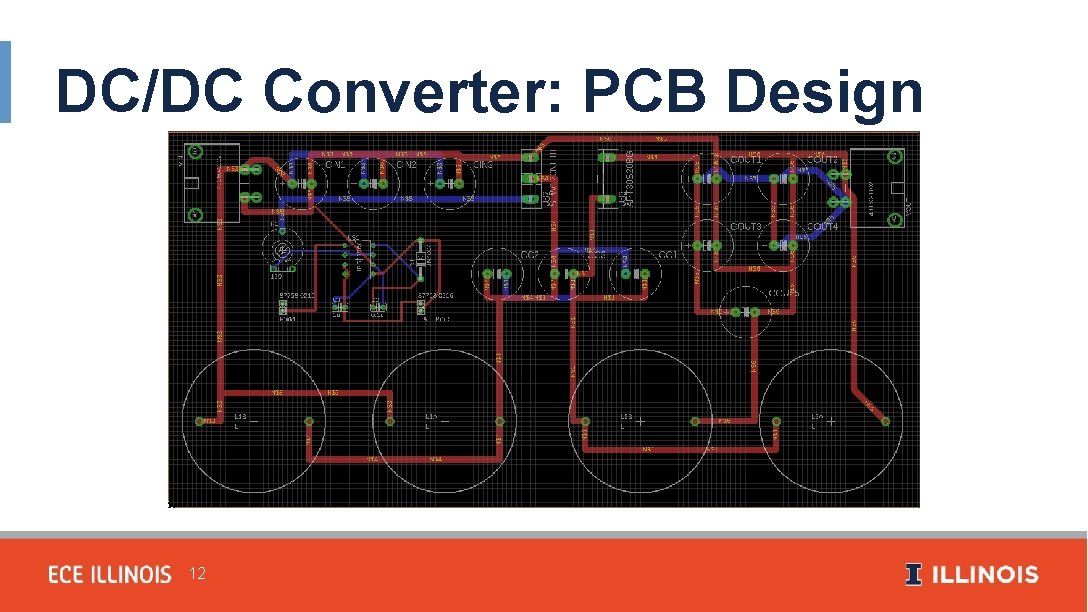
DC/DC Converter: PCB Design 12
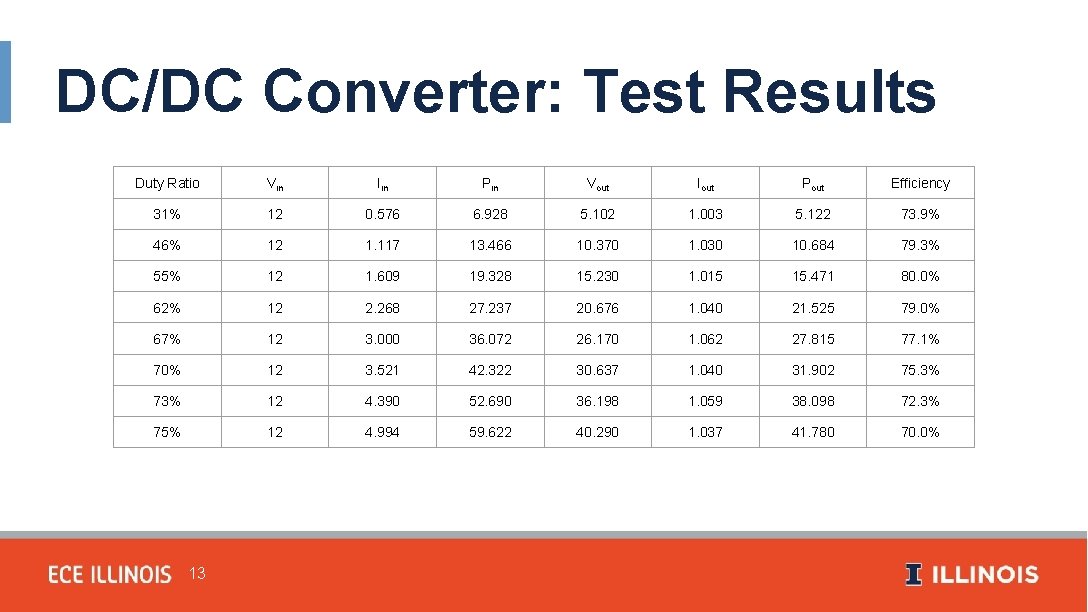
DC/DC Converter: Test Results Duty Ratio Vin Iin Pin Vout Iout Pout Efficiency 31% 12 0. 576 6. 928 5. 102 1. 003 5. 122 73. 9% 46% 12 1. 117 13. 466 10. 370 1. 030 10. 684 79. 3% 55% 12 1. 609 19. 328 15. 230 1. 015 15. 471 80. 0% 62% 12 2. 268 27. 237 20. 676 1. 040 21. 525 79. 0% 67% 12 3. 000 36. 072 26. 170 1. 062 27. 815 77. 1% 70% 12 3. 521 42. 322 30. 637 1. 040 31. 902 75. 3% 73% 12 4. 390 52. 690 36. 198 1. 059 38. 098 72. 3% 75% 12 4. 994 59. 622 40. 290 1. 037 41. 780 70. 0% 13
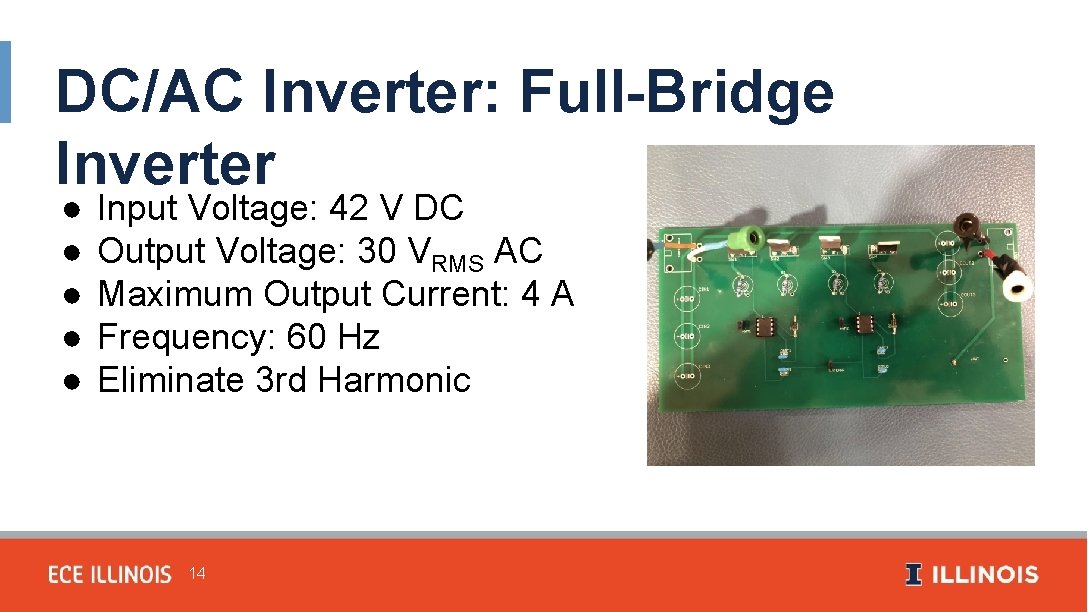
DC/AC Inverter: Full-Bridge Inverter ● ● ● Input Voltage: 42 V DC Output Voltage: 30 VRMS AC Maximum Output Current: 4 A Frequency: 60 Hz Eliminate 3 rd Harmonic 14
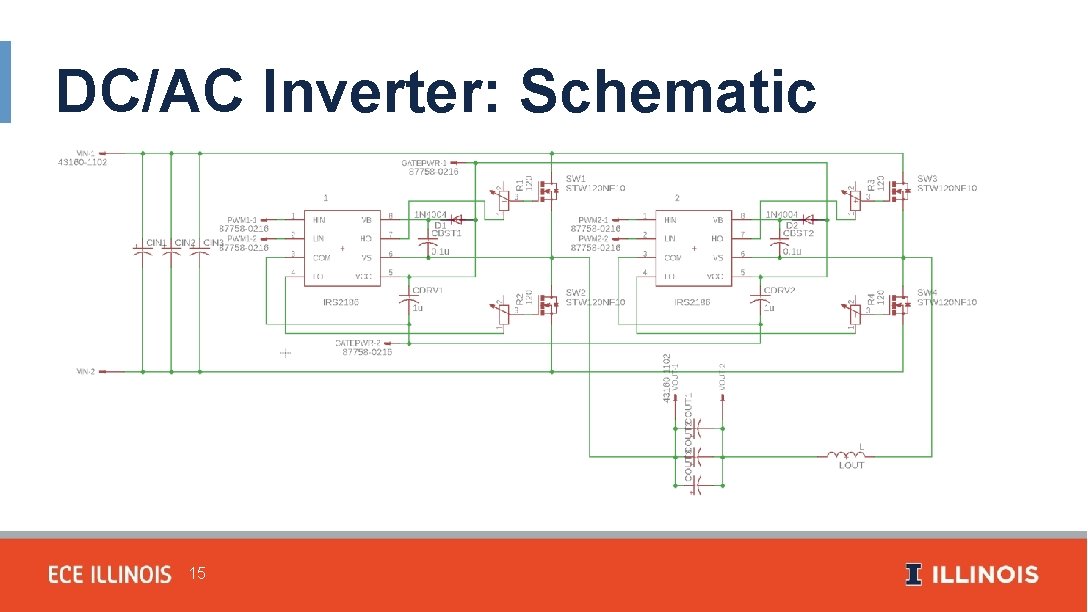
DC/AC Inverter: Schematic 15
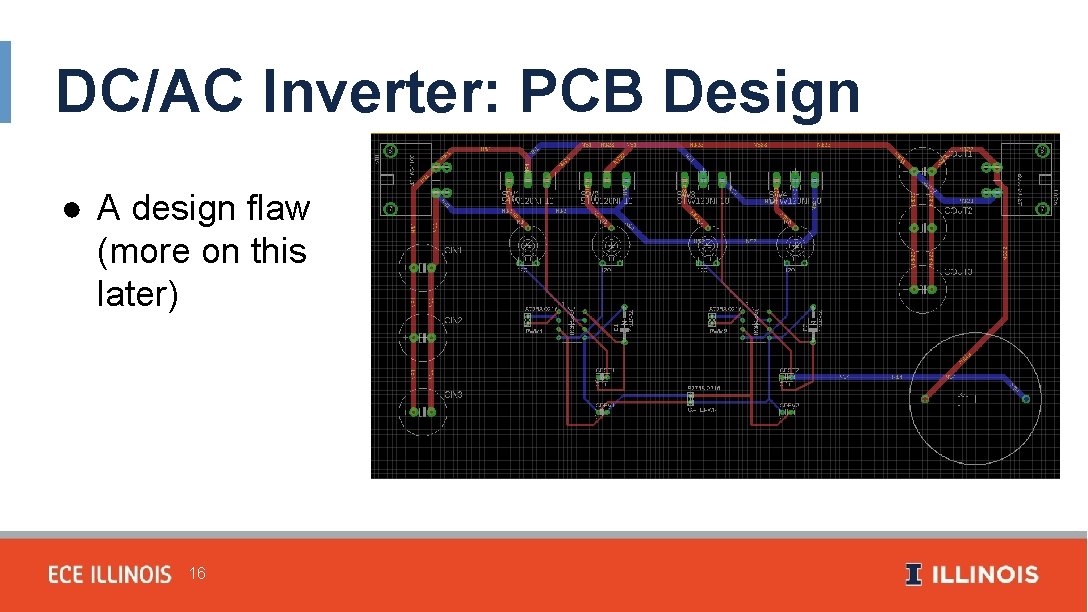
DC/AC Inverter: PCB Design ● A design flaw (more on this later) 16
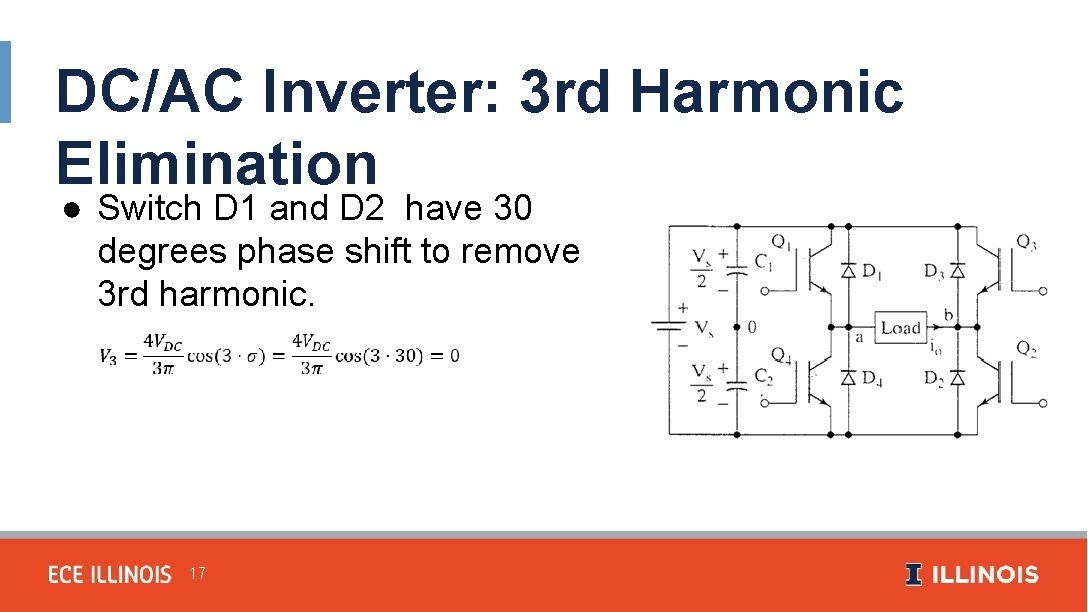
DC/AC Inverter: 3 rd Harmonic Elimination ● Switch D 1 and D 2 have 30 degrees phase shift to remove 3 rd harmonic. 17
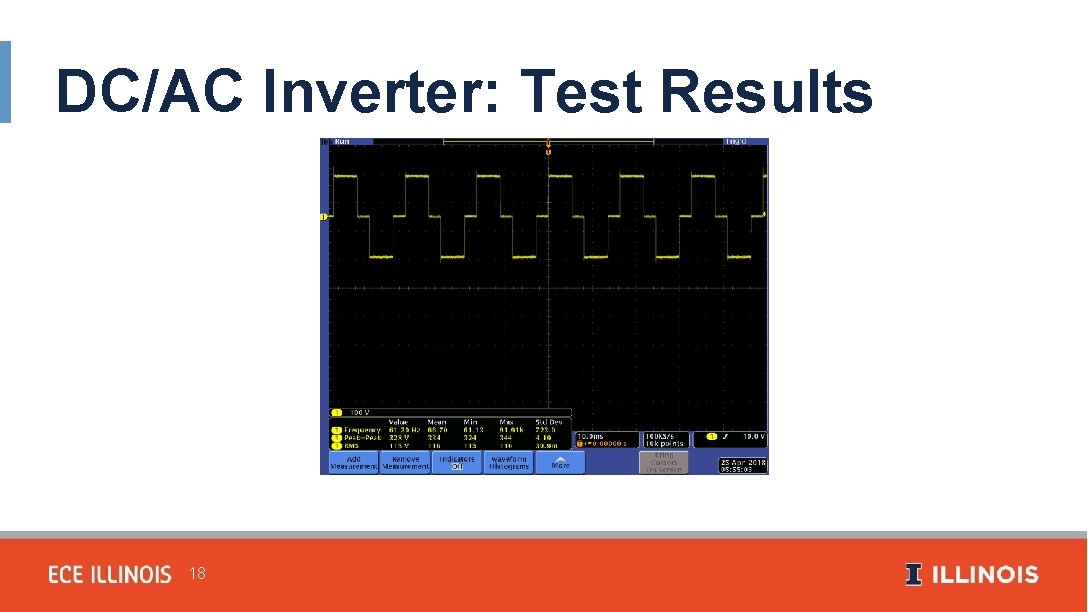
DC/AC Inverter: Test Results 18
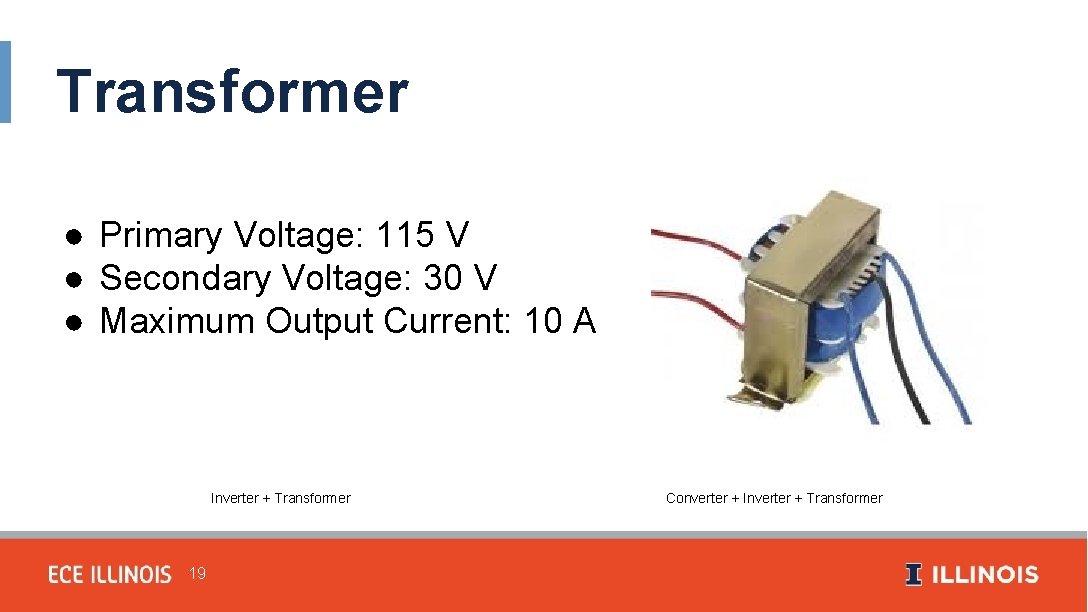
Transformer ● Primary Voltage: 115 V ● Secondary Voltage: 30 V ● Maximum Output Current: 10 A Inverter + Transformer 19 Converter + Inverter + Transformer
Software ▪ C 2000 Microcontroller Generate PWM waveform for the gate drivers from both the converter circuit and inverter circuit ▪ Arduino Perform measurement of the output voltage and current and displace them onto LCD 20
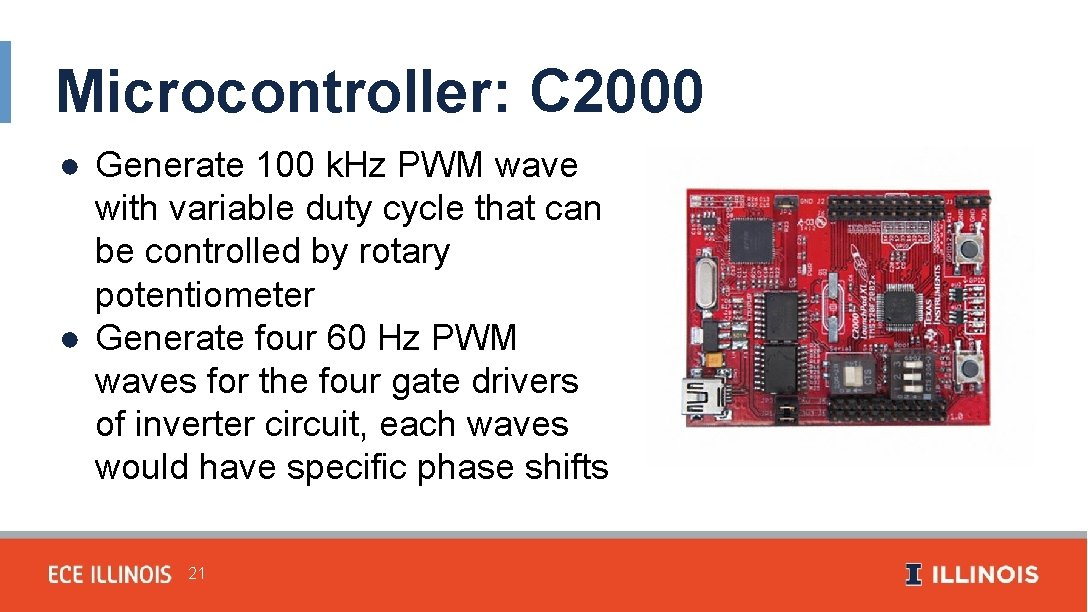
Microcontroller: C 2000 ● Generate 100 k. Hz PWM wave with variable duty cycle that can be controlled by rotary potentiometer ● Generate four 60 Hz PWM waves for the four gate drivers of inverter circuit, each waves would have specific phase shifts 21
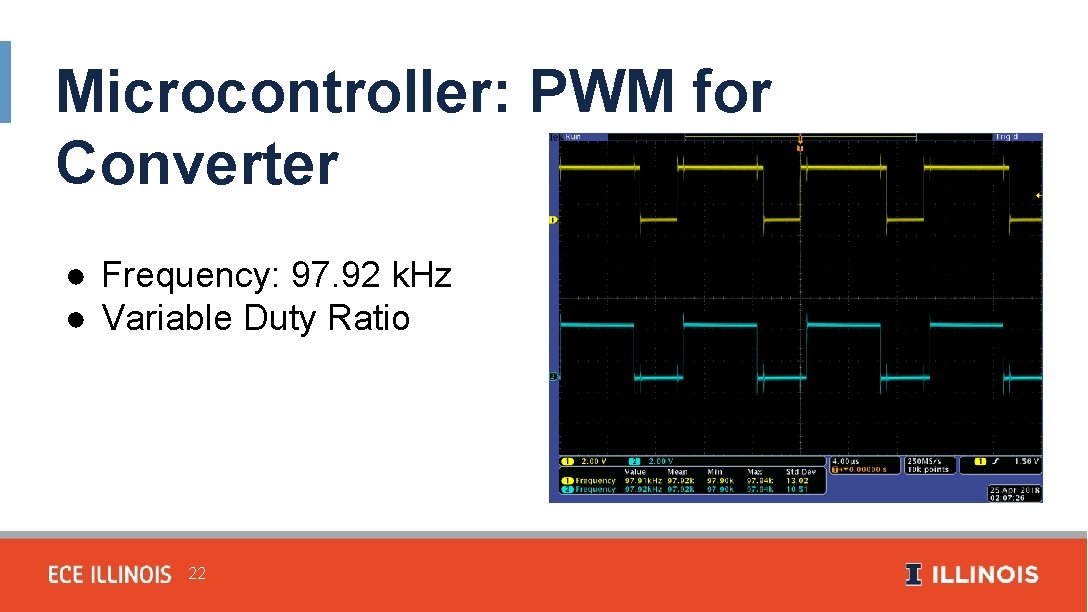
Microcontroller: PWM for Converter ● Frequency: 97. 92 k. Hz ● Variable Duty Ratio 22
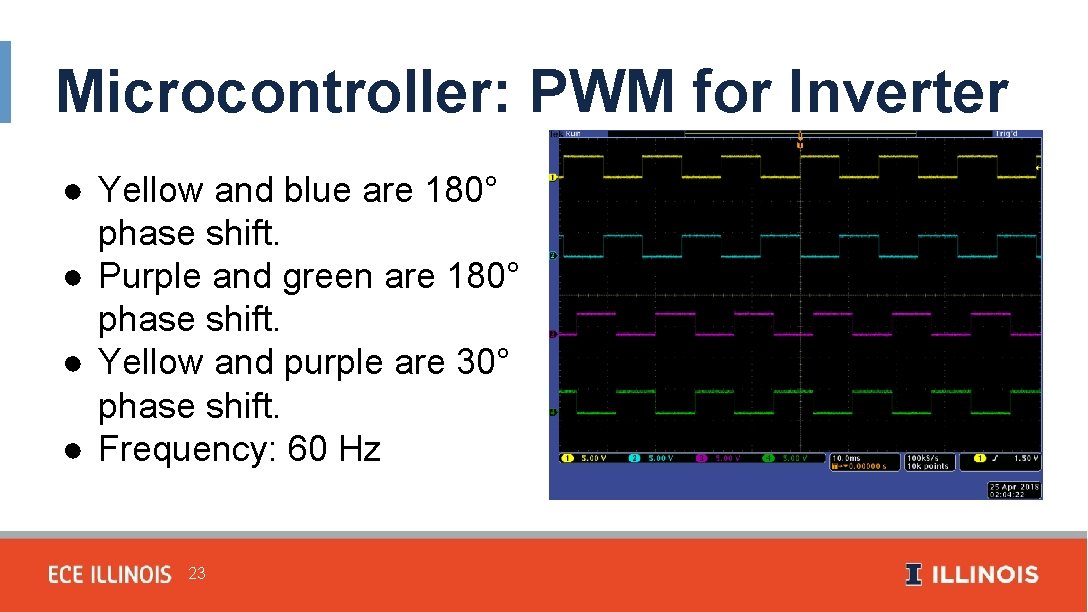
Microcontroller: PWM for Inverter ● Yellow and blue are 180° phase shift. ● Purple and green are 180° phase shift. ● Yellow and purple are 30° phase shift. ● Frequency: 60 Hz 23

Arduino ● Arduino and current sensors are used to measure the DC output voltages and currents of the system and output the data to the LCD screen 24
Measurement System ▪ Voltage Measurement ● Arduino itself is sensitive to analog voltage ranges from 0 to 5 V. ● Voltage divider scales down the output voltage to 0 - 5 V. ▪ Current Measurement ● ACS 711 Hall-Effect Linear Current Sensor ● Applied current flowing through this sensor is converted into a proportional voltage sensed by Arduino. 25
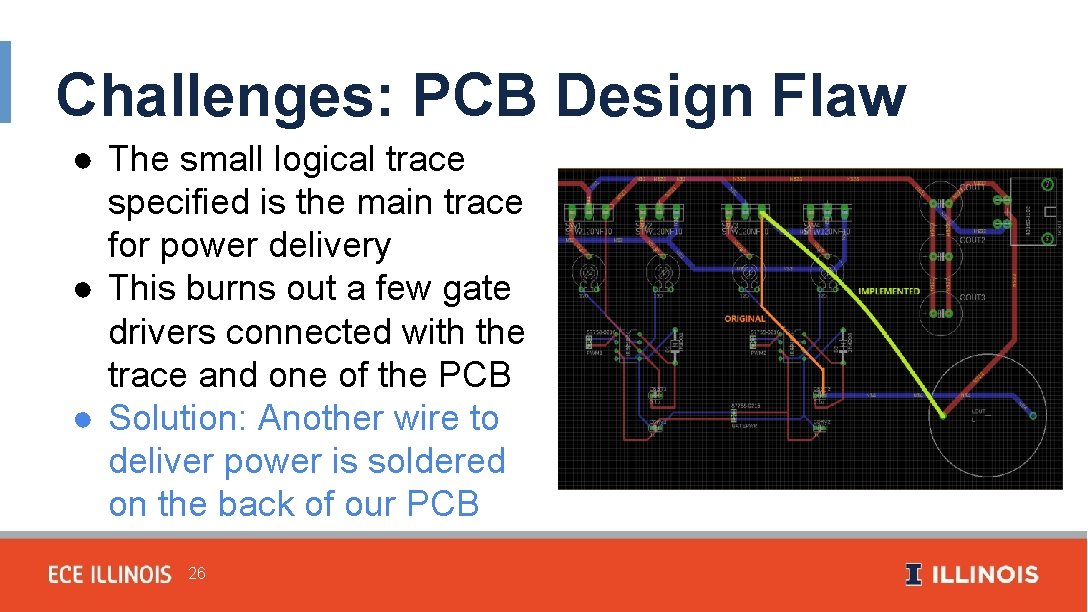
Challenges: PCB Design Flaw ● The small logical trace specified is the main trace for power delivery ● This burns out a few gate drivers connected with the trace and one of the PCB ● Solution: Another wire to deliver power is soldered on the back of our PCB 26
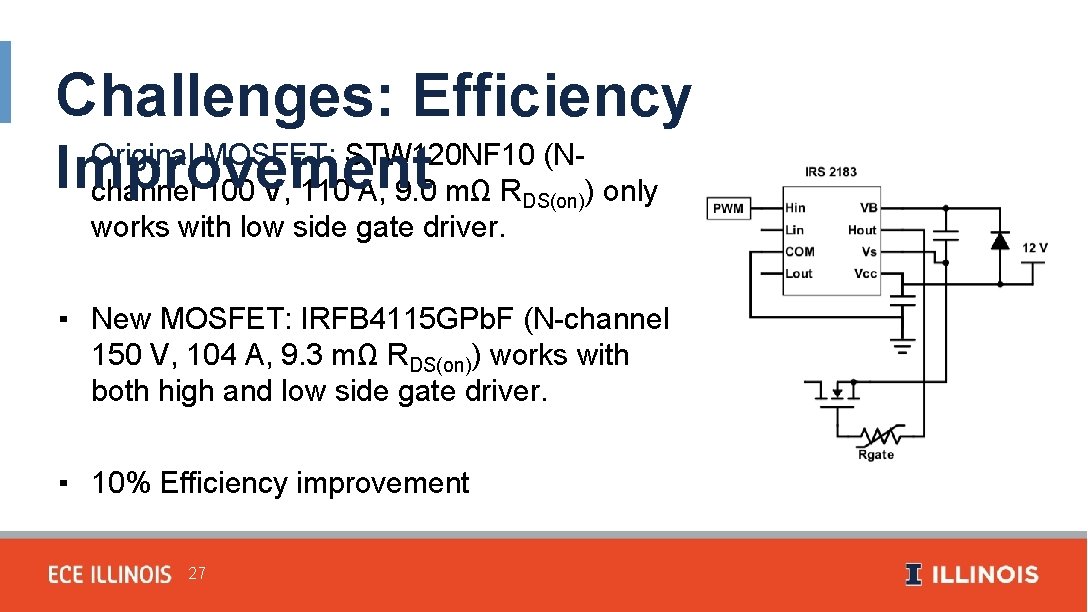
Challenges: Efficiency ▪ Original MOSFET: STW 120 NF 10 (NImprovement channel 100 V, 110 A, 9. 0 mΩ R ) only works with low side gate driver. DS(on) ▪ New MOSFET: IRFB 4115 GPb. F (N-channel 150 V, 104 A, 9. 3 mΩ RDS(on)) works with both high and low side gate driver. ▪ 10% Efficiency improvement 27
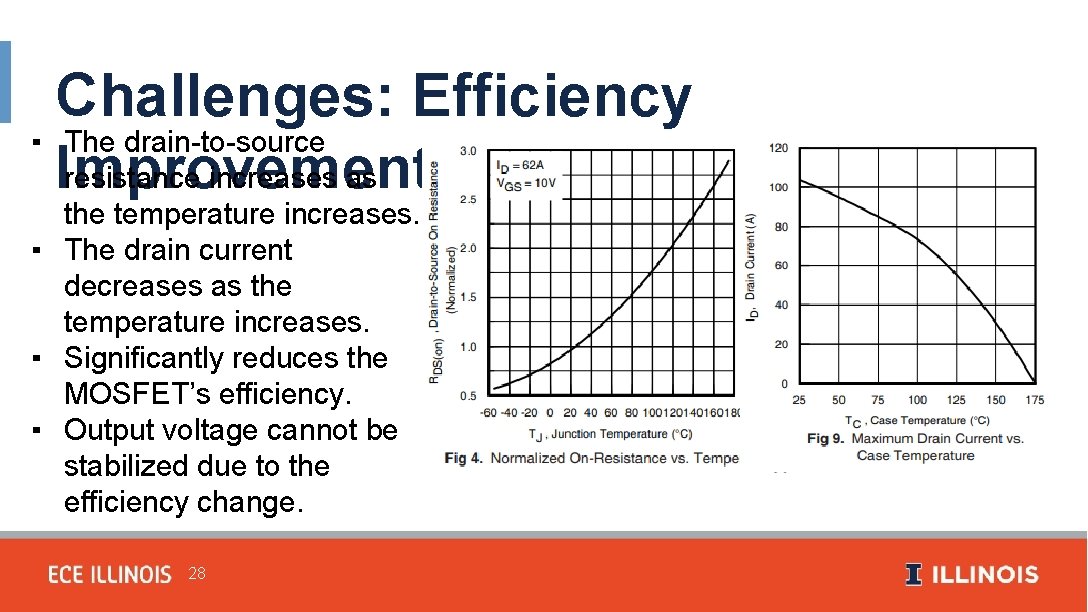
Challenges: Efficiency ▪ The drain-to-source Improvement resistance increases as the temperature increases. ▪ The drain current decreases as the temperature increases. ▪ Significantly reduces the MOSFET’s efficiency. ▪ Output voltage cannot be stabilized due to the efficiency change. 28
Challenges: Measurement System ▪ The measurement system worked perfectly on the breadboard test ▪ However, it failed when it was soldered on the perfboard for no reason ▪ Solution: Not enough time for replacement 29
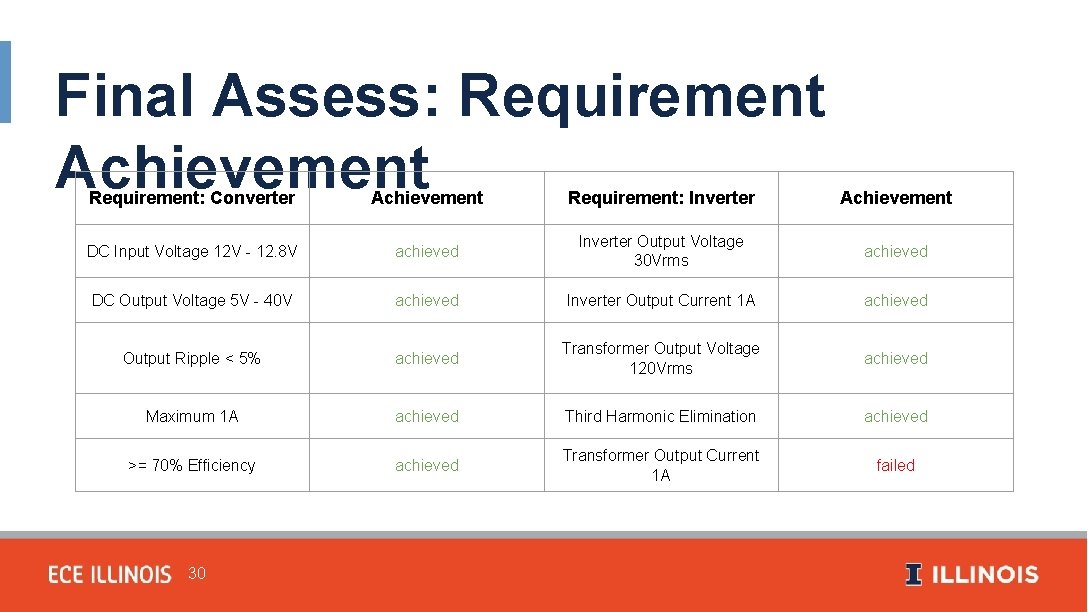
Final Assess: Requirement Achievement Requirement: Converter Achievement Requirement: Inverter Achievement DC Input Voltage 12 V - 12. 8 V achieved Inverter Output Voltage 30 Vrms achieved DC Output Voltage 5 V - 40 V achieved Inverter Output Current 1 A achieved Output Ripple < 5% achieved Transformer Output Voltage 120 Vrms achieved Maximum 1 A achieved Third Harmonic Elimination achieved >= 70% Efficiency achieved Transformer Output Current 1 A failed 30
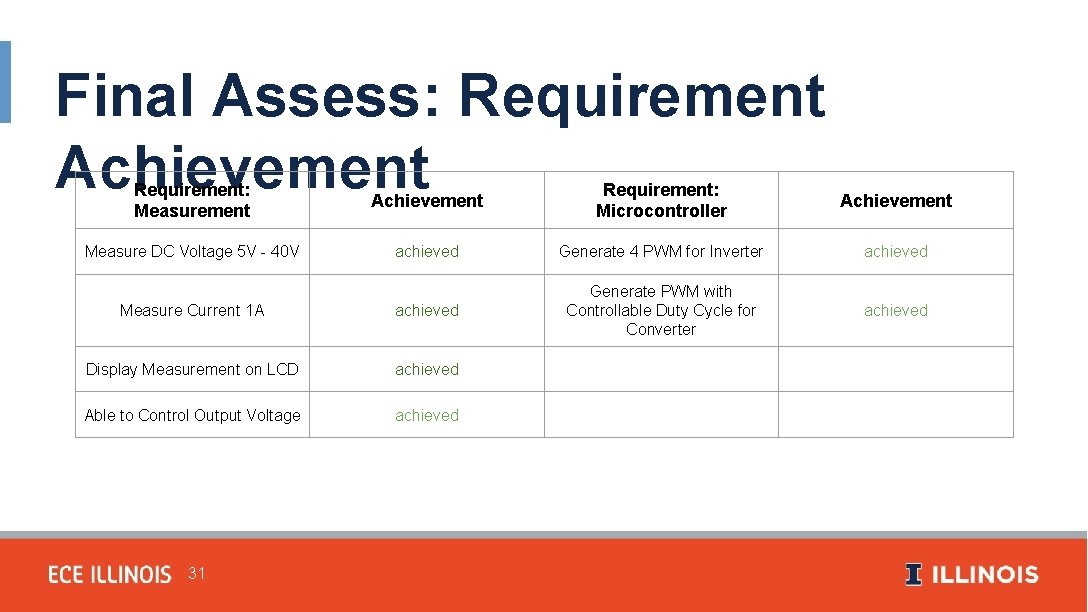
Final Assess: Requirement Achievement Requirement: Measurement Achievement Requirement: Microcontroller Achievement Measure DC Voltage 5 V - 40 V achieved Generate 4 PWM for Inverter achieved Measure Current 1 A achieved Generate PWM with Controllable Duty Cycle for Converter achieved Display Measurement on LCD achieved Able to Control Output Voltage achieved 31
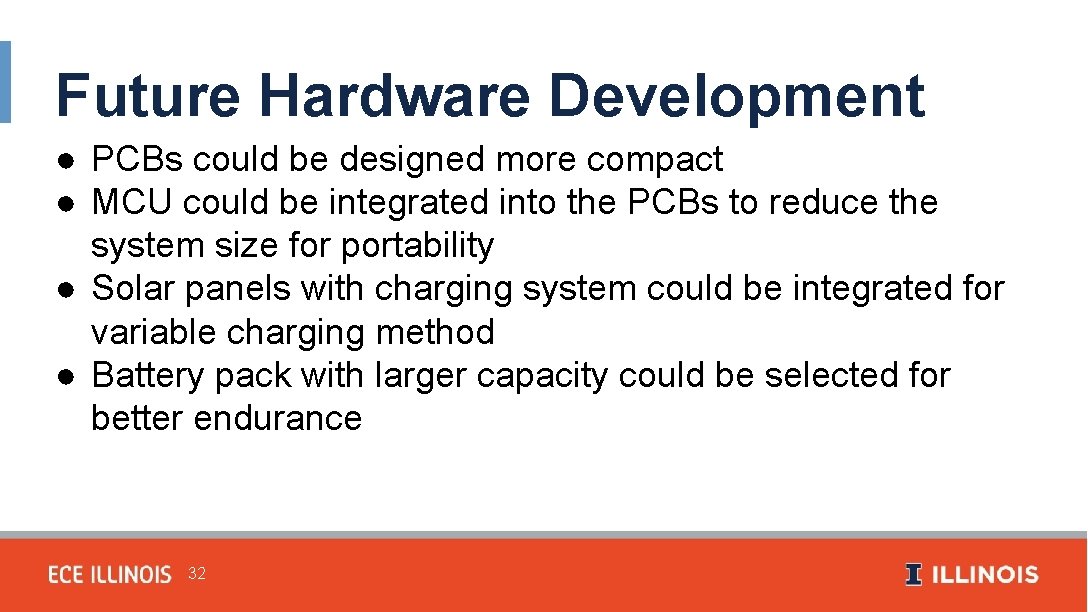
Future Hardware Development ● PCBs could be designed more compact ● MCU could be integrated into the PCBs to reduce the system size for portability ● Solar panels with charging system could be integrated for variable charging method ● Battery pack with larger capacity could be selected for better endurance 32

Thank you! Questions? 33
- Slides: 33