
Solar power generation and solar chemistry Energy focus
- Slides: 23
Solar power generation and solar chemistry Energy focus Department of Physics
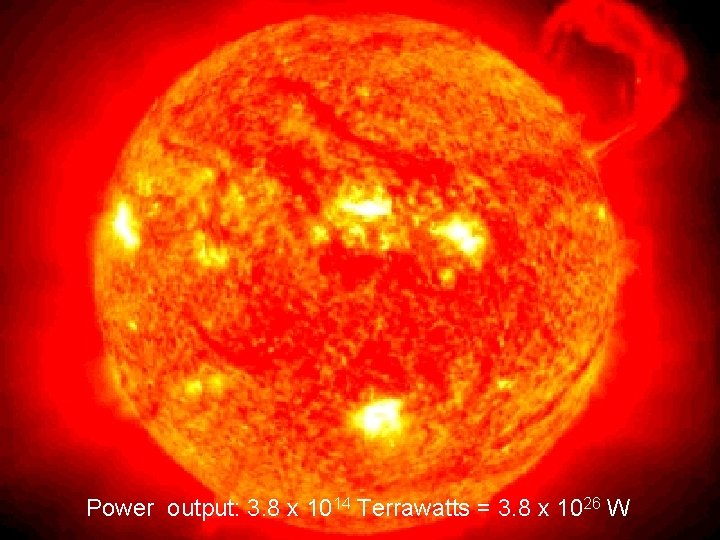
Power output: 3. 8 x 10¹⁴ Terrawatts = 3. 8 x 1026 W
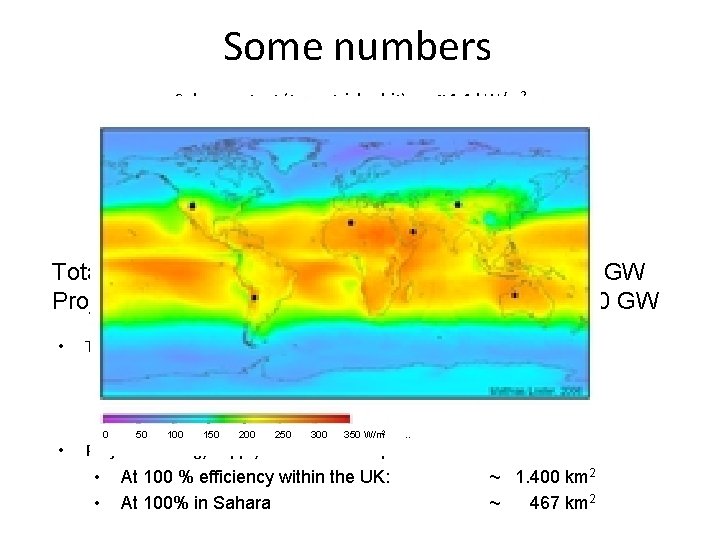
Some numbers • • • Solar constant (terrestrial orbit) Ground level constant Correction for UK latitude Average over one day Correction for UK weather Near equator in desert (Sahara) ~ 1. 4 k. W/m 2 ~ 1. 0 k. W/m 2 ~ 600 W/m 2 ~ 200 W/m 2 ~ 100 W/m 2 ~ 300 W/m 2 Total electricity supply in the UK at present: Projected energy supply in the future: • Today’s electricity supply from solar sources requires • At 100 % efficiency within the UK: • At 10% efficiency (present level): • 0 At 50100% in 150 desert 100 250 300 350 W/m. . Projected energy supply in the future requires • At 100 % efficiency within the UK: • At 100% in Sahara 2 • ~40 GW ~140 GW ~ 400 km 2 ~ 4. 000 km 2 ~ 134 km 2 ~ 1. 400 km 2 ~ 467 km 2
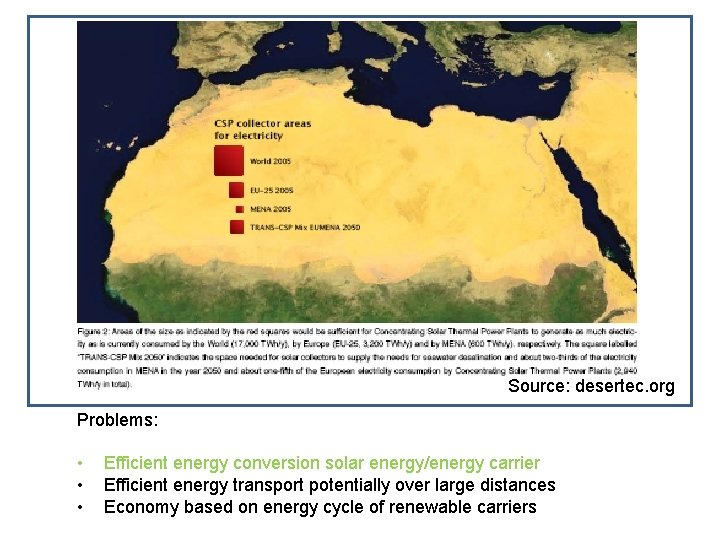
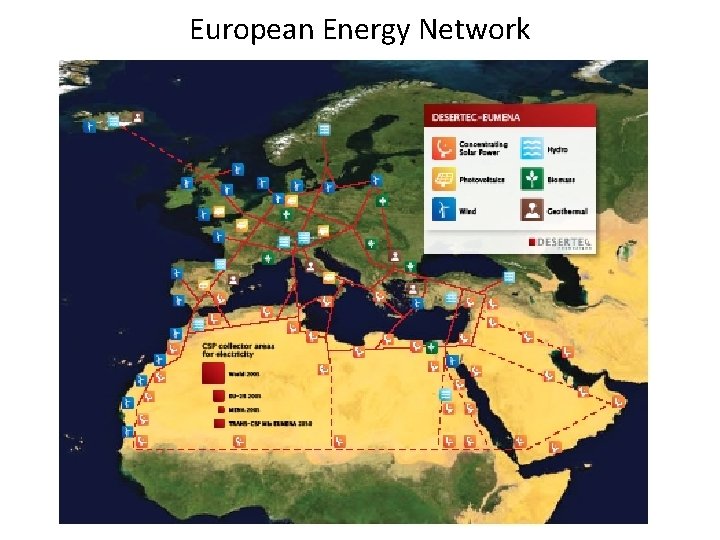
Sa Source: desertec. org Problems: • • • Efficient energy conversion solar energy/energy carrier Efficient energy transport potentially over large distances Economy based on energy cycle of renewable carriers
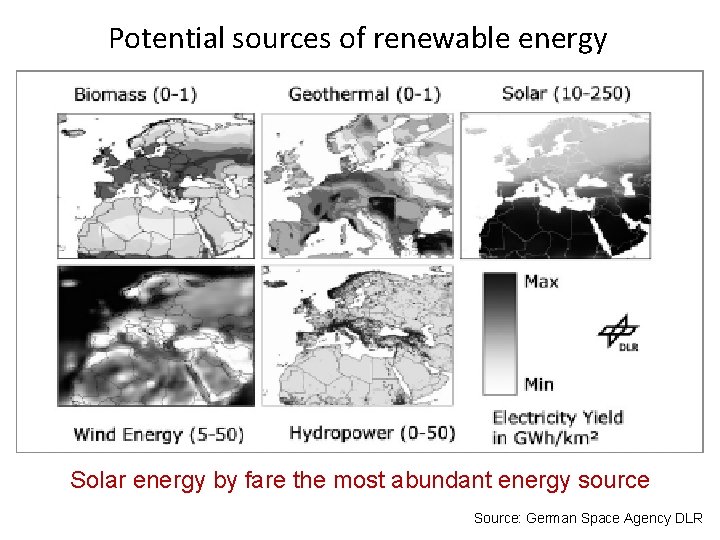
Potential sources of renewable energy Solar energy by fare the most abundant energy source Source: German Space Agency DLR
European Energy Network
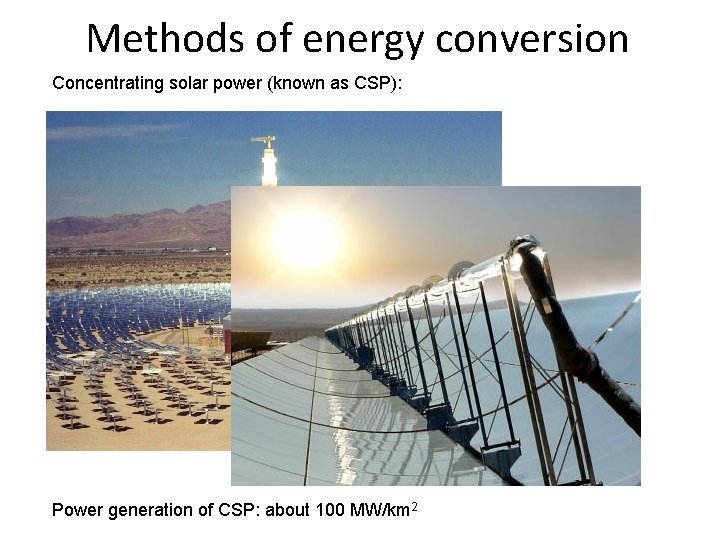
Methods of energy conversion Concentrating solar power (known as CSP): Power generation of CSP: about 100 MW/km 2
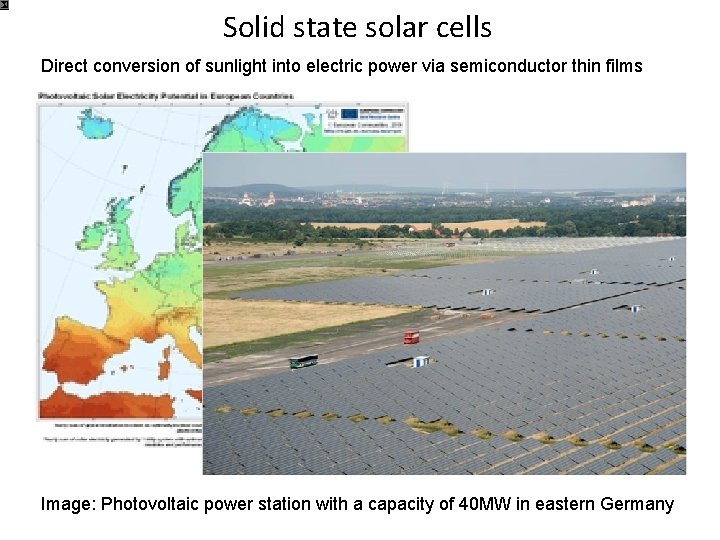
Solid state solar cells Direct conversion of sunlight into electric power via semiconductor thin films Image: Photovoltaic power station with a capacity of 40 MW in eastern Germany
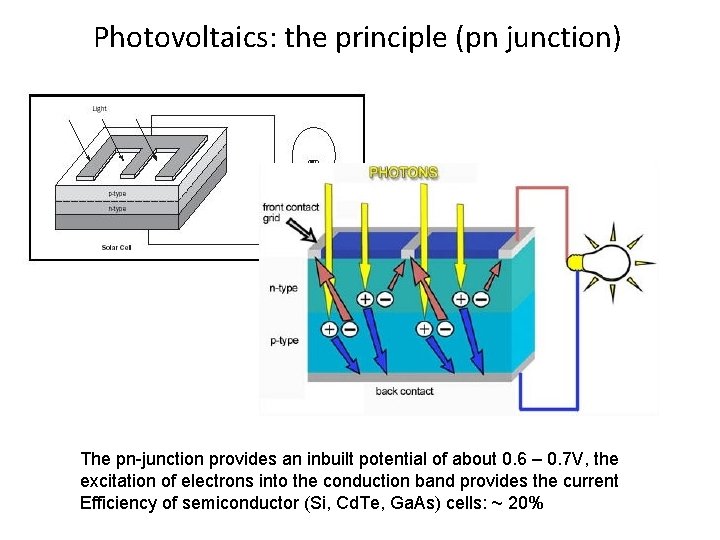
Photovoltaics: the principle (pn junction) The pn-junction provides an inbuilt potential of about 0. 6 – 0. 7 V, the excitation of electrons into the conduction band provides the current Efficiency of semiconductor (Si, Cd. Te, Ga. As) cells: ~ 20%
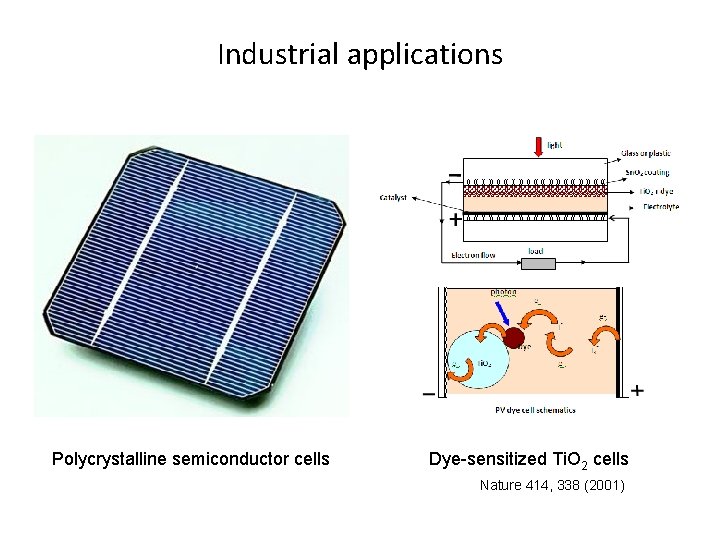
Industrial applications Polycrystalline semiconductor cells Dye-sensitized Ti. O 2 cells Nature 414, 338 (2001)
Problems of solar cells • Semiconductor solar cells: • Energy balance of production • Cost of production material • Frequency dependence of light adsorption • Dye sensitized cells • Lifetime of dye compounds • Efficiency of cells • Frequency dependence of light adsorption Bottom line: photovoltaics will not be the exclusive solution to our energy problems
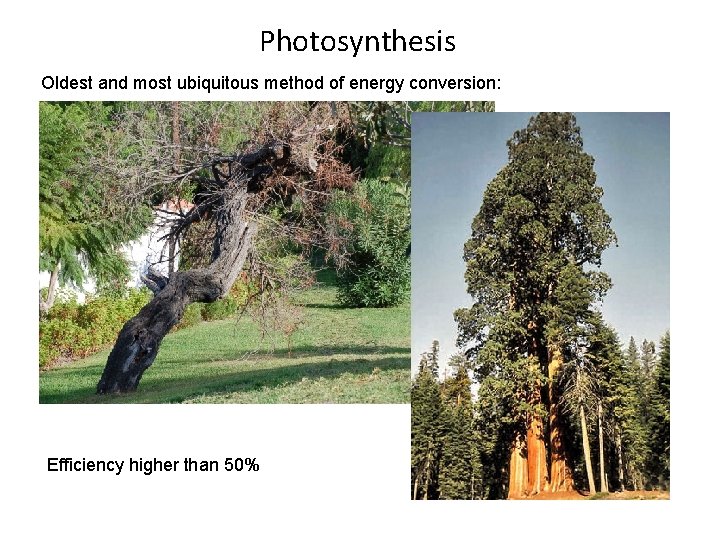
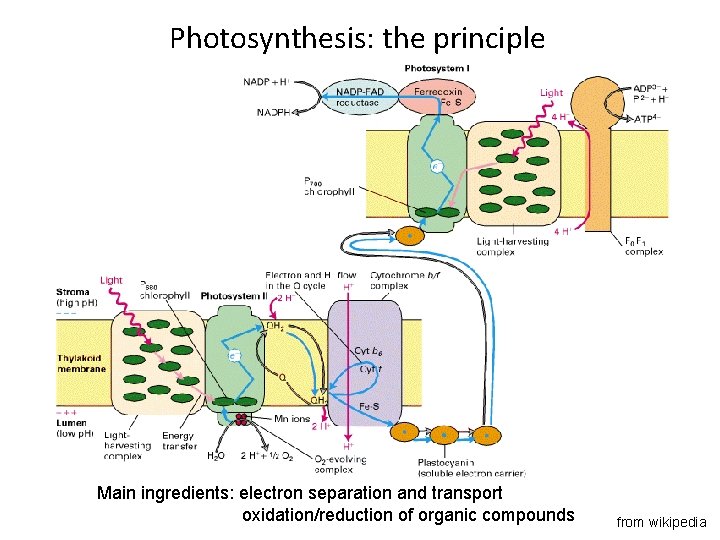
Photosynthesis Oldest and most ubiquitous method of energy conversion: Efficiency higher than 50%
Photosynthesis: the principle Main ingredients: electron separation and transport oxidation/reduction of organic compounds from wikipedia
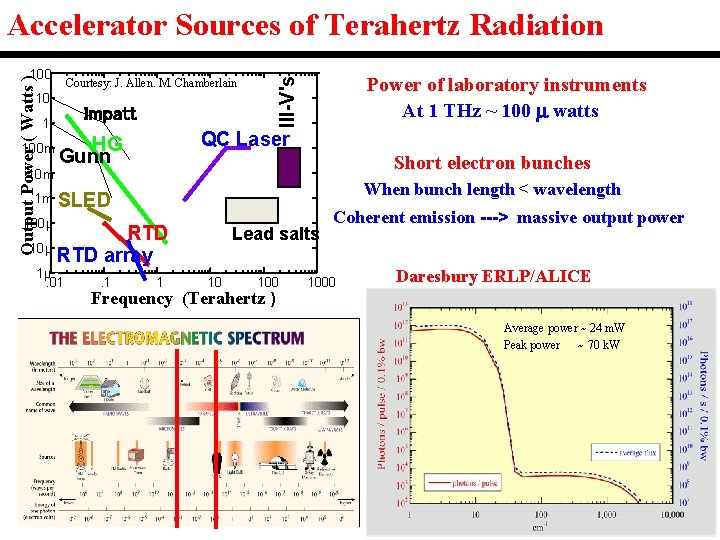
Accelerator Sources of Terahertz Radiation Courtesy: J. Allen. M. Chamberlain 10 Impatt 1 100 m 1 m 100µ 10µ Power of laboratory instruments At 1 THz ~ 100 watts III-V's Output Power ( Watts ) 100 QC Laser HG Gunn Short electron bunches When bunch length < wavelength SLED RTD array 1µ. 01 . 1 1 Lead salts 10 100 Frequency (Terahertz ) Coherent emission ---> massive output power 1000 Daresbury ERLP/ALICE Average power ~ 24 m. W Peak power ~ 70 k. W
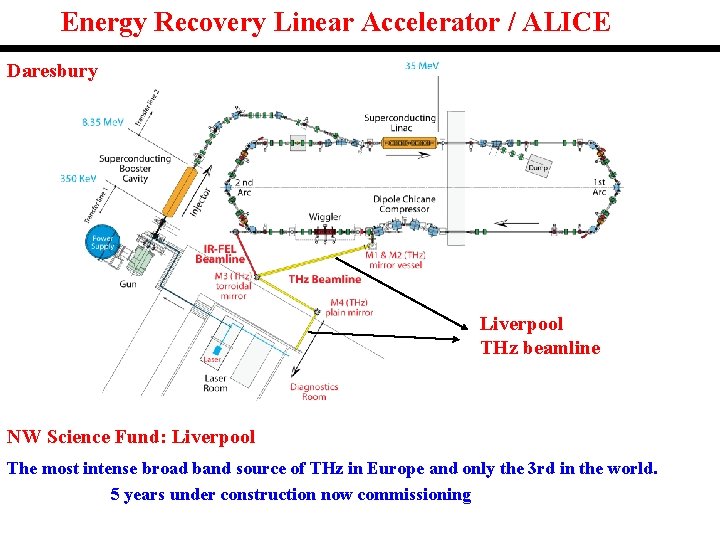
Energy Recovery Linear Accelerator / ALICE Daresbury Liverpool THz beamline NW Science Fund: Liverpool The most intense broad band source of THz in Europe and only the 3 rd in the world. 5 years under construction now commissioning
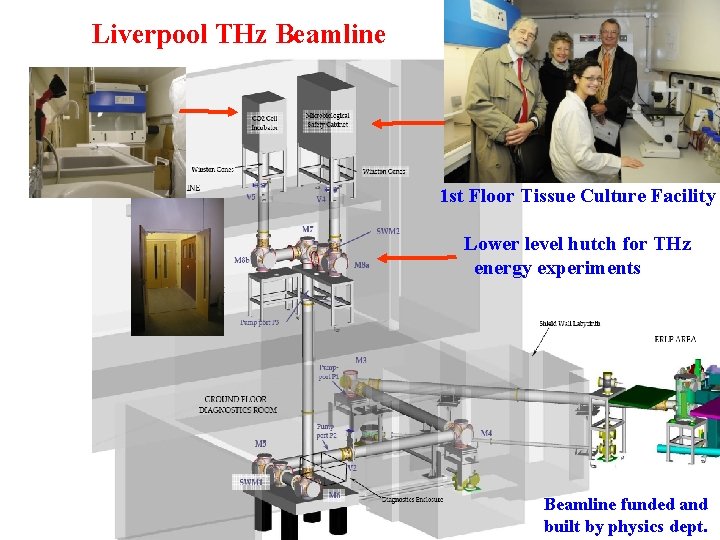
. . Liverpool THz Beamline 1 st Floor Tissue Culture Facility Lower level hutch for THz energy experiments Beamline funded and built by physics dept.
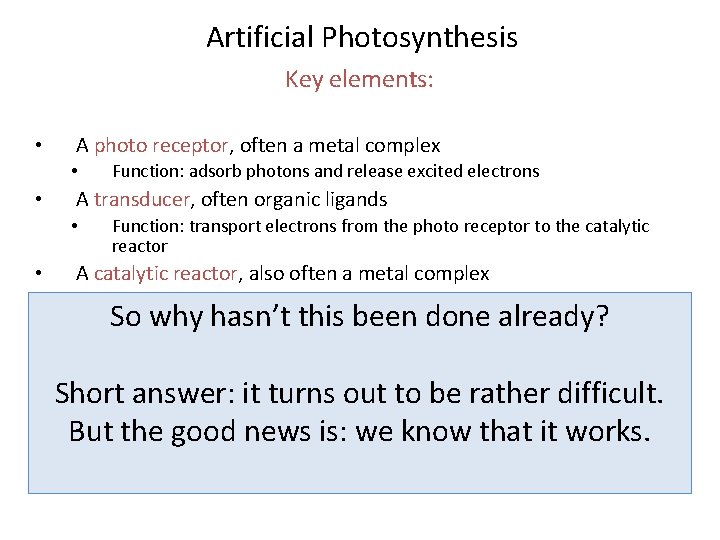
Artificial Photosynthesis Key elements: • A photo receptor, often a metal complex • • A transducer, often organic ligands • • Function: adsorb photons and release excited electrons Function: transport electrons from the photo receptor to the catalytic reactor A catalytic reactor, also often a metal complex • Function: reduce CO 2 to CO, split H 2 from H 2 O, or convert CO 2 and H 2 O to formic acid HCOOH So why hasn’t this been done already? The goal is to use sunlight to create high-energy molecules which can then be recombined with other molecules to release the stored chemical energy. The principle is applied in living organisms (bacteria, plants). Harnessing it for technological applications has the potential to create cycles of energy production and consumption, which have no negative impact on the environment. Short answer: it turns out to be rather difficult. But the good news is: we know that it works.
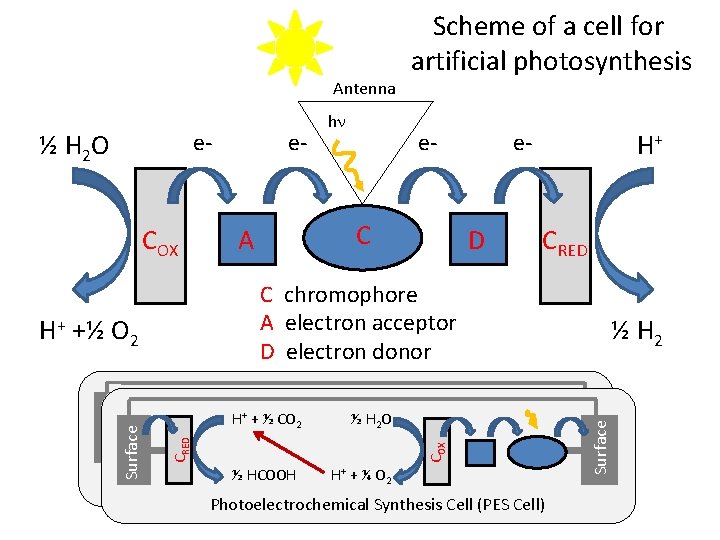
Antenna ½ H 2 O e- COX e- e- C A H+ e- D CRED C chromophore A electron acceptor D electron donor ½ H 2 O ½ H 2 H+ +½ O 2 ½ HCOOH H+ + ¼ O 2 Photoelectrochemical Synthesis Cell (PES Cell) ½ H 2 Surface ½ H 2 O + ½ CO 2 COX H+ CCRED H+ COX H+ +½ O 2 Surface hn Scheme of a cell for artificial photosynthesis
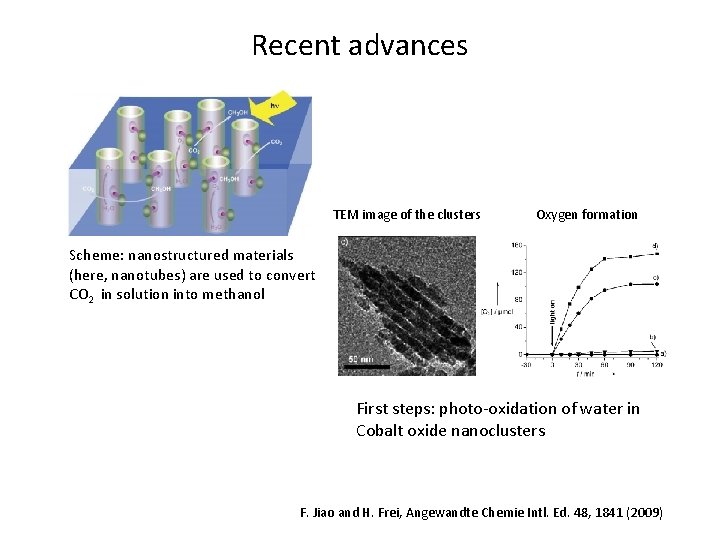
Recent advances TEM image of the clusters Oxygen formation Scheme: nanostructured materials (here, nanotubes) are used to convert CO 2 in solution into methanol First steps: photo-oxidation of water in Cobalt oxide nanoclusters F. Jiao and H. Frei, Angewandte Chemie Intl. Ed. 48, 1841 (2009)
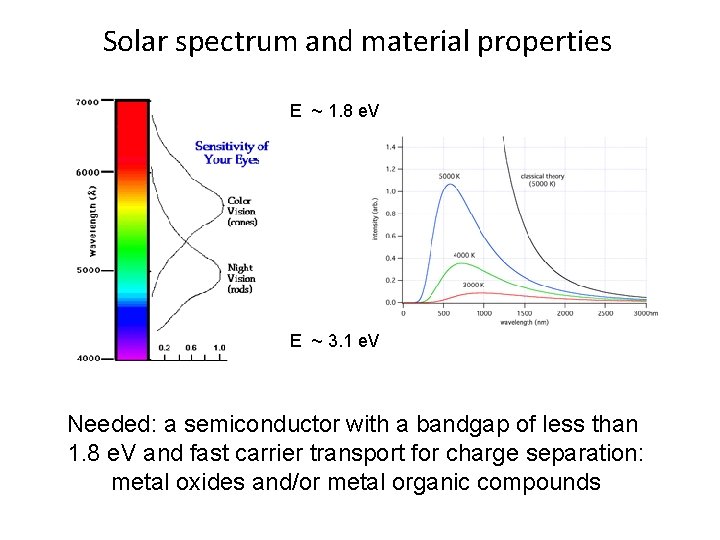
Solar spectrum and material properties E ~ 1. 8 e. V E ~ 3. 1 e. V Needed: a semiconductor with a bandgap of less than 1. 8 e. V and fast carrier transport for charge separation: metal oxides and/or metal organic compounds
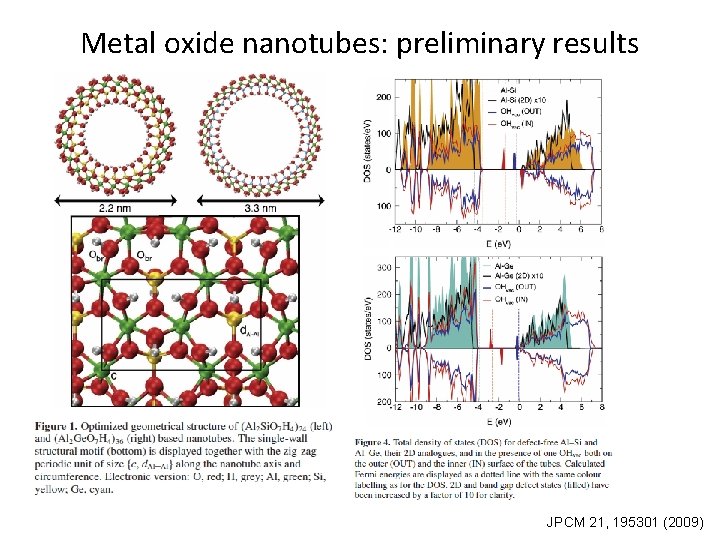
Metal oxide nanotubes: preliminary results JPCM 21, 195301 (2009)
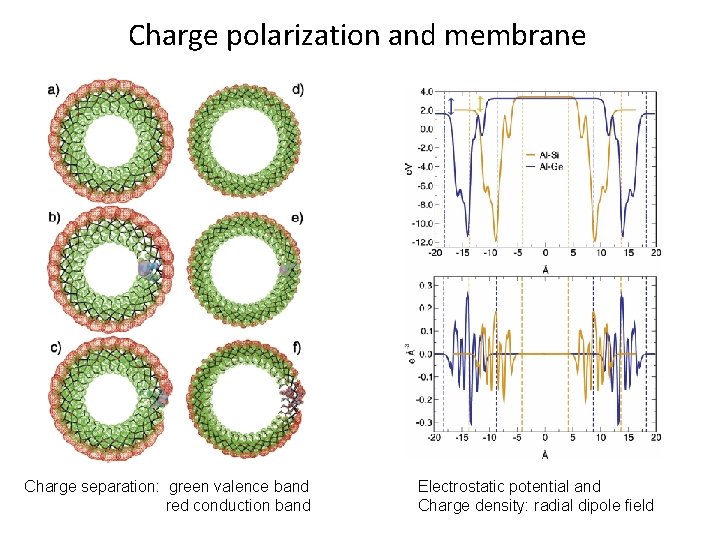
Charge polarization and membrane Charge separation: green valence band red conduction band Electrostatic potential and Charge density: radial dipole field
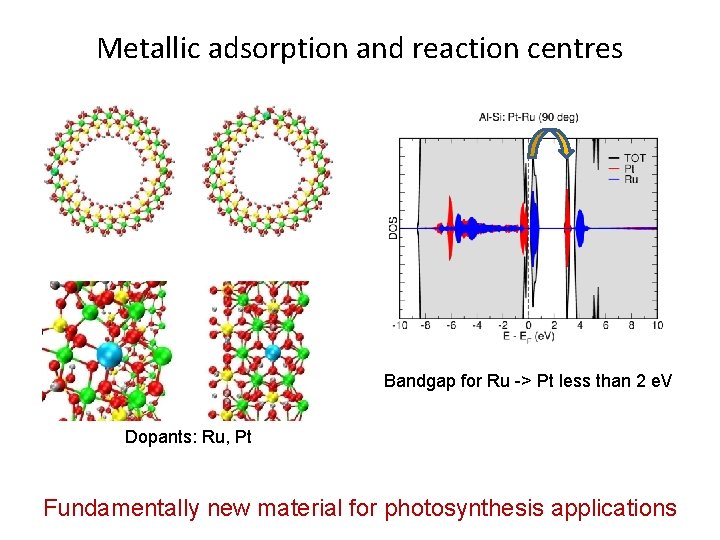
Metallic adsorption and reaction centres Bandgap for Ru -> Pt less than 2 e. V Dopants: Ru, Pt Fundamentally new material for photosynthesis applications