
Solar Ovens Developing a mathematical model for energy
- Slides: 11
Solar Ovens Developing a mathematical model for energy transfer
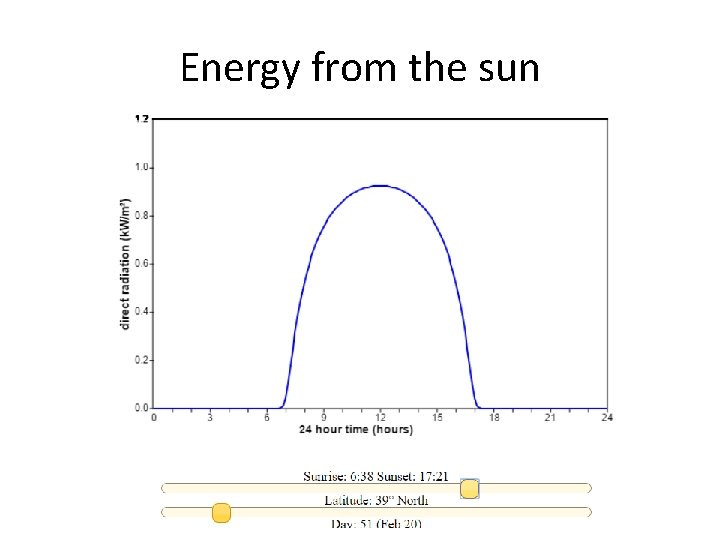
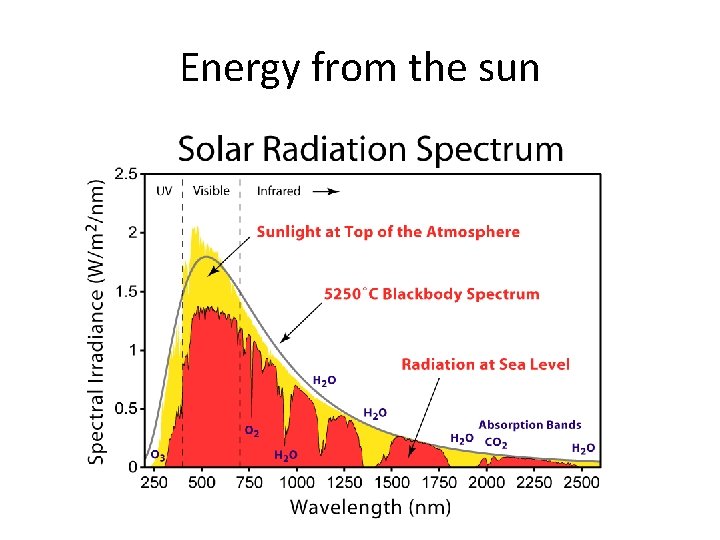
Energy from the sun
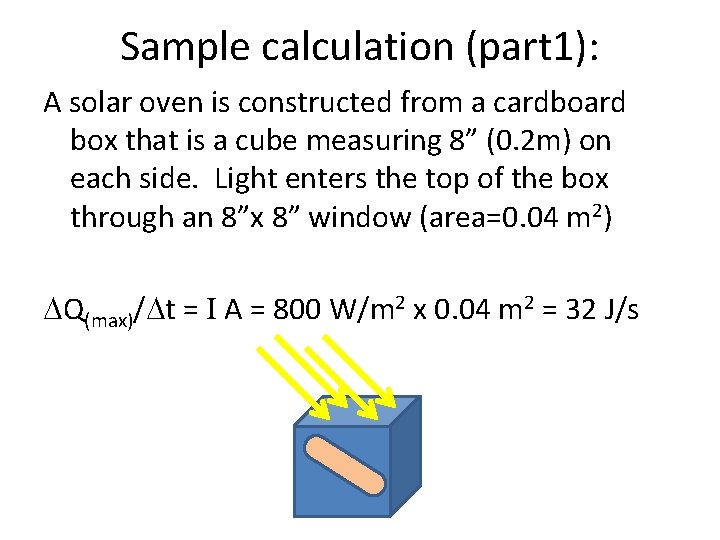
Sample calculation (part 1): A solar oven is constructed from a cardboard box that is a cube measuring 8” (0. 2 m) on each side. Light enters the top of the box through an 8”x 8” window (area=0. 04 m 2) DQ(max)/Dt = I A = 800 W/m 2 x 0. 04 m 2 = 32 J/s
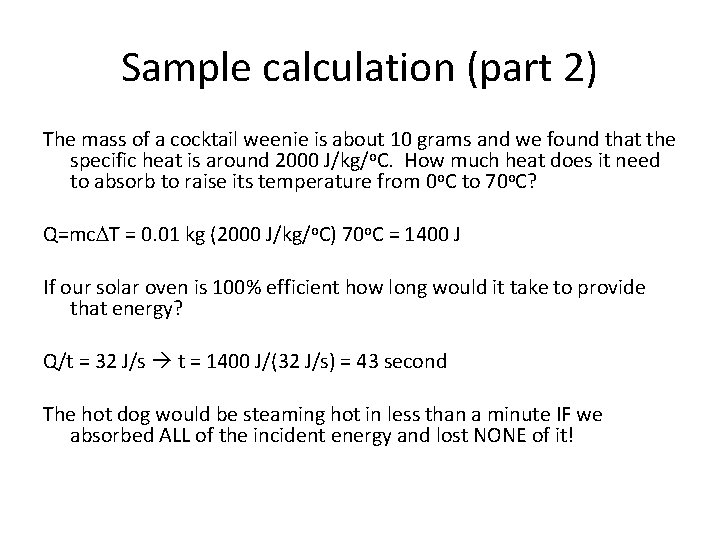
Sample calculation (part 2) The mass of a cocktail weenie is about 10 grams and we found that the specific heat is around 2000 J/kg/o. C. How much heat does it need to absorb to raise its temperature from 0 o. C to 70 o. C? Q=mc. DT = 0. 01 kg (2000 J/kg/o. C) 70 o. C = 1400 J If our solar oven is 100% efficient how long would it take to provide that energy? Q/t = 32 J/s t = 1400 J/(32 J/s) = 43 second The hot dog would be steaming hot in less than a minute IF we absorbed ALL of the incident energy and lost NONE of it!
Energy from the sun
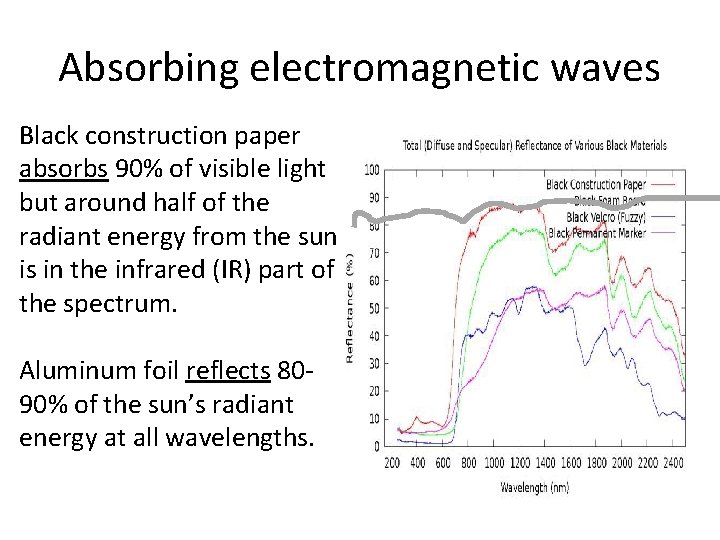
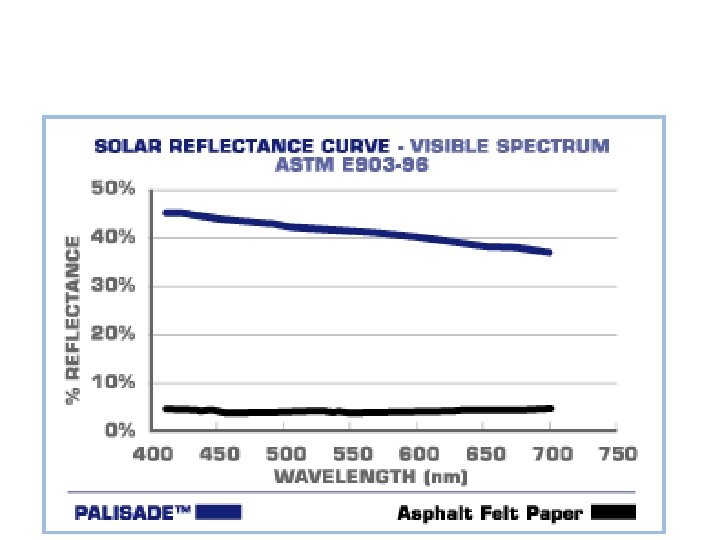
Absorbing electromagnetic waves Black construction paper absorbs 90% of visible light but around half of the radiant energy from the sun is in the infrared (IR) part of the spectrum. Aluminum foil reflects 8090% of the sun’s radiant energy at all wavelengths.
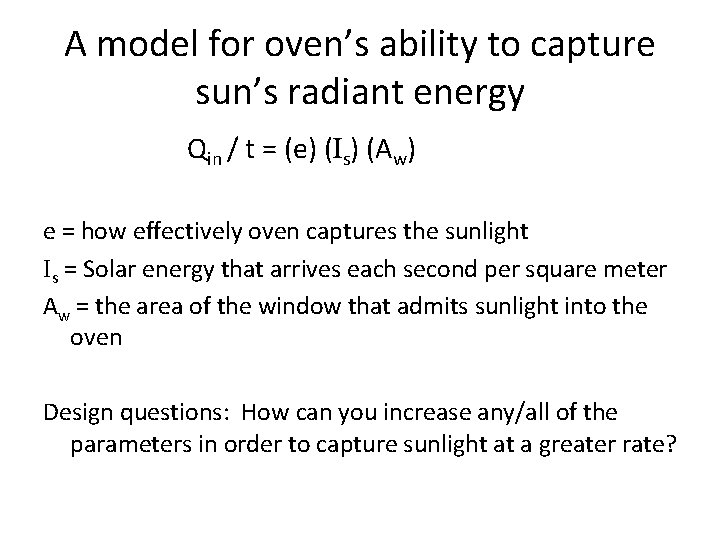
A model for oven’s ability to capture sun’s radiant energy Qin / t = (e) (Is) (Aw) e = how effectively oven captures the sunlight Is = Solar energy that arrives each second per square meter Aw = the area of the window that admits sunlight into the oven Design questions: How can you increase any/all of the parameters in order to capture sunlight at a greater rate?
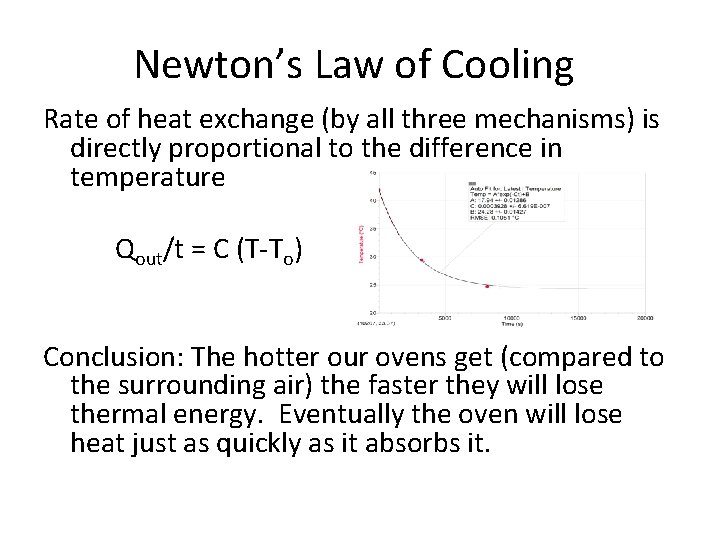
Newton’s Law of Cooling Rate of heat exchange (by all three mechanisms) is directly proportional to the difference in temperature Qout/t = C (T-To) Conclusion: The hotter our ovens get (compared to the surrounding air) the faster they will lose thermal energy. Eventually the oven will lose heat just as quickly as it absorbs it.
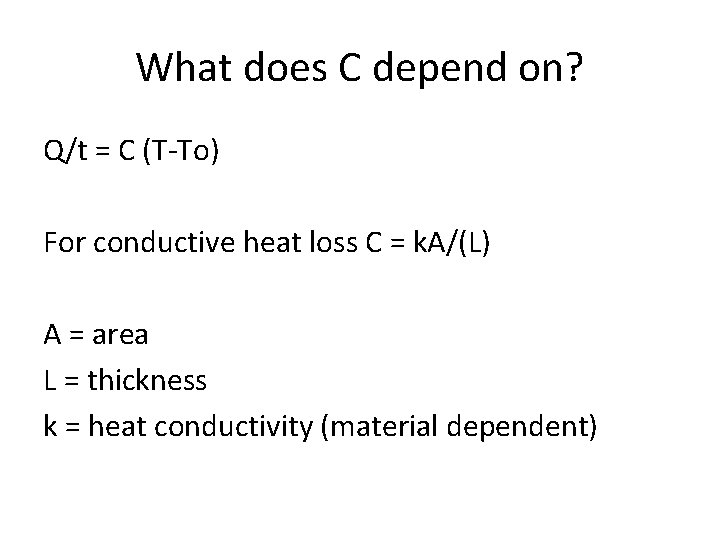
What does C depend on? Q/t = C (T-To) For conductive heat loss C = k. A/(L) A = area L = thickness k = heat conductivity (material dependent)
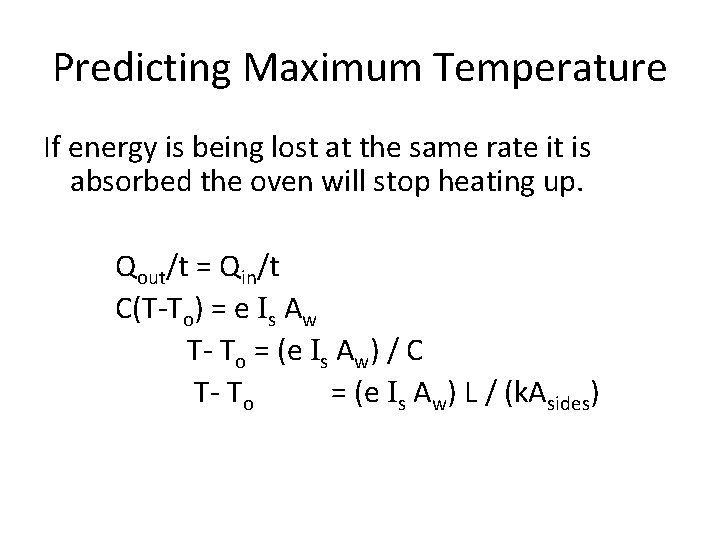
Predicting Maximum Temperature If energy is being lost at the same rate it is absorbed the oven will stop heating up. Qout/t = Qin/t C(T-To) = e Is Aw T- To = (e Is Aw) / C T- To = (e Is Aw) L / (k. Asides)