
SOLAR OBSERVING PART ONE THE HISTORY OF SOLAR
SOLAR OBSERVING PART ONE THE HISTORY OF SOLAR OBSERVING Presented by the Charlie Elliott Chapter of the Atlanta Astronomy Club

WE GOT HITCHED!!!!

IT WAS EASY!!!!

“ASKED” FOR NATALIES HAND IN MARRIAGE

FIVE MINUTES BEFORE THE ”AGREEMENT”
JON WOODS ANCESTOR RAMSDEN’S ANCESTOR
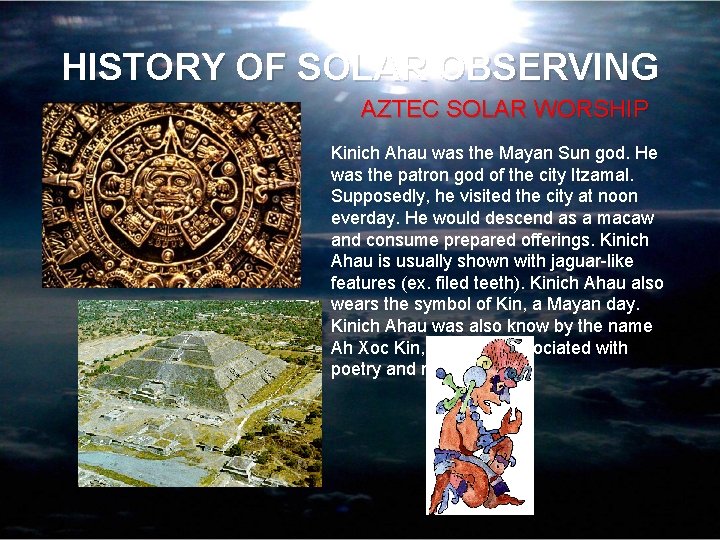
HISTORY OF SOLAR OBSERVING AZTEC SOLAR WORSHIP Kinich Ahau was the Mayan Sun god. He was the patron god of the city Itzamal. Supposedly, he visited the city at noon everday. He would descend as a macaw and consume prepared offerings. Kinich Ahau is usually shown with jaguar-like features (ex. filed teeth). Kinich Ahau also wears the symbol of Kin, a Mayan day. Kinich Ahau was also know by the name Ah Xoc Kin, who was associated with poetry and music.
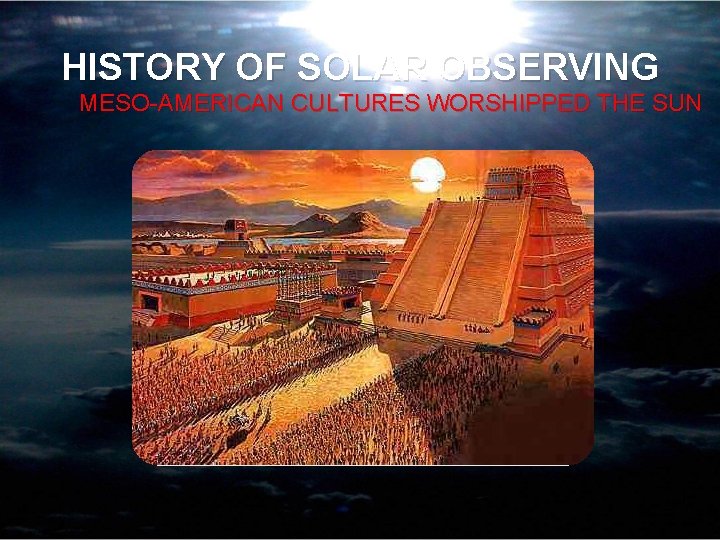
HISTORY OF SOLAR OBSERVING MESO-AMERICAN CULTURES WORSHIPPED THE SUN
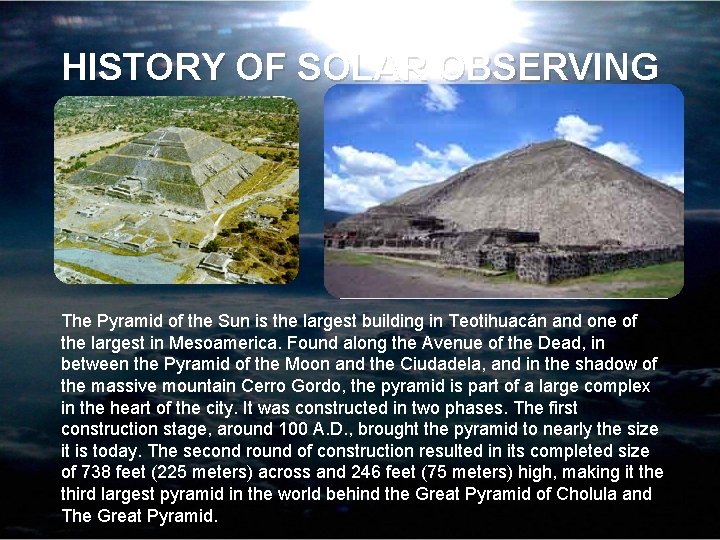
HISTORY OF SOLAR OBSERVING The Pyramid of the Sun is the largest building in Teotihuacán and one of the largest in Mesoamerica. Found along the Avenue of the Dead, in between the Pyramid of the Moon and the Ciudadela, and in the shadow of the massive mountain Cerro Gordo, the pyramid is part of a large complex in the heart of the city. It was constructed in two phases. The first construction stage, around 100 A. D. , brought the pyramid to nearly the size it is today. The second round of construction resulted in its completed size of 738 feet (225 meters) across and 246 feet (75 meters) high, making it the third largest pyramid in the world behind the Great Pyramid of Cholula and The Great Pyramid.
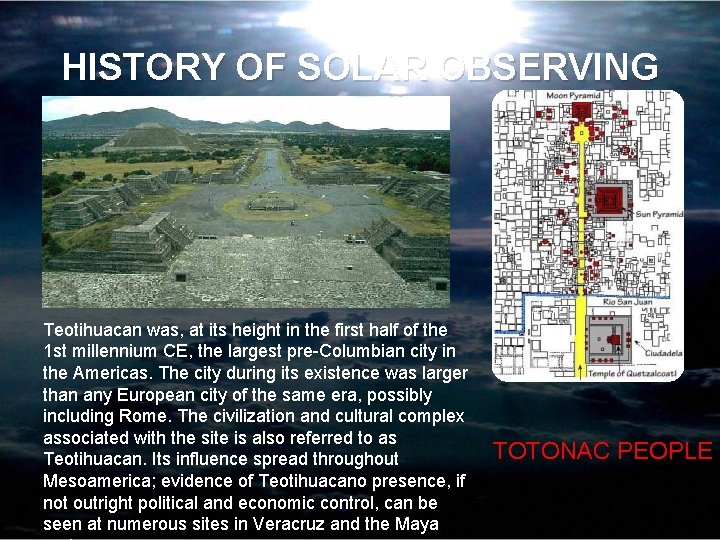
HISTORY OF SOLAR OBSERVING � TOTANAC PEOPLE Teotihuacan was, at its height in the first half of the 1 st millennium CE, the largest pre-Columbian city in the Americas. The city during its existence was larger than any European city of the same era, possibly including Rome. The civilization and cultural complex associated with the site is also referred to as Teotihuacan. Its influence spread throughout Mesoamerica; evidence of Teotihuacano presence, if not outright political and economic control, can be seen at numerous sites in Veracruz and the Maya TOTONAC PEOPLE
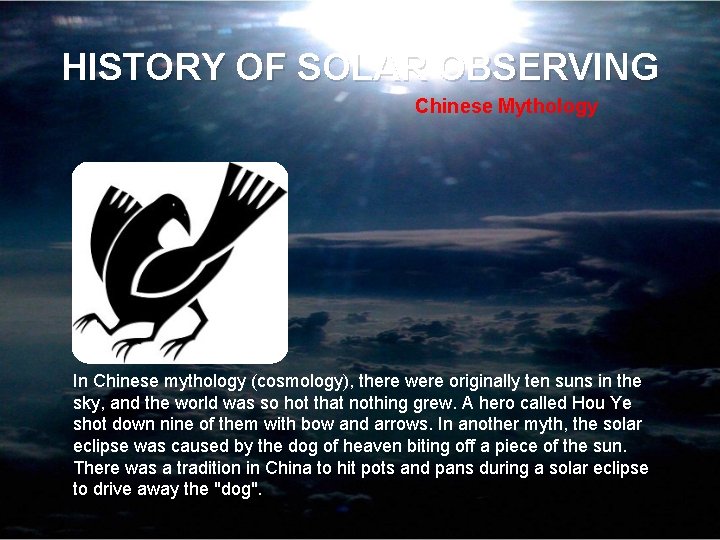
HISTORY OF SOLAR OBSERVING Chinese Mythology In Chinese mythology (cosmology), there were originally ten suns in the sky, and the world was so hot that nothing grew. A hero called Hou Ye shot down nine of them with bow and arrows. In another myth, the solar eclipse was caused by the dog of heaven biting off a piece of the sun. There was a tradition in China to hit pots and pans during a solar eclipse to drive away the "dog".
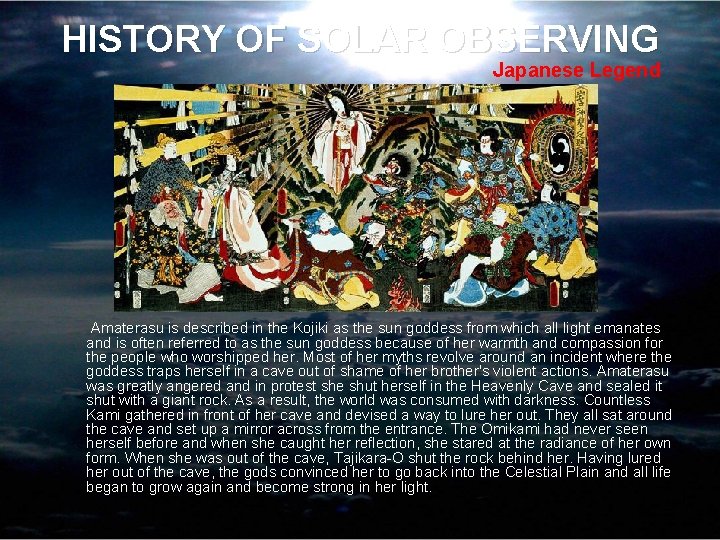
HISTORY OF SOLAR OBSERVING Japanese Legend Amaterasu is described in the Kojiki as the sun goddess from which all light emanates and is often referred to as the sun goddess because of her warmth and compassion for the people who worshipped her. Most of her myths revolve around an incident where the goddess traps herself in a cave out of shame of her brother's violent actions. Amaterasu was greatly angered and in protest she shut herself in the Heavenly Cave and sealed it shut with a giant rock. As a result, the world was consumed with darkness. Countless Kami gathered in front of her cave and devised a way to lure her out. They all sat around the cave and set up a mirror across from the entrance. The Omikami had never seen herself before and when she caught her reflection, she stared at the radiance of her own form. When she was out of the cave, Tajikara-O shut the rock behind her. Having lured her out of the cave, the gods convinced her to go back into the Celestial Plain and all life began to grow again and become strong in her light.
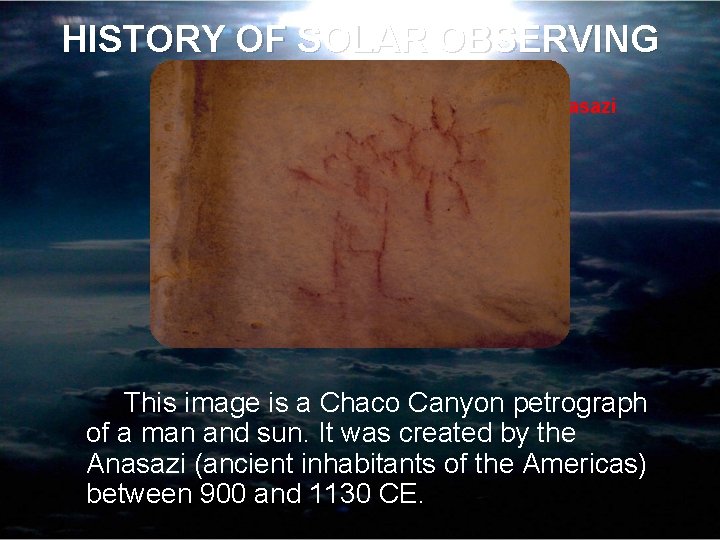
HISTORY OF SOLAR OBSERVING Anasazi This image is a Chaco Canyon petrograph of a man and sun. It was created by the Anasazi (ancient inhabitants of the Americas) between 900 and 1130 CE.
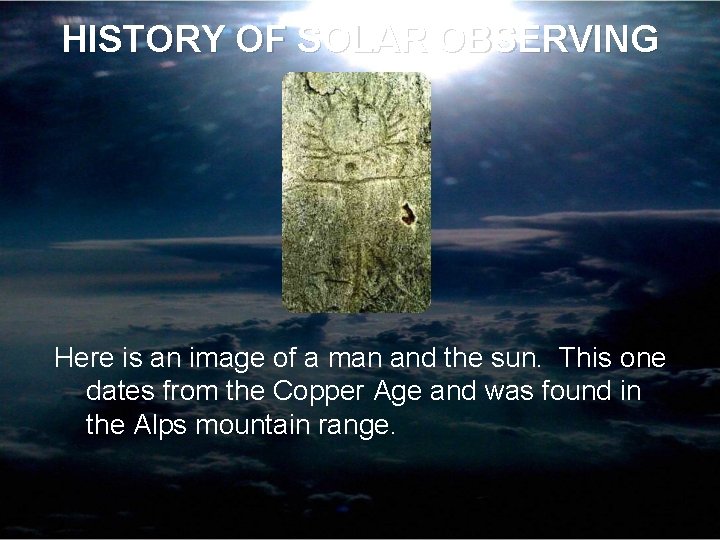
HISTORY OF SOLAR OBSERVING Here is an image of a man and the sun. This one dates from the Copper Age and was found in the Alps mountain range.
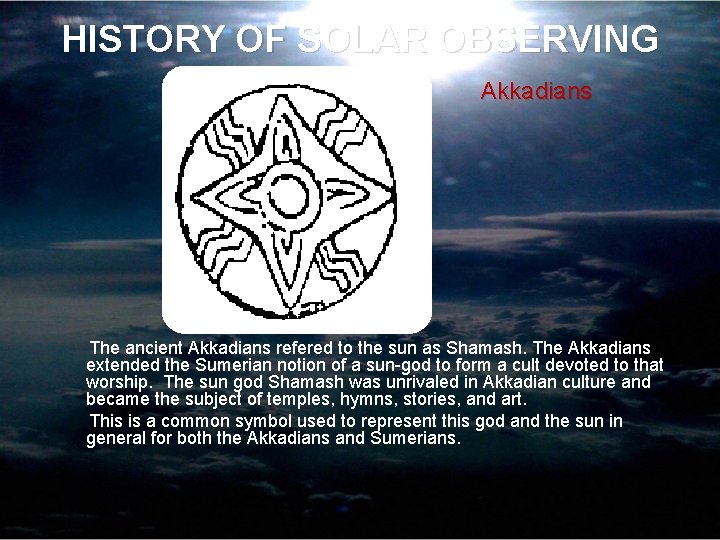
HISTORY OF SOLAR OBSERVING Akkadians The ancient Akkadians refered to the sun as Shamash. The Akkadians extended the Sumerian notion of a sun-god to form a cult devoted to that worship. The sun god Shamash was unrivaled in Akkadian culture and became the subject of temples, hymns, stories, and art. This is a common symbol used to represent this god and the sun in general for both the Akkadians and Sumerians.
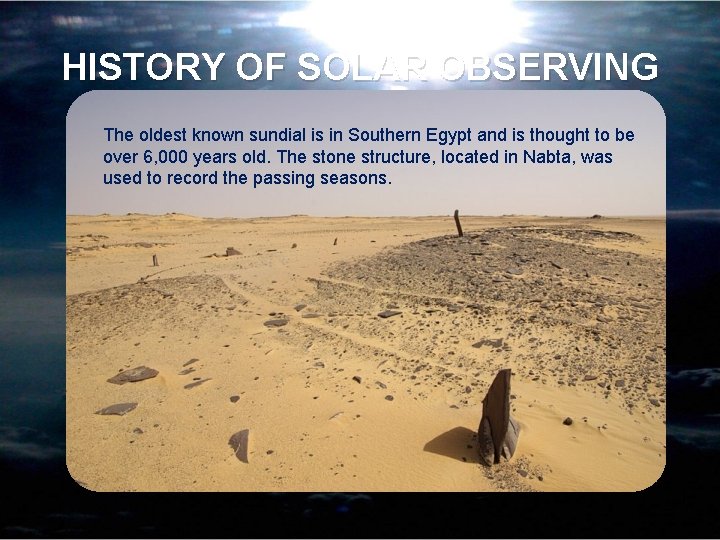
HISTORY OF SOLAR OBSERVING The oldest known sundial is in Southern Egypt and is thought to be over 6, 000 years old. The stone structure, located in Nabta, was used to record the passing seasons.
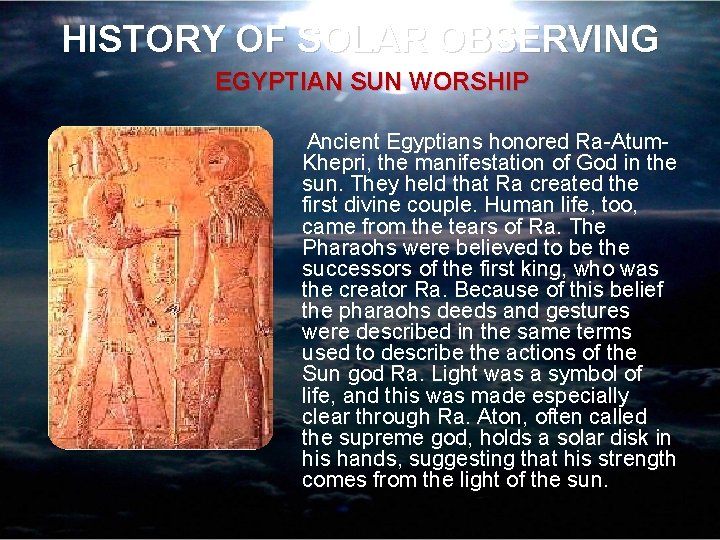
HISTORY OF SOLAR OBSERVING EGYPTIAN SUN WORSHIP Ancient Egyptians honored Ra-Atum. Khepri, the manifestation of God in the sun. They held that Ra created the first divine couple. Human life, too, came from the tears of Ra. The Pharaohs were believed to be the successors of the first king, who was the creator Ra. Because of this belief the pharaohs deeds and gestures were described in the same terms used to describe the actions of the Sun god Ra. Light was a symbol of life, and this was made especially clear through Ra. Aton, often called the supreme god, holds a solar disk in his hands, suggesting that his strength comes from the light of the sun.
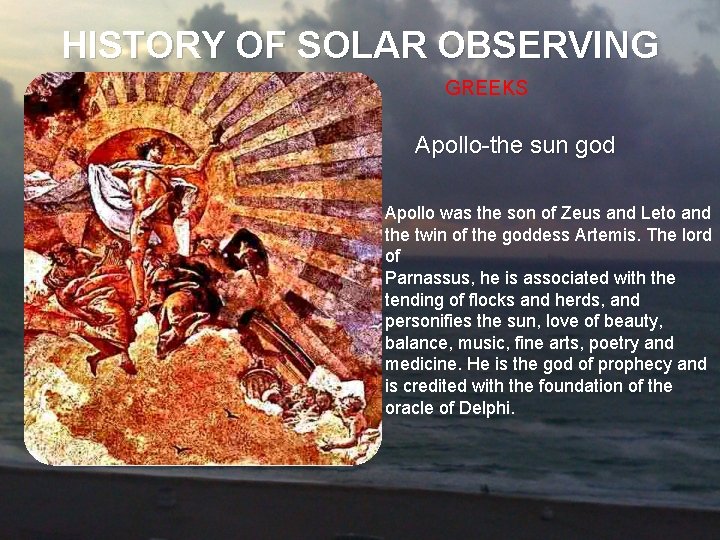
HISTORY OF SOLAR OBSERVING GREEKS Apollo-the sun god Apollo was the son of Zeus and Leto and the twin of the goddess Artemis. The lord of Parnassus, he is associated with the tending of flocks and herds, and personifies the sun, love of beauty, balance, music, fine arts, poetry and medicine. He is the god of prophecy and is credited with the foundation of the oracle of Delphi.
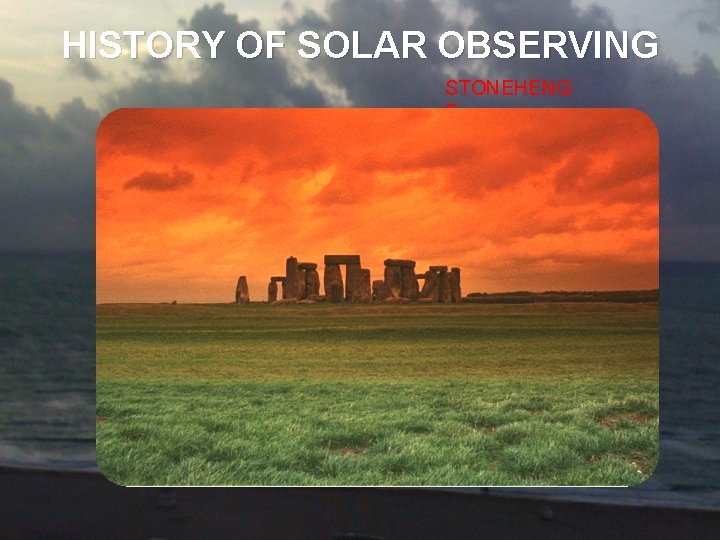
HISTORY OF SOLAR OBSERVING STONEHENG E
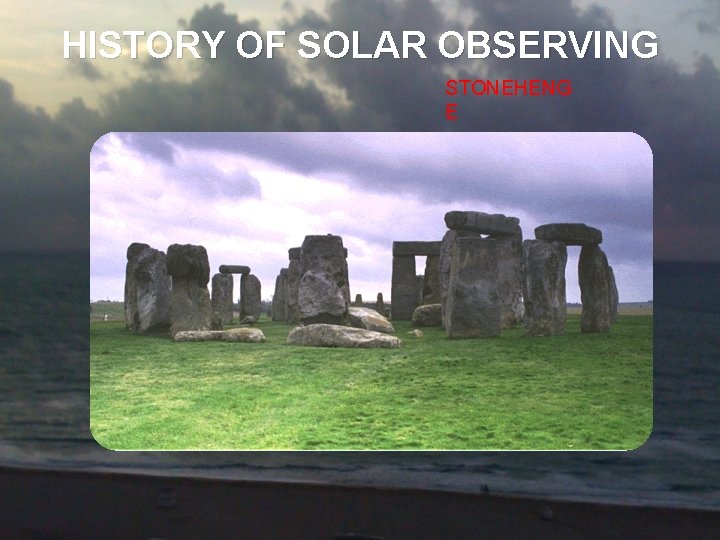
HISTORY OF SOLAR OBSERVING STONEHENG E
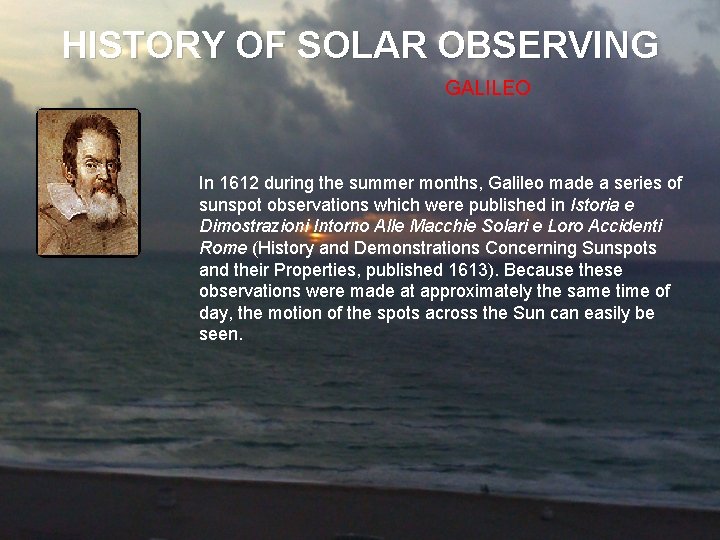
HISTORY OF SOLAR OBSERVING GALILEO In 1612 during the summer months, Galileo made a series of sunspot observations which were published in Istoria e Dimostrazioni Intorno Alle Macchie Solari e Loro Accidenti Rome (History and Demonstrations Concerning Sunspots and their Properties, published 1613). Because these observations were made at approximately the same time of day, the motion of the spots across the Sun can easily be seen.
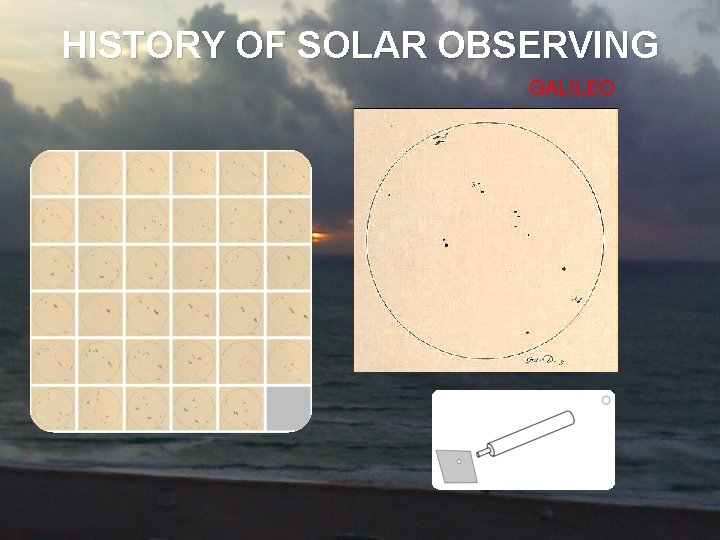
HISTORY OF SOLAR OBSERVING GALILEO
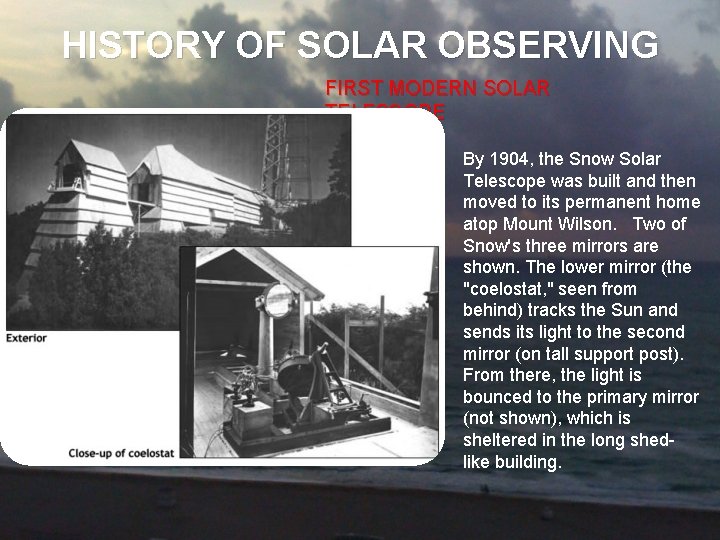
HISTORY OF SOLAR OBSERVING FIRST MODERN SOLAR TELESCOPE By 1904, the Snow Solar Telescope was built and then moved to its permanent home atop Mount Wilson. Two of Snow's three mirrors are shown. The lower mirror (the "coelostat, " seen from behind) tracks the Sun and sends its light to the second mirror (on tall support post). From there, the light is bounced to the primary mirror (not shown), which is sheltered in the long shedlike building.
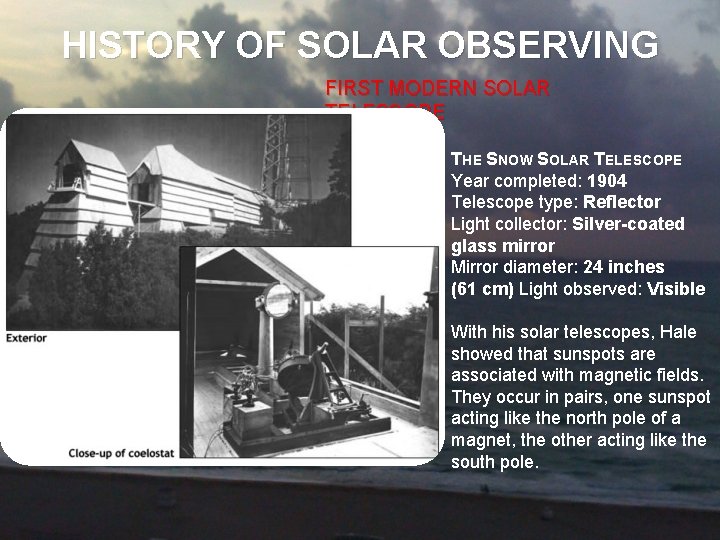
HISTORY OF SOLAR OBSERVING FIRST MODERN SOLAR TELESCOPE THE SNOW SOLAR TELESCOPE Year completed: 1904 Telescope type: Reflector Light collector: Silver-coated glass mirror Mirror diameter: 24 inches (61 cm) Light observed: Visible With his solar telescopes, Hale showed that sunspots are associated with magnetic fields. They occur in pairs, one sunspot acting like the north pole of a magnet, the other acting like the south pole.
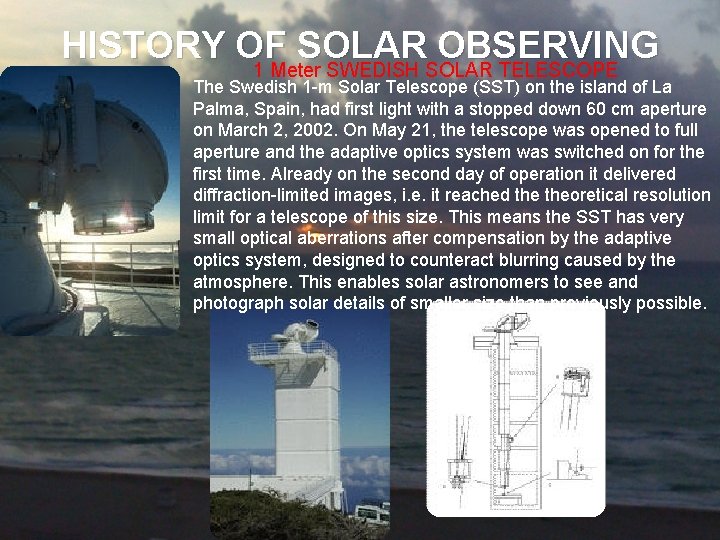
HISTORY OF SOLAR OBSERVING 1 Meter SWEDISH SOLAR TELESCOPE The Swedish 1 -m Solar Telescope (SST) on the island of La Palma, Spain, had first light with a stopped down 60 cm aperture on March 2, 2002. On May 21, the telescope was opened to full aperture and the adaptive optics system was switched on for the first time. Already on the second day of operation it delivered diffraction-limited images, i. e. it reached theoretical resolution limit for a telescope of this size. This means the SST has very small optical aberrations after compensation by the adaptive optics system, designed to counteract blurring caused by the atmosphere. This enables solar astronomers to see and photograph solar details of smaller size than previously possible.
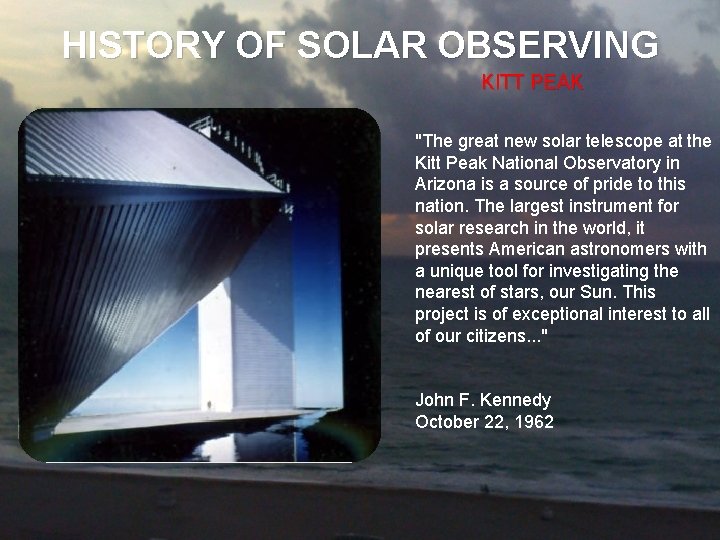
HISTORY OF SOLAR OBSERVING KITT PEAK "The great new solar telescope at the Kitt Peak National Observatory in Arizona is a source of pride to this nation. The largest instrument for solar research in the world, it presents American astronomers with a unique tool for investigating the nearest of stars, our Sun. This project is of exceptional interest to all of our citizens. . . " John F. Kennedy October 22, 1962
HISTORY OF SOLAR OBSERVING KITT PEAK At 1. 6 -m aperture, the world's largest solar telescope. All-reflective optics with no windows, lenses or central obscuration. Primary Uses High-precision solar spectroscopy and polarimetry. Infrared spectroscopy and imaging (1 -20 micrometers). Solar-stellar spectroscopy. Laboratory spectroscopy. Planetary and cometary spectroscopy. Terrestrial atmospheric spectroscopy and monitoring (including ozone and CFCs).
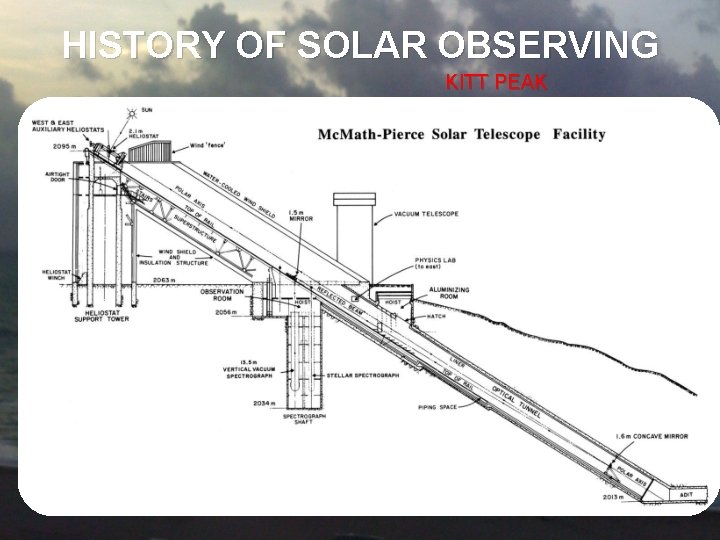
HISTORY OF SOLAR OBSERVING KITT PEAK
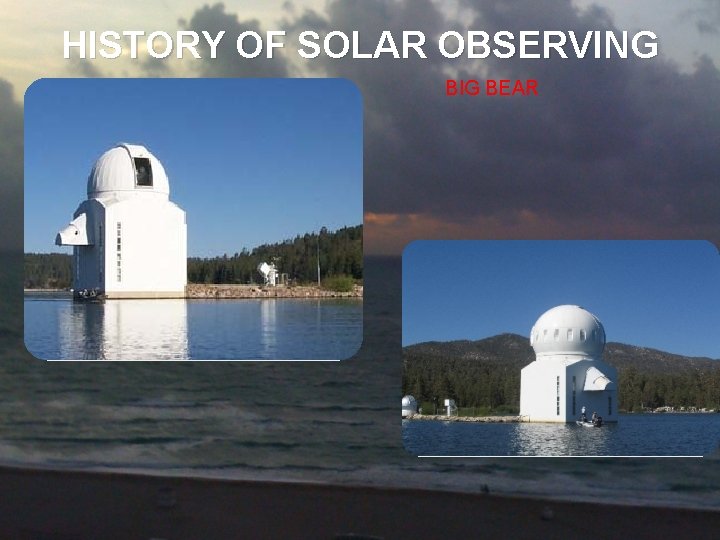
HISTORY OF SOLAR OBSERVING BIG BEAR
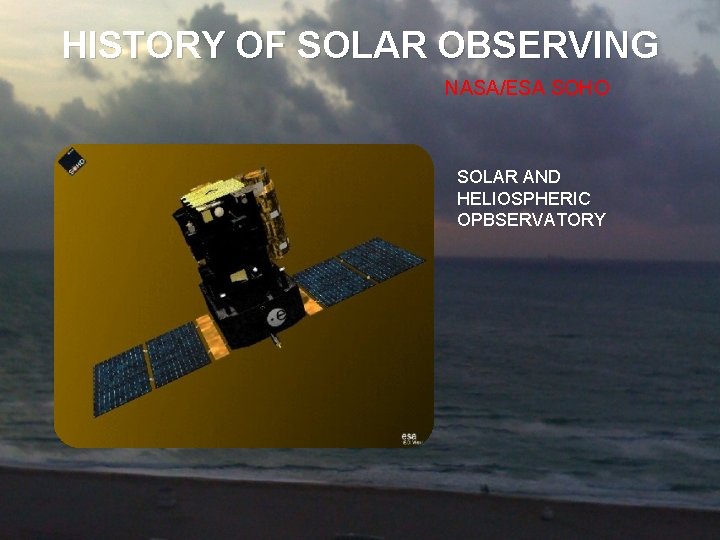
HISTORY OF SOLAR OBSERVING NASA/ESA SOHO SOLAR AND HELIOSPHERIC OPBSERVATORY
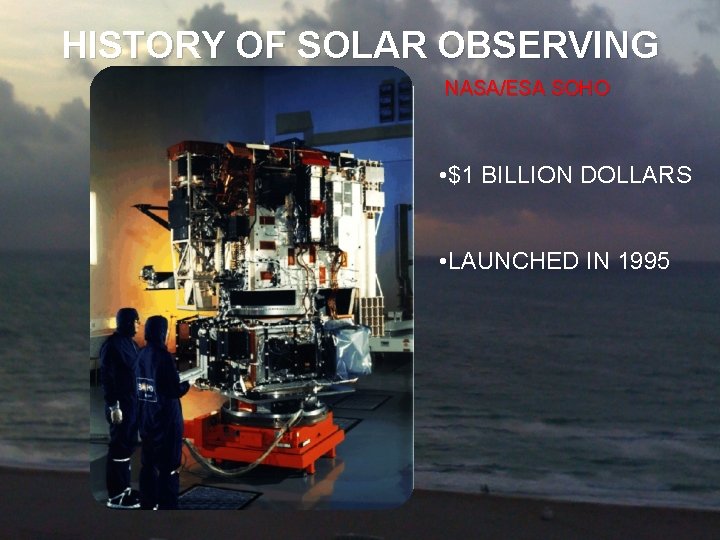
HISTORY OF SOLAR OBSERVING NASA/ESA SOHO • $1 BILLION DOLLARS • LAUNCHED IN 1995
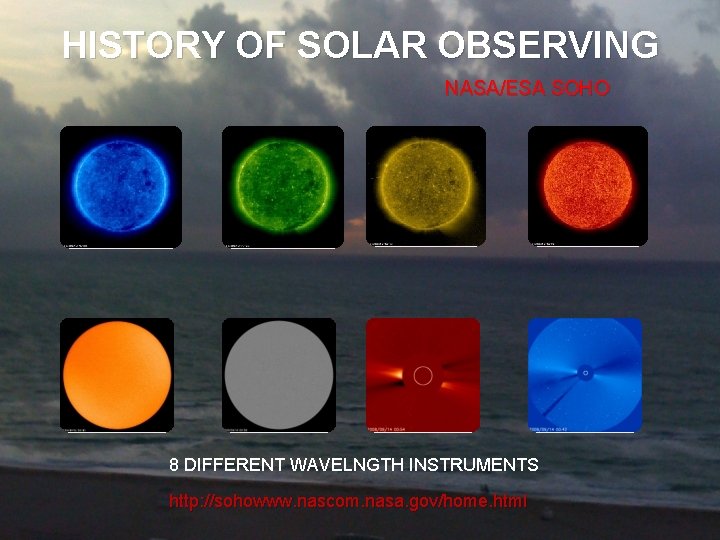
HISTORY OF SOLAR OBSERVING NASA/ESA SOHO 8 DIFFERENT WAVELNGTH INSTRUMENTS http: //sohowww. nascom. nasa. gov/home. html
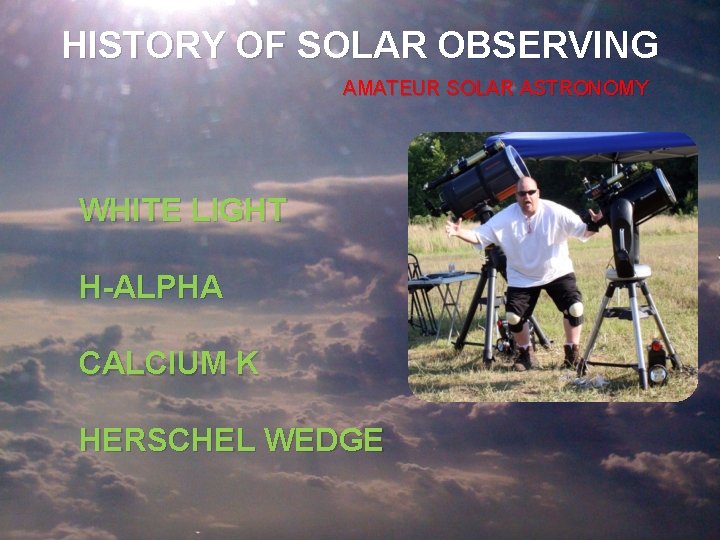
HISTORY OF SOLAR OBSERVING AMATEUR SOLAR ASTRONOMY WHITE LIGHT H-ALPHA CALCIUM K HERSCHEL WEDGE
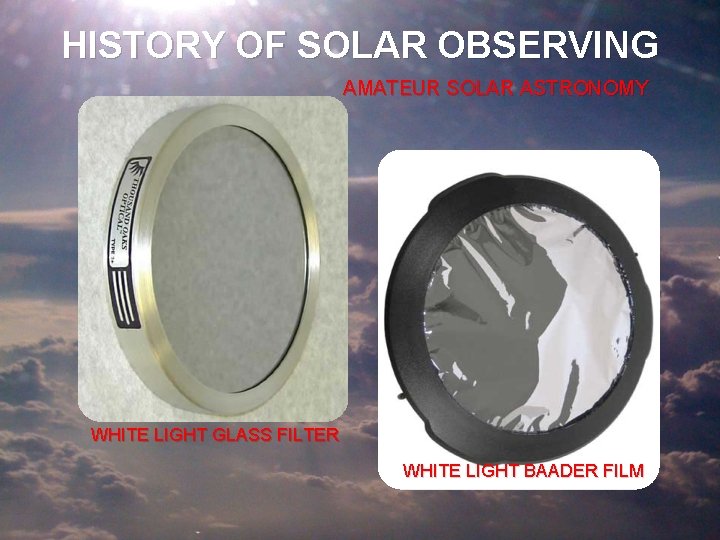
HISTORY OF SOLAR OBSERVING AMATEUR SOLAR ASTRONOMY WHITE LIGHT GLASS FILTER WHITE LIGHT BAADER FILM
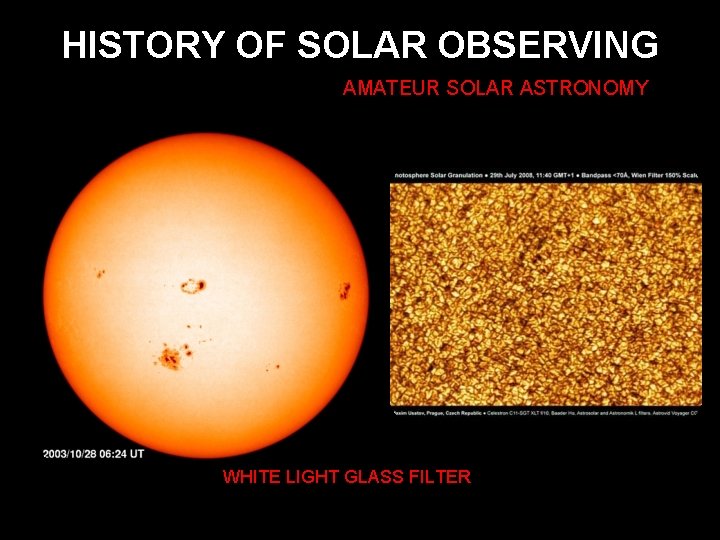
HISTORY OF SOLAR OBSERVING AMATEUR SOLAR ASTRONOMY WHITE LIGHT GLASS FILTER
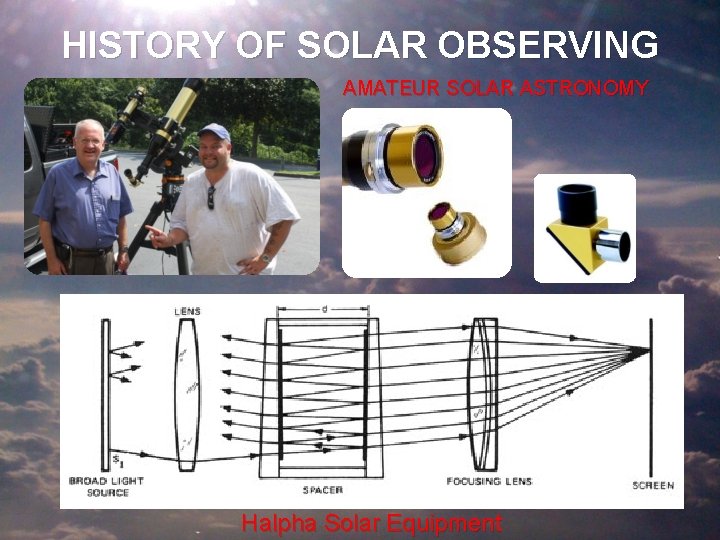
HISTORY OF SOLAR OBSERVING AMATEUR SOLAR ASTRONOMY Halpha Solar Equipment
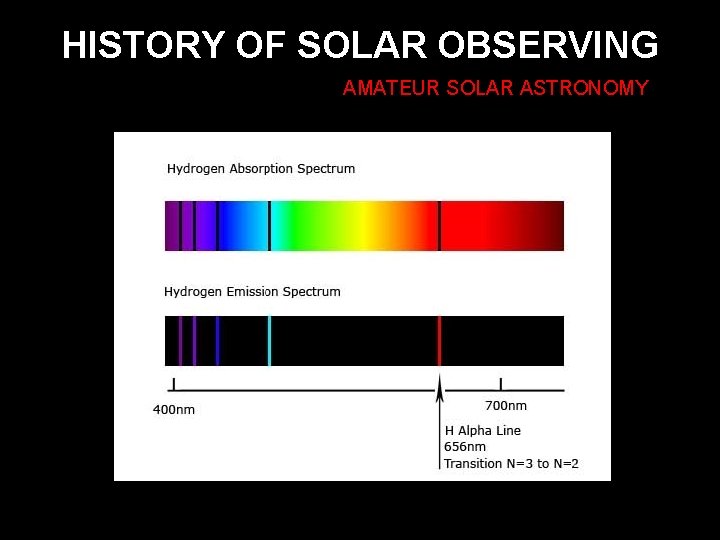
HISTORY OF SOLAR OBSERVING AMATEUR SOLAR ASTRONOMY
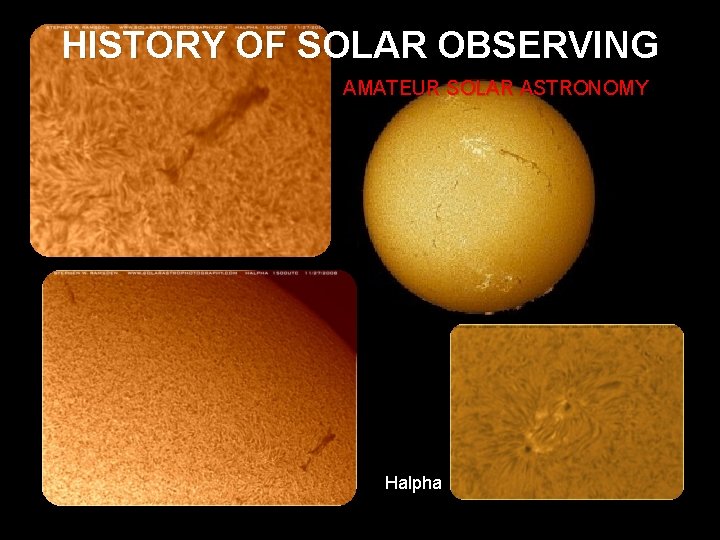
HISTORY OF SOLAR OBSERVING AMATEUR SOLAR ASTRONOMY Halpha
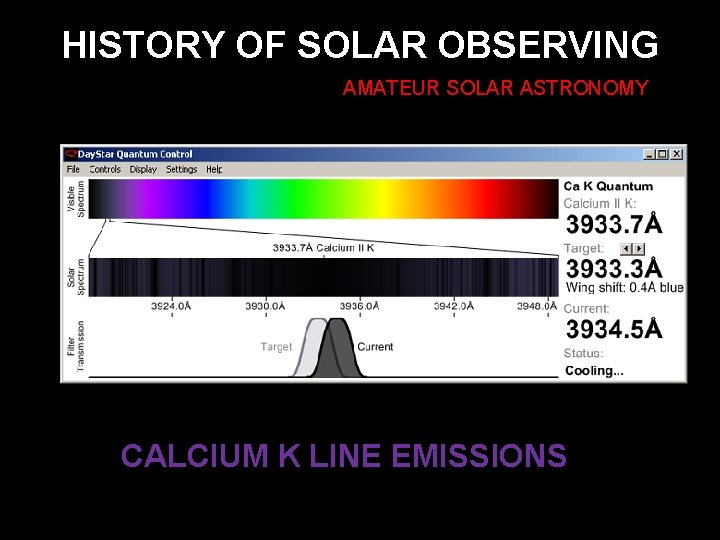
HISTORY OF SOLAR OBSERVING AMATEUR SOLAR ASTRONOMY CALCIUM K LINE EMISSIONS
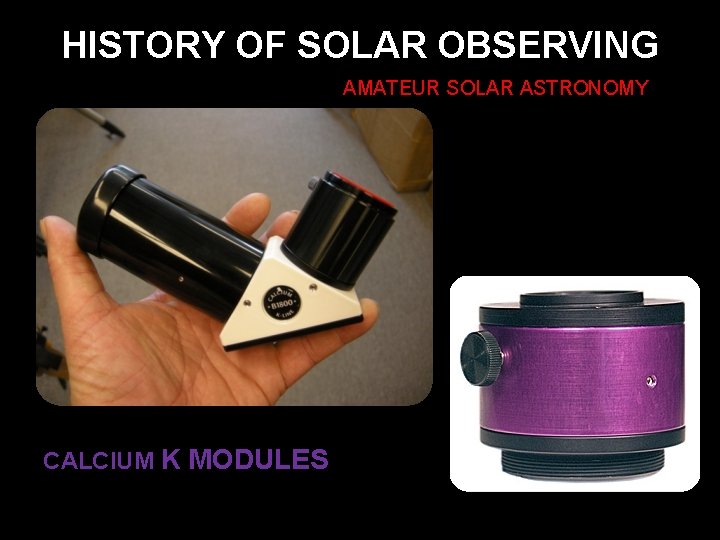
HISTORY OF SOLAR OBSERVING AMATEUR SOLAR ASTRONOMY CALCIUM K MODULES
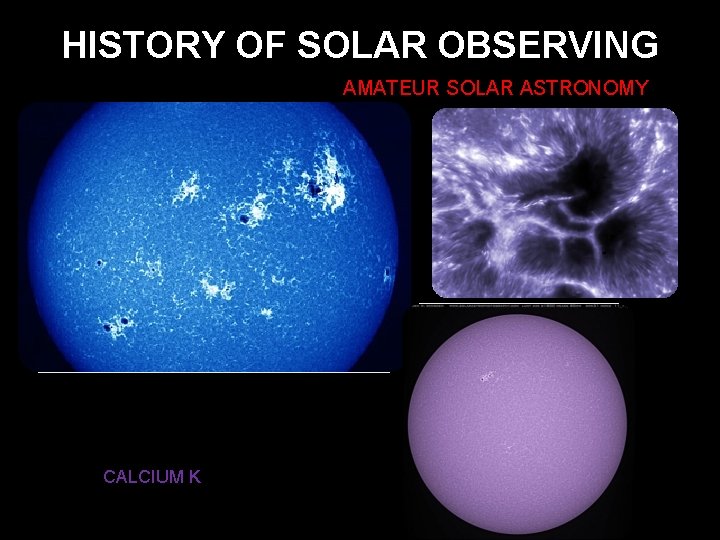
HISTORY OF SOLAR OBSERVING AMATEUR SOLAR ASTRONOMY CALCIUM K
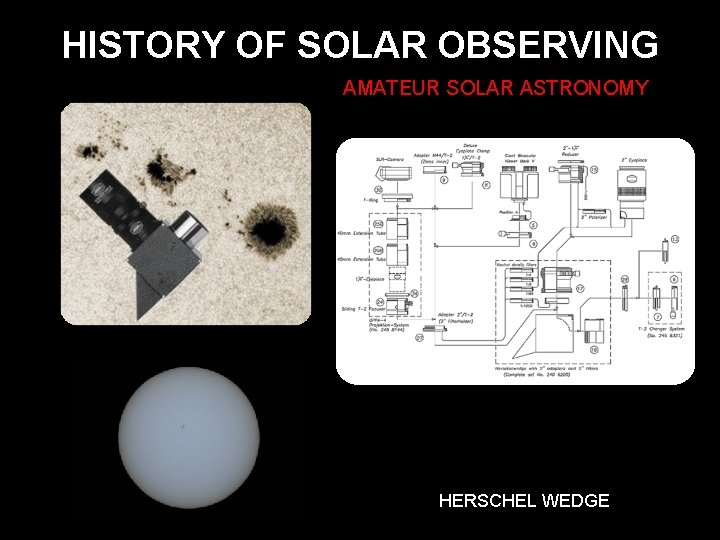
HISTORY OF SOLAR OBSERVING AMATEUR SOLAR ASTRONOMY HERSCHEL WEDGE
SOLAR OBSERVING PART TWO OBSERVING SOLAR PHENOMENA � Presented by the Charlie Elliott Chapter of the Atlanta Astronomy Club

SUNSPOT FORMATION
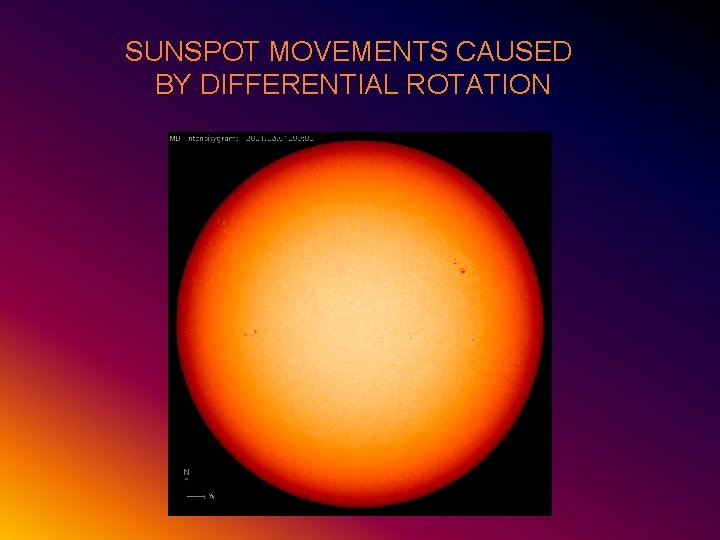
SUNSPOT MOVEMENTS CAUSED BY DIFFERENTIAL ROTATION
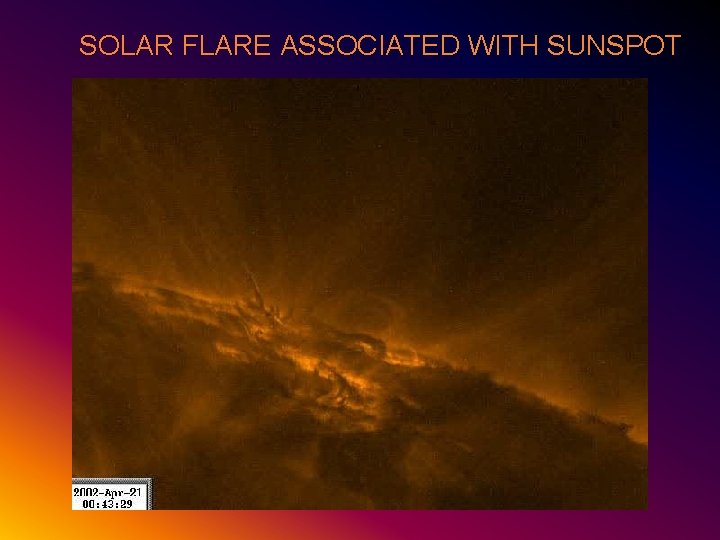
SOLAR FLARE ASSOCIATED WITH SUNSPOT
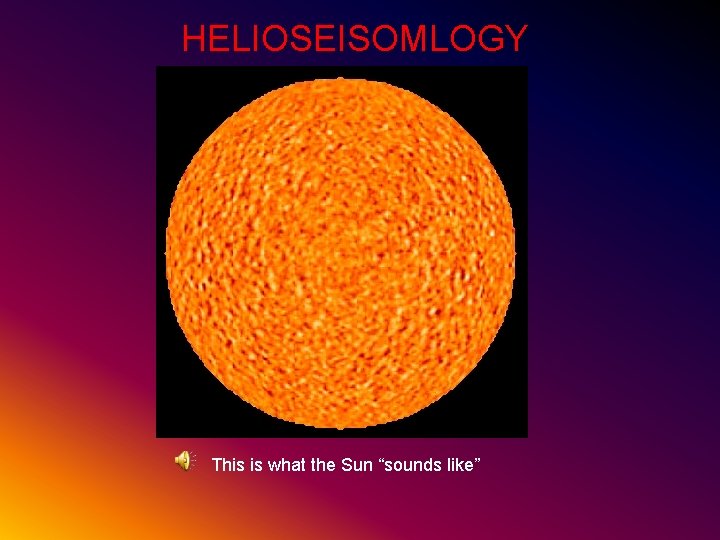
HELIOSEISOMLOGY This is what the Sun “sounds like”
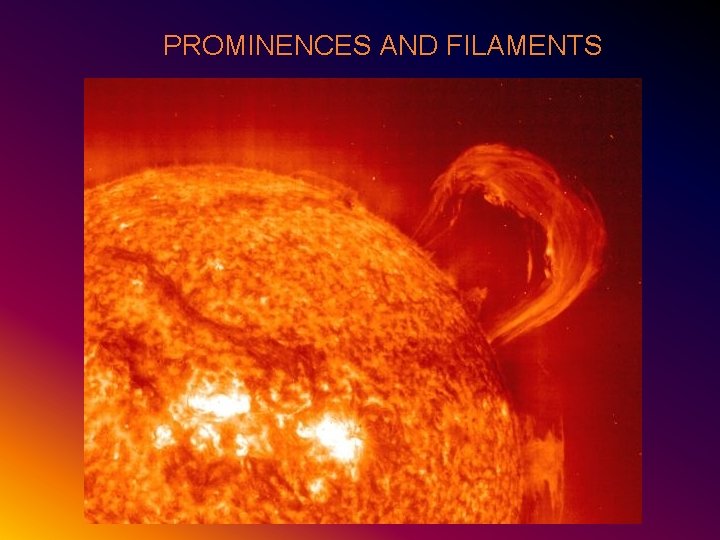
PROMINENCES AND FILAMENTS
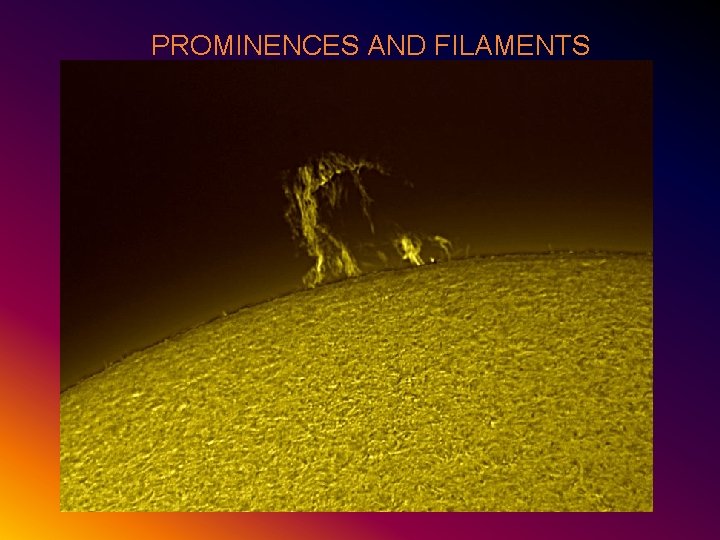
PROMINENCES AND FILAMENTS
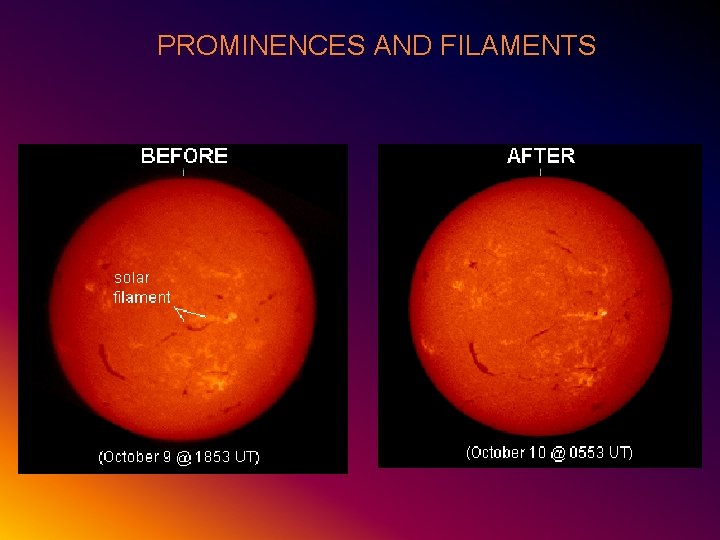
PROMINENCES AND FILAMENTS
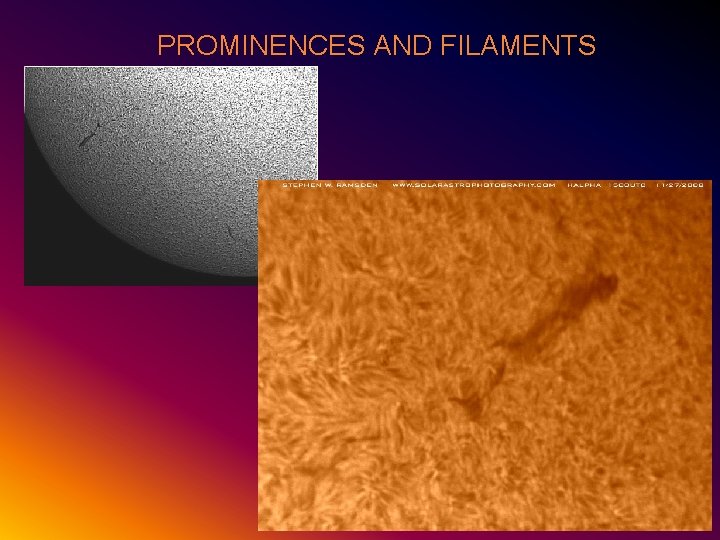
PROMINENCES AND FILAMENTS
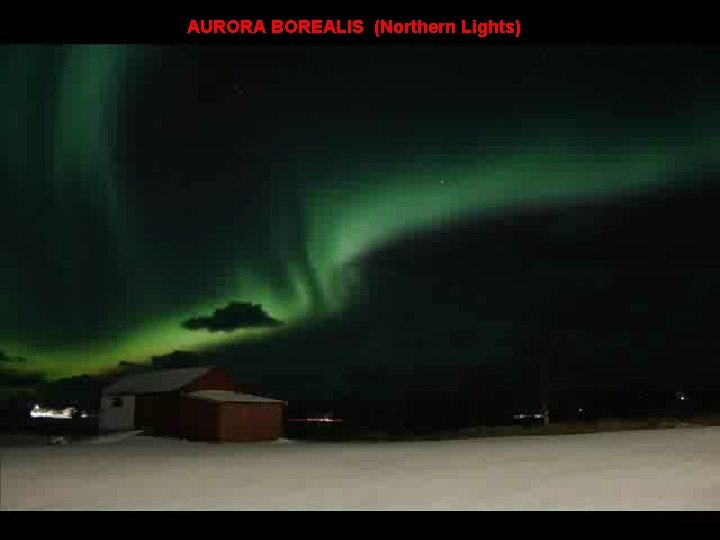
AURORA BOREALIS (Northern Lights)
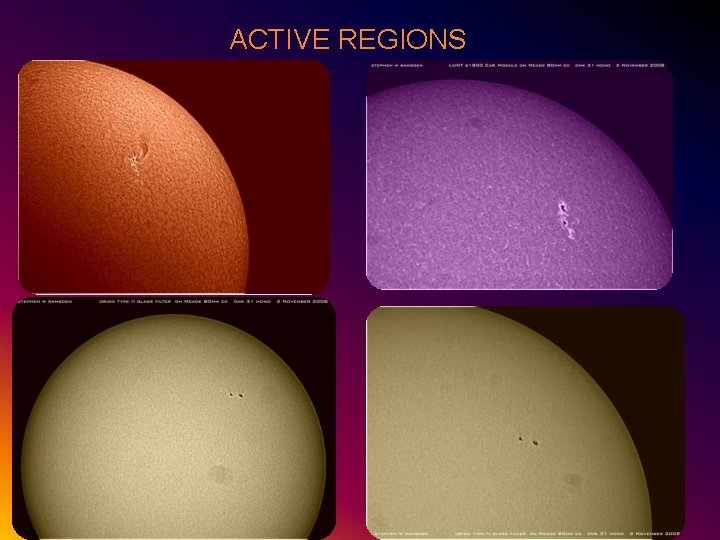
ACTIVE REGIONS
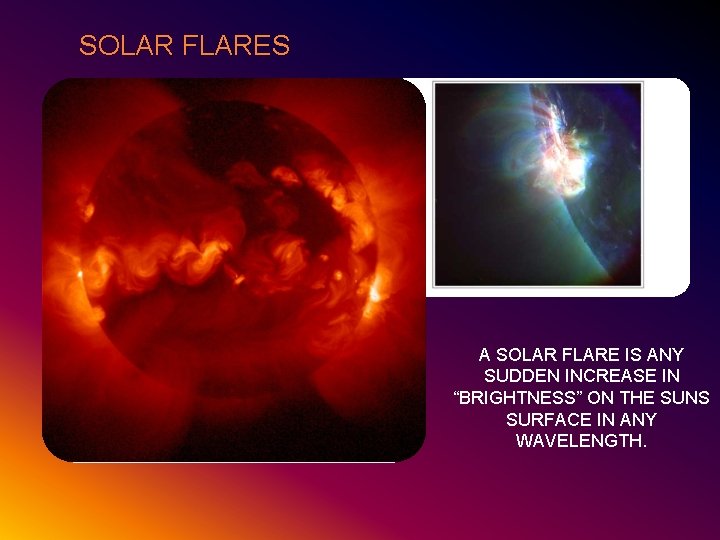
SOLAR FLARES A SOLAR FLARE IS ANY SUDDEN INCREASE IN “BRIGHTNESS” ON THE SUNS SURFACE IN ANY WAVELENGTH.
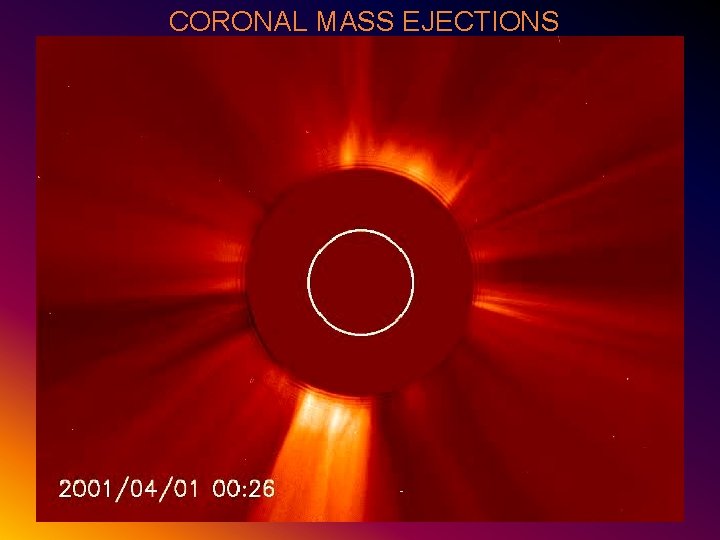
CORONAL MASS EJECTIONS
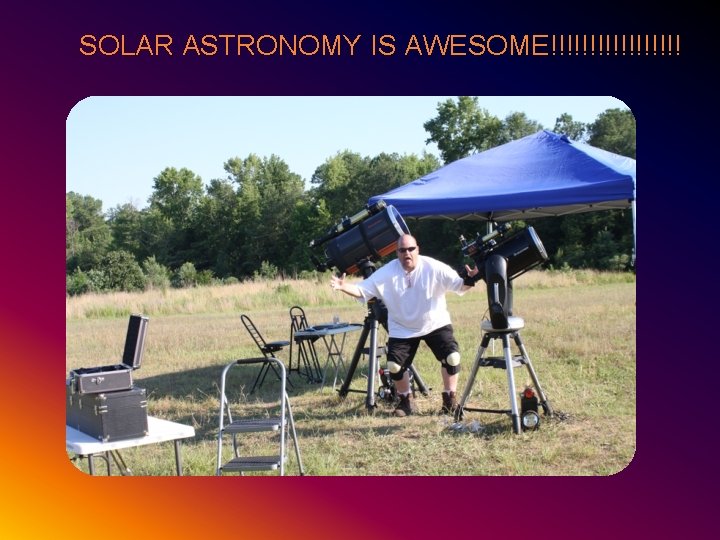
SOLAR ASTRONOMY IS AWESOME!!!!!!!!!
SOLAR ASTRONOMY Presented by the Charlie Elliott Chapter of the Atlanta Astronomy Club
- Slides: 58