
Solar Energy Expectations Review Class Rules Be Prompt
Solar Energy
Expectations Review • Class Rules: –Be Prompt –Be Prepared –Be Productive –Be Positive
Reminders • There will almost always be “phone time” • Assigned seats • Hall passes

Get to Know You (Again) 1. Favorite book of all time 2. Your favorite toy when you were 5 years old 3. What are you doing after you graduate high school? 4. Name 3 things that make you happy
Pre-Test 1. What is “insolation? ” 2. How does the atmosphere turn light into heat? 3. What causes the seasons in Utah? 4. What is ozone?
Starter 01/03/2017 What do you believe the word “insolation” means? (FYI: Insulation is the pink stuff you put in the walls and attic of your house…it’s a completely different word!)
Vocabulary! The amount of incoming solar radiation on the Earth Insolation Earth receives about 342 W/m 2
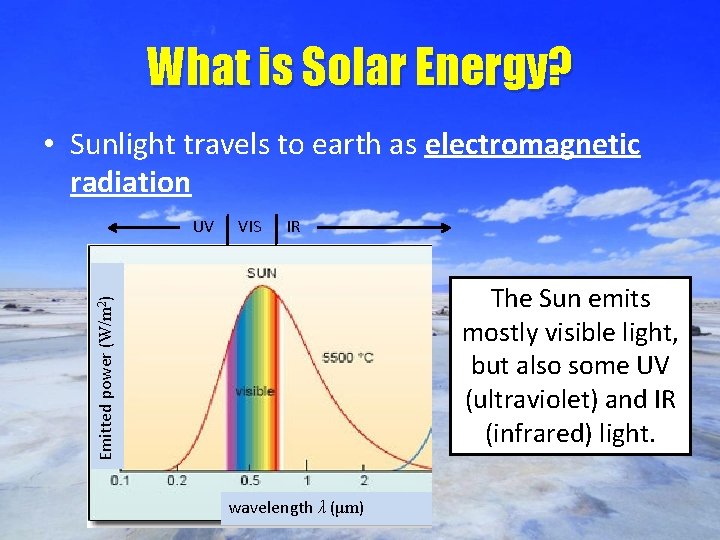
What is Solar Energy? • Sunlight travels to earth as electromagnetic radiation VIS IR The Sun emits mostly visible light, but also some UV (ultraviolet) and IR (infrared) light. Emitted power (W/m 2) UV wavelength λ (μm)
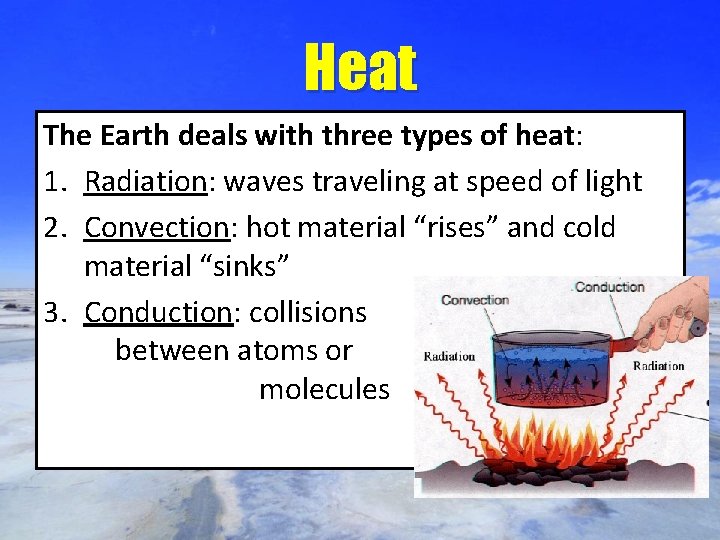
Heat The Earth deals with three types of heat: 1. Radiation: waves traveling at speed of light 2. Convection: hot material “rises” and cold material “sinks” 3. Conduction: collisions between atoms or molecules
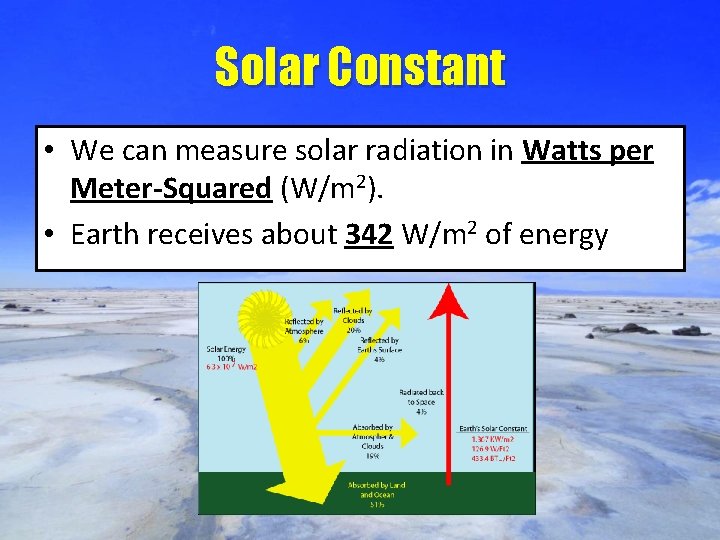
Solar Constant • We can measure solar radiation in Watts per Meter-Squared (W/m 2). • Earth receives about 342 W/m 2 of energy
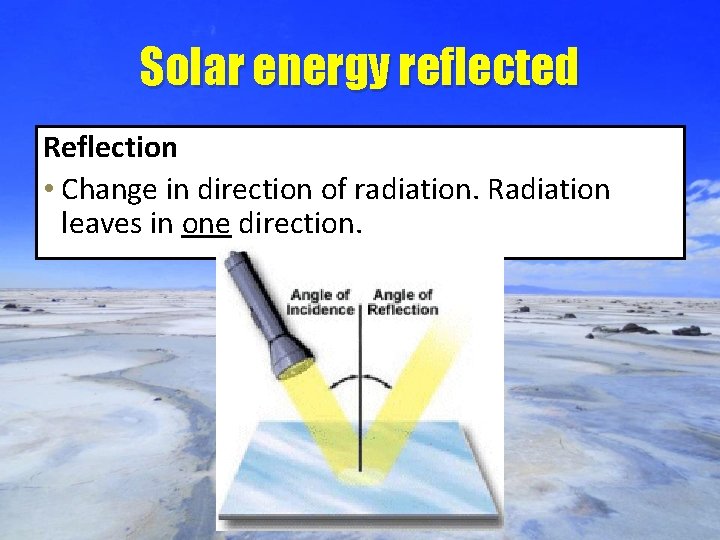
Solar energy reflected Reflection • Change in direction of radiation. Radiation leaves in one direction.

Solar energy absorbed Absorption • Transfer of solar energy to a substance (like the ground or water). • This process changes UV light into HEAT!
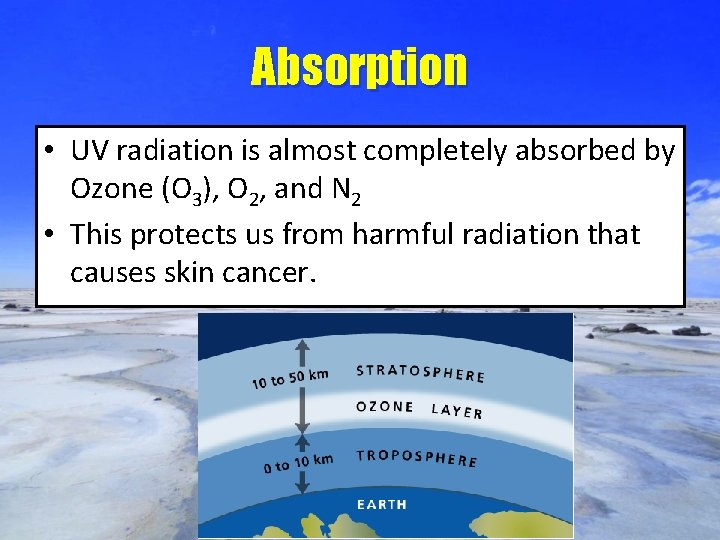
Absorption • UV radiation is almost completely absorbed by Ozone (O 3), O 2, and N 2 • This protects us from harmful radiation that causes skin cancer.

Solar energy scattered • Scattering • Change in direction of radiation. Radiation leaves in many directions.
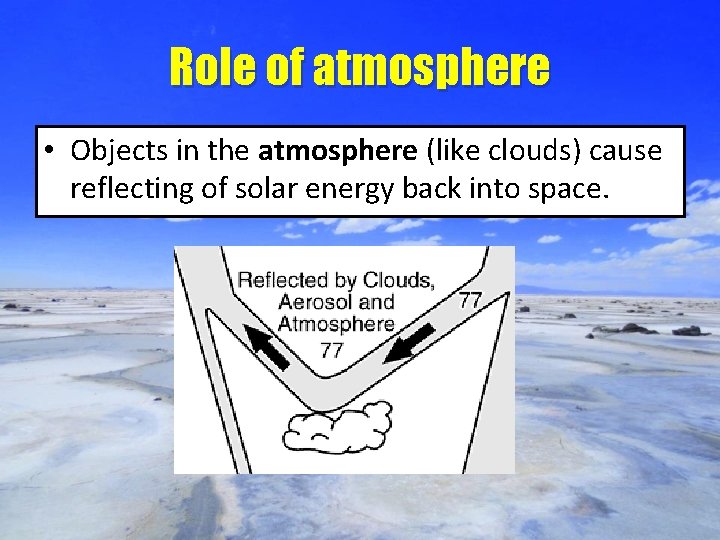
Role of atmosphere • Objects in the atmosphere (like clouds) cause reflecting of solar energy back into space.
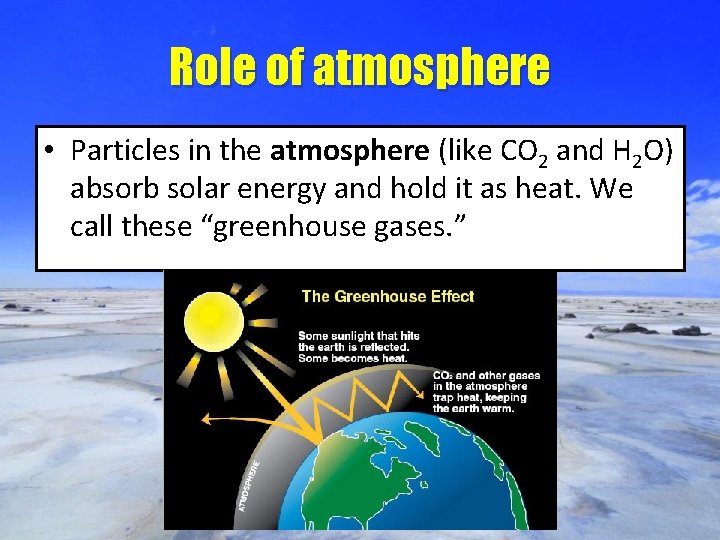
Role of atmosphere • Particles in the atmosphere (like CO 2 and H 2 O) absorb solar energy and hold it as heat. We call these “greenhouse gases. ”
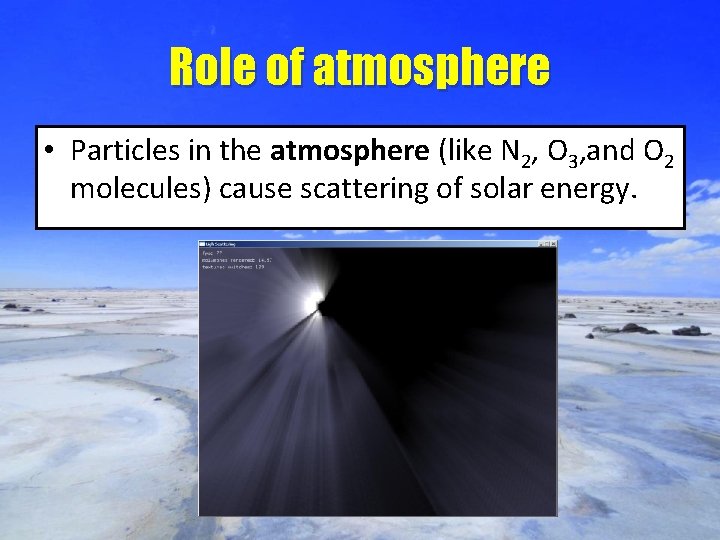
Role of atmosphere • Particles in the atmosphere (like N 2, O 3, and O 2 molecules) cause scattering of solar energy.
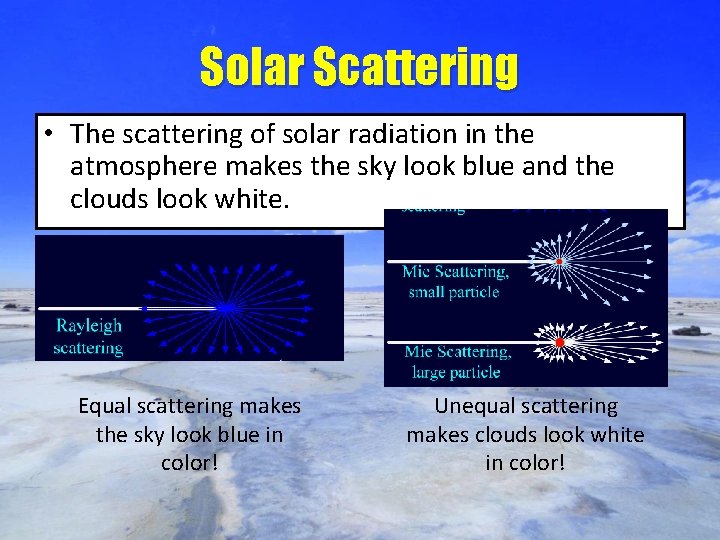
Solar Scattering • The scattering of solar radiation in the atmosphere makes the sky look blue and the clouds look white. Equal scattering makes the sky look blue in color! Unequal scattering makes clouds look white in color!
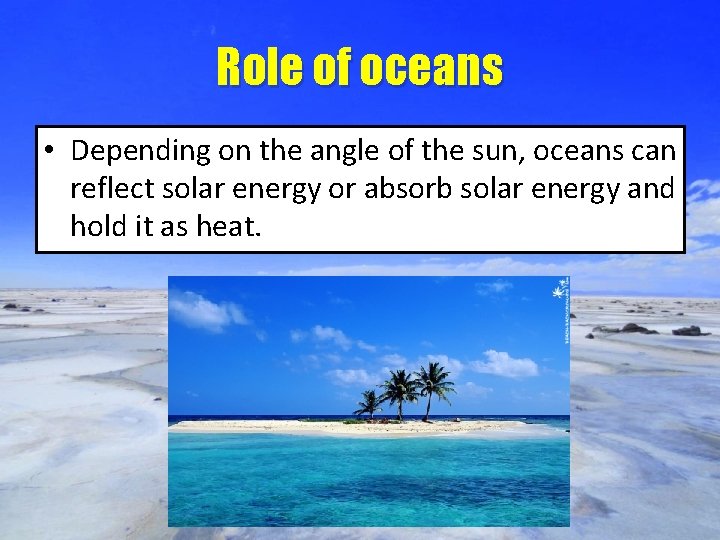
Role of oceans • Depending on the angle of the sun, oceans can reflect solar energy or absorb solar energy and hold it as heat.
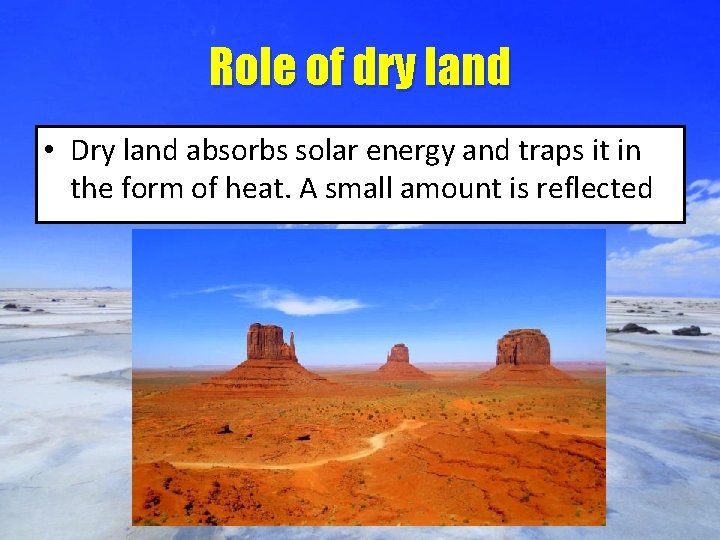
Role of dry land • Dry land absorbs solar energy and traps it in the form of heat. A small amount is reflected
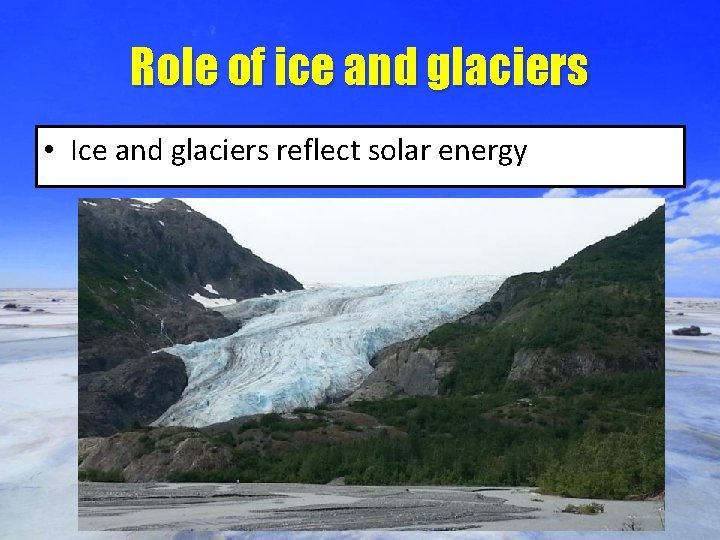
Role of ice and glaciers • Ice and glaciers reflect solar energy
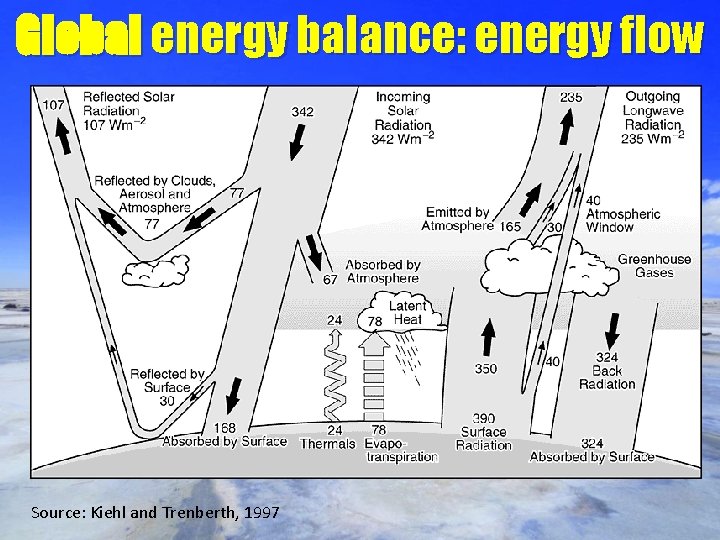
Global energy balance: energy flow Source: Kiehl and Trenberth, 1997
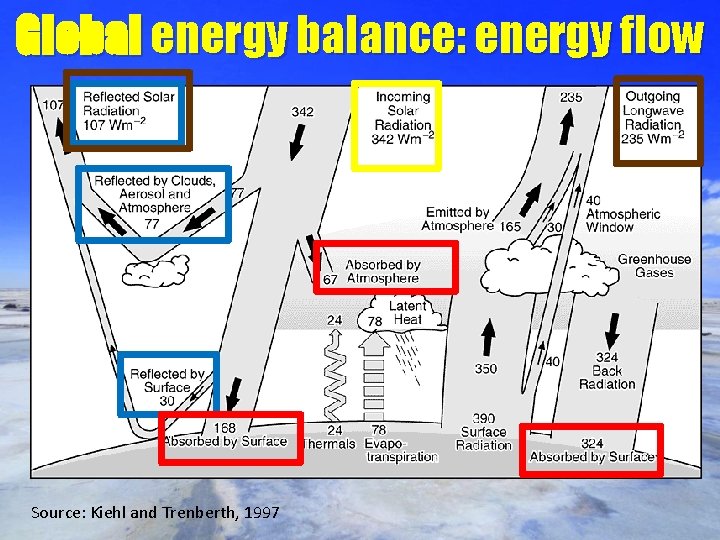
Global energy balance: energy flow Source: Kiehl and Trenberth, 1997
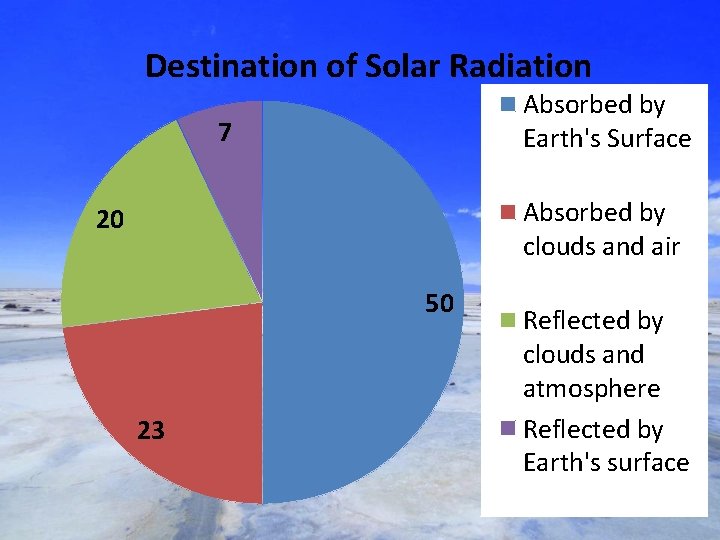
Destination of Solar Radiation Absorbed by Earth's Surface 7 Absorbed by clouds and air 20 50 23 Reflected by clouds and atmosphere Reflected by Earth's surface
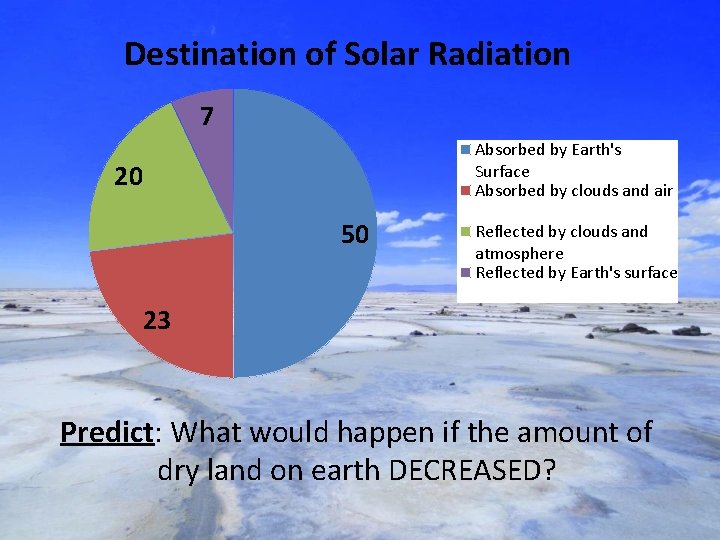
Destination of Solar Radiation 7 Absorbed by Earth's Surface Absorbed by clouds and air 20 50 Reflected by clouds and atmosphere Reflected by Earth's surface 23 Predict: What would happen if the amount of dry land on earth DECREASED?
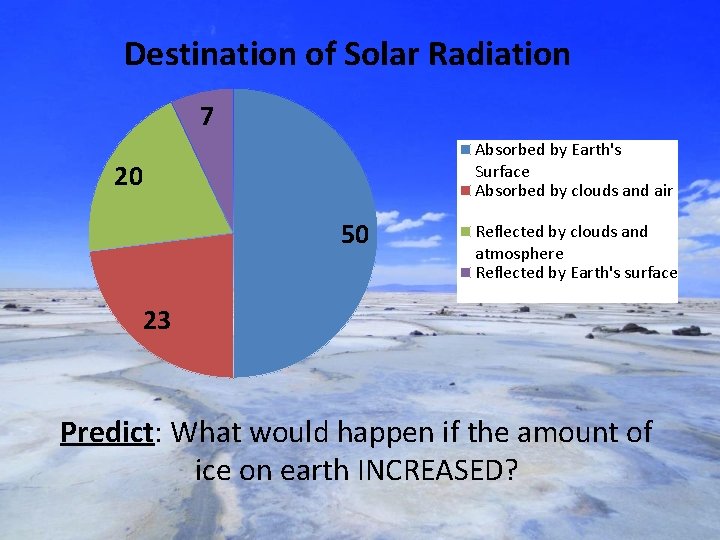
Destination of Solar Radiation 7 Absorbed by Earth's Surface Absorbed by clouds and air 20 50 Reflected by clouds and atmosphere Reflected by Earth's surface 23 Predict: What would happen if the amount of ice on earth INCREASED?
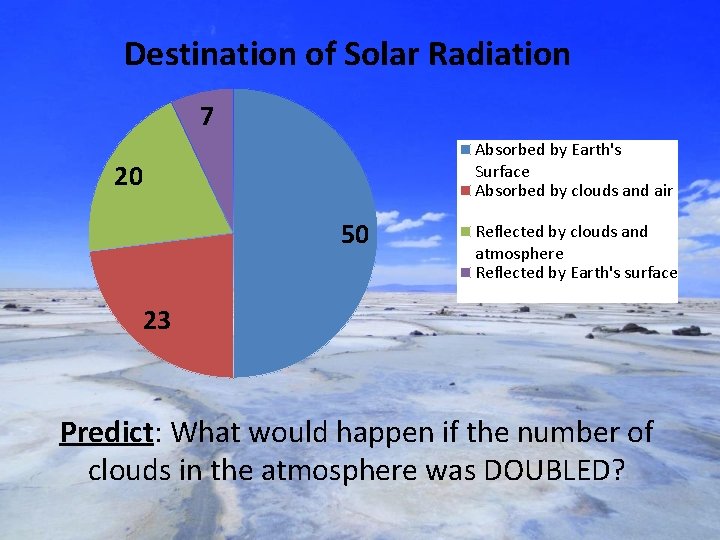
Destination of Solar Radiation 7 Absorbed by Earth's Surface Absorbed by clouds and air 20 50 Reflected by clouds and atmosphere Reflected by Earth's surface 23 Predict: What would happen if the number of clouds in the atmosphere was DOUBLED?
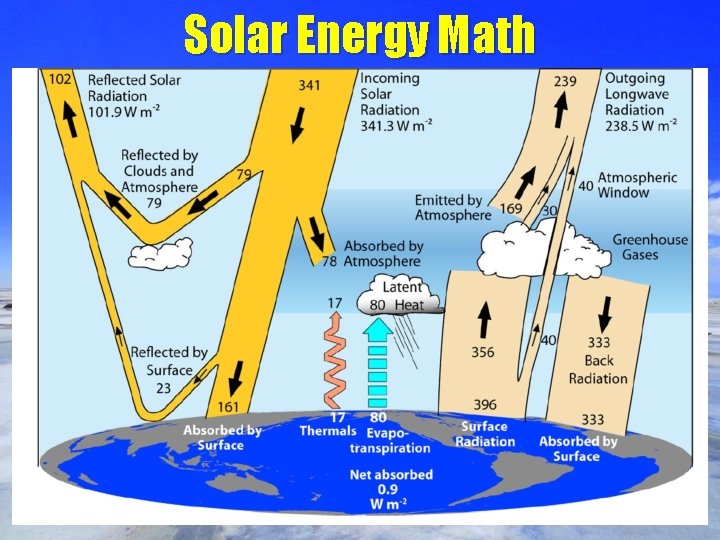
Solar Energy Math
- Slides: 28