
Solar 101 A Crash Course to Going Solar


- Slides: 25
Solar 101: A Crash Course to Going Solar in Maryland S
Benefits of Solar Control your electricity costs Federal, state, and local tax incentives offset much of the cost Solar electric production warrantied for 25 years Increase value of your home Minimize your environmental impact Solar investment provides a solid financial return Contributing to distributed generation
MD Renewable Energy Policies S Maryland’s RPS requires 20% of MD energy to be generated by renewable sources by 2022, including 2% from solar power S Greenhouse Emissions Reduction Act of 2009 requires Maryland to reduce greenhouse gas emissions by 25% by 2020 S Solar power helps to meet both of these targets
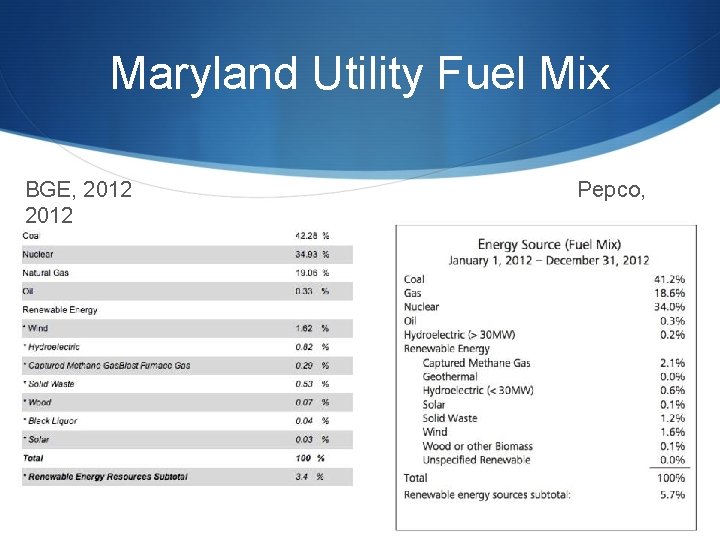
Maryland Utility Fuel Mix BGE, 2012 Pepco,
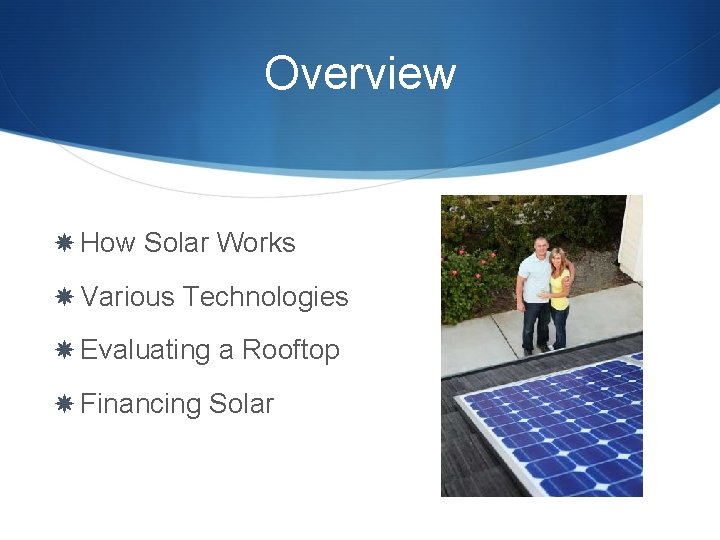
Overview How Solar Works Various Technologies Evaluating a Rooftop Financing Solar
How Solar Works Photovoltaics, Solar Thermal & Applications S
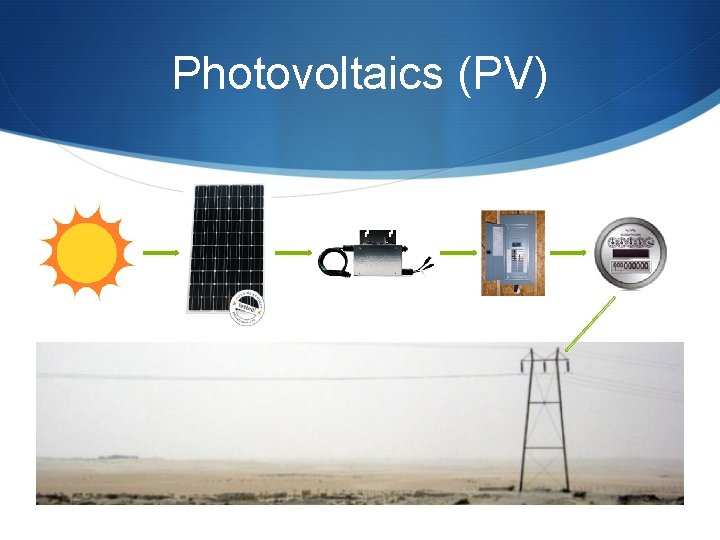
Photovoltaics (PV)
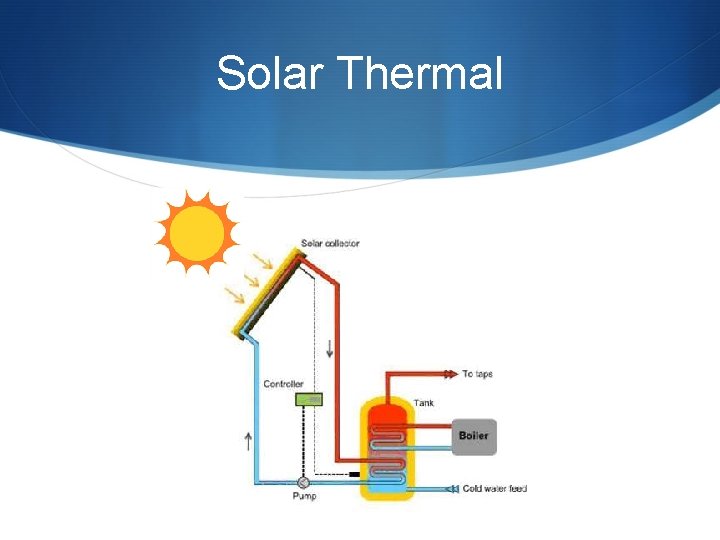
Solar Thermal
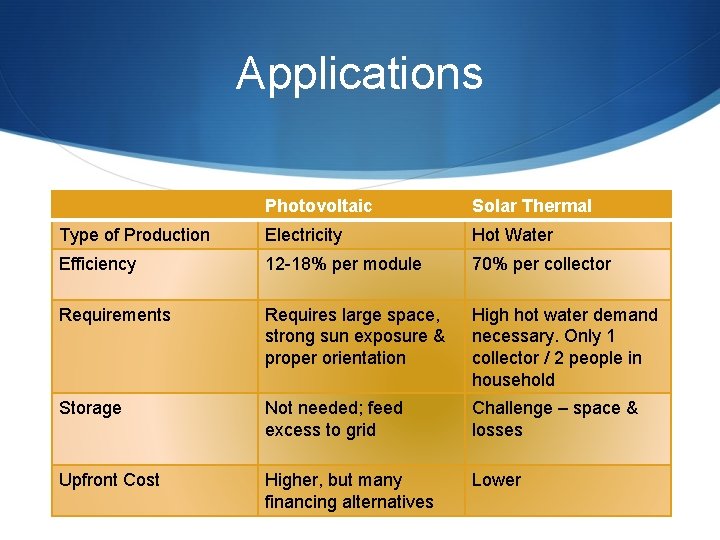
Applications Photovoltaic Solar Thermal Type of Production Electricity Hot Water Efficiency 12 -18% per module 70% per collector Requirements Requires large space, strong sun exposure & proper orientation High hot water demand necessary. Only 1 collector / 2 people in household Storage Not needed; feed excess to grid Challenge – space & losses Upfront Cost Higher, but many financing alternatives Lower
Various Technologies PV Modules Inverters and Microinverters DC Optimizers PV/Thermal Hybrids S
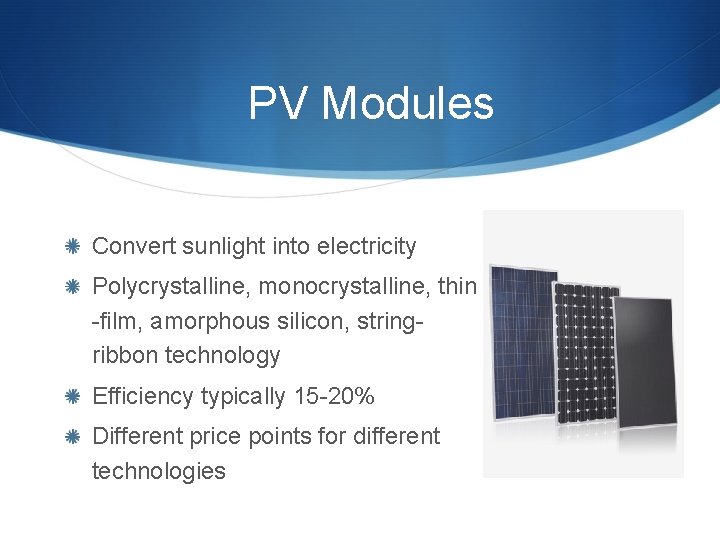
PV Modules Convert sunlight into electricity Polycrystalline, monocrystalline, thin -film, amorphous silicon, stringribbon technology Efficiency typically 15 -20% Different price points for different technologies
Evaluating PV Modules Power output - How many panels fit on your roof? Efficiency: Cost per AC Watt produced (STC/PTC/AC system production) Aesthetics: What looks good to you? Power Tolerance: negative bad, 0% / + 5% is good Power Warranty- 10 year 90% / 25 year 80% industry standard Manufacturer reputation Domestic vs imported
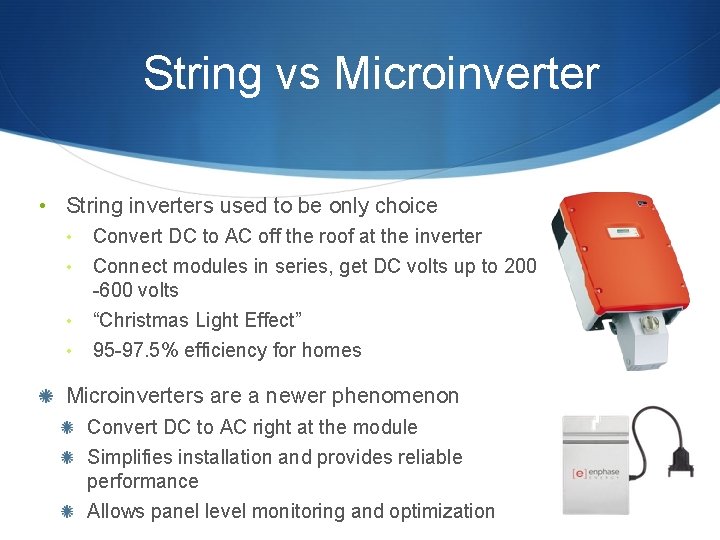
String vs Microinverter • String inverters used to be only choice • • Convert DC to AC off the roof at the inverter Connect modules in series, get DC volts up to 200 -600 volts “Christmas Light Effect” 95 -97. 5% efficiency for homes Microinverters are a newer phenomenon Convert DC to AC right at the module Simplifies installation and provides reliable performance Allows panel level monitoring and optimization
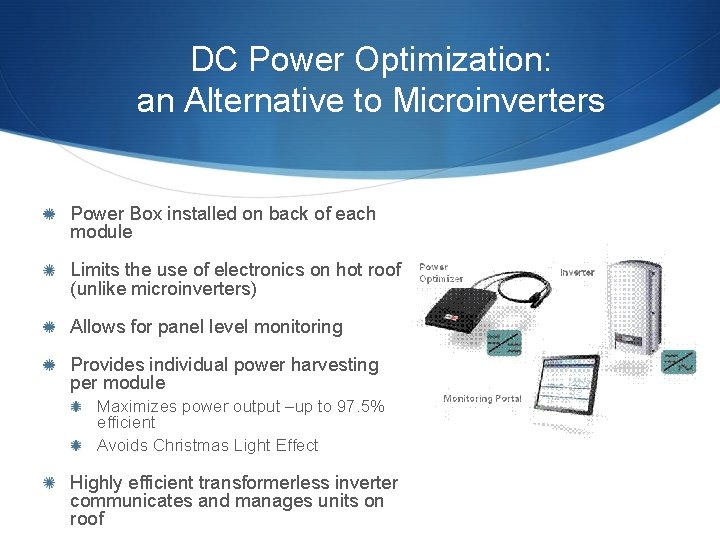
DC Power Optimization: an Alternative to Microinverters Power Box installed on back of each module Limits the use of electronics on hot roof (unlike microinverters) Allows for panel level monitoring Provides individual power harvesting per module Maximizes power output –up to 97. 5% efficient Avoids Christmas Light Effect Highly efficient transformerless inverter communicates and manages units on roof
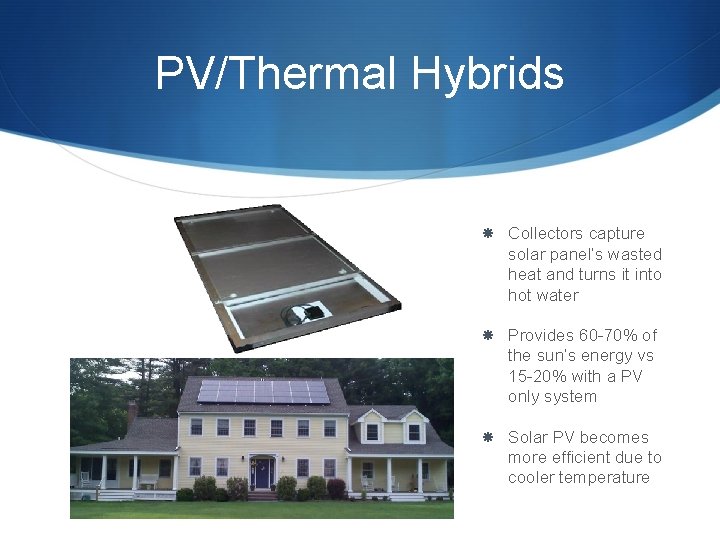
PV/Thermal Hybrids Collectors capture solar panel’s wasted heat and turns it into hot water Provides 60 -70% of the sun’s energy vs 15 -20% with a PV only system Solar PV becomes more efficient due to cooler temperature
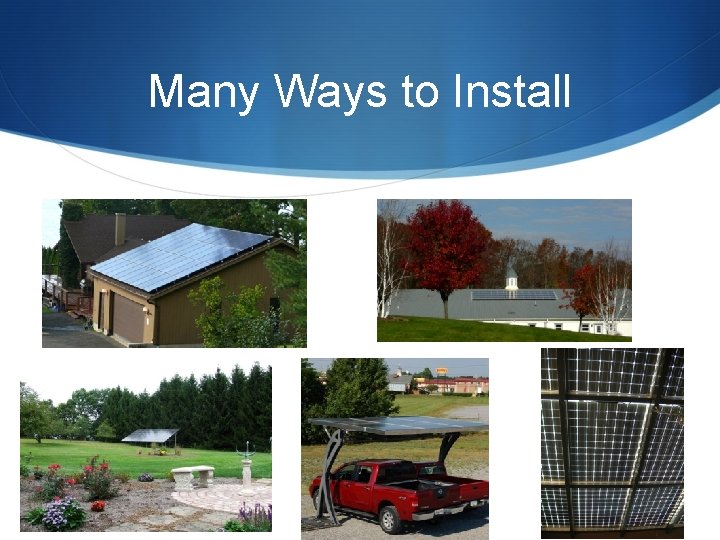
Many Ways to Install
Curious About Solar for Your Home? Evaluating your Roof Financing Options S
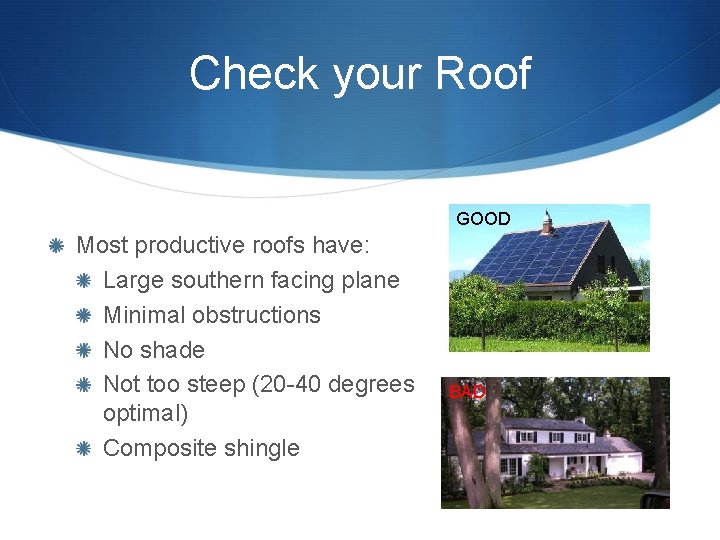
Check your Roof GOOD Most productive roofs have: Large southern facing plane Minimal obstructions No shade Not too steep (20 -40 degrees optimal) Composite shingle BAD
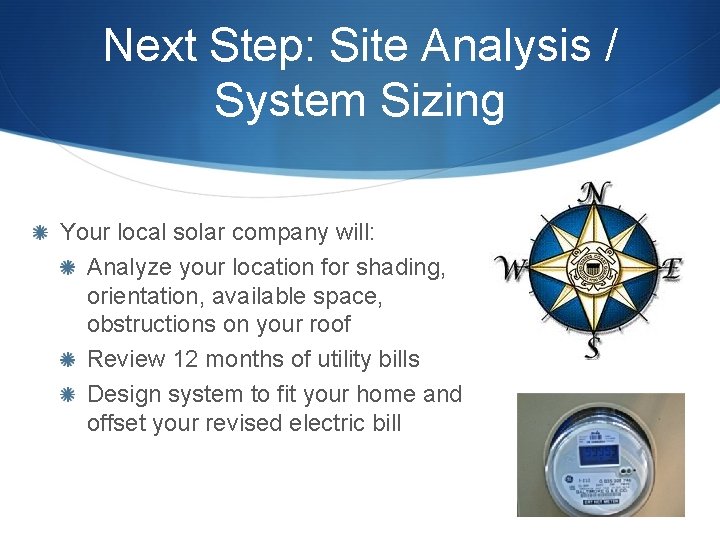
Next Step: Site Analysis / System Sizing Your local solar company will: Analyze your location for shading, orientation, available space, obstructions on your roof Review 12 months of utility bills Design system to fit your home and offset your revised electric bill
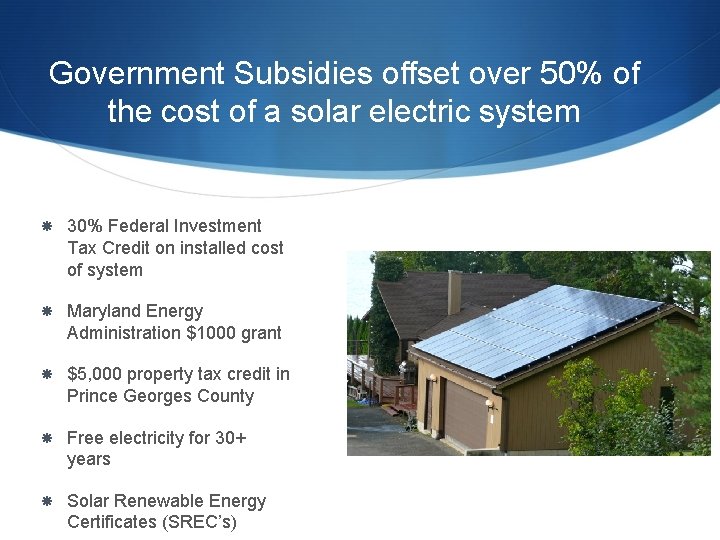
Government Subsidies offset over 50% of the cost of a solar electric system 30% Federal Investment Tax Credit on installed cost of system Maryland Energy Administration $1000 grant $5, 000 property tax credit in Prince Georges County Free electricity for 30+ years Solar Renewable Energy Certificates (SREC’s)
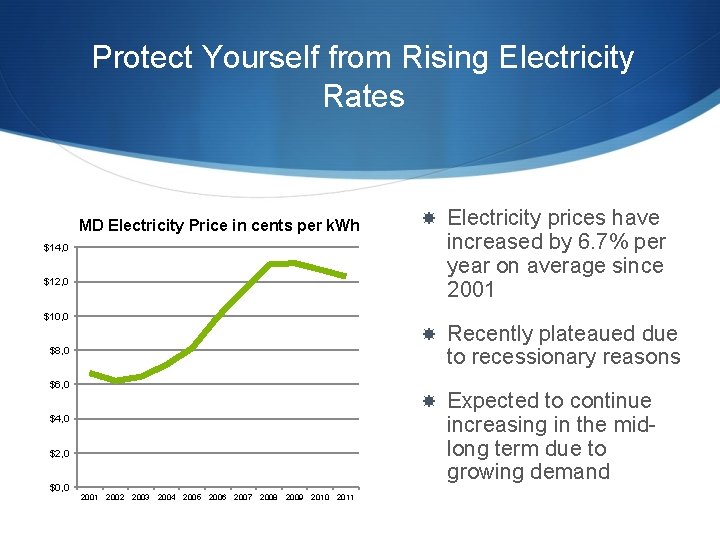
Protect Yourself from Rising Electricity Rates MD Electricity Price in cents per k. Wh $14, 0 $12, 0 $10, 0 increased by 6. 7% per year on average since 2001 Recently plateaued due to recessionary reasons $8, 0 $6, 0 Expected to continue increasing in the midlong term due to growing demand $4, 0 $2, 0 $0, 0 Electricity prices have 2001 2002 2003 2004 2005 2006 2007 2008 2009 2010 2011
Solar Renewable Energy Certificates (SRECs) MD requires utilities to generate a percentage of electricity from renewables (solar carveout) Utilities that don’t meet the state’s requirement pay an Alternative Compliance Payment, or ACP Utilities purchase SRECs instead of paying the ACP Worth twice the value of the electricity Residential system generates 1 SREC per 1, 000 k. Wh it generates Typical residential system generates 6 -10 SRECs per year, translates into $1, 200 - $2, 000 of additional income per year at current SREC values Recently passed MD legislation (SB 791) will continue to support the value of SRECs
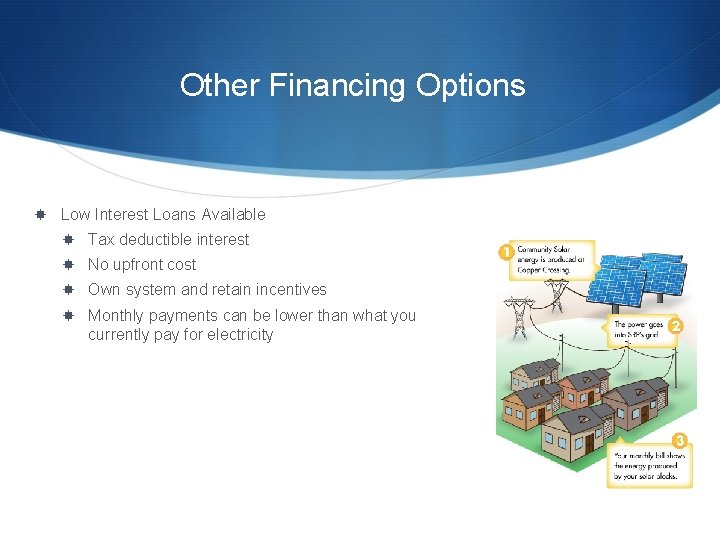
Other Financing Options Low Interest Loans Available Tax deductible interest No upfront cost Own system and retain incentives Monthly payments can be lower than what you currently pay for electricity
In Summary S Solar provides savings by reducing your electric bills, and will provide a high return on investment S Incentives driven by MD energy policies significantly reduce the cost of solar for homeowners S Solar is clean energy and helps to reduce carbon emissions
THANK YOU! QUESTIONS? Ken Stadlin, President info@kenergysolar. com www. kenergysolar. com S