
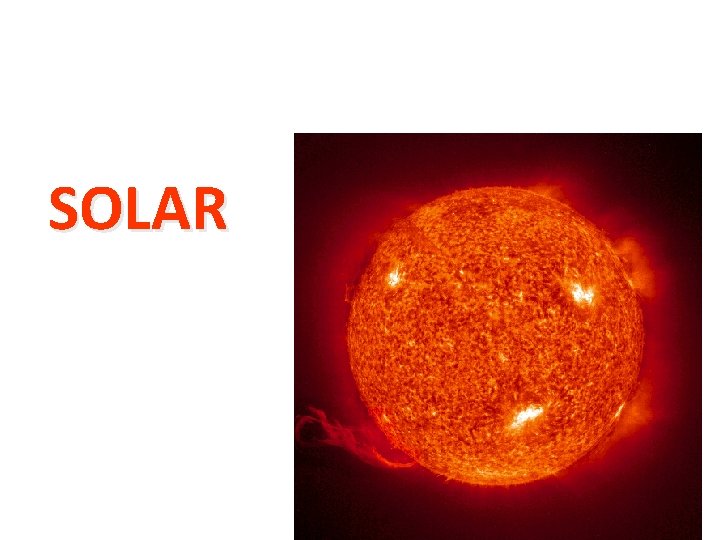
SOLAR 1 Suns major gases Hydrogen Helium 2

- Slides: 48
SOLAR
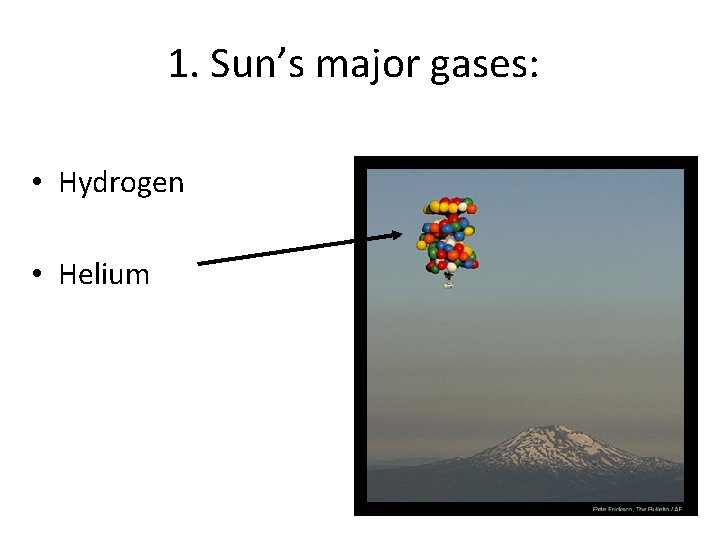
1. Sun’s major gases: • Hydrogen • Helium
2. Creating Energy The sun’s intense heat and pressure cause hydrogen to break and combine This makes helium + ENERGY!!! What is it called when two atoms combine? (remember…apart = fission)
a. Emits energy into space Radiant Energy: takes 8 minutes to hit Earth
b. Absorbed by Earth Turns from radiant energy to _____ energy.
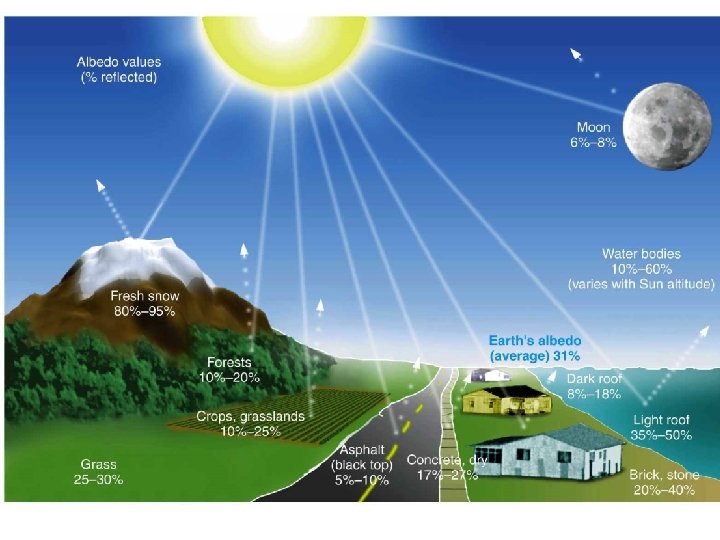
b. Absorbed by Earth • • Darker colors absorb more energy Term for the amount of light energy a surface absorbs or reflects: ? What color should the west side of your house be? (The west is the hardest hit by the sun!!)
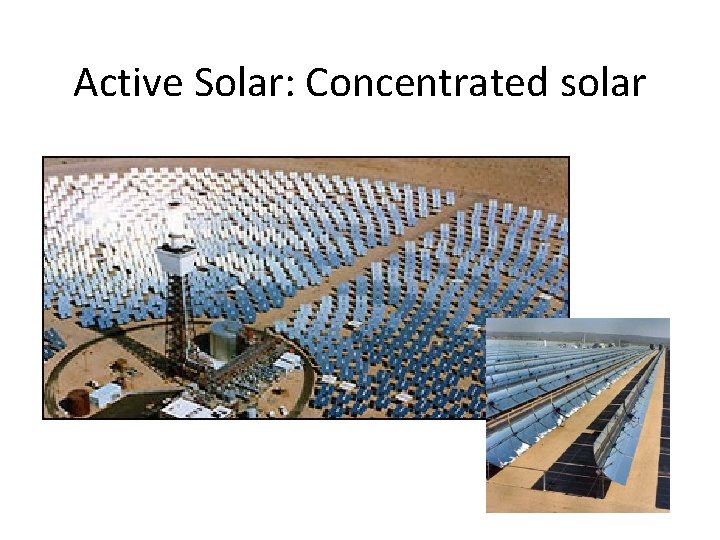
3. Our uses A) Grabbing the solar energy 1. System for capturing heat = solar collector 2. Sunlight = spread out, so its difficult to capture. 3. Mirrors can be used…this is called concentrated solar
B. Types of solar heating: 1. Passive: designing buildings to absorb & reflect solar energy as needed 2. Active: Photovoltaic cells
Active Solar: Concentrated solar
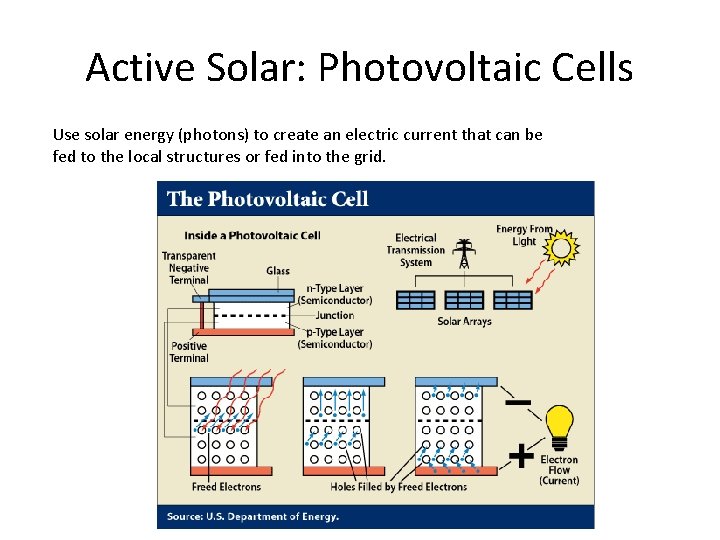
Active Solar: Photovoltaic Cells Use solar energy (photons) to create an electric current that can be fed to the local structures or fed into the grid.
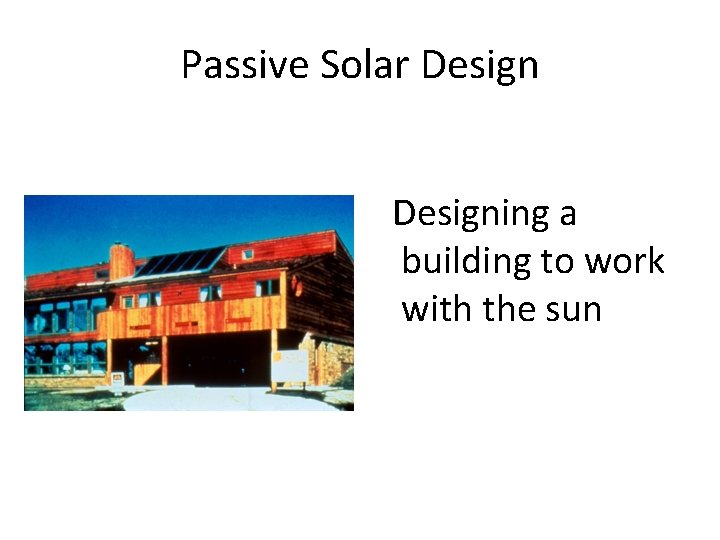
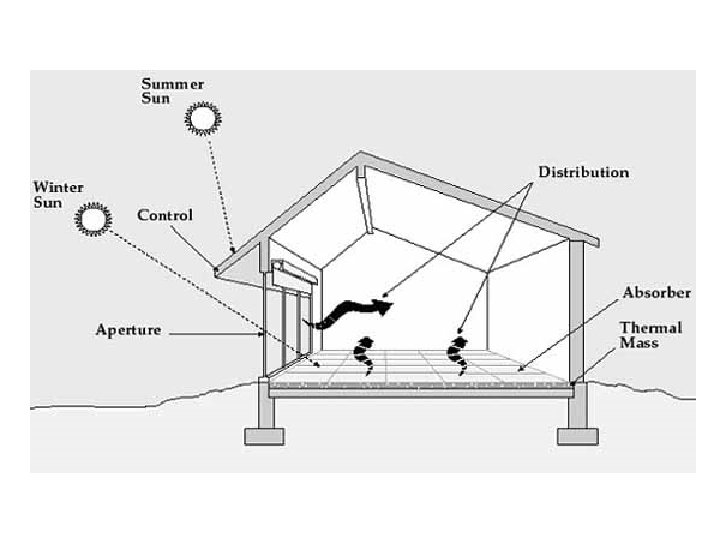
Passive Solar Designing a building to work with the sun
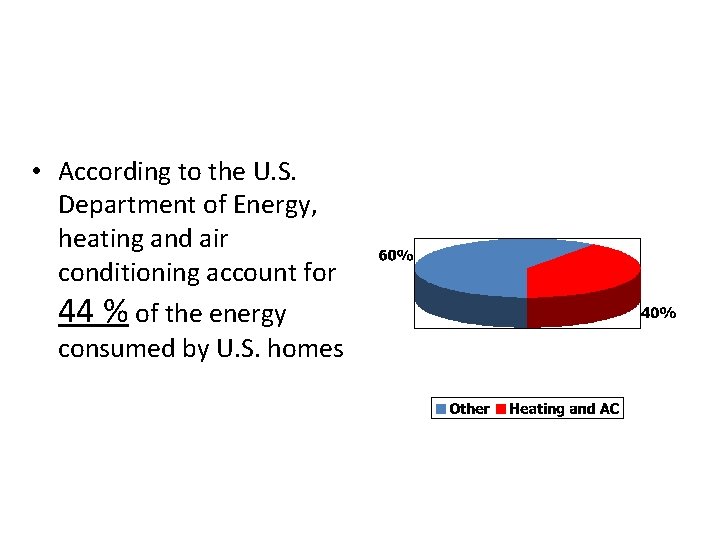
• According to the U. S. Department of Energy, heating and air conditioning account for 44 % of the energy consumed by U. S. homes
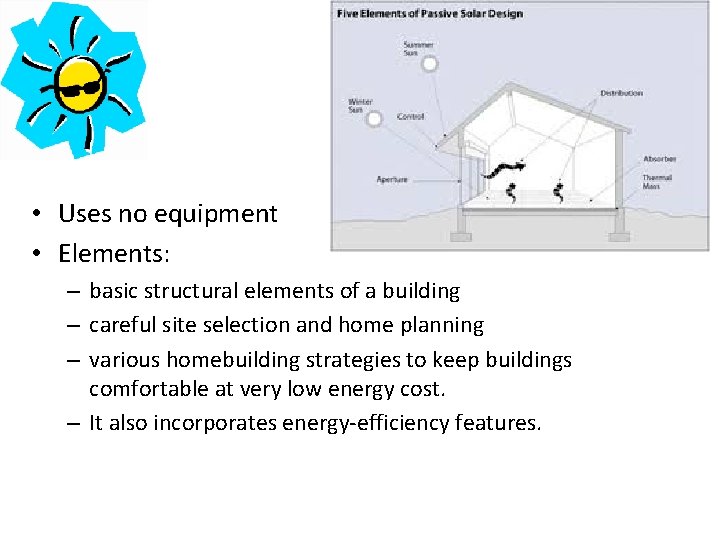
• Uses no equipment • Elements: – basic structural elements of a building – careful site selection and home planning – various homebuilding strategies to keep buildings comfortable at very low energy cost. – It also incorporates energy-efficiency features.
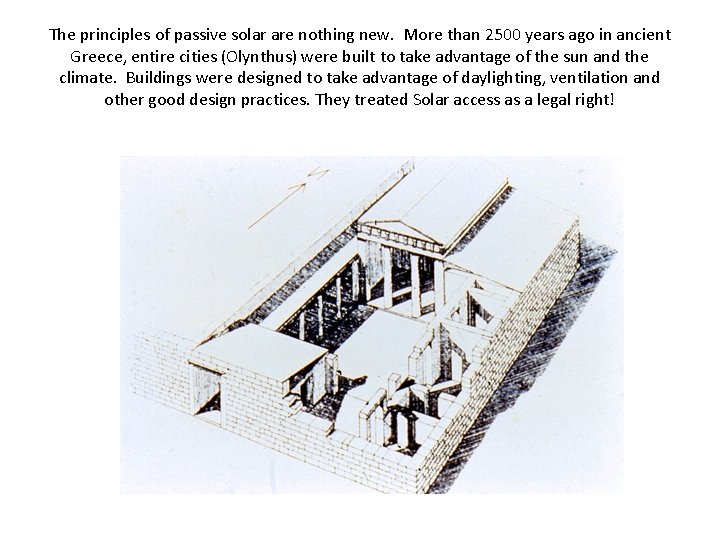
The principles of passive solar are nothing new. More than 2500 years ago in ancient Greece, entire cities (Olynthus) were built to take advantage of the sun and the climate. Buildings were designed to take advantage of daylighting, ventilation and other good design practices. They treated Solar access as a legal right!
a. Passive heating • Orientation • Insulation • Color • Landscape
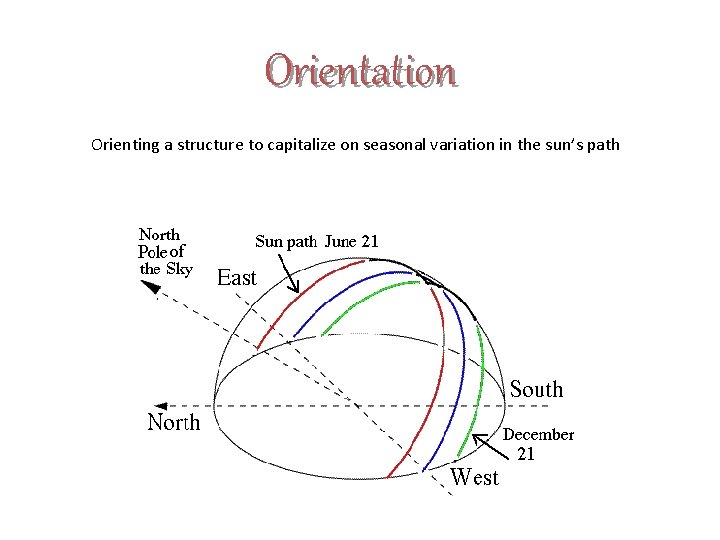
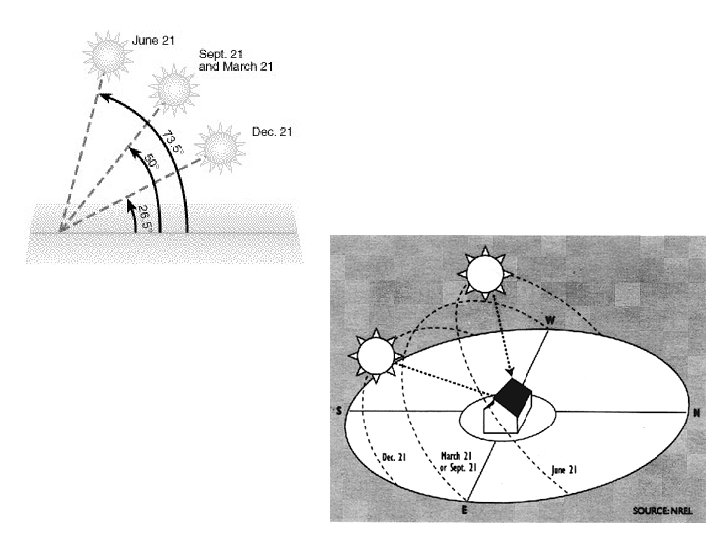
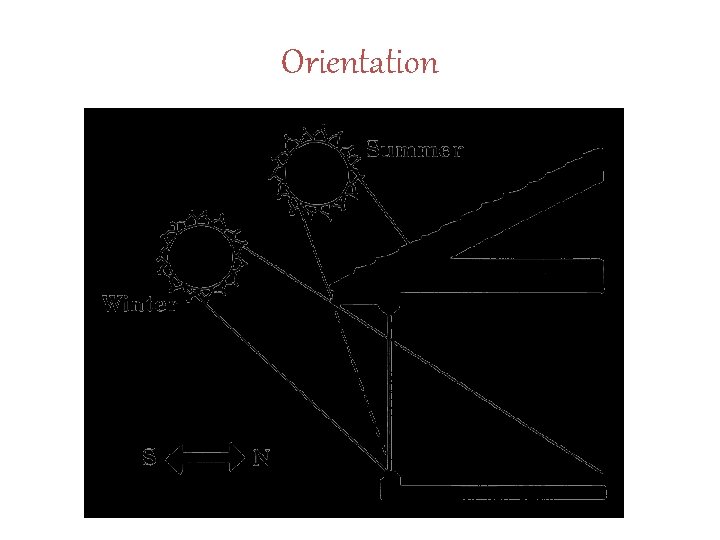
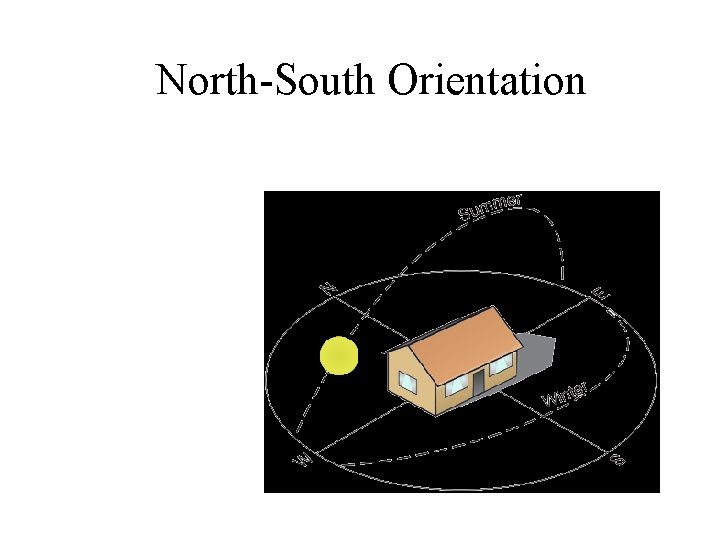
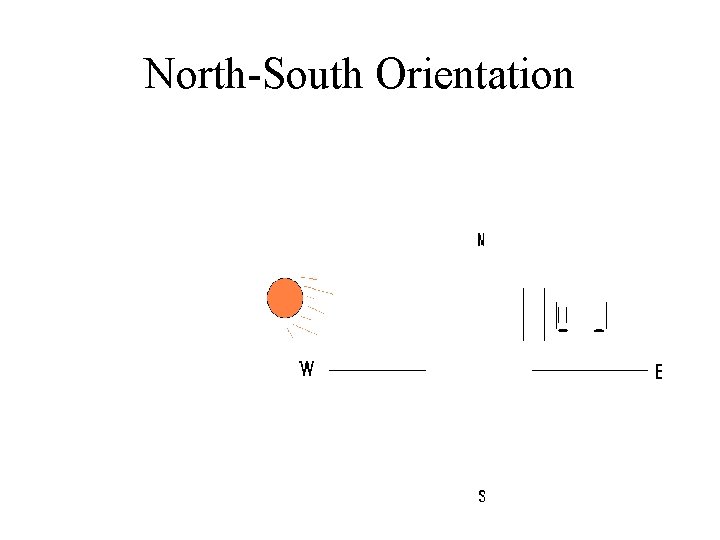
Orientation Orienting a structure to capitalize on seasonal variation in the sun’s path
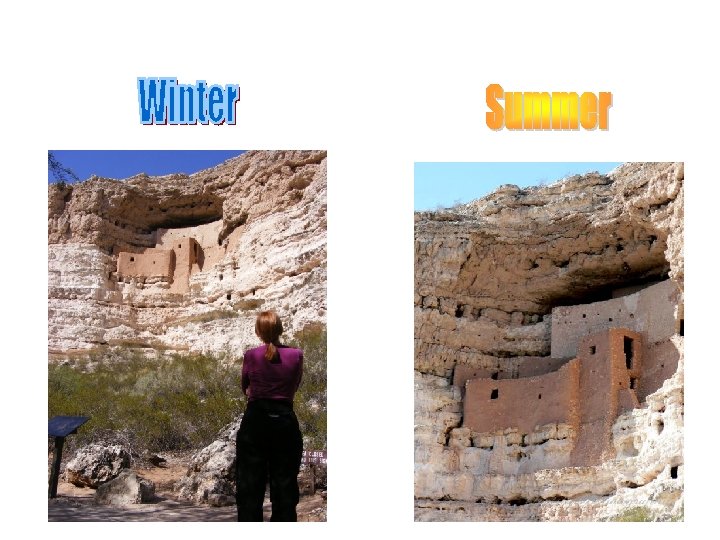
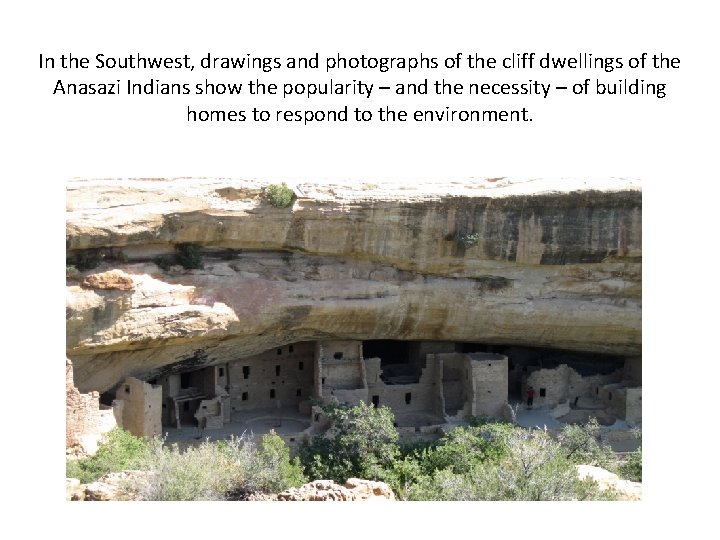
In the Southwest, drawings and photographs of the cliff dwellings of the Anasazi Indians show the popularity – and the necessity – of building homes to respond to the environment.
Orientation
East-West Orientation VS. North-South Orientation
North-South Orientation
North-South Orientation
• The difference has been shown to be up to 20 degrees!!!
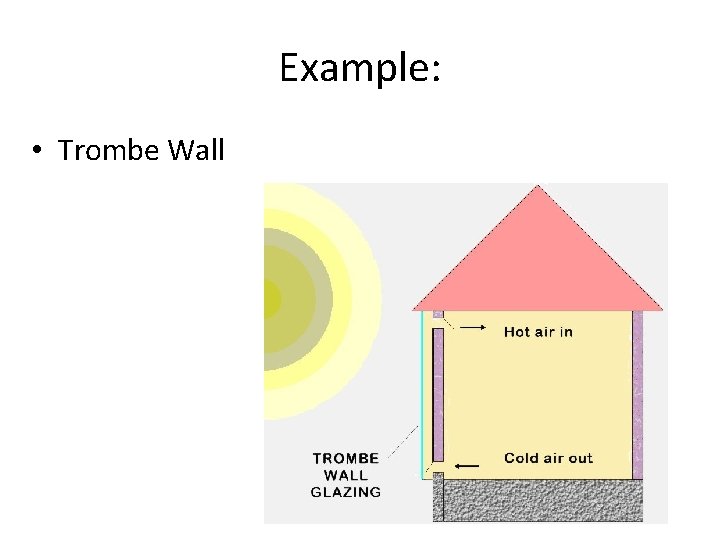
Thermal mass: • Capture heat during the day, and release it slowly during the night. • Winter time idea
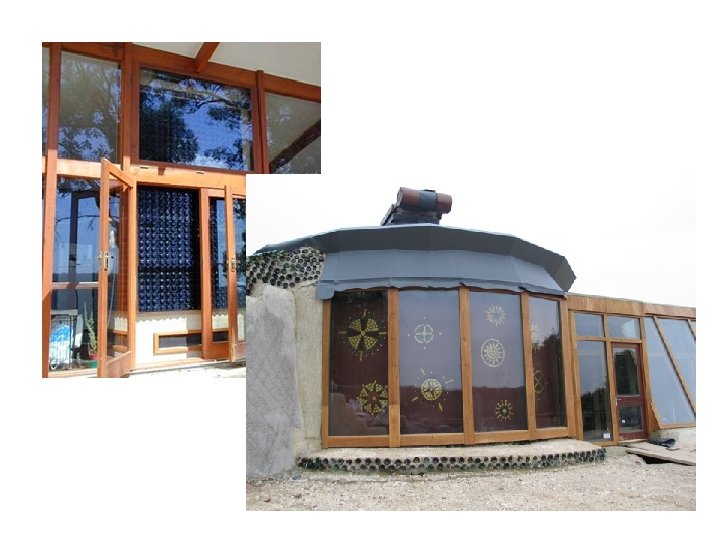
Example: • Trombe Wall
INSULATION • The term thermal insulation can refer to materials used to reduce the rate of heat transfer
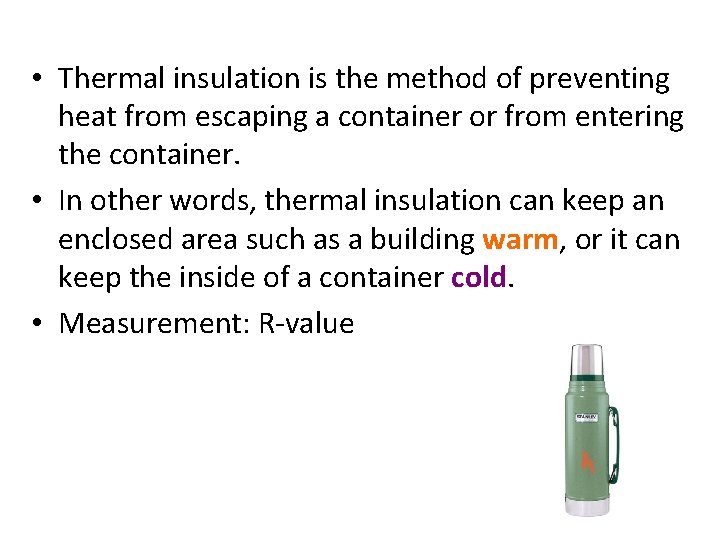
• Thermal insulation is the method of preventing heat from escaping a container or from entering the container. • In other words, thermal insulation can keep an enclosed area such as a building warm, or it can keep the inside of a container cold. • Measurement: R-value
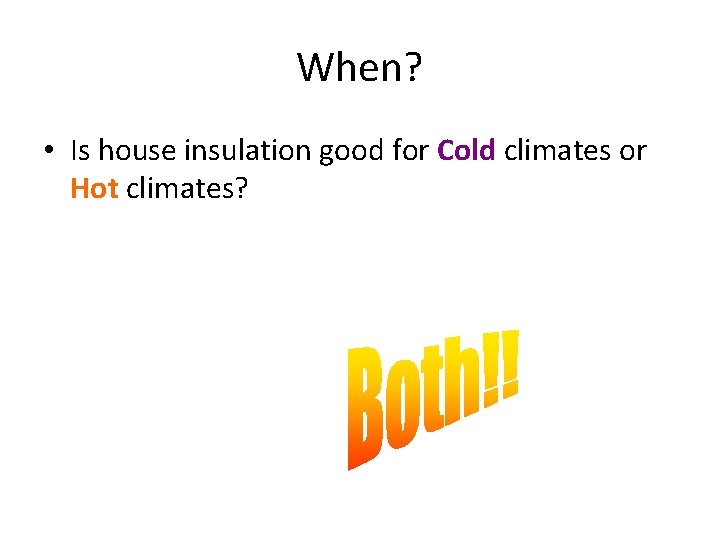
When? • Is house insulation good for Cold climates or Hot climates?
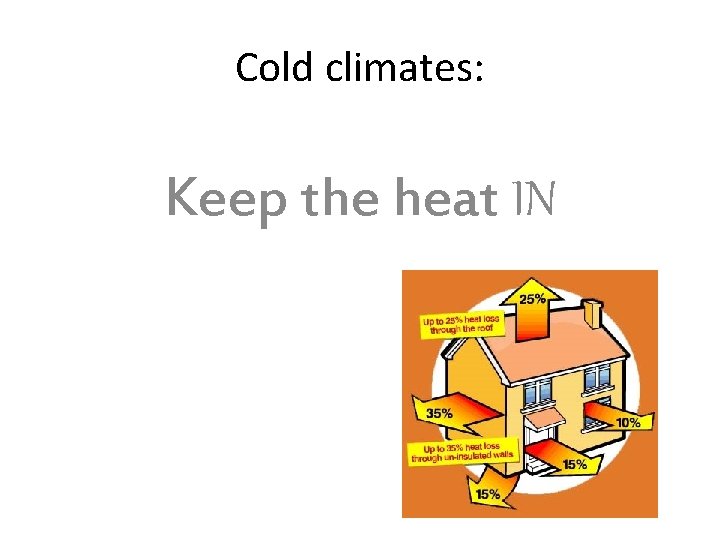
Cold climates: Keep the heat IN
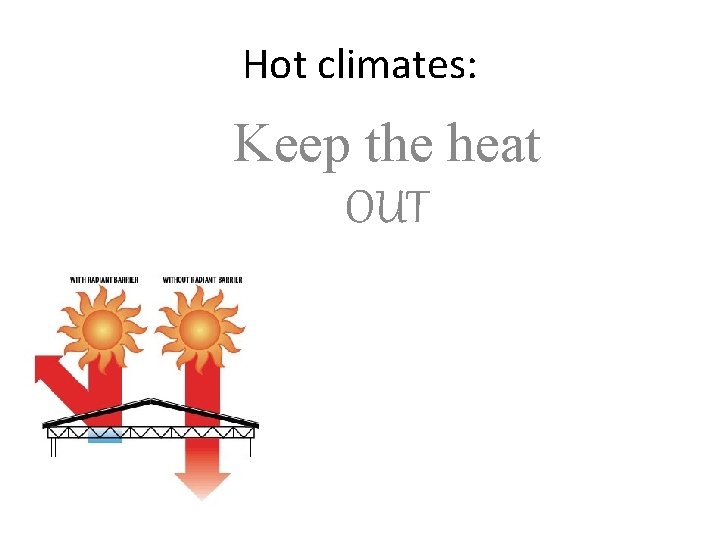
Hot climates: Keep the heat OUT
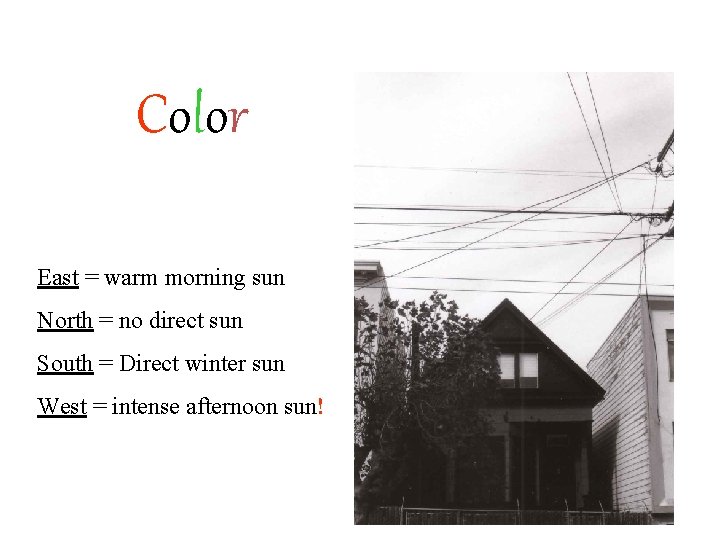
Color East = warm morning sun North = no direct sun South = Direct winter sun West = intense afternoon sun!
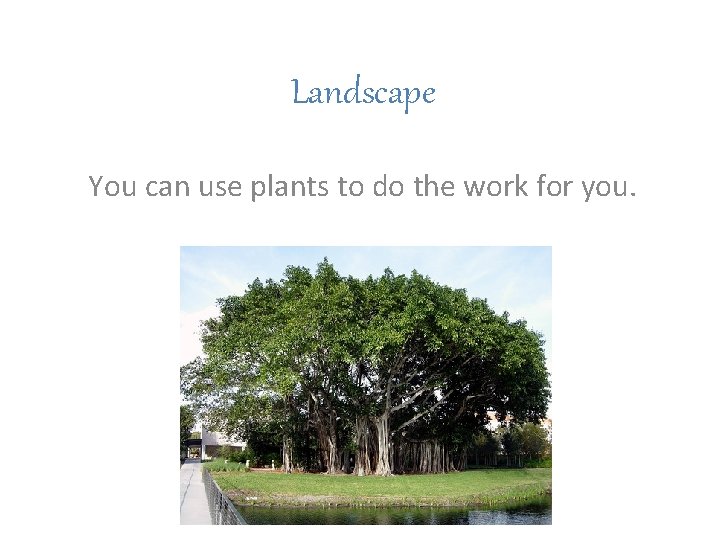
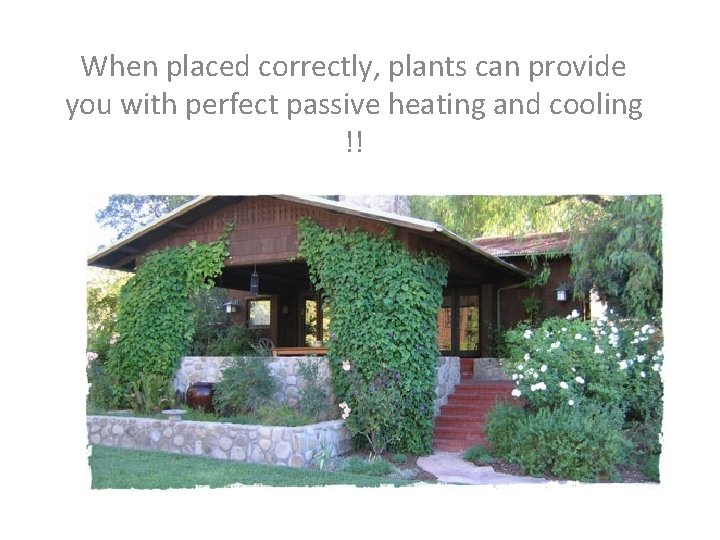
Landscape You can use plants to do the work for you.
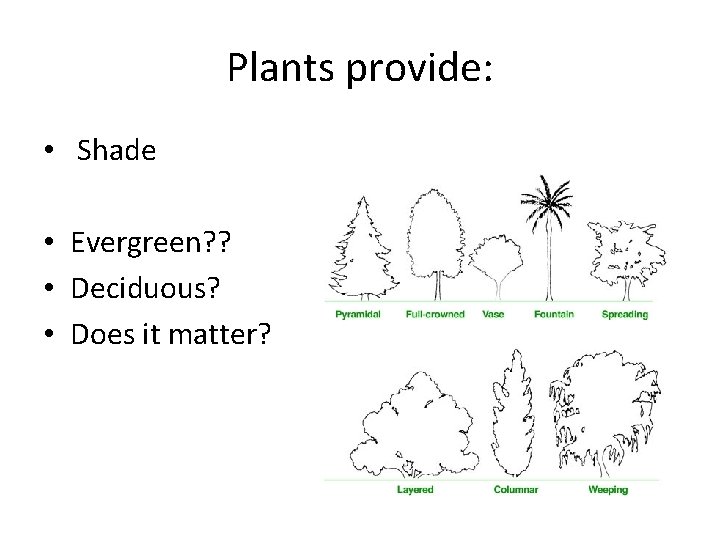
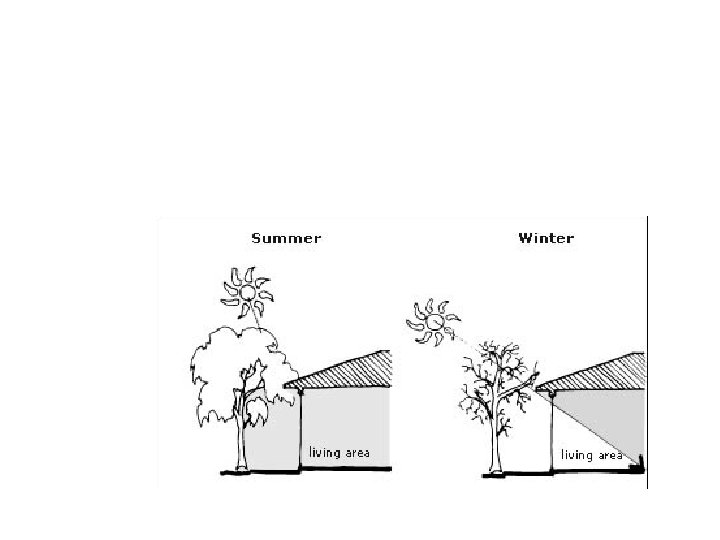
Plants provide: • Shade • Evergreen? ? • Deciduous? • Does it matter?
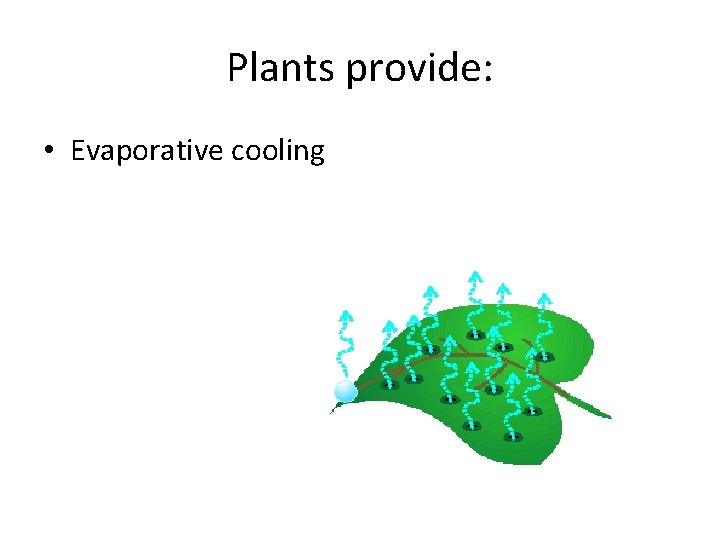
Plants provide: • Evaporative cooling
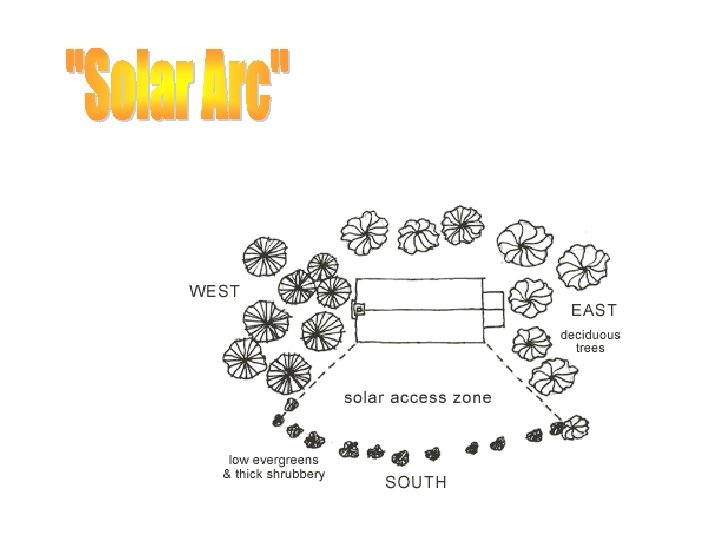
When placed correctly, plants can provide you with perfect passive heating and cooling !!
More passive designs • • • Cooling tubes CFL’s External shades Green roof Solar Hot water
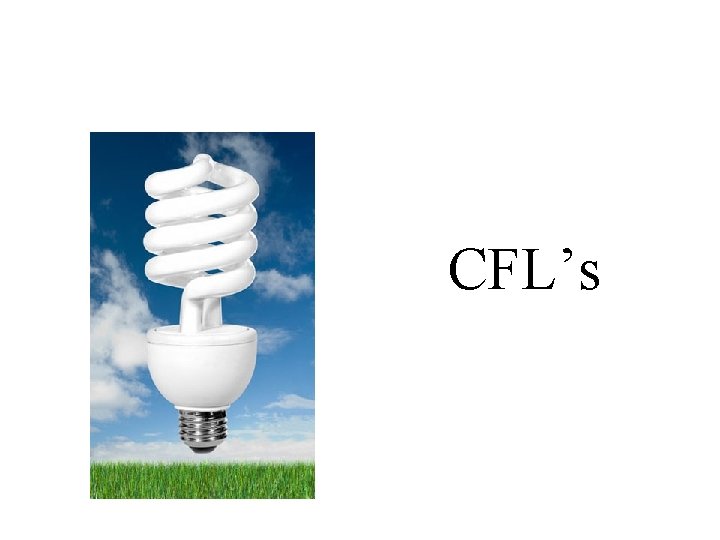
CFL’s
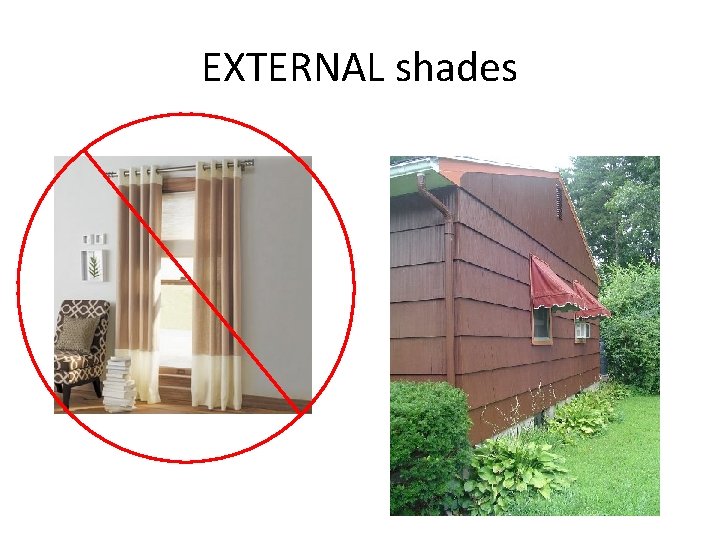
EXTERNAL shades
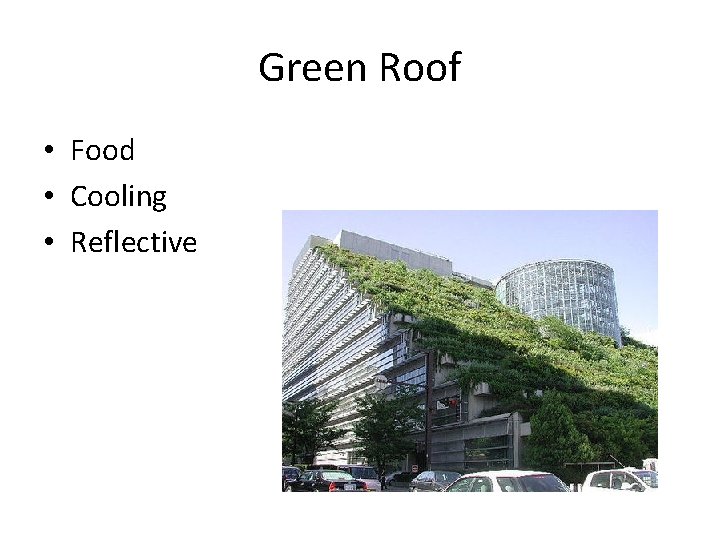
Green Roof • Food • Cooling • Reflective
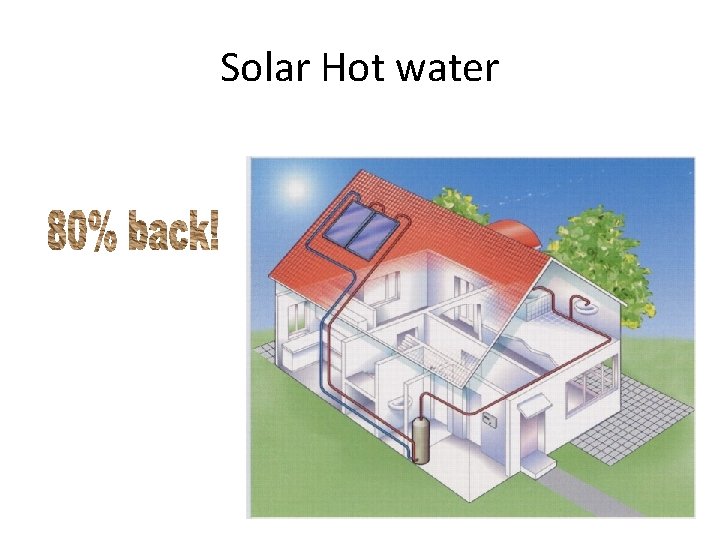
Solar Hot water