
Soils Soil texture and structure Soil horizons and



- Slides: 43
Soils Soil texture and structure Soil horizons and types Soil-forming processes Mgr. Matúš Dobeš, 2006
Soils
Soils Pedology = science studying the thinnest, organic part of the Earth´s surface – soil cover. n 1880 s: soil was recognized as a natural body – worthy of study in its own right - by the Russian scientist Dokuchaev. n
Soils Soil = a complex mixture of mineral matter, organic matter and living organisms. Soil is a product of the environment, constantly changing. n Soils develop over time (very slowly in dry desert areas and more quickly in wet tropical regions). n
Soils Soil can be thought of as the "skin" of the land – without it the land would die. n Soil = constantly being eroded at its surface by wind, water and man's activities and being renewed at its base by weathering of its parent material. Think of this important resource in three dimensions i. e. soil has depth as well as area. n
Soils n Soil = composed of solid particles of different sizes (minerals and organic matter) often "glued" together into tiny aggregates by organic matter, mineral oxides and clay particles.
Soils n The gaps between the particles link together into a meandering network of pores of various sizes. Through this pore space the soil exchanges water and air with the environment. The movement of air and water also allows for heat and nutrients to flow.
Soil texture
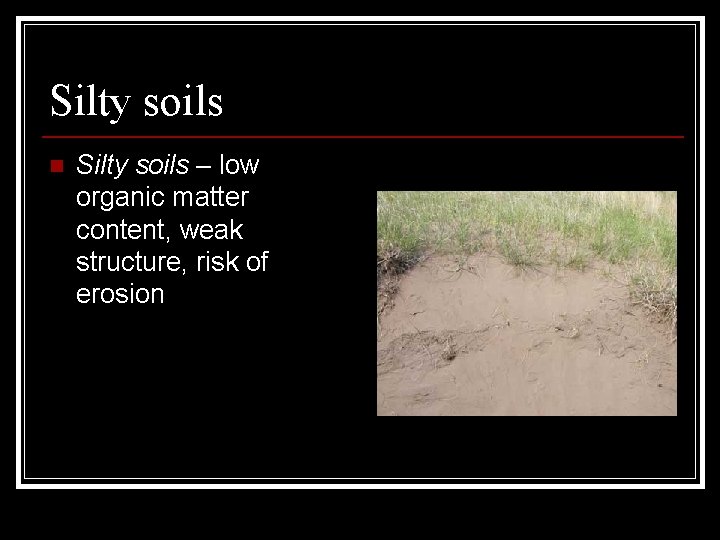
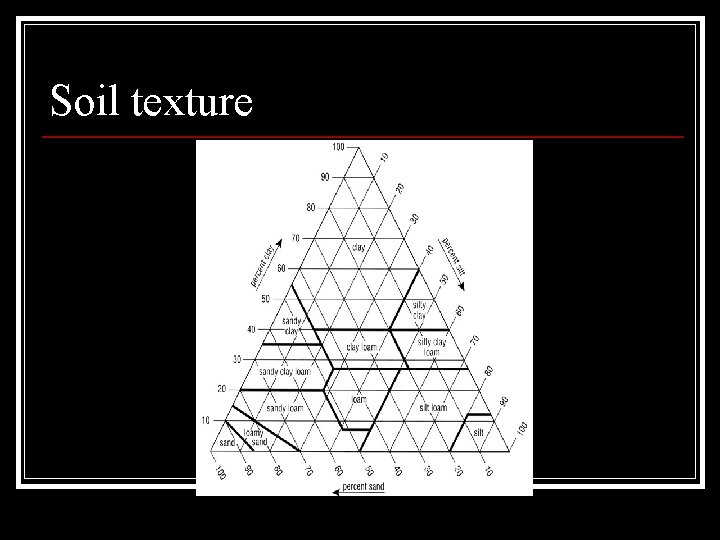
Soil texture = refers to the size of the solid particles in a soil, ranging from gravel to clay. n Most of soils = sand, silt and clay particles => n Sandy soils n Loamy soils n Silty soils n
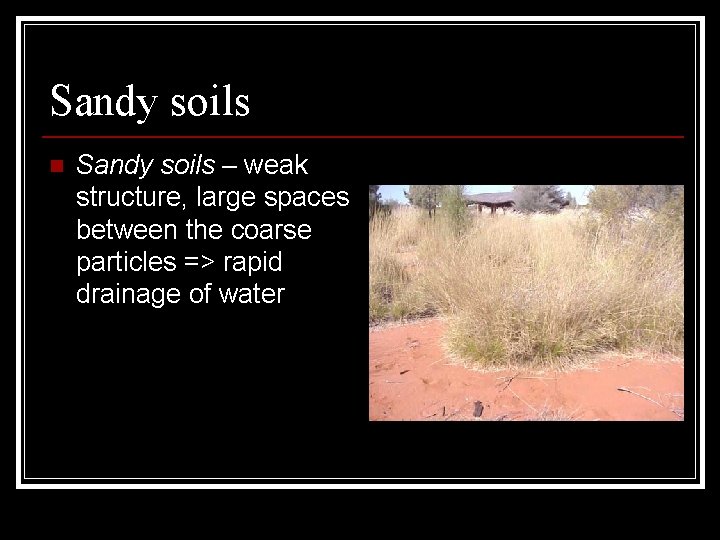
Sandy soils n Sandy soils – weak structure, large spaces between the coarse particles => rapid drainage of water
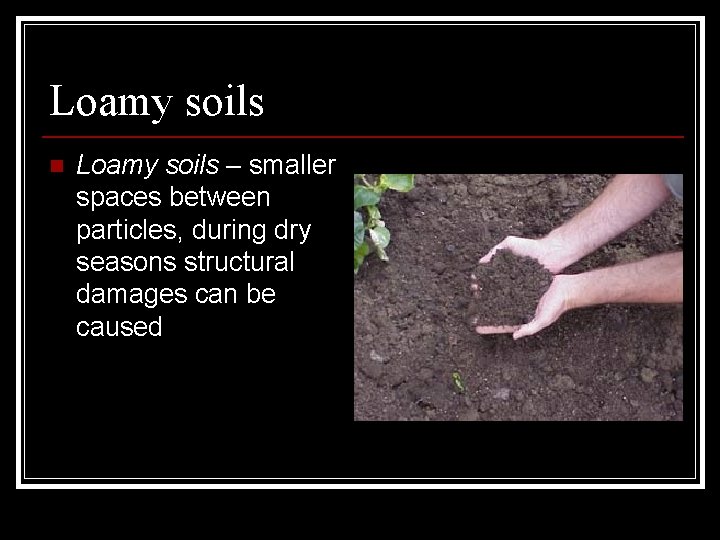
Loamy soils n Loamy soils – smaller spaces between particles, during dry seasons structural damages can be caused
Silty soils n Silty soils – low organic matter content, weak structure, risk of erosion
Soil texture
Soil structure
Soil structure = shape of the individual grains => n crumb – suitable for agriculture n prismatic – disabling of free movement of water and air n
Soil profile (horizon)
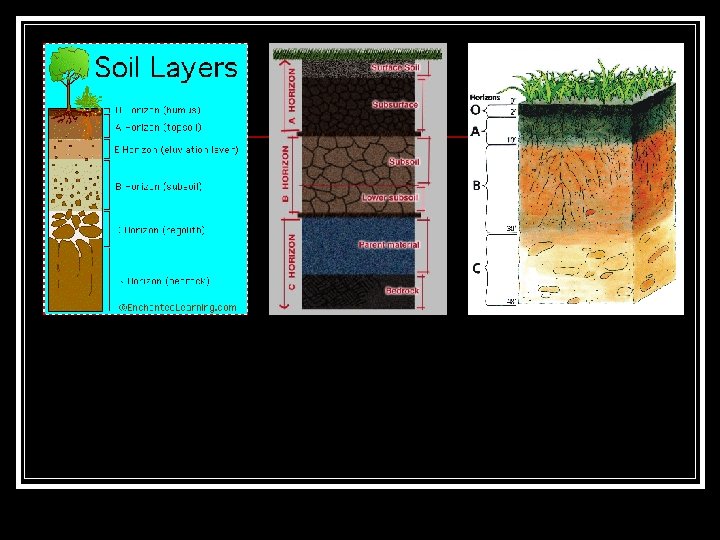
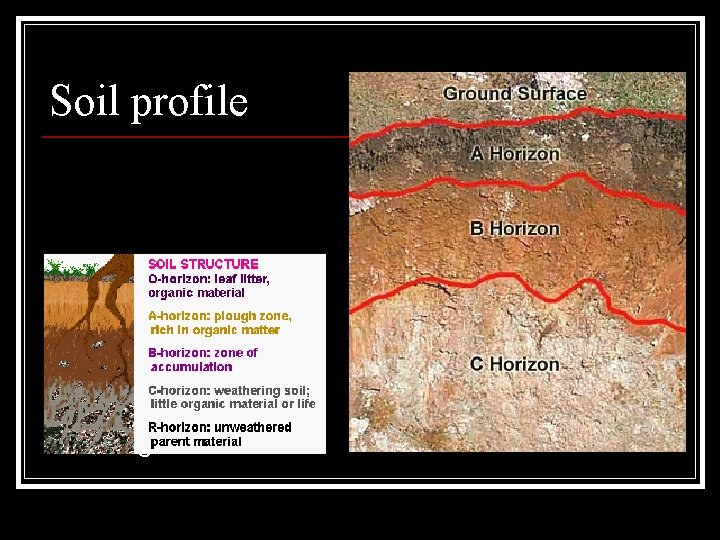
Soil profile n Soil profile = 2 -D, vertical cross-section through a soil.
Soil profile Topsoil (humus) cover = organic horizon with dark colour (organic matter) n Leached or removal (elluvial) horizon = leaching = removal of soluble material from the horizon downwards, e. g. podzols (intensive leaching) => ash-coloured horizon n
Soil profile Deposited (illuvial) horizon = contain (re)moved material, e. g. Fe, humus and clay n Bedrock (parent material) = rock situated below the soil n
Factors affecting soils
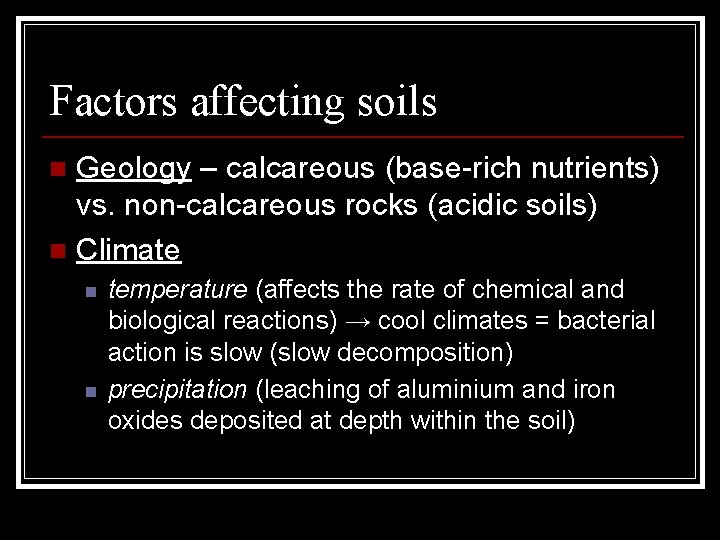
Factors affecting soils Geology – calcareous (base-rich nutrients) vs. non-calcareous rocks (acidic soils) n Climate n n n temperature (affects the rate of chemical and biological reactions) → cool climates = bacterial action is slow (slow decomposition) precipitation (leaching of aluminium and iron oxides deposited at depth within the soil)
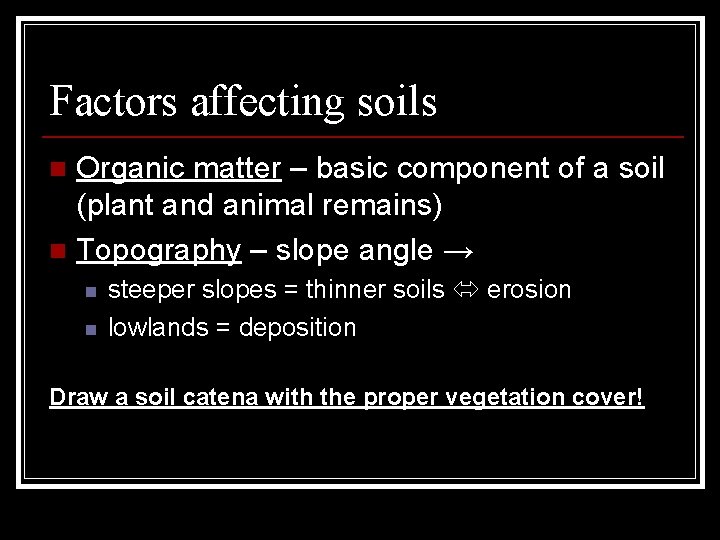
Factors affecting soils Organic matter – basic component of a soil (plant and animal remains) n Topography – slope angle → n n n steeper slopes = thinner soils erosion lowlands = deposition Draw a soil catena with the proper vegetation cover!
Soil-forming processes
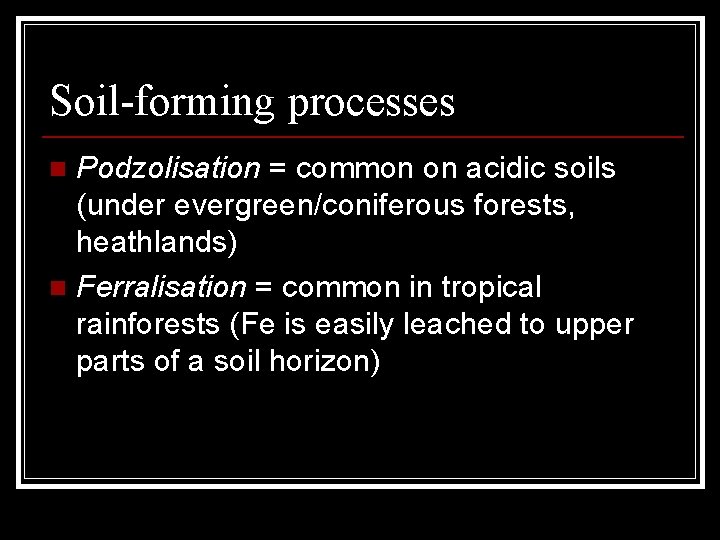
Soil-forming processes Podzolisation = common on acidic soils (under evergreen/coniferous forests, heathlands) n Ferralisation = common in tropical rainforests (Fe is easily leached to upper parts of a soil horizon) n
Soil-forming processes Gleying = waterlogged soils, common in areas of poor drainage (within the water table) n Salinisation = well-known process n
Soil types
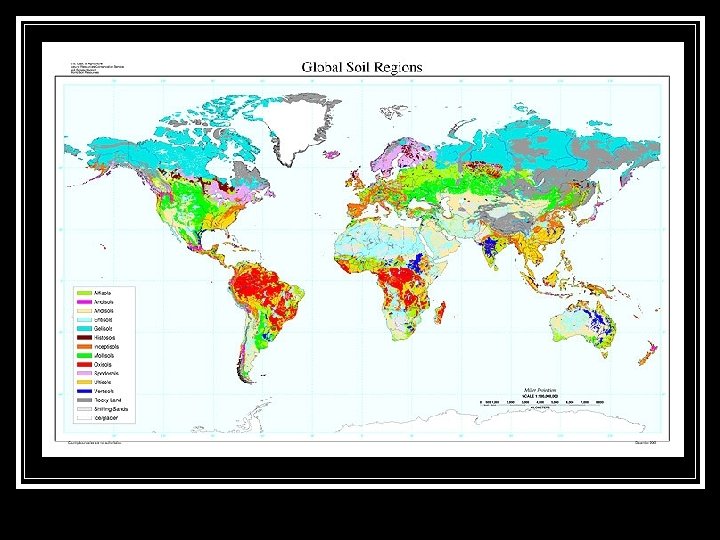
Soil types n Zonal soils = soils are determined by climatic factors n e. g. brown earths in temperate climates, podzols in cool temperate climates, chernozems in continental climates
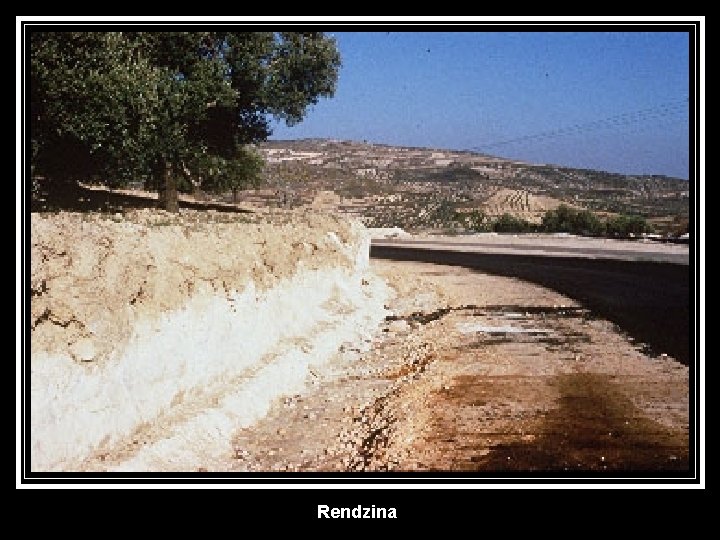
Soil types Intrazonal soils = located within any climatic zone with respect to local factors (geology) → limestone and chalk determine rendzina soil type, i. e. developed on a particular rock type rather than due to climatic conditions n Azonal soils = no relation between a soil type and bedrock or climatic zone n
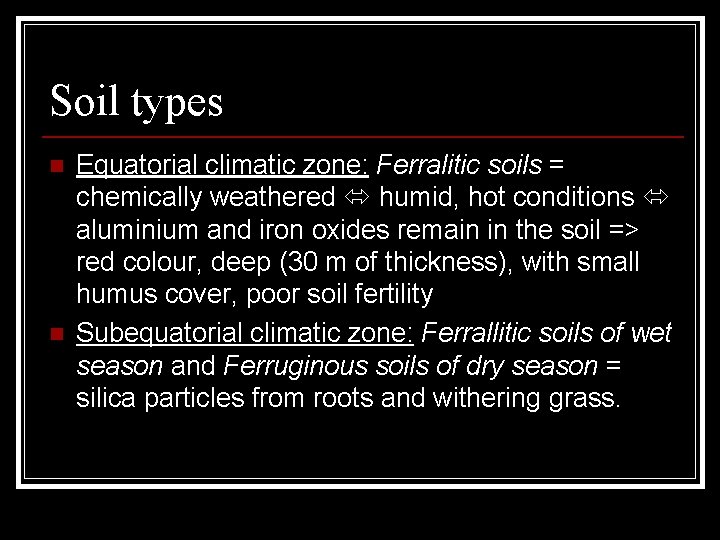
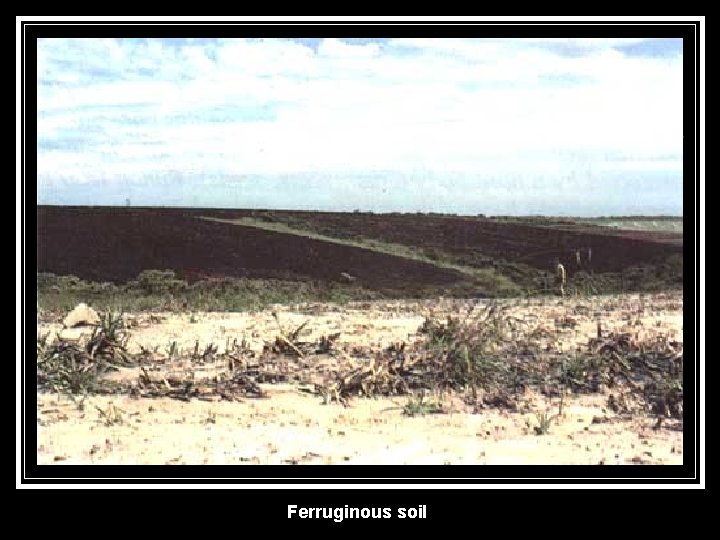
Soil types n n Equatorial climatic zone: Ferralitic soils = chemically weathered humid, hot conditions aluminium and iron oxides remain in the soil => red colour, deep (30 m of thickness), with small humus cover, poor soil fertility Subequatorial climatic zone: Ferrallitic soils of wet season and Ferruginous soils of dry season = silica particles from roots and withering grass.
Ferruginous soil
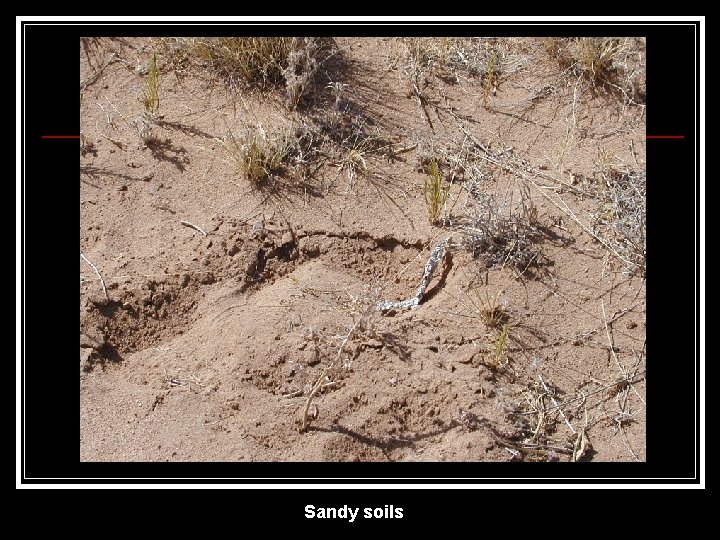
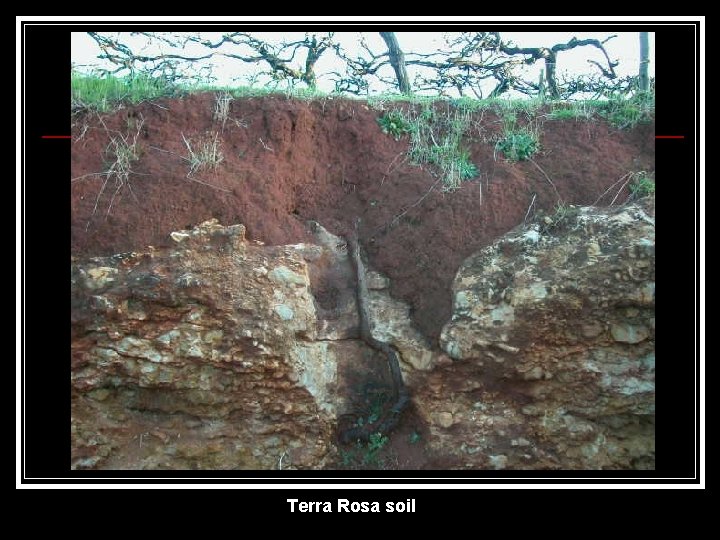
Soil types The Tropics: sandy soils n Mediterranean climatic zone: Rendzinas = on limestone or calcareous marl, black/brown upper horizon = rich in organic matter (calcium). Terra Rosa (red rendzinas) found on limestone, formed by weathering of limestone, Ca. CO 3 (calcium carbonate) is weathered by carbonation. n
Sandy soils
Rendzina
Terra Rosa soil
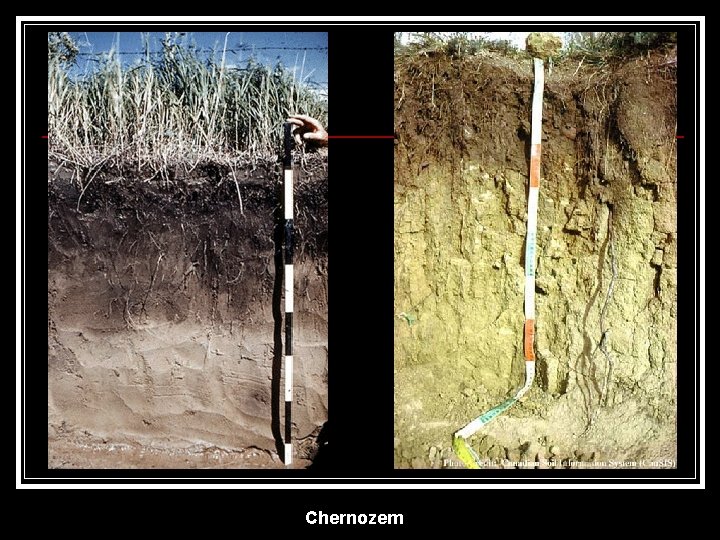
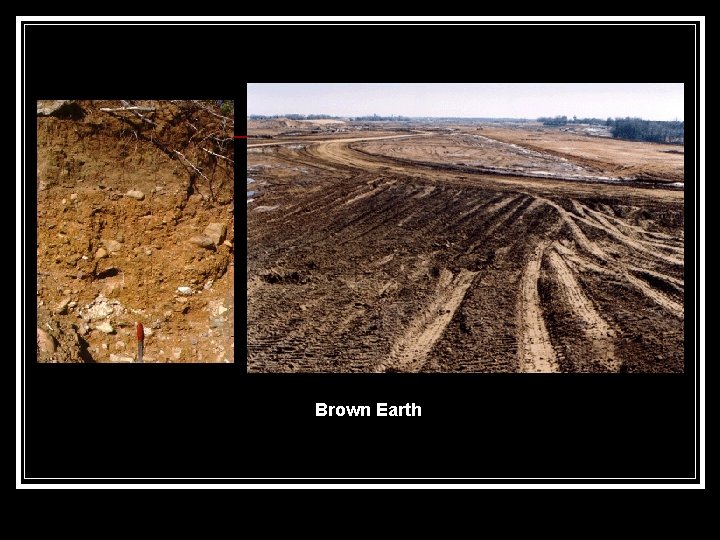
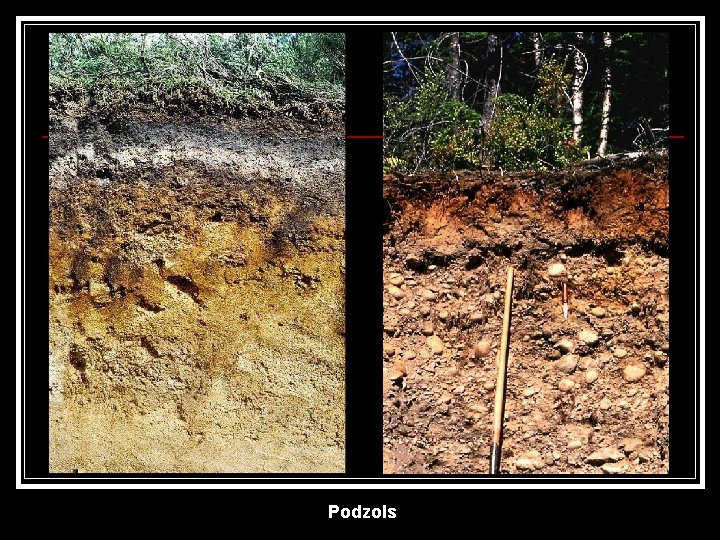
Soil types n n Temperate climatic zone: Temperate grassland: Chernozem (Black earth) = the most fertile soils on Earth, rich in calcium carbonate. Temperate deciduous woodland: Brown earth = generally quite fertile, earthworms mixing soil nutrients. Temperate coniferous woodland: Podzols = prec. > evt. => acidic topsoil, acidic nature of needles => iron and aluminium oxides => impermeable pan, few earthworms
Chernozem
Brown Earth
Podzols
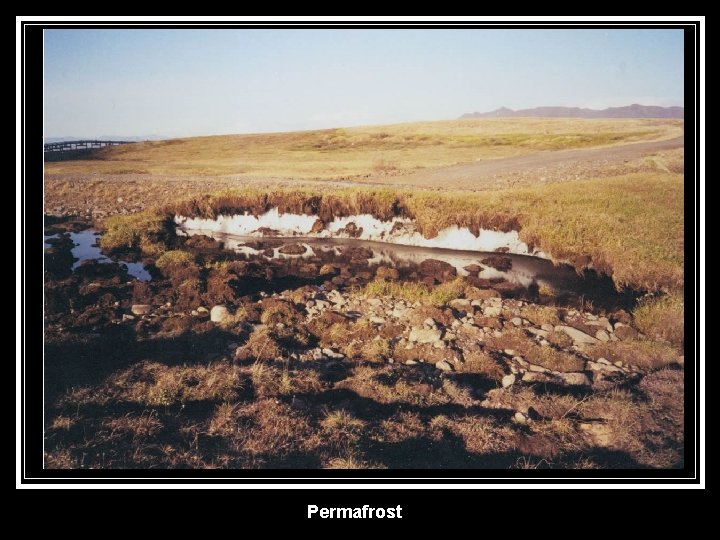
Soil types n Polar climatic zone: Permafrost = permanently frozen, impermeable (sub)surface. Pingoes (landforms) created by ice-up of a groundwater, inside pingo is ice lens. Similar are polygonal soils. Gleys = waterlogged soils on flatter and podzols on steeper slopes. Both with poor fertility.
Permafrost
Thank You for Your attention