
SOIL Whats the dirt on dirt Why study
- Slides: 35
SOIL What’s the dirt on dirt?
Why study soil in environmental science? ? ? • Soils are the foundation for terrestrial ecosystems. • Understanding soils and the organisms that rely on it allows us to understand how human activity can affect those organisms – For example…. • Waste, Construction, Mining, Deforestation all affect soils
Importance of Soil • “Essentially, all life depends upon the soil…there can be no life without soil and no soil without life; they have evolved together. ” – Charles E. Kellogg, USDA Yearbook of Agriculture, 1938 “Life builds soil, soil builds life”
Soil Properties • • • Composition Formation Texture Porosity / Permeability Fertility- Nutrient Holding Capacity
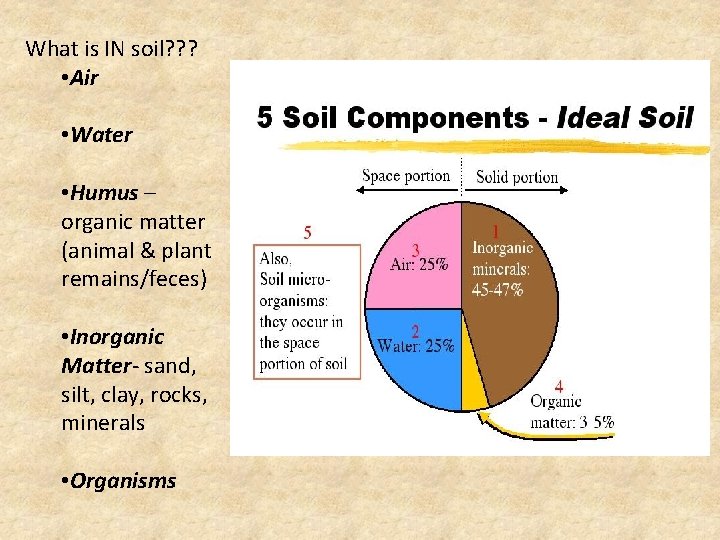
What is IN soil? ? ? • Air • Water • Humus – organic matter (animal & plant remains/feces) • Inorganic Matter- sand, silt, clay, rocks, minerals • Organisms
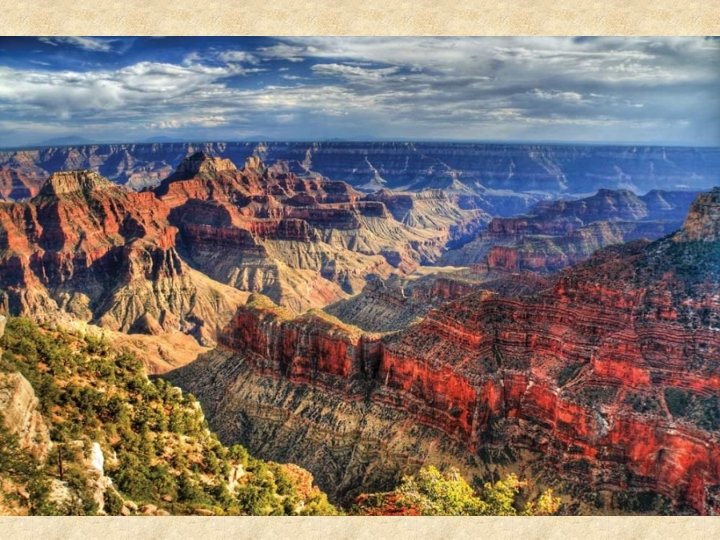
How Rocks Become Sediments (soils) Rocks can be broken down from their parent material and transported to far away new locations and deposited. The processes that accomplish this are called weathering, erosion and deposition. http: //www. youtube. com/watch? v=o. Fnpm 4 SUF 7 I&feature =related
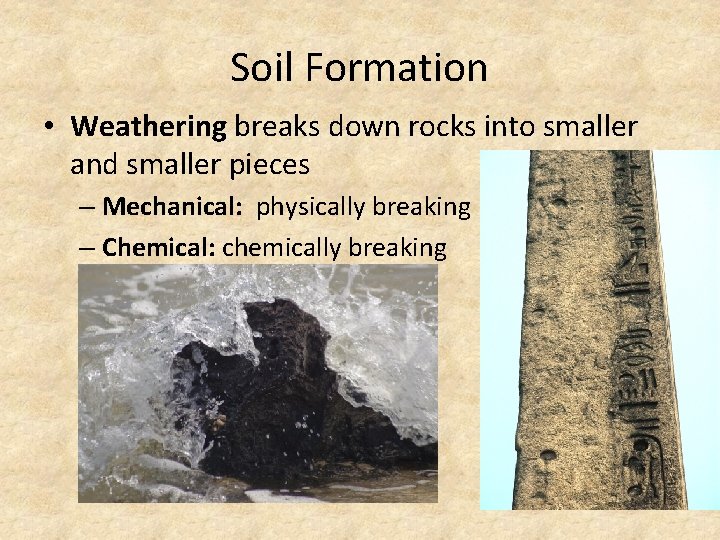
Soil Formation • Weathering breaks down rocks into smaller and smaller pieces – Mechanical: physically breaking – Chemical: chemically breaking
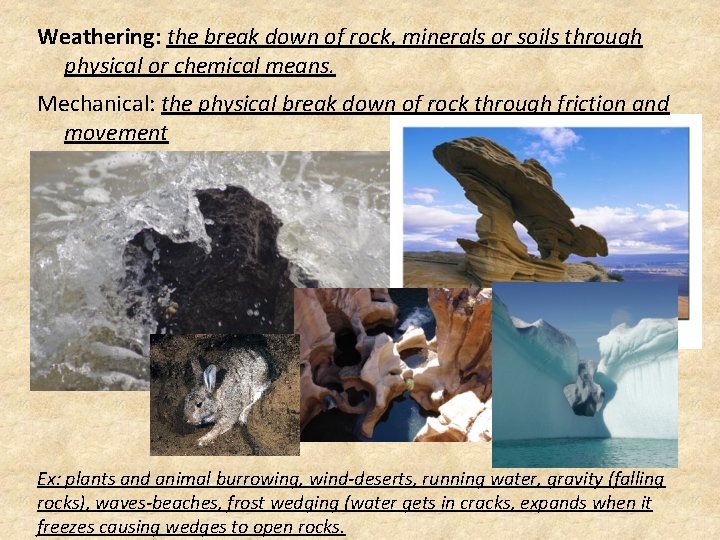
Weathering: the break down of rock, minerals or soils through physical or chemical means. Mechanical: the physical break down of rock through friction and movement Ex: plants and animal burrowing, wind-deserts, running water, gravity (falling rocks), waves-beaches, frost wedging (water gets in cracks, expands when it freezes causing wedges to open rocks.
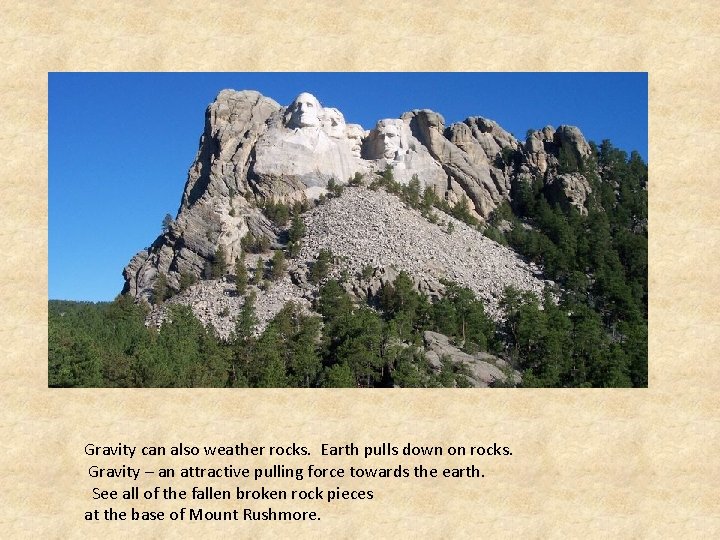
Gravity can also weather rocks. Earth pulls down on rocks. Gravity – an attractive pulling force towards the earth. See all of the fallen broken rock pieces at the base of Mount Rushmore.
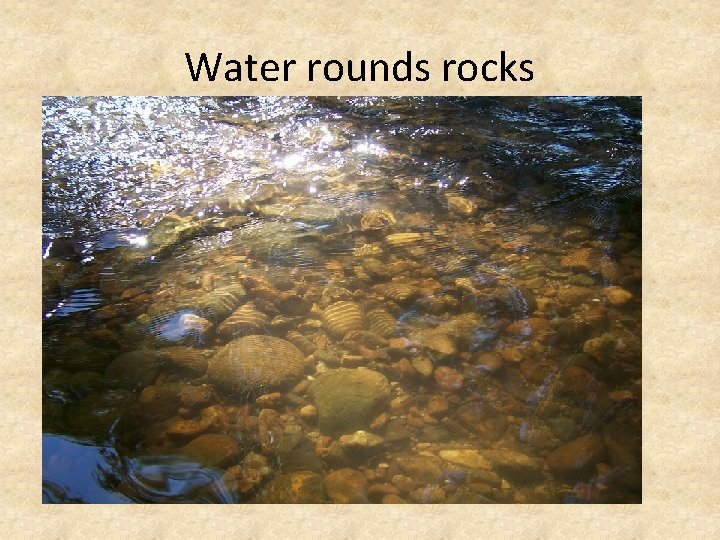
Water rounds rocks
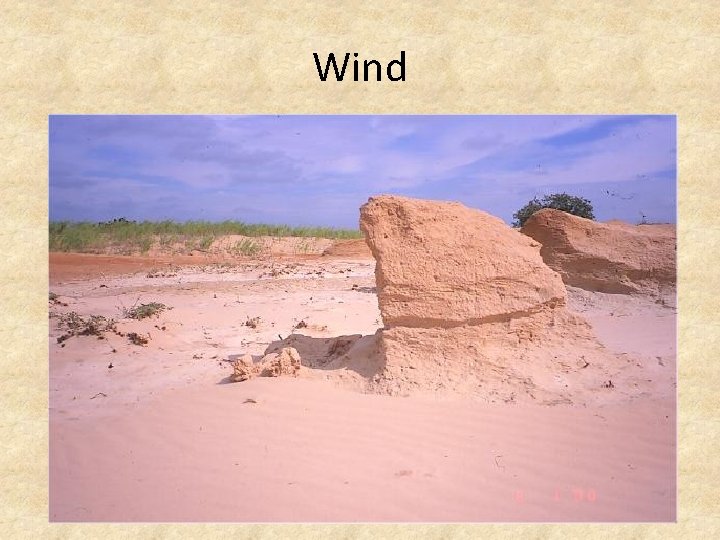
Wind
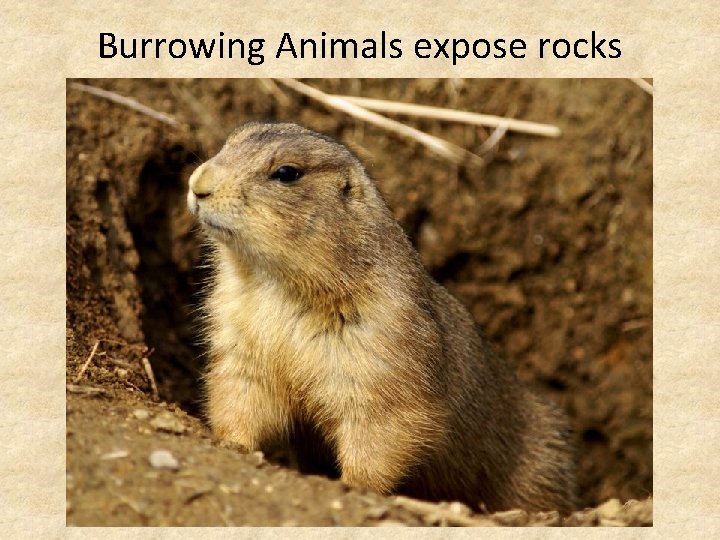
Burrowing Animals expose rocks
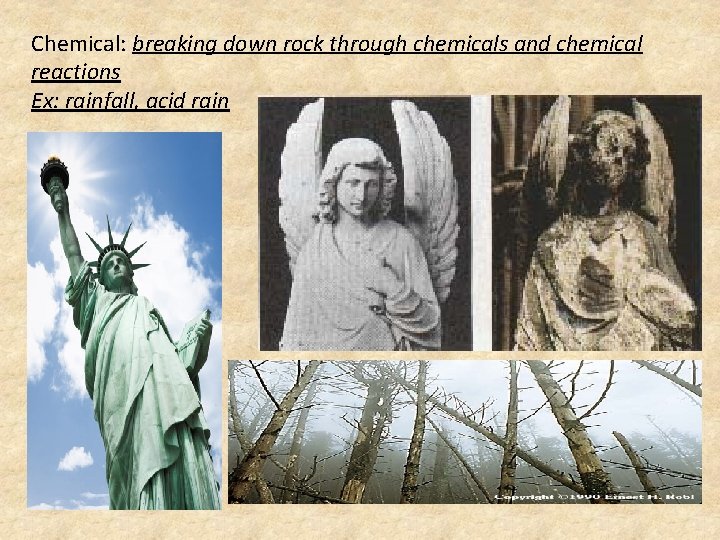
Chemical: breaking down rock through chemicals and chemical reactions Ex: rainfall, acid rain
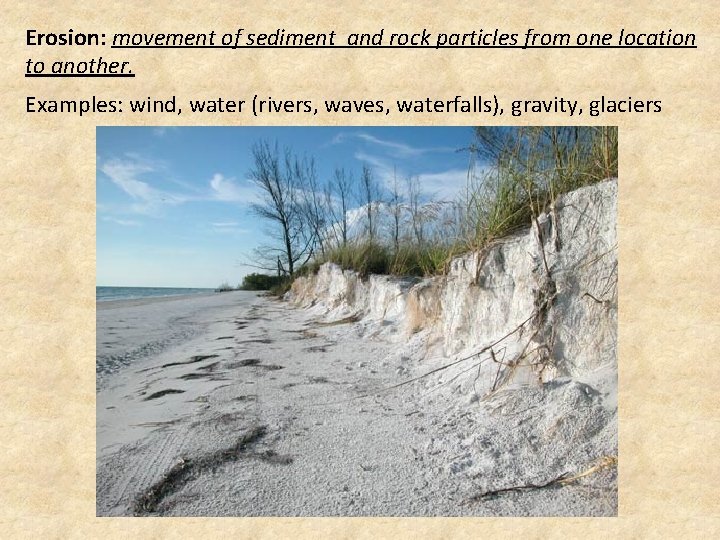
Erosion: movement of sediment and rock particles from one location to another. Examples: wind, water (rivers, waves, waterfalls), gravity, glaciers
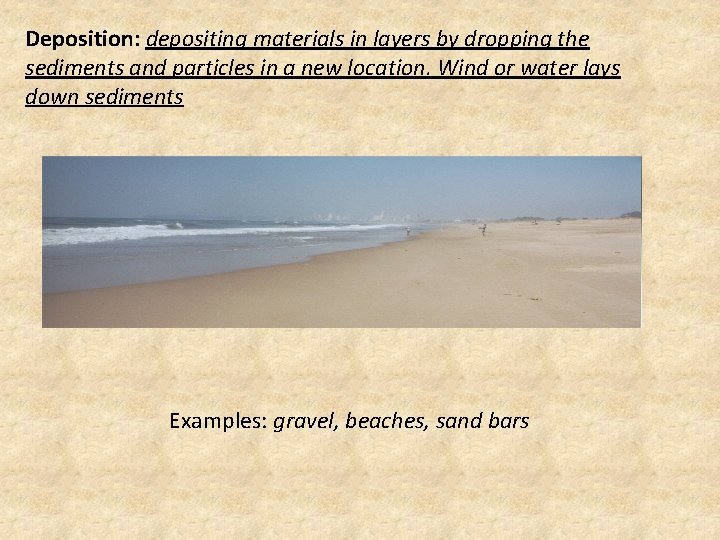
Deposition: depositing materials in layers by dropping the sediments and particles in a new location. Wind or water lays down sediments Examples: gravel, beaches, sand bars
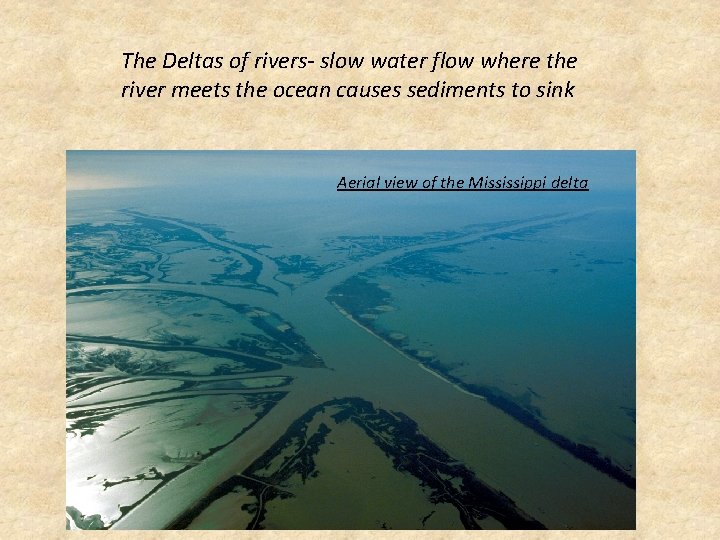
The Deltas of rivers- slow water flow where the river meets the ocean causes sediments to sink Aerial view of the Mississippi delta
So what do we do with the soil once it is formed? ? ? • Soil is used to support plant life – the base of the food chain and original food source for all other organisms • Plants need… – Sunlight (from the sun) – Water (retrieved from the soil) – Nutrients (retrieved from the soil)
Soil fertility • This gives an indication of the quality of the soil. • A measure of the ability of soil to provide plants with • 1) sufficient amount of nutrients (measured by nutrient holding capacity) and • 2) water (determined by porosity, permeability and percolation), and • 3) a sturdy place for plants to anchor their roots
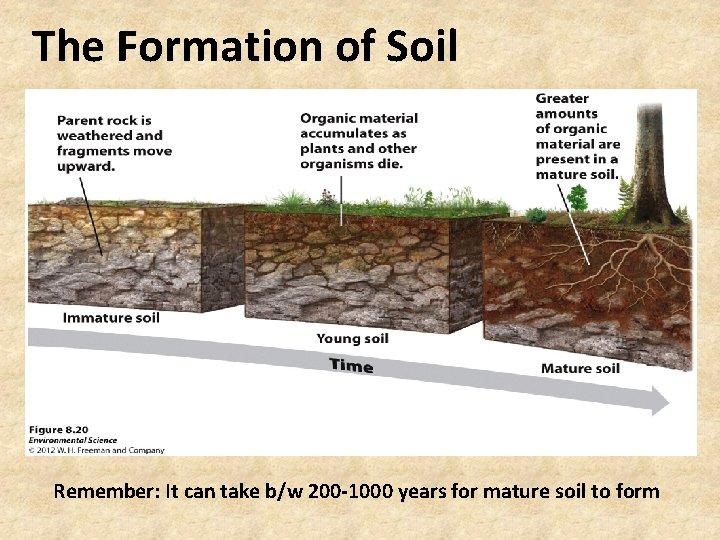
Soil Formation: • Inorganic sediments- sand, silt, clay • Living and decaying organisms (humus) – “Life Builds Soil” • Air and Water • Time – it takes 500 years for 1 inch of topsoil to form!
The Formation of Soil Remember: It can take b/w 200 -1000 years for mature soil to form
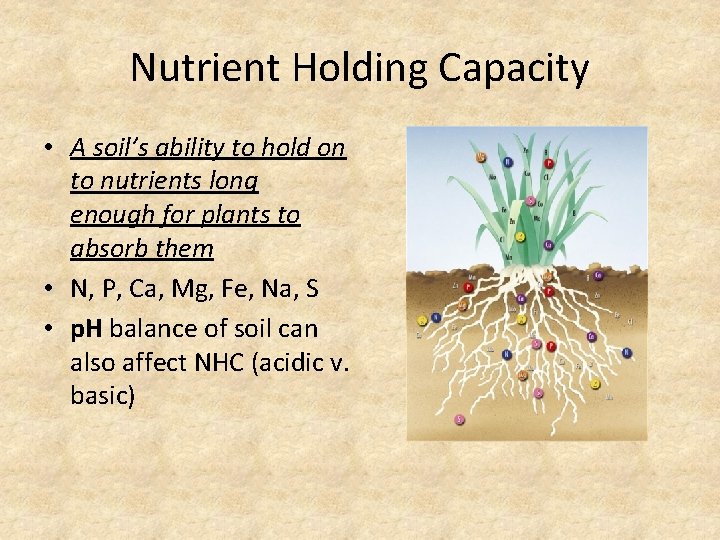
Nutrient Holding Capacity • A soil’s ability to hold on to nutrients long enough for plants to absorb them • N, P, Ca, Mg, Fe, Na, S • p. H balance of soil can also affect NHC (acidic v. basic)
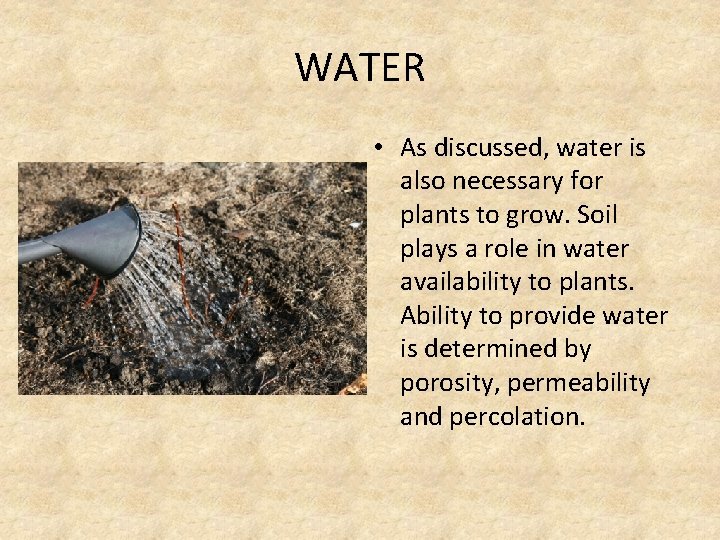
WATER • As discussed, water is also necessary for plants to grow. Soil plays a role in water availability to plants. Ability to provide water is determined by porosity, permeability and percolation.
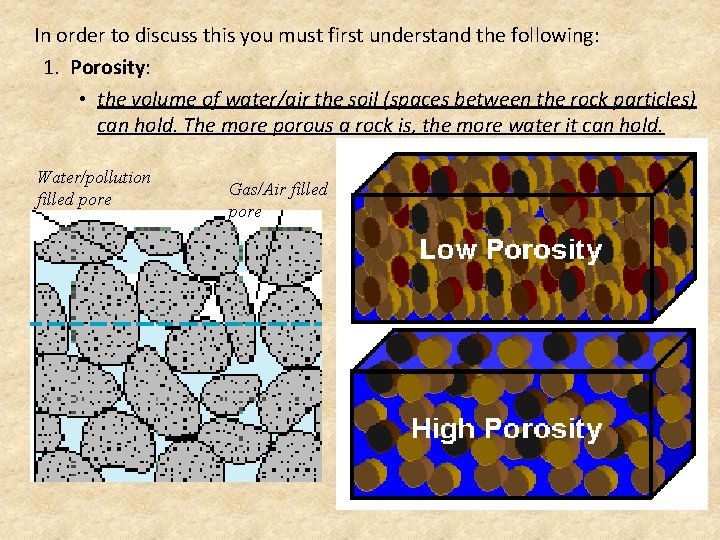
In order to discuss this you must first understand the following: 1. Porosity: • the volume of water/air the soil (spaces between the rock particles) can hold. The more porous a rock is, the more water it can hold. Water/pollution filled pore Gas/Air filled pore
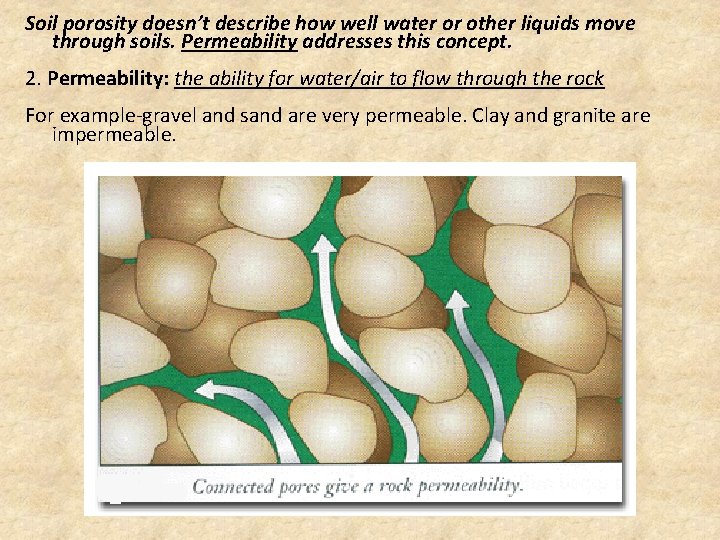
Soil porosity doesn’t describe how well water or other liquids move through soils. Permeability addresses this concept. 2. Permeability: the ability for water/air to flow through the rock For example-gravel and sand are very permeable. Clay and granite are impermeable.
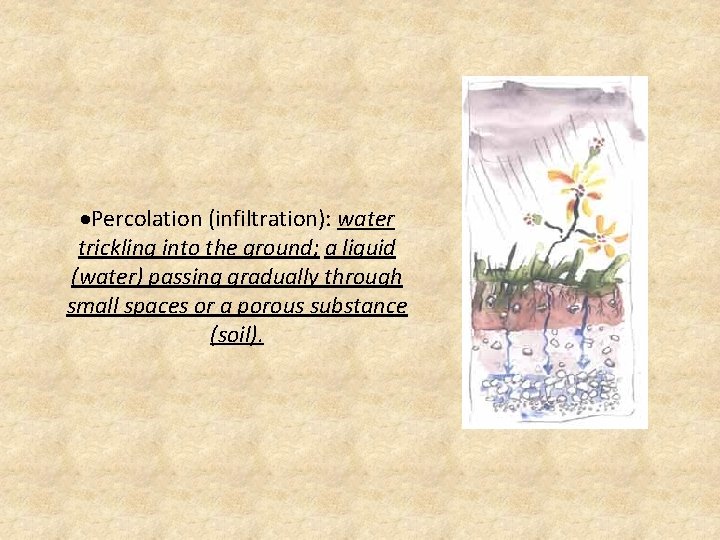
Percolation (infiltration): water trickling into the ground; a liquid (water) passing gradually through small spaces or a porous substance (soil).
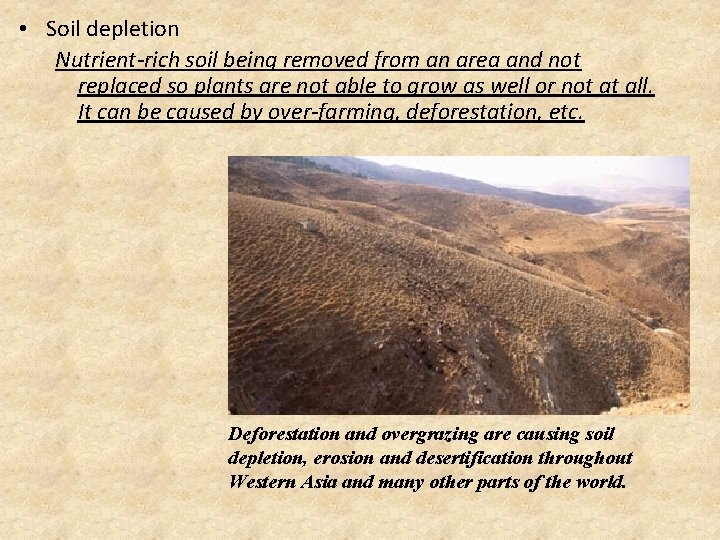
• Soil depletion Nutrient-rich soil being removed from an area and not replaced so plants are not able to grow as well or not at all. It can be caused by over-farming, deforestation, etc. Deforestation and overgrazing are causing soil depletion, erosion and desertification throughout Western Asia and many other parts of the world.
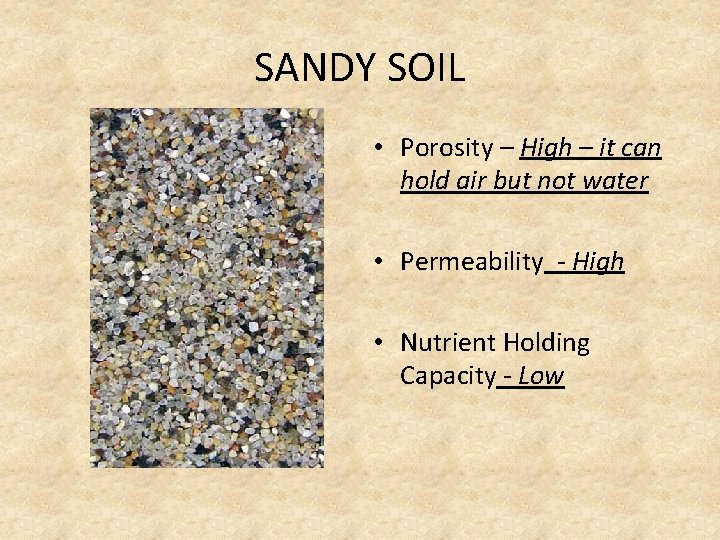
SANDY SOIL • Porosity – High – it can hold air but not water • Permeability - High • Nutrient Holding Capacity - Low
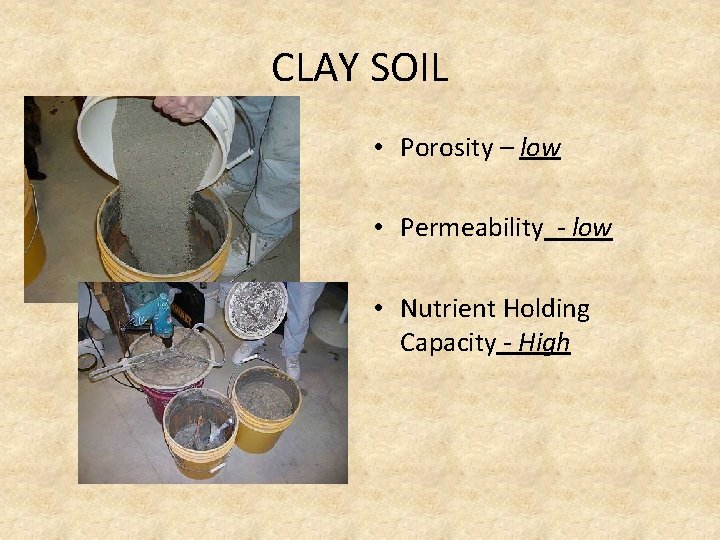
CLAY SOIL • Porosity – low • Permeability - low • Nutrient Holding Capacity - High
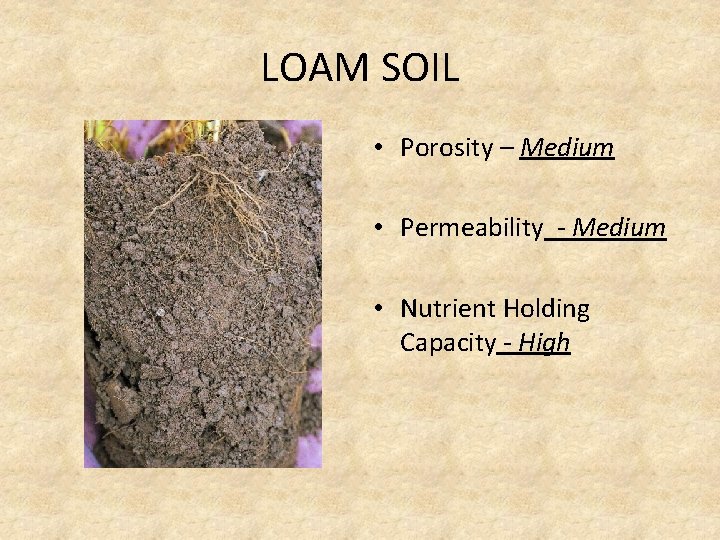
LOAM SOIL • Porosity – Medium • Permeability - Medium • Nutrient Holding Capacity - High
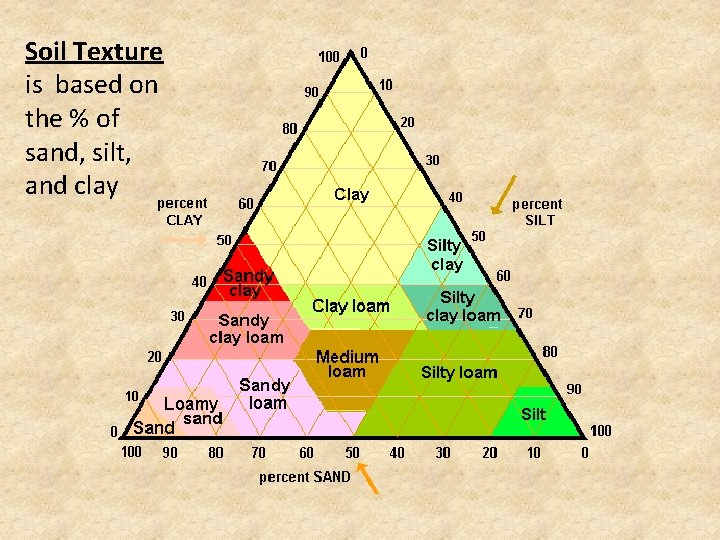
Soil Texture is based on the % of sand, silt, and clay
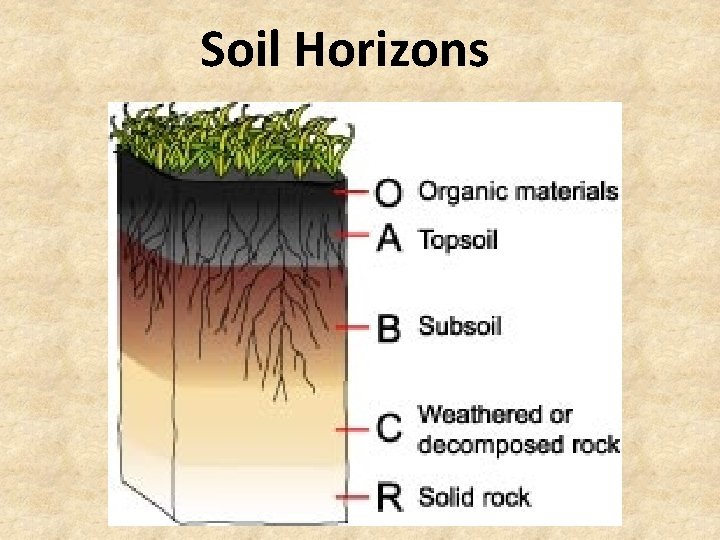
Soil Horizons
Texture Matters! • Soil Texture (%sand, silt, and clay) is the determining factor for many other soil properties: – Permeability – Porosity – Fertility: clays have lots of nutrients compared to sand
With soil made from weathering rock, LAND that is now made can be used. With optimal water and nutrient holding capacity, plants can be grown for food, clothing, oxygen and more.
Soil Texture Practice: Use the percentages on the “texture triangle” to determine the types of soils A, B, C, and D