
SOIL What is it O partially decomposed leaves




- Slides: 23
SOIL What is it?
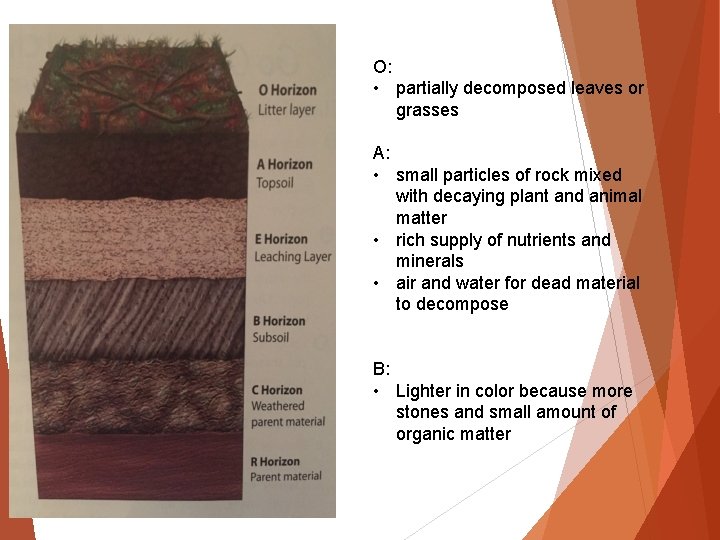
O: • partially decomposed leaves or grasses A: • small particles of rock mixed with decaying plant and animal matter • rich supply of nutrients and minerals • air and water for dead material to decompose B: • Lighter in color because more stones and small amount of organic matter
Formation of Soil begins as bedrock. Over time, rock is attacked by rain, wind, frost, snow, and living things and is broken down into smaller particles. (This is called weathering. ) Small plants can grow. Plants speed up the weathering process and add material from themselves to enrich the top soil. Larger plants can then grow.
Soil Characteristics Color -dark are rich in nutrients and lighter are not. Texture Structure clumpy soil tends to have more nutrients. PH -soil’s acidity shows its ability to support plant growth. -plants die in soils too acidic or too alkaline for them.
Soil Texture www. soils 4 teachers. org
Particle Size Distribution (Texture) Important for determining suitability for various uses Considered a basic property because it doesn’t change
Properties Related to Texture Permeability Shrink-swell Water Holding Capacity Erodibility
Soil Components Most soils have a combination of soil particles sizes. Sand Silt Clay
Sand Gritty feel Can be seen with the naked eye Hand sampling: No residue left on hand or in pores
Silt Dry: Powdery smooth feel Wet: Creamy slick, slippery feel No sticky or plastic feel Can be seen with a hand lens or microscope Hand sampling: Coats hand, able to brush off Remains in pores
Clay Dry: Hard feel Wet: Sticky, plastic feel Can be seen with an electron microscope Hand Sampling: Thick film residue
Particle Sizes Clay: less than 0. 002 mm Silt: 0. 002 -0. 005 mm Sand: 0. 05 – 2 mm . 05 - . 24 mm fine . 25 - . 49 mm medium . 5 1 - . 99 mm 2 mm course very course Gravels: 2 -75 mm Cobbles: 75 -250 mm Stones: 250 -600 mm Boulders: >600 mm
Fine Textured Soil Large components of silt and clay, making it "muddy" when wet. Pore spaces are smaller and hold more water As clay soils begin to dry, they may still hold large quantities of water. The small particle size and adhesive & cohesive properties of water make most of it will be unavailable for root uptake.
Course Textured Soil Mostly sand & gravel has large pore spaces and allows water to easily run through it beyond the reach of roots drought-prone little surface area for the particle volume, reducing the potential for nutrient weathering
Loamy Soil A mix of sand, silt, and clay that optimizes agricultural productivity
General Influence of Soil Separates on Properties and Behaviors of Soils Property/Behavior Sand Silt Clay Water holding Low Med-high Aeration Good Med Poor OM decomposition Fast Med Slow Water erosion pot. Low High Low Compactability Low Med High Sealing (ponds, ect) Poor Good Nutrient supplying* Poor Med-high High Pollutant leaching High Med Low
Soil Texture and Surface Area As particle size decreases, surface area increases Clay has about 10, 000 times as much surface area as sand Has a big effect on: Water holding capacity Chemical reactions Soil cohesion Ability to support microorganisms
Soil Degradation and Conservation Erosion: Certain farming, ranching, and forestry practices can erode soil but other practices can protect it. Desertification: loss of more than 10% of productivity due to erosion, soil compaction, forest removal, overgrazing, drought, salt buildup, climate change, depletion of water sources and other factors.
Soil Conservation Techniques to Reduce Erosion Intercropping Crop Rotation Shelterbelts Conservation Tilling Terracing Contour Farming
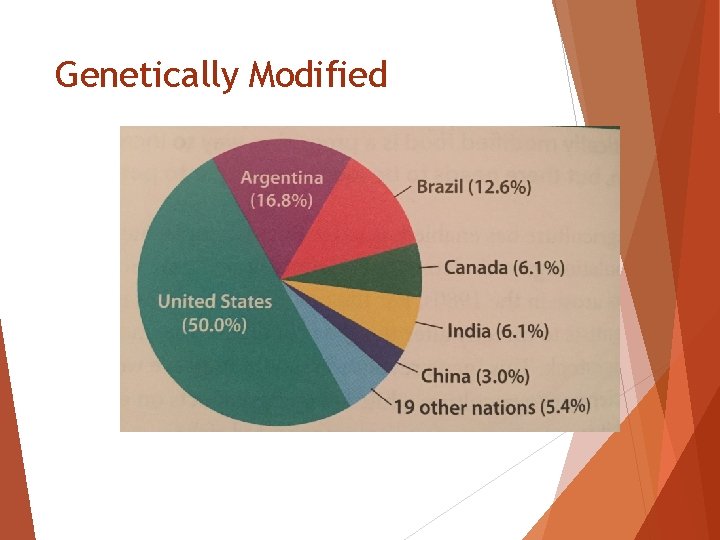
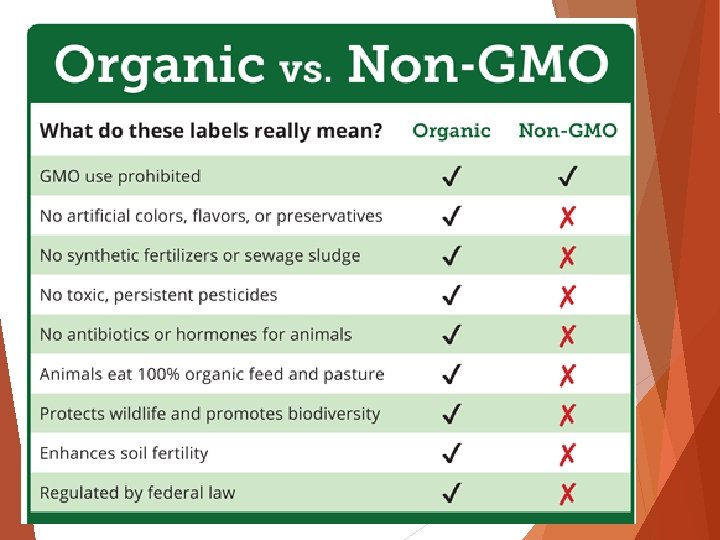
Agriculture and Food Production Only about 11% of the Earth’s land is suitable for growing crops. Genetically Modified Organisms -a promising way to increase food production but there needs to be more research into potential risks.
Genetically Modified
GMO Potential Risks -New foods dangerous to eat -pests would be resistant and become “superpests. ” Potential Benefits -GM crops have only had positive affecst on humans