
Soil Weathering Inference Point How does the age




- Slides: 25
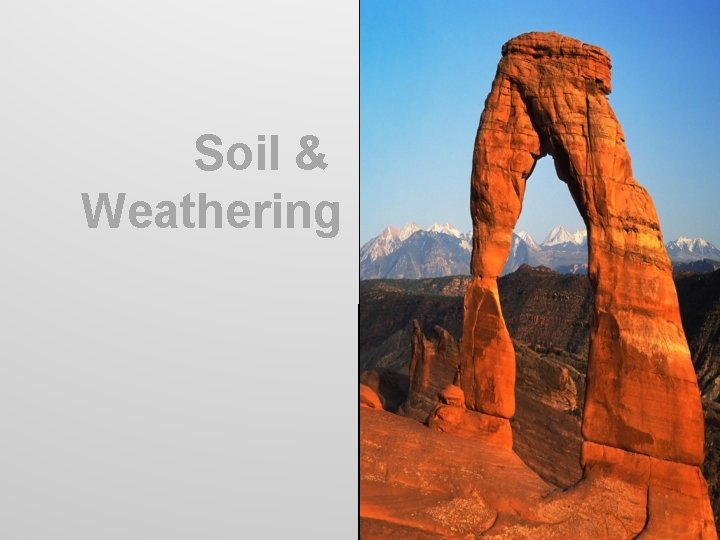
Soil & Weathering
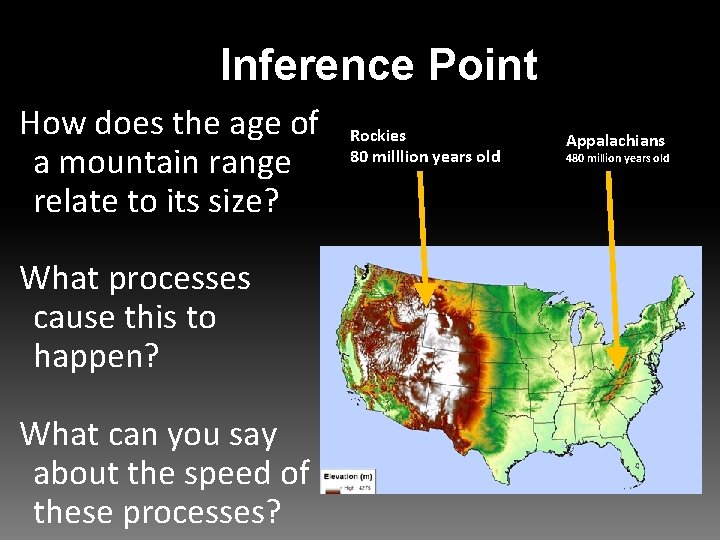
Inference Point How does the age of a mountain range relate to its size? What processes cause this to happen? What can you say about the speed of these processes? Rockies 80 milllion years old Appalachians 480 million years old
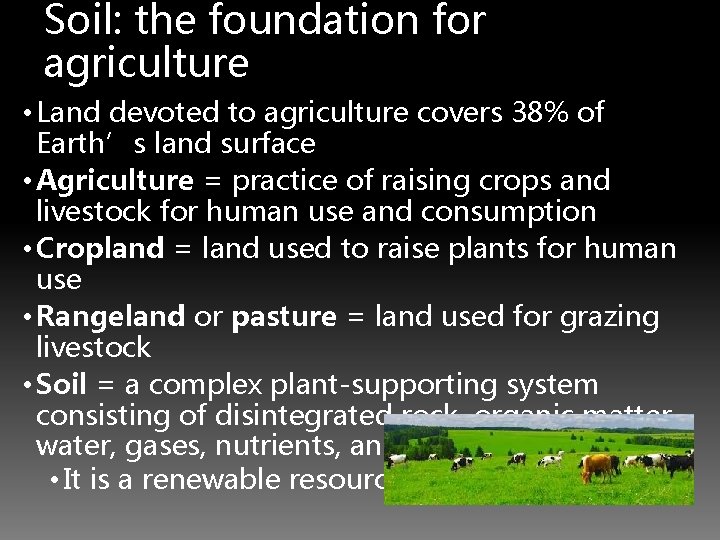
Soil: the foundation for agriculture • Land devoted to agriculture covers 38% of Earth’s land surface • Agriculture = practice of raising crops and livestock for human use and consumption • Cropland = land used to raise plants for human use • Rangeland or pasture = land used for grazing livestock • Soil = a complex plant-supporting system consisting of disintegrated rock, organic matter, water, gases, nutrients, and microorganism • It is a renewable resource
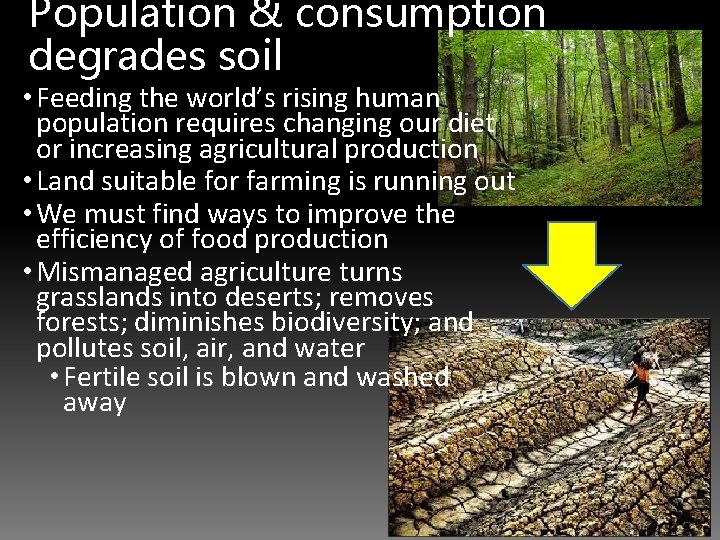
Population & consumption degrades soil • Feeding the world’s rising human population requires changing our diet or increasing agricultural production • Land suitable for farming is running out • We must find ways to improve the efficiency of food production • Mismanaged agriculture turns grasslands into deserts; removes forests; diminishes biodiversity; and pollutes soil, air, and water • Fertile soil is blown and washed away
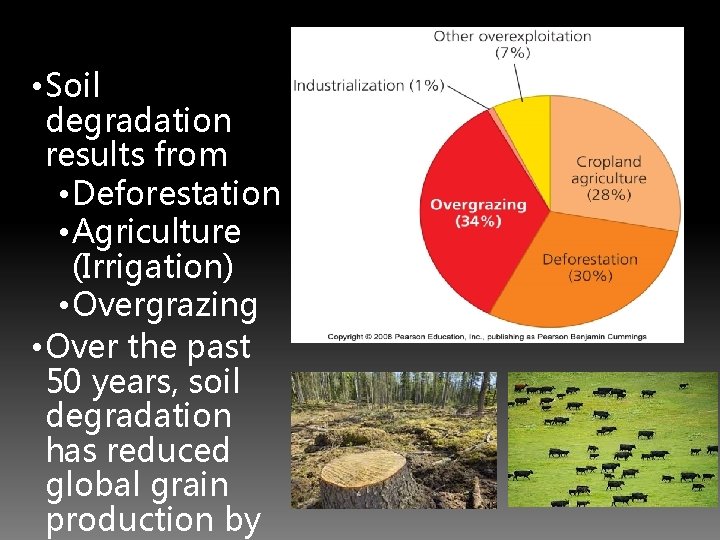
Soil degradation has many causes • Soil degradation results from • Deforestation • Agriculture (Irrigation) • Overgrazing • Over the past 50 years, soil degradation has reduced global grain production by
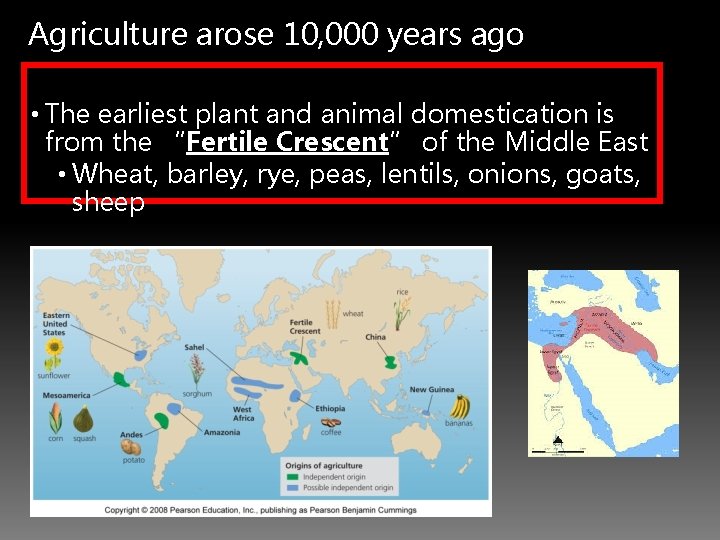
Agriculture arose 10, 000 years ago • Agriculture was invented independently by different cultures • The earliest plant and animal domestication is from the “Fertile Crescent” of the Middle East • Wheat, barley, rye, peas, lentils, onions, goats, sheep
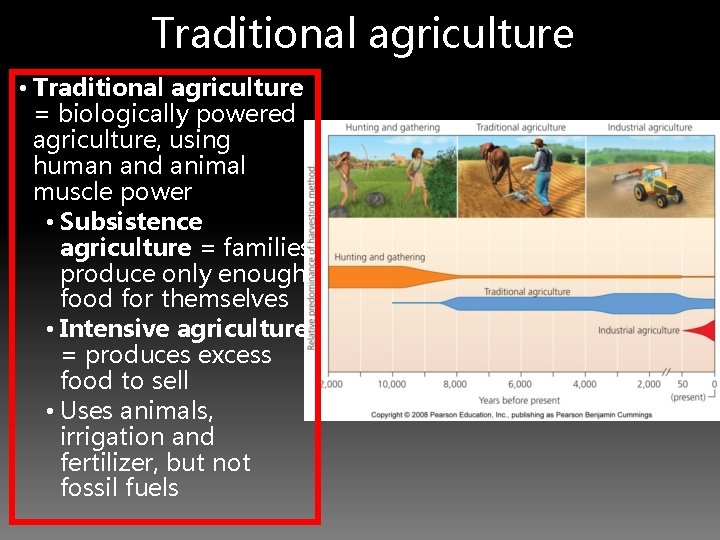
Traditional agriculture • Traditional agriculture = biologically powered agriculture, using human and animal muscle power • Subsistence agriculture = families produce only enough food for themselves • Intensive agriculture = produces excess food to sell • Uses animals, irrigation and fertilizer, but not fossil fuels
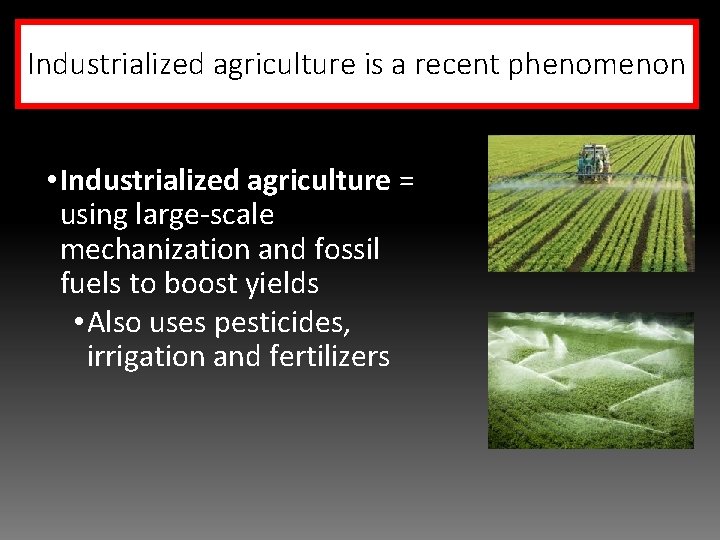
Industrialized agriculture is a recent phenomenon • Industrialized agriculture = using large-scale mechanization and fossil fuels to boost yields • Also uses pesticides, irrigation and fertilizers
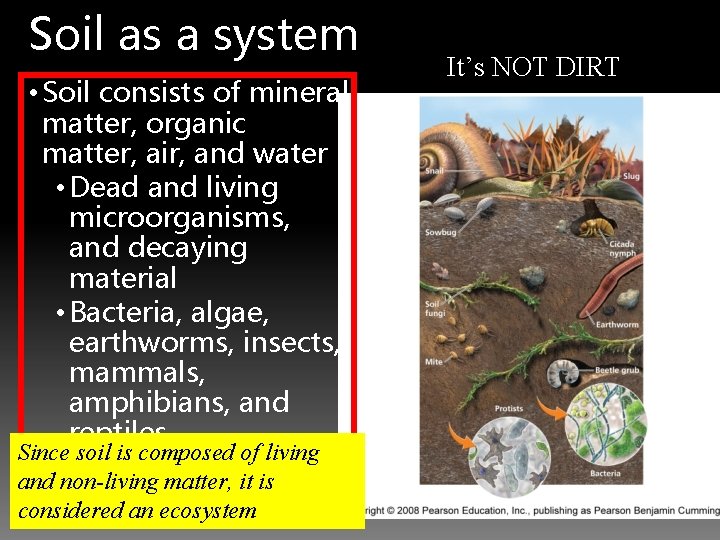
Soil as a system • Soil consists of mineral matter, organic matter, air, and water • Dead and living microorganisms, and decaying material • Bacteria, algae, earthworms, insects, mammals, amphibians, and reptiles Since soil is composed of living and non-living matter, it is considered an ecosystem It’s NOT DIRT
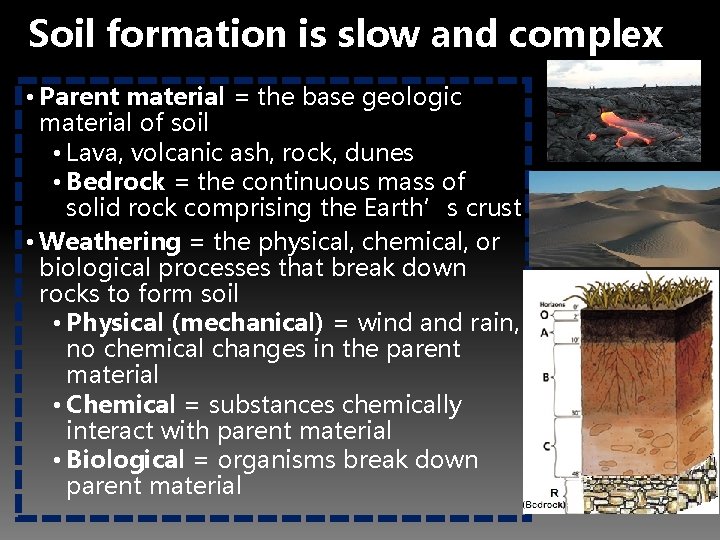
Soil formation is slow and complex • Parent material = the base geologic material of soil • Lava, volcanic ash, rock, dunes • Bedrock = the continuous mass of solid rock comprising the Earth’s crust • Weathering = the physical, chemical, or biological processes that break down rocks to form soil • Physical (mechanical) = wind and rain, no chemical changes in the parent material • Chemical = substances chemically interact with parent material • Biological = organisms break down parent material
3 Types of Weathering produces soil
Weathering Any process that breaks rocks into smaller and smaller pieces. Pieces of broken down rock and soil are called sediments.
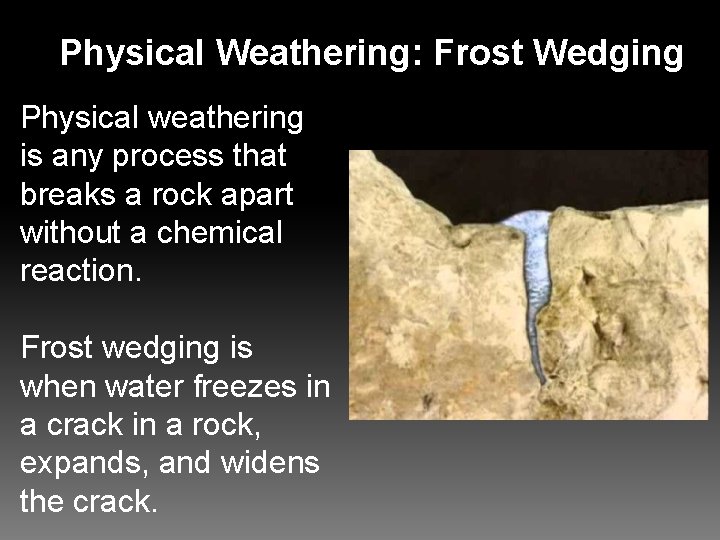
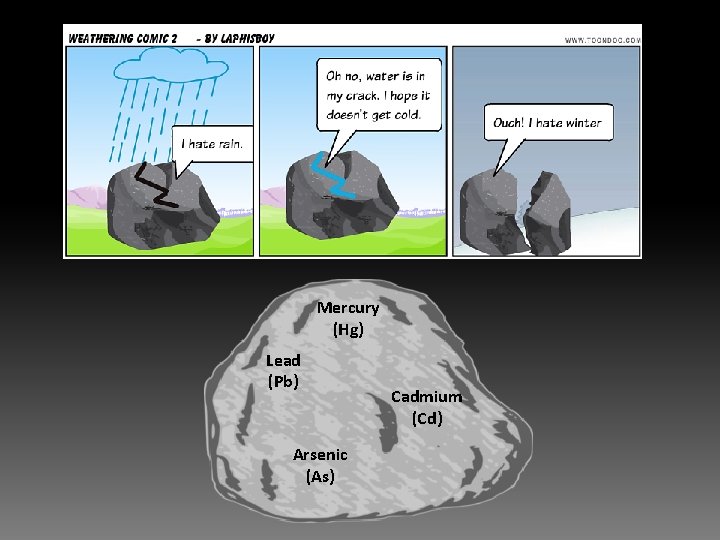
Physical Weathering: Frost Wedging Physical weathering is any process that breaks a rock apart without a chemical reaction. Frost wedging is when water freezes in a crack in a rock, expands, and widens the crack.
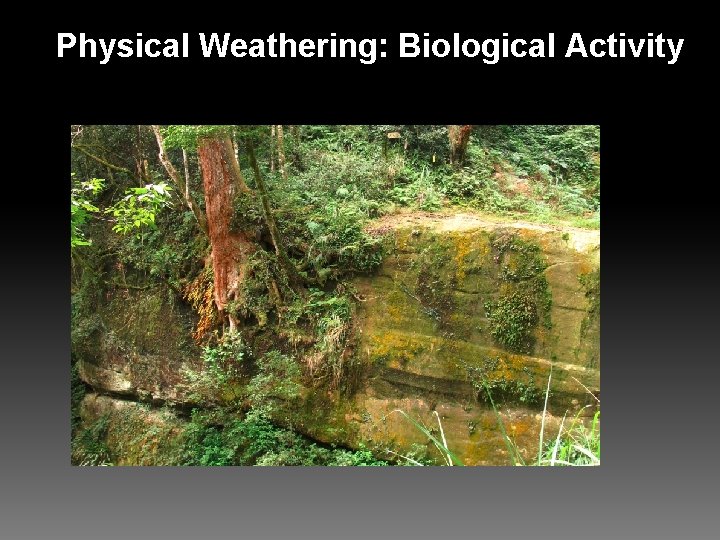
Physical Weathering: Biological Activity
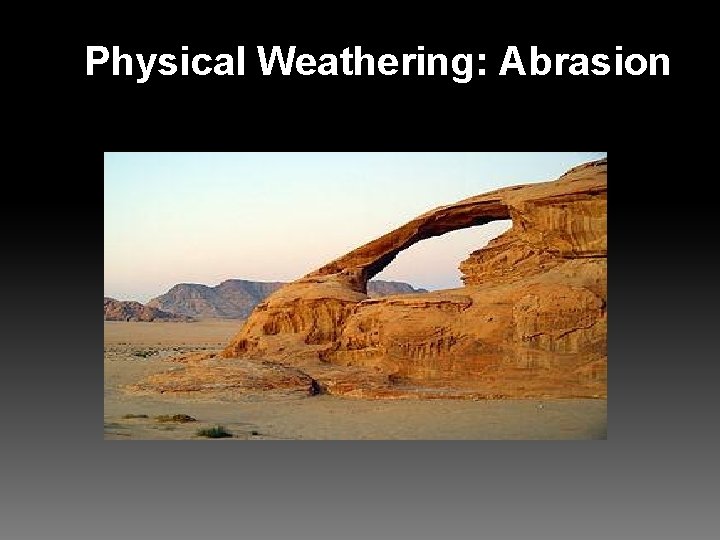
Physical Weathering: Abrasion
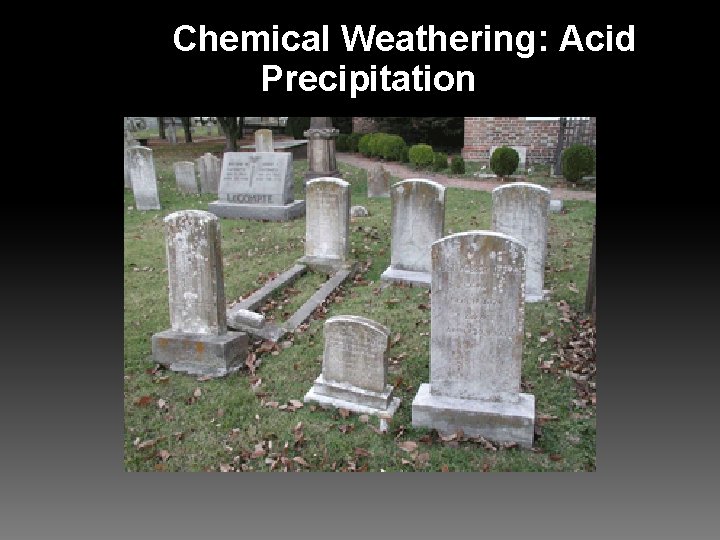
Chemical Weathering: Acid Precipitation
Mercury (Hg) Lead (Pb) Arsenic (As) Cadmium (Cd)
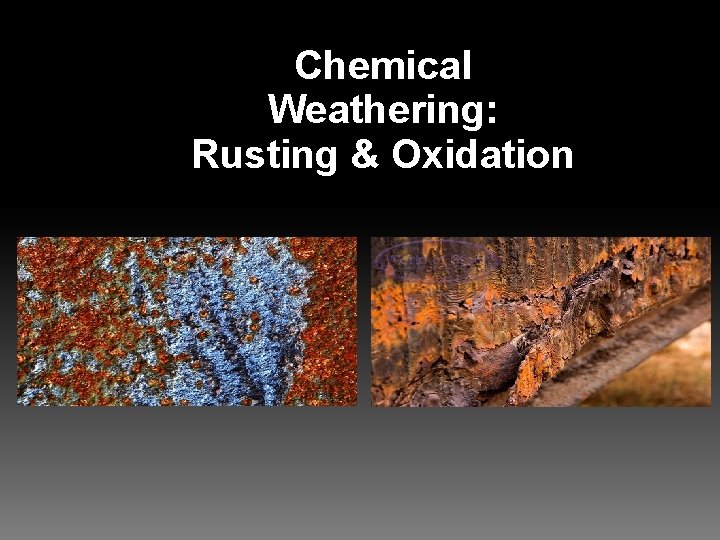
Chemical Weathering: Rusting & Oxidation
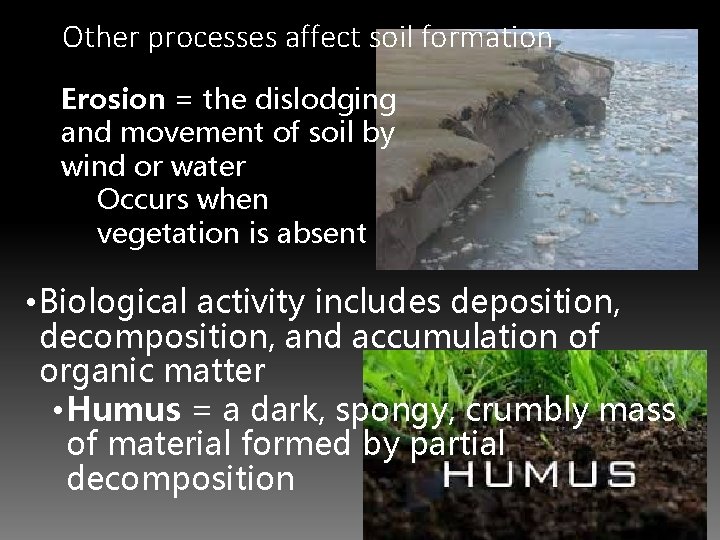
Other processes affect soil formation Erosion = the dislodging and movement of soil by wind or water Occurs when vegetation is absent • Biological activity includes deposition, decomposition, and accumulation of organic matter • Humus = a dark, spongy, crumbly mass of material formed by partial decomposition
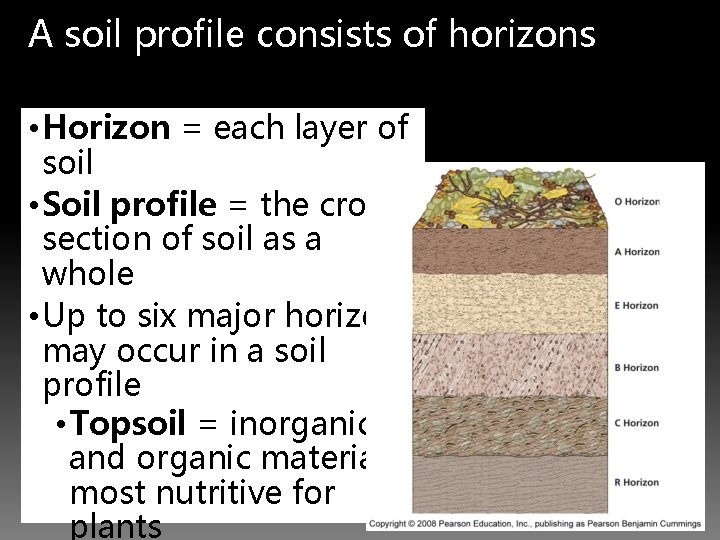
A soil profile consists of horizons • Horizon = each layer of soil • Soil profile = the crosssection of soil as a whole • Up to six major horizons may occur in a soil profile • Topsoil = inorganic and organic material most nutritive for plants
Soil Horizon Profile
Soils are characterized in many ways • Soils are classified based on color, texture, structure, and p. H • Soil color = indicates its composition and fertility • Black or dark brown = rich in organic matter • Pale gray or white = indicates leaching • Soil texture = determined by the size of particles • From smallest to largest = clay, silt, sand • Loam = soil with an even mixture of the three • Influences how easy it is to cultivate and let air and water travel through the soil
Soil texture classification Silty soils with medium-size pores, or loamy soils with mixtures of pore sizes are best for plant growth and crop agriculture
a m g a M xit E