
SOIL Weathering 1 PHYSICAL Mechanical breakdown of rocks
SOIL!
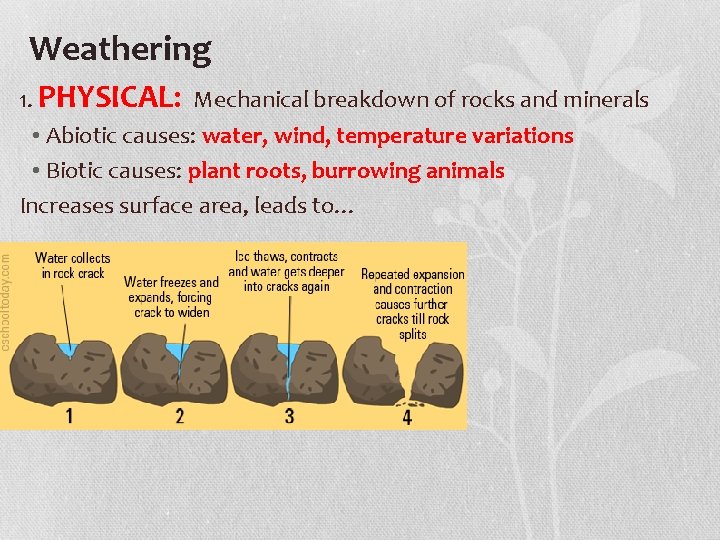
Weathering 1. PHYSICAL: Mechanical breakdown of rocks and minerals • Abiotic causes: water, wind, temperature variations • Biotic causes: plant roots, burrowing animals Increases surface area, leads to…
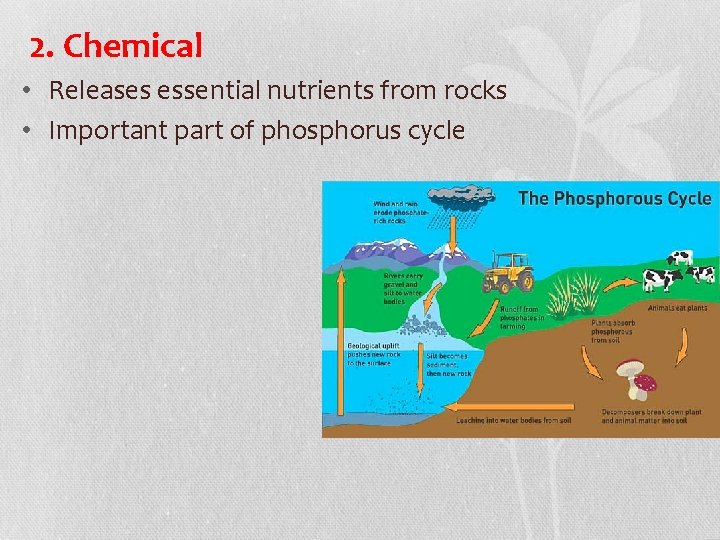
2. Chemical • Releases essential nutrients from rocks • Important part of phosphorus cycle

Anthropogenic chemical weathering Fossil fuel combustion �� Sulfur and nitrogen oxides �� react with water vapor �� sulfuric acid �� acid precipitation (acid rain)

Acid rain effects 1. Limestone, marble (statues, gravestones) 2. Acidification of soils and trees 3. Impaired Visibility 4. Human health: asthma, bronchitis, emphysema
Soil development • From below: Physical breakdown of rocks and primary materials (newly exposed minerals) provide raw material • From above : Deposition of organic material from dead organisms and their waste
• Mature soil has more organic material and more nutrients • BUT very old soils may be nutrient-poor due to plants and water leaching nutrients
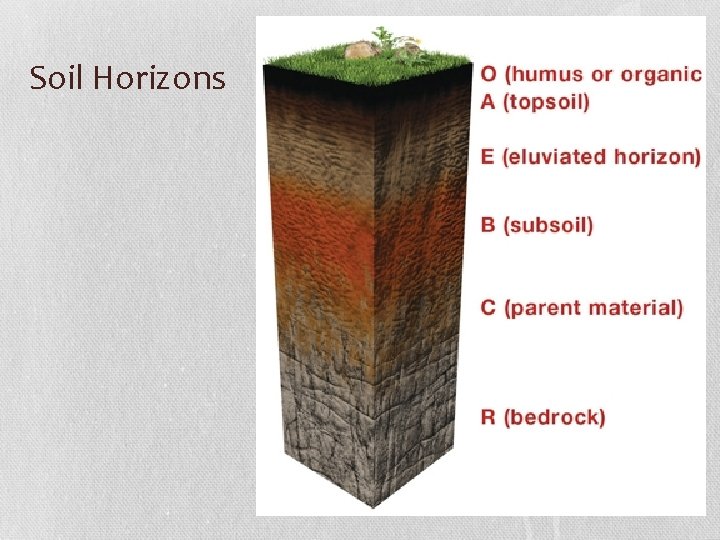
Soil Horizons
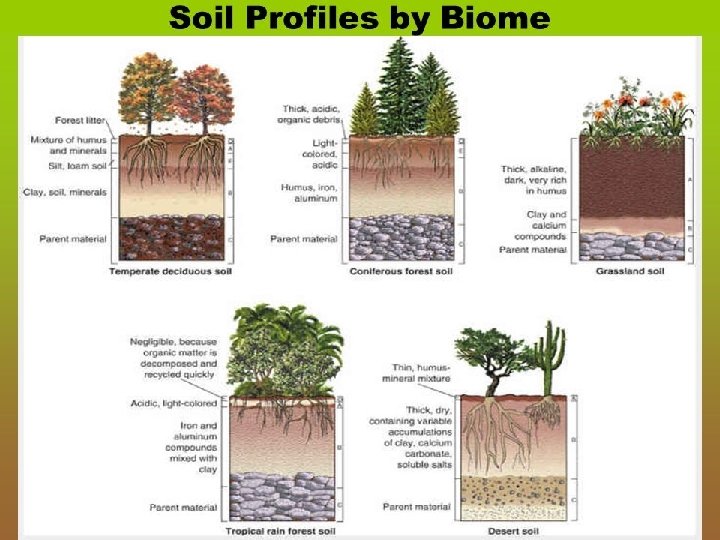
O Horizon = “Organic” • Decomposed organic material • Sometimes called humus (lower layer) • Most pronounced in forests
A Horizon = topsoil • Surface soil/topsoil • Organic mixed with mineral material • Most biological activity

E Horizon = “Eluviated” • In some acidic soils • Metals and nutrients are leached, or eluviated, from above (iron, aluminum, organic acids)
B Horizon = Subsoil • Mineral material – zone of accumulation of metals and nutrients
C Horizon • Least weathered • Similar to parent material
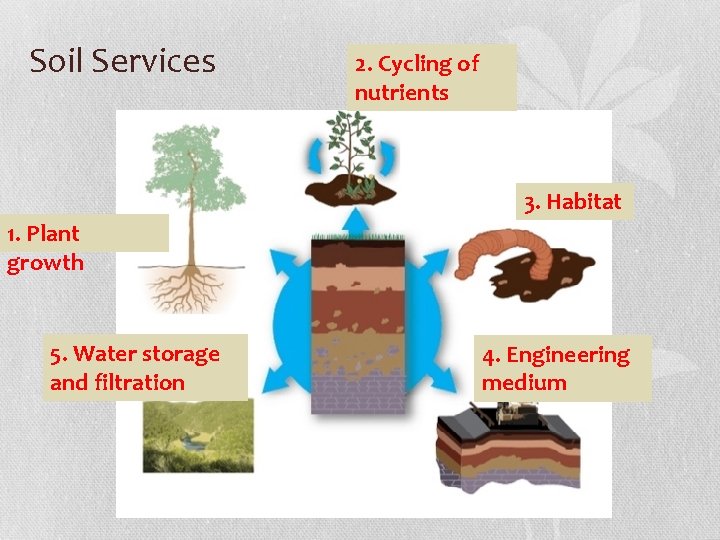
Soil Services 2. Cycling of nutrients 3. Habitat 1. Plant growth 5. Water storage and filtration 4. Engineering medium
- Slides: 15