
Soil Texture 1 What is Soil Texture Soil
- Slides: 11
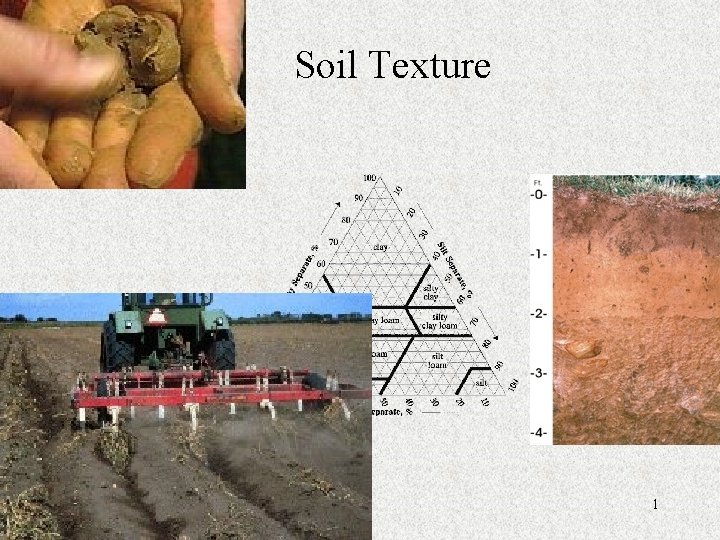
Soil Texture 1
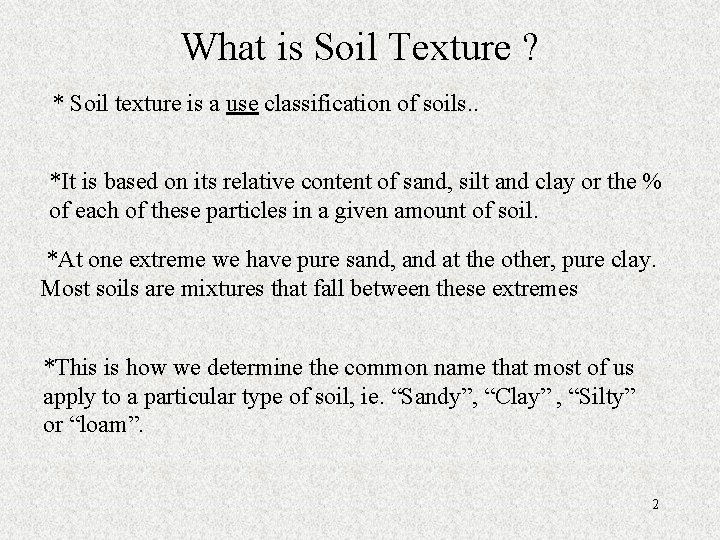
What is Soil Texture ? * Soil texture is a use classification of soils. . *It is based on its relative content of sand, silt and clay or the % of each of these particles in a given amount of soil. *At one extreme we have pure sand, and at the other, pure clay. Most soils are mixtures that fall between these extremes *This is how we determine the common name that most of us apply to a particular type of soil, ie. “Sandy”, “Clay” , “Silty” or “loam”. 2
So What? Soil Texture determines the uses and the limitations of the soil. 3
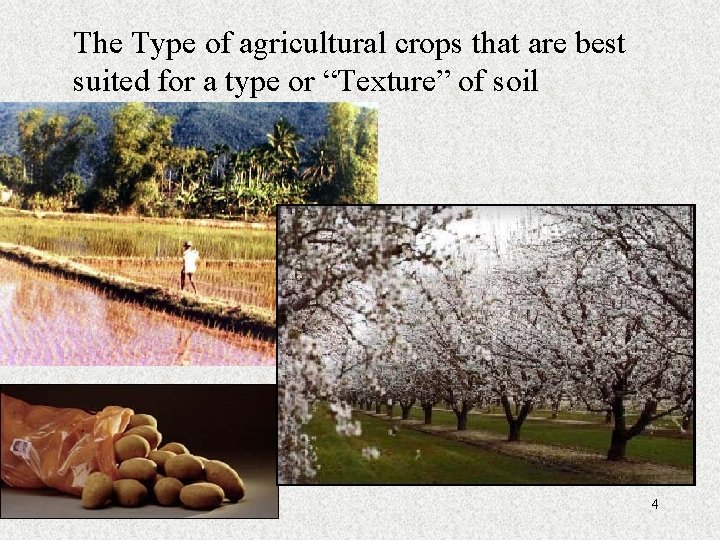
The Type of agricultural crops that are best suited for a type or “Texture” of soil 4
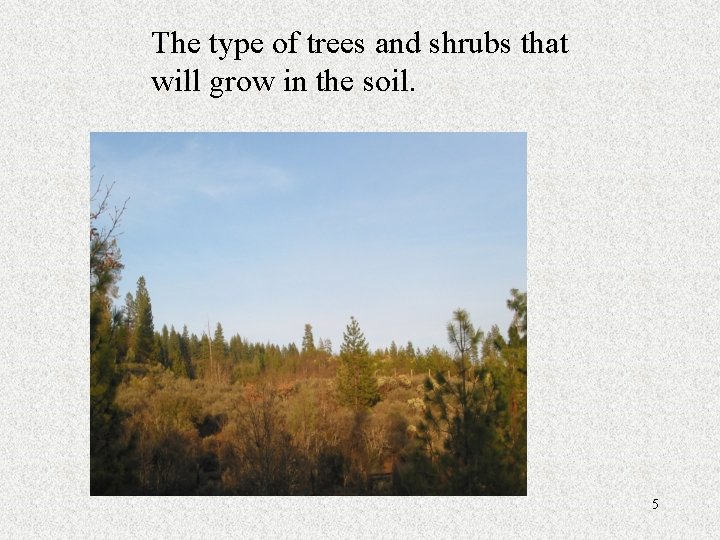
The type of trees and shrubs that will grow in the soil. 5
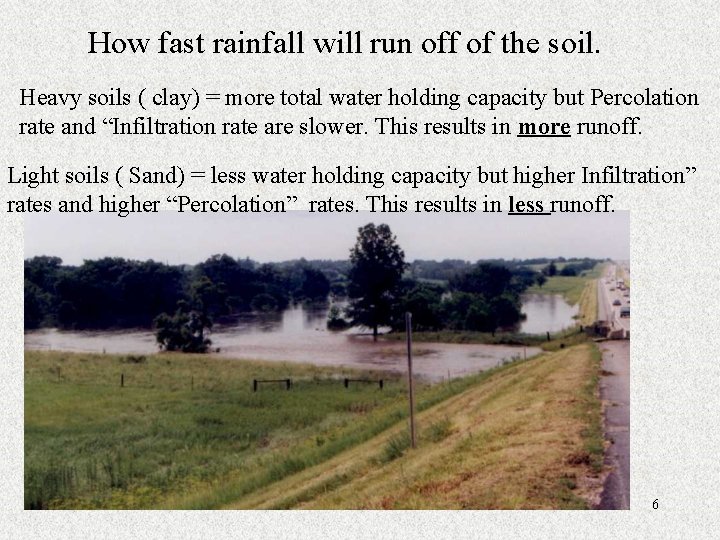
How fast rainfall will run off of the soil. Heavy soils ( clay) = more total water holding capacity but Percolation rate and “Infiltration rate are slower. This results in more runoff. Light soils ( Sand) = less water holding capacity but higher Infiltration” rates and higher “Percolation” rates. This results in less runoff. 6
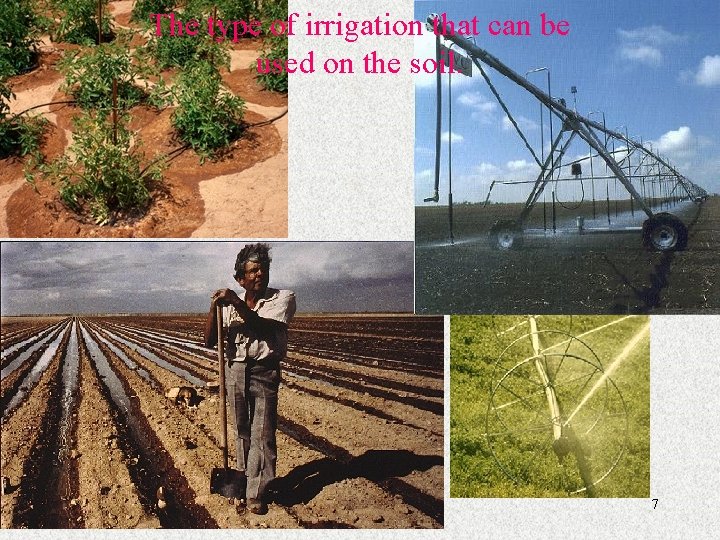
The type of irrigation that can be used on the soil. 7
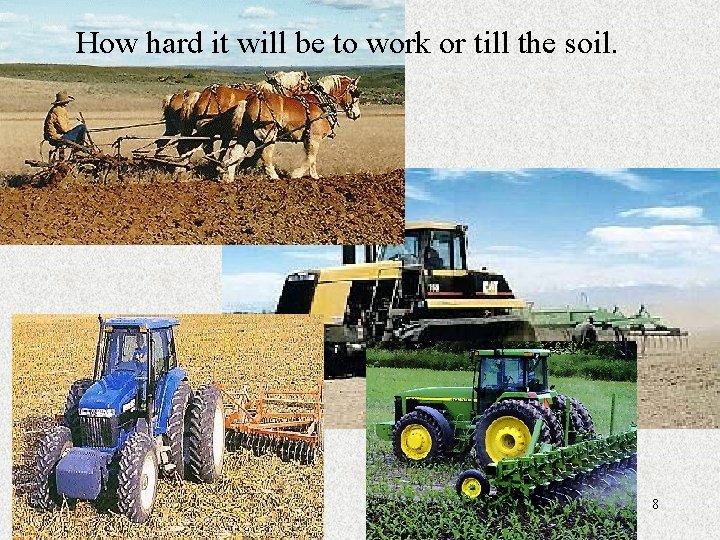
How hard it will be to work or till the soil. 8
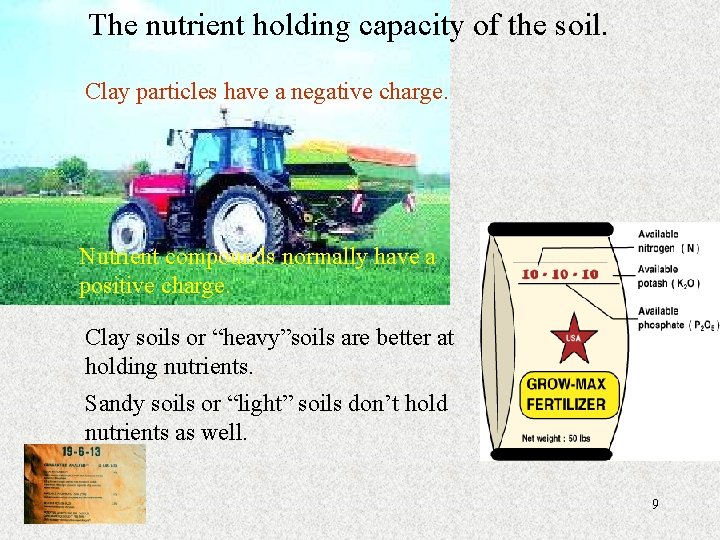
The nutrient holding capacity of the soil. Clay particles have a negative charge. Nutrient compounds normally have a positive charge. Clay soils or “heavy”soils are better at holding nutrients. Sandy soils or “light” soils don’t hold nutrients as well. 9
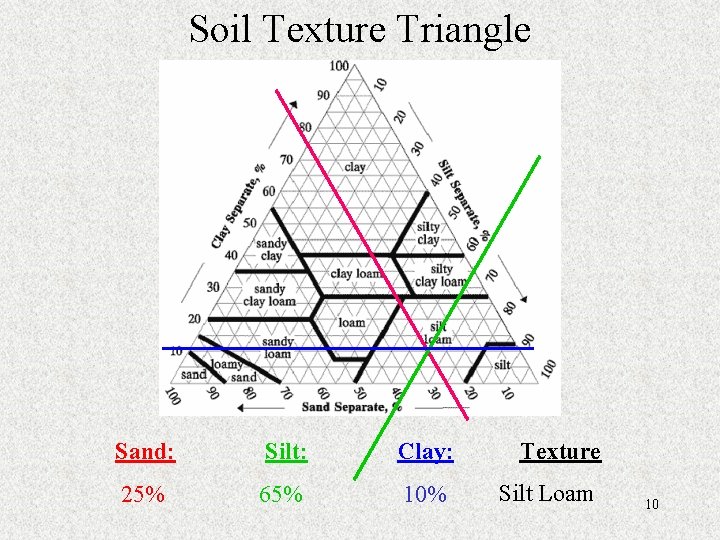
Soil Texture Triangle Sand: Silt: Clay: Texture 25% 65% 10% Silt Loam 10
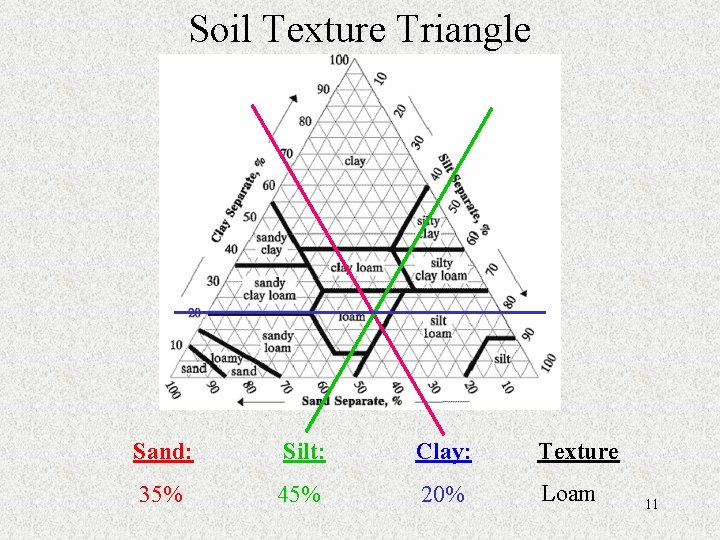
Soil Texture Triangle Sand: Silt: Clay: Texture 35% 45% 20% Loam 11