SOIL Soil is a mixture of weathered rock
- Slides: 14
SOIL
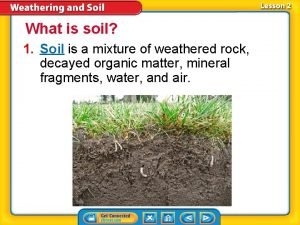
• Soil: is a mixture of weathered rock particles and other materials.
Soil Composition • Weathered rock particles – 65 -75% • Organic matter (humus) – 5% • Water • Air – Together make up 20 -30%
Factors that determine soil in an area. • • • Kind of rock Climate or overall weather pattern Landforms, such as mountains or valleys Plant coverage Animal or organisms Time
Composition of soil determines • What you can grow in it • What you can build on it • What happens to the rainwater that falls on it.
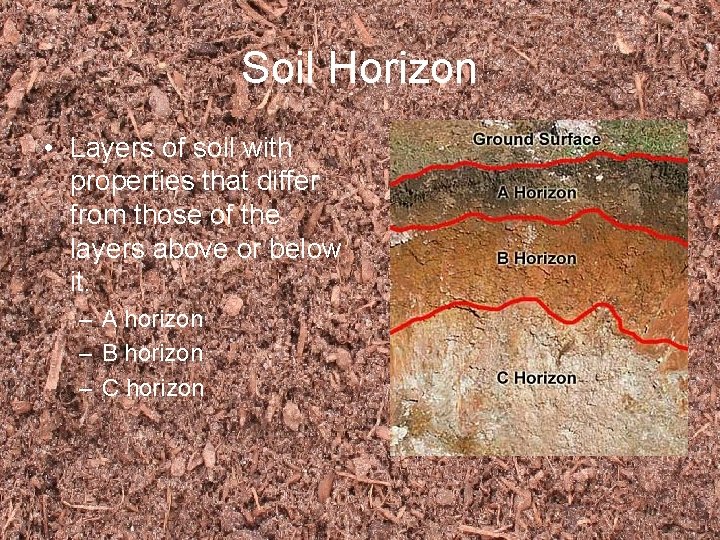
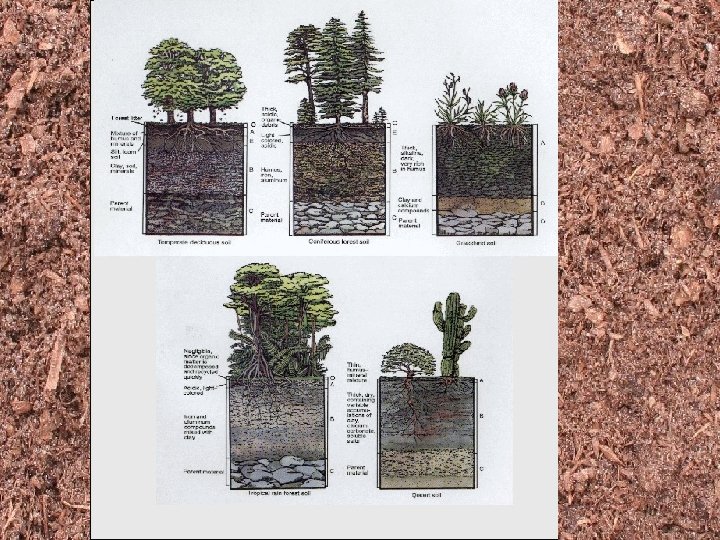
Soil Horizon • Layers of soil with properties that differ from those of the layers above or below it. – A horizon – B horizon – C horizon
Climate and landforms affect soil • Climate influences the characteristics and thickness of the soil that develops from weathered rock • Soil is going to vary from mountains to valleys.
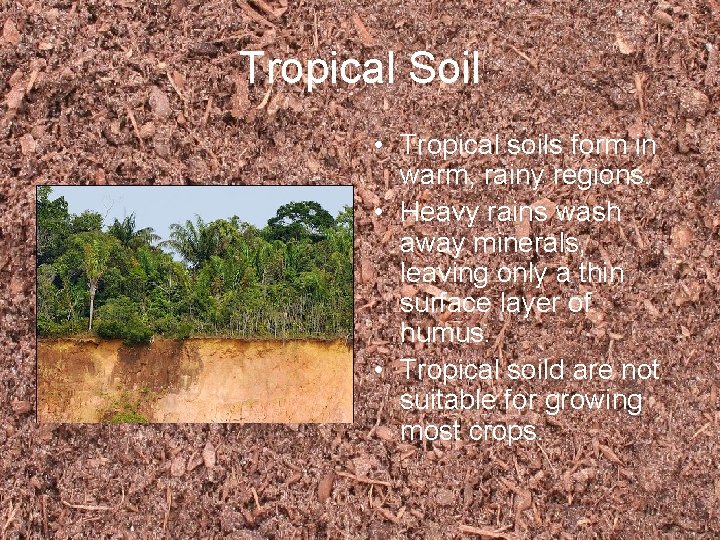
Tropical Soil • Tropical soils form in warm, rainy regions. • Heavy rains wash away minerals, leaving only a thin surface layer of humus. • Tropical soild are not suitable for growing most crops.
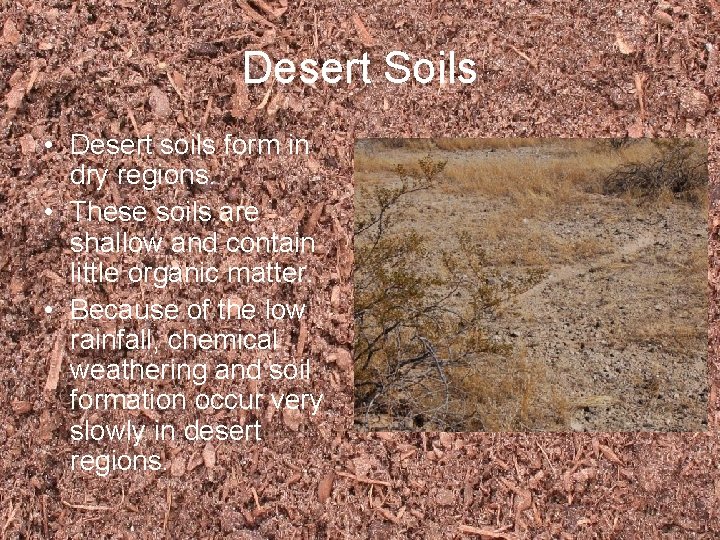
Desert Soils • Desert soils form in dry regions. • These soils are shallow and contain little organic matter. • Because of the low rainfall, chemical weathering and soil formation occur very slowly in desert regions.
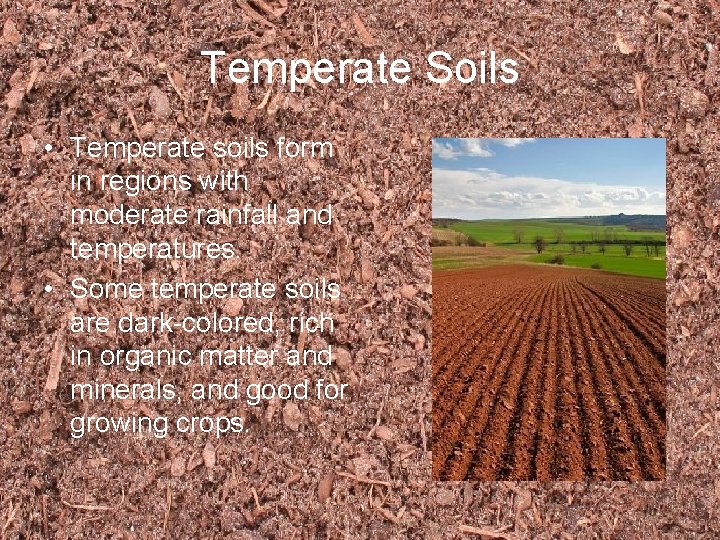
Temperate Soils • Temperate soils form in regions with moderate rainfall and temperatures. • Some temperate soils are dark-colored, rich in organic matter and minerals, and good for growing crops.
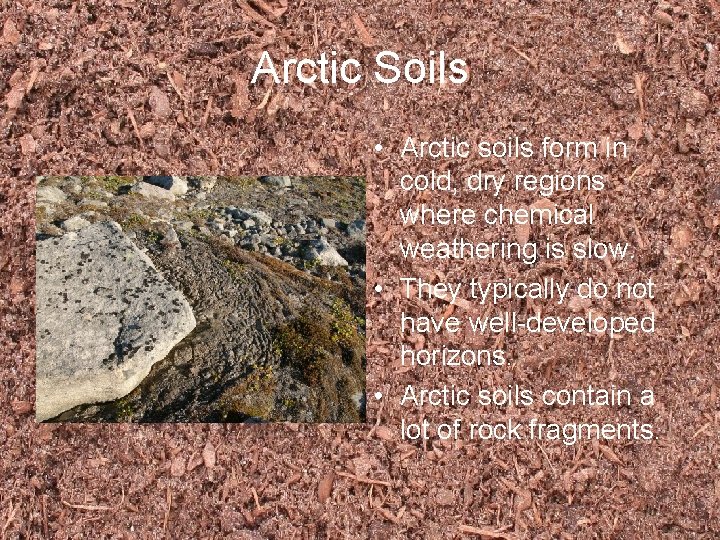
Arctic Soils • Arctic soils form in cold, dry regions where chemical weathering is slow. • They typically do not have well-developed horizons. • Arctic soils contain a lot of rock fragments.
Activity of organisms affect soil. • Plant • Microorganisms • Animals
Properties of soil • • Texture Color Pore space Chemistry