
SOIL SCIENCE 1 Soil science as a study
![The pedosphere (from the Greek πέδον [pedon] soil, earth + σφαίρα [sfaíra] sphere) is](https://slidetodoc.com/presentation_image_h2/46e8f16eba87eb091ade7555a0bb0822/image-5.jpg "The pedosphere (from the Greek πέδον [pedon] soil, earth + σφαίρα [sfaíra] sphere) is")
- Slides: 56
SOIL SCIENCE 1. Soil science as a study. 2. Fields of study. 3. History. 4. Areas of practice. 5. Fields of application in soil science. 6. Soil formation and the Factors of soil formation. 7. Characteristics of the soils. 8. Organic matter.
Soil science deals with soil as a natural resource on the surface of the earth including soil formation, classification and mapping; physical, chemical, biological, and fertility properties of soils per se; and these properties in relation to the use and management of soils. Soil science is the study of the earth’s soil as a renewable natural resource. This field was originally made up of a conglomeration of several disciplines, chemistry, biology and geology, but has since grown into a fully recognized field of study. The science has broken into two main divisions: pedology studies the soil as it exists in nature and edaphology studies man’s utilization of soil as a tool. While the two areas study different things, they have the same overall goals: maintaining soil quality, slowing desertification and safeguarding human activities from both the human and soil standpoint.
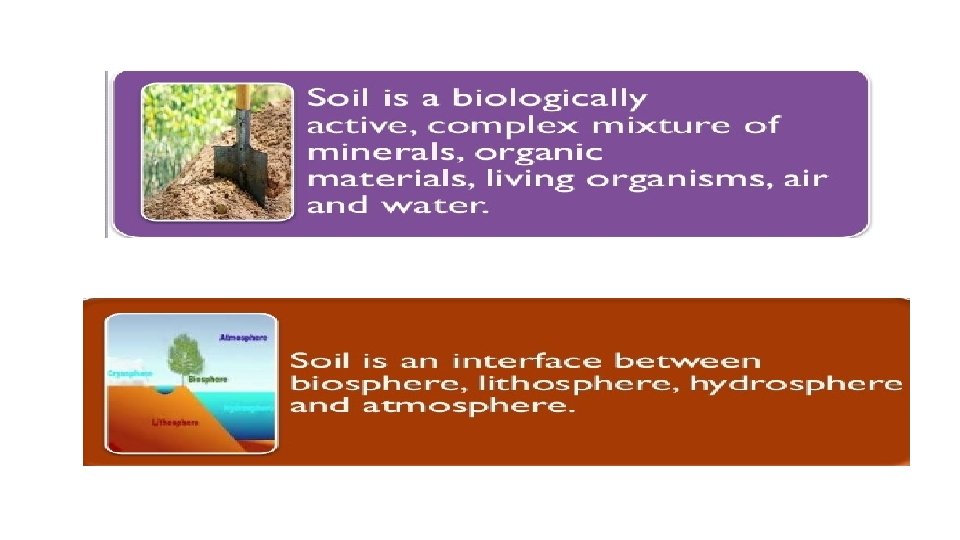
The pedosphere (from the Greek πέδον [pedon] soil, earth + σφαίρα [sfaíra] sphere) is the outermost layer of the Earth that is composed of soil and subject to soil formation processes. It exists at the interface of the lithosphere, atmosphere, hydrosphere and biosphere
Edaphology (from Greek ἔδαφος, edaphos, "ground"; and -λογία, -logia) is one of two main divisions of soil science, the other being pedology. Edaphology is concerned with the influence of soils on living things, particularly plants. The term is also applied to the study of how soil influences man's use of land for plant growth as well as man's overall use of the land. General subfields within edaphology are agricultural soil science (known by the term agrology in some regions) and environmental soil science.
While many of the usages of soil science are well known. These fields work heavily with ground contamination remediation from landfills, toxic dumping and ecological accidents. A soil scientist is often consulted by paleontologists and archeologists to help decipher areas where specimens are found in highly disturbed areas. Lastly, the modern field of climatology is learning that soil contains vast amounts of information related to greenhouse cycles and carbon fixation.
Dependence on and curiosity about soil, exploring the diversity and dynamic of this resource continues to yield fresh discoveries and insights. New avenues of soil research are compelled by a need to understand soil in the context of climate change, greenhouse gases, and carbon sequestration. Interest in maintaining the planet's biodiversity and in exploring past cultures has also stimulated renewed interest in achieving a more refined understanding of soil.
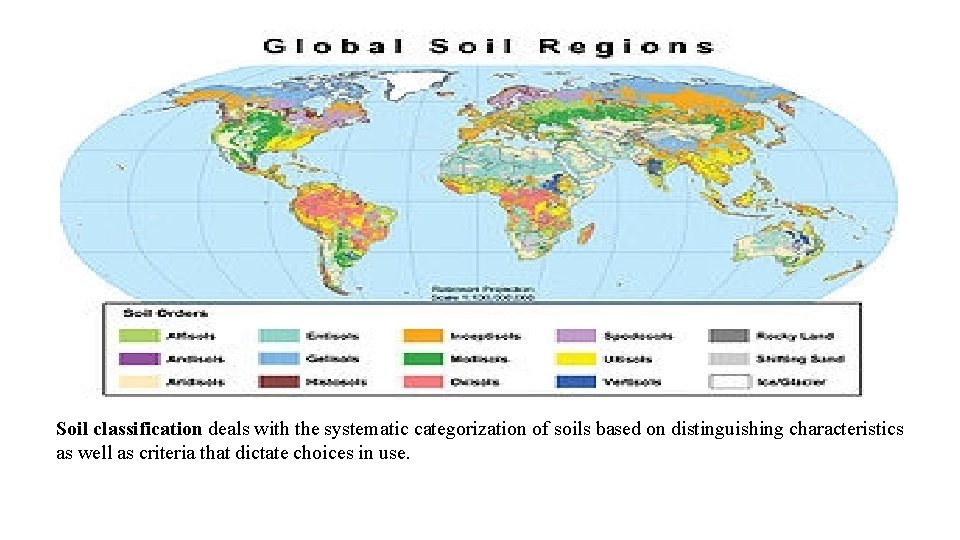
Soil classification deals with the systematic categorization of soils based on distinguishing characteristics as well as criteria that dictate choices in use.
For soil resources, experience has shown that a natural system approach to classification, i. e. grouping soils by their intrinsic property (soil morphology), behaviour, or genesis, results in classes that can be interpreted for many diverse uses. Differing concepts of pedogenesis, and differences in the significance of morphological features to various land uses can affect the classification approach. Despite these differences, in a well-constructed system, classification criteria group similar concepts so that interpretations do not vary widely. This is in contrast to a technical system approach to soil classification, where soils are grouped according to their fitness for a specific use and their edaphic characteristics.
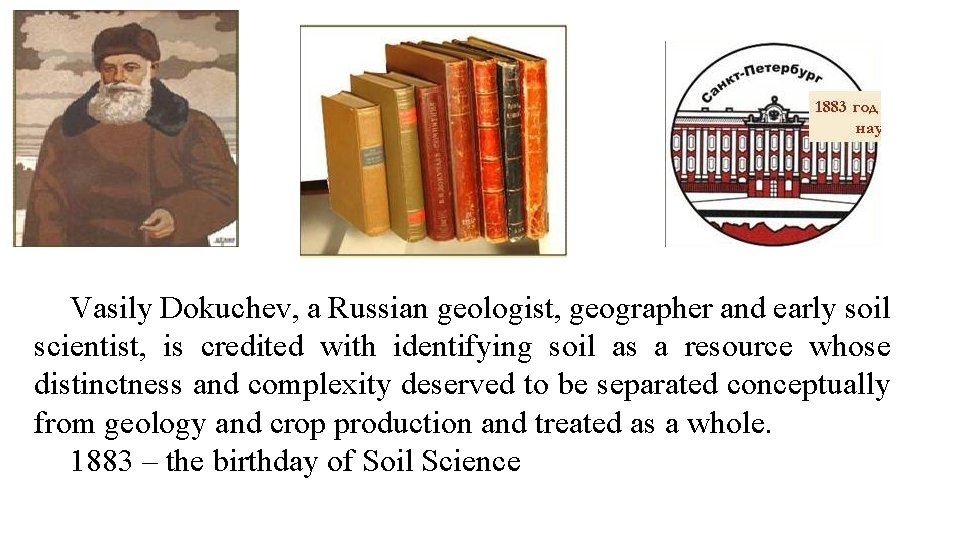
Vasily Dokuchev, a Russian geologist, geographer and early soil scientist, is credited with identifying soil as a resource whose distinctness and complexity deserved to be separated conceptually from geology and crop production and treated as a whole. 1883 – the birthday of Soil Science
Previously, soil had been considered a product of chemical transformations of rocks, a dead substrate from which plants derive nutritious elements. Soil and bedrock were in fact equated. Dokuchaev considers the soil as a natural body having its own genesis and its own history of development, a body with complex and multiform processes taking place within it. The soil is considered as different from bedrock. The latter becomes soil under the influence of a series of soilformation factors (climate, vegetation, country, relief and age). According to him, soil should be called the "daily" or outward horizons of rocks regardless of the type; they are changed naturally by the common effect of water, air and various kinds of living and dead organisms. [7]
A 1914 encyclopedic definition: "the different forms of earth on the surface of the rocks, formed by the breaking down or weathering of rocks" serves to illustrate the historic view of soil which persisted from the 19 th century. Dokuchaev's late 19 th century soil concept developed in the 20 th century to one of soil as earthy material that has been altered by living processes. A corollary concept is that soil without a living component is simply a part of earth's outer layer. Further refinement of the soil concept is occurring in view of an appreciation of energy transport and transformation within soil. The term is popularly applied to the material on the surface of the earth's moon and Mars, a usage acceptable within a portion of the scientific community. Accurate to this modern understanding of soil is Nikiforoff's 1959 definition of soil as the "excited skin of the sub aerial part of the earth's crust".
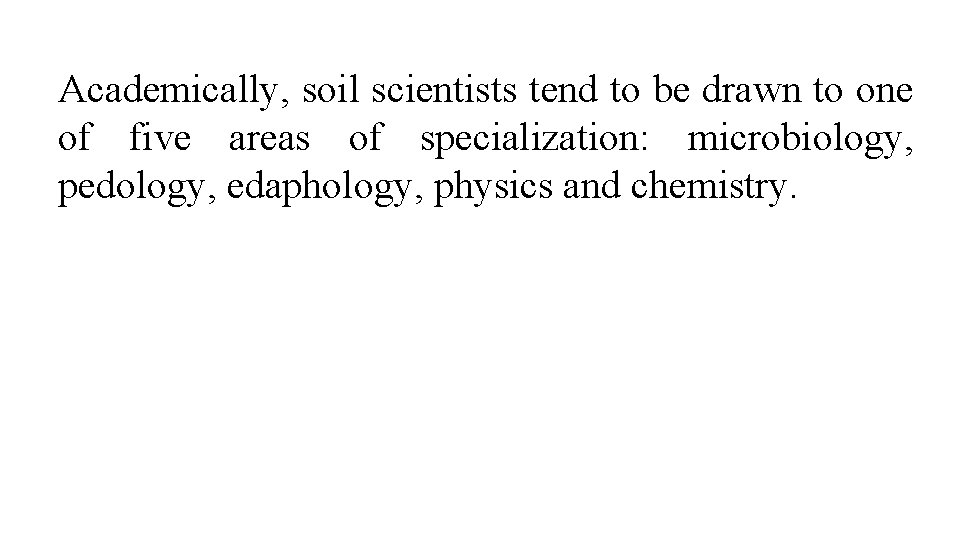
Academically, soil scientists tend to be drawn to one of five areas of specialization: microbiology, pedology, edaphology, physics and chemistry.
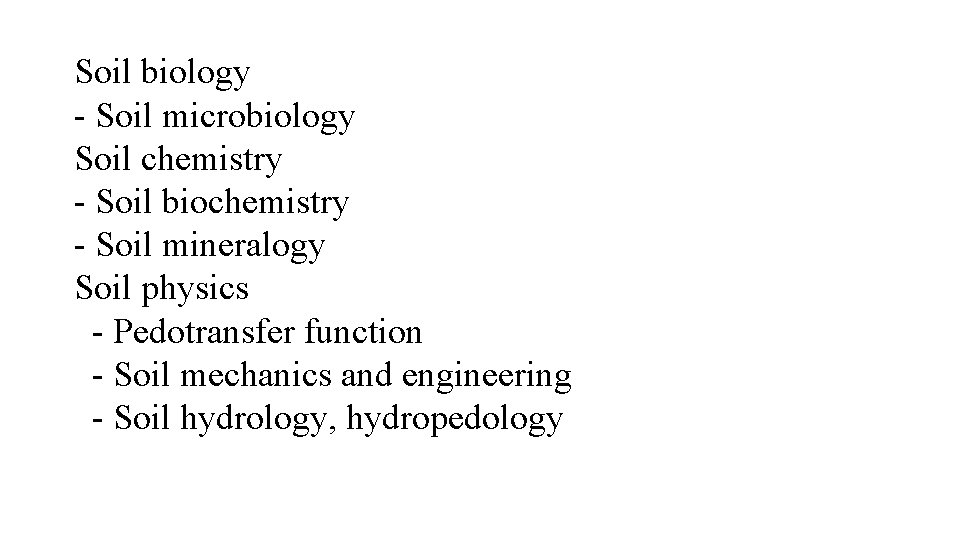
Soil biology - Soil microbiology Soil chemistry - Soil biochemistry - Soil mineralogy Soil physics - Pedotransfer function - Soil mechanics and engineering - Soil hydrology, hydropedology
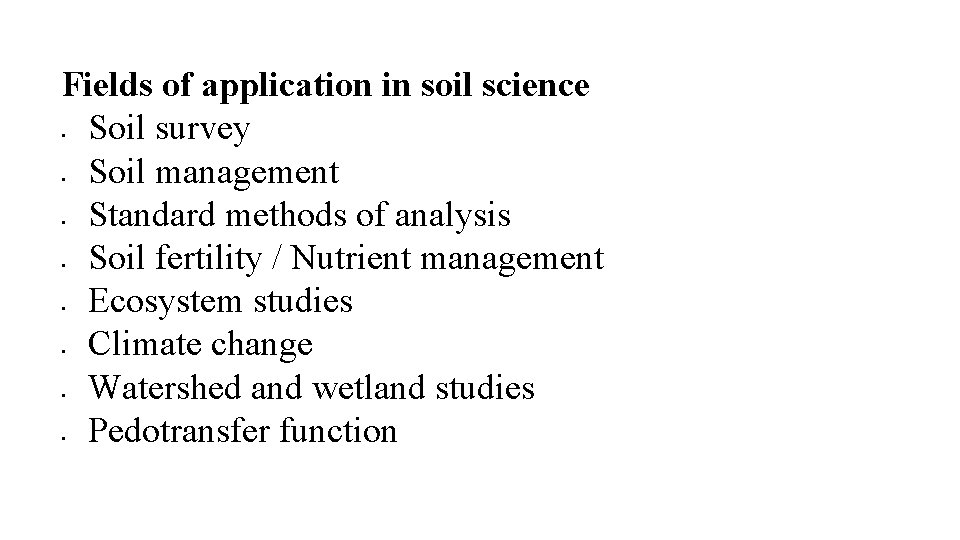
Fields of application in soil science Soil survey Soil management Standard methods of analysis Soil fertility / Nutrient management Ecosystem studies Climate change Watershed and wetland studies Pedotransfer function
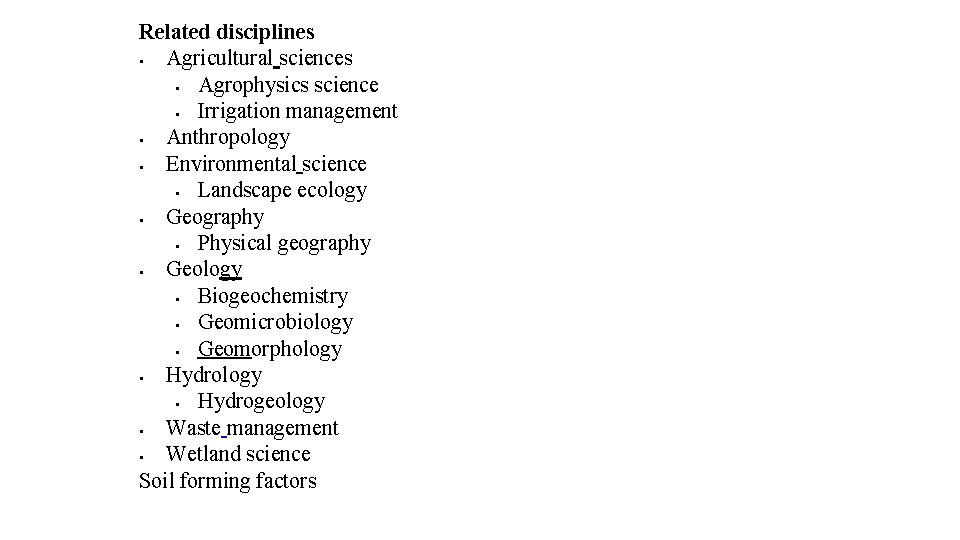
Related disciplines Agricultural sciences Agrophysics science Irrigation management Anthropology Environmental science Landscape ecology Geography Physical geography Geology Biogeochemistry Geomicrobiology Geomorphology Hydrogeology Waste management Wetland science Soil forming factors
Soil formation, or pedogenesis, is the combined effect of physical, chemical, biological, and anthropogenic processes on soil parent material.
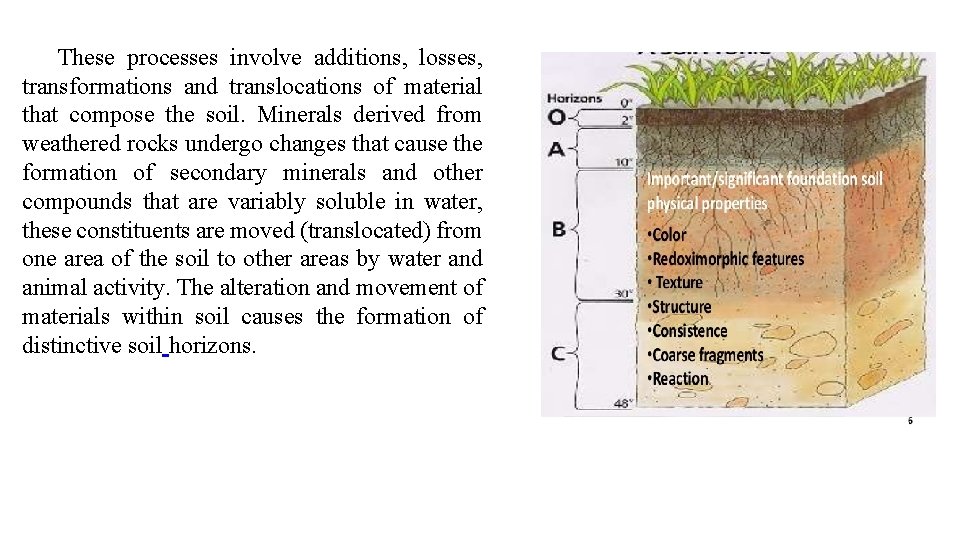
These processes involve additions, losses, transformations and translocations of material that compose the soil. Minerals derived from weathered rocks undergo changes that cause the formation of secondary minerals and other compounds that are variably soluble in water, these constituents are moved (translocated) from one area of the soil to other areas by water and animal activity. The alteration and movement of materials within soil causes the formation of distinctive soil horizons.
Soil-forming factors. The weathering of bedrock produces the parent material from which soils form. An example of soil development from bare rock occurs on recent lava flows in warm regions under heavy and very frequent rainfall. In such climates, plants become established very quickly on basaltic lava, even though there is very little organic material. The plants are supported by the porous rock as it is filled with nutrient-bearing water which carries, for example, dissolved minerals and guano. The developing plant roots, themselves or associated with mycorrhizal fungi, gradually break up the porous lava and organic matter soon accumulates.
The material from which soils form is called parent material. It includes: weathered primary bedrock; secondary material transported from other locations, e. g. colluvium and alluvium; deposits that are already present but mixed or altered in other ways - old soil formations, organic material including peat or alpine humus; and anthropogenic materials, like landfill or mine waste. Few soils form directly from the breakdown of the underlying rocks they develop on. These soils are often called “residual soils”, and have the same general chemistry as their parent rocks.
Weather is the first stage in the transforming of parent material into soil material. In soils forming from bedrock, a thick layer of weathered material called saprolite may form. Saprolite is the result of weathering processes that include: hydrolysis (the replacement of a mineral’s cations with hydrogen ions), chelation from organic compounds, hydration (the absorption of water by minerals), solution of minerals by water, and physical processes that include freezing and thawing or wetting and drying
Soil formation greatly depends on the climate, and soils from different climate zones show distinctive characteristics. Temperature and moisture affect weathering and leaching. Wind moves sand other particles, especially in arid regions where there is little plant cover. The type and amount of precipitation influence soil formation by affecting the movement of ions and particles through the soil, aiding in the development of different soil profiles.
Biological factors. Plants, animals, fungi, bacteria and humans affect soil formation. Animals and micro-organisms mix soils to form burrows and pores allowing moisture and gases to seep into deeper layers. In the same way, plant roots open channels in the soils, especially plants with deep taproots which can penetrate many meters through the different soil layers to bring up nutrients from deeper in the soil. Plants with fibrous roots that spread out near the soil surface, have roots that are easily decomposed, adding organic matter. Micro-organisms, including fungi and bacteria, affect chemical exchanges between roots and soil and act as a reserve of nutrients. Humans can impact soil formation by removing vegetation cover; this removal promotes erosion. They can also mix the different soil layers, restarting the soil formation process as less-weathered material is mixed with and diluting the more developed upper layers.
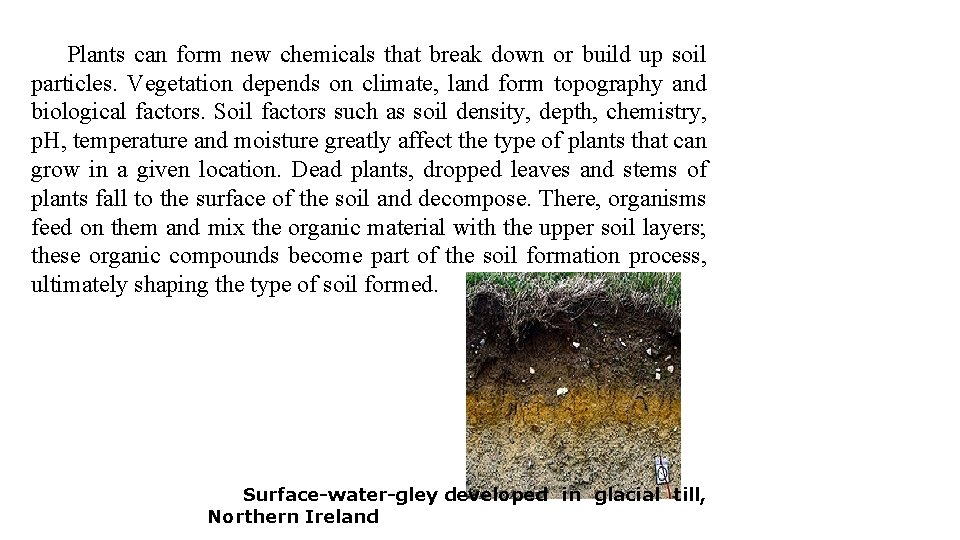
Plants can form new chemicals that break down or build up soil particles. Vegetation depends on climate, land form topography and biological factors. Soil factors such as soil density, depth, chemistry, p. H, temperature and moisture greatly affect the type of plants that can grow in a given location. Dead plants, dropped leaves and stems of plants fall to the surface of the soil and decompose. There, organisms feed on them and mix the organic material with the upper soil layers; these organic compounds become part of the soil formation process, ultimately shaping the type of soil formed. Surface-water-gley developed in glacial till, Northern Ireland
Time is a factor in the interactions of all the above factors as they develop soil. Over time, soils evolve features dependent on the other forming factors, and soil formation is a time-responsive process dependent on how the other factors interplay with each other. Soil is always changing. For example, recentlydeposited material from a flood exhibits no soil development because there has not been enough time for soil-forming activities. The soil surface is buried, and the formation process begins again for this soil.
Soil-forming factors continue to affect soils during their existence, even on “stable” landscapes that are long-enduring, some for millions of years. Materials are deposited on top and materials are blown or washed away from the surface. With additions, removals and alterations, soils are always subject to new conditions. Whether these are slow or rapid changes depend on climate, landscape position and biological activity.
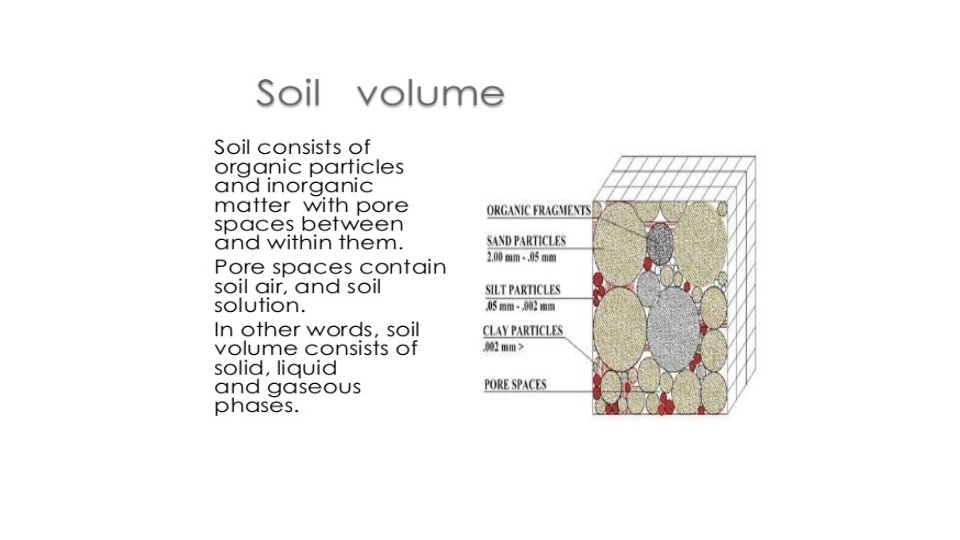
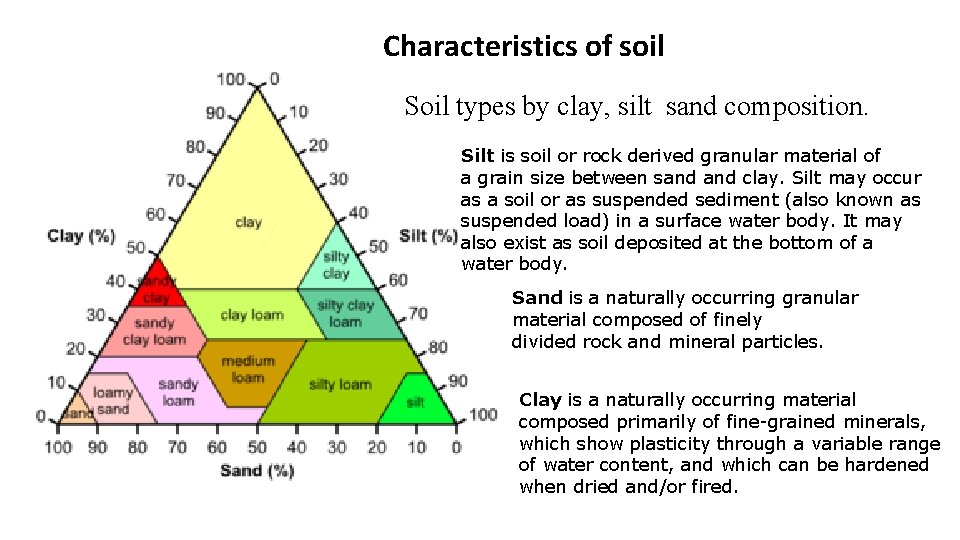
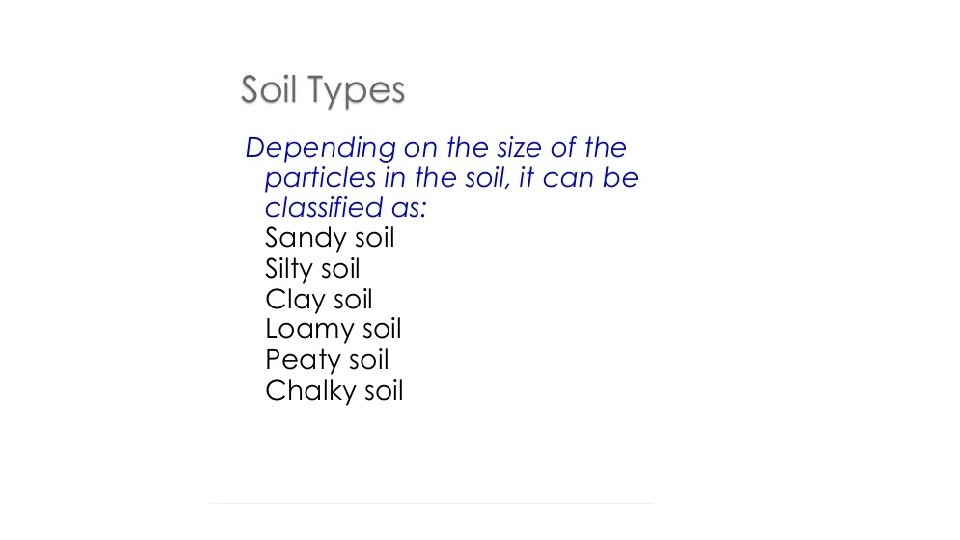
Characteristics of soil Soil types by clay, silt sand composition. Silt is soil or rock derived granular material of a grain size between sand clay. Silt may occur as a soil or as suspended sediment (also known as suspended load) in a surface water body. It may also exist as soil deposited at the bottom of a water body. Sand is a naturally occurring granular material composed of finely divided rock and mineral particles. Clay is a naturally occurring material composed primarily of fine-grained minerals, which show plasticity through a variable range of water content, and which can be hardened when dried and/or fired.
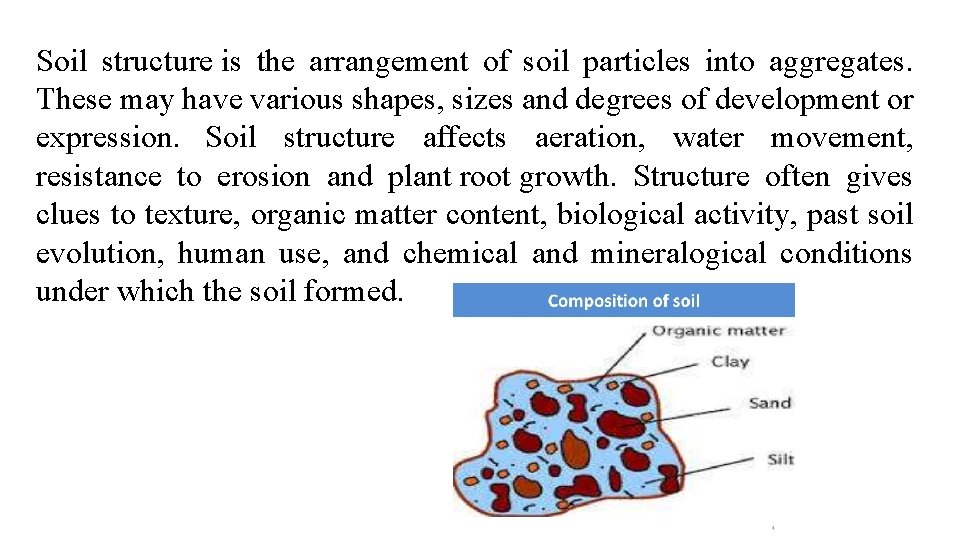
Soil structure is the arrangement of soil particles into aggregates. These may have various shapes, sizes and degrees of development or expression. Soil structure affects aeration, water movement, resistance to erosion and plant root growth. Structure often gives clues to texture, organic matter content, biological activity, past soil evolution, human use, and chemical and mineralogical conditions under which the soil formed.
Soil texture refers to sand, silt and clay composition. Soil content affects soil behavior, including the retention capacity for nutrients and water. Sand silt are the products of physical weathering, while clay is the product of chemical weathering. Clay content has retention capacity for nutrients and water. Clay soils resist wind and water erosion better than silty and sandy soils, because the particles are more tightly joined to each other. In medium-textured soils, clay is often translocated downward through the soil profile and accumulates in the subsoil.
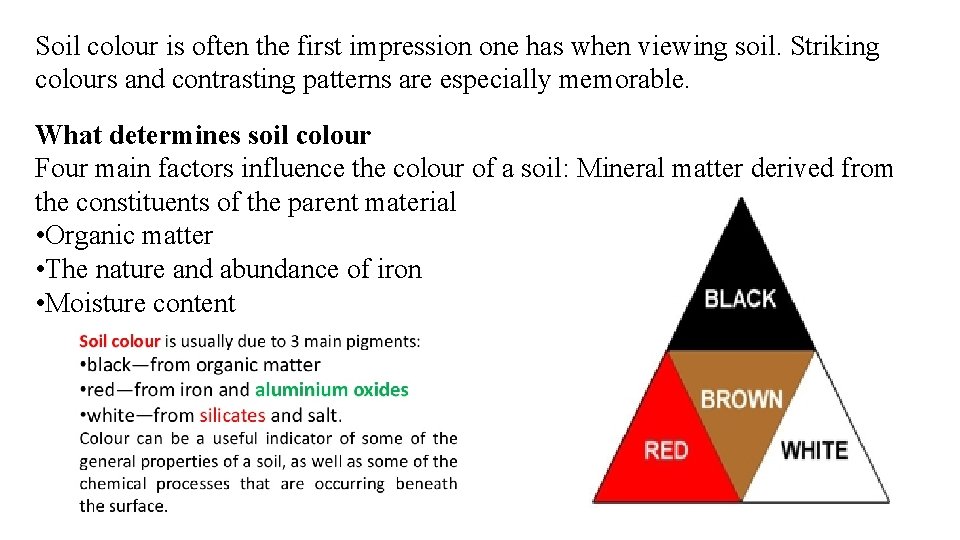
Soil colour is often the first impression one has when viewing soil. Striking colours and contrasting patterns are especially memorable. What determines soil colour Four main factors influence the colour of a soil: Mineral matter derived from the constituents of the parent material • Organic matter • The nature and abundance of iron • Moisture content
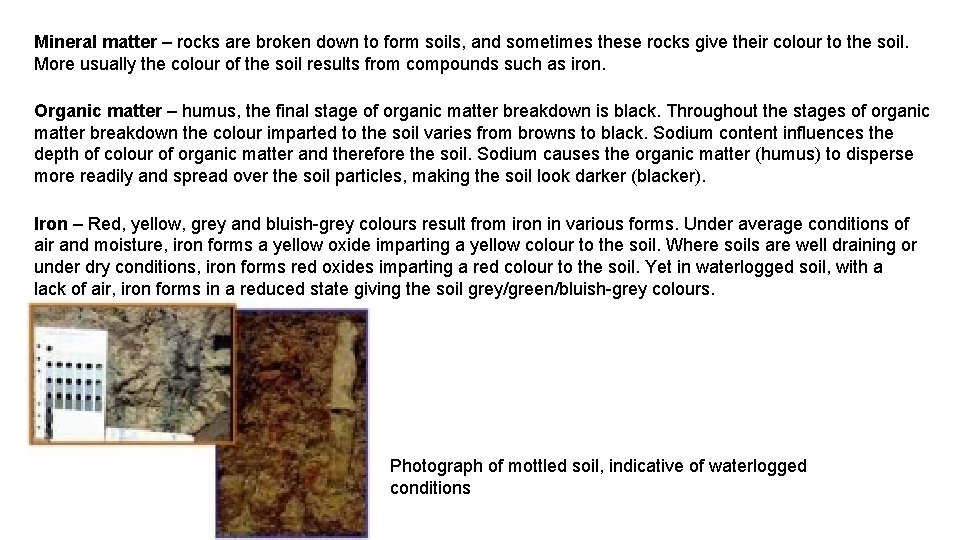
Mineral matter – rocks are broken down to form soils, and sometimes these rocks give their colour to the soil. More usually the colour of the soil results from compounds such as iron. Organic matter – humus, the final stage of organic matter breakdown is black. Throughout the stages of organic matter breakdown the colour imparted to the soil varies from browns to black. Sodium content influences the depth of colour of organic matter and therefore the soil. Sodium causes the organic matter (humus) to disperse more readily and spread over the soil particles, making the soil look darker (blacker). Iron – Red, yellow, grey and bluish-grey colours result from iron in various forms. Under average conditions of air and moisture, iron forms a yellow oxide imparting a yellow colour to the soil. Where soils are well draining or under dry conditions, iron forms red oxides imparting a red colour to the soil. Yet in waterlogged soil, with a lack of air, iron forms in a reduced state giving the soil grey/green/bluish-grey colours. Photograph of mottled soil, indicative of waterlogged conditions
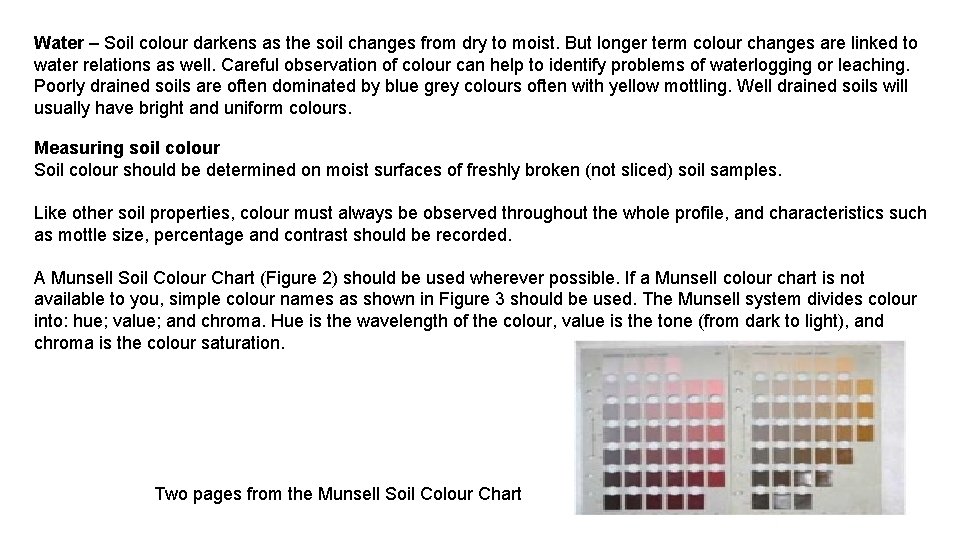
Water – Soil colour darkens as the soil changes from dry to moist. But longer term colour changes are linked to water relations as well. Careful observation of colour can help to identify problems of waterlogging or leaching. Poorly drained soils are often dominated by blue grey colours often with yellow mottling. Well drained soils will usually have bright and uniform colours. Measuring soil colour Soil colour should be determined on moist surfaces of freshly broken (not sliced) soil samples. Like other soil properties, colour must always be observed throughout the whole profile, and characteristics such as mottle size, percentage and contrast should be recorded. A Munsell Soil Colour Chart (Figure 2) should be used wherever possible. If a Munsell colour chart is not available to you, simple colour names as shown in Figure 3 should be used. The Munsell system divides colour into: hue; value; and chroma. Hue is the wavelength of the colour, value is the tone (from dark to light), and chroma is the colour saturation. Two pages from the Munsell Soil Colour Chart
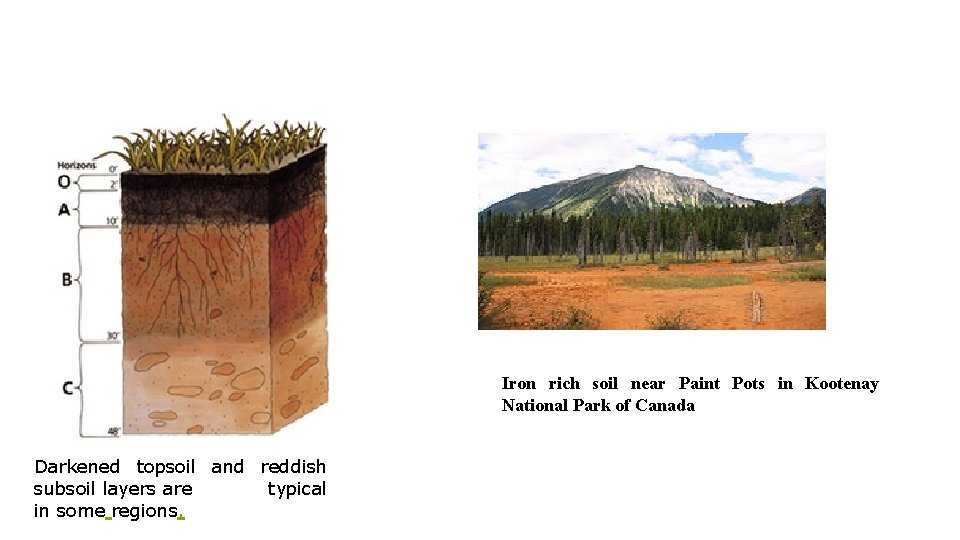
Iron rich soil near Paint Pots in Kootenay National Park of Canada Darkened topsoil and reddish subsoil layers are typical in some regions.
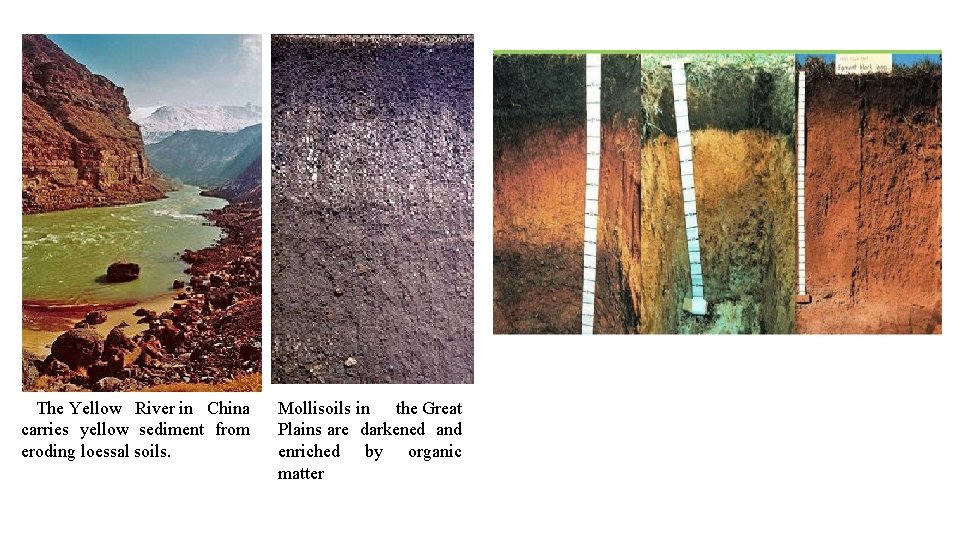
The Yellow River in China carries yellow sediment from eroding loessal soils. Mollisoils in the Great Plains are darkened and enriched by organic matter
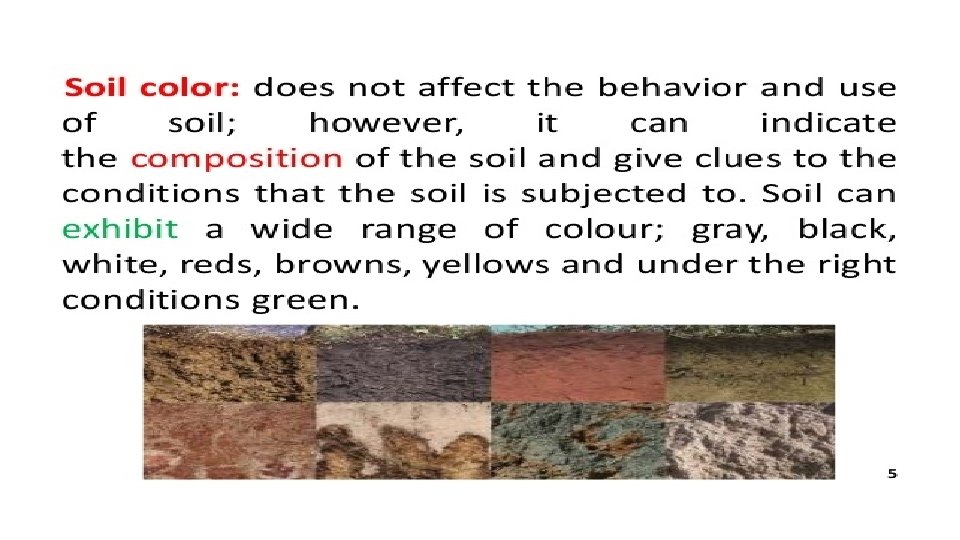
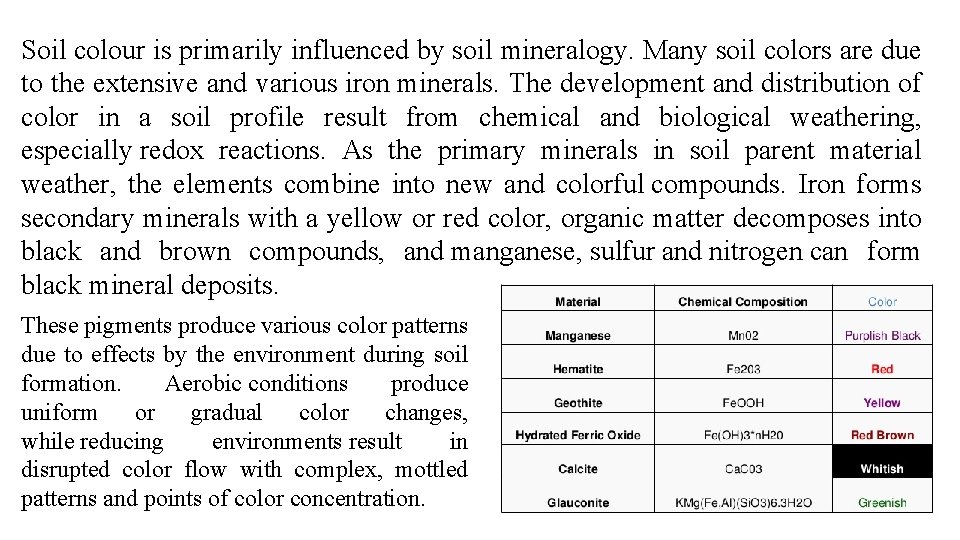
Soil colour is primarily influenced by soil mineralogy. Many soil colors are due to the extensive and various iron minerals. The development and distribution of color in a soil profile result from chemical and biological weathering, especially redox reactions. As the primary minerals in soil parent material weather, the elements combine into new and colorful compounds. Iron forms secondary minerals with a yellow or red color, organic matter decomposes into black and brown compounds, and manganese, sulfur and nitrogen can form black mineral deposits. These pigments produce various color patterns due to effects by the environment during soil formation. Aerobic conditions produce uniform or gradual color changes, while reducing environments result in disrupted color flow with complex, mottled patterns and points of color concentration.
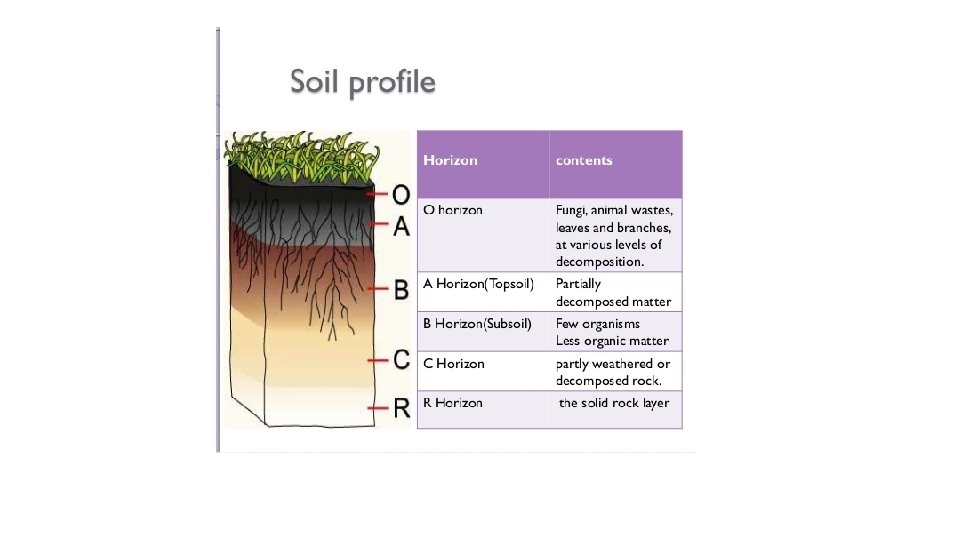
Soil horizons. The naming of soil horizons is based on the type of material the horizons are composed of; these materials reflect the duration of the specific processes used in soil formation. They are labeled using a short hand notation of letters and numbers. They are described and classified by their color, size, texture, structure, consistency, root quantity, p. H, voids, boundary characteristics, and if they have nodules or concretions. Any one soil profile does not have all the major horizons covered below; soils may have few or many horizons. The exposure of parent material to favorable conditions produces initial soils that are suitable for plant growth. Plant growth often results in the accumulation of organic residues, the accumulated organic layer is called the O -horizon. Biological organisms colonize and break down organic materials, making available nutrients that other plants and animals can live on. After sufficient time a distinctive organic surface layer forms with humus which is called the A horizon.
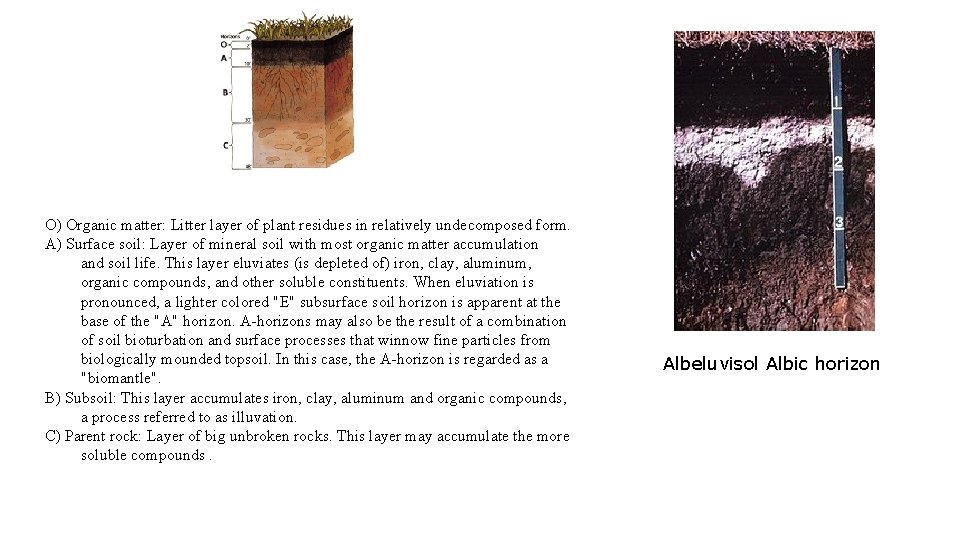
O) Organic matter: Litter layer of plant residues in relatively undecomposed form. A) Surface soil: Layer of mineral soil with most organic matter accumulation and soil life. This layer eluviates (is depleted of) iron, clay, aluminum, organic compounds, and other soluble constituents. When eluviation is pronounced, a lighter colored "E" subsurface soil horizon is apparent at the base of the "A" horizon. A-horizons may also be the result of a combination of soil bioturbation and surface processes that winnow fine particles from biologically mounded topsoil. In this case, the A-horizon is regarded as a "biomantle". B) Subsoil: This layer accumulates iron, clay, aluminum and organic compounds, a process referred to as illuvation. C) Parent rock: Layer of big unbroken rocks. This layer may accumulate the more soluble compounds. Albeluvisol Albic horizon
Classification. Soil is classified into categories in order to understand relationships between different soils and to determine the usefulness of a soil for a particular use. One of the first classification systems was developed by the Russian scientist Dokuchaev around 1880. It was modified a number of times by American and European researchers, and developed into the system commonly used until the 1960 s. It was based on the idea that soils have a particular morphology based on the materials and factors that form them. In the 1960 s, a different classification system began to emerge, that focused on soil morphology instead of parental materials and soil-forming factors. Since then it has undergone further modifications. The World Reference Base for Soil Resources (WRB) aims to establish an international reference base for soil classification.
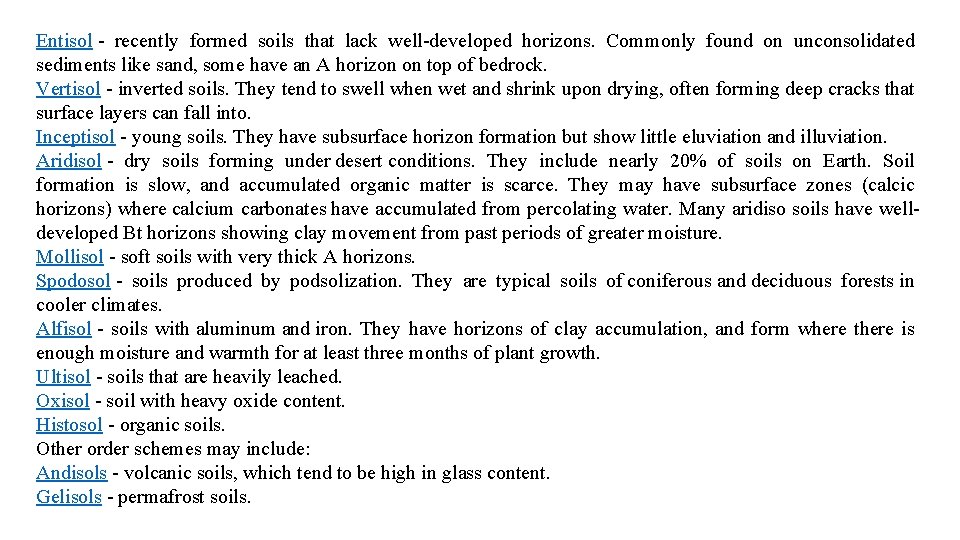
Entisol - recently formed soils that lack well-developed horizons. Commonly found on unconsolidated sediments like sand, some have an A horizon on top of bedrock. Vertisol - inverted soils. They tend to swell when wet and shrink upon drying, often forming deep cracks that surface layers can fall into. Inceptisol - young soils. They have subsurface horizon formation but show little eluviation and illuviation. Aridisol - dry soils forming under desert conditions. They include nearly 20% of soils on Earth. Soil formation is slow, and accumulated organic matter is scarce. They may have subsurface zones (calcic horizons) where calcium carbonates have accumulated from percolating water. Many aridiso soils have welldeveloped Bt horizons showing clay movement from past periods of greater moisture. Mollisol - soft soils with very thick A horizons. Spodosol - soils produced by podsolization. They are typical soils of coniferous and deciduous forests in cooler climates. Alfisol - soils with aluminum and iron. They have horizons of clay accumulation, and form where there is enough moisture and warmth for at least three months of plant growth. Ultisol - soils that are heavily leached. Oxisol - soil with heavy oxide content. Histosol - organic soils. Other order schemes may include: Andisols - volcanic soils, which tend to be high in glass content. Gelisols - permafrost soils.
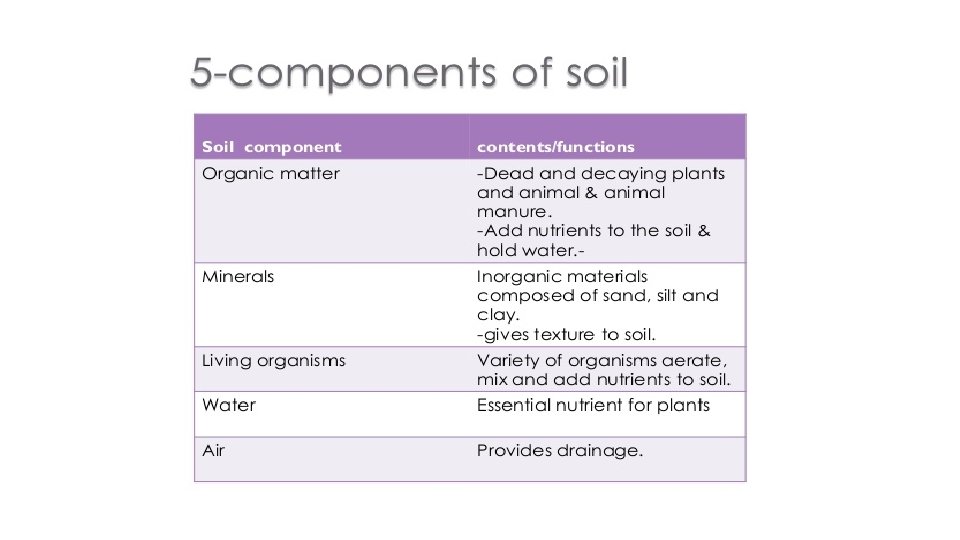
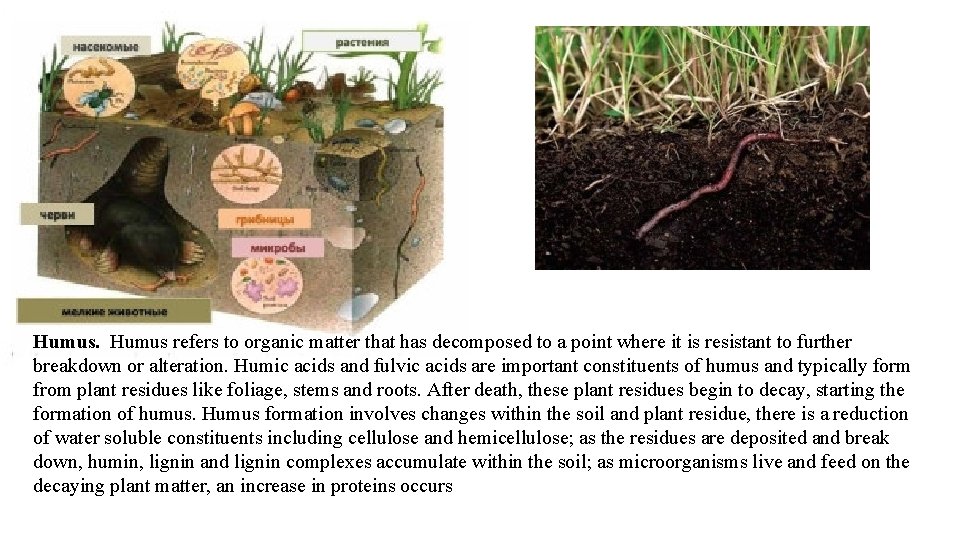
Organic matter. Most living things in soils, including plants, insects, bacteria and fungi, are dependent on organic matter for nutrients and energy. Soils often have varying degrees of organic compounds in different states of decomposition. Many soils, including desert and rockygravel soils, have no or little organic matter. Soils that are all organic matter, such as peat (histosols), are infertile.
Humus refers to organic matter that has decomposed to a point where it is resistant to further breakdown or alteration. Humic acids and fulvic acids are important constituents of humus and typically form from plant residues like foliage, stems and roots. After death, these plant residues begin to decay, starting the formation of humus. Humus formation involves changes within the soil and plant residue, there is a reduction of water soluble constituents including cellulose and hemicellulose; as the residues are deposited and break down, humin, lignin and lignin complexes accumulate within the soil; as microorganisms live and feed on the decaying plant matter, an increase in proteins occurs
Humus formation is a process dependent on the amount of plant material added each year and the type of base soil; both are affected by climate and the type of organisms present. Soils with humus can vary in nitrogen content but have 3 to 6 percent nitrogen typically; humus, as a reserve of nitrogen and phosphorus, is a vital component affecting soil fertility. Humus also absorbs water, acting as a moisture reserve, that plants can utilize; it also expands and shrinks between dry and wet states, providing pore spaces. Humus is less stable than other soil constituents, because it is affected by microbial decomposition, and over time its concentration decreases without the addition of new organic matter.
Biogeography is the study of special variations in biological communities. Soils are a restricting factor as to which plants can grow in which environments. Soil scientists survey soils in the hope of understanding controls as to what vegetation can and will grow in a particular location. Geologists also have a particular interest in the patterns of soil on the surface of the earth. Soil texture, color and chemistry often reflect the underlying geologic parent material, and soil types often change at geologic unit boundaries.
Geologists use this paleopedological record to understand the ecological relationships in past ecosystems. According to theory of biorhexistasy, prolonged conditions conducive to forming deep, weathered soils result in increasing ocean salinity and the formation of limestone. Geologists use soil profile features to establish the duration of surface stability in the context of geologic faults or slope stability.
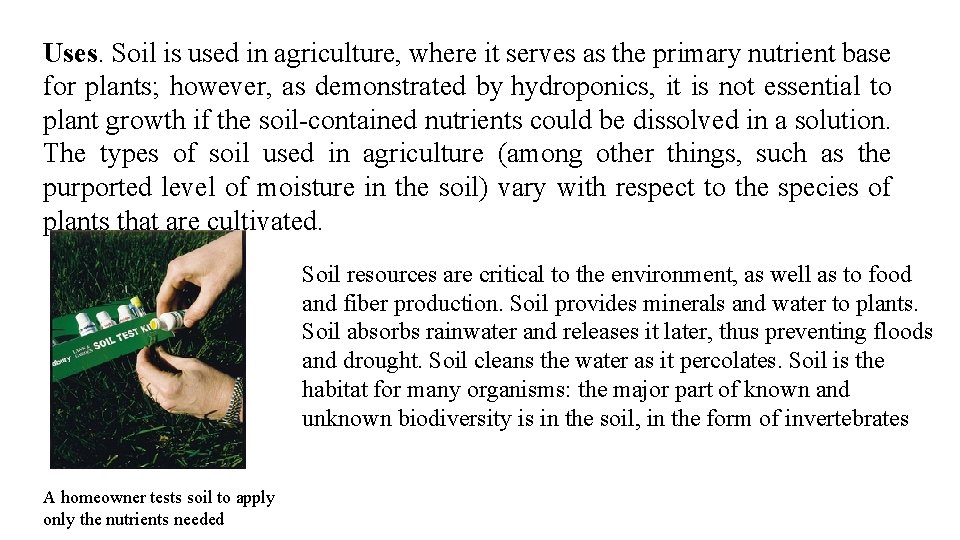
Uses. Soil is used in agriculture, where it serves as the primary nutrient base for plants; however, as demonstrated by hydroponics, it is not essential to plant growth if the soil-contained nutrients could be dissolved in a solution. The types of soil used in agriculture (among other things, such as the purported level of moisture in the soil) vary with respect to the species of plants that are cultivated. Soil resources are critical to the environment, as well as to food and fiber production. Soil provides minerals and water to plants. Soil absorbs rainwater and releases it later, thus preventing floods and drought. Soil cleans the water as it percolates. Soil is the habitat for many organisms: the major part of known and unknown biodiversity is in the soil, in the form of invertebrates A homeowner tests soil to apply only the nutrients needed
Soils filter and purify water and affect its chemistry. Rain water and pooled water from ponds, lakes and rivers percolate through the soil horizons and the upper rock strata; thus becoming groundwater. Pests(viruses) and pollutants, such as persistent organic pollutants (chlorinated pesticides, polychlorinated biphenyls), oils (hydrocarbons), heavy metals (lead, zinc, cadmium), and excess nutrients (nitrates, sulfates, phosphates) are filtered out by the soil
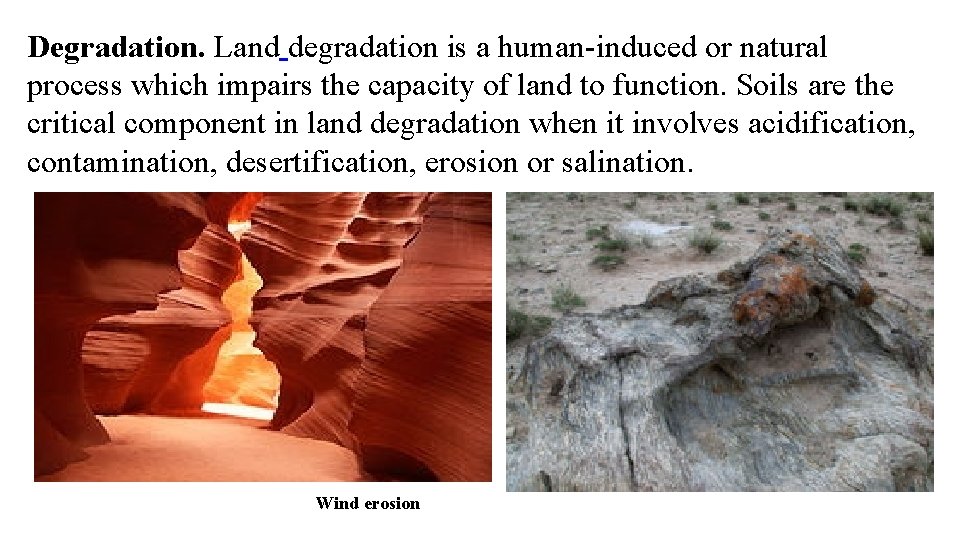
Degradation. Land degradation is a human-induced or natural process which impairs the capacity of land to function. Soils are the critical component in land degradation when it involves acidification, contamination, desertification, erosion or salination. Wind erosion
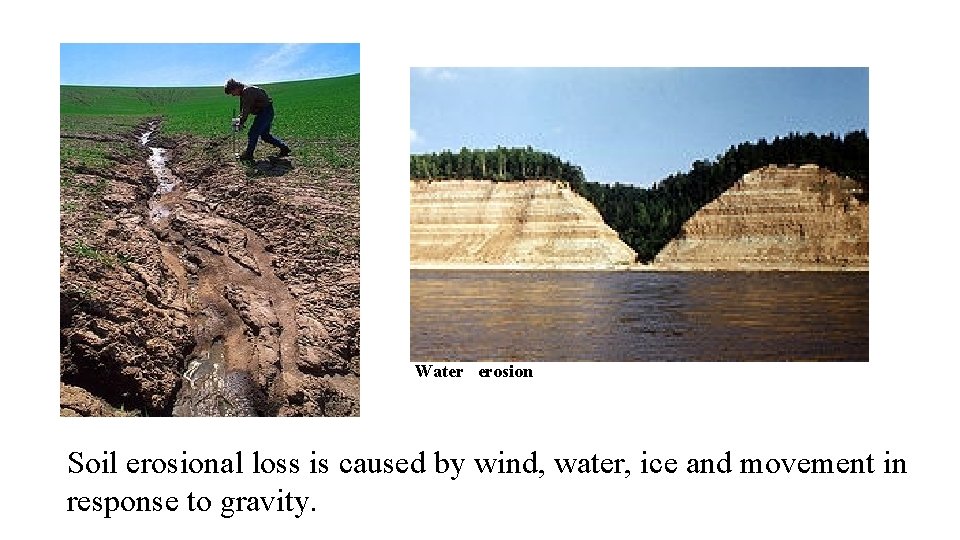
Water erosion Soil erosional loss is caused by wind, water, ice and movement in response to gravity.