
Soil Quality Measurement Unit Soil Science Lesson 7

- Slides: 8
Soil Quality Measurement Unit: Soil Science Lesson 7
Objectives • • • • Define: soil quality, soil series, erosion Describe two methods to assess soil quality Create a model that represents signs of erosion List and describe causes of erosion Explain the role of soil management in determining soil quality Determine percent slope of a specific land area Explain how climate impacts soil Explain how longitude and latitude impact soil Identify environmentally sensitive areas Determine when to properly sample soil Determine where to sample soil Explain the guidelines for selecting sampling sites Explain the need for collecting multiple samples Use the Nebraska Soil Quality Card
Soil Quality • Soil Quality integrates the physical, chemical, and biological components of soil and their interactions. • There are two fundamental ways to assess soil quality: • Take measurements periodically over time to monitor changes or trends in soil quality • Compare measured values to a standard or reference soil condition.
Field or Site Characterization • Soil series: • name of soil • found in the county soil survey. • Signs of erosion include • • Gullies and rills development of pedestals exposed areas of subsoil wind damage or plants • Management history includes • • description of past and present land crop management kind, amount and method of fertilization prior tillage land leveling.
Field or Site Characterization • Slope and topography includes • percent slope at sampling sites • note any hills, knolls, ridges, potholes, depressions, etc. • Location of field includes a record of • longitude and latitude • Climatic information includes • precipitation and high and low average temperatures for each month • Location of environmentally sensitive areas includes location • Ponds and creeks • Wetlands • other environmentally fragile sites.
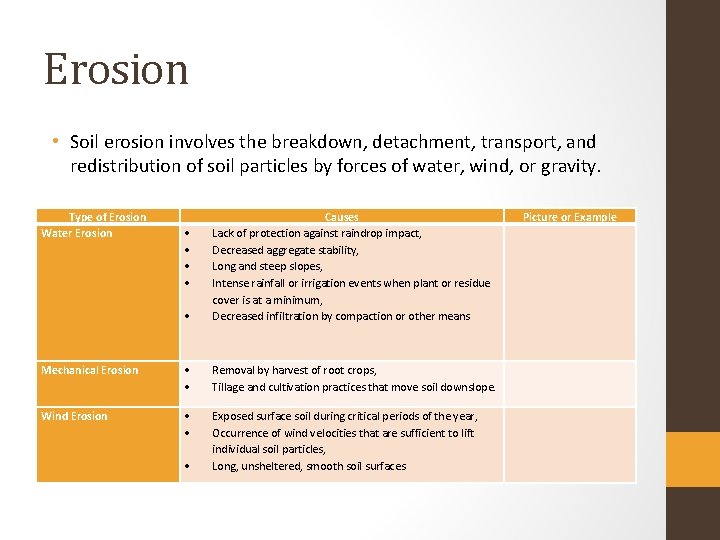
Erosion • Soil erosion involves the breakdown, detachment, transport, and redistribution of soil particles by forces of water, wind, or gravity. Type of Erosion Water Erosion Causes Lack of protection against raindrop impact, Decreased aggregate stability, Long and steep slopes, Intense rainfall or irrigation events when plant or residue cover is at a minimum, Decreased infiltration by compaction or other means Mechanical Erosion Removal by harvest of root crops, Tillage and cultivation practices that move soil downslope. Wind Erosion Exposed surface soil during critical periods of the year, Occurrence of wind velocities that are sufficient to lift individual soil particles, Long, unsheltered, smooth soil surfaces Picture or Example
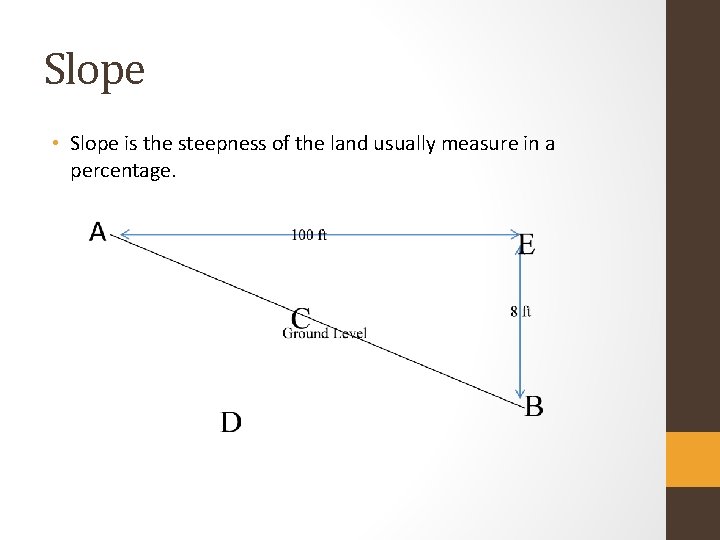
Slope • Slope is the steepness of the land usually measure in a percentage.
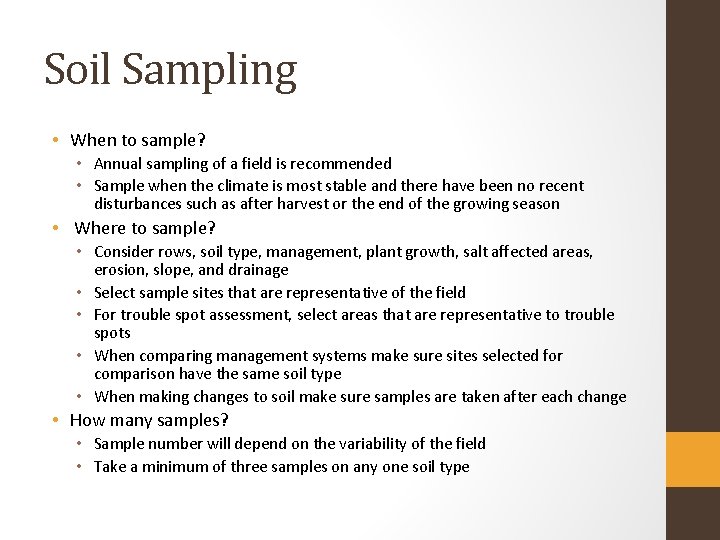
Soil Sampling • When to sample? • Annual sampling of a field is recommended • Sample when the climate is most stable and there have been no recent disturbances such as after harvest or the end of the growing season • Where to sample? • Consider rows, soil type, management, plant growth, salt affected areas, erosion, slope, and drainage • Select sample sites that are representative of the field • For trouble spot assessment, select areas that are representative to trouble spots • When comparing management systems make sure sites selected for comparison have the same soil type • When making changes to soil make sure samples are taken after each change • How many samples? • Sample number will depend on the variability of the field • Take a minimum of three samples on any one soil type