
SOIL ORIGIN AND DEVELOPMENT Chapter 2 Intro to
- Slides: 20
SOIL ORIGIN AND DEVELOPMENT Chapter 2 Intro to Soil Science
Pedology • Study of soil formation • Also known as soil genesis, and soil classification and mapping • Modern pedology dates to the eighteenth and nineteenth centuries in Germany, the United States, and especially Russia
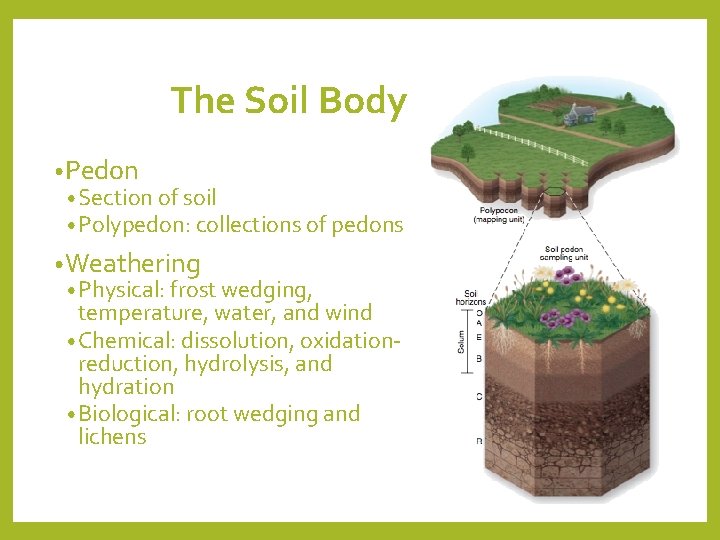
The Soil Body • Pedon • Section of soil • Polypedon: collections of pedons • Weathering • Physical: frost wedging, temperature, water, and wind • Chemical: dissolution, oxidationreduction, hydrolysis, and hydration • Biological: root wedging and lichens
Rocks and Minerals • Original source of most soils is rock • Unweathered material of the earth’s crust • Solid rock breaks into smaller particles (i. e. , parent materials) • Rock types • Igneous rock • Sedimentary rock • Metamorphic rock
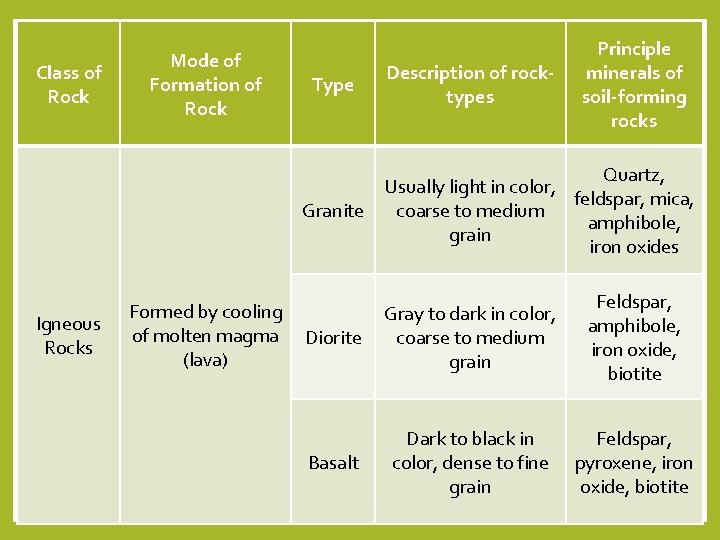
Class of Rock Igneous Rocks Mode of Formation of Rock Formed by cooling of molten magma (lava) Type Description of rocktypes Principle minerals of soil-forming rocks Granite Quartz, Usually light in color, feldspar, mica, coarse to medium amphibole, grain iron oxides Diorite Gray to dark in color, coarse to medium grain Feldspar, amphibole, iron oxide, biotite Basalt Dark to black in color, dense to fine grain Feldspar, pyroxene, iron oxide, biotite
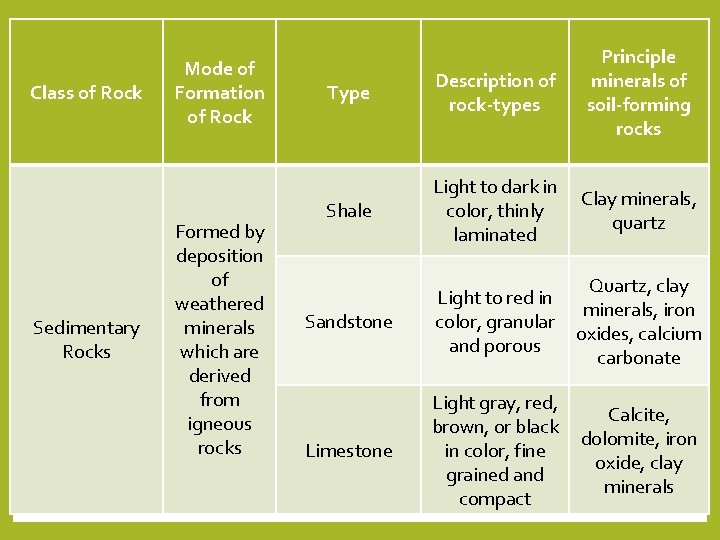
Class of Rock Sedimentary Rocks Mode of Formation of Rock Formed by deposition of weathered minerals which are derived from igneous rocks Type Description of rock-types Principle minerals of soil-forming rocks Shale Light to dark in color, thinly laminated Clay minerals, quartz Sandstone Light to red in color, granular and porous Quartz, clay minerals, iron oxides, calcium carbonate Limestone Light gray, red, brown, or black in color, fine grained and compact Calcite, dolomite, iron oxide, clay minerals
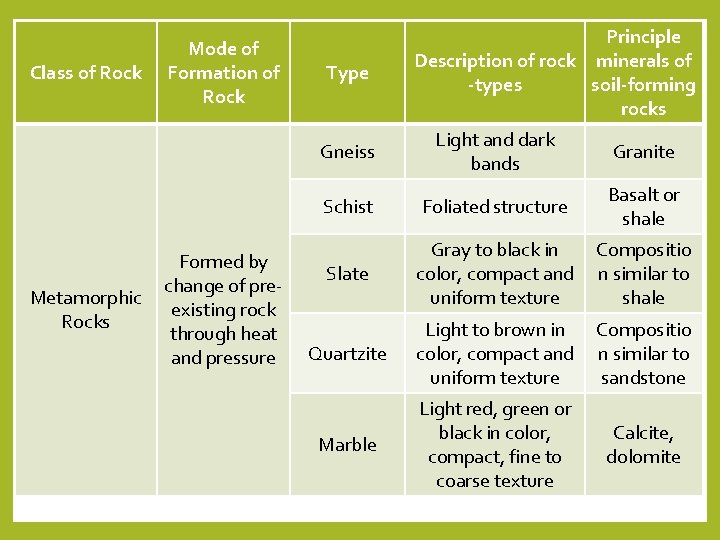
Class of Rock Metamorphic Rocks Mode of Formation of Rock Formed by change of preexisting rock through heat and pressure Type Principle Description of rock minerals of -types soil-forming rocks Gneiss Light and dark bands Granite Schist Foliated structure Basalt or shale Slate Gray to black in color, compact and uniform texture Compositio n similar to shale Quartzite Light to brown in color, compact and uniform texture Compositio n similar to sandstone Marble Light red, green or black in color, compact, fine to coarse texture Calcite, dolomite
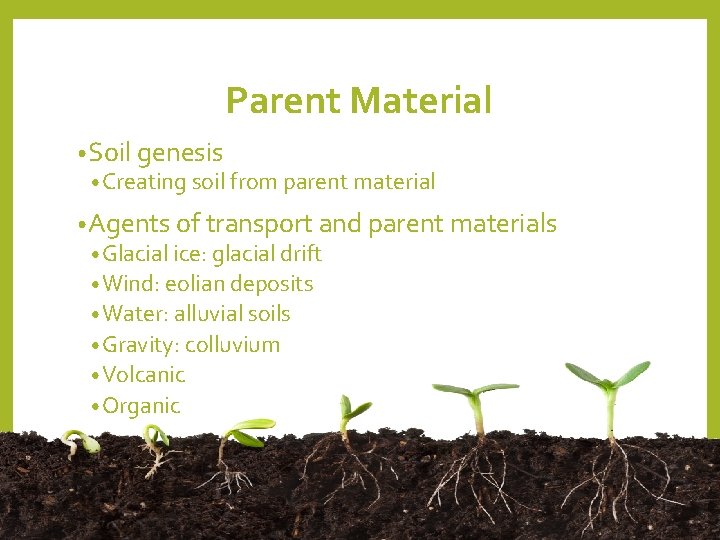
Parent Material • Soil genesis • Creating soil from parent material • Agents of transport and parent materials • Glacial ice: glacial drift • Wind: eolian deposits • Water: alluvial soils • Gravity: colluvium • Volcanic • Organic
Climate • Extremely complex • We are speaking primarily of temperature and precipitation • Terms • Arid, semiarid, and humid • Climates which, in order, experience very low, and higher rainfall
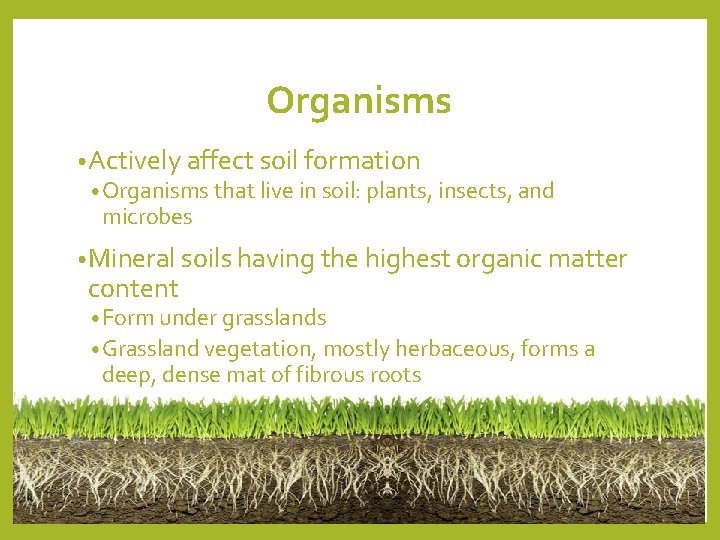
Organisms • Actively affect soil formation • Organisms that live in soil: plants, insects, and microbes • Mineral soils having the highest organic matter content • Form under grasslands • Grassland vegetation, mostly herbaceous, forms a deep, dense mat of fibrous roots
Topography • Slope • Position • Length • Moisture retention • Slope aspect • Solar energy • Wind exposure
Time • Important considerations • Aging • Weathering • Leaching • Biological processes • Erosion • Progression and regression cycles
Humans • Human activity modifies soil • Land use • Pollutants • Fertilization • Waste disposal • Cultivation
The Soil Profile • Soil forming factors • Additions • Losses • Translocations • Transformations
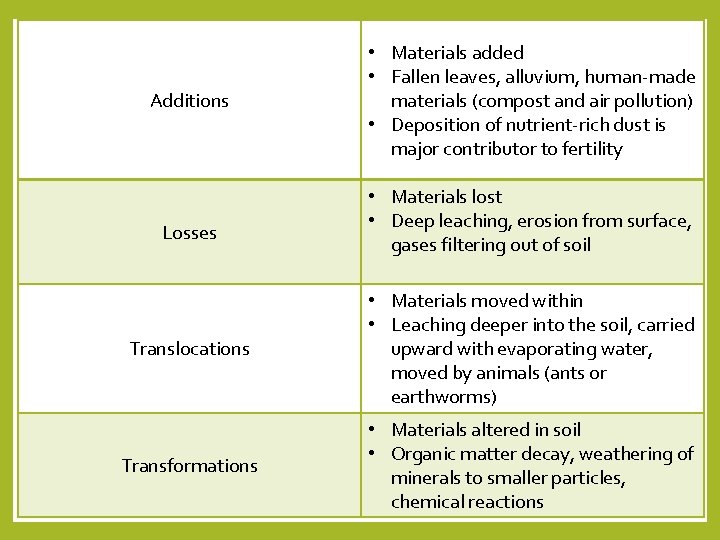
Additions Losses • Materials added • Fallen leaves, alluvium, human-made materials (compost and air pollution) • Deposition of nutrient-rich dust is major contributor to fertility • Materials lost • Deep leaching, erosion from surface, gases filtering out of soil Translocations • Materials moved within • Leaching deeper into the soil, carried upward with evaporating water, moved by animals (ants or earthworms) Transformations • Materials altered in soil • Organic matter decay, weathering of minerals to smaller particles, chemical reactions
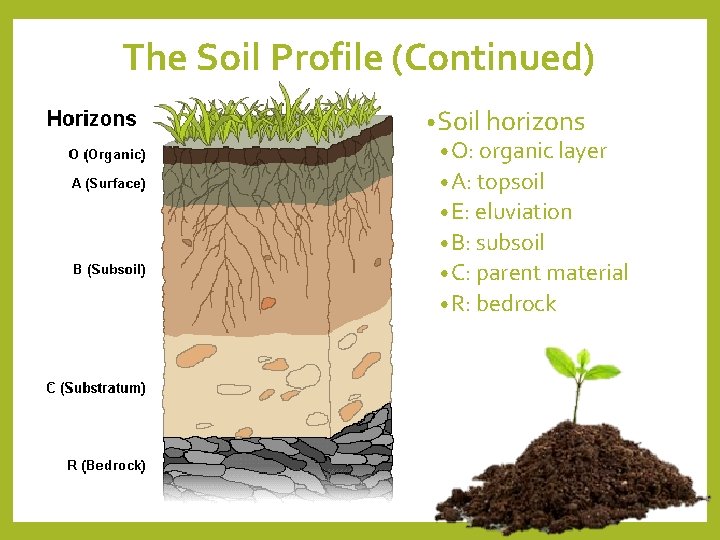
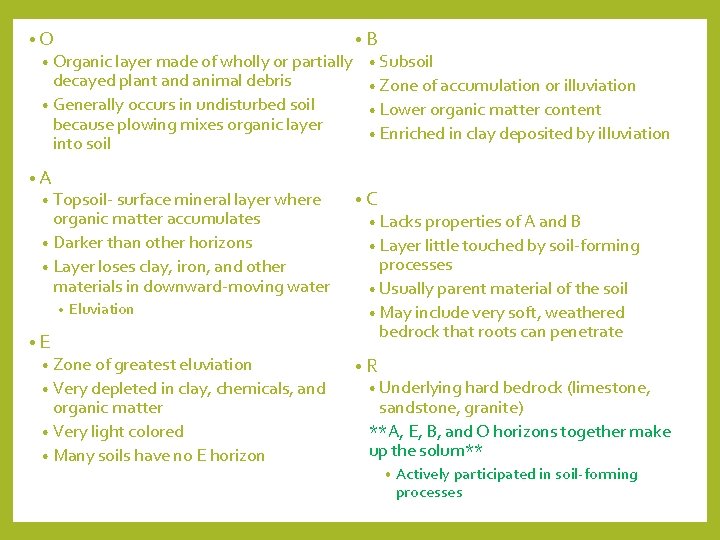
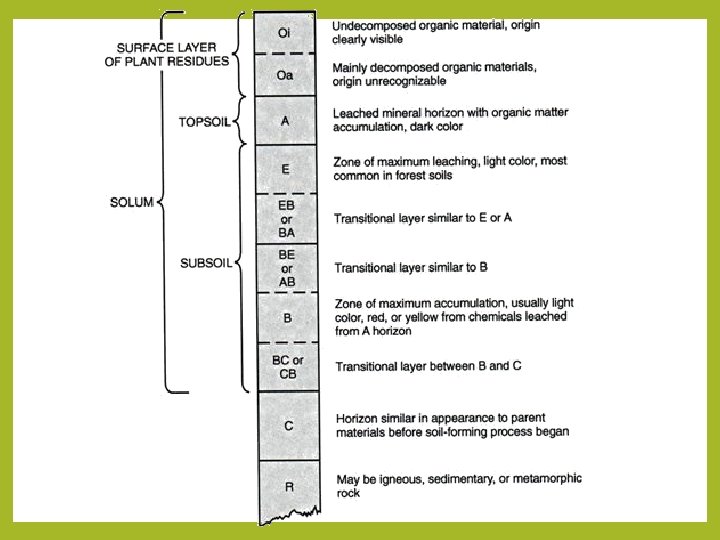
The Soil Profile (Continued) • Soil horizons • O: organic layer • A: topsoil • E: eluviation • B: subsoil • C: parent material • R: bedrock
• Organic layer made of wholly or partially decayed plant and animal debris • Generally occurs in undisturbed soil because plowing mixes organic layer into soil • A • Topsoil- surface mineral layer where organic matter accumulates • Darker than other horizons • Layer loses clay, iron, and other materials in downward-moving water • Eluviation • E • Zone of greatest eluviation • Very depleted in clay, chemicals, and organic matter • Very light colored • Many soils have no E horizon • B • Subsoil • Zone of accumulation or illuviation • Lower organic matter content • Enriched in clay deposited by illuviation • C • Lacks properties of A and B • Layer little touched by soil-forming processes • Usually parent material of the soil • May include very soft, weathered bedrock that roots can penetrate • R • Underlying hard bedrock (limestone, sandstone, granite) **A, E, B, and O horizons together make up the solum** • Actively participated in soil-forming processes
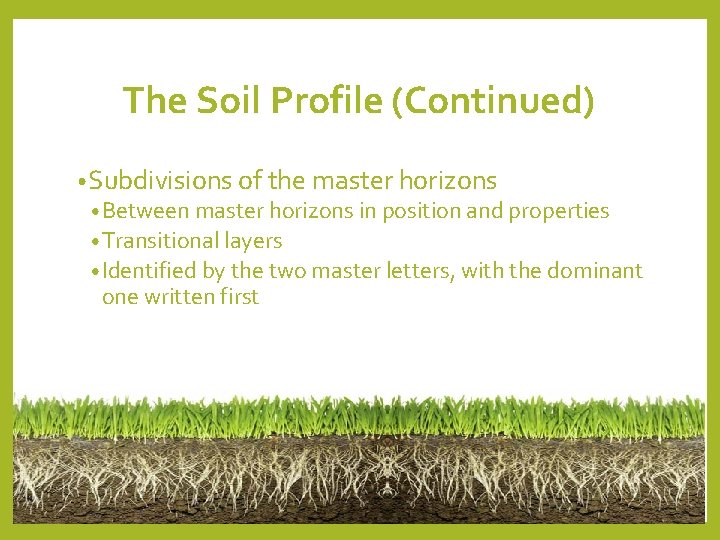
The Soil Profile (Continued) • Subdivisions of the master horizons • Between master horizons in position and properties • Transitional layers • Identified by the two master letters, with the dominant one written first
SUMMARY • This chapter reviewed several topics • • Soil body Rocks and minerals Parent material Climate Topography Time Soil-forming factors Soil profiles