
SOIL ORGANIC MATTER Organic Matter Decomposition a cyclic

- Slides: 22
SOIL ORGANIC MATTER
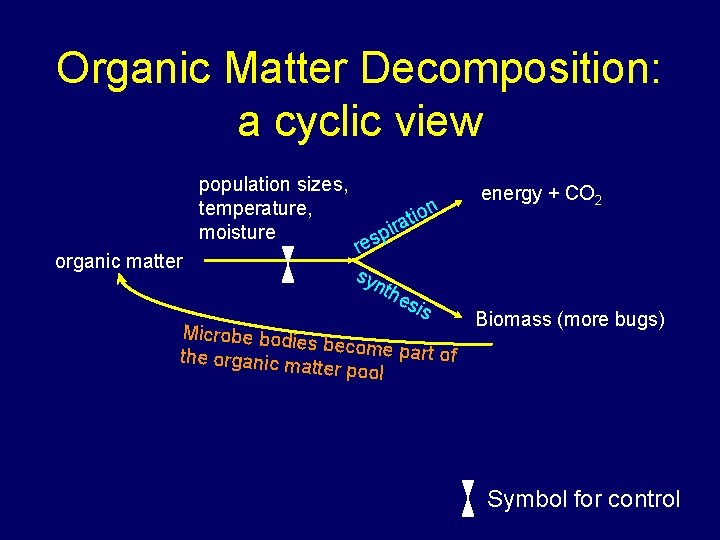
Organic Matter Decomposition: a cyclic view population sizes, temperature, moisture organic matter pi s re sy on i t ra nth es is Microbe bodie s become par t of the organic m atter pool energy + CO 2 Biomass (more bugs) Symbol for control
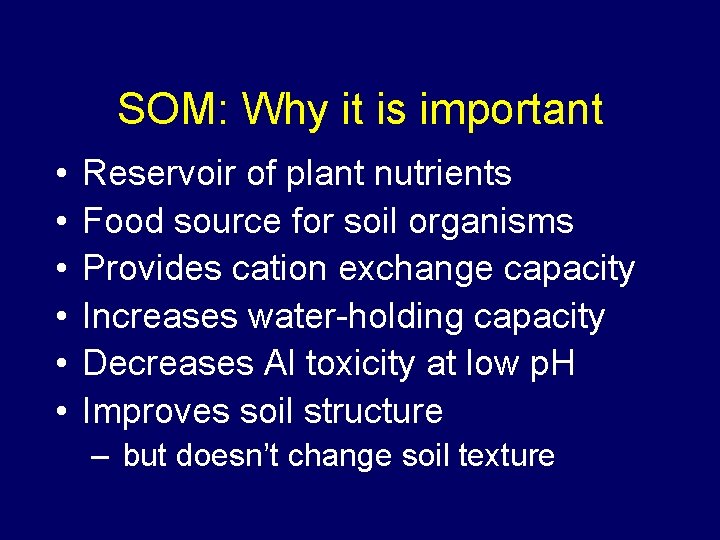
SOM: Why it is important • • • Reservoir of plant nutrients Food source for soil organisms Provides cation exchange capacity Increases water-holding capacity Decreases Al toxicity at low p. H Improves soil structure – but doesn’t change soil texture
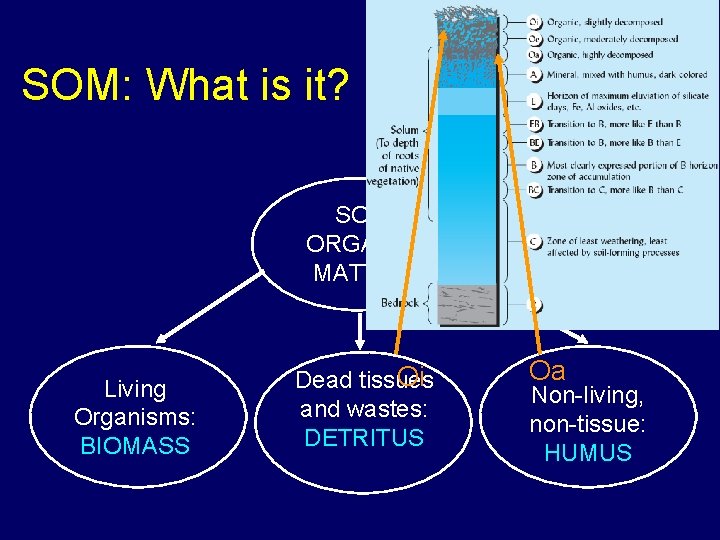
SOM: What is it? SOIL ORGANIC MATTER Living Organisms: BIOMASS Oi Dead tissues and wastes: DETRITUS Oa Non-living, non-tissue: HUMUS
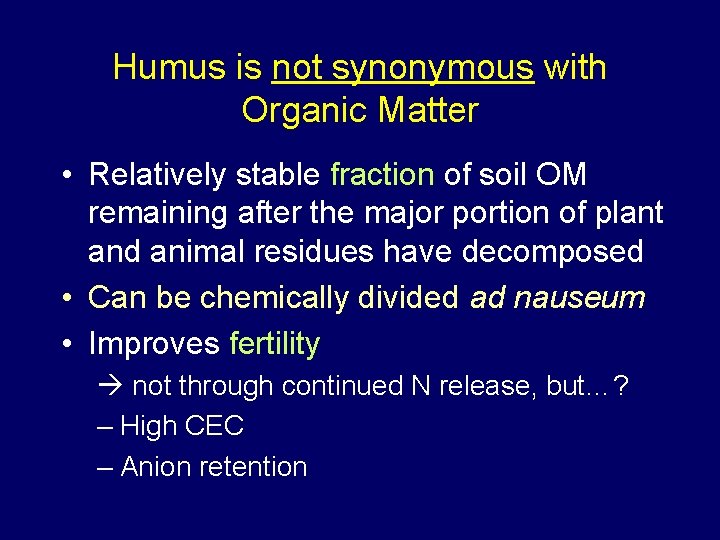
Humus is not synonymous with Organic Matter • Relatively stable fraction of soil OM remaining after the major portion of plant and animal residues have decomposed • Can be chemically divided ad nauseum • Improves fertility not through continued N release, but…? – High CEC – Anion retention
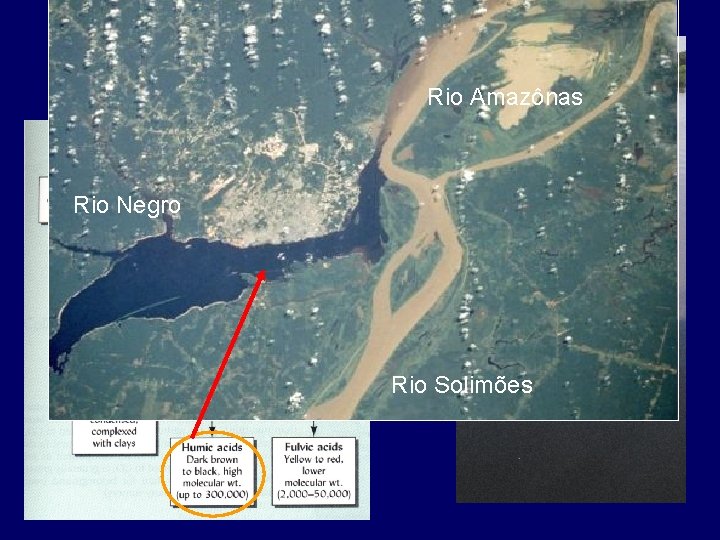
Fate of Humus Rio Amazônas Rio Negro Rio Solimões
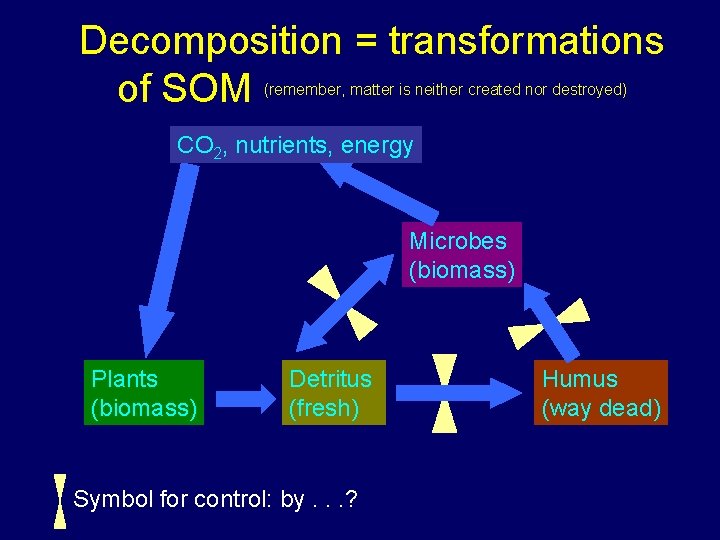
Decomposition = transformations of SOM (remember, matter is neither created nor destroyed) CO 2, nutrients, energy Microbes (biomass) Plants (biomass) Detritus (fresh) Symbol for control: by. . . ? Humus (way dead)
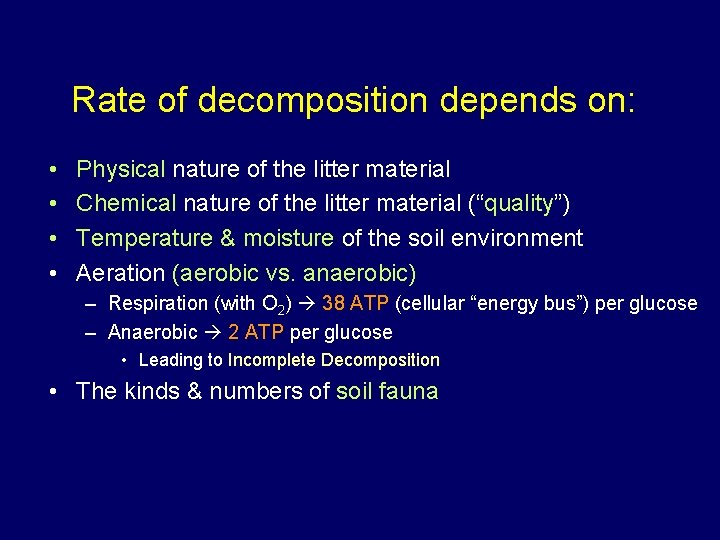
Rate of decomposition depends on: • • Physical nature of the litter material Chemical nature of the litter material (“quality”) Temperature & moisture of the soil environment Aeration (aerobic vs. anaerobic) – Respiration (with O 2) 38 ATP (cellular “energy bus”) per glucose – Anaerobic 2 ATP per glucose • Leading to Incomplete Decomposition • The kinds & numbers of soil fauna
1. Physical nature of litter • Small stuff decomposes faster than big stuff – More Surface Area – Role for “Shredders” Mechanical decomposition …
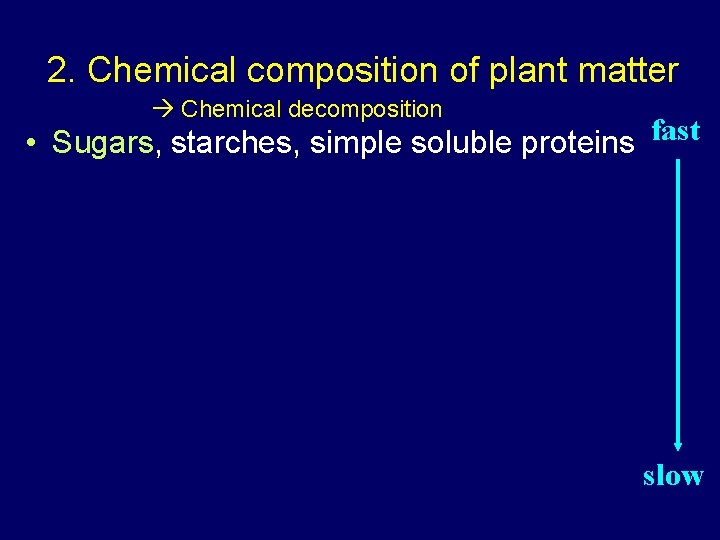
2. Chemical composition of plant matter Chemical decomposition • Sugars, starches, simple soluble proteins fast slow
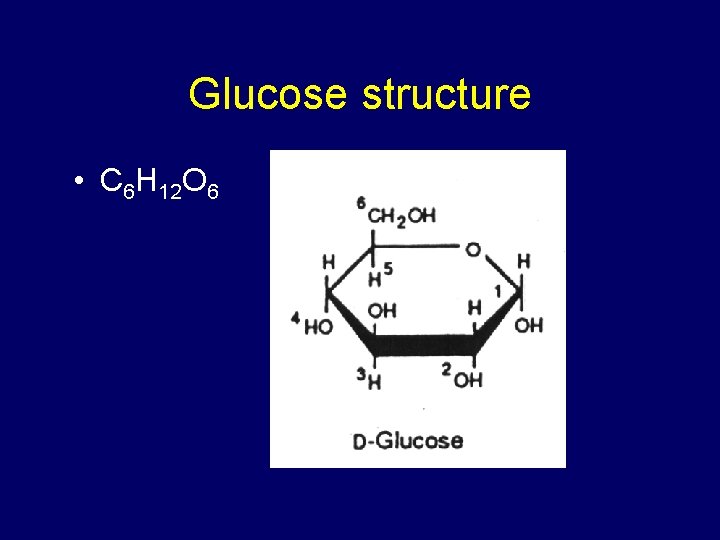
Glucose structure • C 6 H 12 O 6
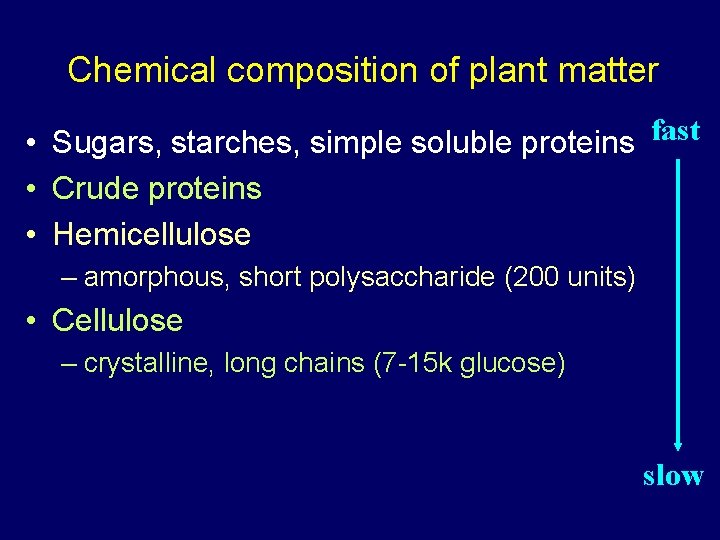
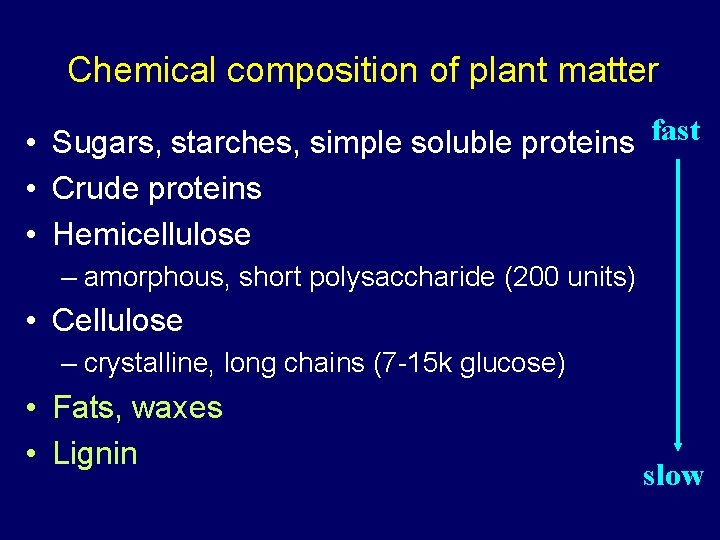
Chemical composition of plant matter • Sugars, starches, simple soluble proteins fast • Crude proteins • Hemicellulose – amorphous, short polysaccharide (200 units) • Cellulose – crystalline, long chains (7 -15 k glucose) slow
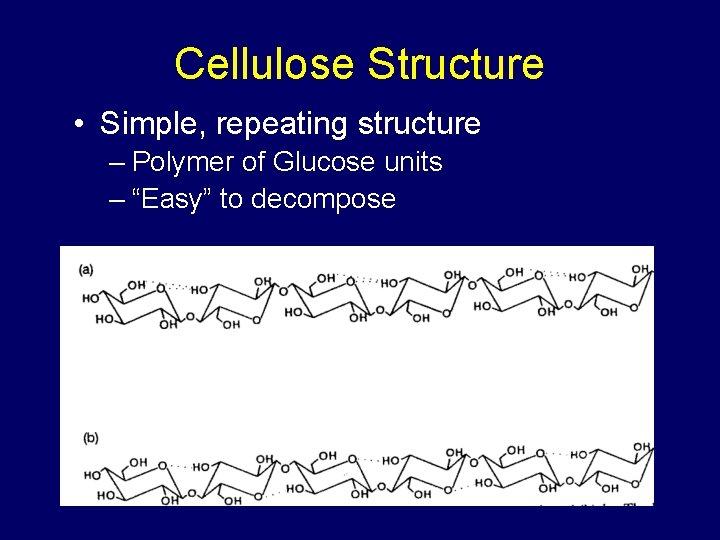
Cellulose Structure • Simple, repeating structure – Polymer of Glucose units – “Easy” to decompose
Chemical composition of plant matter • Sugars, starches, simple soluble proteins fast • Crude proteins • Hemicellulose – amorphous, short polysaccharide (200 units) • Cellulose – crystalline, long chains (7 -15 k glucose) • Fats, waxes • Lignin slow
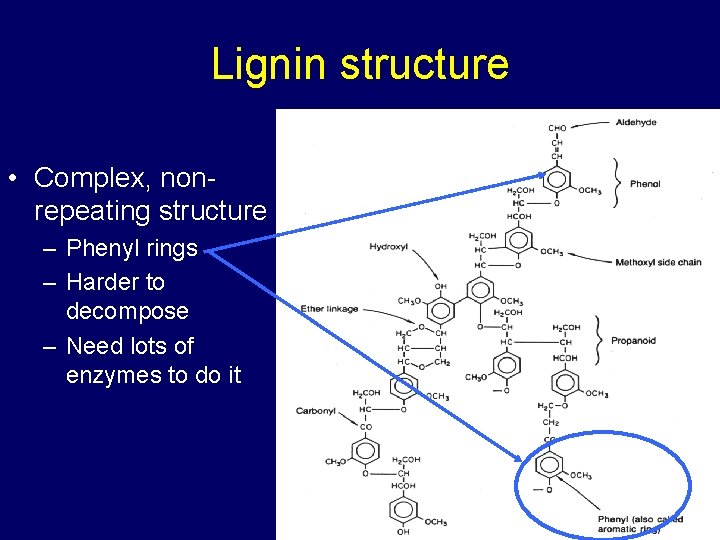
Lignin structure • Complex, nonrepeating structure – Phenyl rings – Harder to decompose – Need lots of enzymes to do it
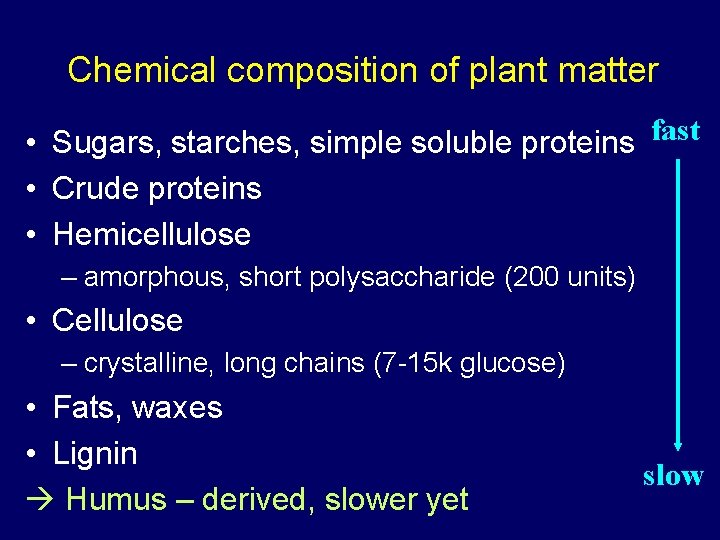
Chemical composition of plant matter • Sugars, starches, simple soluble proteins fast • Crude proteins • Hemicellulose – amorphous, short polysaccharide (200 units) • Cellulose – crystalline, long chains (7 -15 k glucose) • Fats, waxes • Lignin Humus – derived, slower yet slow
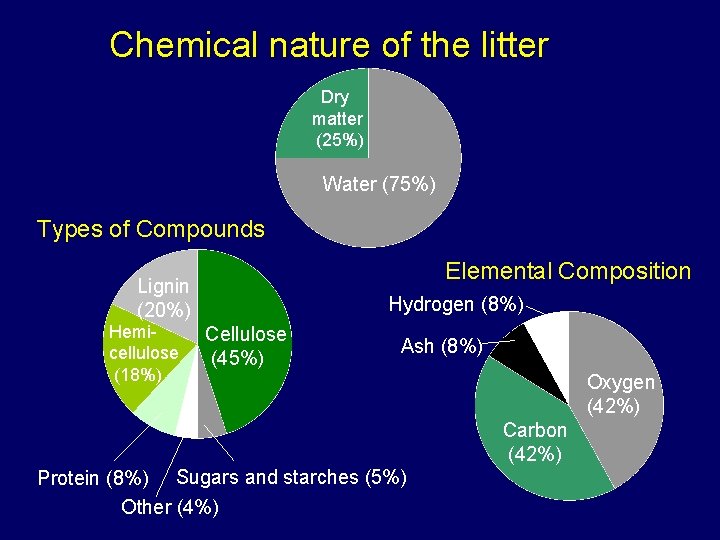
Chemical nature of the litter Dry matter (25%) Water (75%) Types of Compounds Elemental Composition Lignin (20%) Hemicellulose (18%) Hydrogen (8%) Cellulose (45%) Ash (8%) Oxygen (42%) Carbon (42%) Protein (8%) Sugars and starches (5%) Other (4%)
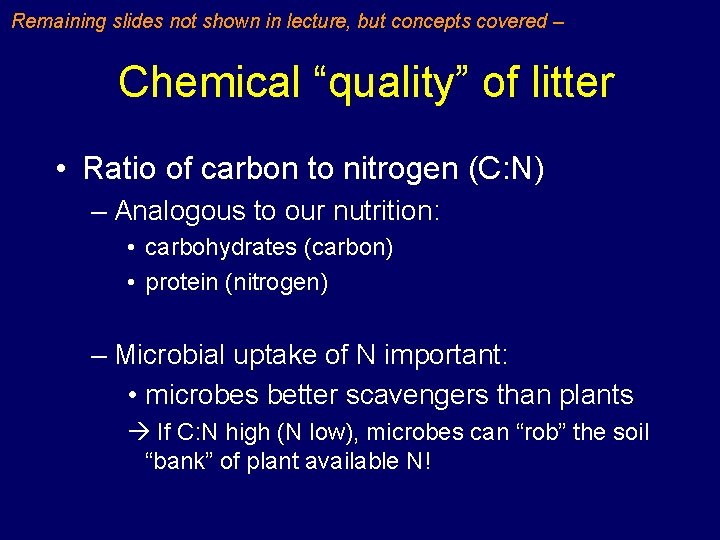
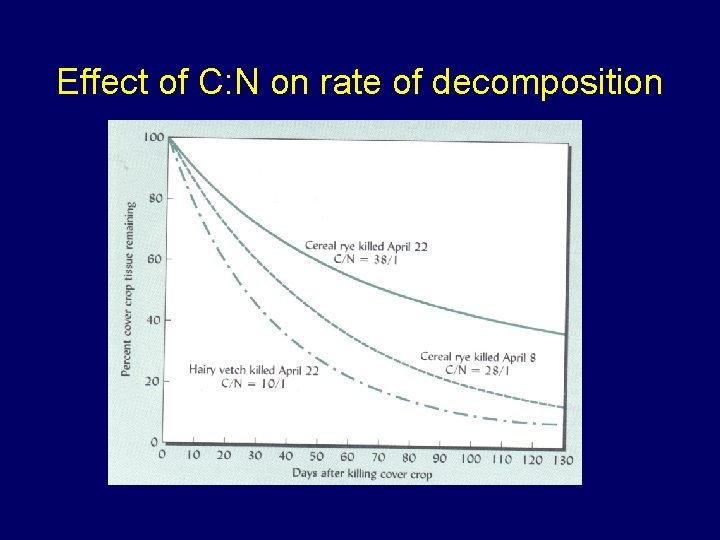
Remaining slides not shown in lecture, but concepts covered – Chemical “quality” of litter • Ratio of carbon to nitrogen (C: N) – Analogous to our nutrition: • carbohydrates (carbon) • protein (nitrogen) – Microbial uptake of N important: • microbes better scavengers than plants If C: N high (N low), microbes can “rob” the soil “bank” of plant available N!
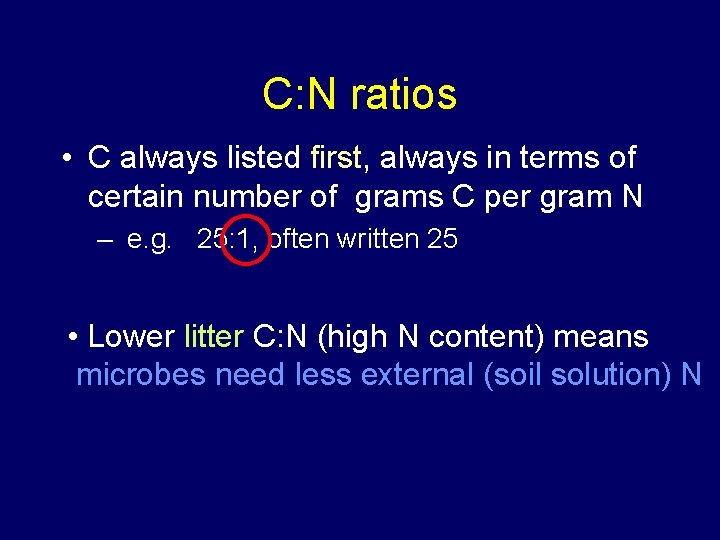
C: N ratios • C always listed first, always in terms of certain number of grams C per gram N – e. g. 25: 1, often written 25 • Lower litter C: N (high N content) means microbes need less external (soil solution) N
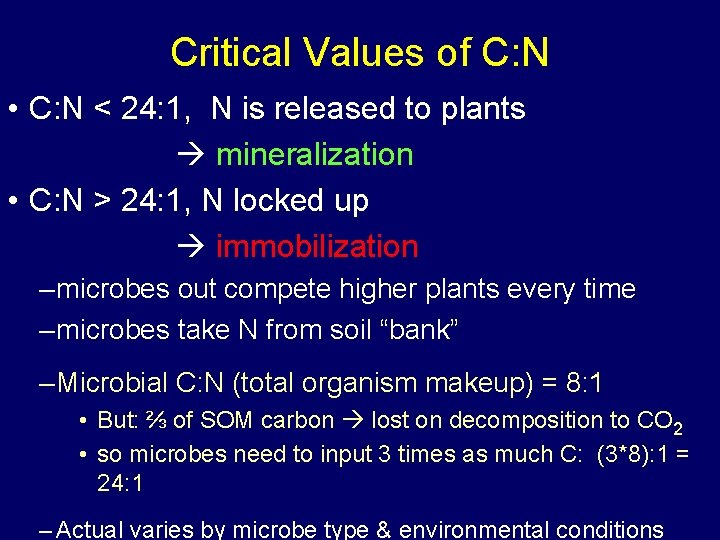
Critical Values of C: N • C: N < 24: 1, N is released to plants mineralization • C: N > 24: 1, N locked up immobilization – microbes out compete higher plants every time – microbes take N from soil “bank” – Microbial C: N (total organism makeup) = 8: 1 • But: ⅔ of SOM carbon lost on decomposition to CO 2 • so microbes need to input 3 times as much C: (3*8): 1 = 24: 1 – Actual varies by microbe type & environmental conditions
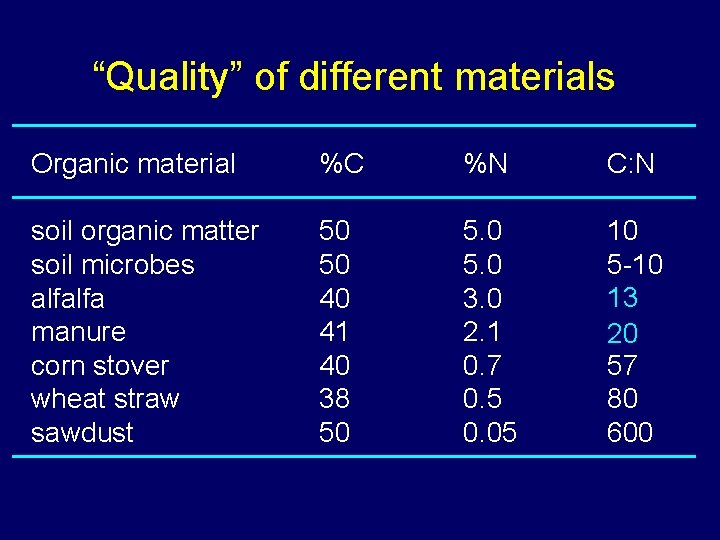
“Quality” of different materials Organic material %C %N C: N soil organic matter soil microbes alfalfa manure corn stover wheat straw sawdust 50 50 40 41 40 38 50 5. 0 3. 0 2. 1 0. 7 0. 5 0. 05 10 5 -10 13 20 57 80 600
Effect of C: N on rate of decomposition