
Soil Orders Study Guide Part I These slides

- Slides: 9
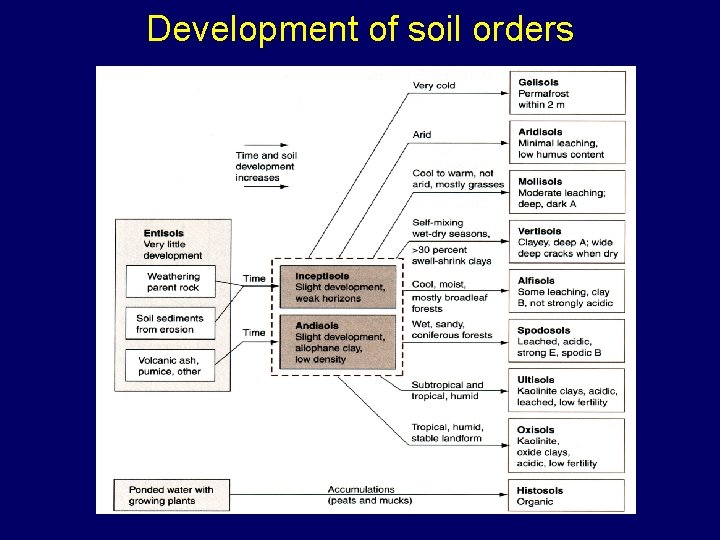
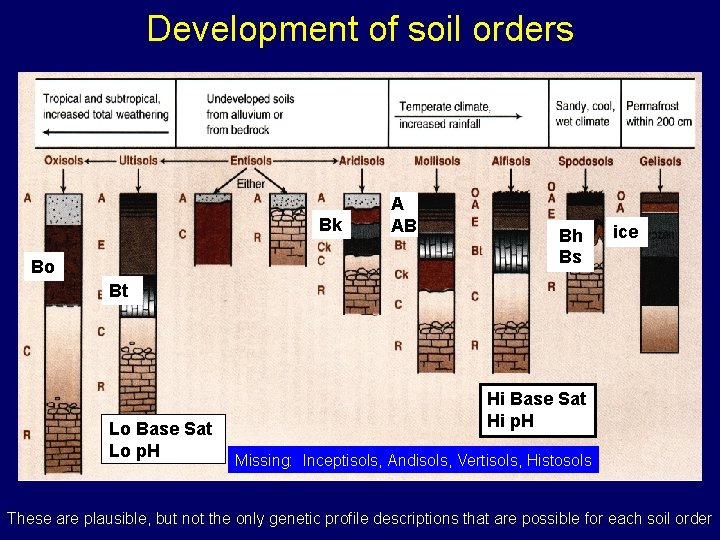
Soil Orders Study Guide – Part I These slides are to help organize in your mind: • Key diagnostic features for each Soil Order • Their developmental progression • Diagnostic surface & subsurface layers See also – for the individual orders: • • the text’s description and plates Soil Orders Study Guide – Part II (on course website)
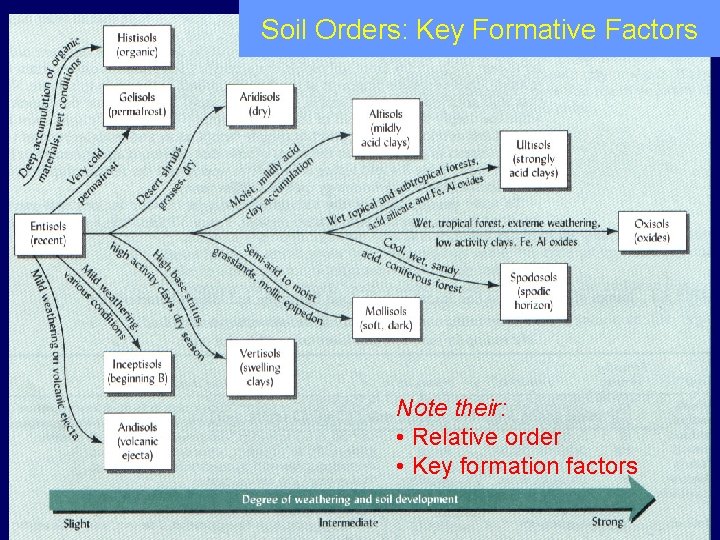
Soil Orders: Key Formative Factors Note their: • Relative order • Key formation factors
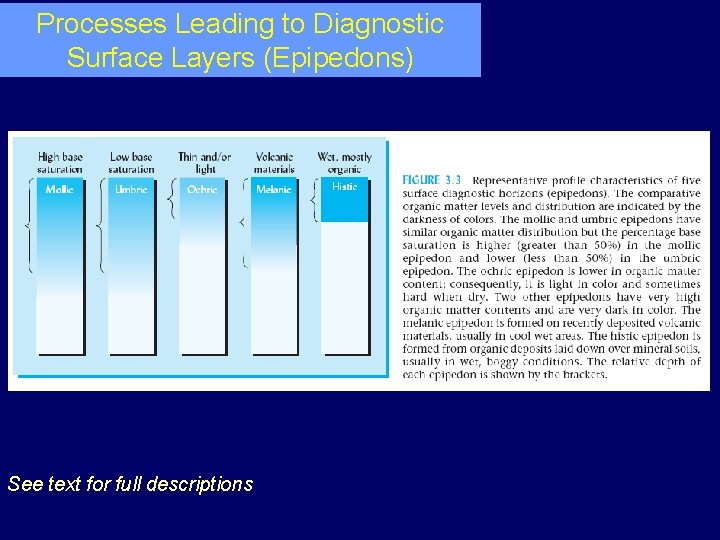
Processes Leading to Diagnostic Surface Layers (Epipedons) See text for full descriptions
Processes Leading to Diagnostic Subsurface Layers Albic Light colored horizon Argillic No significant accumulation Weakly developed horizon on lati Cambic of silicate clays Extreme w eathe Fe, Al oxid ring es u cum Unweathered material Ac Accumulation of organic matter Acc umu latio n of inor Acid weathering, Fe, Al oxides gan ic salt nt nte nt o c de lay evi c h ins Hig y sk Cla Oxic Spodic s Modified from text: full version = Figure 3. 5 (p. 83) See text for full descriptions Carbonates primarily Ca CO 3 Calcic
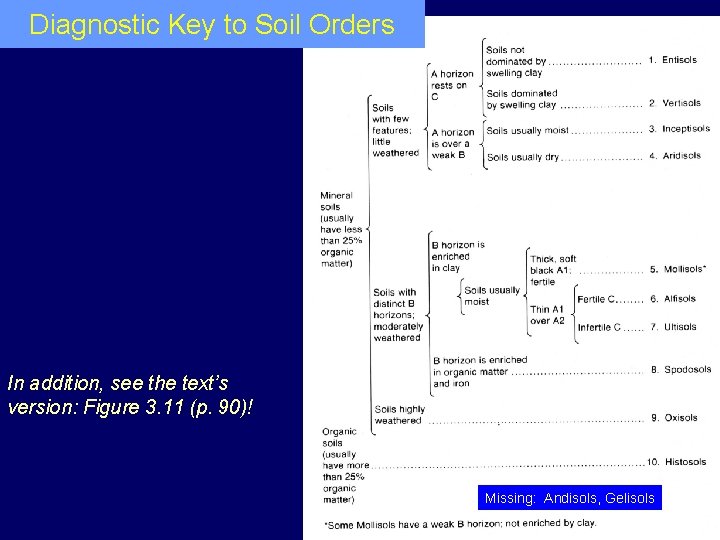
Diagnostic Key to Soil Orders In addition, see the text’s version: Figure 3. 11 (p. 90)! Missing: Andisols, Gelisols
Development of soil orders
Development of soil orders Bk Bo A AB Bh Bs ice Bt Lo Base Sat Lo p. H Hi Base Sat Hi p. H Missing: Inceptisols, Andisols, Vertisols, Histosols These are plausible, but not the only genetic profile descriptions that are possible for each soil order
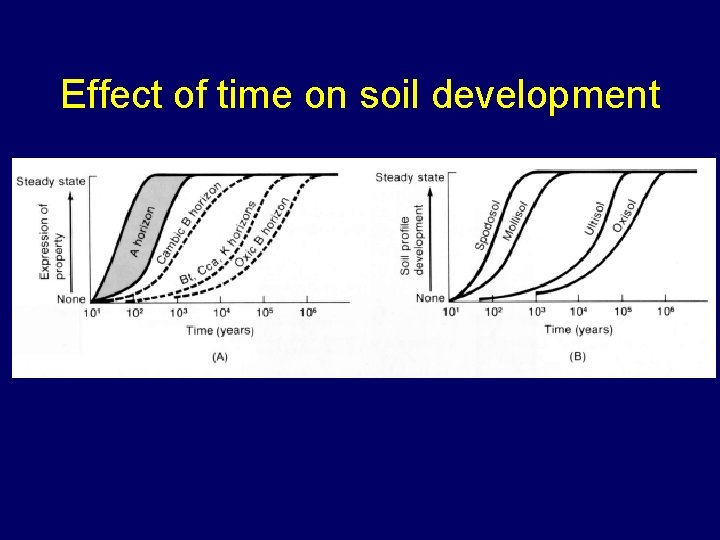
Effect of time on soil development