
Soil moisture percent organic matter and soil texture
- Slides: 46
Soil moisture, percent organic matter and soil texture calculations http: //www. virtualschoolhub. com
Soil Moisture Procedures 1. Weigh the soil when it is taken out of the ground. 2. Dry it in the oven. 3. Weigh the soil after it is dry. 4. Consider drying the soil more and reweighing the soil to be sure it is dry. http: //www. virtualschoolhub. com
Soil moisture calculation Percent moisture = http: //www. virtualschoolhub. com mass water x 100 mass original soil
Calculate the percent of soil moisture Masses of soil and the pan +/-0. 005 Mass of original soil + pan 180. 00 Mass of dry soil + pan 150. 00 Mass of empty pan 20. 00 http: //www. virtualschoolhub. com
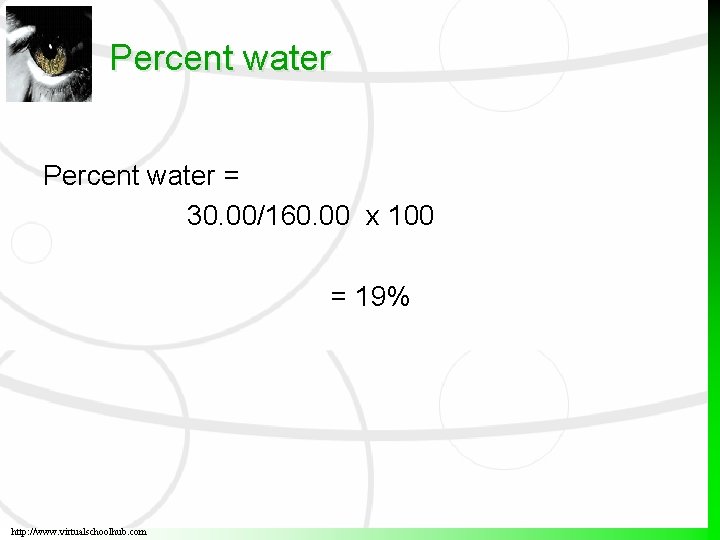
Percent water = 30. 00/160. 00 x 100 = 19% http: //www. virtualschoolhub. com
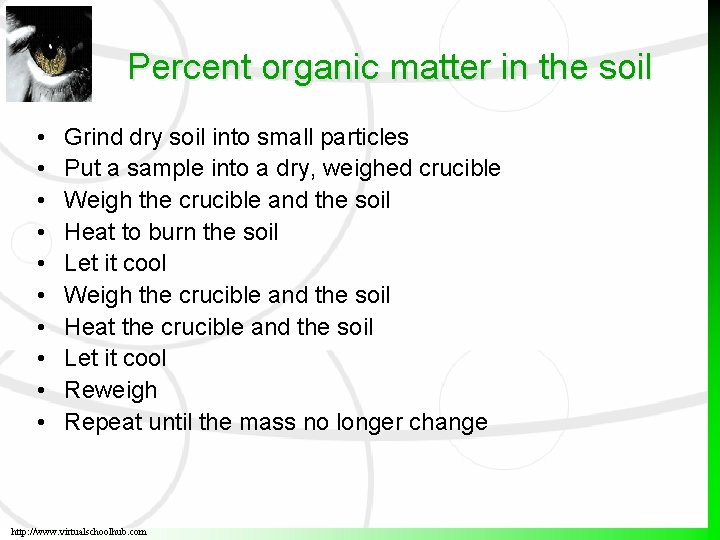
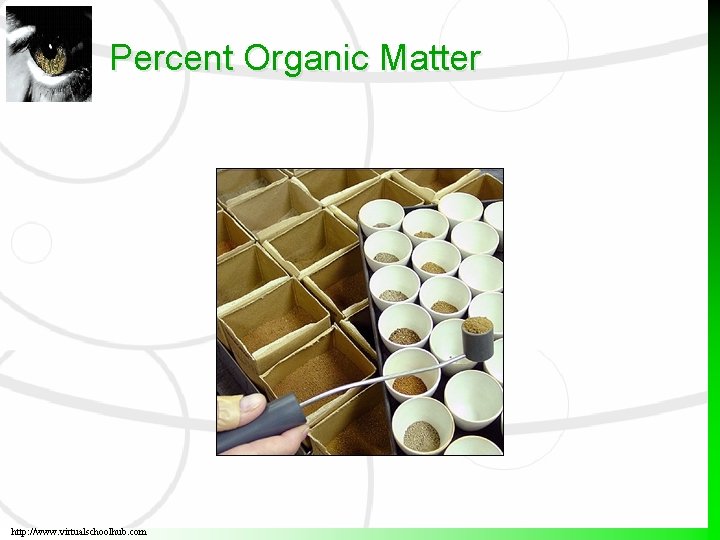
Percent organic matter in the soil • • • Grind dry soil into small particles Put a sample into a dry, weighed crucible Weigh the crucible and the soil Heat to burn the soil Let it cool Weigh the crucible and the soil Heat the crucible and the soil Let it cool Reweigh Repeat until the mass no longer change http: //www. virtualschoolhub. com
Percent Organic Matter http: //www. virtualschoolhub. com
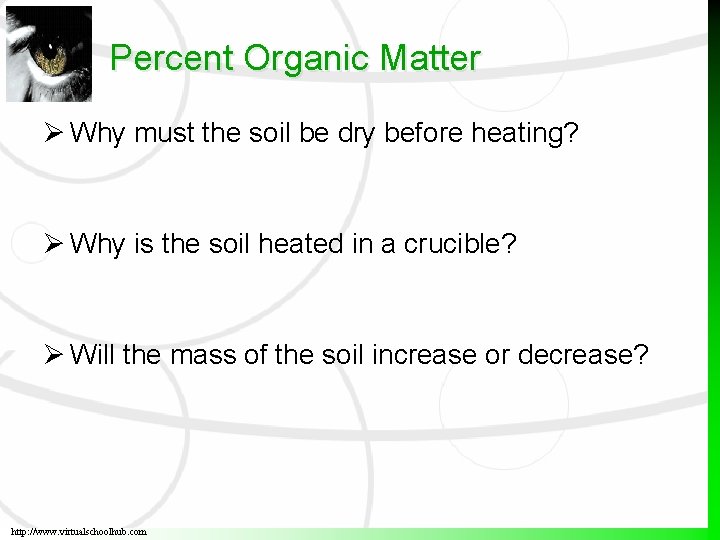
Percent Organic Matter Why must the soil be dry before heating? Why is the soil heated in a crucible? Will the mass of the soil increase or decrease? http: //www. virtualschoolhub. com
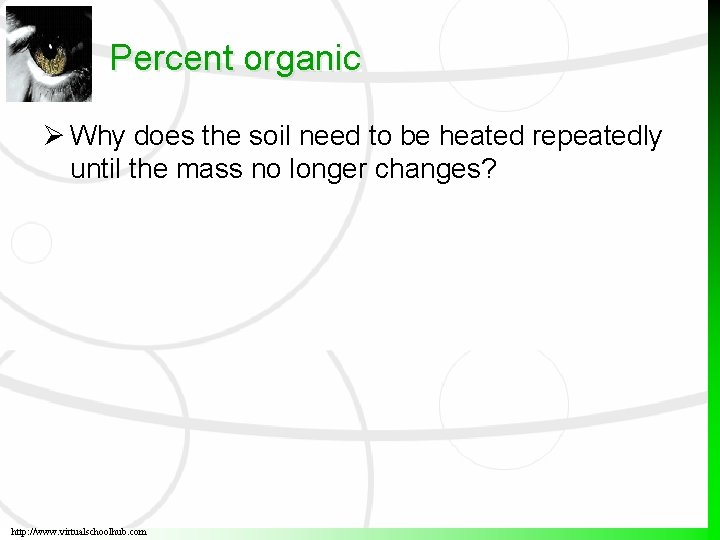
Percent organic Why does the soil need to be heated repeatedly until the mass no longer changes? http: //www. virtualschoolhub. com
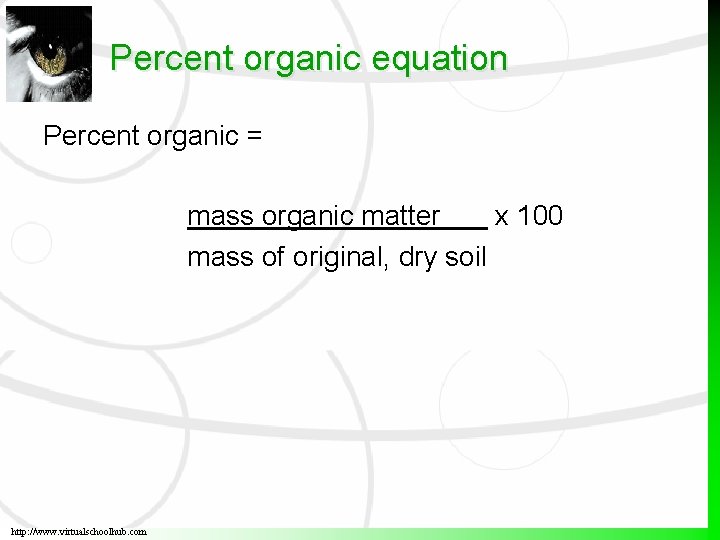
Percent organic equation Percent organic = mass organic matter x 100 mass of original, dry soil http: //www. virtualschoolhub. com
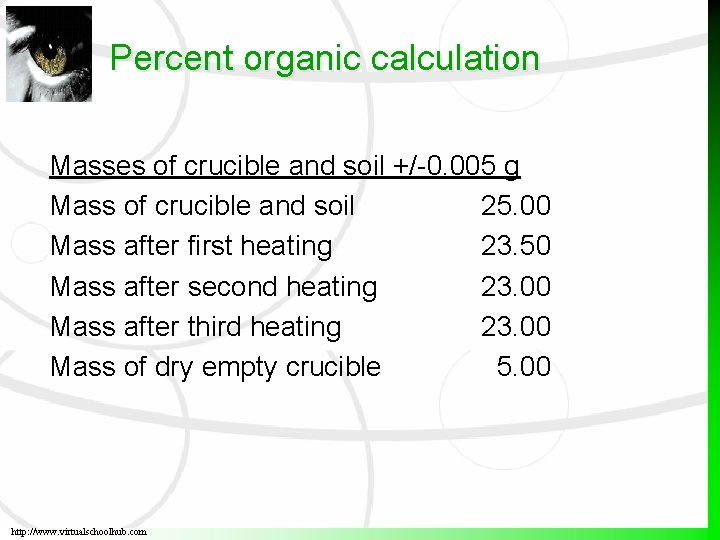
Percent organic calculation Masses of crucible and soil +/-0. 005 g Mass of crucible and soil 25. 00 Mass after first heating 23. 50 Mass after second heating 23. 00 Mass after third heating 23. 00 Mass of dry empty crucible 5. 00 http: //www. virtualschoolhub. com
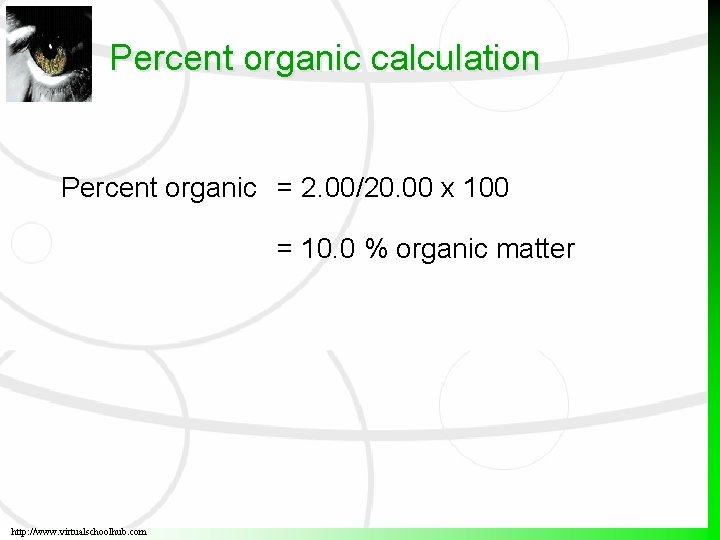
Percent organic calculation Percent organic = 2. 00/20. 00 x 100 = 10. 0 % organic matter http: //www. virtualschoolhub. com
Soil Texture • Soil texture depends on the amounts of sand, silt and clay. • Sand is the largest type of particle • Silt is intermediate in size • Clay is the smallest • Gravel is removed first. . http: //www. virtualschoolhub. com
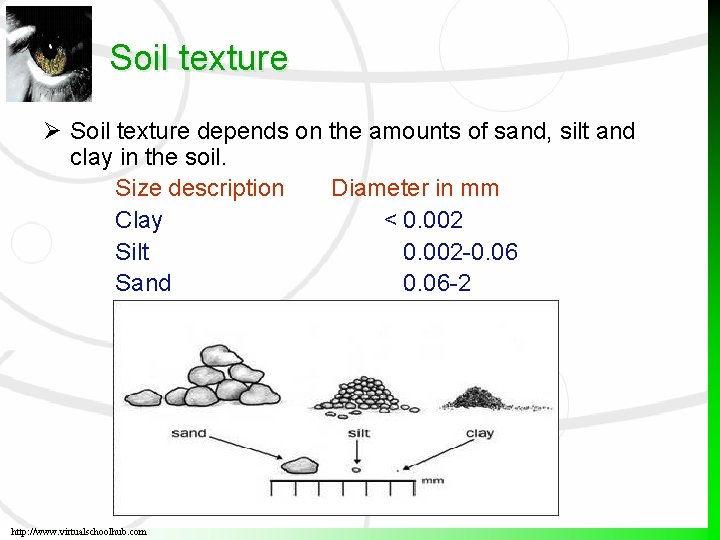
Soil texture depends on the amounts of sand, silt and clay in the soil. Size description Diameter in mm Clay < 0. 002 Silt 0. 002 -0. 06 Sand 0. 06 -2 http: //www. virtualschoolhub. com
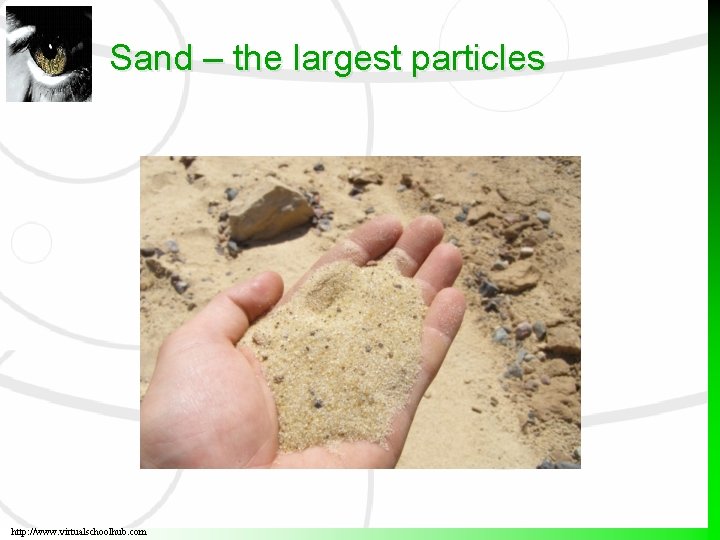
Sand – the largest particles http: //www. virtualschoolhub. com
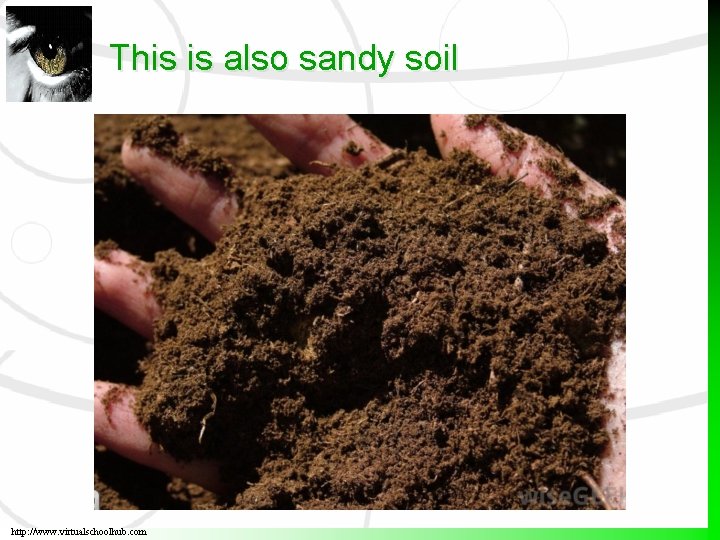
This is also sandy soil http: //www. virtualschoolhub. com
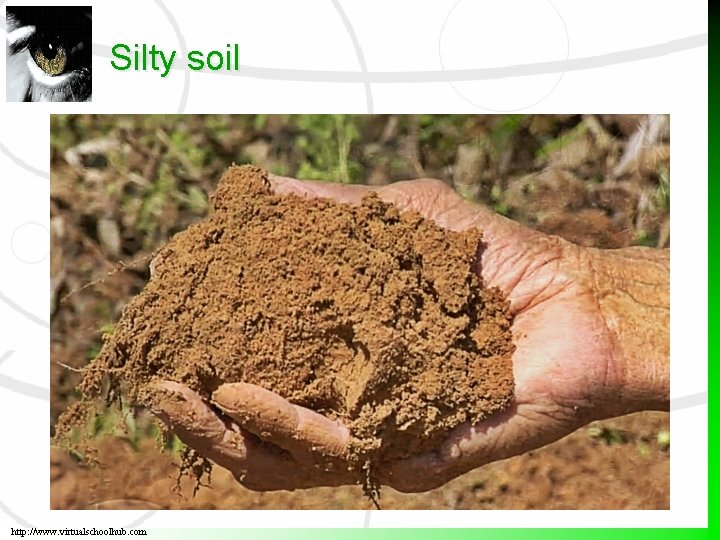
Silty soil http: //www. virtualschoolhub. com
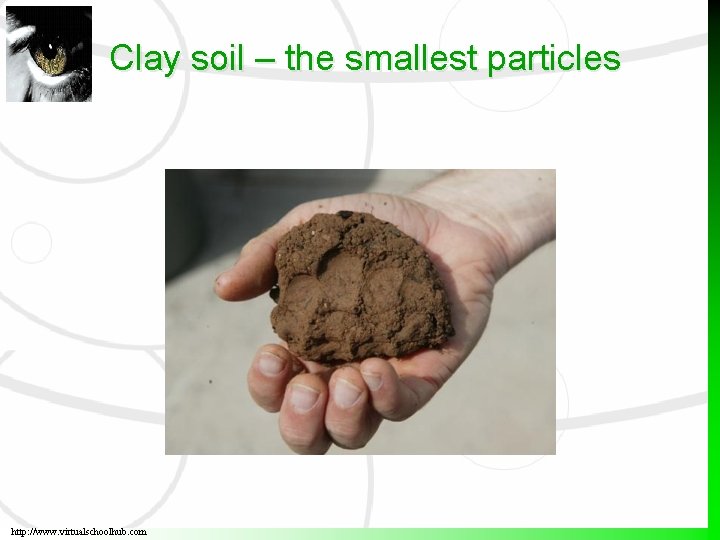
Clay soil – the smallest particles http: //www. virtualschoolhub. com
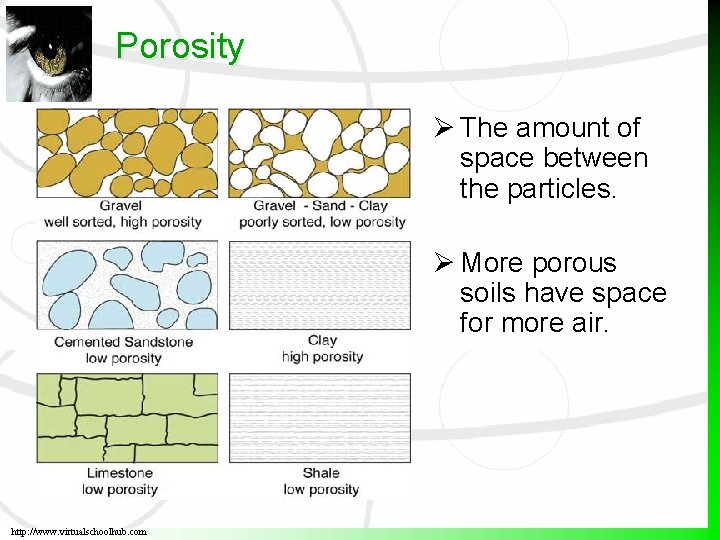
Porosity The amount of space between the particles. More porous soils have space for more air. http: //www. virtualschoolhub. com
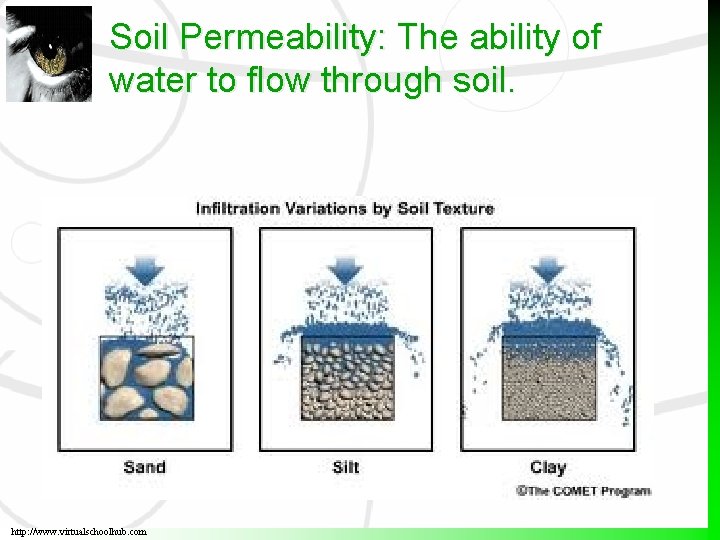
Soil Permeability: The ability of water to flow through soil. http: //www. virtualschoolhub. com
Water holding capacity: the ability of the soil to hold water Clay stores too much water Sand does not hold water very well http: //www. virtualschoolhub. com
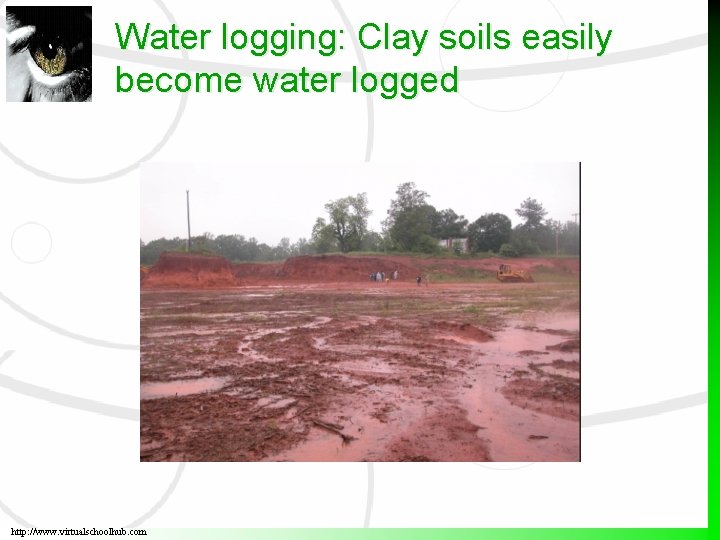
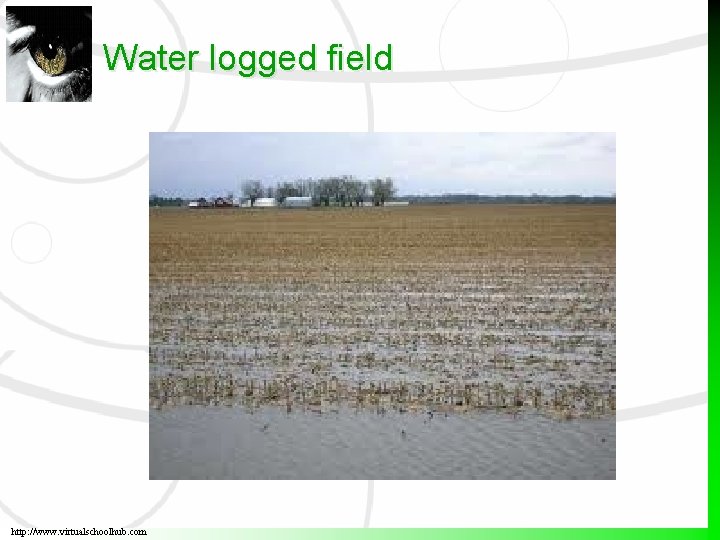
Water logging: Clay soils easily become water logged http: //www. virtualschoolhub. com
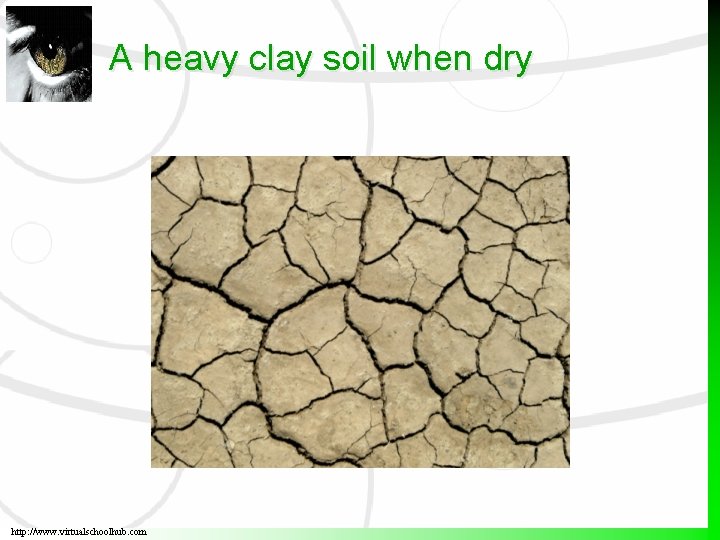
A heavy clay soil when dry http: //www. virtualschoolhub. com
Water logging When the soil becomes too wet Plants can die from growing in water logged soils Clay soils can become waterlogged easily. http: //www. virtualschoolhub. com
Water logged field http: //www. virtualschoolhub. com
Compare sand, silt, clay Which is the most porous? Which has the highest water-holding capacity? Which is the most permeable? Which has the best drainage? Which has the most air space? http: //www. virtualschoolhub. com
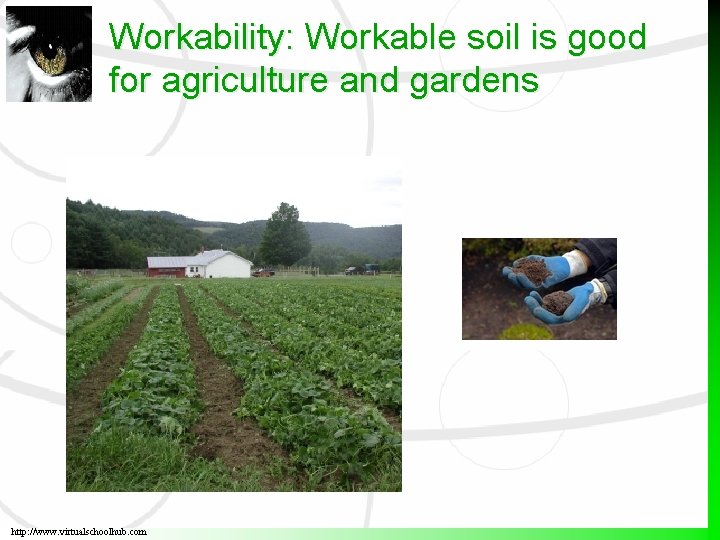
Workability: Workable soil is good for agriculture and gardens http: //www. virtualschoolhub. com
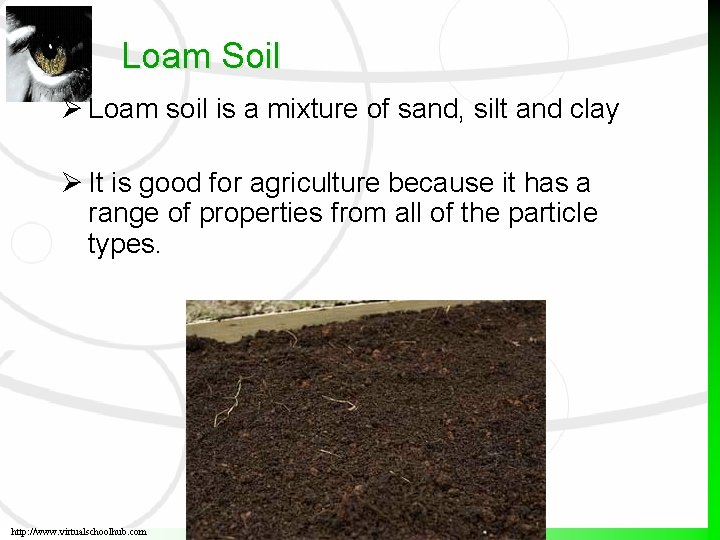
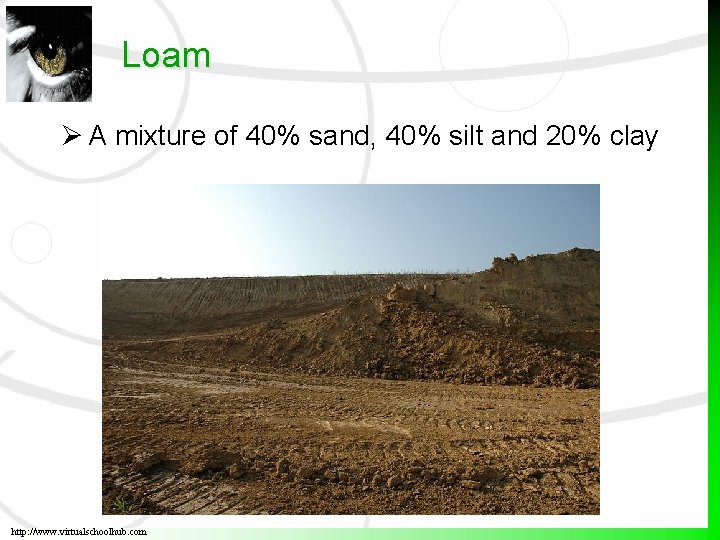
Loam Soil Loam soil is a mixture of sand, silt and clay It is good for agriculture because it has a range of properties from all of the particle types. http: //www. virtualschoolhub. com
Loam A mixture of 40% sand, 40% silt and 20% clay http: //www. virtualschoolhub. com
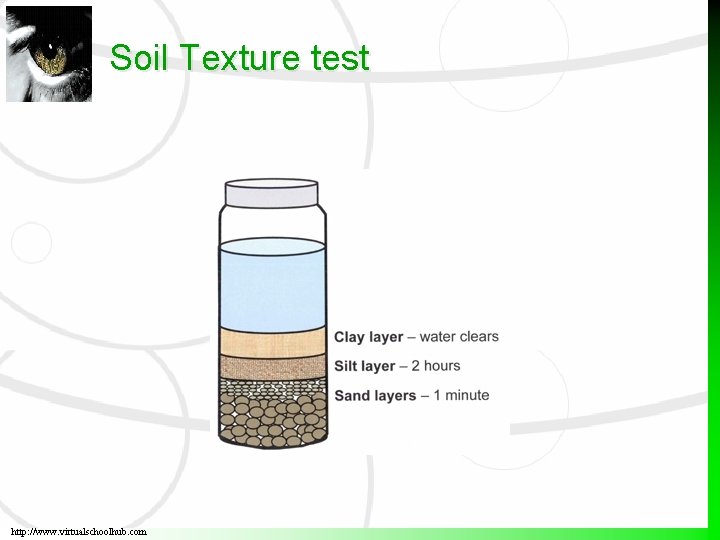
Soil Texture test http: //www. virtualschoolhub. com
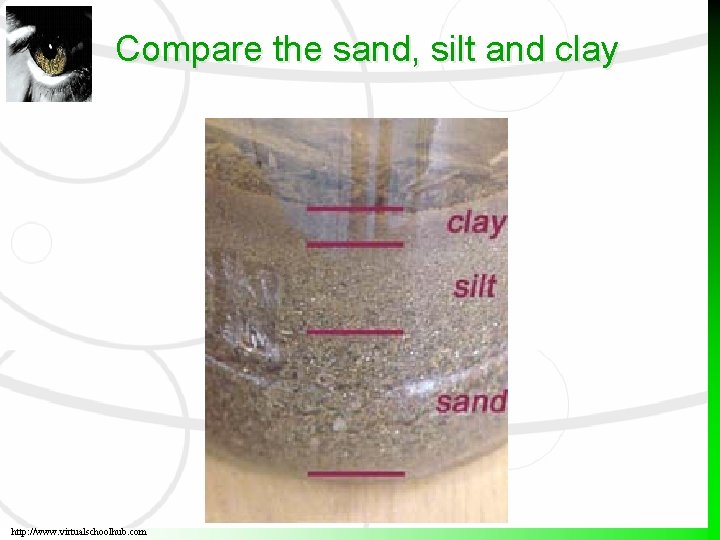
Compare the sand, silt and clay http: //www. virtualschoolhub. com
http: //www. virtualschoolhub. com
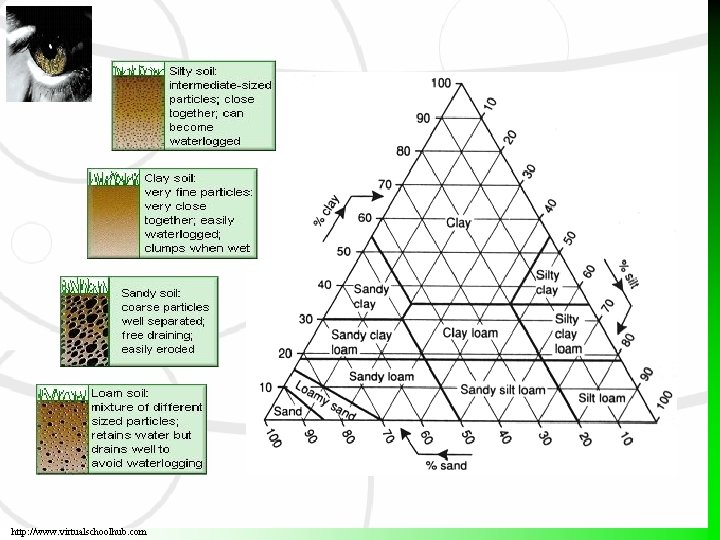
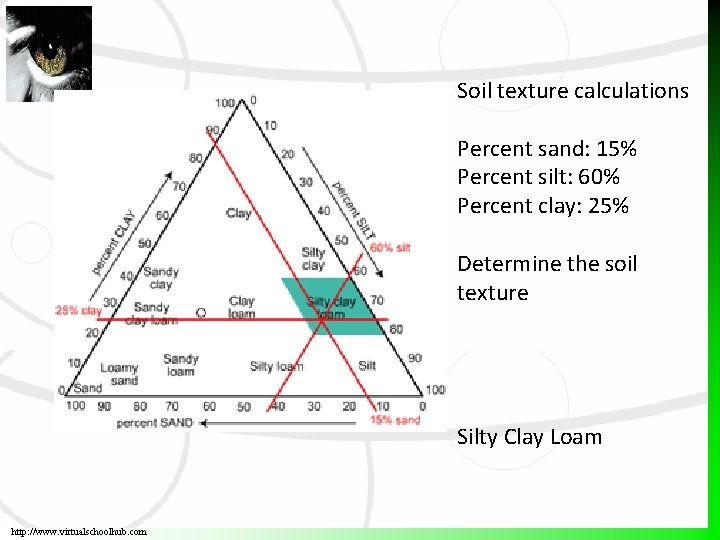
Soil texture calculations Percent sand: 15% Percent silt: 60% Percent clay: 25% Determine the soil texture Silty Clay Loam http: //www. virtualschoolhub. com
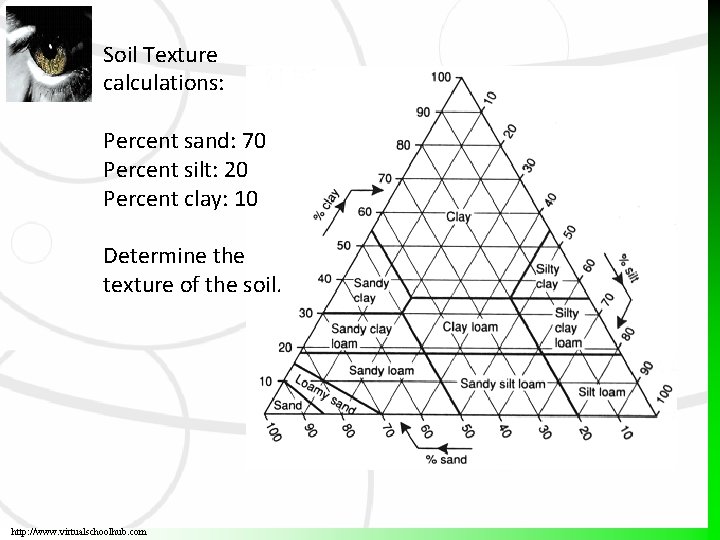
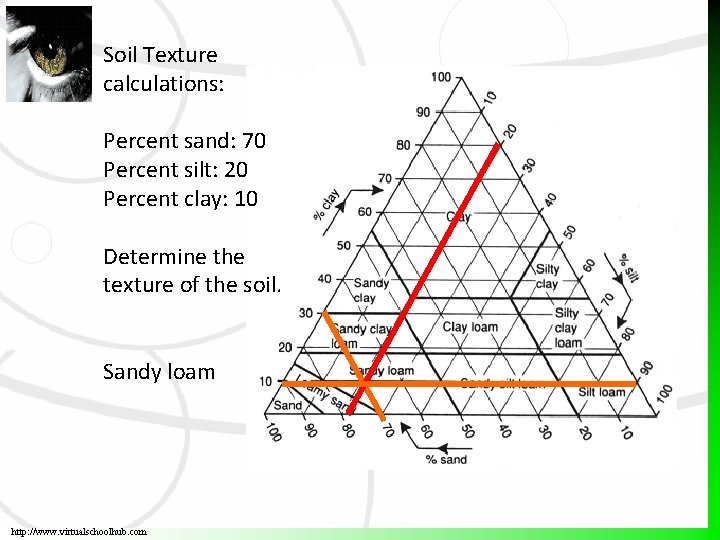
Soil Texture calculations: Percent sand: 70 Percent silt: 20 Percent clay: 10 Determine the texture of the soil. http: //www. virtualschoolhub. com
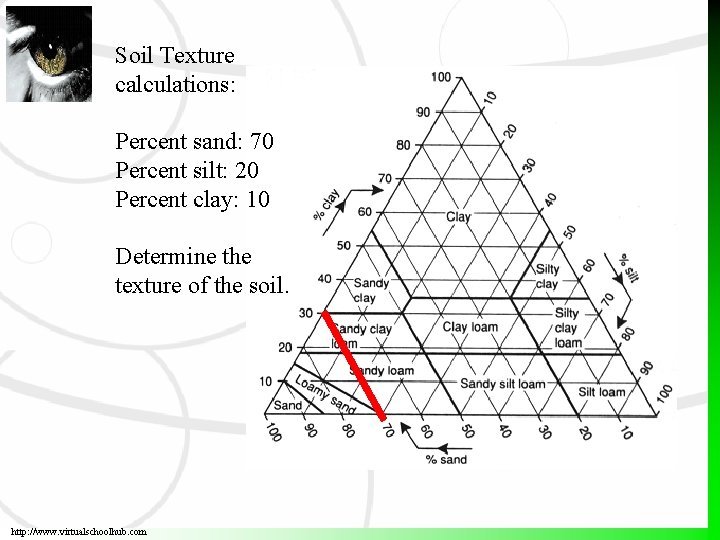
Soil Texture calculations: Percent sand: 70 Percent silt: 20 Percent clay: 10 Determine the texture of the soil. http: //www. virtualschoolhub. com
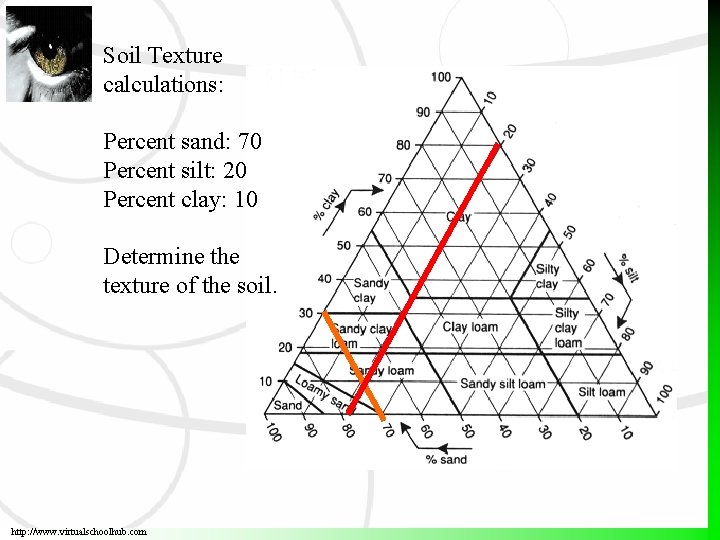
Soil Texture calculations: Percent sand: 70 Percent silt: 20 Percent clay: 10 Determine the texture of the soil. http: //www. virtualschoolhub. com
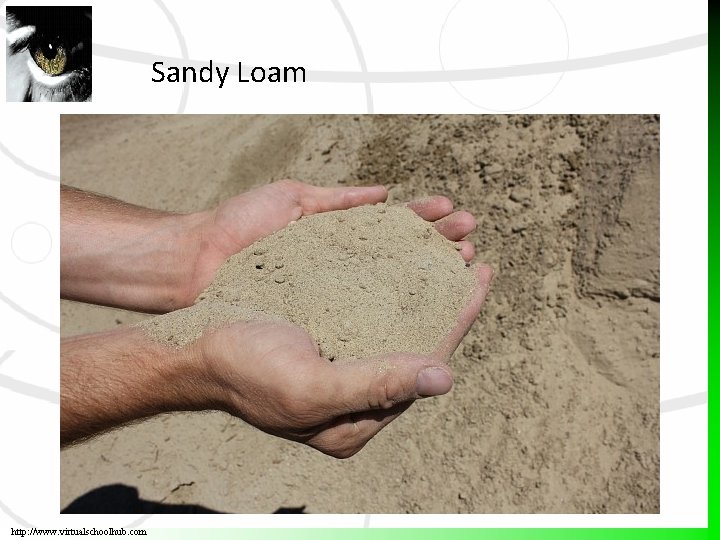
Soil Texture calculations: Percent sand: 70 Percent silt: 20 Percent clay: 10 Determine the texture of the soil. Sandy loam http: //www. virtualschoolhub. com
Sandy Loam http: //www. virtualschoolhub. com
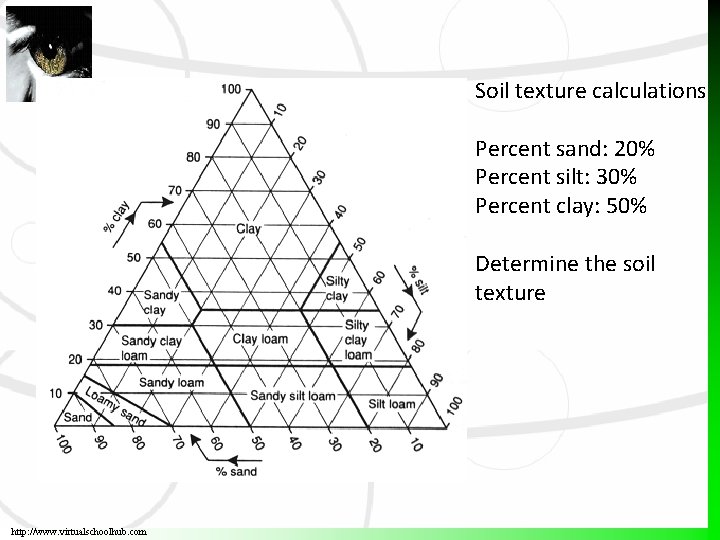
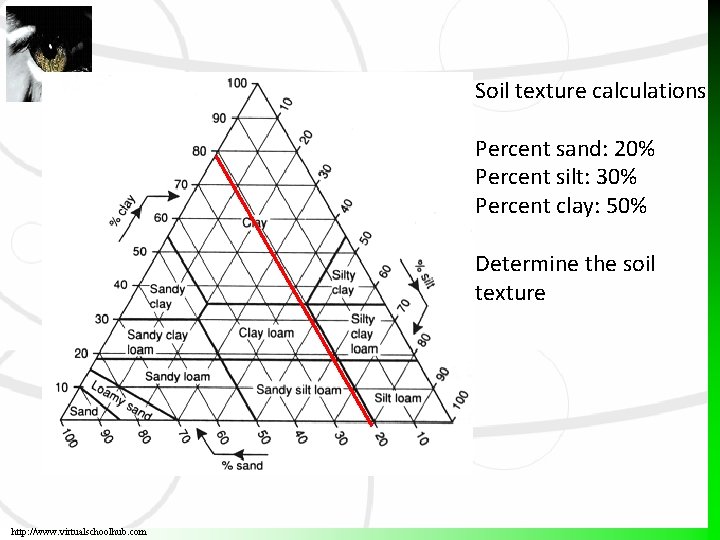
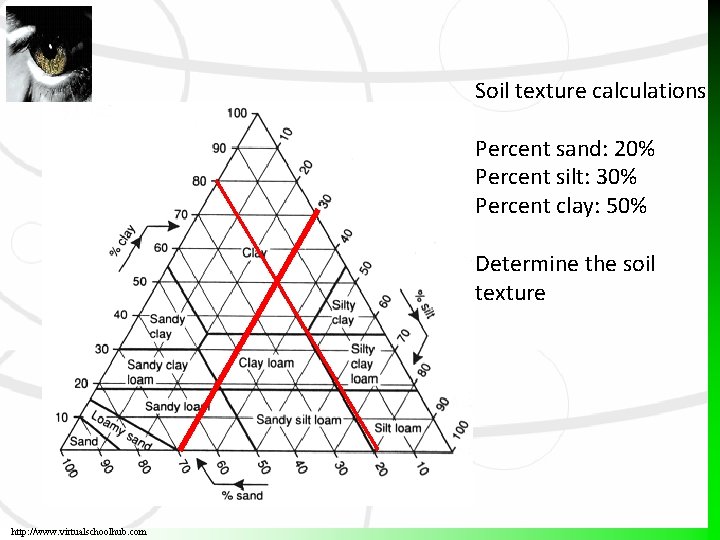
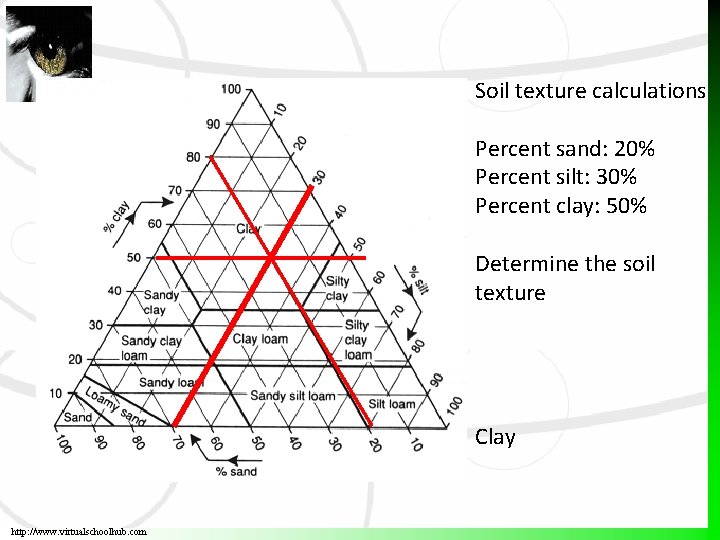
Soil texture calculations Percent sand: 20% Percent silt: 30% Percent clay: 50% Determine the soil texture http: //www. virtualschoolhub. com
Soil texture calculations Percent sand: 20% Percent silt: 30% Percent clay: 50% Determine the soil texture http: //www. virtualschoolhub. com
Soil texture calculations Percent sand: 20% Percent silt: 30% Percent clay: 50% Determine the soil texture http: //www. virtualschoolhub. com
Soil texture calculations Percent sand: 20% Percent silt: 30% Percent clay: 50% Determine the soil texture Clay http: //www. virtualschoolhub. com
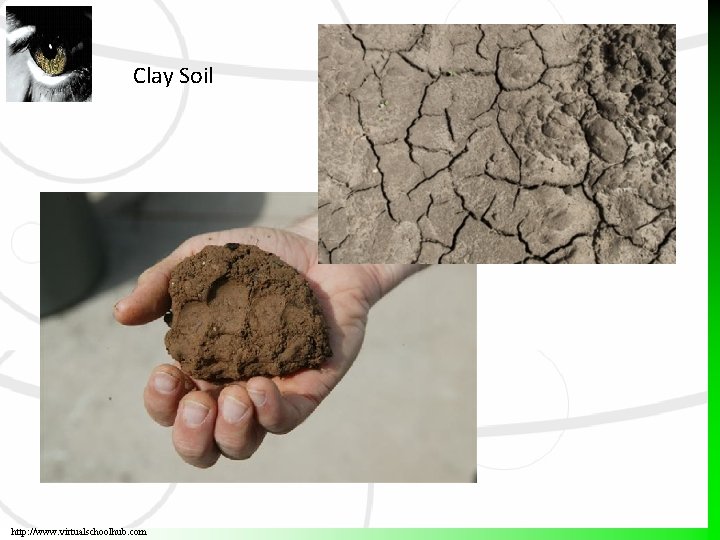
Clay Soil http: //www. virtualschoolhub. com
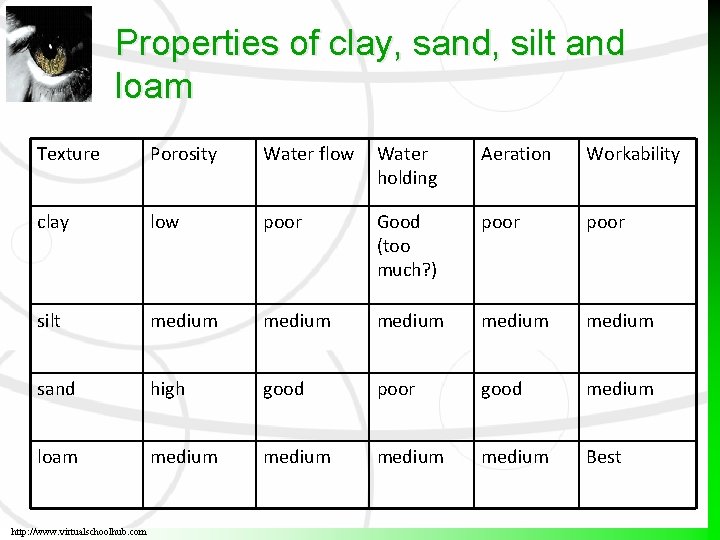
Properties of clay, sand, silt and loam Texture Porosity Water flow Water holding Aeration Workability clay low poor Good (too much? ) poor silt medium medium sand high good poor good medium loam medium Best http: //www. virtualschoolhub. com
Soil Texture Experiment 1. Grind the soil sample with a mortar and pestle. 2. Weigh the sieves and put them together correctly. 3. Shake the soil sample to separate the particles. 4. Pull the sieves apart. 5. Weigh the sand, silt and clay. 6. Add to find the total mass. 7. Calculate the percent of sand silt and clay 8. Use a soil texture triangle to classify the soil texture. http: //www. virtualschoolhub. com
Soil Texture Lab Report Data collection: Data TABLE with a descriptive title, units, ranges of uncertainties for the units Qualitative Observations! (colour…) Data Processing: The equation used and a sample calculation Data Presentation: A labelled table with the results. http: //www. virtualschoolhub. com