
SOIL MICROORGANISMS IN CYCLING OF ELEMENTS OR PLANT
- Slides: 17
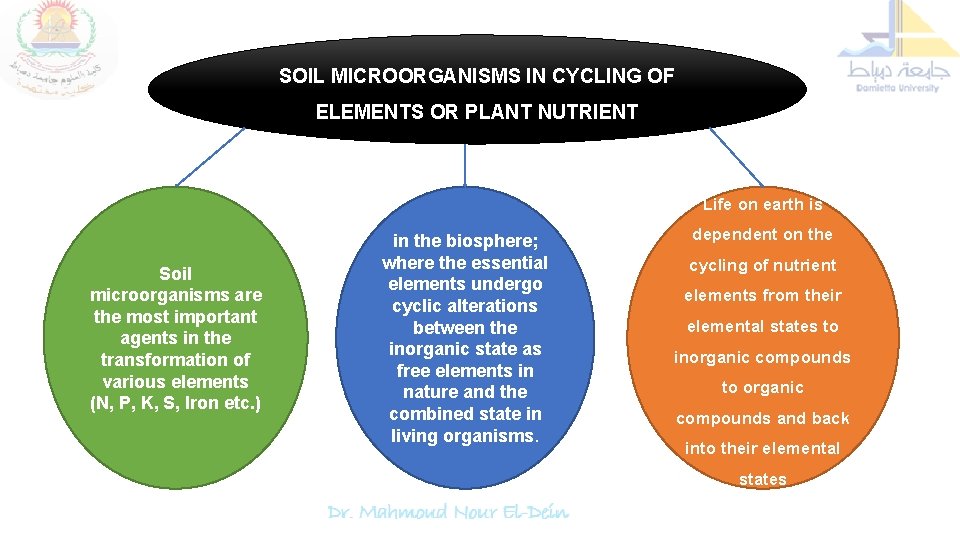
SOIL MICROORGANISMS IN CYCLING OF ELEMENTS OR PLANT NUTRIENT Life on earth is Soil microorganisms are the most important agents in the transformation of various elements (N, P, K, S, Iron etc. ) in the biosphere; where the essential elements undergo cyclic alterations between the inorganic state as free elements in nature and the combined state in living organisms. dependent on the cycling of nutrient elements from their elemental states to inorganic compounds to organic compounds and back into their elemental states
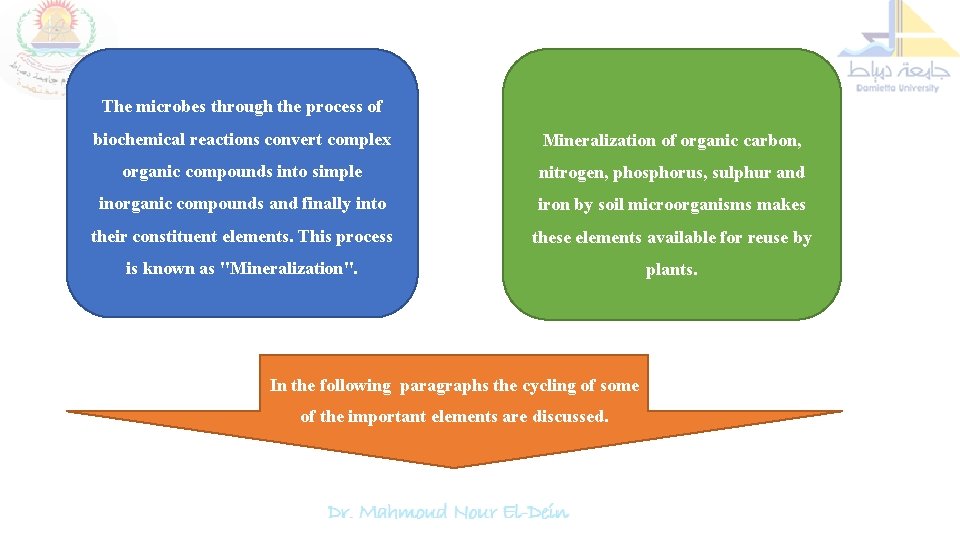
The microbes through the process of biochemical reactions convert complex Mineralization of organic carbon, organic compounds into simple nitrogen, phosphorus, sulphur and inorganic compounds and finally into iron by soil microorganisms makes their constituent elements. This process these elements available for reuse by is known as "Mineralization". plants. In the following paragraphs the cycling of some of the important elements are discussed.
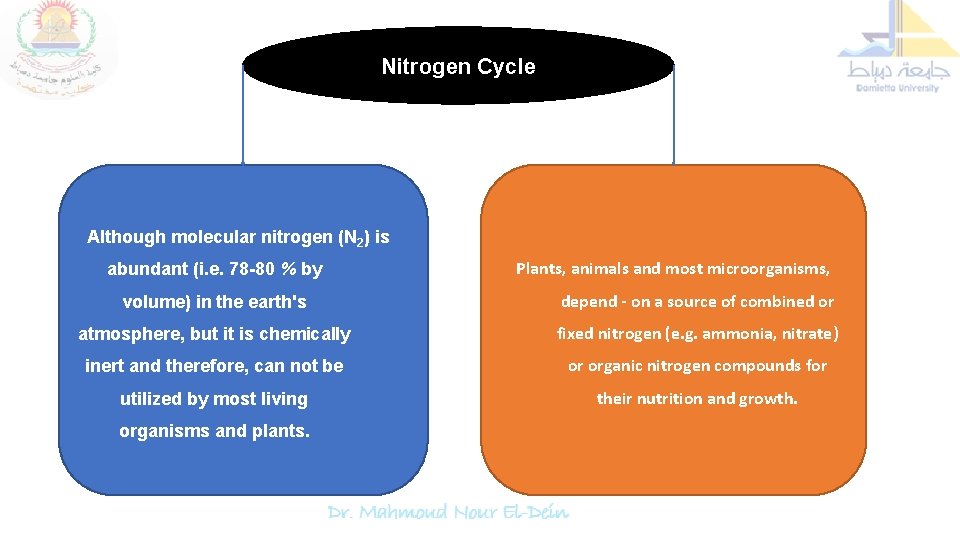
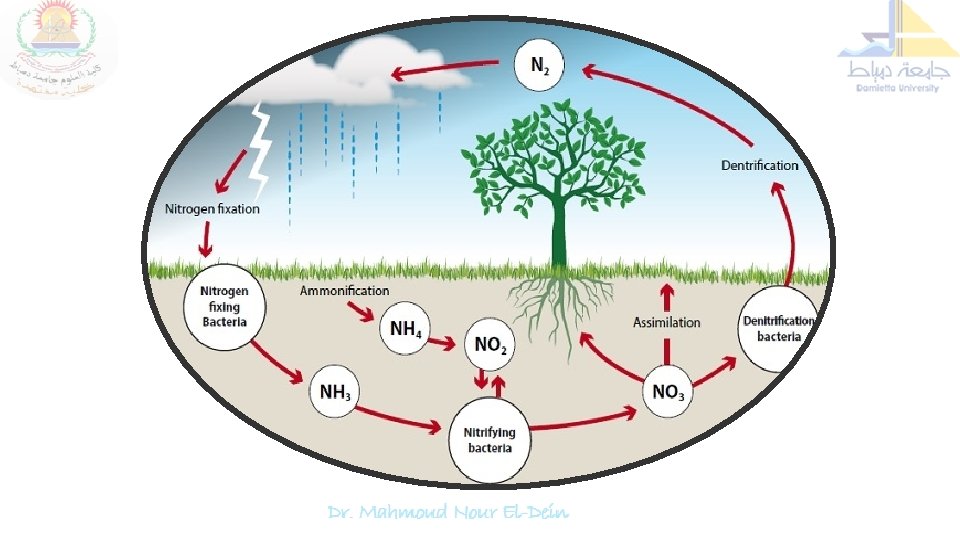
Nitrogen Cycle Although molecular nitrogen (N 2) is abundant (i. e. 78 -80 % by Plants, animals and most microorganisms, volume) in the earth's depend - on a source of combined or atmosphere, but it is chemically fixed nitrogen (e. g. ammonia, nitrate) inert and therefore, can not be or organic nitrogen compounds for utilized by most living their nutrition and growth. organisms and plants.
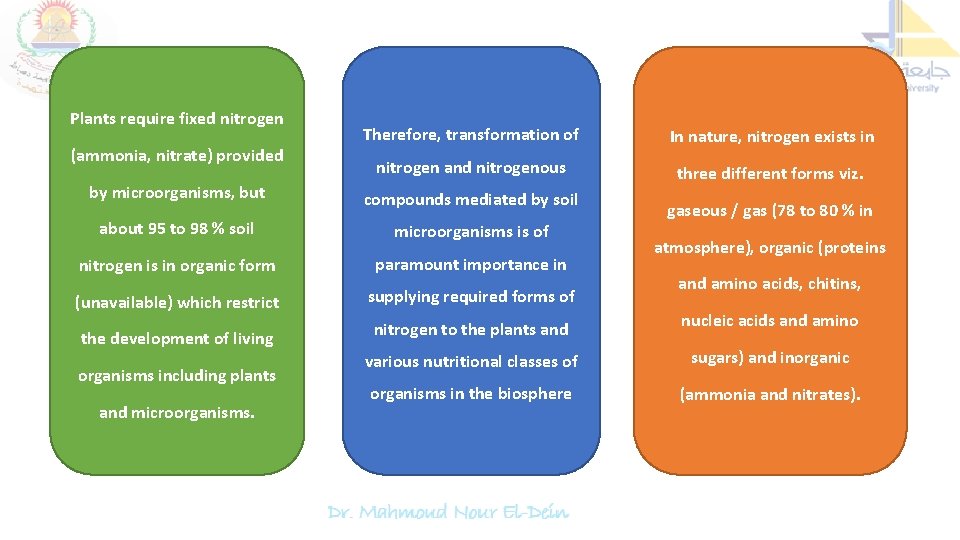
Plants require fixed nitrogen (ammonia, nitrate) provided Therefore, transformation of In nature, nitrogen exists in nitrogen and nitrogenous three different forms viz. by microorganisms, but compounds mediated by soil about 95 to 98 % soil microorganisms is of nitrogen is in organic form paramount importance in (unavailable) which restrict supplying required forms of the development of living organisms including plants and microorganisms. gaseous / gas (78 to 80 % in atmosphere), organic (proteins and amino acids, chitins, nitrogen to the plants and nucleic acids and amino various nutritional classes of sugars) and inorganic organisms in the biosphere (ammonia and nitrates).
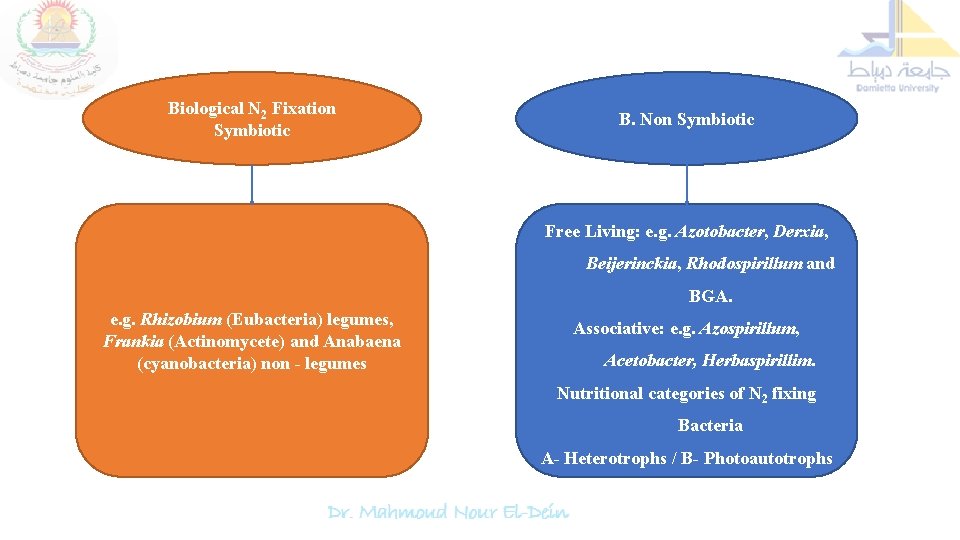
Biological N 2 Fixation Symbiotic B. Non Symbiotic Free Living: e. g. Azotobacter, Derxia, Beijerinckia, Rhodospirillum and BGA. e. g. Rhizobium (Eubacteria) legumes, Frankia (Actinomycete) and Anabaena (cyanobacteria) non - legumes Associative: e. g. Azospirillum, Acetobacter, Herbaspirillim. Nutritional categories of N 2 fixing Bacteria A- Heterotrophs / B- Photoautotrophs
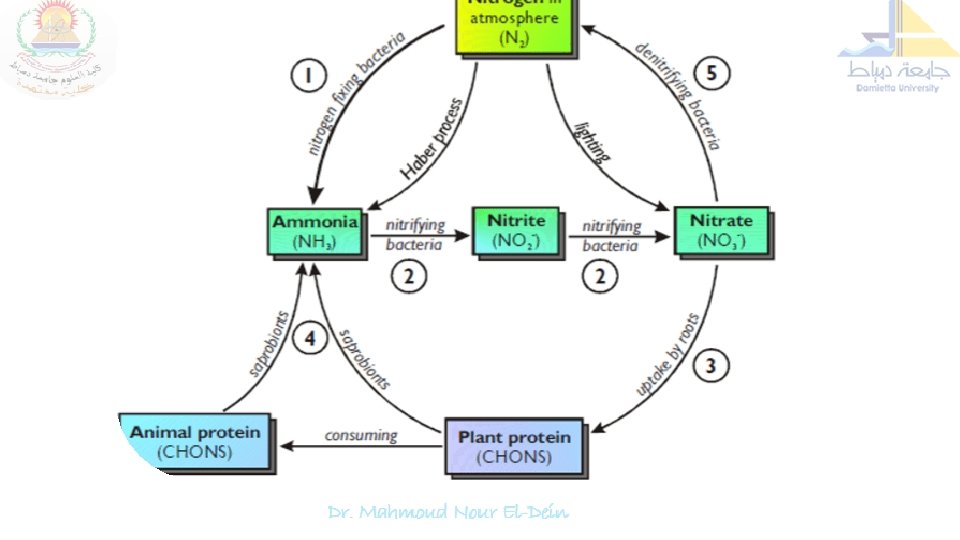
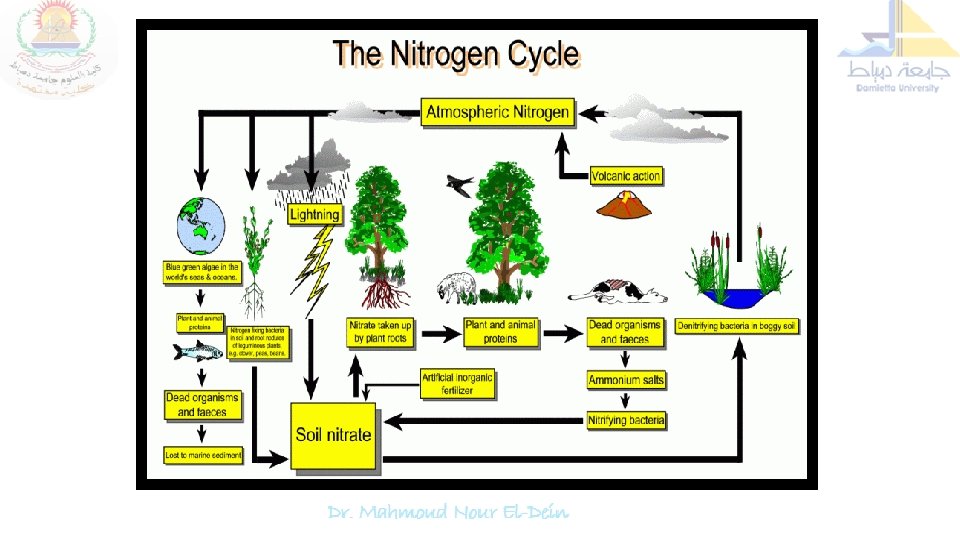
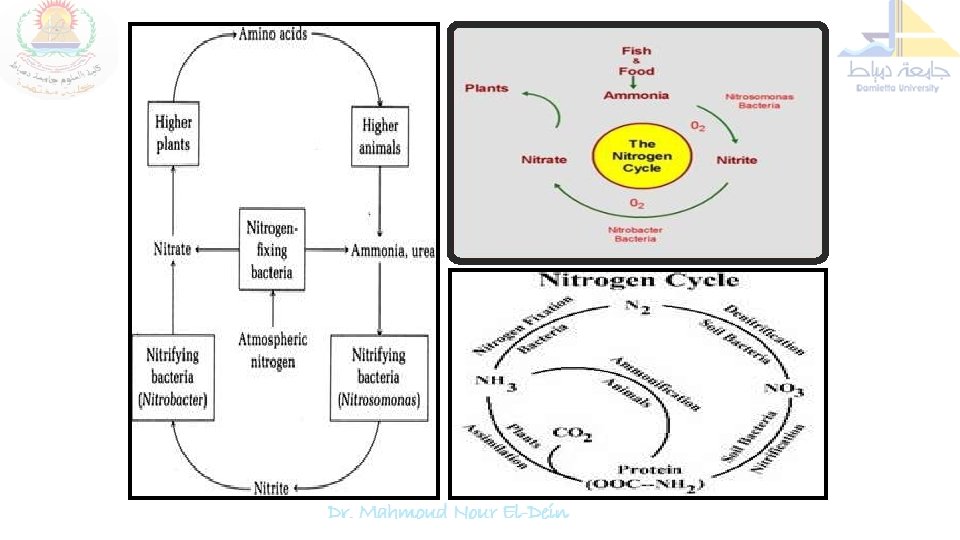
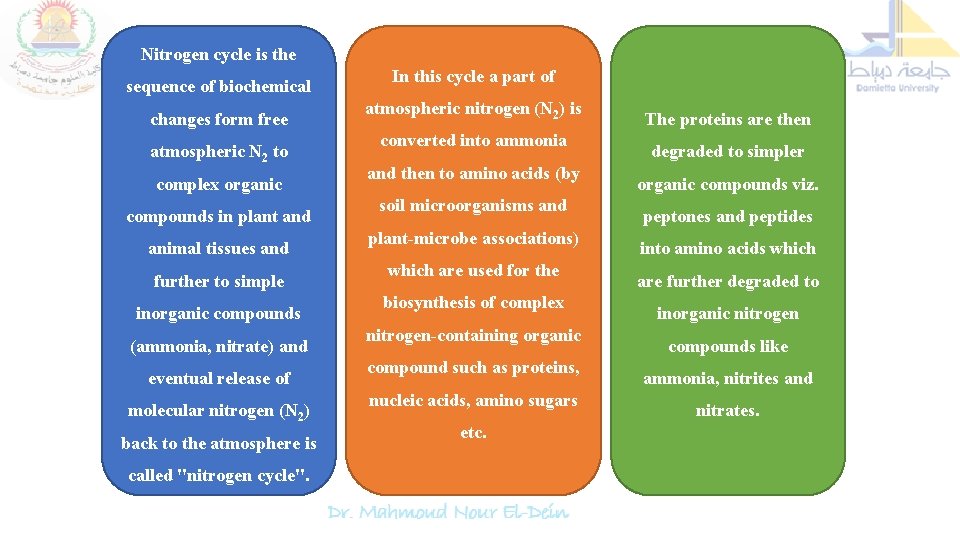
Nitrogen cycle is the sequence of biochemical changes form free atmospheric N 2 to complex organic compounds in plant and animal tissues and further to simple inorganic compounds (ammonia, nitrate) and eventual release of molecular nitrogen (N 2) back to the atmosphere is called "nitrogen cycle". In this cycle a part of atmospheric nitrogen (N 2) is converted into ammonia and then to amino acids (by soil microorganisms and plant-microbe associations) which are used for the biosynthesis of complex nitrogen-containing organic compound such as proteins, nucleic acids, amino sugars etc. The proteins are then degraded to simpler organic compounds viz. peptones and peptides into amino acids which are further degraded to inorganic nitrogen compounds like ammonia, nitrites and nitrates.
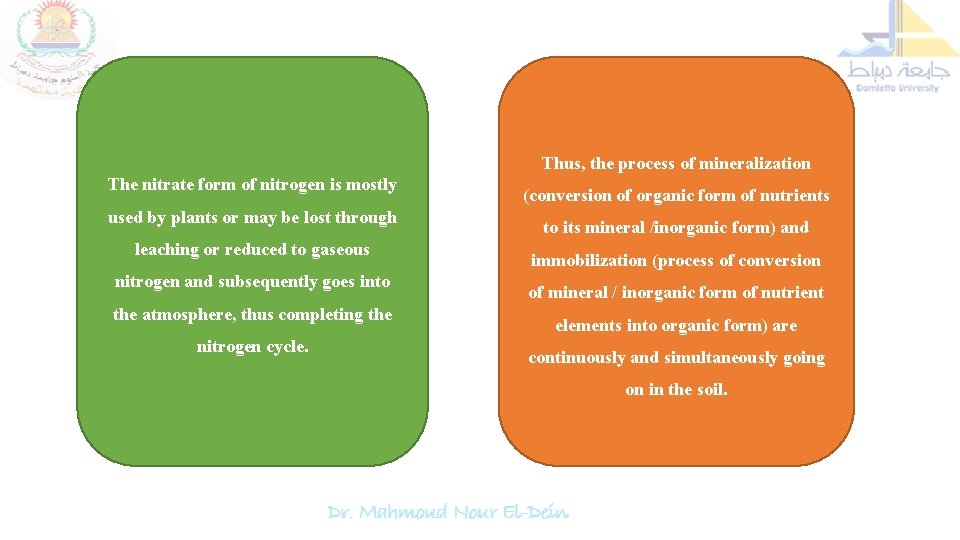
Thus, the process of mineralization The nitrate form of nitrogen is mostly used by plants or may be lost through leaching or reduced to gaseous nitrogen and subsequently goes into the atmosphere, thus completing the nitrogen cycle. (conversion of organic form of nutrients to its mineral /inorganic form) and immobilization (process of conversion of mineral / inorganic form of nutrient elements into organic form) are continuously and simultaneously going on in the soil.
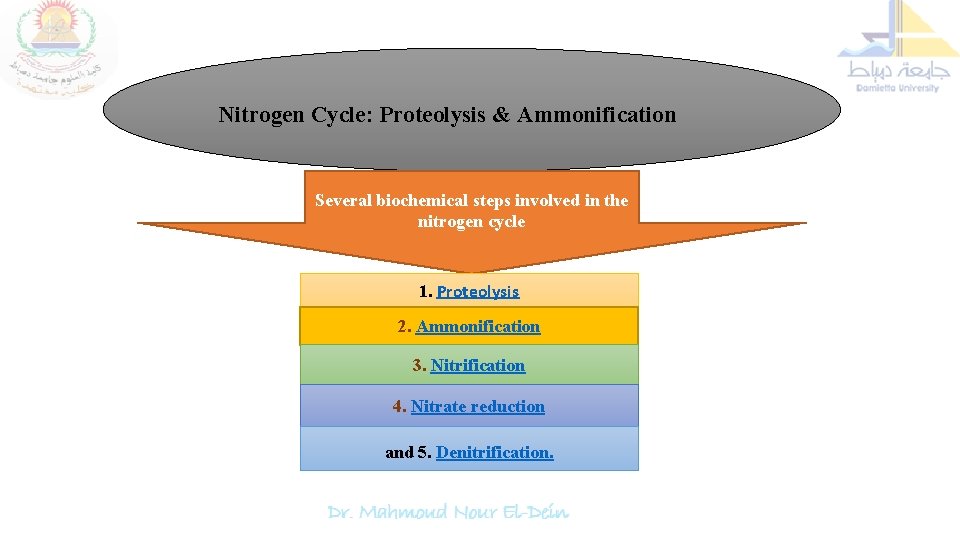
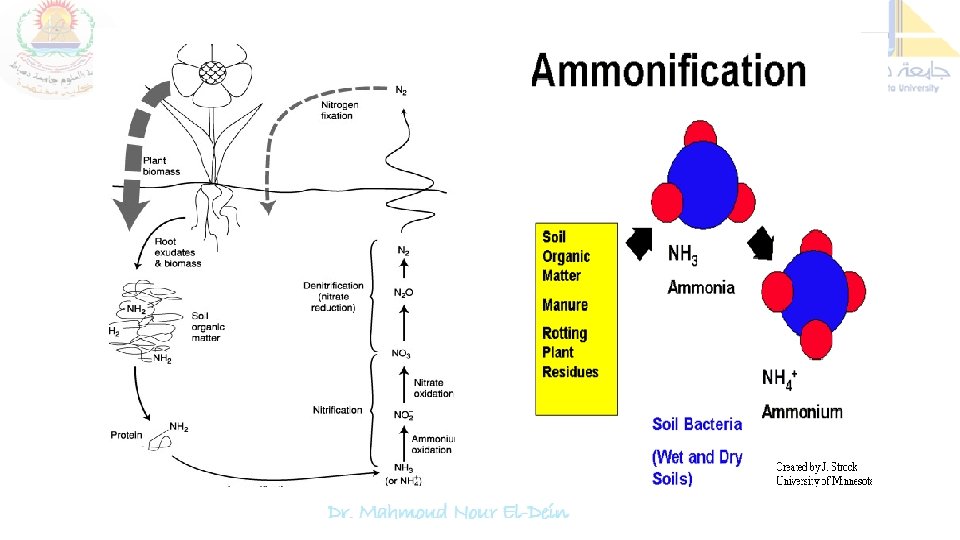
Nitrogen Cycle: Proteolysis & Ammonification Several biochemical steps involved in the nitrogen cycle 1. Proteolysis 2. Ammonification 3. Nitrification 4. Nitrate reduction and 5. Denitrification.
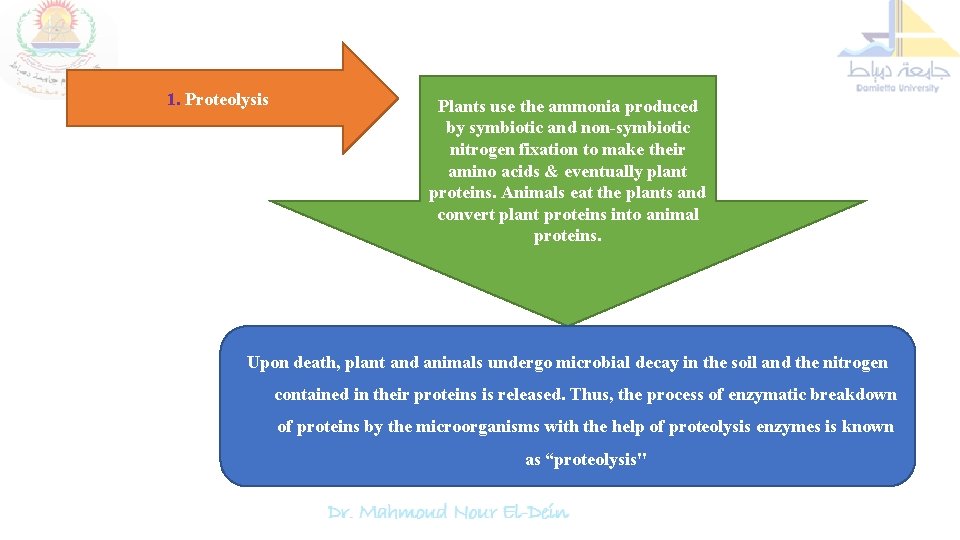
1. Proteolysis Plants use the ammonia produced by symbiotic and non-symbiotic nitrogen fixation to make their amino acids & eventually plant proteins. Animals eat the plants and convert plant proteins into animal proteins. Upon death, plant and animals undergo microbial decay in the soil and the nitrogen contained in their proteins is released. Thus, the process of enzymatic breakdown of proteins by the microorganisms with the help of proteolysis enzymes is known as “proteolysis"
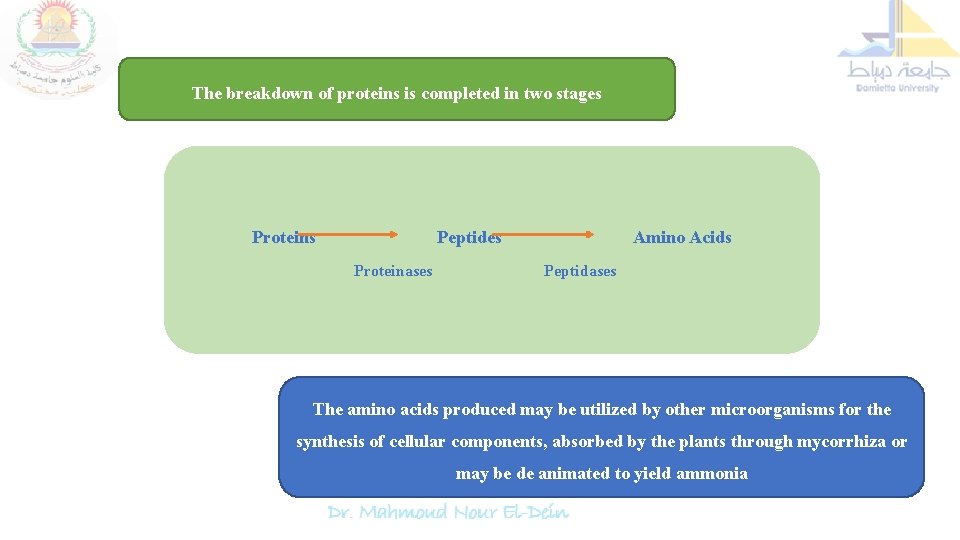
The breakdown of proteins is completed in two stages Proteins Peptides Proteinases Amino Acids Peptidases The amino acids produced may be utilized by other microorganisms for the synthesis of cellular components, absorbed by the plants through mycorrhiza or may be de animated to yield ammonia
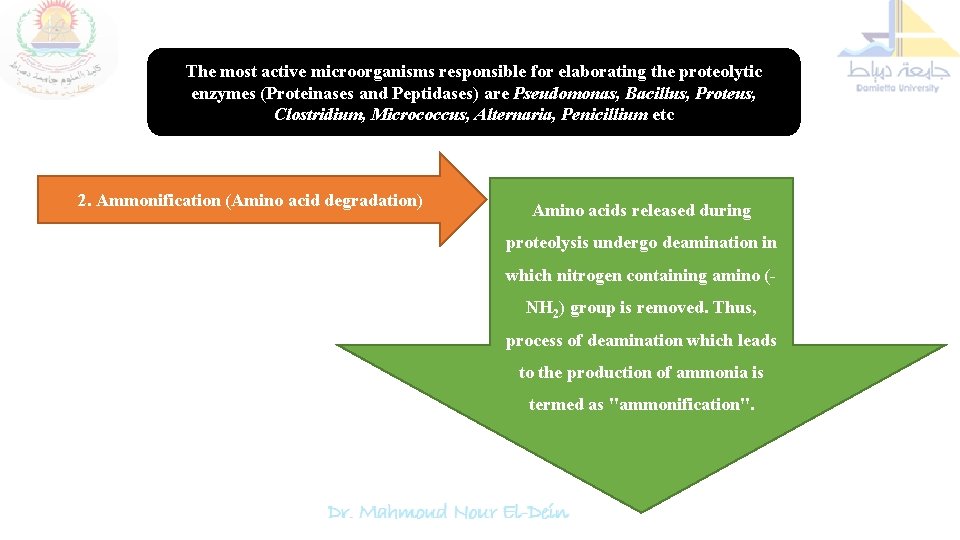
The most active microorganisms responsible for elaborating the proteolytic enzymes (Proteinases and Peptidases) are Pseudomonas, Bacillus, Proteus, Clostridium, Micrococcus, Alternaria, Penicillium etc 2. Ammonification (Amino acid degradation) Amino acids released during proteolysis undergo deamination in which nitrogen containing amino (NH 2) group is removed. Thus, process of deamination which leads to the production of ammonia is termed as "ammonification".
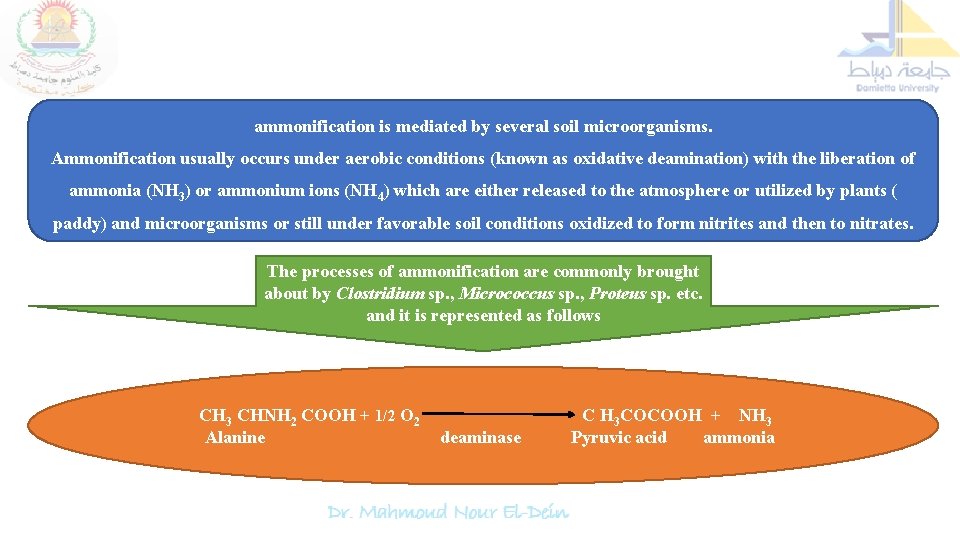
ammonification is mediated by several soil microorganisms. Ammonification usually occurs under aerobic conditions (known as oxidative deamination) with the liberation of ammonia (NH 3) or ammonium ions (NH 4) which are either released to the atmosphere or utilized by plants ( paddy) and microorganisms or still under favorable soil conditions oxidized to form nitrites and then to nitrates. The processes of ammonification are commonly brought about by Clostridium sp. , Micrococcus sp. , Proteus sp. etc. and it is represented as follows CH 3 CHNH 2 COOH + 1/2 O 2 Alanine deaminase C H 3 COCOOH + NH 3 Pyruvic acid ammonia