
Soil Microorganisms and environmental quality I Topic 8



- Slides: 22
Soil Microorganisms and environmental quality (I) Topic 8 Ms Sherina Kamal 1
Outline n n n n Soil microorganisms Xenobiotics Properties of xenobiootics Groups of xenobiotics Source of xenobiotics Fate of xenobiotics Impact of xenobiotics Biodegradation of xenobiotic compounds 2
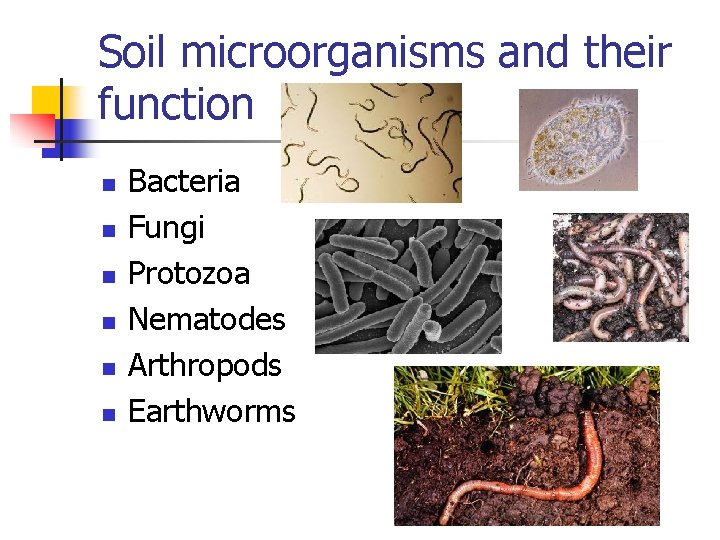
Soil microorganisms and their function n n n Bacteria Fungi Protozoa Nematodes Arthropods Earthworms
Xenobiotics n A combination of two different roots n Xeno n The Greek, means strange, unnatural or different n Biotic n ………………… 4
Xenobiotics n n n Man made chemicals present in the nature at high concentrations May not be recognized by biochemical processes in plants and microorganisms Resistant to degradation in the environment Rate of degradation very slow Has adverse effects on human and on ecological health Can include many compounds in agricultural activities 5
Properties of xenobiotic compounds (i) (iii) (iv) (v) Non recognizable as substrate by microbes to act upon and degrade it It does not contain permease which is needed for transport into microbial cell Large molecular nature makes it difficult to enter microbial cell They are highly stable and insolubility to water adds to this property ……………… 6
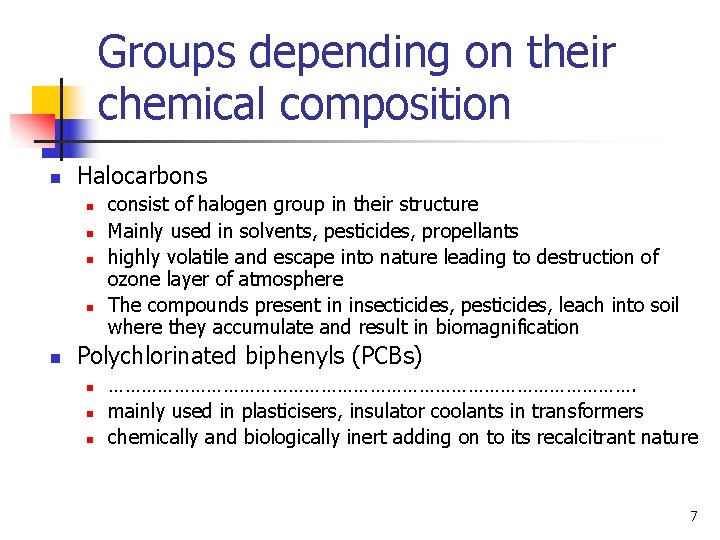
Groups depending on their chemical composition n Halocarbons n n n consist of halogen group in their structure Mainly used in solvents, pesticides, propellants highly volatile and escape into nature leading to destruction of ozone layer of atmosphere The compounds present in insecticides, pesticides, leach into soil where they accumulate and result in biomagnification Polychlorinated biphenyls (PCBs) n n n …………………………………………. mainly used in plasticisers, insulator coolants in transformers chemically and biologically inert adding on to its recalcitrant nature 7
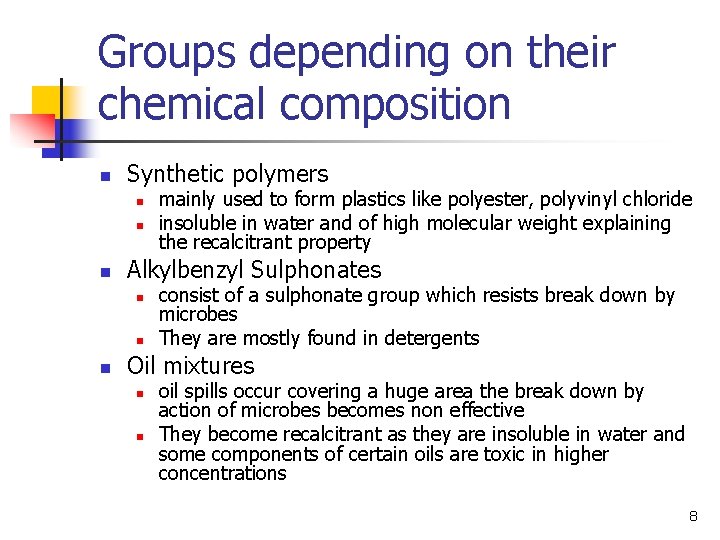
Groups depending on their chemical composition n Synthetic polymers n n n Alkylbenzyl Sulphonates n n n mainly used to form plastics like polyester, polyvinyl chloride insoluble in water and of high molecular weight explaining the recalcitrant property consist of a sulphonate group which resists break down by microbes They are mostly found in detergents Oil mixtures n n oil spills occur covering a huge area the break down by action of microbes becomes non effective They become recalcitrant as they are insoluble in water and some components of certain oils are toxic in higher concentrations 8
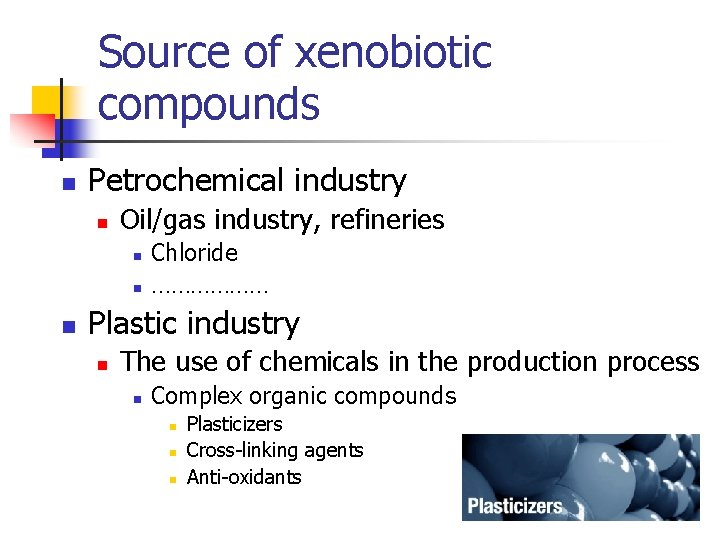
Source of xenobiotic compounds n Petrochemical industry n Oil/gas industry, refineries n n n Chloride ……………… Plastic industry n The use of chemicals in the production process n Complex organic compounds n n n Plasticizers Cross-linking agents Anti-oxidants 9
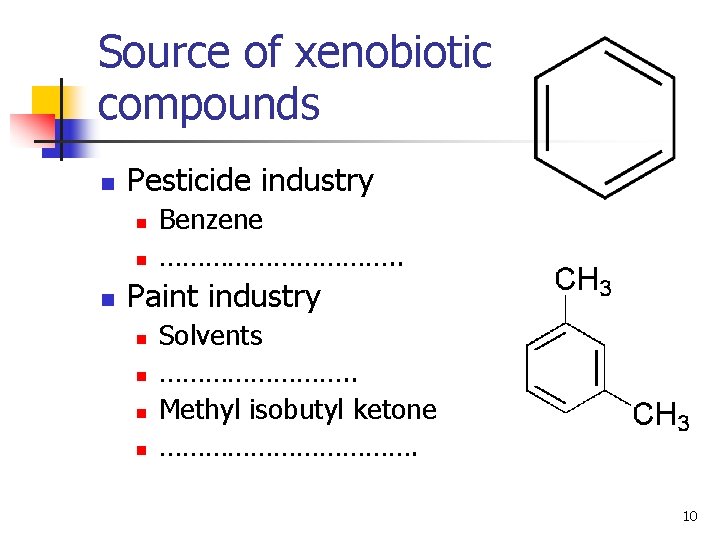
Source of xenobiotic compounds n Pesticide industry n n n Benzene ……………. . Paint industry n n Solvents …………. . Methyl isobutyl ketone ………………. 10
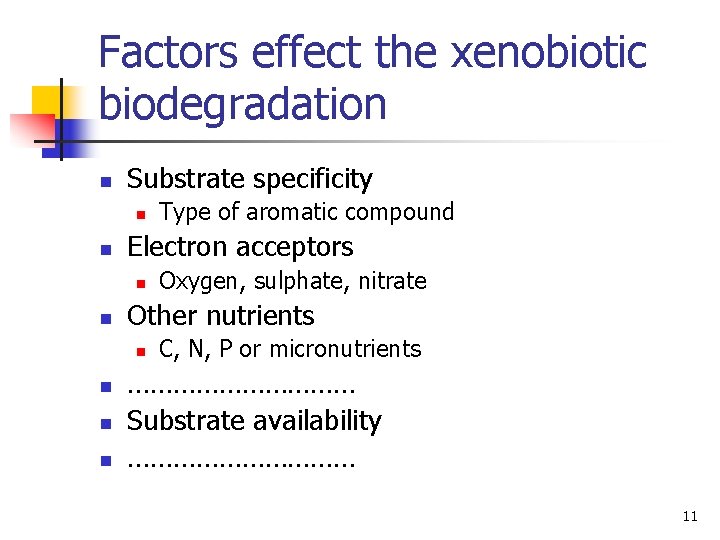
Factors effect the xenobiotic biodegradation n Substrate specificity n n Electron acceptors n n Oxygen, sulphate, nitrate Other nutrients n n Type of aromatic compound C, N, P or micronutrients …………… Substrate availability …………… 11
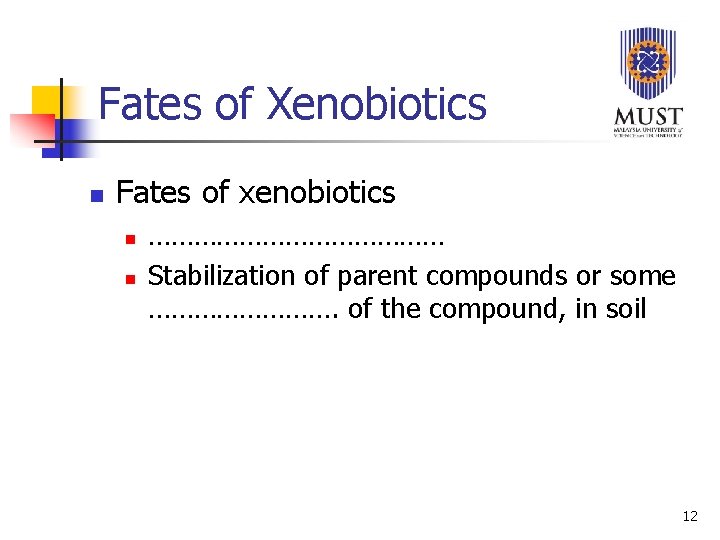
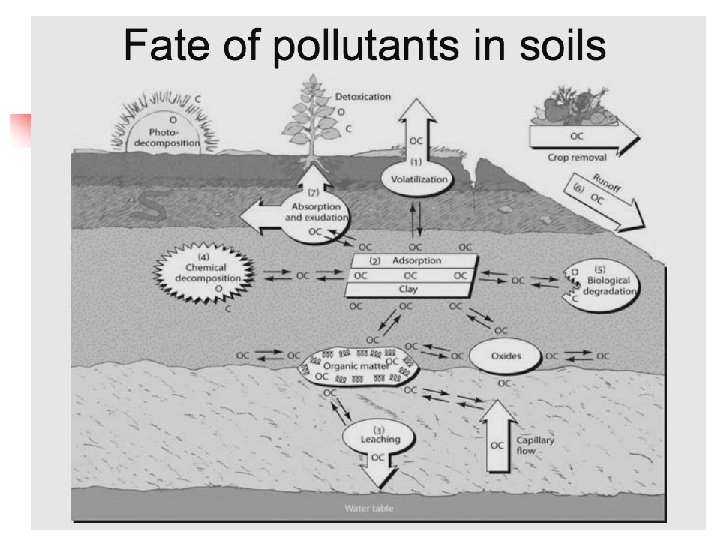
Fates of Xenobiotics n Fates of xenobiotics n n ………………… Stabilization of parent compounds or some …………. of the compound, in soil 12
13
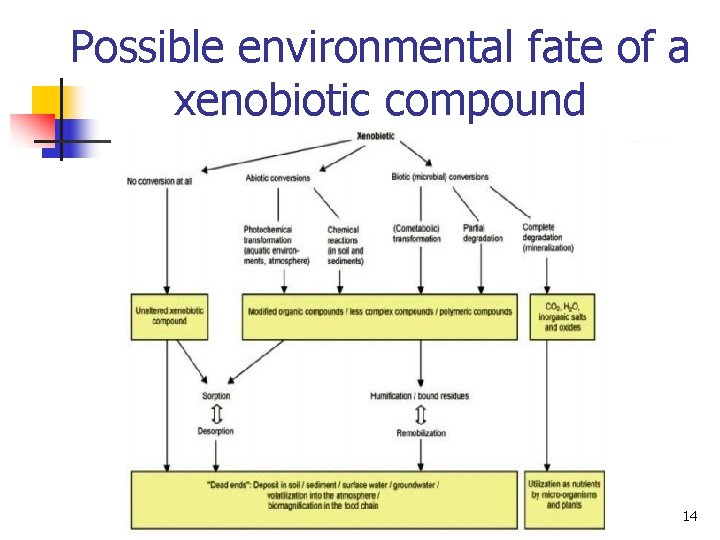
Possible environmental fate of a xenobiotic compound 14
Hazards posed by xenobiotic compounds n n n hazards posed by xenobiotics are ……………… highly toxic in nature and can affect survival of lower as well as higher eukaryotes It also poses health hazards to humans n n ………………… reproductively and even known as a trigger for causing cancer ……………… and remain in the environment for many years leading to ………………… or …………… They also find a way into the food chains and the concentrations of such compounds was found to be high even in organisms that do not come in contact with xenobiotics directly 15
Xenobiotics and Environment n n Xenobiotics pose threat to the environment They pollute the environment n n n Synthetic polymers such as plastics and nylon are insoluble in water Oil is also a pollutant n n n ………………… many of its compounds are biodegradable degraded at different rates Oil is recalcitrant mainly n n its insolubility in water ……………. . of some of its compounds 16
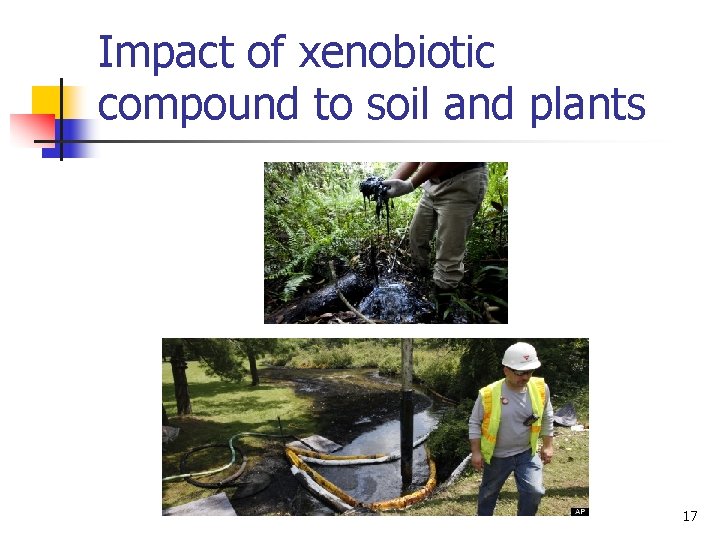
Impact of xenobiotic compound to soil and plants 17
How Do Oil Spills Affect Plants? n n One of the ways that oil spills affect plants is oil blocks sunlight from reaching the plants and organisms below the water's surface Sunlight and its different rays including ultraviolet rays are important for cells ………………. and …………………. The oil itself is damaging to the plants but it also damages the water and reduces the nutritive value the water gives the plant An oil spill has short-term effects on plant photosynthesis and also long-term effects as the plants struggle to recover only to encounter hidden pockets of oil 18
How Do Oil Spills Affect Plants? n n The impact of oil spills on plants lies with its …………. . In order to produce food and energy, a plant must be able to carry out gas exchange with the environment The coating of oil on the leaves of plants prevents the ……………. or pores from receiving carbon dioxide from the air The result is slow growth and ………… of plants 19
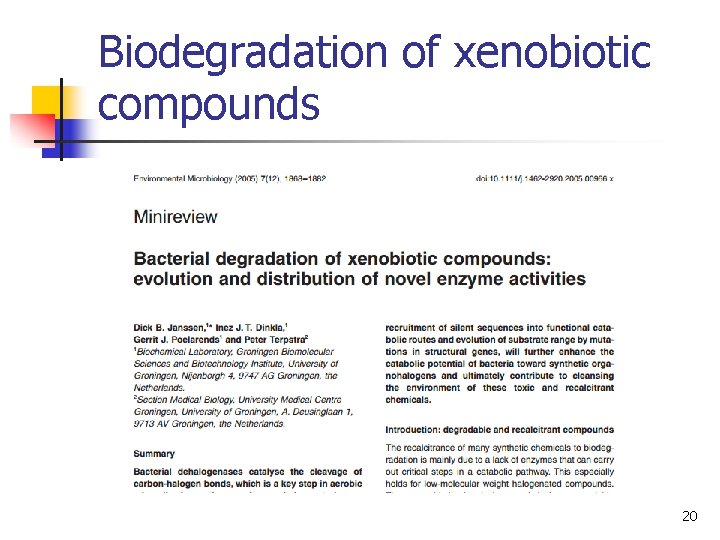
Biodegradation of xenobiotic compounds 20
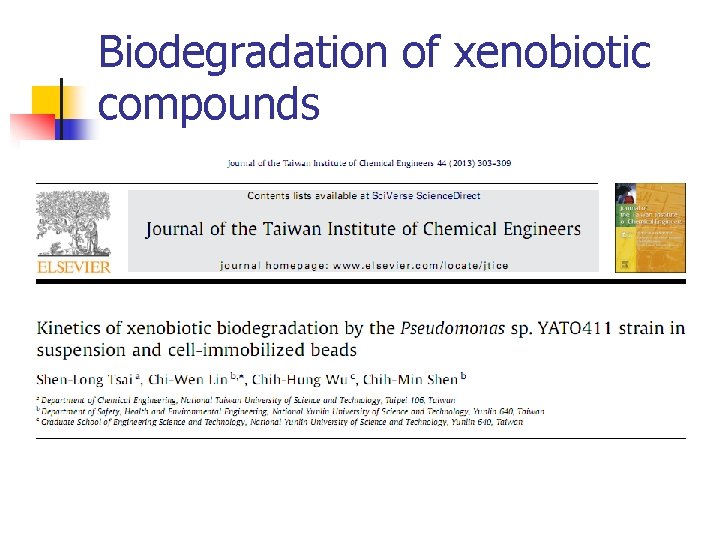
Biodegradation of xenobiotic compounds
n END OF LECTURE 22