
Soil Microbes and Nutrient Cycle Soil Food Web
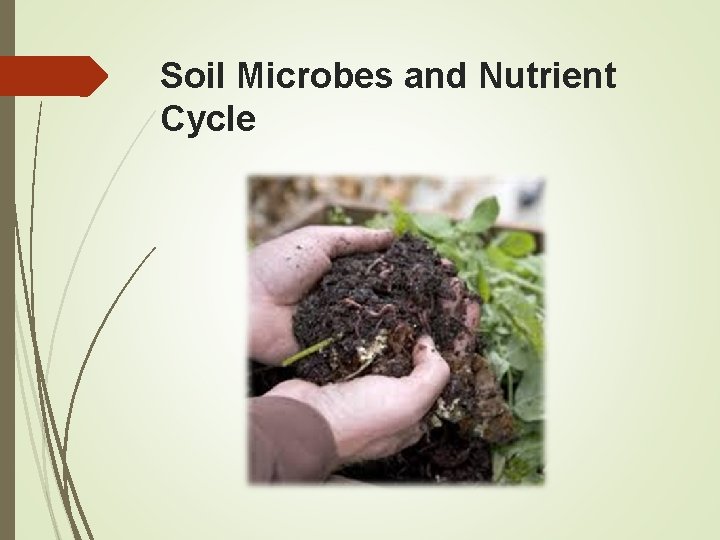
Soil Microbes and Nutrient Cycle
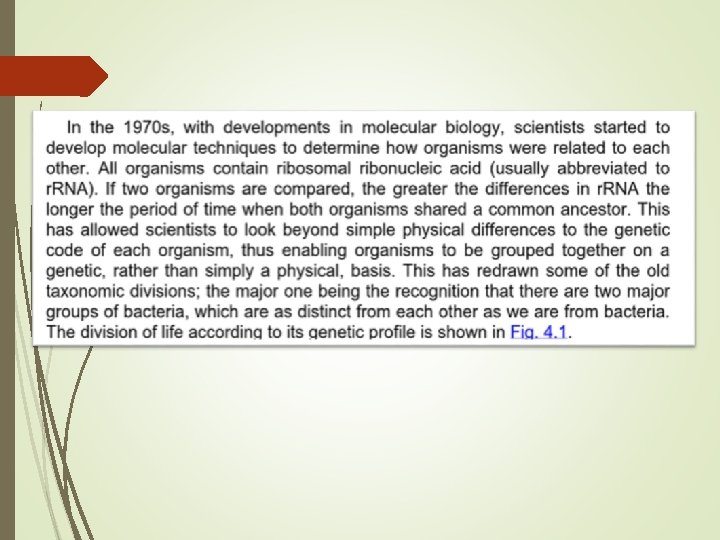
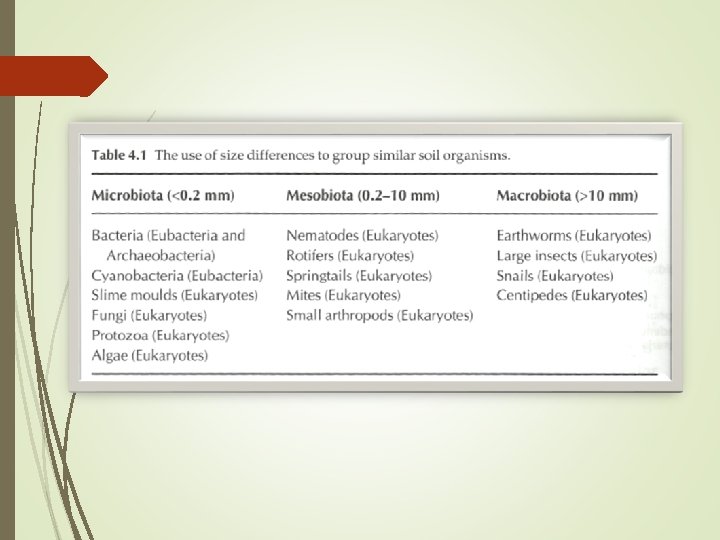
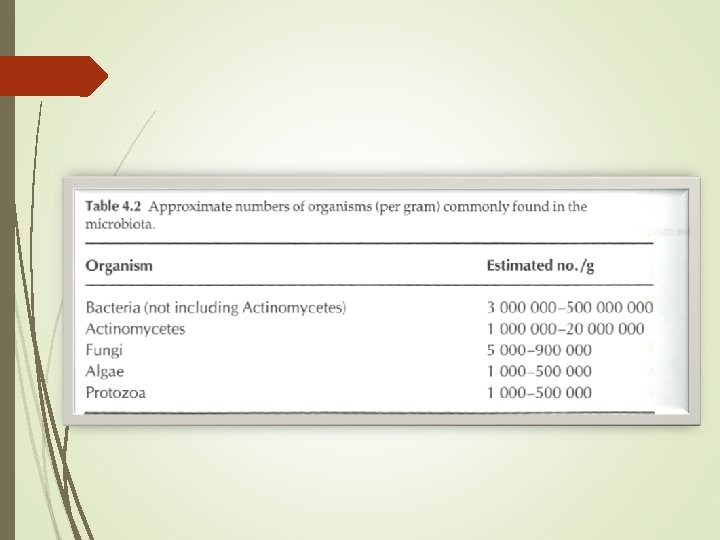
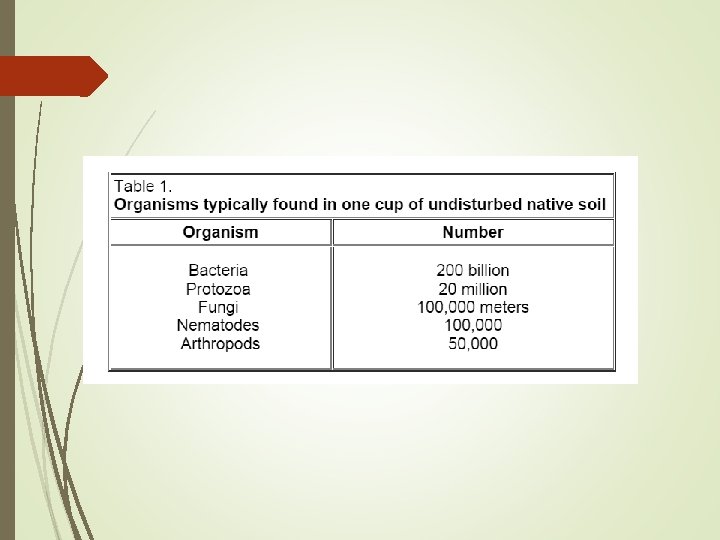
Soil Food Web Within the soil, organisms function within an ecological food web (the smaller becoming the food for the larger) cycling nutrients through the soil biomass. This soil food web is the basis of healthy, living soil. Significant soil organisms involved in the soil food web include: 1) bacteria, 2) fungi 3) protozoa 4) nematodes 5) arthropods 6) earthworms
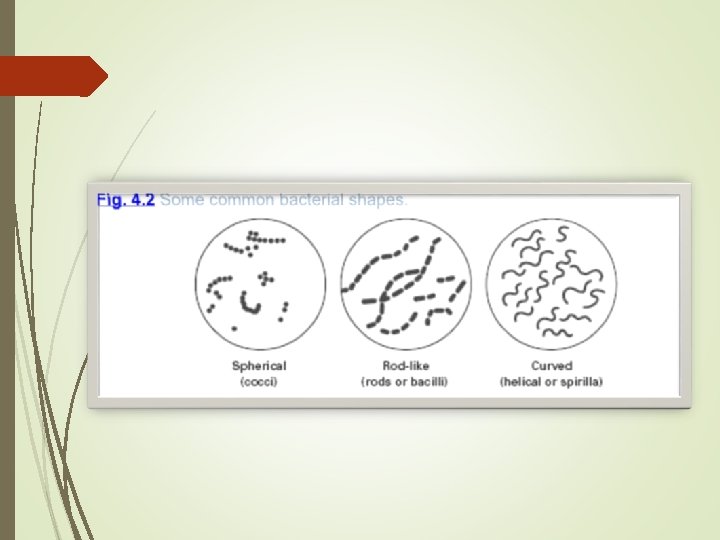
Bacteria are simple, single-celled microorganisms. Bacteria inhabit a wide variety of habitats, including soil. In fact, a teaspoon of productive soil can contain from 100 million to 1 billion bacteria. Soil-inhabiting bacteria can be grouped as decomposers, mutualists, pathogens, or chemoautotrophs. Bacteria that improve soil quality feed on soil organisms, decompose organic matter, help keep nutrients in the root zone, enhance soil structure, compete with diseasecausing organisms, and filter and degrade pollutants in soil.
Fungi are a diverse group of multi-cellular organisms. The best known fungi are mushrooms, molds, and yeast, but there are many others that go unnoticed, particularly those living in soil. Fungi grow as long strands called hyphae (up to several yards long), pushing their way between soil particles, rocks and roots. Fungi can be grouped as decomposers, mutualists, or pathogens. Fungi that improve soil quality decompose complex carbon compounds, improve accumulation of organic matter, retain nutrients in soil, bind soil particles into aggregates, compete with plant pathogens, and decompose certain types of pollution.
Protozoa are microscopic, single-celled microbes that primarily eat bacteria. The bacteria contain more nitrogen than the protozoa can utilize and some ammonium (NH 4) is released to plants. Protozoa also prevent some pathogens from establishing on plants and function as a food source for nematodes in the soil food web.
Nematodes are small, unsegmented round worms. Nematodes live in water films in the large pore spaces in soil. Most species are beneficial, feeding on bacteria, fungi, and other nematodes, but some cause harm by feeding on plant roots. Nematodes distribute bacteria and fungi through the soil as they move about. Predatory nematodes can consume root-feeding nematodes or prevent their access to roots.
Arthropods Soil arthropods are small animals such as insects, spiders, and mites. They range in size from microscopic to several inches in length. Most live near the soil surface or in the upper three inches. Arthropods improve soil quality by creating structure through burrowing, depositing fecal pellets, controlling disease-causing organisms, stimulating microbial activity, enhancing decomposition via shredding organic matter and mixing soil, and regulating healthy soil food web populations. Soil arthropods can be shredders (millipedes, sowbugs, etc. ), predators (spiders, scorpions, pseudoscorpions, centipedes, and predatory mites, ants and beetles), herbivores (symphylans, root-maggots, etc. ), or fungal-feeders (springtails and turtle mites). Most soil-dwelling arthropods eat fungi, worms, or other arthropods.
Earthworms There are three types of earthworms: Anecic Capable of burrowing to depths of 6’ Build permanent burrows into the deep mineral layers of the soil Drag organic matter from the soil surface into their burrows for food Include the familiar bait worm, the nightcrawler or dew worm (Lumbricus terrestris) Endogeic Build extensive non-permanent burrows in the upper mineral layer of soil Feed on the organic matter in the soil Live exclusively in soil and usually are noticed, except after a heavy rain when they come to the surface Epigeic Live on the soil surface Form no permanent burrows Feed on decaying organic matter Common names: red worm, manure worm, brandling worm, red wiggler and compost worm Earthworms digest micro-organisms and organic matter

Typical Numbers of Soil Organisms in Healthy Ecosystems Ag Land Prairie Forest Organisms per gram (teaspoon) of soil Bacteria 100 mil. -1 bil. Fungi Several yards Protozoa 1000’s Nematodes 10 -20 100 mil. -1 bil. 10 s – 100’s of yds 1 -40 miles (in conifers) 1000’s 100, 000’s 10’s – 100’s Organisms per square foot Arthropods < 100 Earthworms 5 -30 500 -2000 10, 000 -25, 000 10 -50 (0 in conifers)
Protozoa Ciliates • Largest of the three • Move by means of hair-like cilia • Eat the other protozoa and bacteria Amoebae • Also large • Move by means of a temporary foot (pseudopod) • Include testate amoebae (with shell-like covering), and naked amoebae Flagellates • Smallest of the three • Move by means of a few ship-like flagella.

PROTOZOA
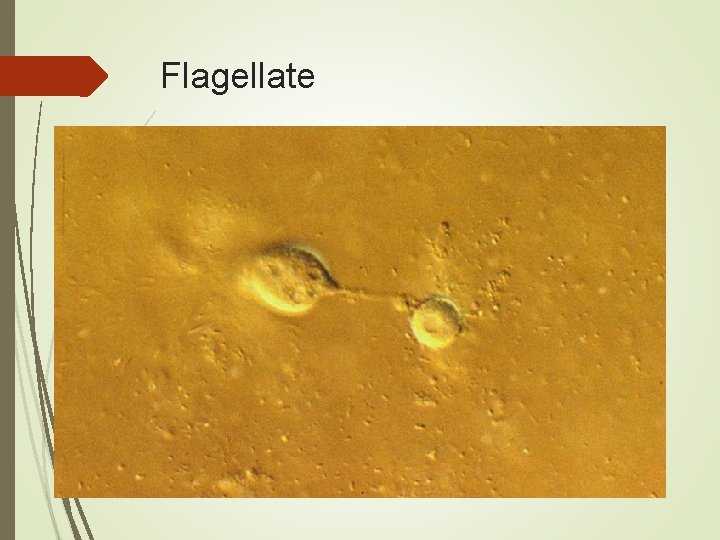
Flagellate
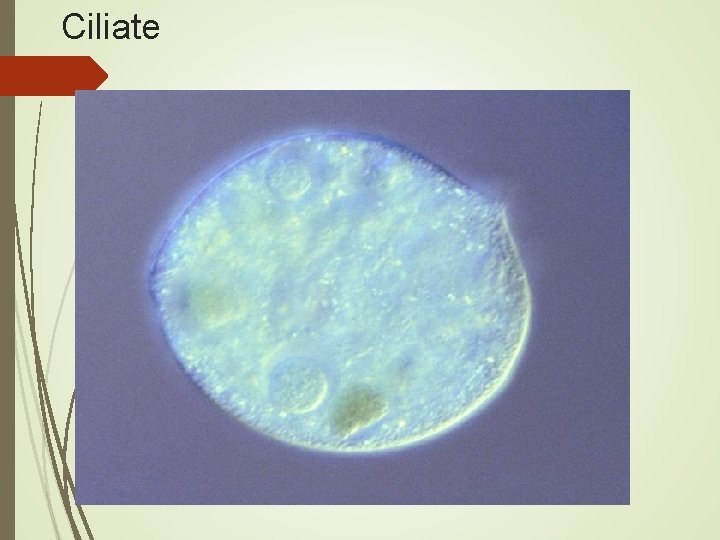
Ciliate
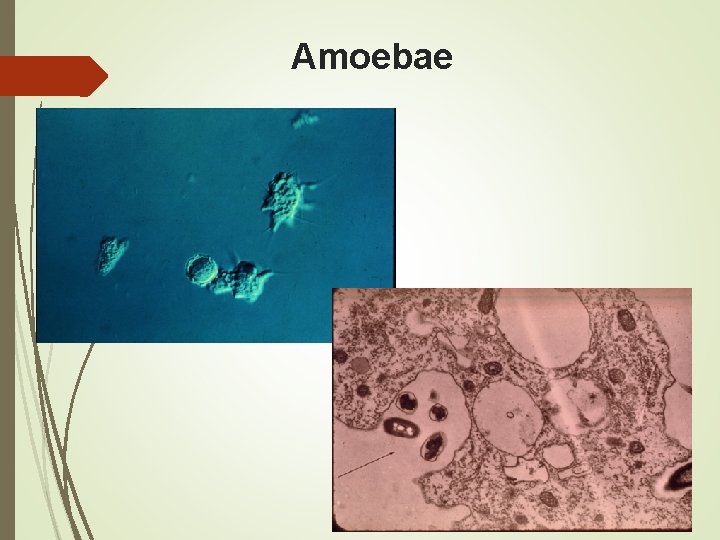
Amoebae
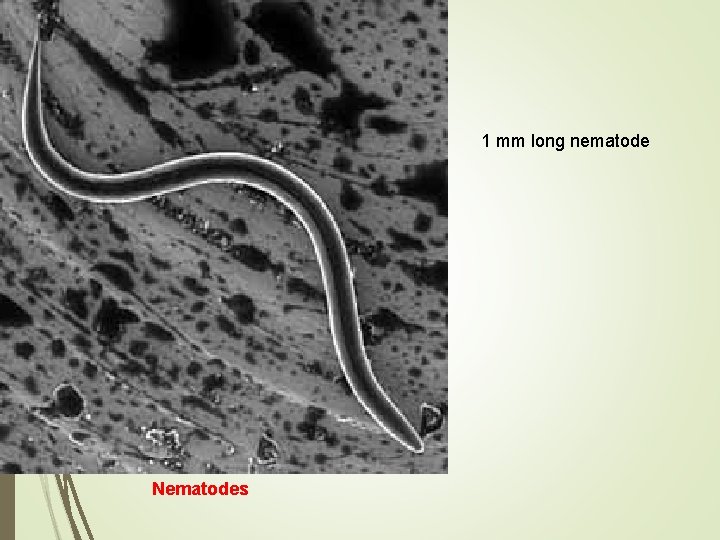
1 mm long nematode Nematodes
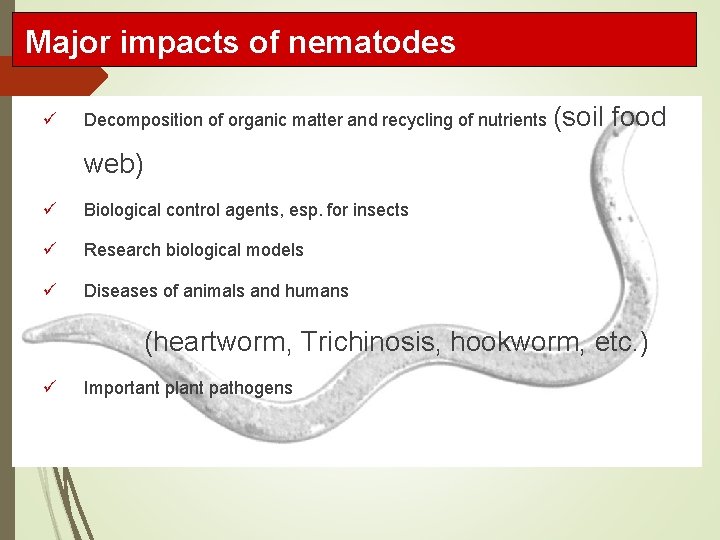
Major impacts of nematodes ü Decomposition of organic matter and recycling of nutrients (soil food web) ü Biological control agents, esp. for insects ü Research biological models ü Diseases of animals and humans (heartworm, Trichinosis, hookworm, etc. ) ü Important plant pathogens
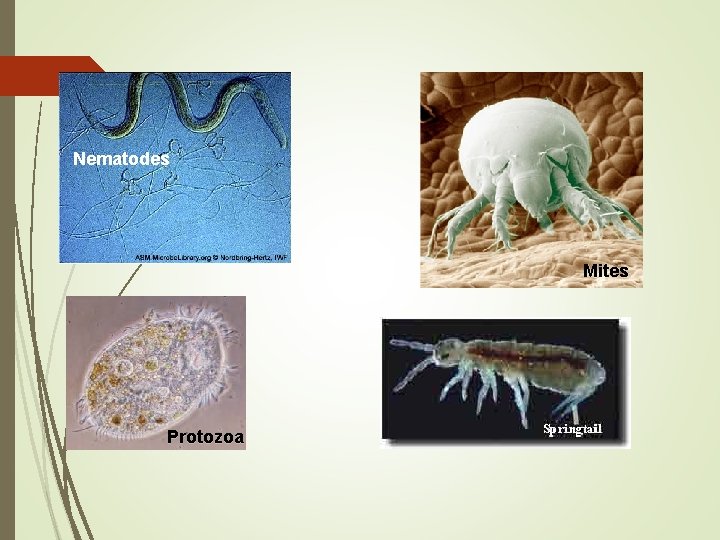
Nematodes Mites Protozoa
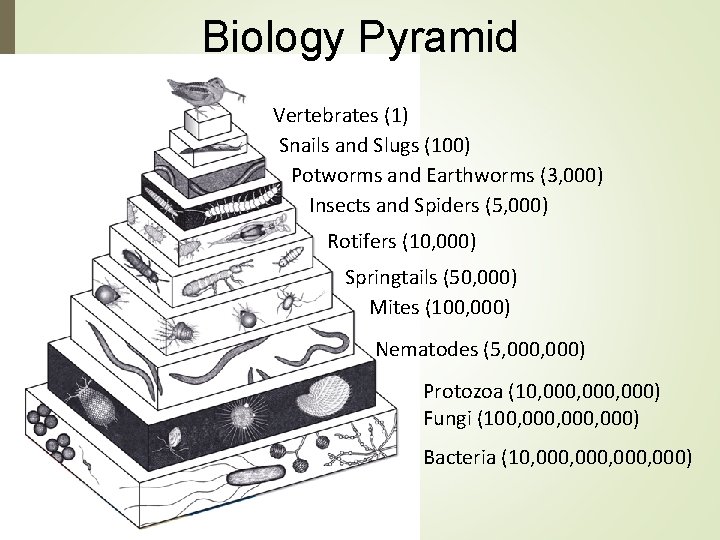
Biology Pyramid Vertebrates (1) Snails and Slugs (100) Potworms and Earthworms (3, 000) Insects and Spiders (5, 000) Rotifers (10, 000) Springtails (50, 000) Mites (100, 000) Nematodes (5, 000) Protozoa (10, 000, 000) Fungi (100, 000, 000) Bacteria (10, 000, 000)
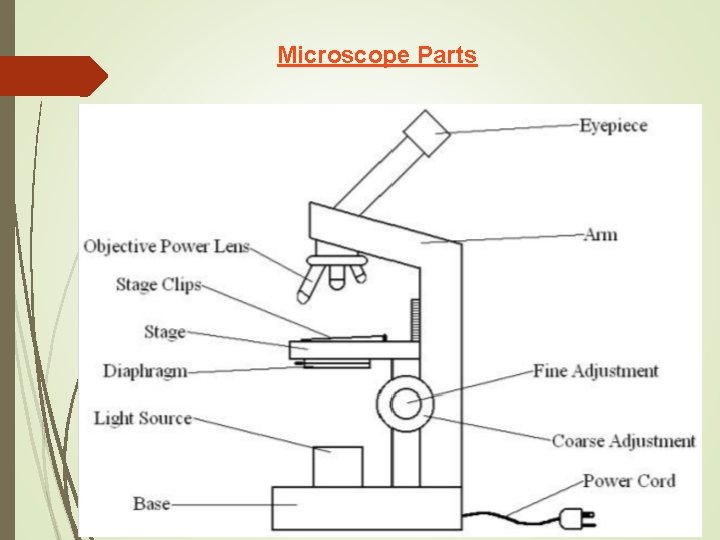
Microscope Parts
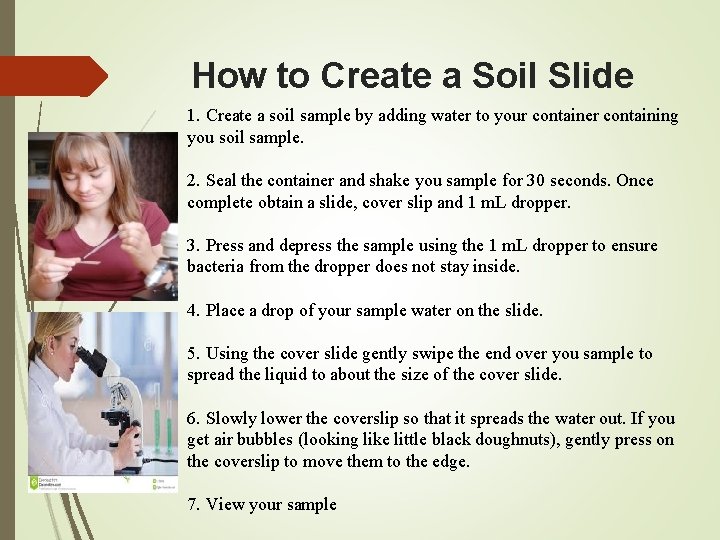
How to Create a Soil Slide 1. Create a soil sample by adding water to your container containing you soil sample. 2. Seal the container and shake you sample for 30 seconds. Once complete obtain a slide, cover slip and 1 m. L dropper. 3. Press and depress the sample using the 1 m. L dropper to ensure bacteria from the dropper does not stay inside. 4. Place a drop of your sample water on the slide. 5. Using the cover slide gently swipe the end over you sample to spread the liquid to about the size of the cover slide. 6. Slowly lower the coverslip so that it spreads the water out. If you get air bubbles (looking like little black doughnuts), gently press on the coverslip to move them to the edge. 7. View your sample
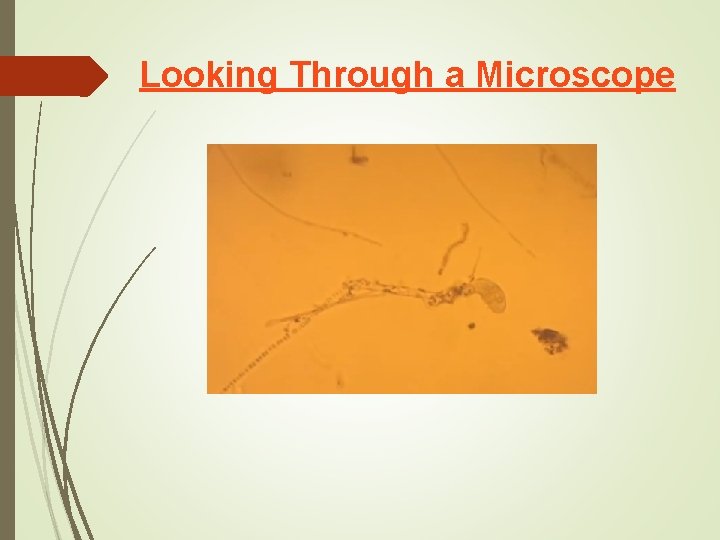
Looking Through a Microscope
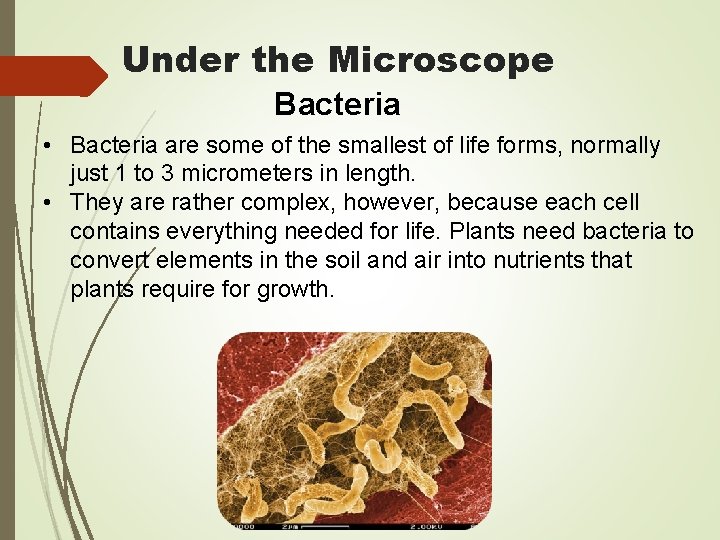
Under the Microscope Bacteria • Bacteria are some of the smallest of life forms, normally just 1 to 3 micrometers in length. • They are rather complex, however, because each cell contains everything needed for life. Plants need bacteria to convert elements in the soil and air into nutrients that plants require for growth.
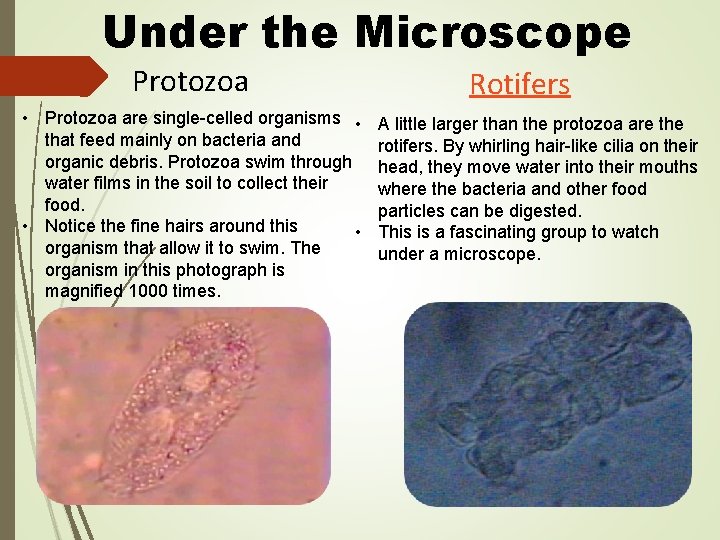
Under the Microscope Protozoa • Protozoa are single-celled organisms • that feed mainly on bacteria and organic debris. Protozoa swim through water films in the soil to collect their food. • Notice the fine hairs around this • organism that allow it to swim. The organism in this photograph is magnified 1000 times. Rotifers A little larger than the protozoa are the rotifers. By whirling hair-like cilia on their head, they move water into their mouths where the bacteria and other food particles can be digested. This is a fascinating group to watch under a microscope.
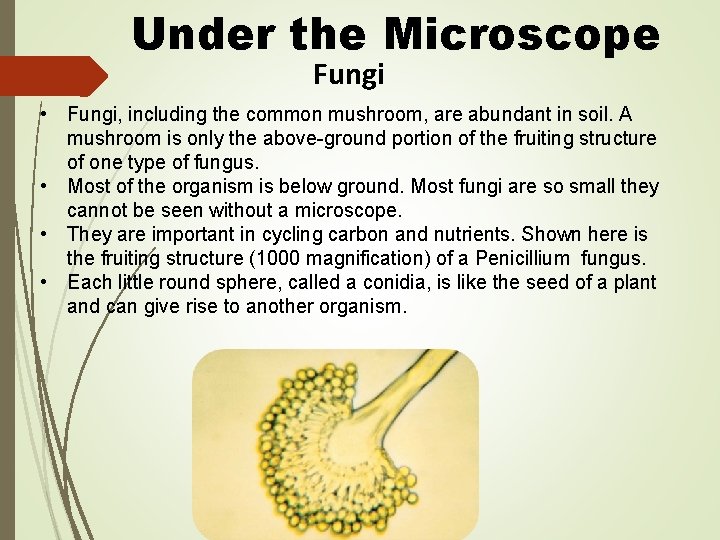
Under the Microscope Fungi • Fungi, including the common mushroom, are abundant in soil. A mushroom is only the above-ground portion of the fruiting structure of one type of fungus. • Most of the organism is below ground. Most fungi are so small they cannot be seen without a microscope. • They are important in cycling carbon and nutrients. Shown here is the fruiting structure (1000 magnification) of a Penicillium fungus. • Each little round sphere, called a conidia, is like the seed of a plant and can give rise to another organism.
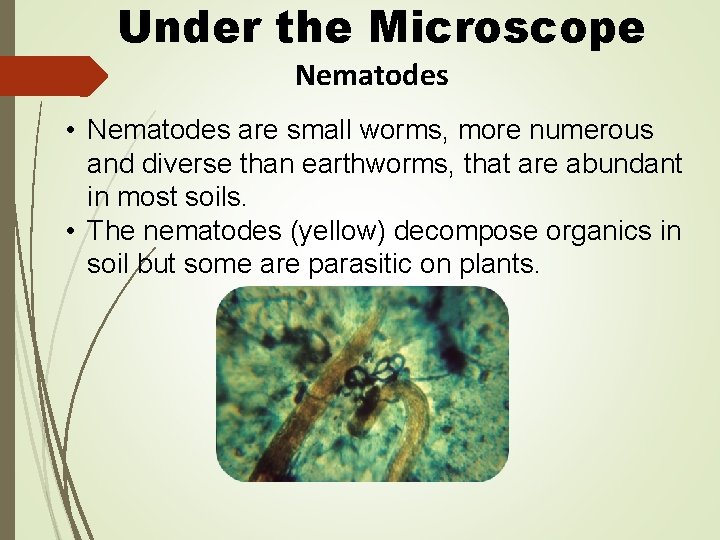
Under the Microscope Nematodes • Nematodes are small worms, more numerous and diverse than earthworms, that are abundant in most soils. • The nematodes (yellow) decompose organics in soil but some are parasitic on plants.
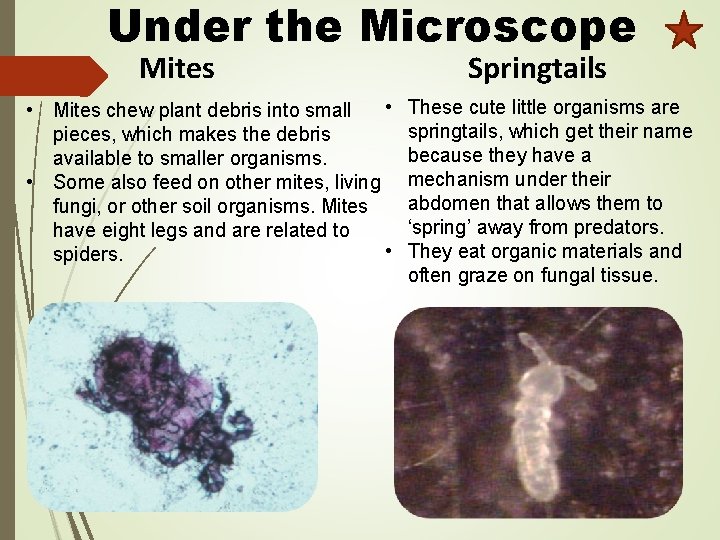
Under the Microscope Mites • • Mites chew plant debris into small pieces, which makes the debris available to smaller organisms. • Some also feed on other mites, living fungi, or other soil organisms. Mites have eight legs and are related to • spiders. Springtails These cute little organisms are springtails, which get their name because they have a mechanism under their abdomen that allows them to ‘spring’ away from predators. They eat organic materials and often graze on fungal tissue.
This document is 100% funded by a $2. 2 million grant from the U. S. Department of Labor, Employment and Training Administration (TAACCCT). The product was created by the grantee and does not necessarily reflect the official position of the U. S. Department of Labor. The Department of Labor makes no guarantees, warranties or assurances of any kind, express or implied, with respect to such information, including any information on linked sites and including, but not limited to, accuracy of the information or its completeness, timeliness, usefulness, adequacy, continued availability, or ownership. This work is licensed under a Creative Commons Attribution 4. 0 International License.
- Slides: 32