
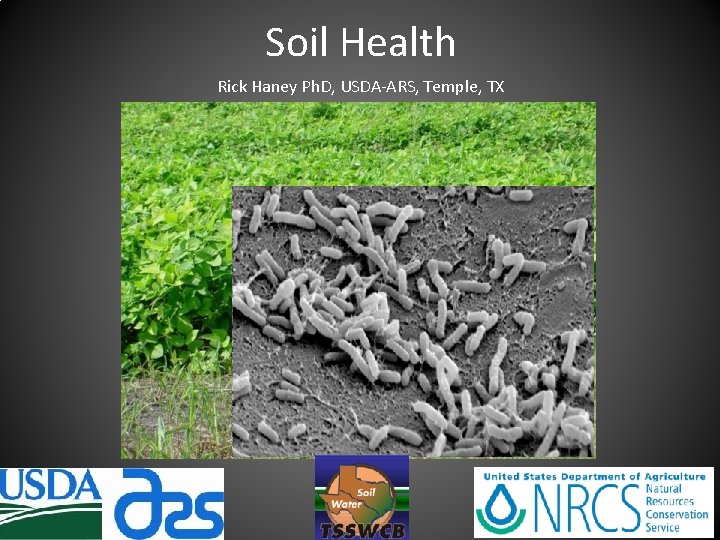
Soil Health Rick Haney Ph D USDAARS Temple

- Slides: 58
Soil Health Rick Haney Ph. D, USDA-ARS, Temple, TX
Rick Haney (51) and daughter (0. 8) Background: Worked for Farmers and Ranchers off and on from 1975 -2000, worked as a mechanic, apartment management and maintenance, Furniture upholstery Education: Bachelor of Science Biology/Chemistry SWOSU 1993 MS Texas A&M University 1997 Soil Microbial Ecology Ph. D Texas A&M University 2001 Soil Chemistry 2001 -2002 Post Doc Texas A&M University Herbicide Chemistry USDA-ARS Research Scientist
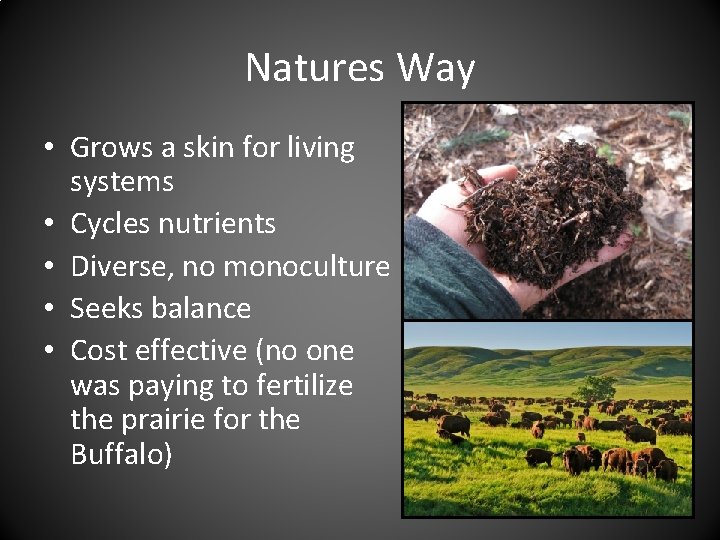
Natures Way • Grows a skin for living systems • Cycles nutrients • Diverse, no monoculture • Seeks balance • Cost effective (no one was paying to fertilize the prairie for the Buffalo)
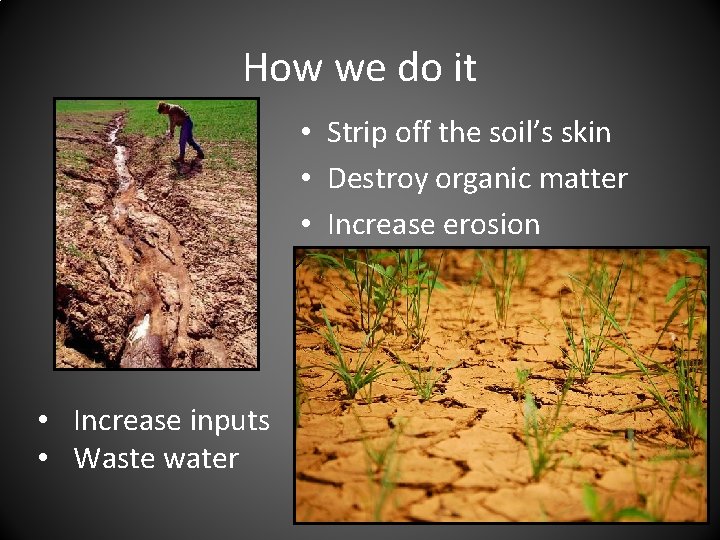
How we do it • Strip off the soil’s skin • Destroy organic matter • Increase erosion • Increase inputs • Waste water
Working with the system • "Go out to where nature has not been disturbed, look at what it is doing and copy it!” - Paul Gautschi • Why mimic nature? • It has been doing R&D much, much longer than us • It fills niches • It creates balance • It recycles nutrients • It conserves water • It is tenacious
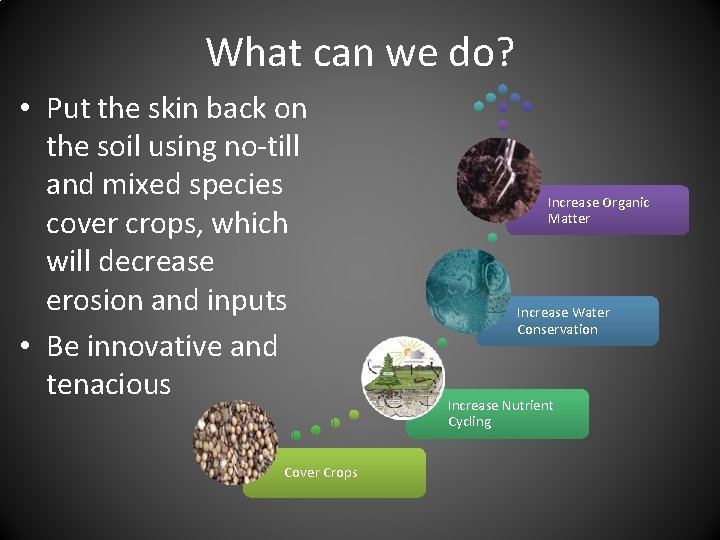
What can we do? • Put the skin back on the soil using no-till and mixed species cover crops, which will decrease erosion and inputs • Be innovative and tenacious Cover Crops Increase Organic Matter Increase Water Conservation Increase Nutrient Cycling
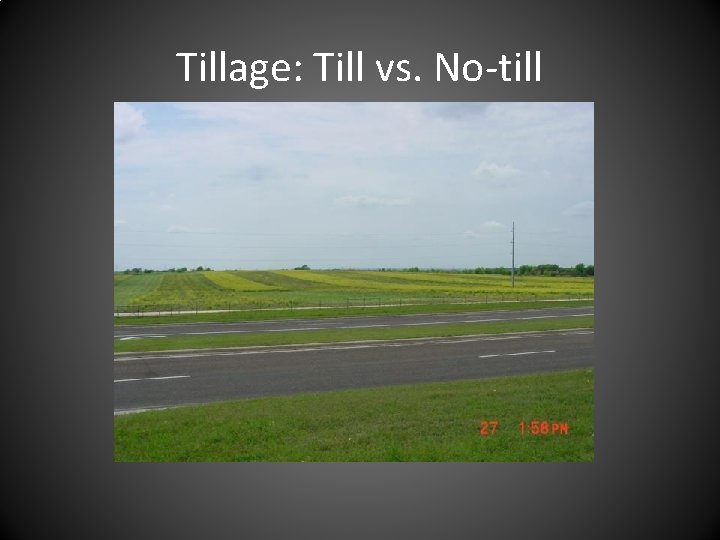
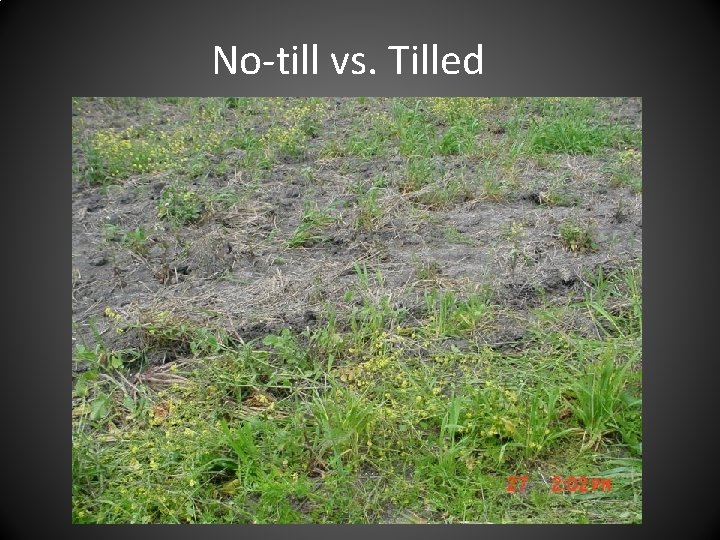
Tillage: Till vs. No-till
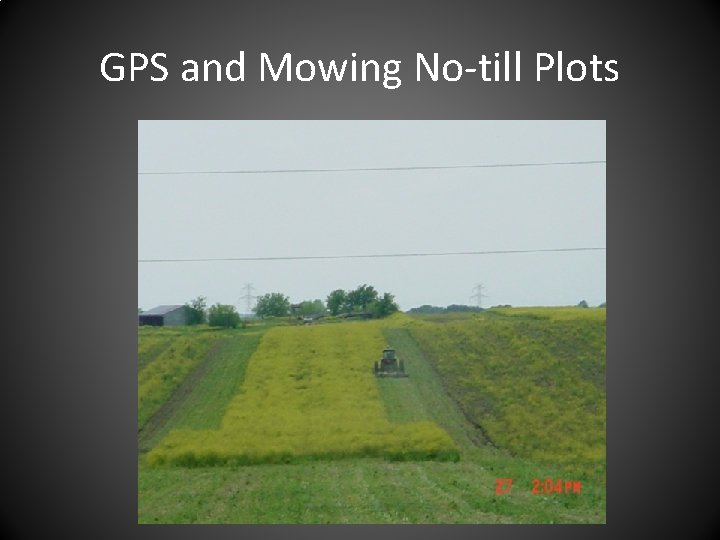
GPS and Mowing No-till Plots
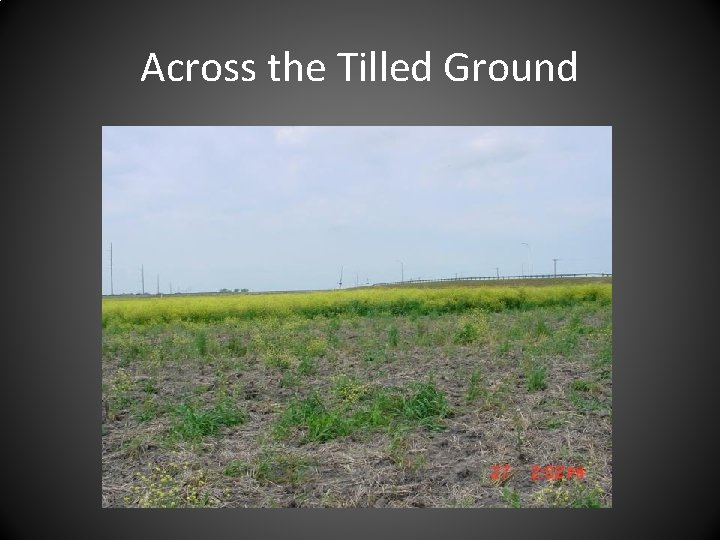
Across the Tilled Ground
No-till vs. Tilled
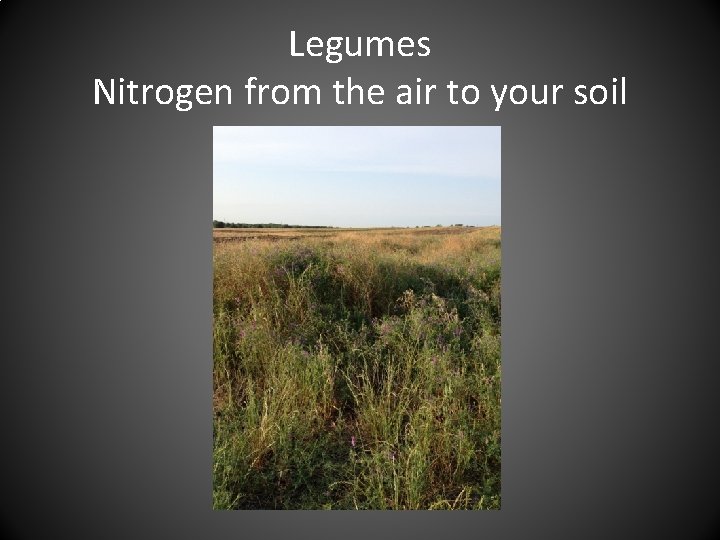
Legumes Nitrogen from the air to your soil
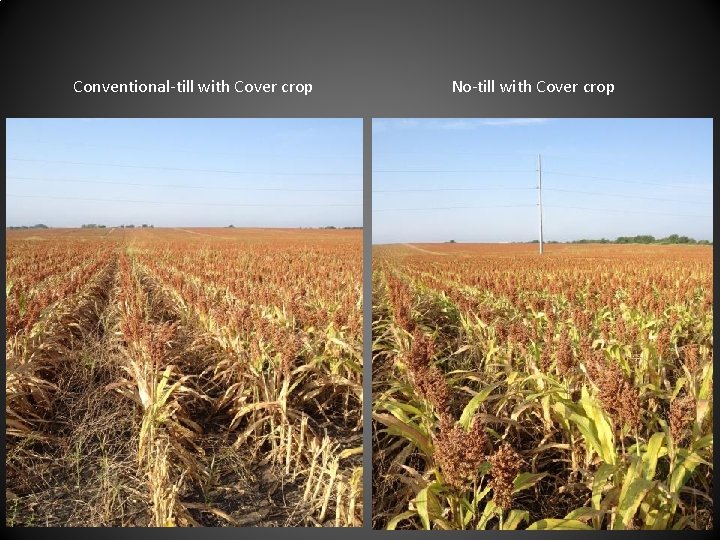
Conventional-till with Cover crop No-till with Cover crop
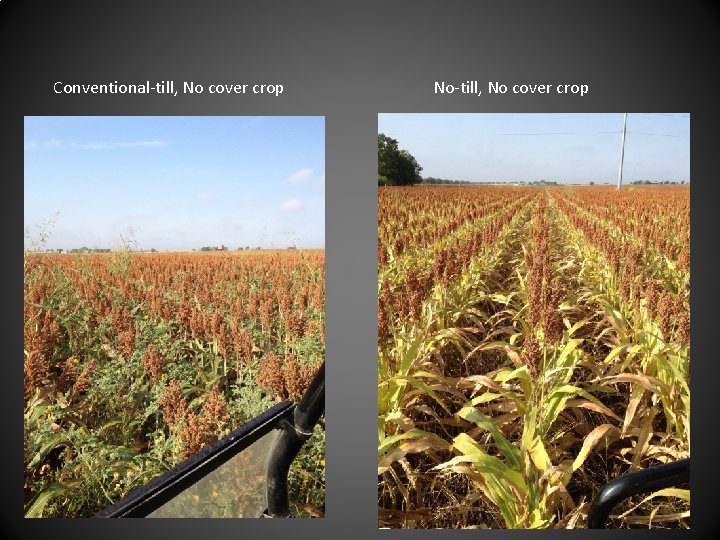
Conventional-till, No cover crop No-till, No cover crop
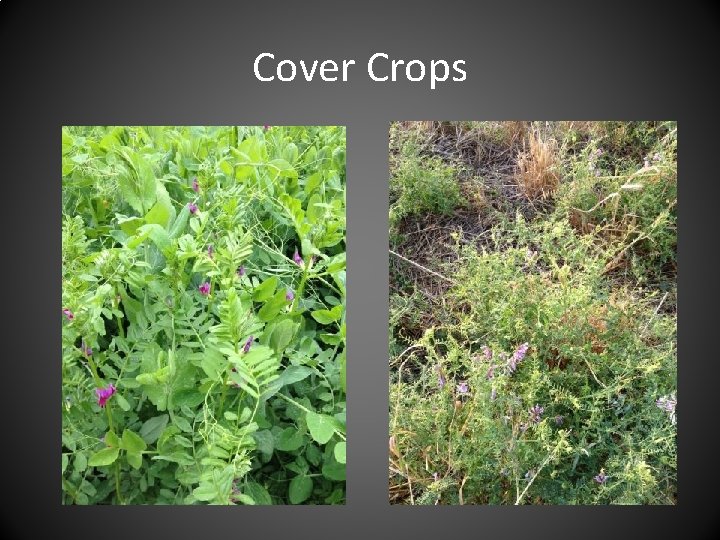
Cover Crops
8 -Way Cover Crop Seed Mix 5% each Whistler Winter Peas - white blossom Common Vetch Greenfix Chickling Vetch Lentil Seed Annual Rye Grass - KB Royal Hybrid Pearl Millet Winter Triticale Mancan Buckwheat Micro Noc Organic Inoculant
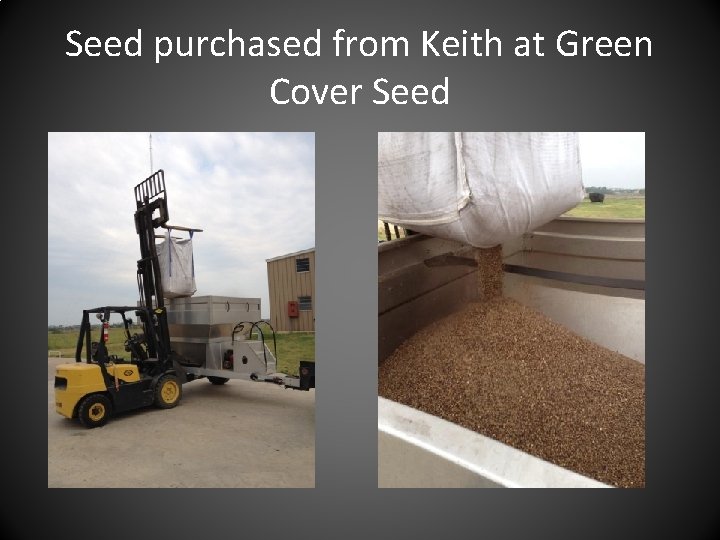
Seed purchased from Keith at Green Cover Seed
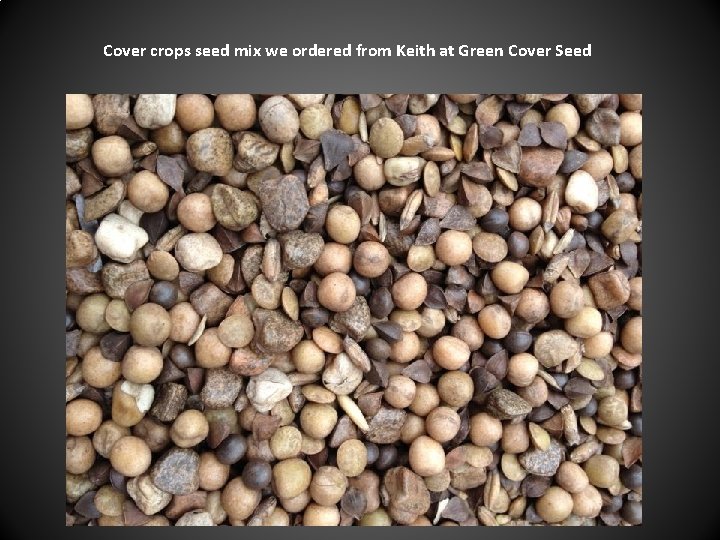
Cover crops seed mix we ordered from Keith at Green Cover Seed
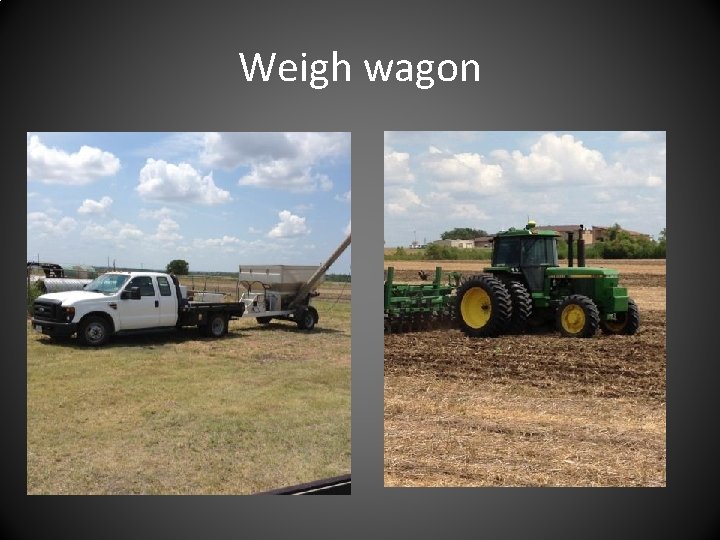
Weigh wagon
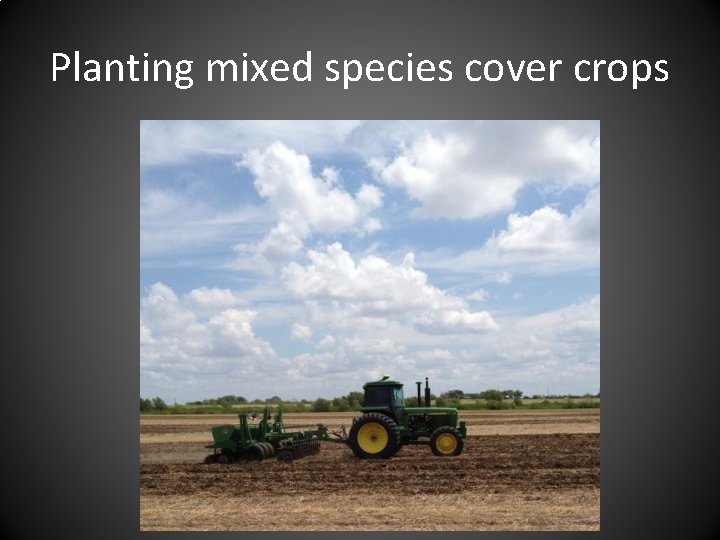
Planting mixed species cover crops
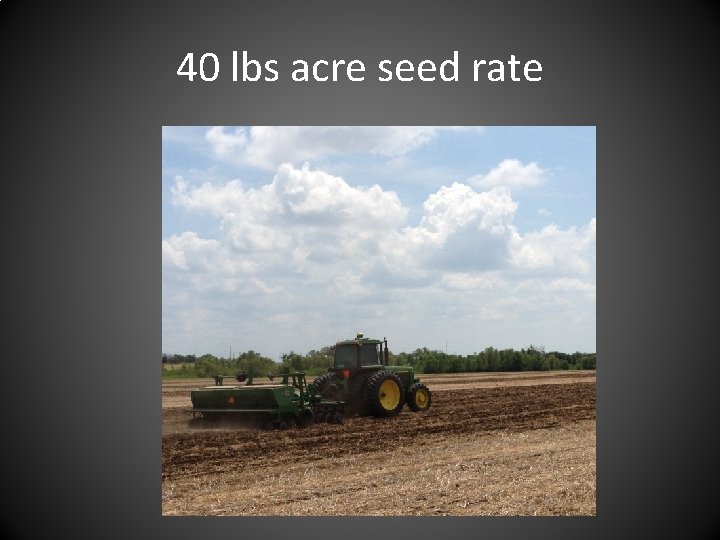
40 lbs acre seed rate
Soil Health Tool Much like a doctor assesses your health, the SHT is designed to assess soil health by asking our soil the following questions: • What is your condition? • Are you in balance? • What can we do to help?
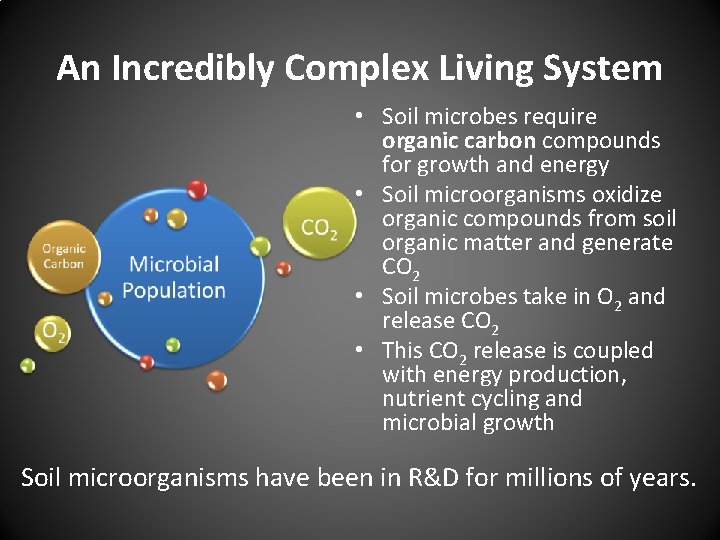
An Incredibly Complex Living System • Soil microbes require organic carbon compounds for growth and energy • Soil microorganisms oxidize organic compounds from soil organic matter and generate CO 2 • Soil microbes take in O 2 and release CO 2 • This CO 2 release is coupled with energy production, nutrient cycling and microbial growth Soil microorganisms have been in R&D for millions of years.
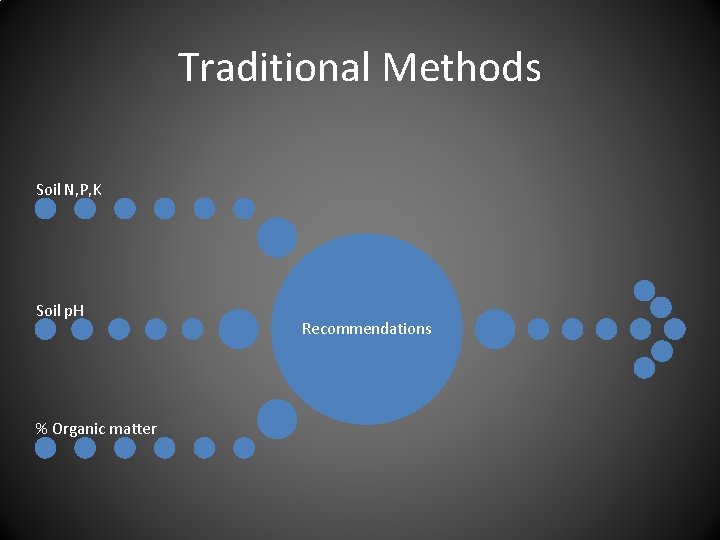
Traditional Methods Soil N, P, K Soil p. H % Organic matter Recommendations
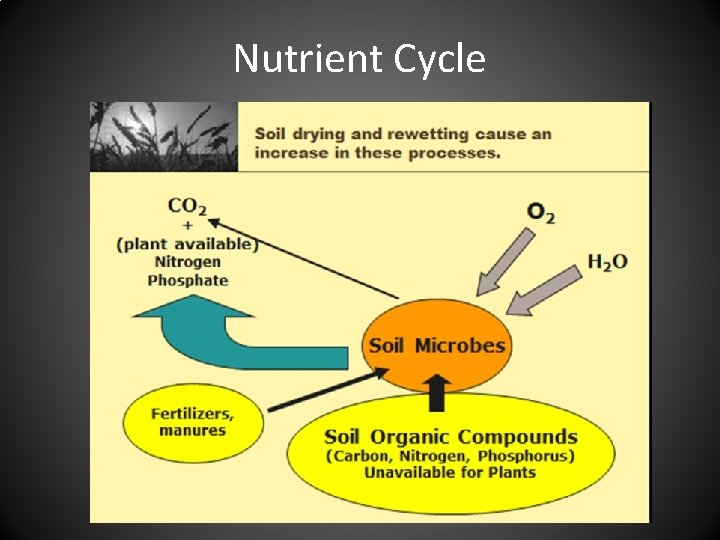
Nutrient Cycle
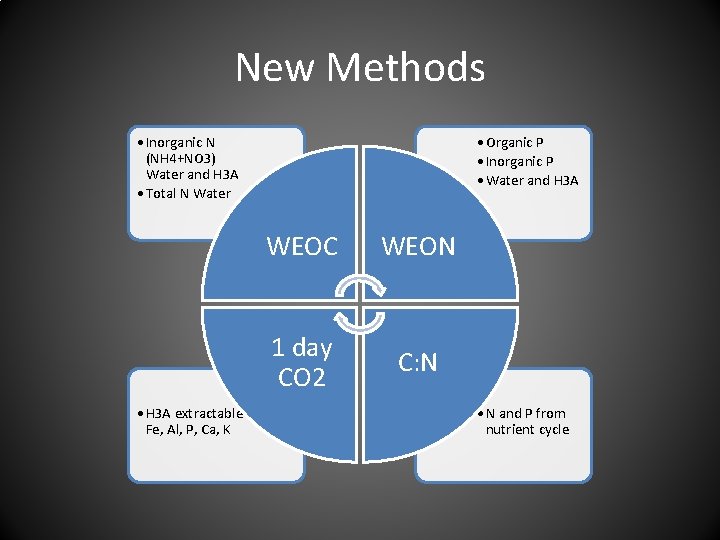
New Methods • Inorganic N (NH 4+NO 3) Water and H 3 A • Total N Water • H 3 A extractable Fe, Al, P, Ca, K • Organic P • Inorganic P • Water and H 3 A WEOC WEON 1 day CO 2 C: N • N and P from nutrient cycle
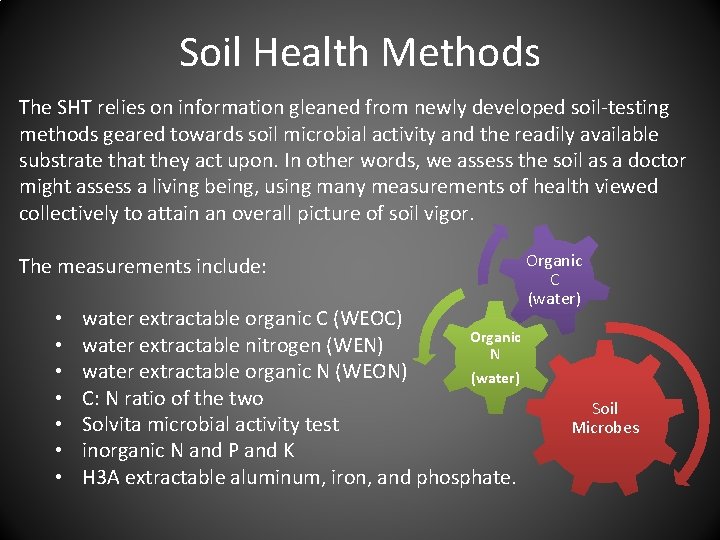
Soil Health Methods The SHT relies on information gleaned from newly developed soil-testing methods geared towards soil microbial activity and the readily available substrate that they act upon. In other words, we assess the soil as a doctor might assess a living being, using many measurements of health viewed collectively to attain an overall picture of soil vigor. The measurements include: • • water extractable organic C (WEOC) Organic water extractable nitrogen (WEN) N water extractable organic N (WEON) (water) C: N ratio of the two Solvita microbial activity test inorganic N and P and K H 3 A extractable aluminum, iron, and phosphate. Organic C (water) Soil Microbes
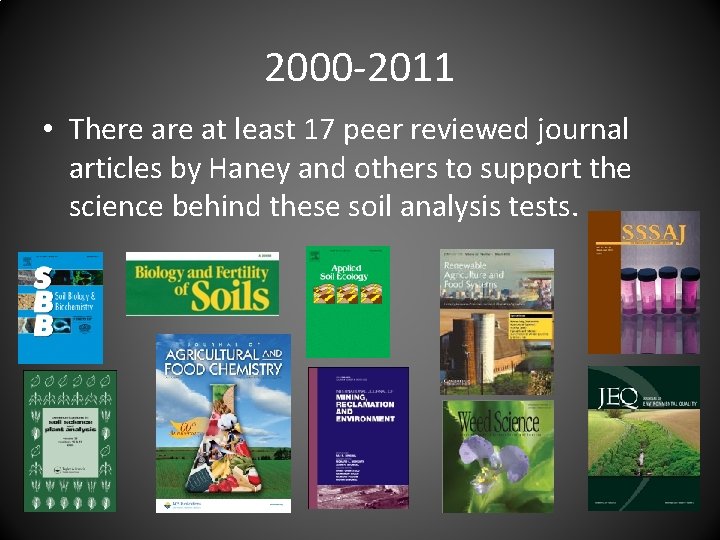
2000 -2011 • There at least 17 peer reviewed journal articles by Haney and others to support the science behind these soil analysis tests.
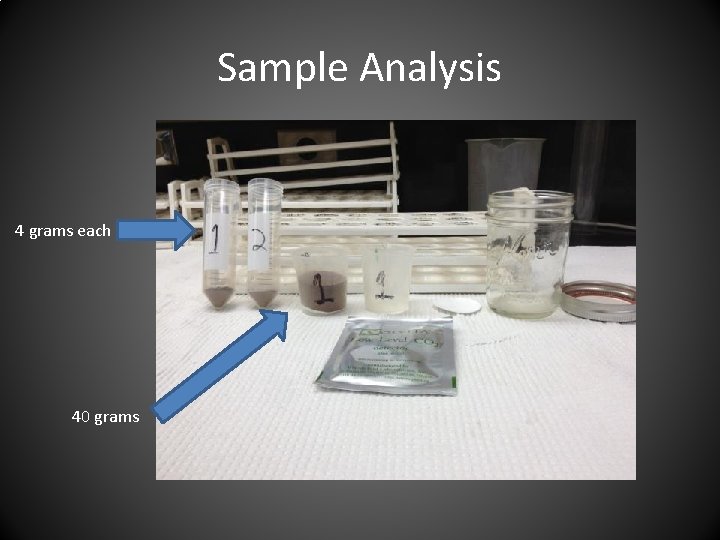
Sample Analysis 4 grams each 40 grams
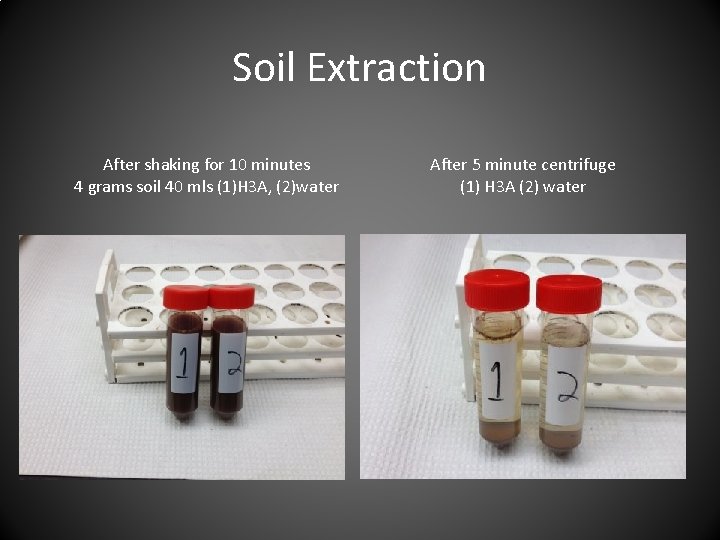
Soil Extraction After shaking for 10 minutes 4 grams soil 40 mls (1)H 3 A, (2)water After 5 minute centrifuge (1) H 3 A (2) water
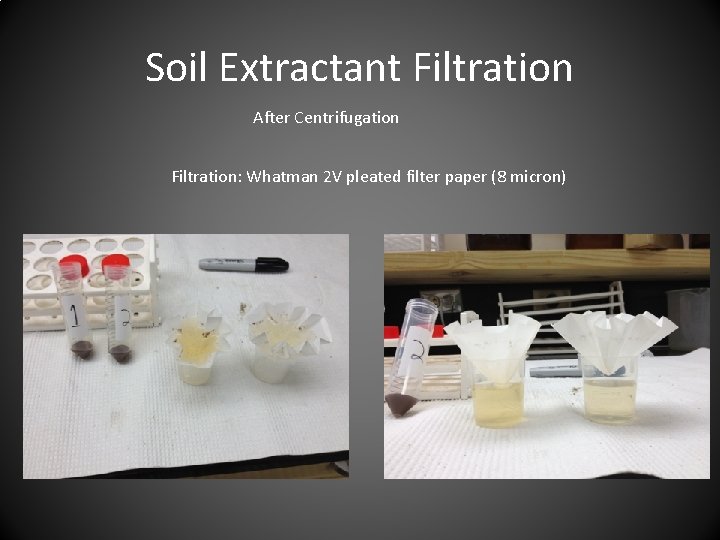
Soil Extractant Filtration After Centrifugation Filtration: Whatman 2 V pleated filter paper (8 micron)
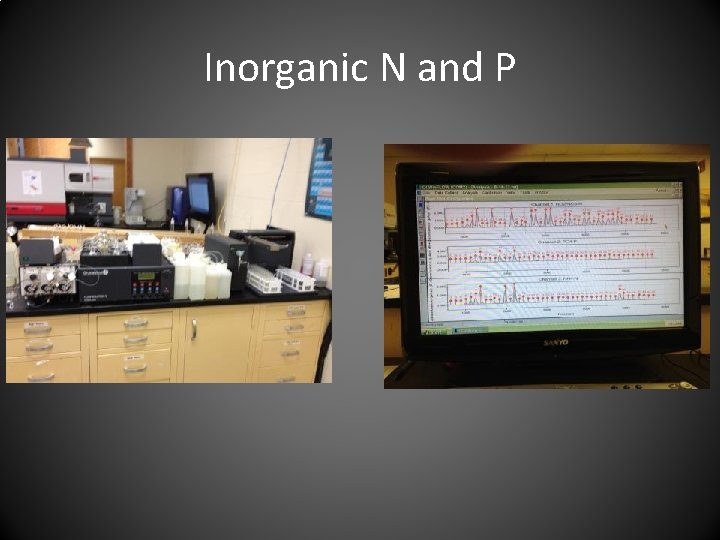
Inorganic N and P
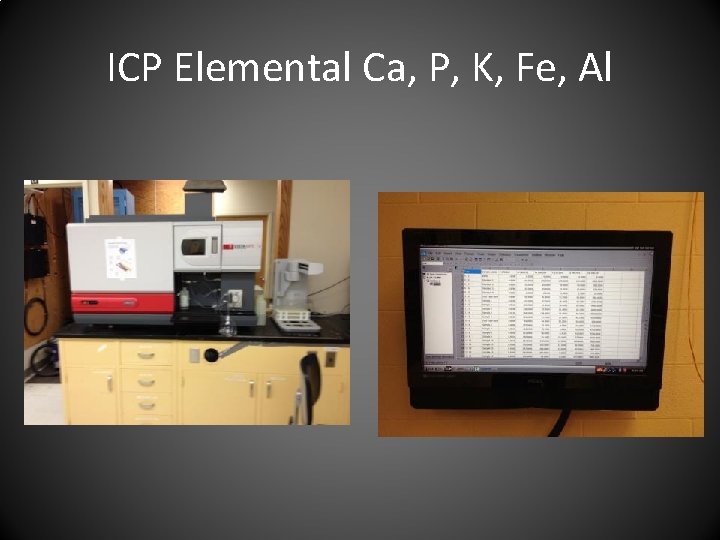
ICP Elemental Ca, P, K, Fe, Al
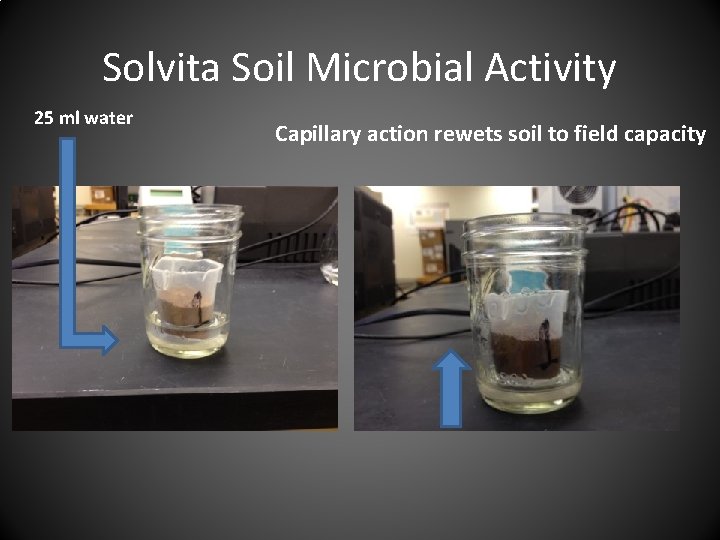
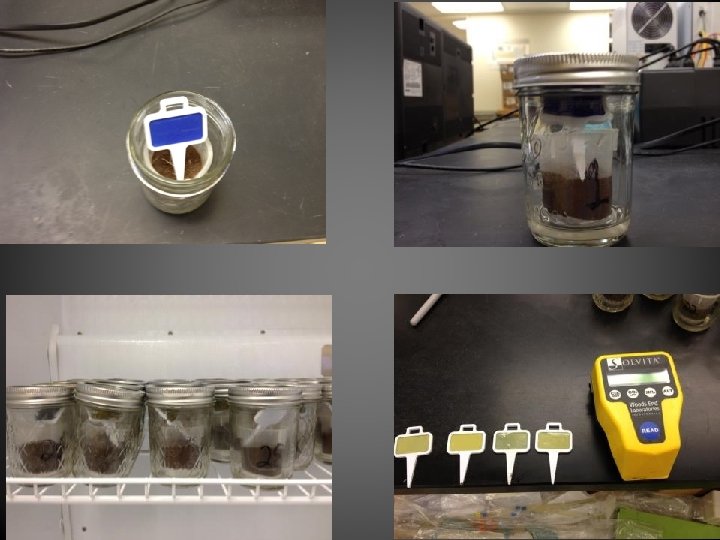
Solvita Soil Microbial Activity 25 ml water Capillary action rewets soil to field capacity
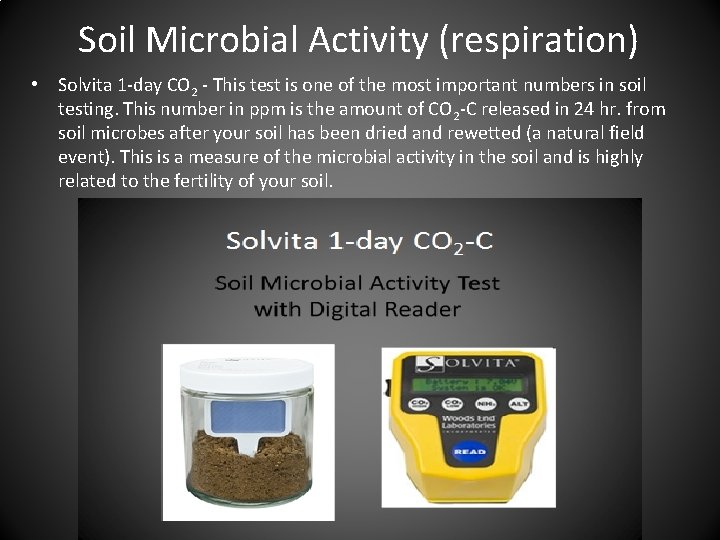
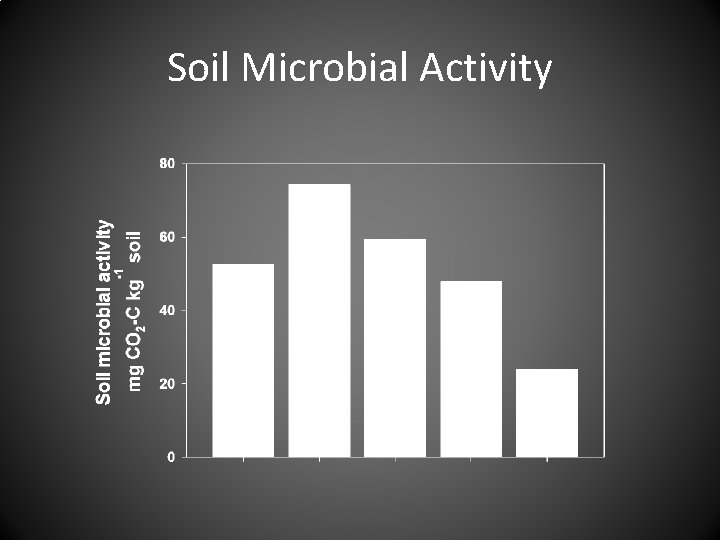
Soil Microbial Activity (respiration) • Solvita 1 -day CO 2 - This test is one of the most important numbers in soil testing. This number in ppm is the amount of CO 2 -C released in 24 hr. from soil microbes after your soil has been dried and rewetted (a natural field event). This is a measure of the microbial activity in the soil and is highly related to the fertility of your soil.
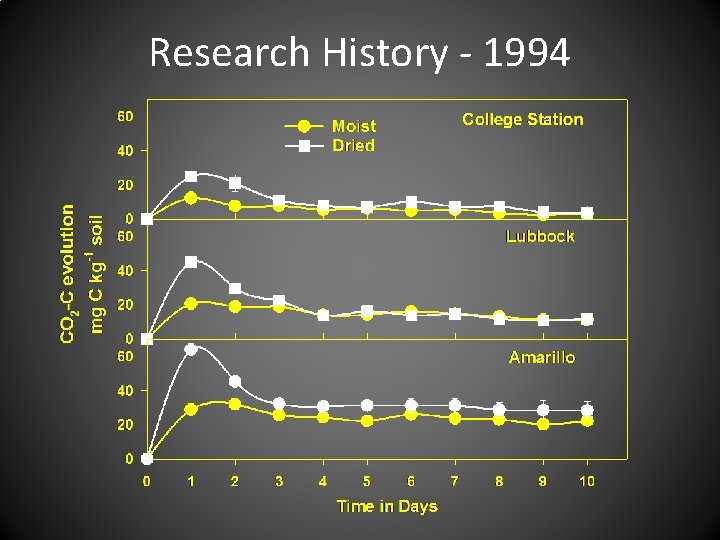
Research History - 1994
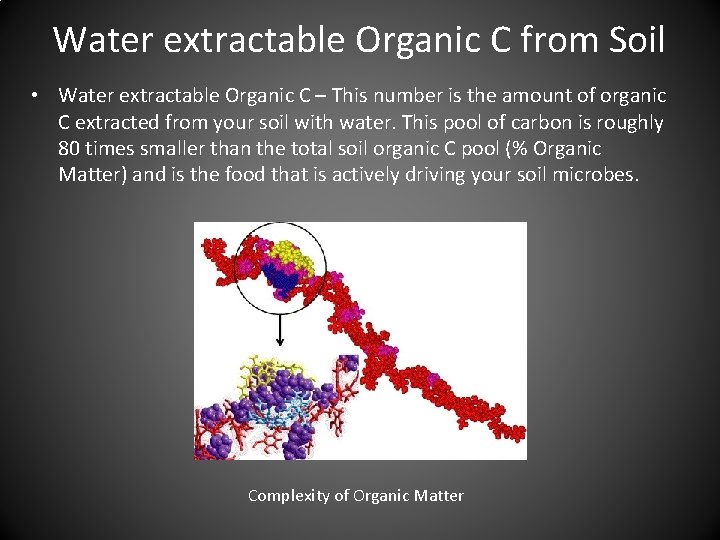
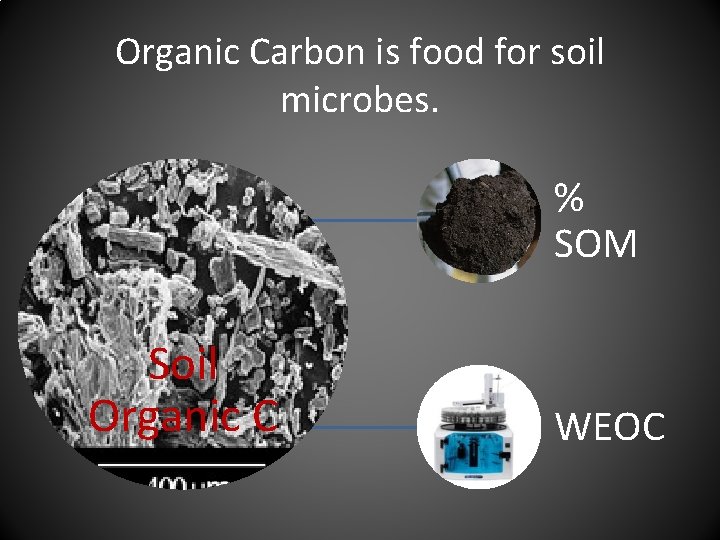
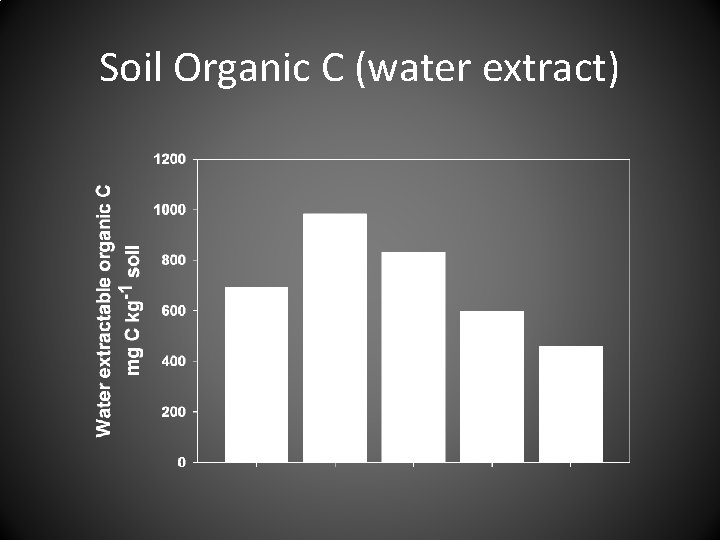
Water extractable Organic C from Soil • Water extractable Organic C – This number is the amount of organic C extracted from your soil with water. This pool of carbon is roughly 80 times smaller than the total soil organic C pool (% Organic Matter) and is the food that is actively driving your soil microbes. Complexity of Organic Matter
Organic Carbon is food for soil microbes. % SOM Soil Organic C WEOC
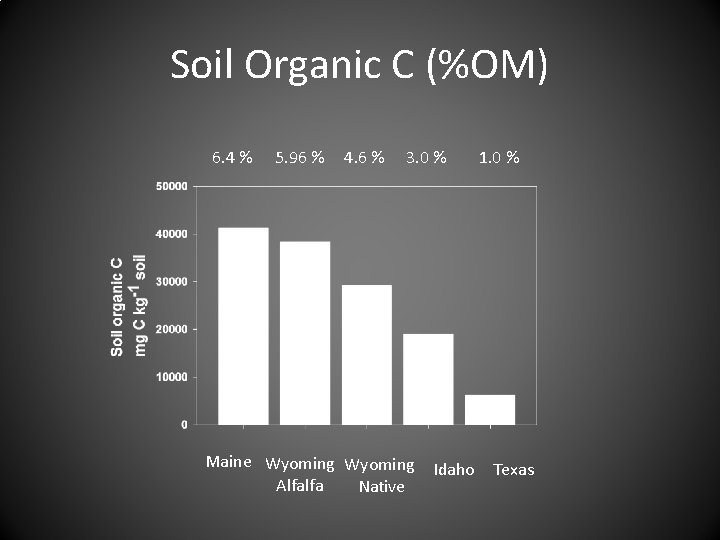
Soil Organic C (%OM) 6. 4 % 5. 96 % 4. 6 % 3. 0 % 1. 0 % Maine Wyoming Idaho Texas Alfalfa Native
Soil Organic C (water extract)
Soil Microbial Activity
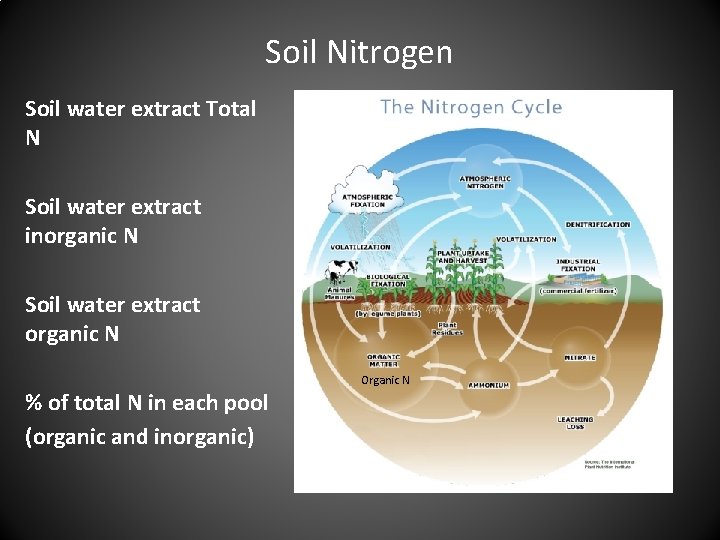
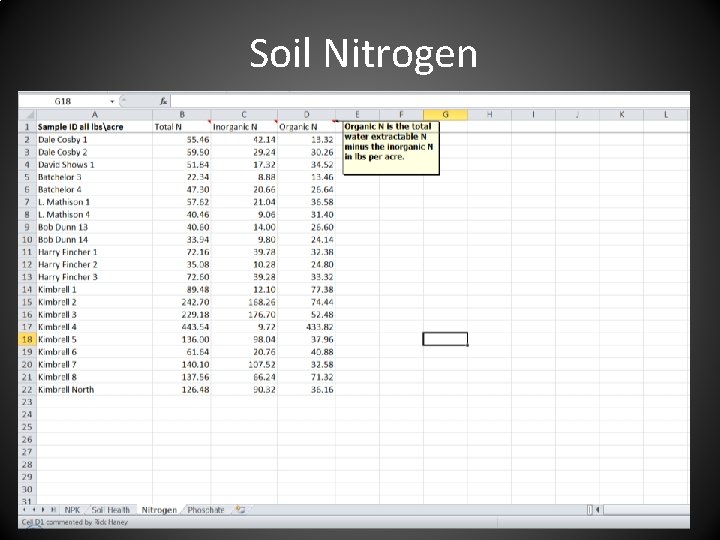
Soil Nitrogen Soil water extract Total N Soil water extract inorganic N Soil water extract organic N Organic N % of total N in each pool (organic and inorganic)
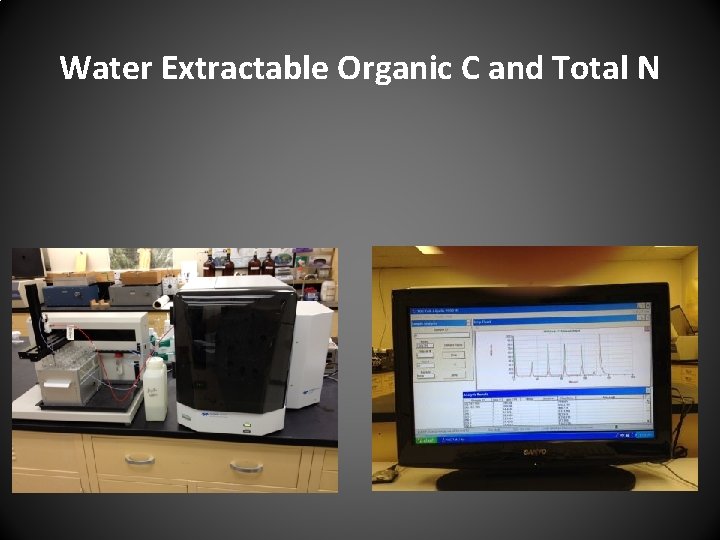
Water Extractable Organic C and Total N
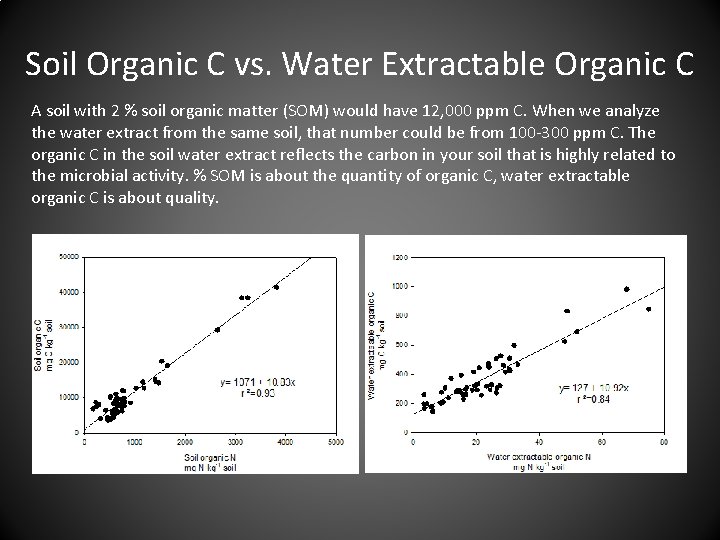
Soil Organic C vs. Water Extractable Organic C A soil with 2 % soil organic matter (SOM) would have 12, 000 ppm C. When we analyze the water extract from the same soil, that number could be from 100 -300 ppm C. The organic C in the soil water extract reflects the carbon in your soil that is highly related to the microbial activity. % SOM is about the quantity of organic C, water extractable organic C is about quality.
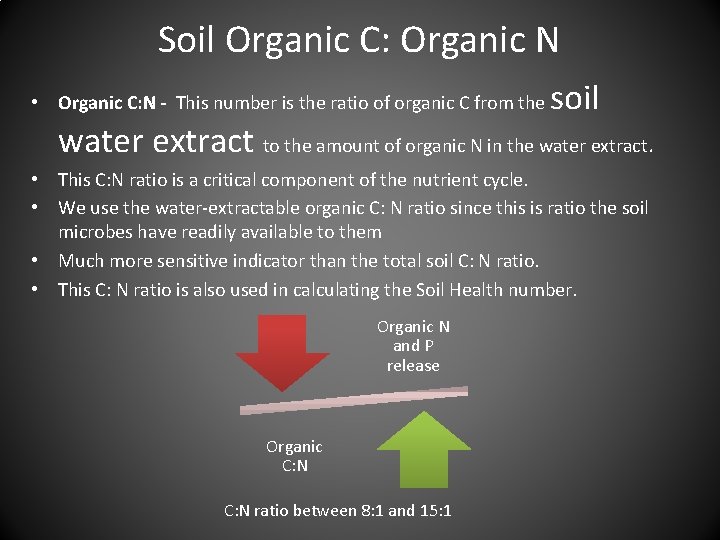
Soil Organic C: Organic N • Organic C: N - This number is the ratio of organic C from the soil water extract to the amount of organic N in the water extract. • This C: N ratio is a critical component of the nutrient cycle. • We use the water-extractable organic C: N ratio since this is ratio the soil microbes have readily available to them • Much more sensitive indicator than the total soil C: N ratio. • This C: N ratio is also used in calculating the Soil Health number. Organic N and P release Organic C: N ratio between 8: 1 and 15: 1
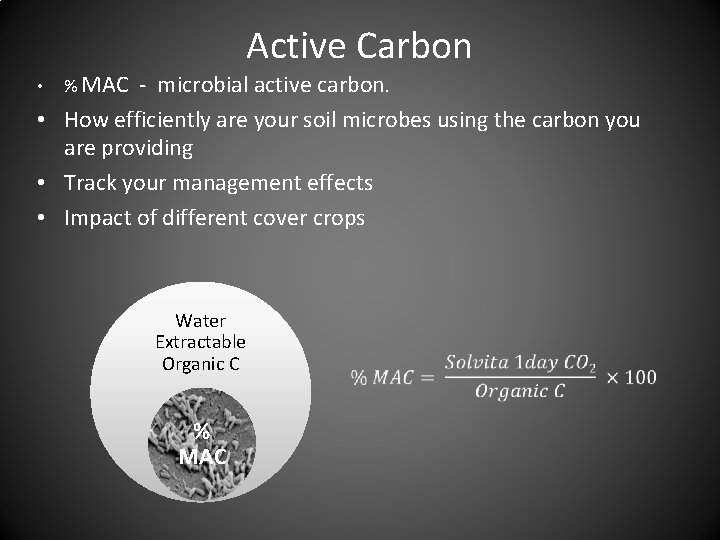
Active Carbon • % MAC - microbial active carbon. • How efficiently are your soil microbes using the carbon you are providing • Track your management effects • Impact of different cover crops Water Extractable Organic C % MAC
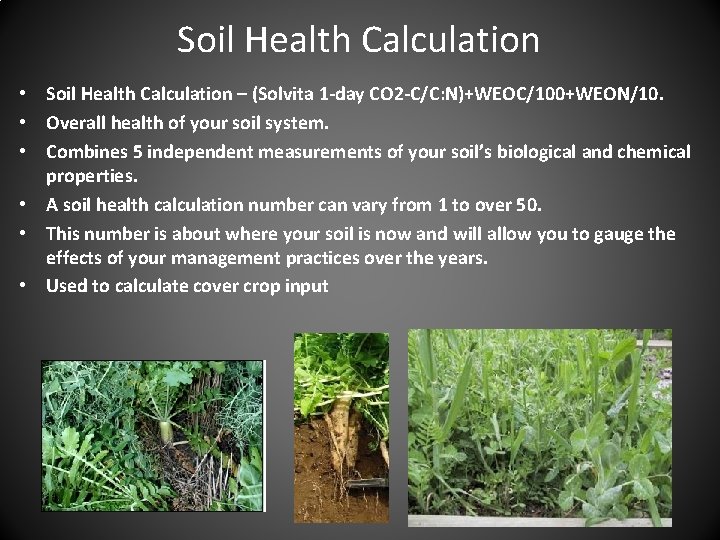
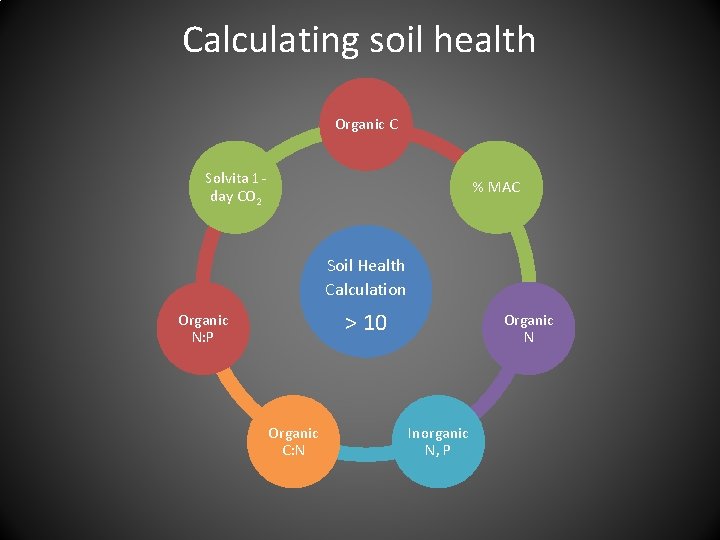
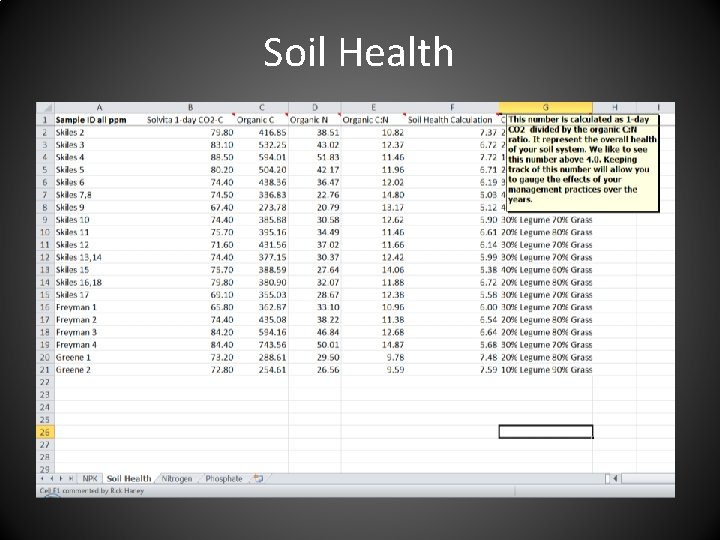
Soil Health Calculation • Soil Health Calculation – (Solvita 1 -day CO 2 -C/C: N)+WEOC/100+WEON/10. • Overall health of your soil system. • Combines 5 independent measurements of your soil’s biological and chemical properties. • A soil health calculation number can vary from 1 to over 50. • This number is about where your soil is now and will allow you to gauge the effects of your management practices over the years. • Used to calculate cover crop input
Calculating soil health Organic C Solvita 1 day CO 2 % MAC Soil Health Calculation > 10 Organic N: P Organic C: N Organic N Inorganic N, P
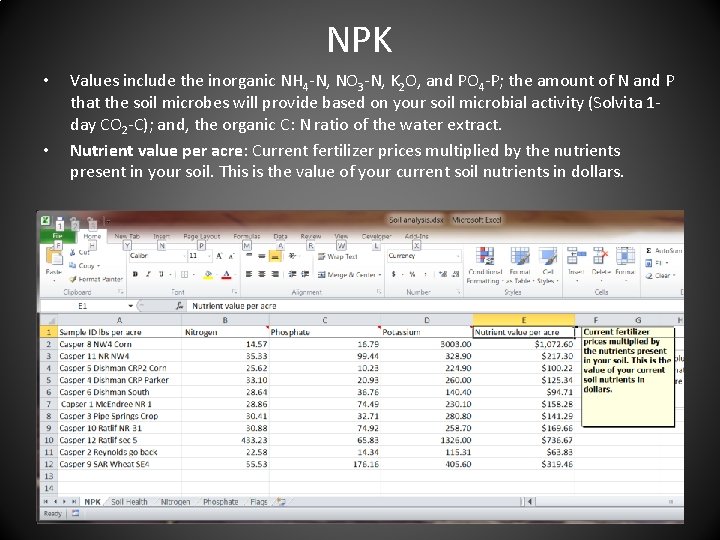
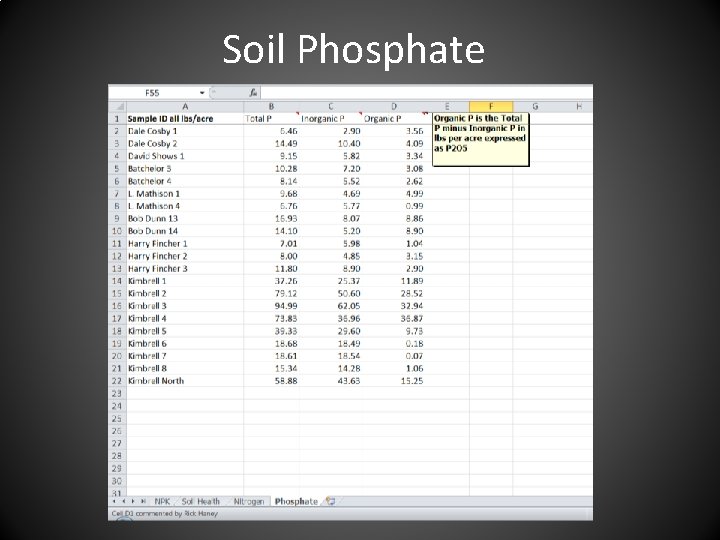
Soil Health Tool - Results • Results are displayed in an Excel file with 4 tabs: – NPK – Soil Health – Nitrogen – Phosphate • An analysis explanation sheet is provided • Within each tab, each column header has a roll over feature with explanations for the values in each column
NPK • • Values include the inorganic NH 4 -N, NO 3 -N, K 2 O, and PO 4 -P; the amount of N and P that the soil microbes will provide based on your soil microbial activity (Solvita 1 day CO 2 -C); and, the organic C: N ratio of the water extract. Nutrient value per acre: Current fertilizer prices multiplied by the nutrients present in your soil. This is the value of your current soil nutrients in dollars.
Soil Health
Soil Nitrogen
Soil Phosphate
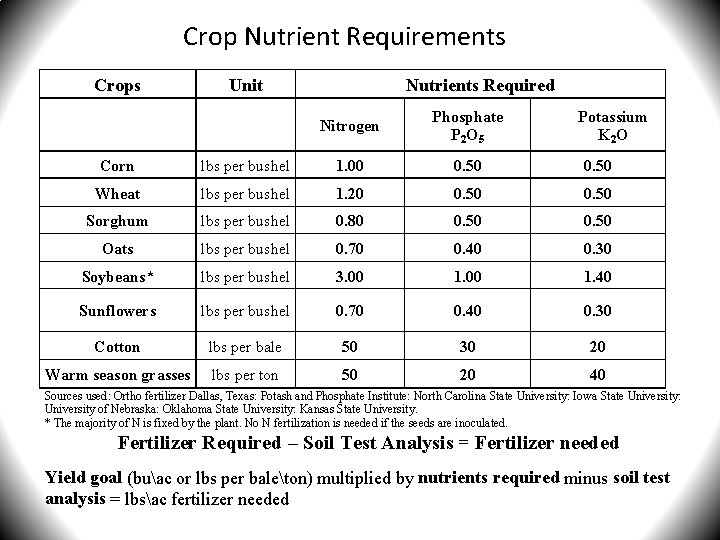
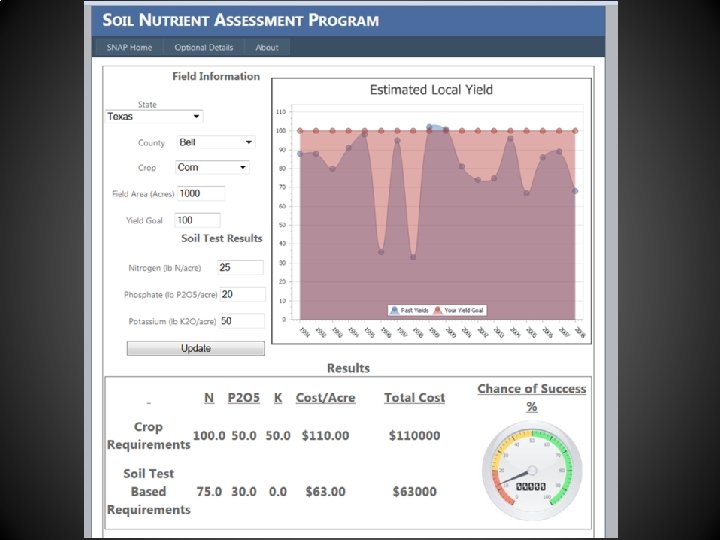
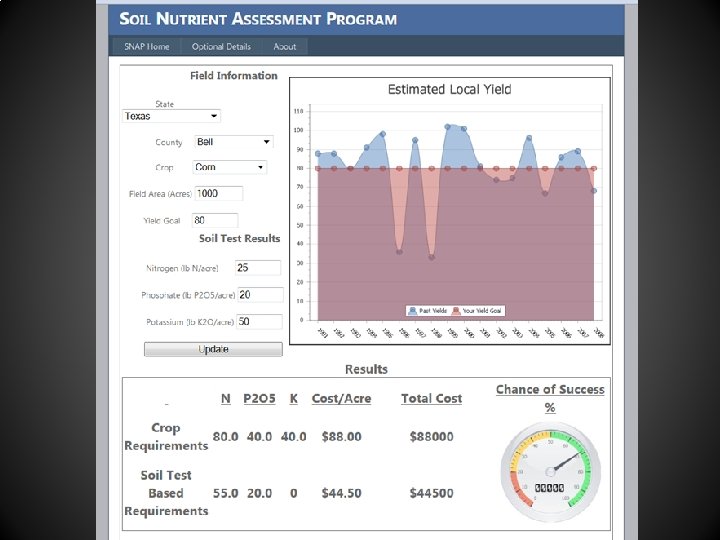
Crop Nutrient Requirements Crops Unit Nutrients Required Nitrogen Phosphate P 2 O 5 Potassium K 2 O Corn lbs per bushel 1. 00 0. 50 Wheat lbs per bushel 1. 20 0. 50 Sorghum lbs per bushel 0. 80 0. 50 Oats lbs per bushel 0. 70 0. 40 0. 30 Soybeans* lbs per bushel 3. 00 1. 40 Sunflowers lbs per bushel 0. 70 0. 40 0. 30 Cotton lbs per bale 50 30 20 Warm season grasses lbs per ton 50 20 40 Sources used: Ortho fertilizer Dallas, Texas: Potash and Phosphate Institute: North Carolina State University: Iowa State University: University of Nebraska: Oklahoma State University: Kansas State University. * The majority of N is fixed by the plant. No N fertilization is needed if the seeds are inoculated. Fertilizer Required – Soil Test Analysis = Fertilizer needed Yield goal (buac or lbs per baleton) multiplied by nutrients required minus soil test analysis = lbsac fertilizer needed
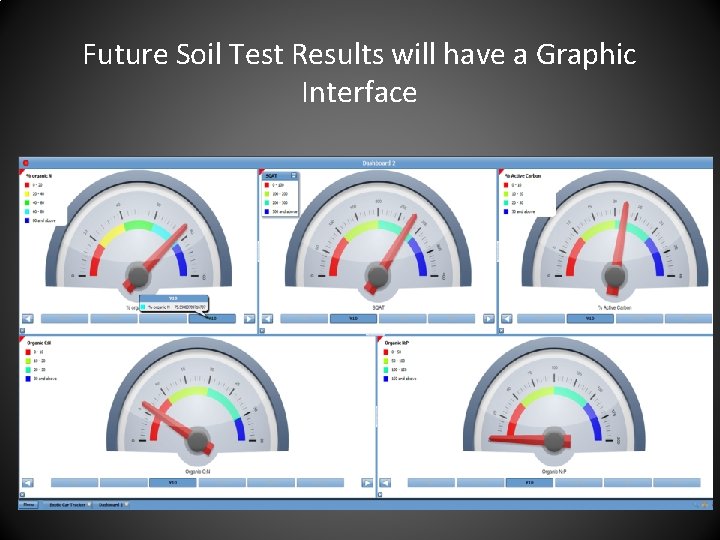
Future Soil Test Results will have a Graphic Interface
Questions? Rick Haney Soil Scientist USDA – ARS Grassland, Soil & Water Research Laboratory 808 E. Blackland Road Temple, TX 76502 (254) 770 -6503 rick. haney@ars. usda. gov