
SOIL CONTAMINATION What are Wastes Wastes are defined

- Slides: 16
SOIL CONTAMINATION
What are Wastes? �Wastes are defined as “substances or objects which are disposed of or are intended to be disposed of or are required to be disposed of by the provisions of the law” 2
Kinds of Wastes Solid wastes: domestic, commercial and industrial wastes Examples: plastics, bottles, cans, papers, scrap iron, and other trash Liquid Wastes: wastes in liquid form Examples: domestic washings, chemicals, oils, waste water from ponds, manufacturing industries and other sources 3
Classification of Wastes according to their Properties Bio-degradable can be degraded (paper, wood, fruits and others) Non-biodegradable cannot be degraded (plastics, bottles, old machines, cans, styrofoam containers and others) 4
Classification of Wastes according to their Effects on Human Health and the Environment Hazardous wastes Substances unsafe to use commercially, industrially, agriculturally, or economically that are shipped, transported to or brought from the country of origin for dumping or disposal. Non-hazardous Substances safe to use commercially, industrially, agriculturally, or economically that are shipped, transported to or brought from the country of origin for dumping or disposal. 5
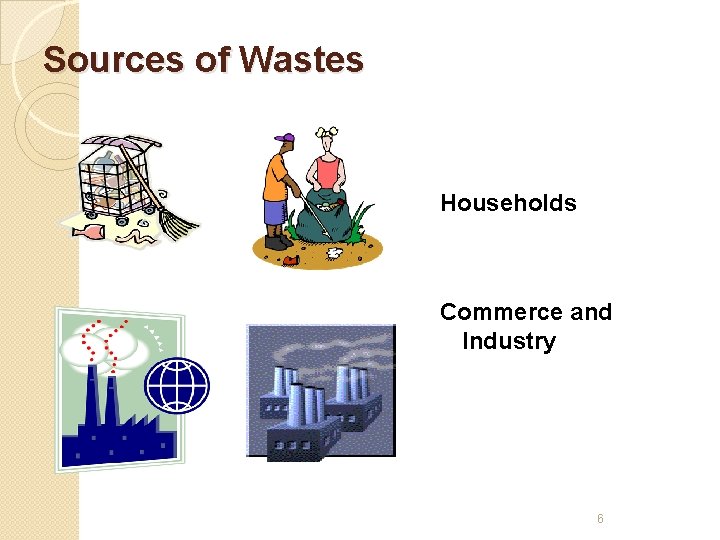
Sources of Wastes Households Commerce and Industry 6
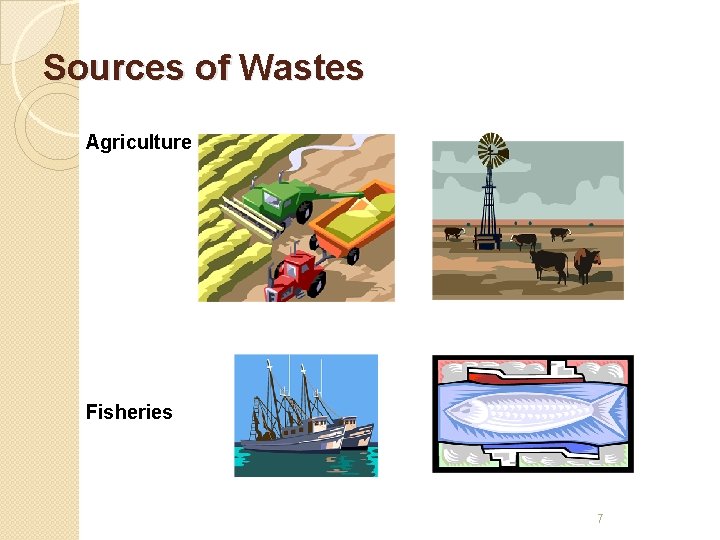
Sources of Wastes Agriculture Fisheries 7
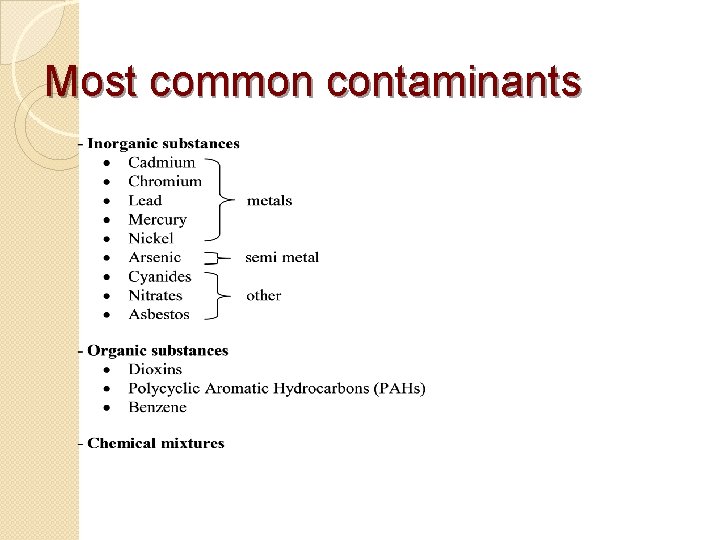
TYPES OF CONTAMINANTS � Organic contaminants have a carbon base, e. g. , petroleum hydrocarbons, dioxins, chlorophenols. � Inorganic contaminants refer to metals & other molecular compounds, e. g. , metals, major ions & nutrients. � Non-reactive contaminants are dissolved contaminants that are not influenced by chemical reactions or microbiological processes. � Reactive contaminants are those contaminants in which the transport processes are considered along with various chemical mass transfer & microbial degradation processes.
Basic concepts �Contaminated land defined as “Any land which appears to the local authority or in whose authority it is situated to be in such a condition, by reason of substances in, or under land that significant harm is being caused or there is significant possibility of such harm being caused” (Part IIA of the Environment Protection Act (1990, Section 78(A))
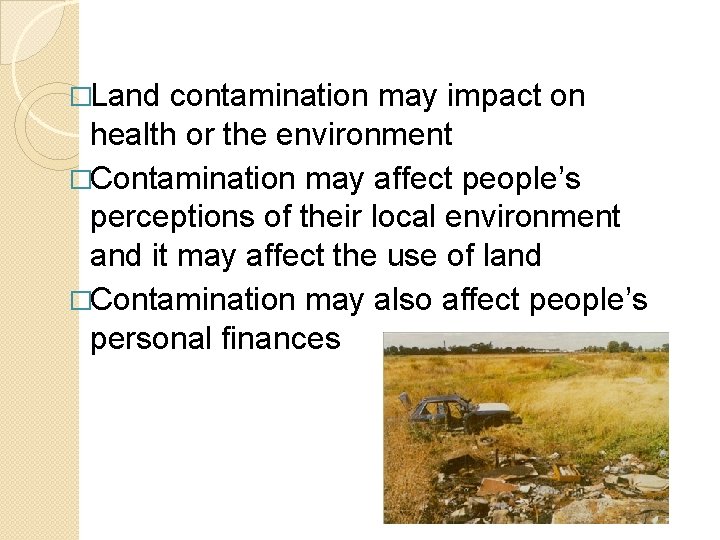
�Land contamination may impact on health or the environment �Contamination may affect people’s perceptions of their local environment and it may affect the use of land �Contamination may also affect people’s personal finances
Risks to humans posed by contaminants on land: � Increased levels of illness have not been observed in people living on contaminated land � However ill effects, which may be undetectable using current epidemiological and analytical methods, may occur � Impact from contaminated soil can be difficult to separate from other types of pollution � Possible health effects of the contaminants are difficult to establish because there are many confounding factors
SOURCES OF CONTAMINATION Sources originating on the ground surface �Infiltration of contaminated surface water �Land disposal of solid and liquid waste �Accidental oil spill �Fertilizers and pesticides �Disposal of sewage and water treatment plant sludge 1.
2. Sources originating above water table �Waste disposal in excavation �Landfills �Leakage from underground storage tanks �Leakage from underground pipelines �Septic tanks
3. Sources originating below water table �Waste disposal in wet excavations �Deep well injections �Mines �Abandoned or improperly constructed wells
Most common contaminants
CADMIUM • Cadmium can be found in cigarettes, fertilisers used in agriculture and in low levels in all foods (highest in shellfish, liver, and kidney meats) Breathing or eating air or food contaminated with cadmium over a long period of time can cause health effects including: • Renal dysfunction • Growth disturbances • Lung disturbances (bronchitis, obstructive lung disease) • Skeletal damage • Reproductive disturbances • Anaemia