
Soil Clay Minerals and CEC Ray Ward Laboratories
Soil Clay Minerals and CEC Ray Ward Laboratories, Inc Kearney
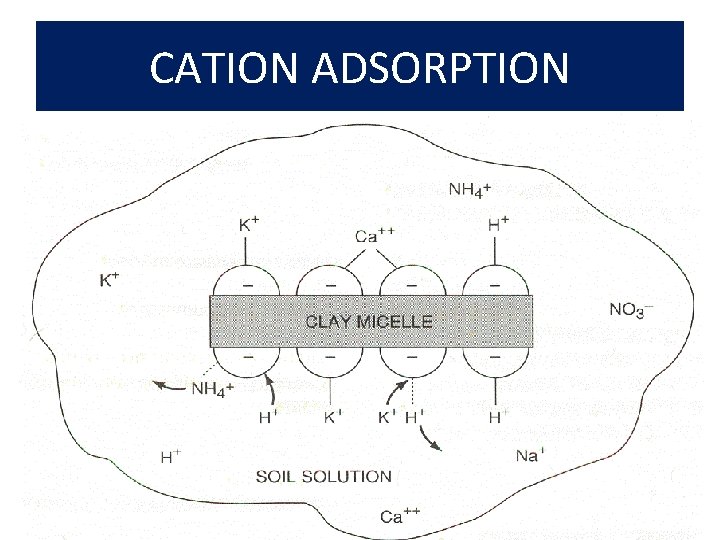
CATION ADSORPTION

“Activity” of silicate clays � refers to cation exchange capacity (CEC) �Ability to retain and supply nutrients �Fertility � High activity clays: �Less weathered ; high effective surface area �smectite, vermiculite, mica (illite), chlorite � Low activity clays: �More weathered; less effective surface area �kaolinite
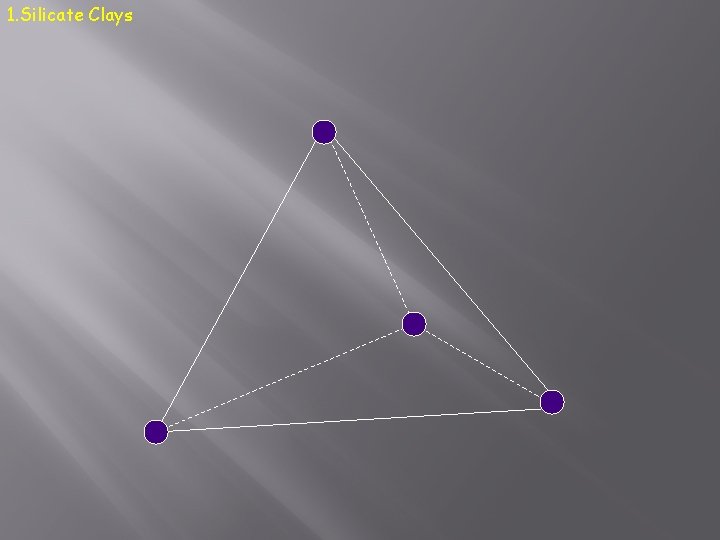
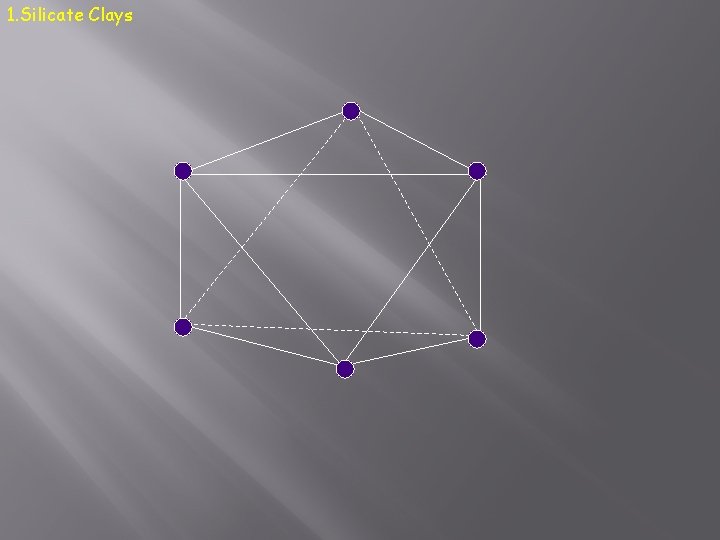
Silicate Clays (aluminosilicates) Particle of silicate clay Composed of tetrahedral and octahedral “sandwiches” Tetrahedron: central cation (Si+4, Al+3) surrounded by 4 oxygens Octahedron: central cation (Al+3, Fe+2, Mg+2) surrounded by 6 oxygens (or hydroxyls)
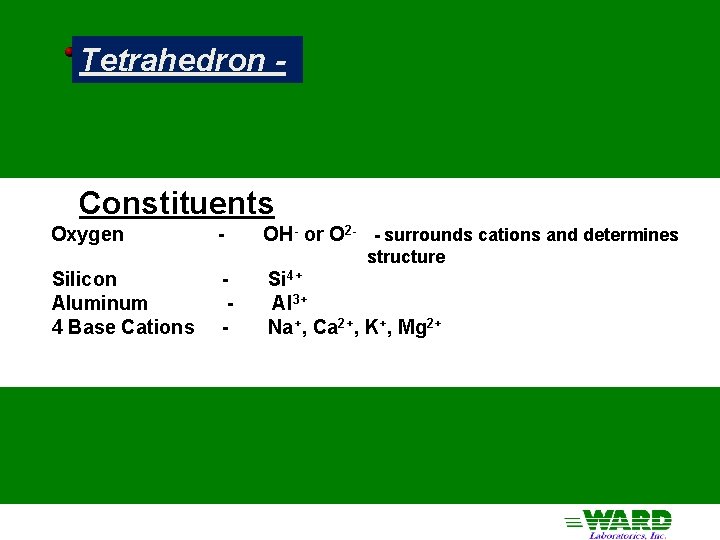
Tetrahedron - Constituents Oxygen - OH- or O 2 - - surrounds cations and determines structure Silicon Aluminum 4 Base Cations - Si 4+ Al 3+ Na+, Ca 2+, K+, Mg 2+
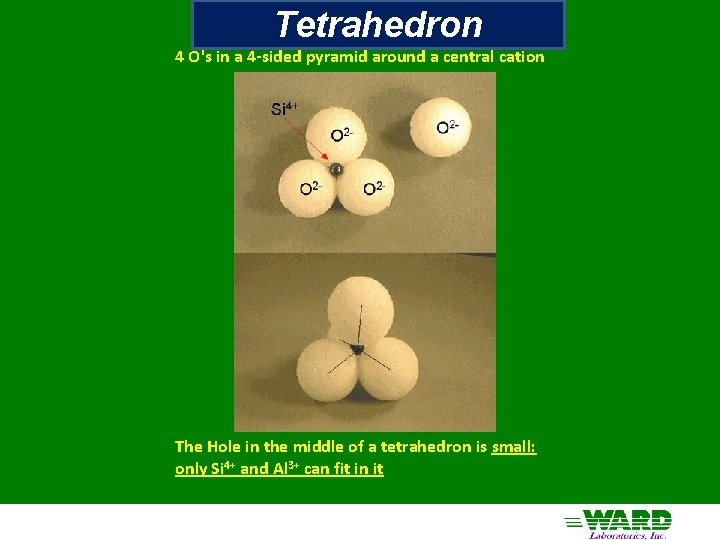
Tetrahedron 4 O's in a 4 -sided pyramid around a central cation The Hole in the middle of a tetrahedron is small: only Si 4+ and Al 3+ can fit in it
1. Silicate Clays
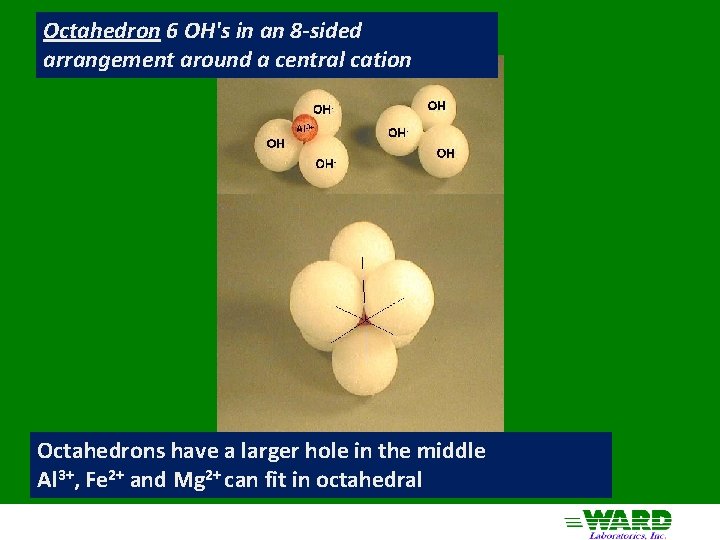
Octahedron 6 OH's in an 8 -sided arrangement around a central cation Octahedrons have a larger hole in the middle Al 3+, Fe 2+ and Mg 2+ can fit in octahedral
1. Silicate Clays
Silicate Clays Different types of silicate clays are composed of sandwiches (combinations) of layers with various substances in their interlayer space. 2: 1 two tetrahedral sheets to one octahedral sheet 1: 1 one tetrahedron sheet to one octahedral sheet
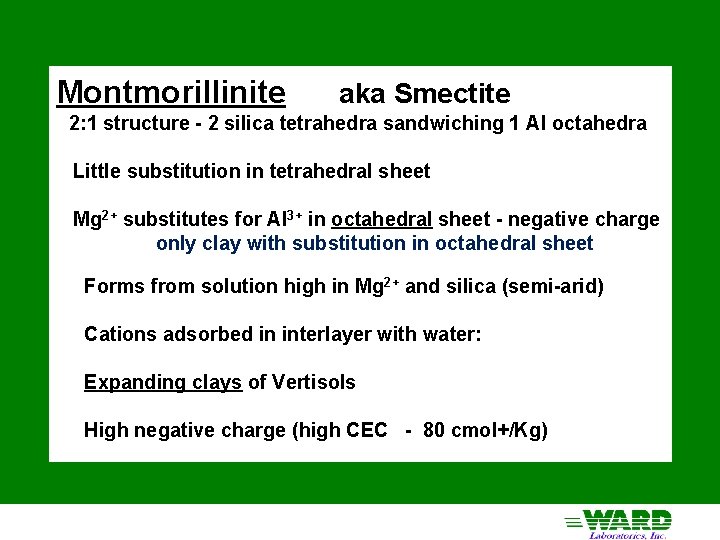
Montmorillinite aka Smectite 2: 1 structure - 2 silica tetrahedra sandwiching 1 Al octahedra Little substitution in tetrahedral sheet Mg 2+ substitutes for Al 3+ in octahedral sheet - negative charge only clay with substitution in octahedral sheet Forms from solution high in Mg 2+ and silica (semi-arid) Cations adsorbed in interlayer with water: Expanding clays of Vertisols High negative charge (high CEC - 80 cmol+/Kg)
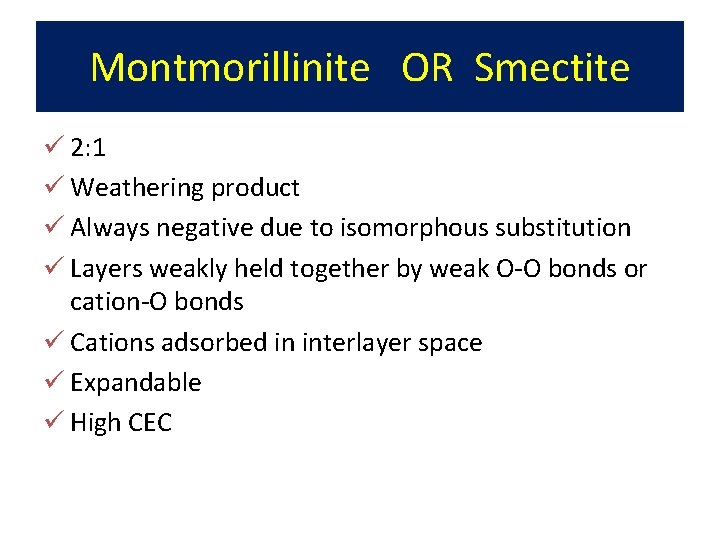
Montmorillinite OR Smectite ü 2: 1 ü Weathering product ü Always negative due to isomorphous substitution ü Layers weakly held together by weak O-O bonds or cation-O bonds ü Cations adsorbed in interlayer space ü Expandable ü High CEC
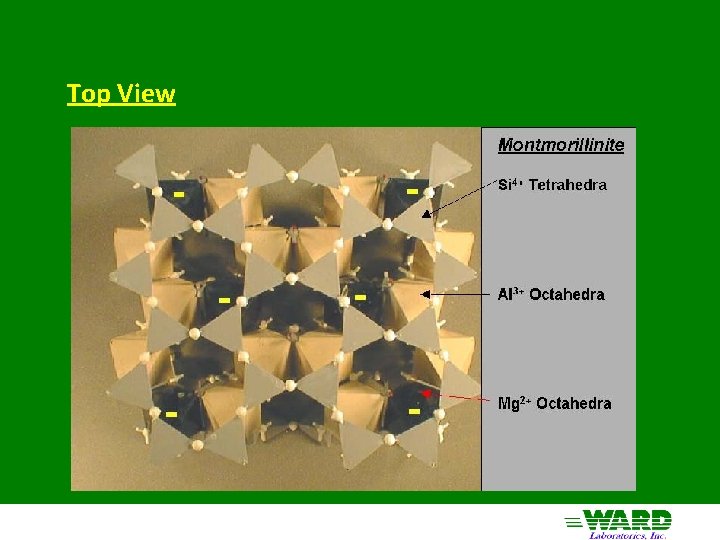
Top View
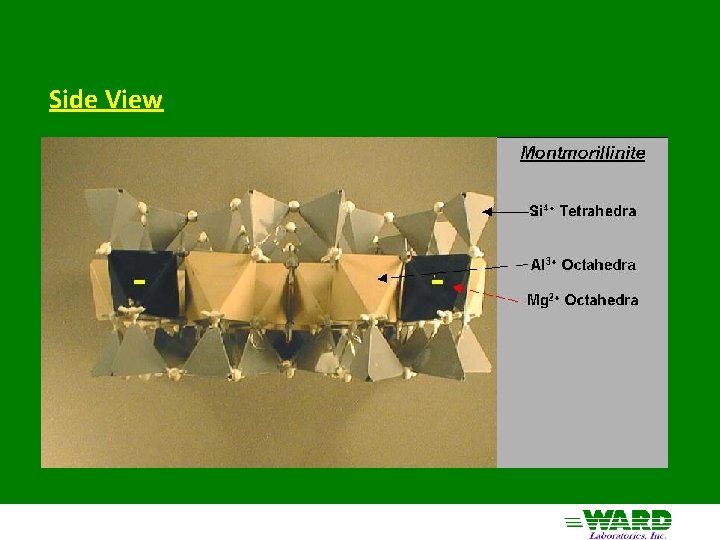
Side View
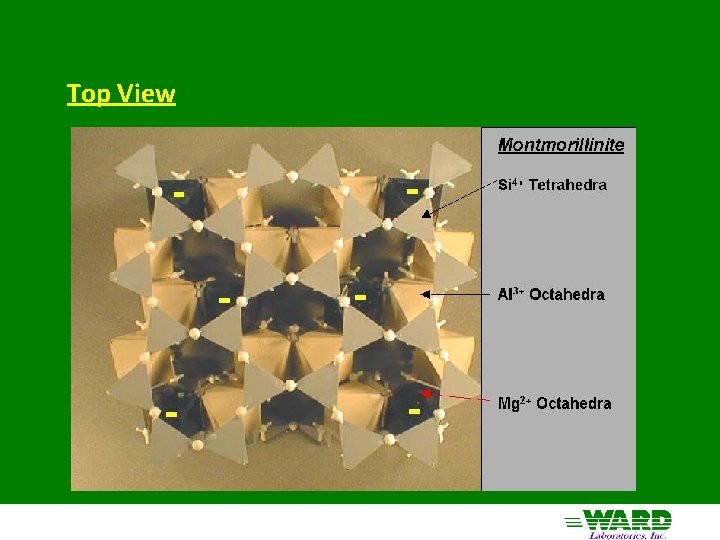
Top View
smectite ü Interlayer cations hold layers together In dry soils, bonding force is strong and hard clods form; deep cracks In wet soils, water is drawn into interlayer space and clay swells. ü ü ü Montmorillonite Vertisols Dominant clay mineral of most NE soils
smectite ü High effective surface area = 650 – 800 m 2/g ü Internal surface area >> external ü Particles small ü Most expandable of all clays
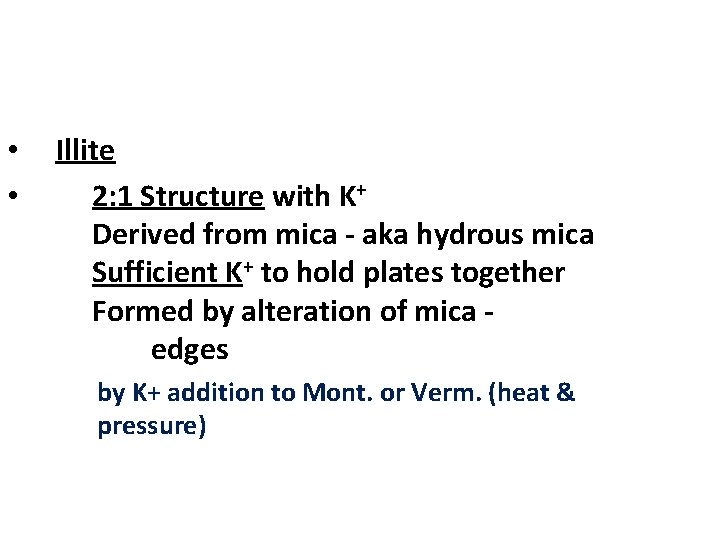
• • Illite 2: 1 Structure with K+ Derived from mica - aka hydrous mica Sufficient K+ to hold plates together Formed by alteration of mica edges by K+ addition to Mont. or Verm. (heat & pressure)
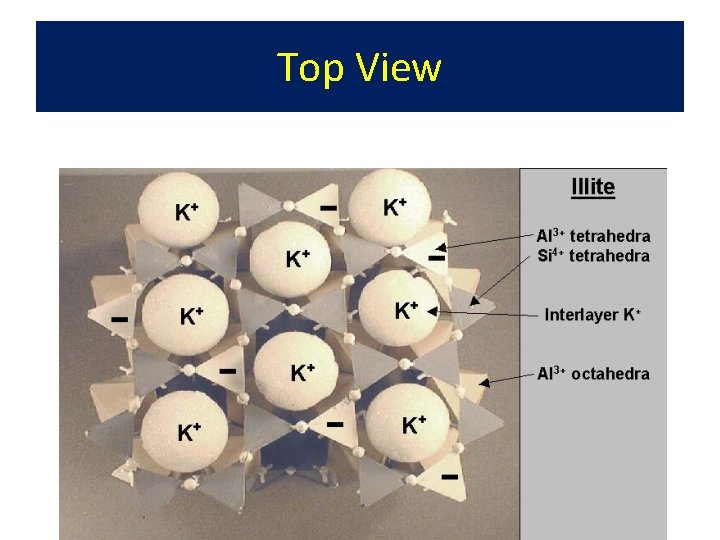
Top View
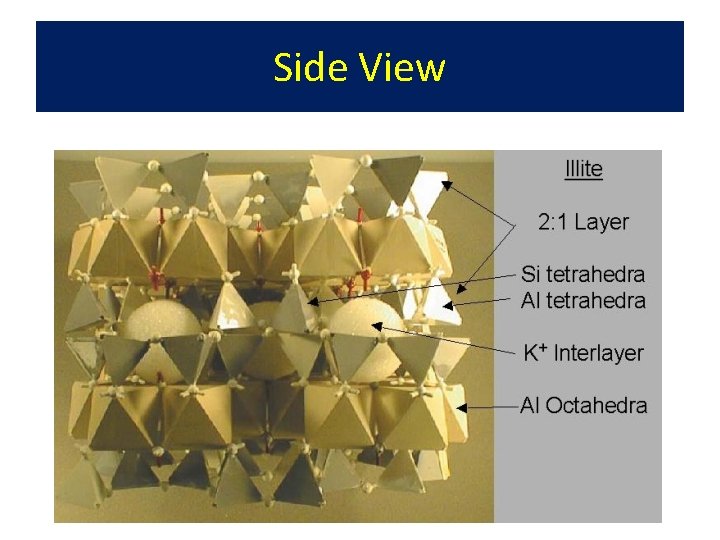
Side View
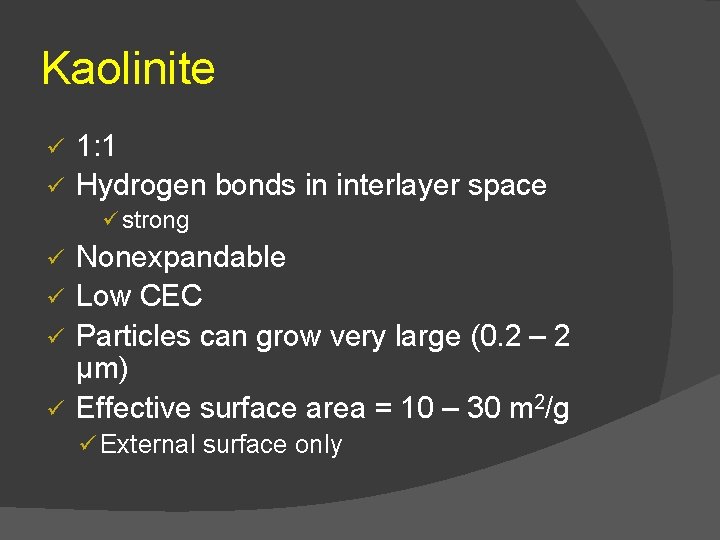
Kaolinite 1: 1 ü Hydrogen bonds in interlayer space ü ü strong Nonexpandable ü Low CEC ü Particles can grow very large (0. 2 – 2 µm) ü Effective surface area = 10 – 30 m 2/g ü ü External surface only
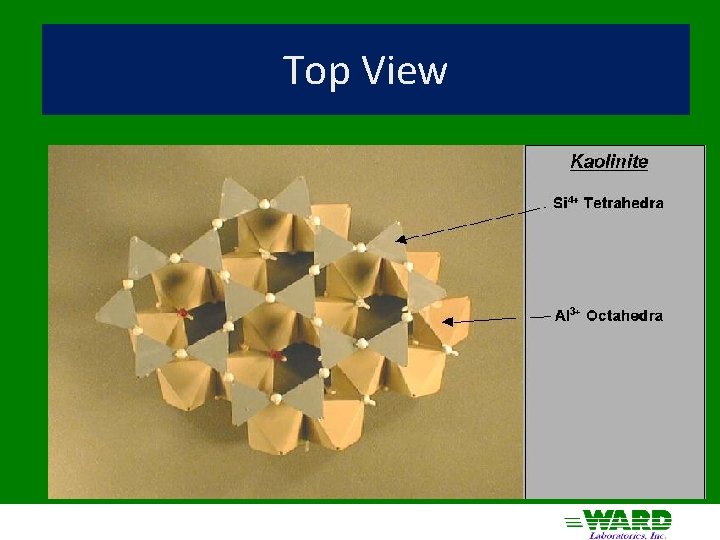
Top View
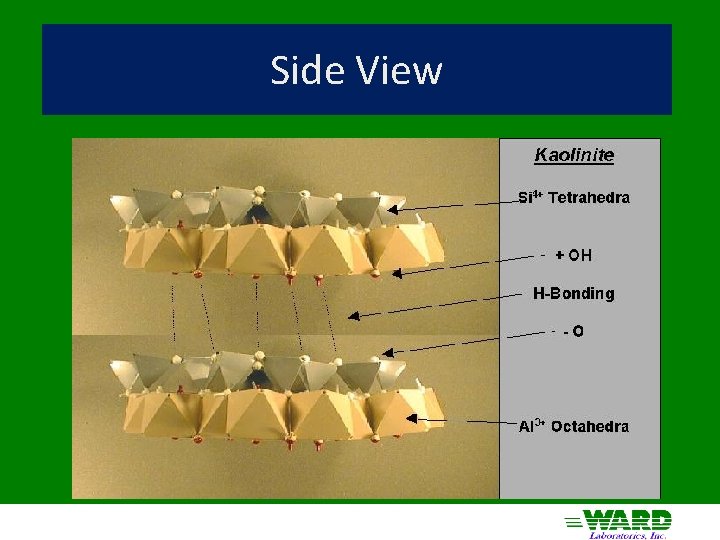
Side View
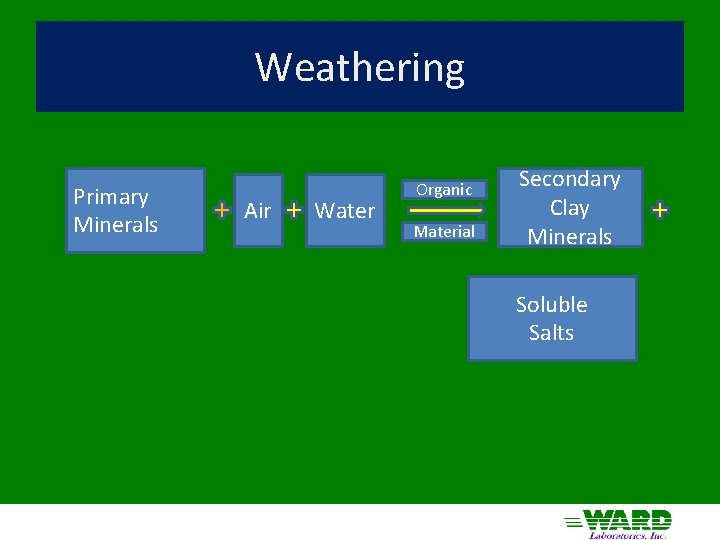
Weathering Primary Minerals Air Water Organic Material Secondary Clay Minerals Soluble Salts
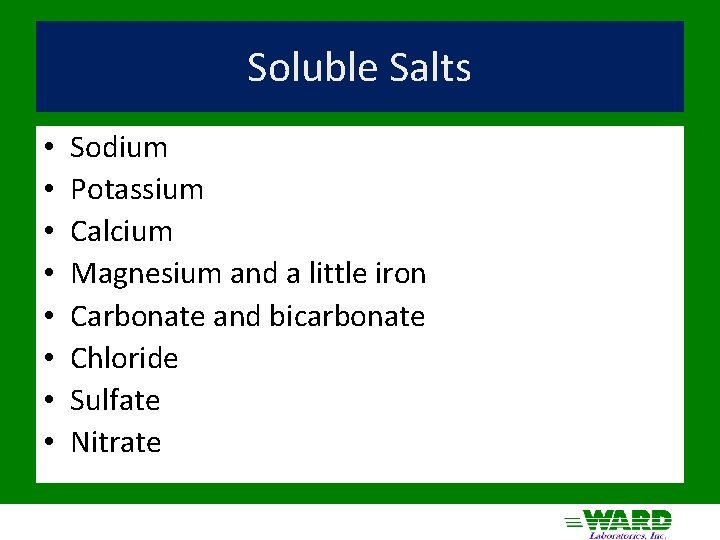
Soluble Salts • • Sodium Potassium Calcium Magnesium and a little iron Carbonate and bicarbonate Chloride Sulfate Nitrate
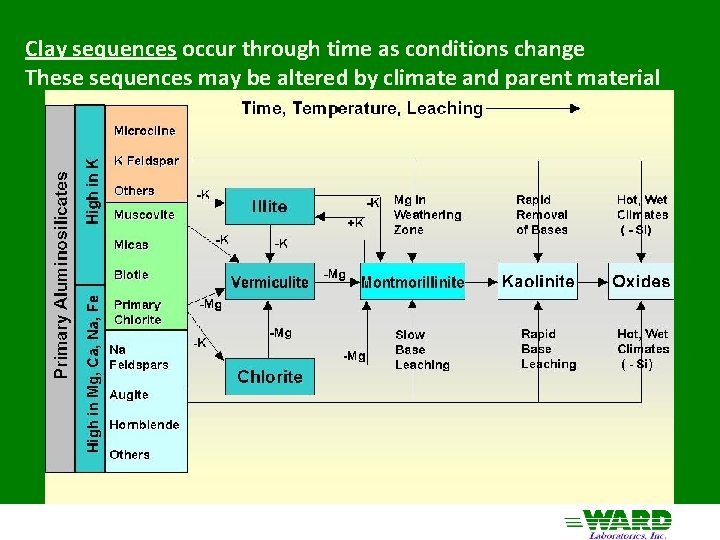
Clay sequences occur through time as conditions change These sequences may be altered by climate and parent material
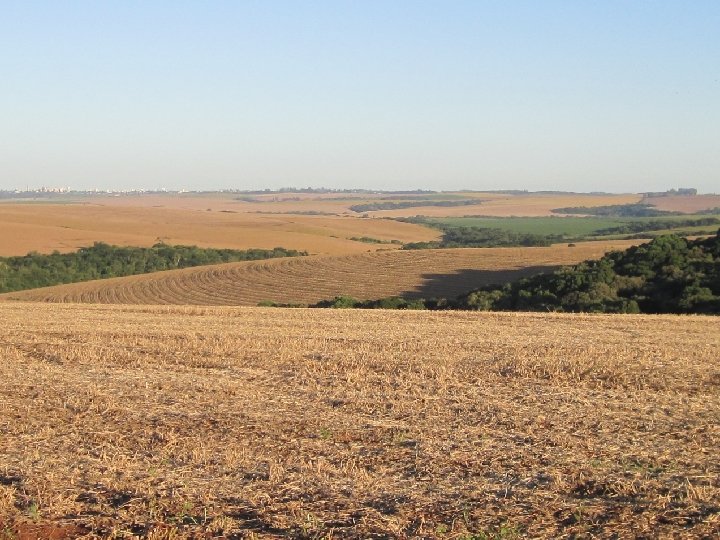
Weathering Transformation of minerals in an environment in which they are unstable to products of greater stability Mineral stability depends on solution composition, which is affected by the minerals dissolving Solution composition changes as new minerals form and leaching occurs Weathering leads to structurally simpler compounds Climatic Effects Dry More Base Cations/Si Primary Silicate Minerals Wet, Cold, Young Base Cations lost, 2 o clays 2: 1 Layer Silicate clays Wet, Warm, Old Hot, Wet, Old Base Cations lost, Si leaching Silica lost 1: 1 Layer Silicate clays Oxide Clays
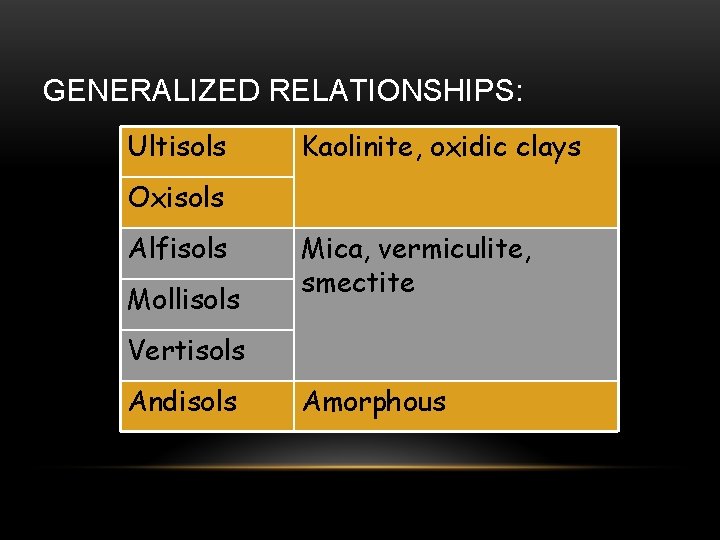
GENERALIZED RELATIONSHIPS: Ultisols Kaolinite, oxidic clays Oxisols Alfisols Mollisols Mica, vermiculite, smectite Vertisols Andisols Amorphous
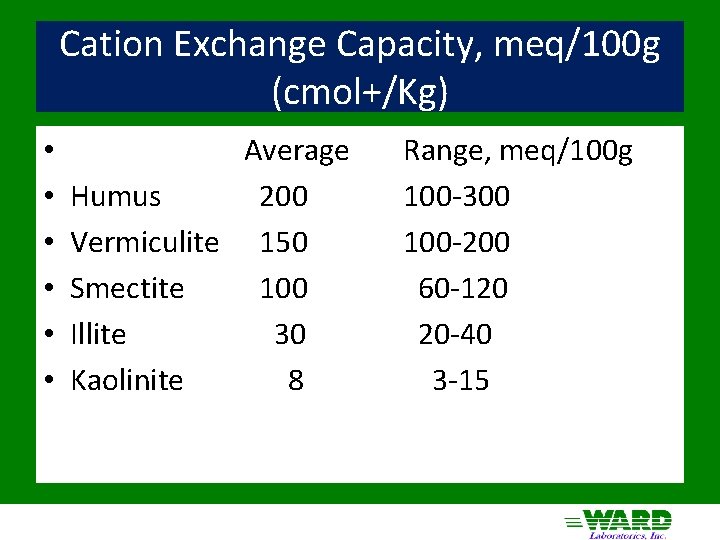
Cation Exchange Capacity, meq/100 g (cmol+/Kg) • • • Average Humus 200 Vermiculite 150 Smectite 100 Illite 30 Kaolinite 8 Range, meq/100 g 100 -300 100 -200 60 -120 20 -40 3 -15
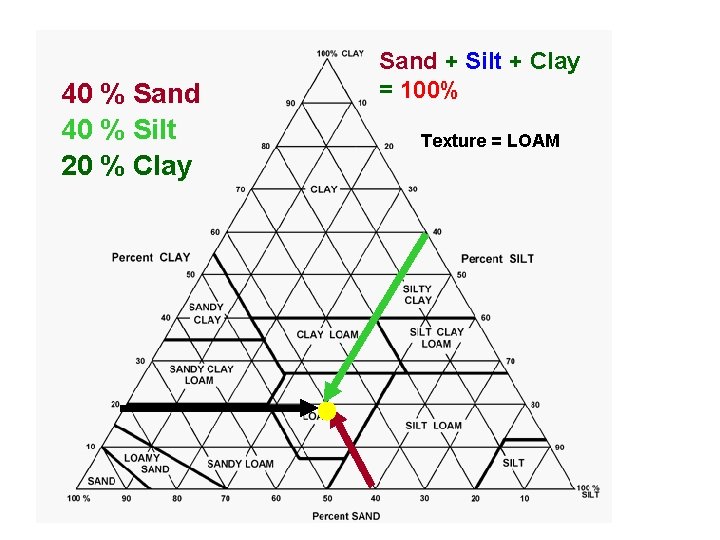
40 % Sand 40 % Silt 20 % Clay Sand + Silt + Clay = 100% Texture = LOAM
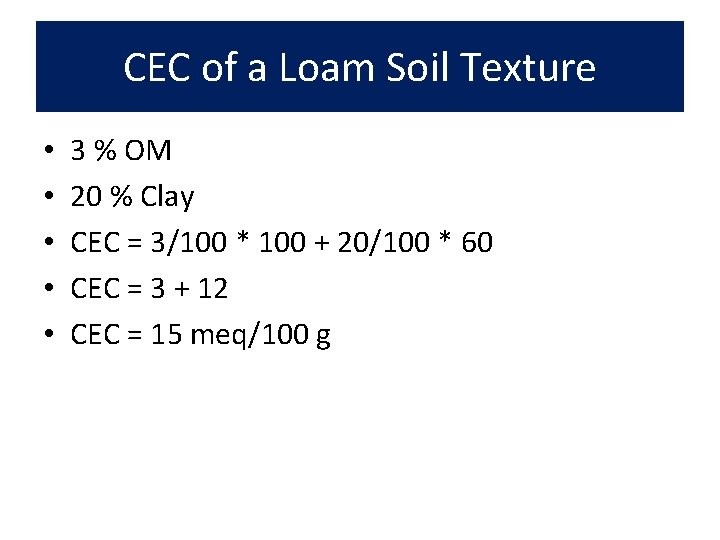
CEC of a Loam Soil Texture • • • 3 % OM 20 % Clay CEC = 3/100 * 100 + 20/100 * 60 CEC = 3 + 12 CEC = 15 meq/100 g
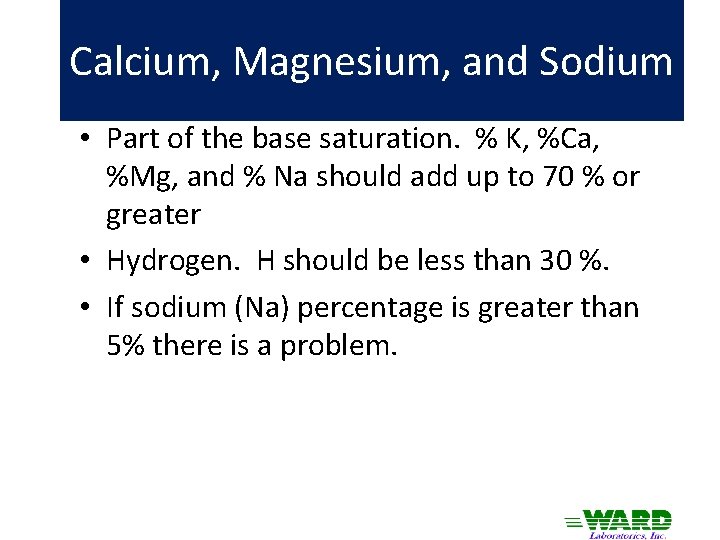
Calcium, Magnesium, and Sodium • Part of the base saturation. % K, %Ca, %Mg, and % Na should add up to 70 % or greater • Hydrogen. H should be less than 30 %. • If sodium (Na) percentage is greater than 5% there is a problem.
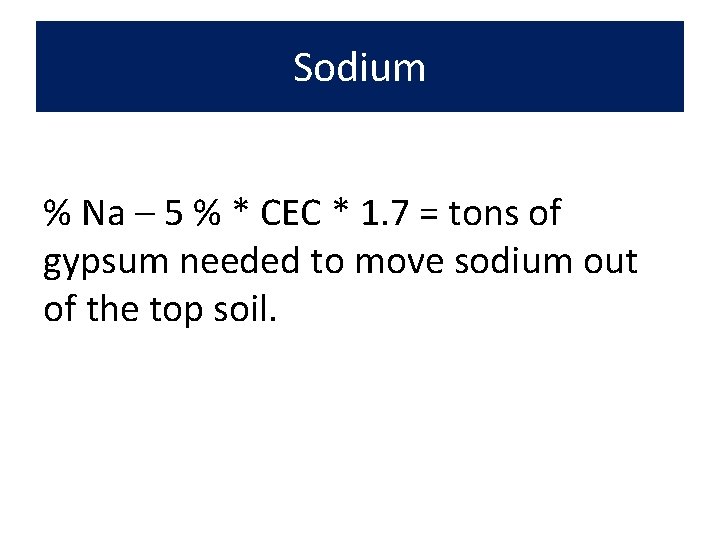
Sodium % Na – 5 % * CEC * 1. 7 = tons of gypsum needed to move sodium out of the top soil.
Calcium: Magnesium Ratio In summary, the Ca: Mg ratio concept is unproven and should not be used as a basis for fertilization or liming practices. Having sufficient levels of Ca and Mg is the proper method of evaluation. rather than trying to manipulate ratios.
Estimating CEC or Sum of Cations • We use ammonium acetate • Ammonium ions (cation) in the extracting solution exchange with the other cations because of the very high concentration of ammonium ions • This is a very good estimate of CEC for soils that have a soil p. H 7. 0 and below. • Above soil p. H of 7. 0 the CEC will be greater than the real CEC
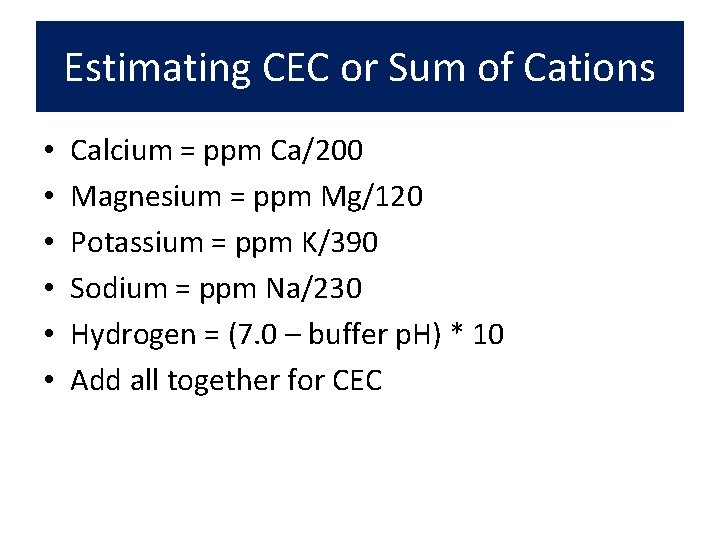
Estimating CEC or Sum of Cations • • • Calcium = ppm Ca/200 Magnesium = ppm Mg/120 Potassium = ppm K/390 Sodium = ppm Na/230 Hydrogen = (7. 0 – buffer p. H) * 10 Add all together for CEC

Estimating Texture from CEC ranges for different soil textures, p. H<7. 0 (meq/100 g) • Sand <6 • Sandy Loam 5 -10 • Loam 9 -18 • Clay Loam 15 -25 • Clay >22
- Slides: 37