
Soil and Natural Vegetation Do We Really Need
- Slides: 33
Soil and Natural Vegetation
Do We Really Need Soil? Let’s Dig Up the Facts!
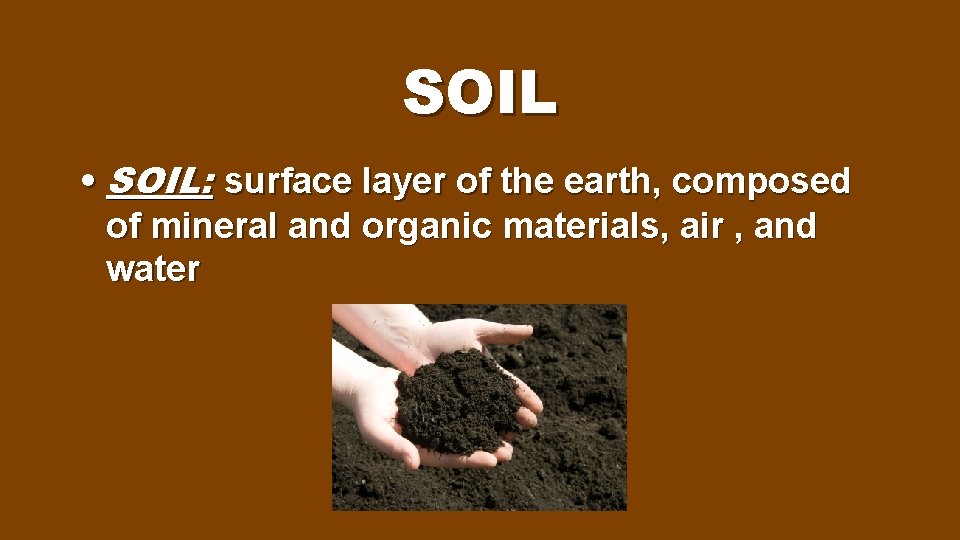
SOIL • SOIL: surface layer of the earth, composed of mineral and organic materials, air , and water
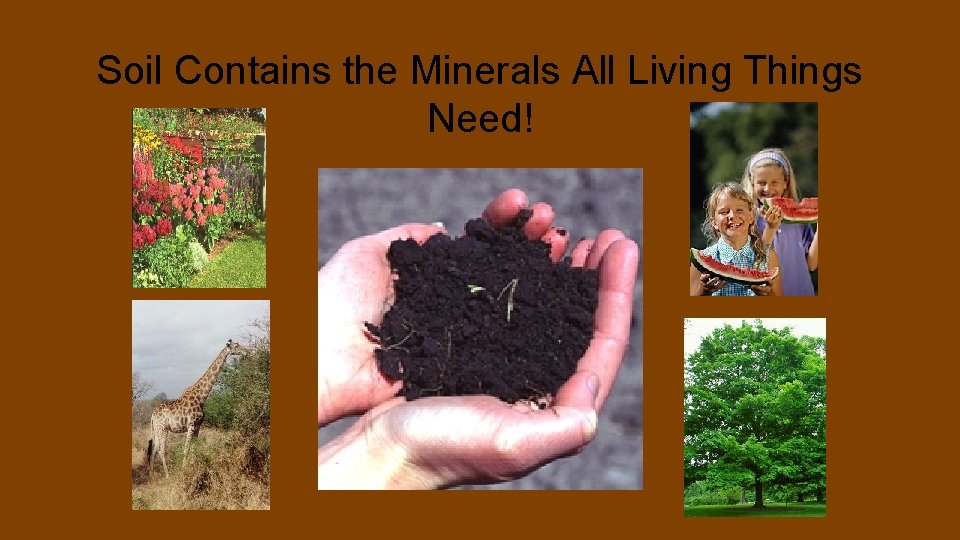
Soil Contains the Minerals All Living Things Need!
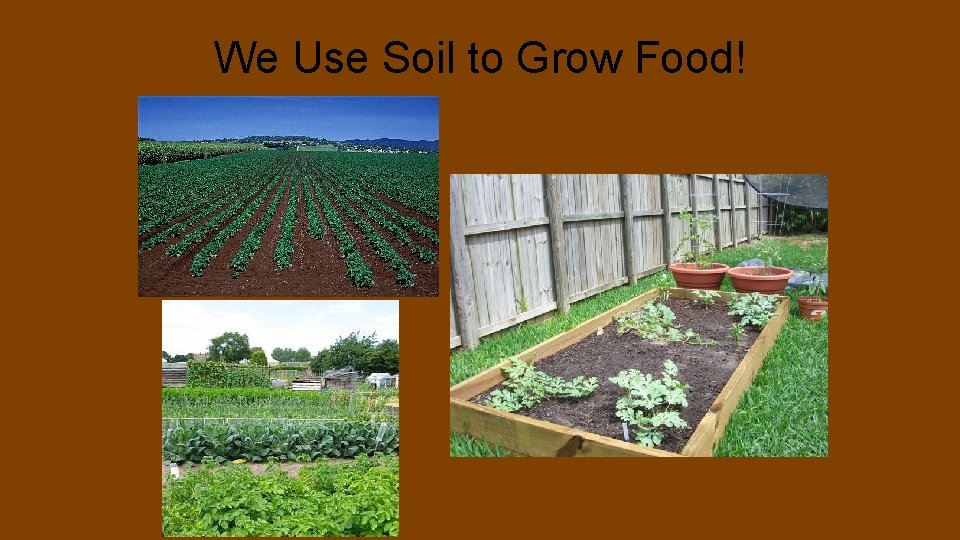
We Use Soil to Grow Food!
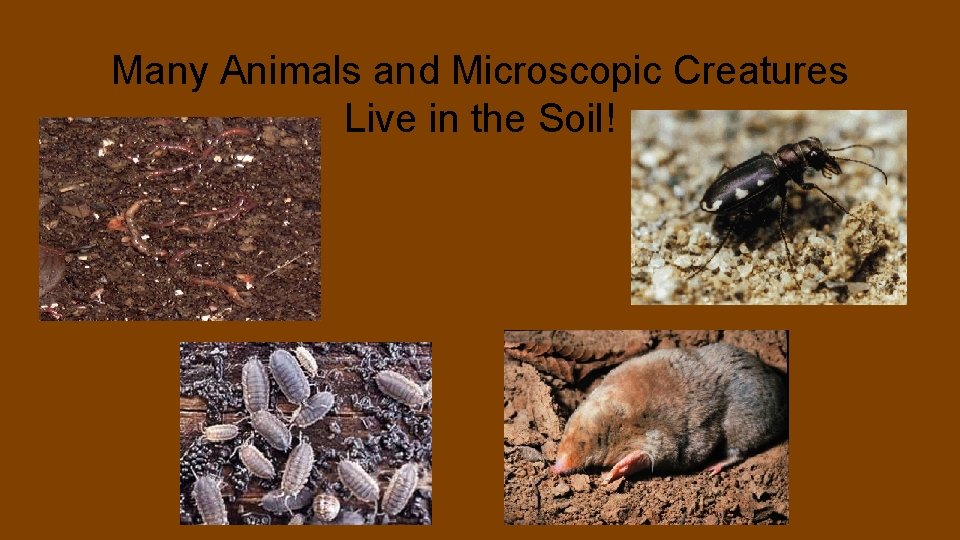
Many Animals and Microscopic Creatures Live in the Soil!
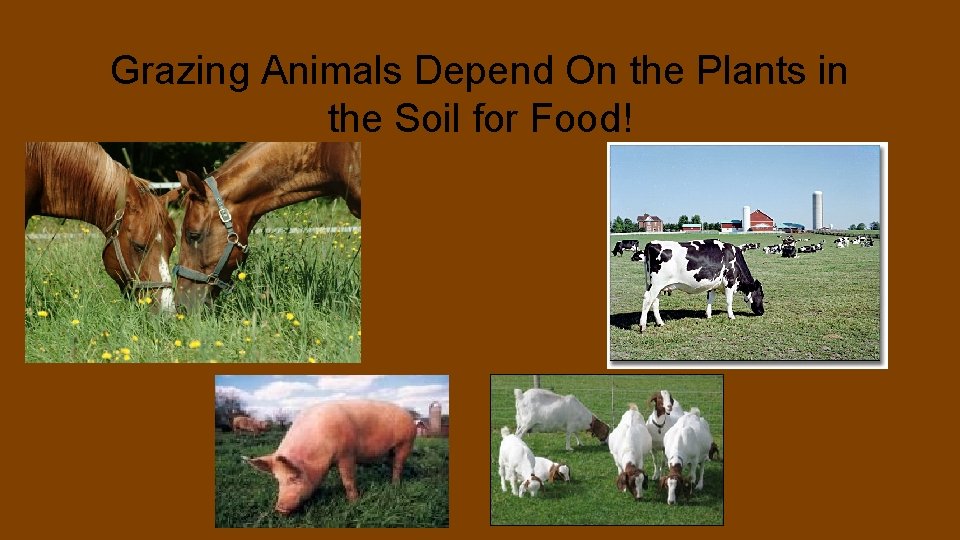
Grazing Animals Depend On the Plants in the Soil for Food!
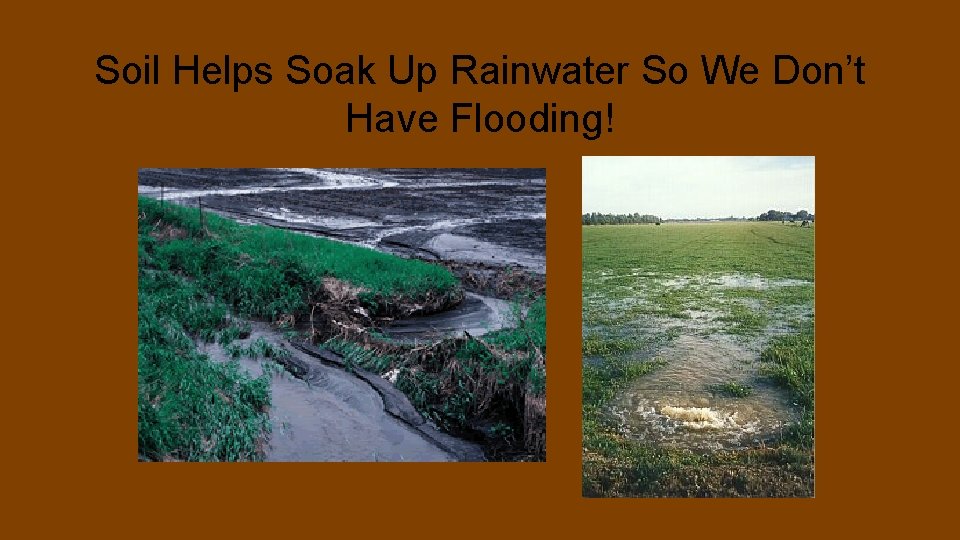
Soil Helps Soak Up Rainwater So We Don’t Have Flooding!
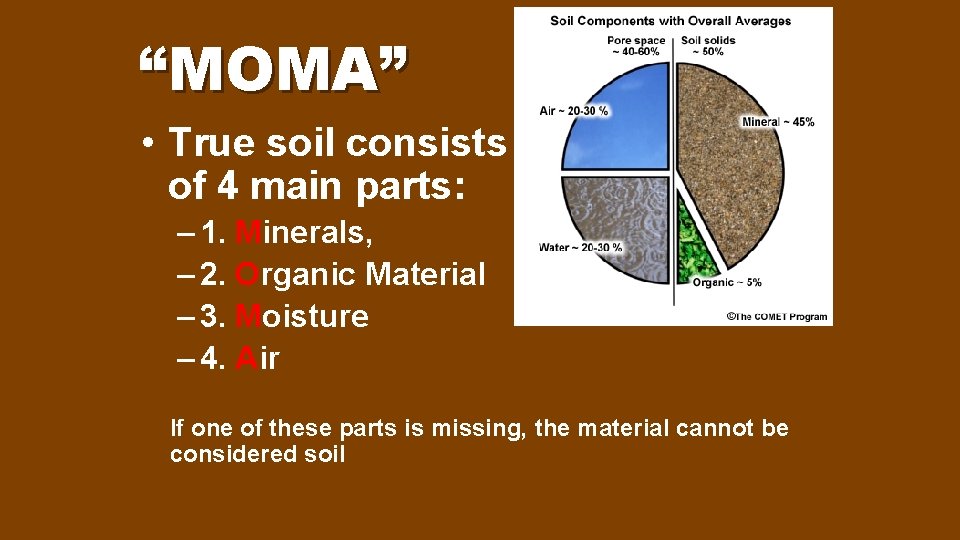
“MOMA” • True soil consists of 4 main parts: – 1. Minerals, – 2. Organic Material – 3. Moisture – 4. Air If one of these parts is missing, the material cannot be considered soil
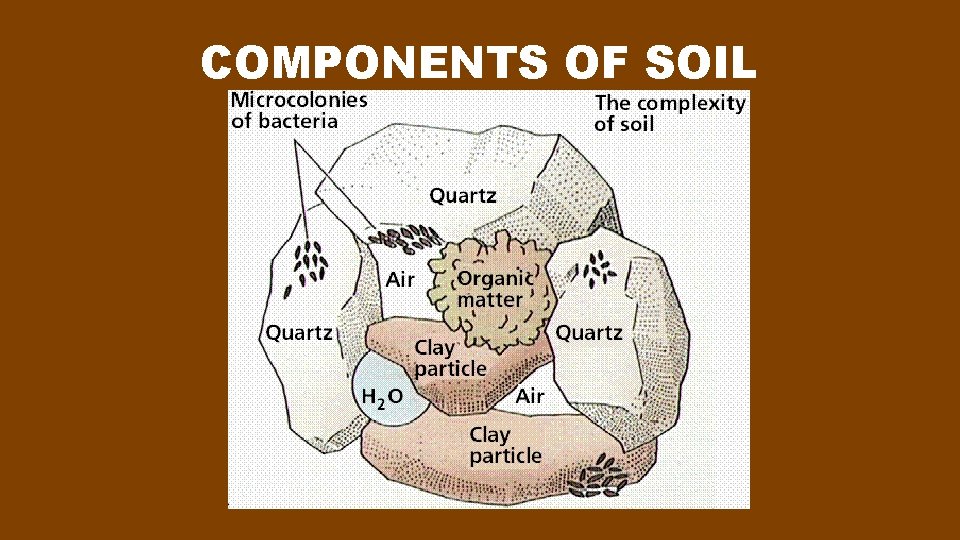
COMPONENTS OF SOIL
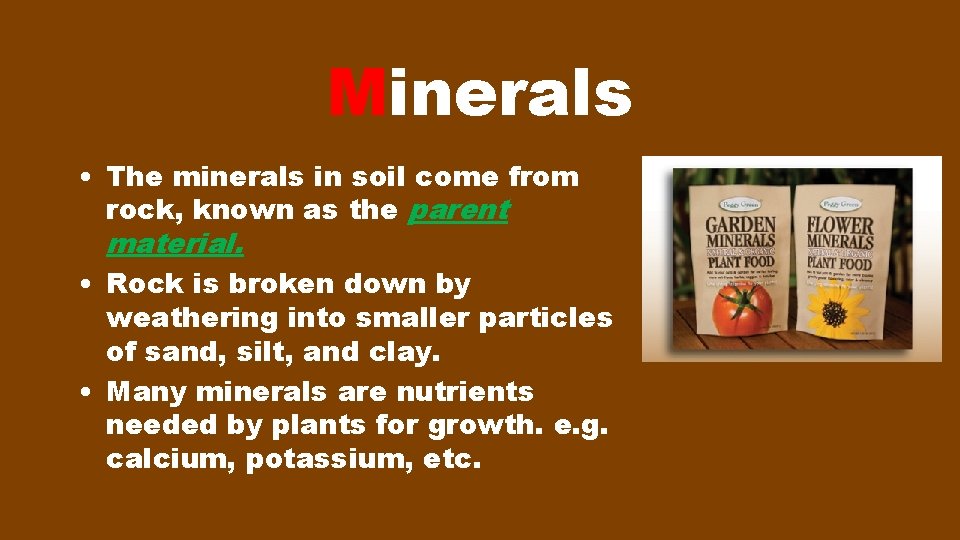
Minerals • The minerals in soil come from rock, known as the parent material. • Rock is broken down by weathering into smaller particles of sand, silt, and clay. • Many minerals are nutrients needed by plants for growth. e. g. calcium, potassium, etc.
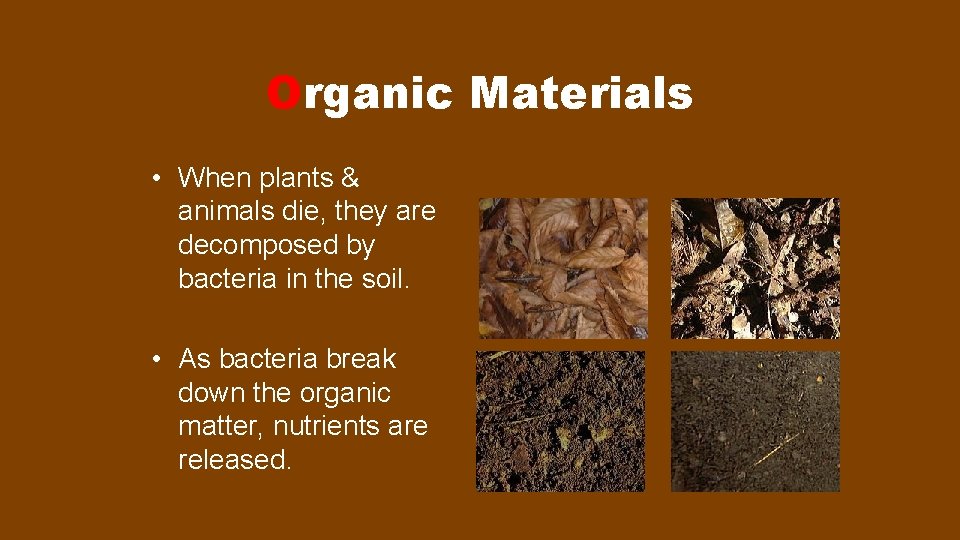
Organic Materials • When plants & animals die, they are decomposed by bacteria in the soil. • As bacteria break down the organic matter, nutrients are released.
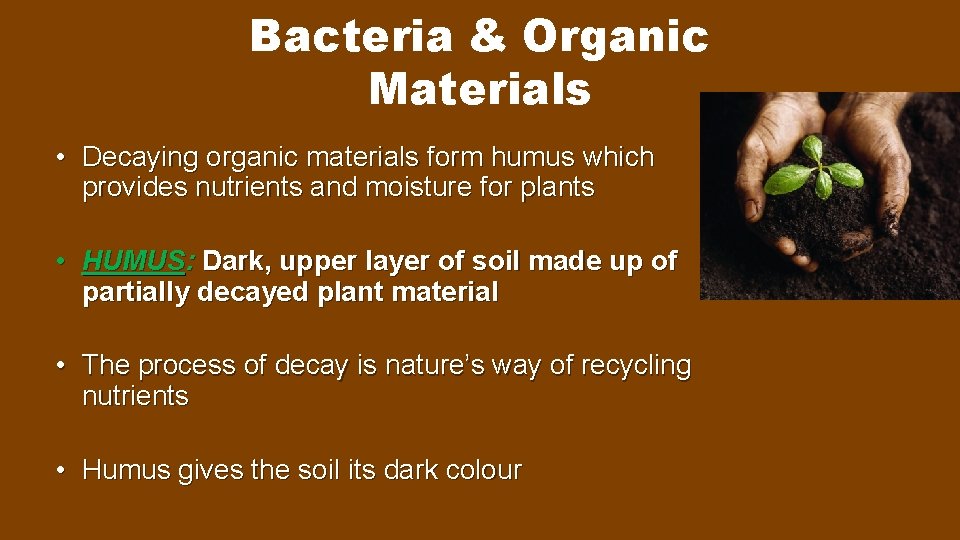
Bacteria & Organic Materials • Decaying organic materials form humus which provides nutrients and moisture for plants • HUMUS: Dark, upper layer of soil made up of partially decayed plant material • The process of decay is nature’s way of recycling nutrients • Humus gives the soil its dark colour
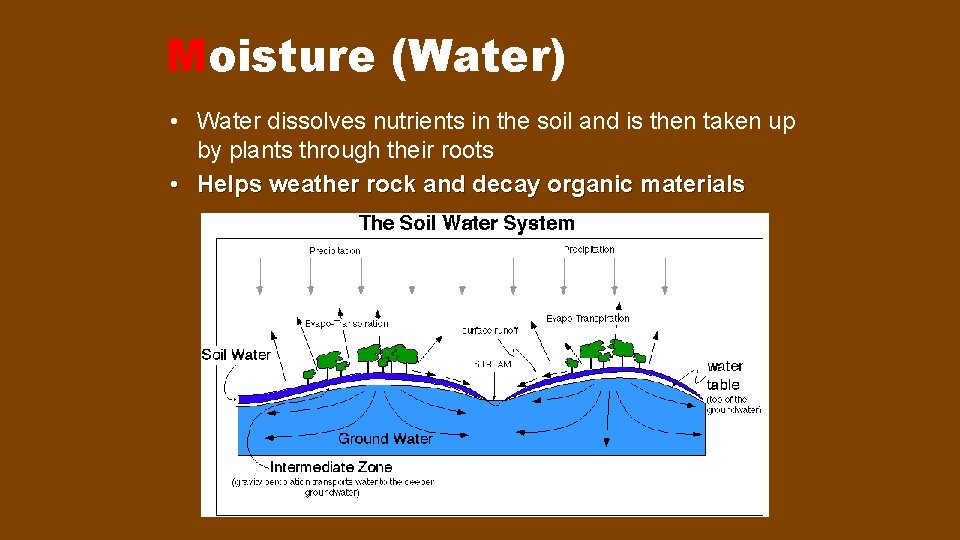
Moisture (Water) • Water dissolves nutrients in the soil and is then taken up by plants through their roots • Helps weather rock and decay organic materials
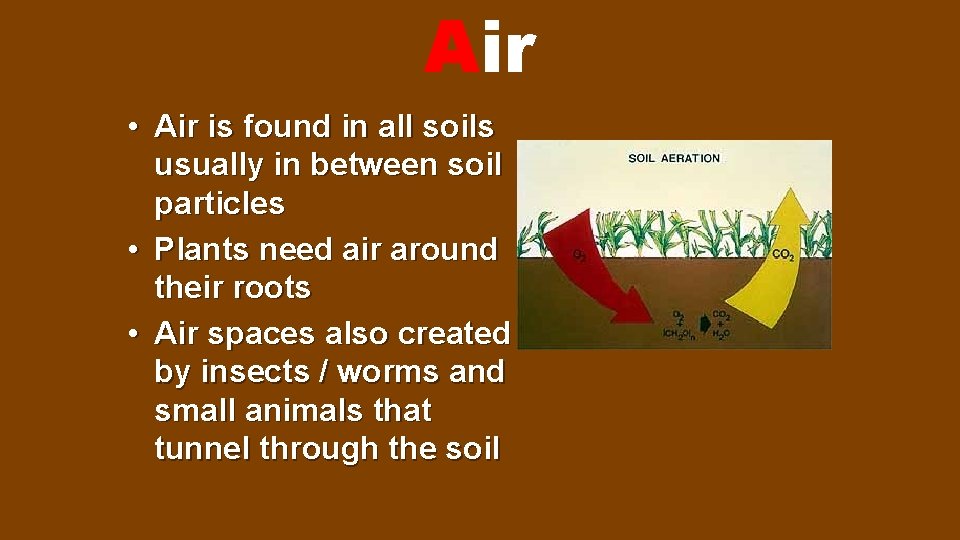
Air • Air is found in all soils usually in between soil particles • Plants need air around their roots • Air spaces also created by insects / worms and small animals that tunnel through the soil
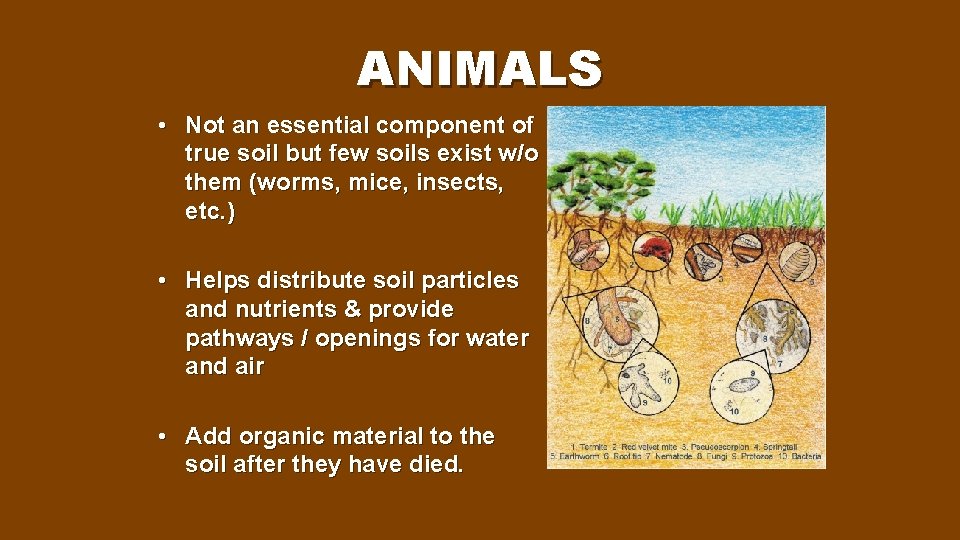
ANIMALS • Not an essential component of true soil but few soils exist w/o them (worms, mice, insects, etc. ) • Helps distribute soil particles and nutrients & provide pathways / openings for water and air • Add organic material to the soil after they have died.
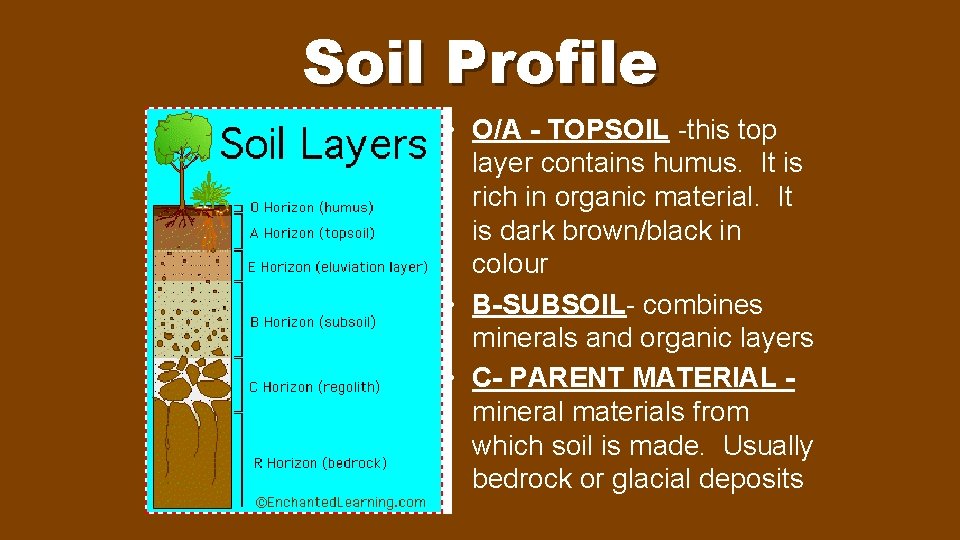
Soil Profile • O/A - TOPSOIL -this top layer contains humus. It is rich in organic material. It is dark brown/black in colour • B-SUBSOIL- combines minerals and organic layers • C- PARENT MATERIAL mineral materials from which soil is made. Usually bedrock or glacial deposits
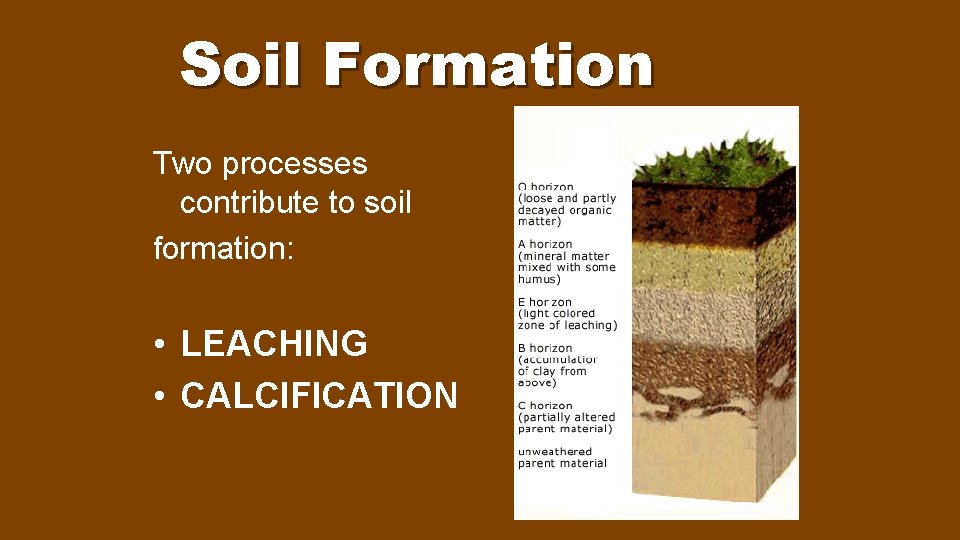
Soil Formation Two processes contribute to soil formation: • LEACHING • CALCIFICATION
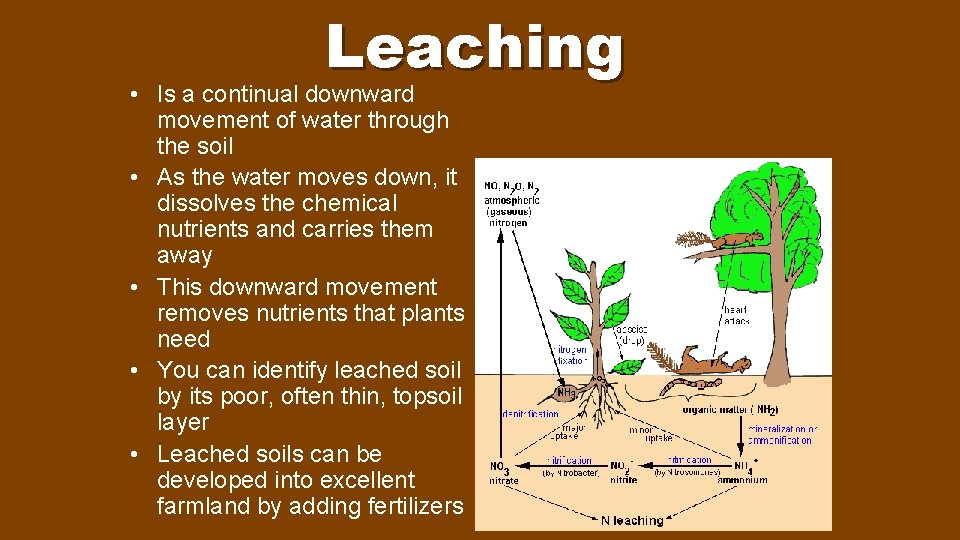
Leaching • Is a continual downward movement of water through the soil • As the water moves down, it dissolves the chemical nutrients and carries them away • This downward movement removes nutrients that plants need • You can identify leached soil by its poor, often thin, topsoil layer • Leached soils can be developed into excellent farmland by adding fertilizers
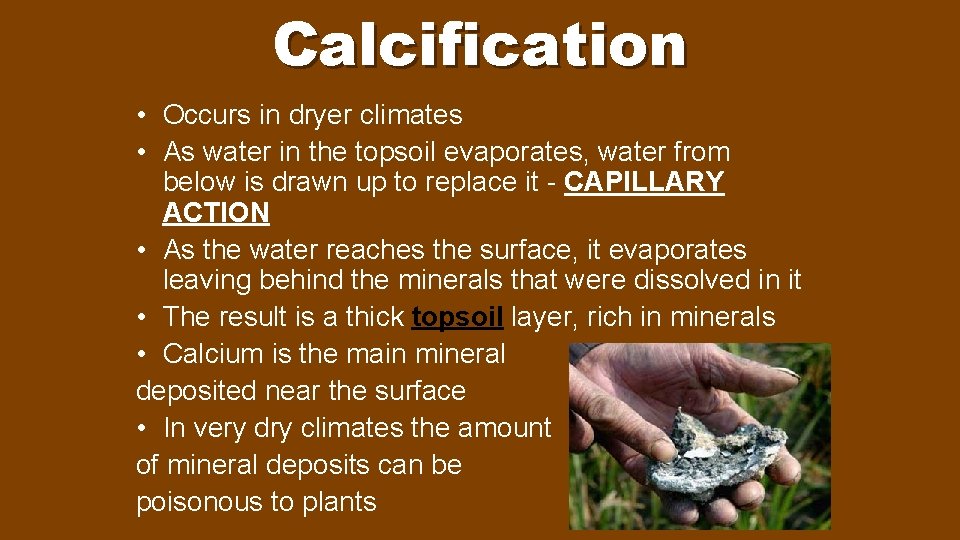
Calcification • Occurs in dryer climates • As water in the topsoil evaporates, water from below is drawn up to replace it - CAPILLARY ACTION • As the water reaches the surface, it evaporates leaving behind the minerals that were dissolved in it • The result is a thick topsoil layer, rich in minerals • Calcium is the main mineral deposited near the surface • In very dry climates the amount of mineral deposits can be poisonous to plants
VIDEOS • Factor of Soil Formation (1: 27 mins): http: //www. youtube. com/watch? v=Y 1 B 1 Ft. HL 10 k • Soil Layers Song (3: 54 mins): http: //www. youtube. com/watch? v=gx 2 w. VHei. TKE • The Living Soil (1982) (8: 44 mins): http: //www. youtube. com/watch? v=gnp 4 Ywjz-po
Vegetation Regions
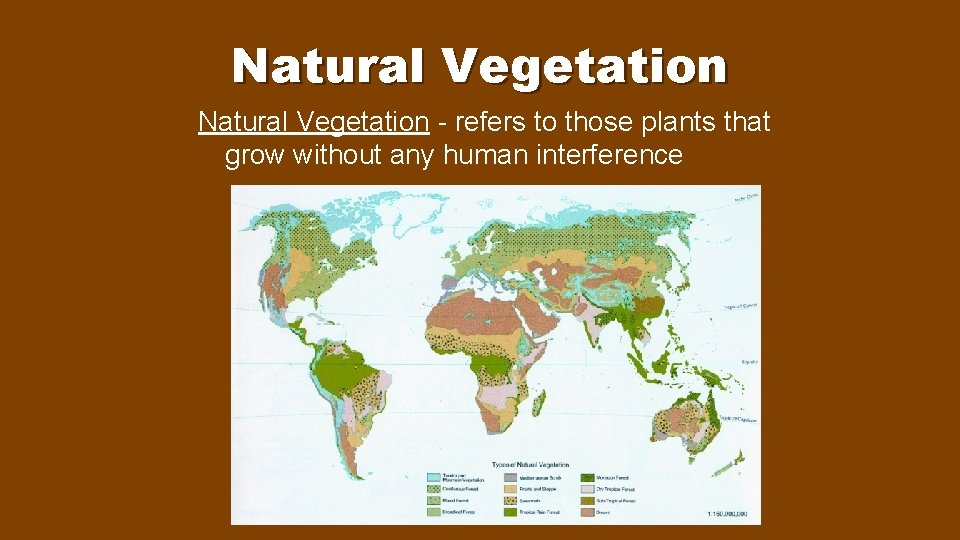
Natural Vegetation - refers to those plants that grow without any human interference
Natural Vegetation There are seven natural vegetation regions across Canada: • • TUNDRA BOREAL AND TAIGA FOREST MIXED FOREST DECIDUOUS FOREST GRASSLANDS CORDILLERA VEGETATION WEST COAST FOREST
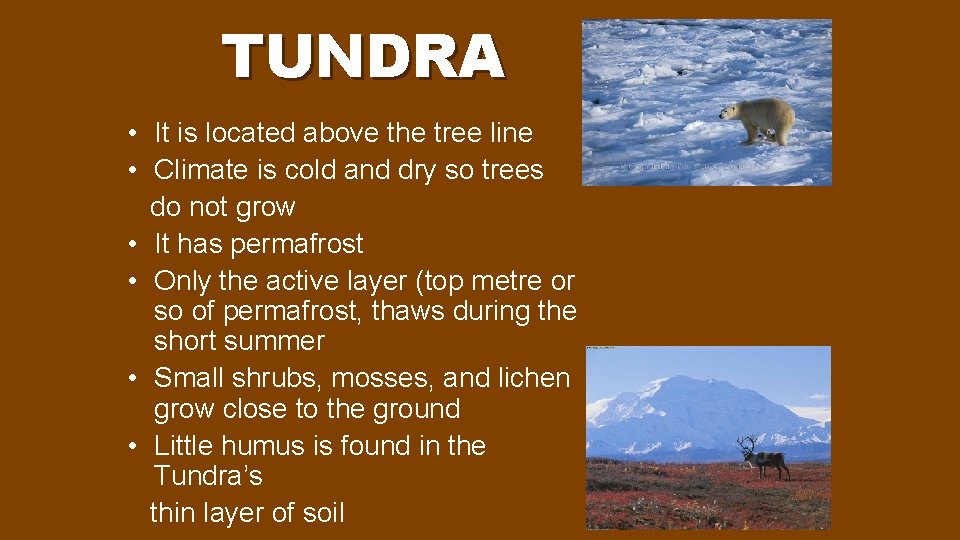
TUNDRA • It is located above the tree line • Climate is cold and dry so trees do not grow • It has permafrost • Only the active layer (top metre or so of permafrost, thaws during the short summer • Small shrubs, mosses, and lichen grow close to the ground • Little humus is found in the Tundra’s thin layer of soil
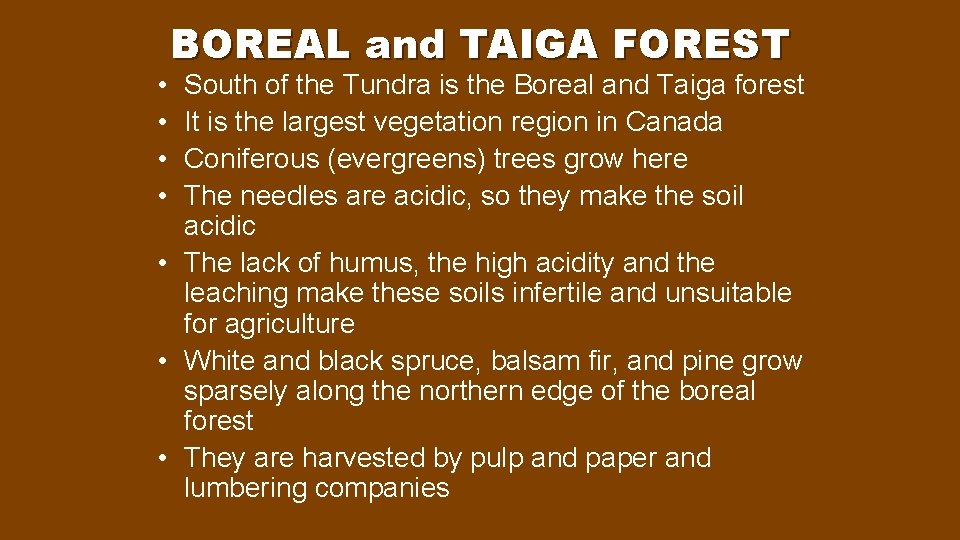
• • BOREAL and TAIGA FOREST South of the Tundra is the Boreal and Taiga forest It is the largest vegetation region in Canada Coniferous (evergreens) trees grow here The needles are acidic, so they make the soil acidic • The lack of humus, the high acidity and the leaching make these soils infertile and unsuitable for agriculture • White and black spruce, balsam fir, and pine grow sparsely along the northern edge of the boreal forest • They are harvested by pulp and paper and lumbering companies
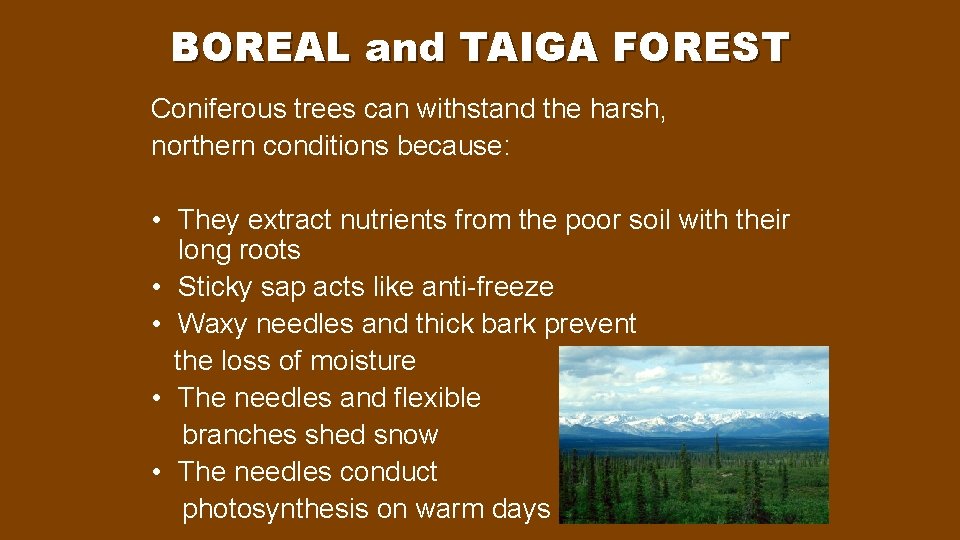
BOREAL and TAIGA FOREST Coniferous trees can withstand the harsh, northern conditions because: • They extract nutrients from the poor soil with their long roots • Sticky sap acts like anti-freeze • Waxy needles and thick bark prevent the loss of moisture • The needles and flexible branches shed snow • The needles conduct photosynthesis on warm days
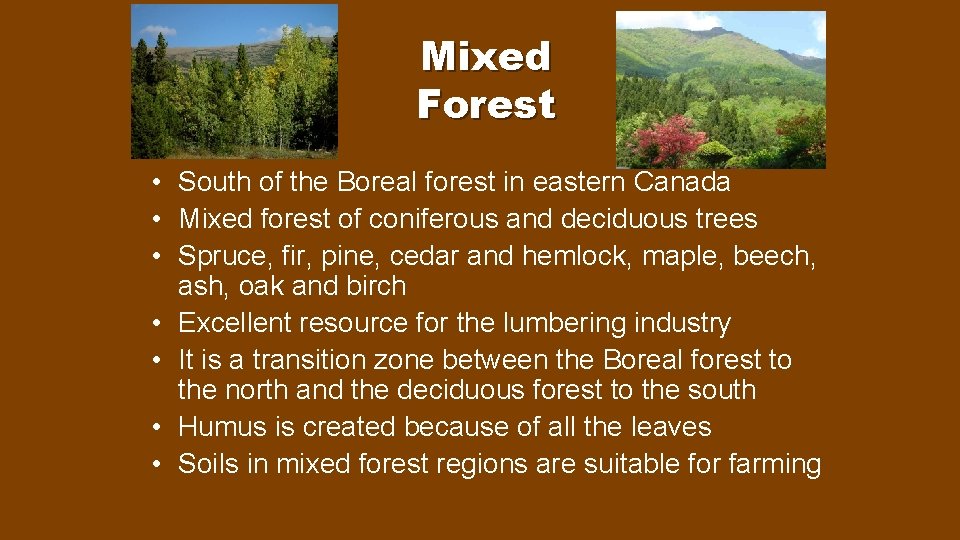
Mixed Forest • South of the Boreal forest in eastern Canada • Mixed forest of coniferous and deciduous trees • Spruce, fir, pine, cedar and hemlock, maple, beech, ash, oak and birch • Excellent resource for the lumbering industry • It is a transition zone between the Boreal forest to the north and the deciduous forest to the south • Humus is created because of all the leaves • Soils in mixed forest regions are suitable for farming
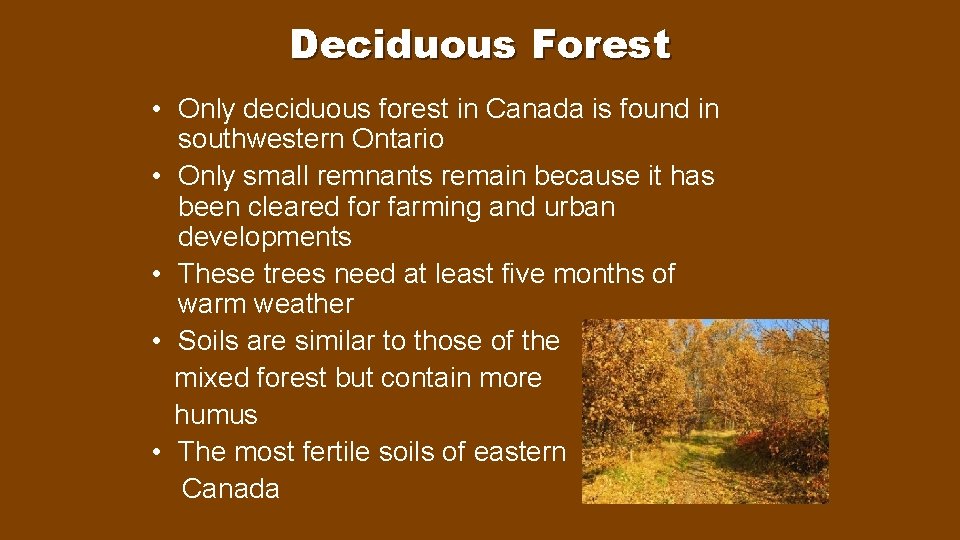
Deciduous Forest • Only deciduous forest in Canada is found in southwestern Ontario • Only small remnants remain because it has been cleared for farming and urban developments • These trees need at least five months of warm weather • Soils are similar to those of the mixed forest but contain more humus • The most fertile soils of eastern Canada
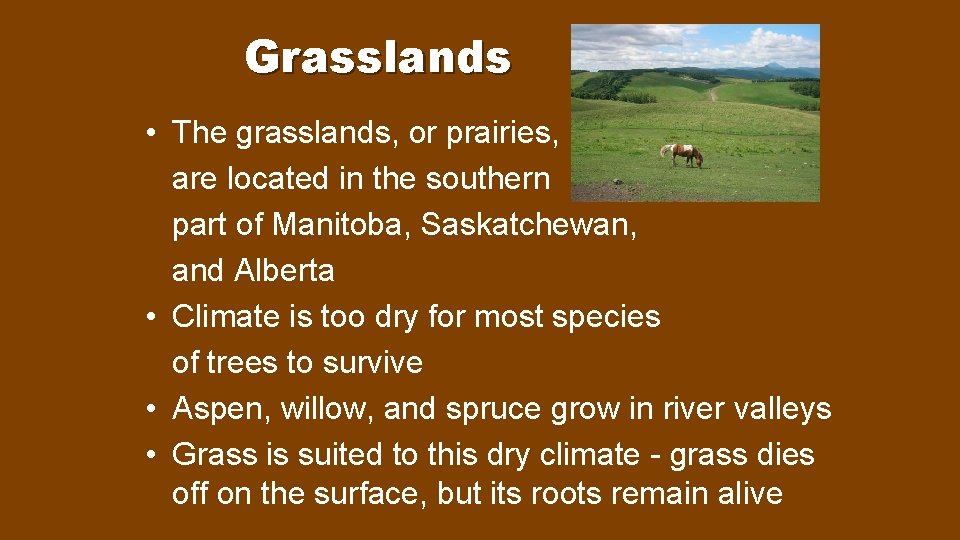
Grasslands • The grasslands, or prairies, are located in the southern part of Manitoba, Saskatchewan, and Alberta • Climate is too dry for most species of trees to survive • Aspen, willow, and spruce grow in river valleys • Grass is suited to this dry climate - grass dies off on the surface, but its roots remain alive
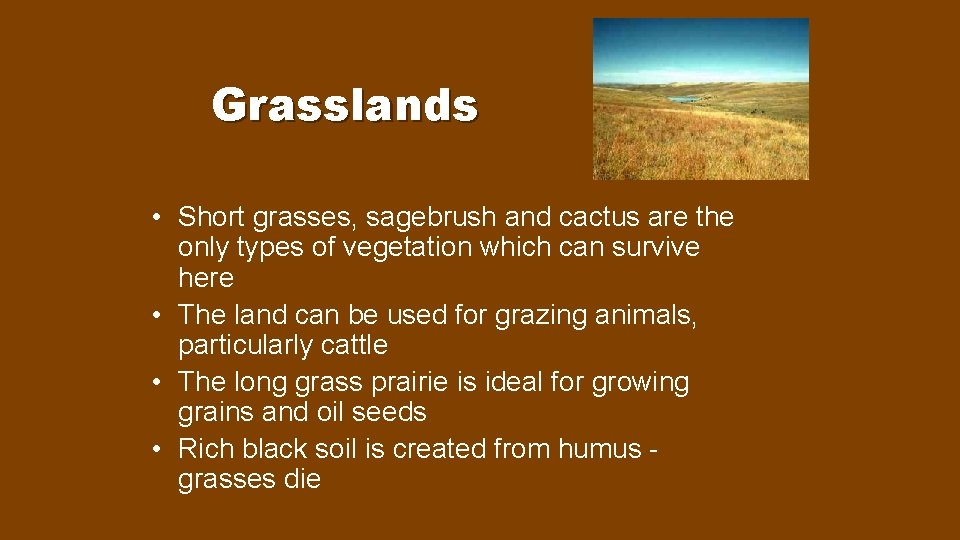
Grasslands • Short grasses, sagebrush and cactus are the only types of vegetation which can survive here • The land can be used for grazing animals, particularly cattle • The long grass prairie is ideal for growing grains and oil seeds • Rich black soil is created from humus grasses die
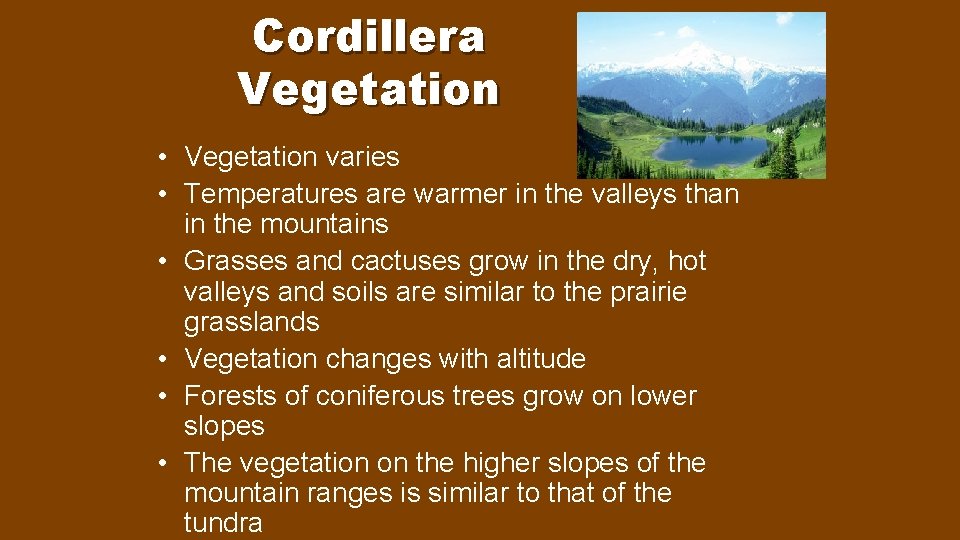
Cordillera Vegetation • Vegetation varies • Temperatures are warmer in the valleys than in the mountains • Grasses and cactuses grow in the dry, hot valleys and soils are similar to the prairie grasslands • Vegetation changes with altitude • Forests of coniferous trees grow on lower slopes • The vegetation on the higher slopes of the mountain ranges is similar to that of the tundra
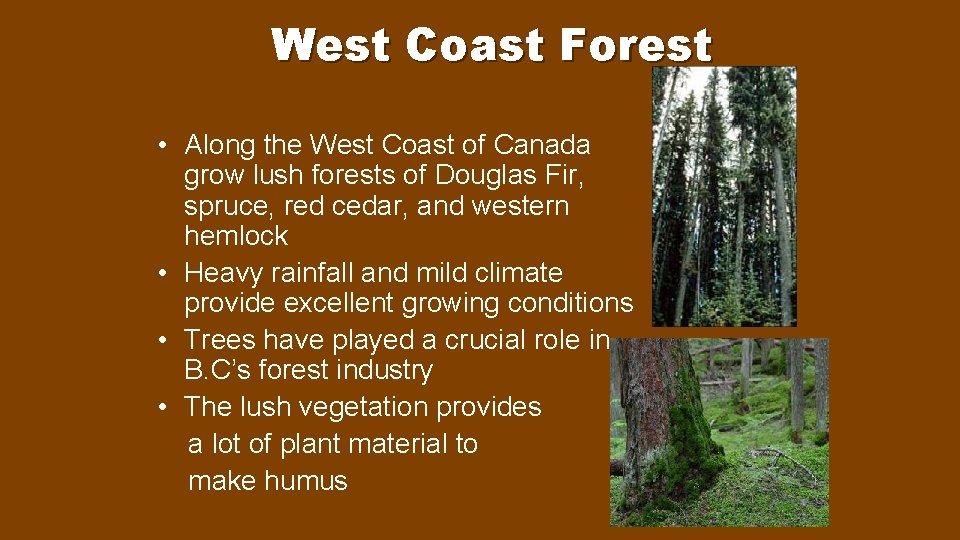
West Coast Forest • Along the West Coast of Canada grow lush forests of Douglas Fir, spruce, red cedar, and western hemlock • Heavy rainfall and mild climate provide excellent growing conditions • Trees have played a crucial role in B. C’s forest industry • The lush vegetation provides a lot of plant material to make humus