
Soil Agriculture and Hunger Things well talk about
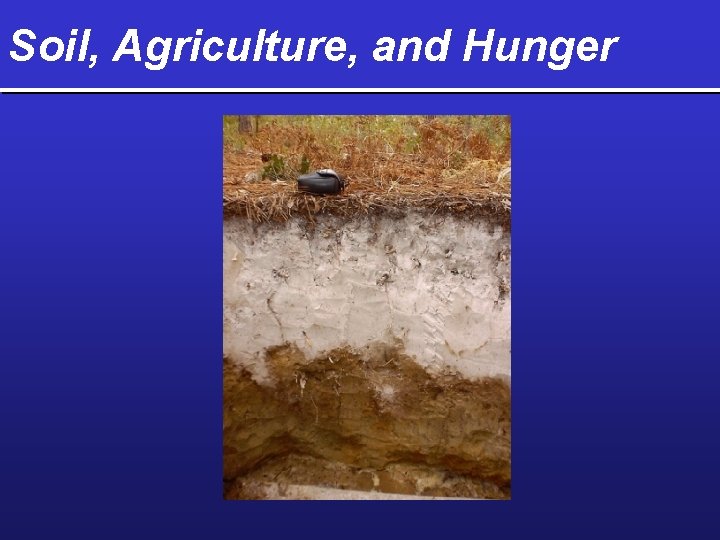
Soil, Agriculture, and Hunger
Things we’ll talk about Ø Soil formation, characteristics Ø Soil erosion Ø Hunger and malnutrition Ø Agricultural practices Ø Feeding the world’s hungry
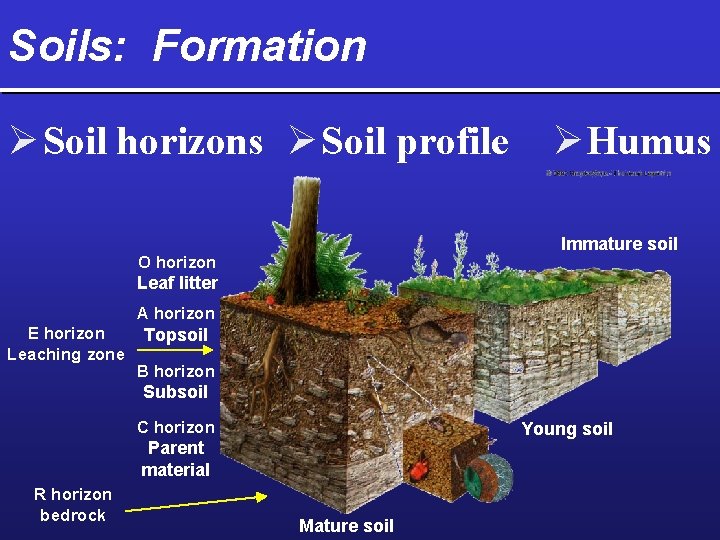
Soils: Formation Ø Soil horizons Ø Soil profile Ø Humus Immature soil O horizon Leaf litter A horizon E horizon Leaching zone Topsoil B horizon Subsoil C horizon Young soil Parent material R horizon bedrock Mature soil
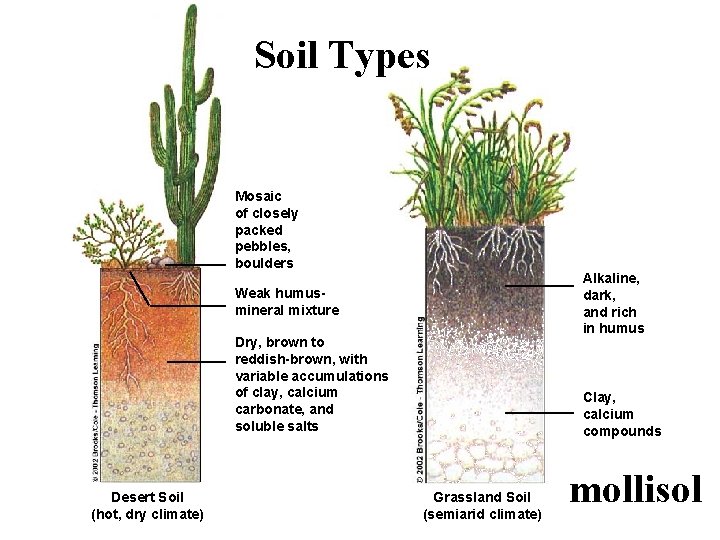
Soil Types Mosaic of closely packed pebbles, boulders Alkaline, dark, and rich in humus Weak humusmineral mixture Dry, brown to reddish-brown, with variable accumulations of clay, calcium carbonate, and soluble salts Desert Soil (hot, dry climate) Clay, calcium compounds Grassland Soil (semiarid climate) mollisol

Laterite (a clay) - ironstone Forest litter leaf mold Acidic lightcolored humus Humus-mineral mixture Light, grayishbrown, silt loam Iron and aluminum compounds mixed with clay Tropical Rain Forest Soil (humid, tropical climate) oxisol Dark brown Firm clay Deciduous Forest Soil (humid, mild climate) alfisol
Soil Components-What is dirt? Ø Inorganic minerals Ø Organic matter Ø Water and air Ø Living organisms
Inorganic minerals Ø 45% of volume Ø Macronutrients -nitrogen, phosphorus, potassium (NPK) -calcium, magnesium, sulfur Ø Micronutrients (trace elements) -iron, copper, zinc Ø Limiting factors
Organic Matter Ø 1 -7% of volume Ø Humus - helps retain water-soluble nutrients - potassium, magnesium, ammonia - serves as food for soil organisms - provides future soil nutrients
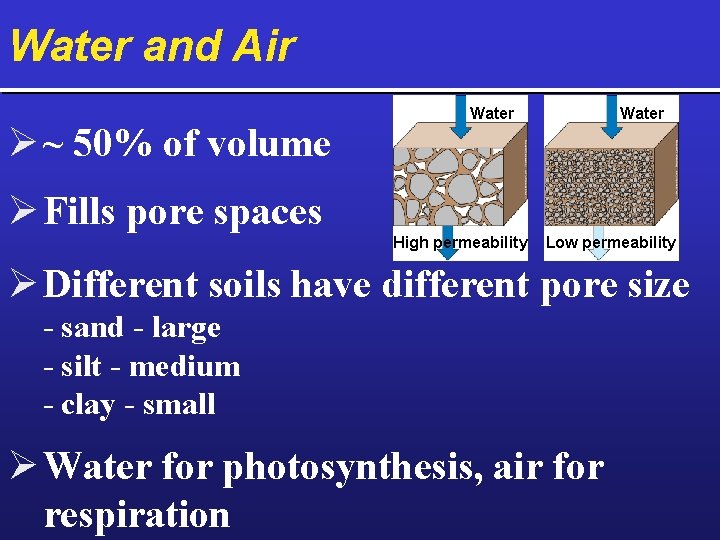
Water and Air Ø ~ 50% of volume Water Ø Fills pore spaces High permeability Low permeability Ø Different soils have different pore size - sand - large - silt - medium - clay - small Ø Water for photosynthesis, air for respiration
Living Organisms Ø ~0. 1% of volume Ø Bacteria, fungi, molds, nematodes, earthworms, insects, mammals Ø Actions contribute to soil fertility, porosity Ø Burrowing, feces, slime, secretions, death
Soil: Determining Factors 1) 2) 3) 4) 5) 6) Parent material Climate Abrasion Organisms Topography Time
Parent Material Ø Rocks>>weathering>>inorganic minerals Ø Residual soils - develop on bare rock during primary succession Ø Transported soils - deposited in areas by actions of wind, water, glaciers, humans Ø Floodplain soils (1/3 of croplands)
Climate Ø Weathering of parent material Ø Heating, cooling, ice, rain (acidic)
Abrasion Ø Physical breakdown Ø Rub rocks together Ø Wind, water, glaciers
Organisms Ø Plant roots enlarge cracks Ø Burrowing helps aerate Ø Feces, death build up organic matter
Topography Ø Steep areas subject to more weathering, but reduced accumulation Ø Flat areas subject to less weathering, but higher accumulation - deposits of transported soils
Time Ø Period of weathering
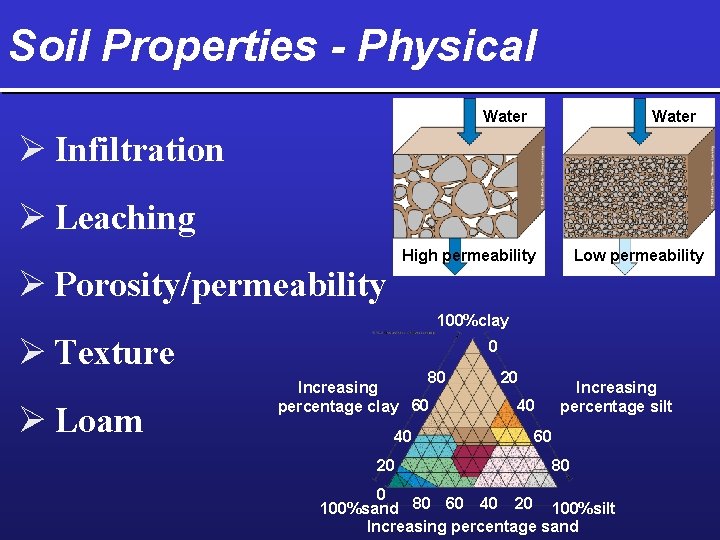
Soil Properties - Physical Water Ø Infiltration Ø Leaching High permeability Ø Porosity/permeability Low permeability 100%clay Ø Texture Ø Loam 0 80 Increasing percentage clay 60 40 20 20 Increasing percentage silt 40 60 80 0 100%sand 80 60 40 20 100%silt Increasing percentage sand
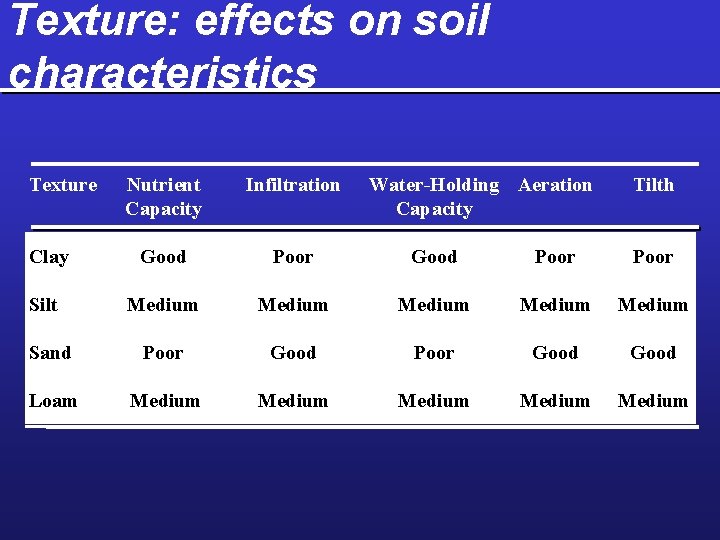
Texture: effects on soil characteristics Texture Nutrient Capacity Infiltration Water-Holding Aeration Capacity Tilth Clay Good Poor Silt Medium Medium Sand Poor Good Loam Medium Medium
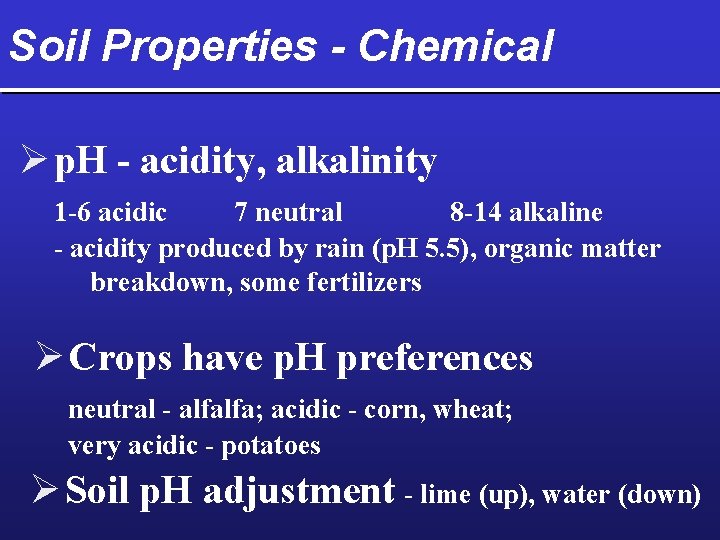
Soil Properties - Chemical Ø p. H - acidity, alkalinity 1 -6 acidic 7 neutral 8 -14 alkaline - acidity produced by rain (p. H 5. 5), organic matter breakdown, some fertilizers Ø Crops have p. H preferences neutral - alfalfa; acidic - corn, wheat; very acidic - potatoes Ø Soil p. H adjustment - lime (up), water (down)
Soil Erosion Ø Loss of soil by actions of wind, water Ø Worldwide net loss - 23 billion tons/yr - eroding faster than it forms on 38% of croplands - 200 -1000 years to produce 1 inch of soil Ø U. S. losses - 18 tons/hectare/year - 0. 7% per year - eroding 16 X faster than it is forming
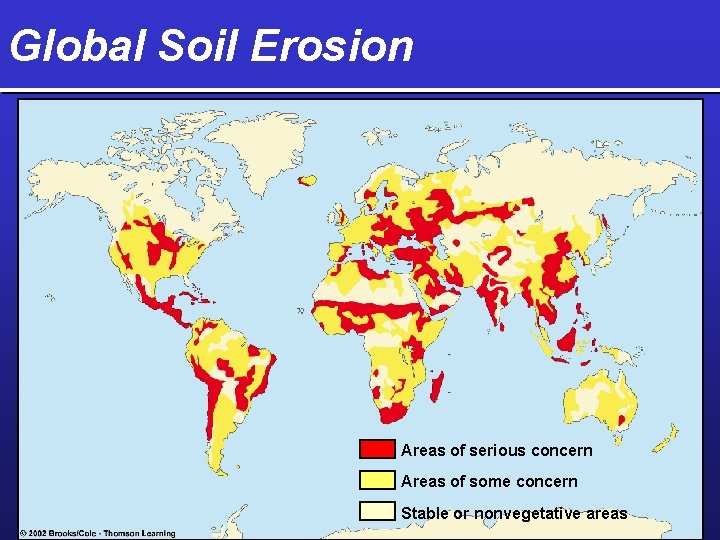
Global Soil Erosion Areas of serious concern Areas of some concern Stable or nonvegetative areas
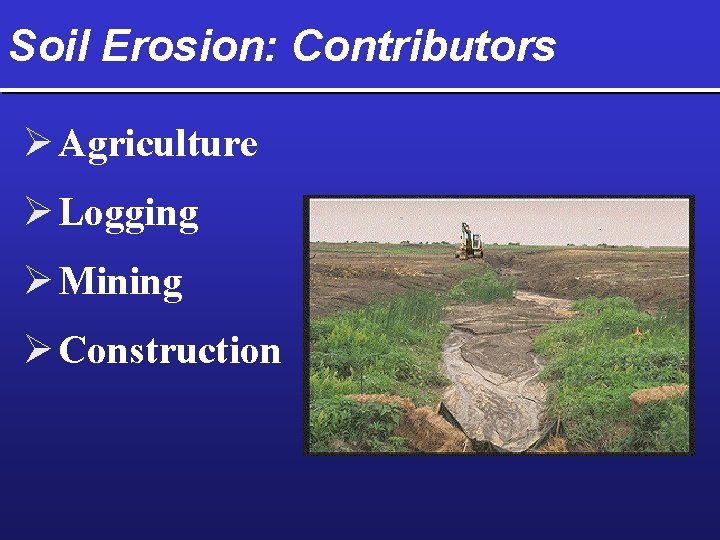
Soil Erosion: Contributors Ø Agriculture Ø Logging Ø Mining Ø Construction
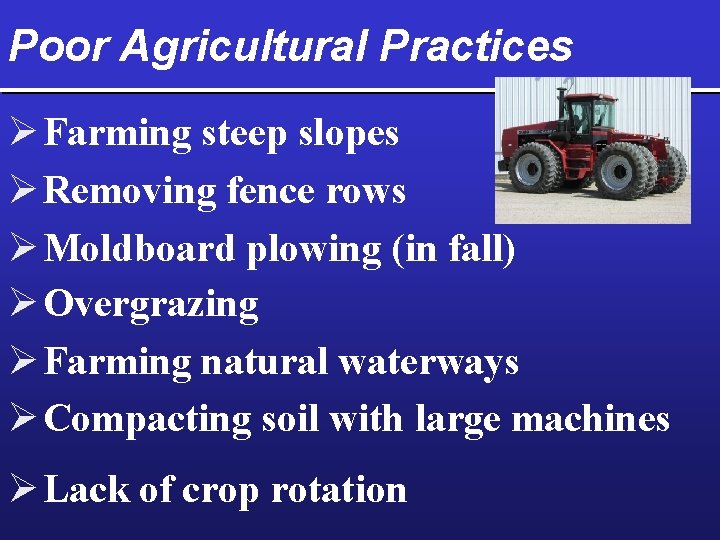
Poor Agricultural Practices Ø Farming steep slopes Ø Removing fence rows Ø Moldboard plowing (in fall) Ø Overgrazing Ø Farming natural waterways Ø Compacting soil with large machines Ø Lack of crop rotation
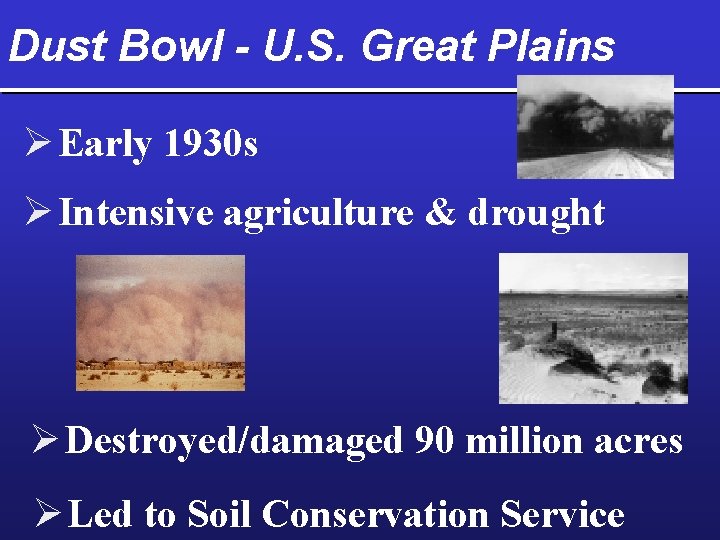
Dust Bowl - U. S. Great Plains Ø Early 1930 s Ø Intensive agriculture & drought Ø Destroyed/damaged 90 million acres Ø Led to Soil Conservation Service
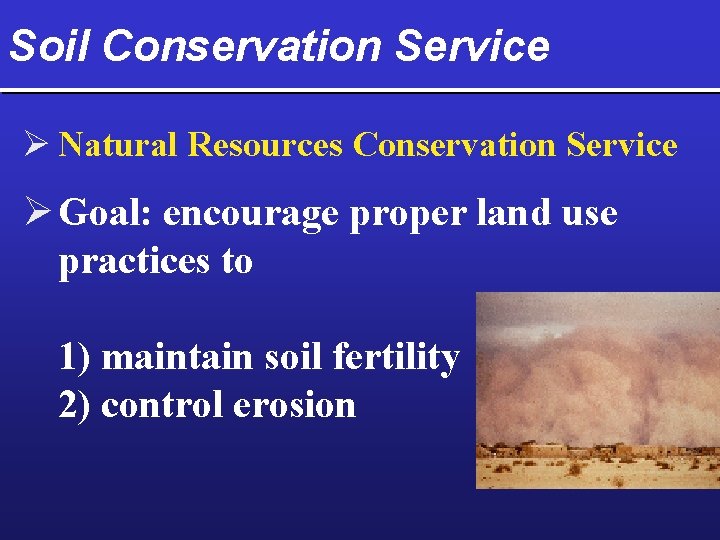
Soil Conservation Service Ø Natural Resources Conservation Service Ø Goal: encourage proper land use practices to 1) maintain soil fertility 2) control erosion
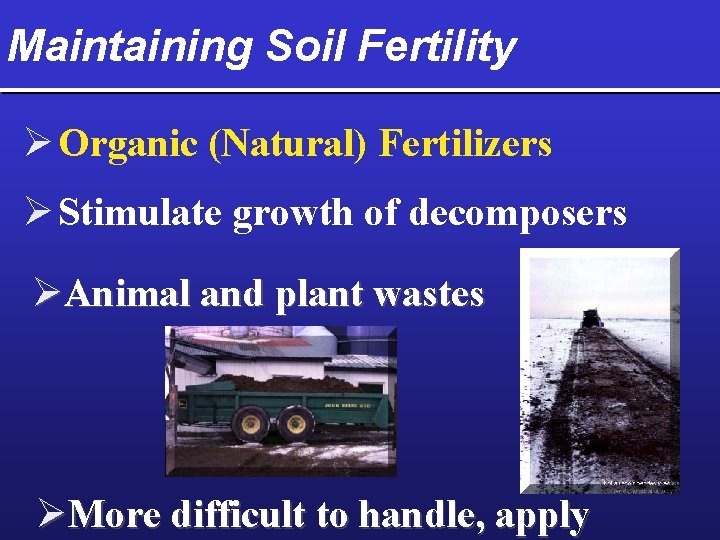
Maintaining Soil Fertility Ø Organic (Natural) Fertilizers Ø Stimulate growth of decomposers ØAnimal and plant wastes ØMore difficult to handle, apply
Maintaining Soil Fertility Ø Inorganic Fertilizers (most U. S. soils) Ø NPK - may harm soil (sustained use) -low or no micronutrients - decrease soil oxygen - lower soil’s ability to produce useable N forms ØMay wash into water supplies - more readily dissolved than manure
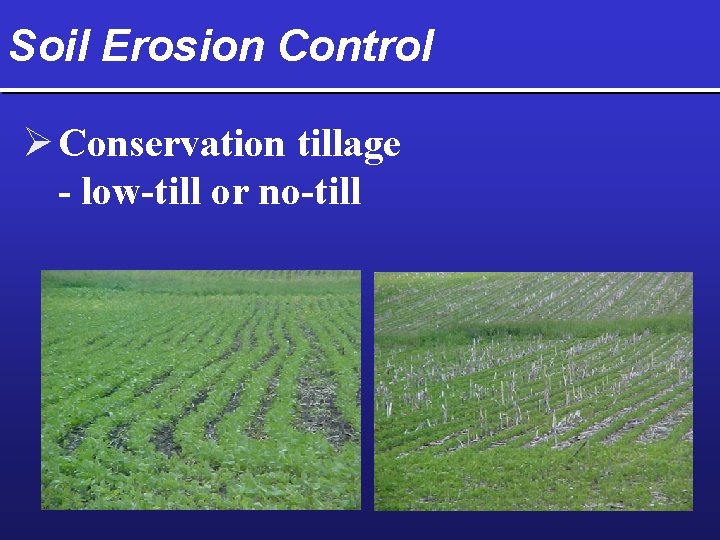
Soil Erosion Control Ø Conservation tillage - low-till or no-till
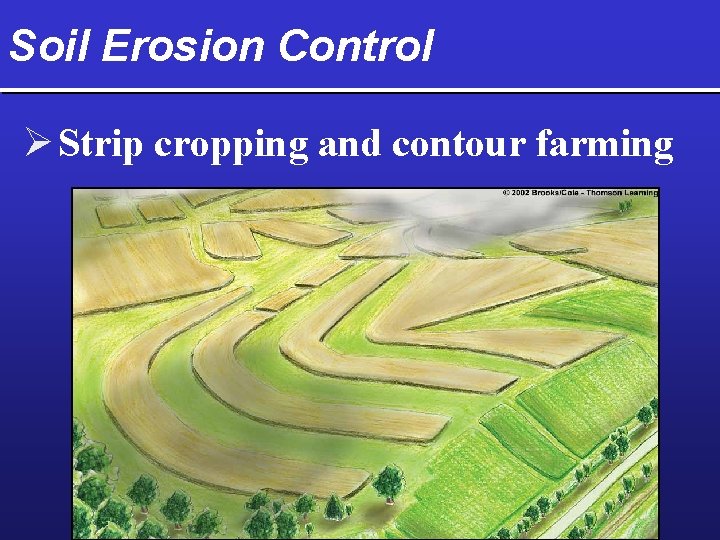
Soil Erosion Control Ø Strip cropping and contour farming
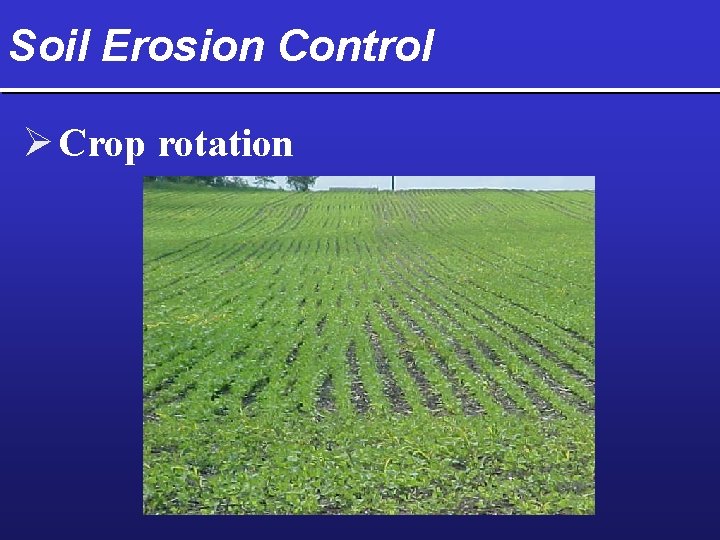
Soil Erosion Control Ø Crop rotation
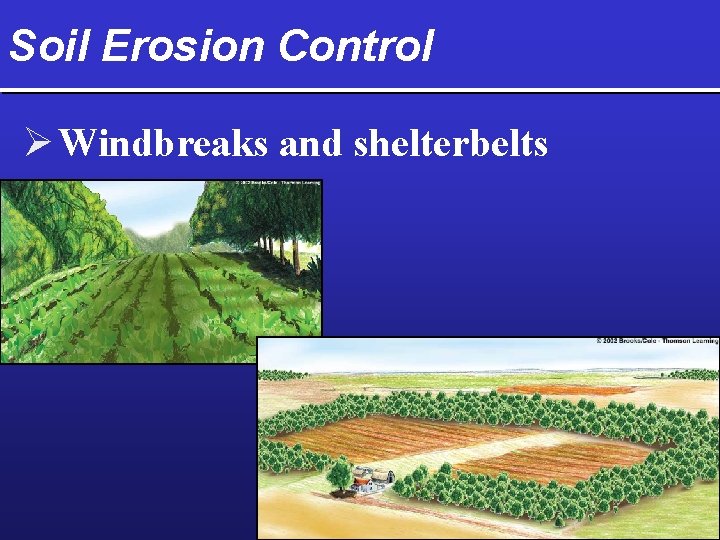
Soil Erosion Control Ø Windbreaks and shelterbelts
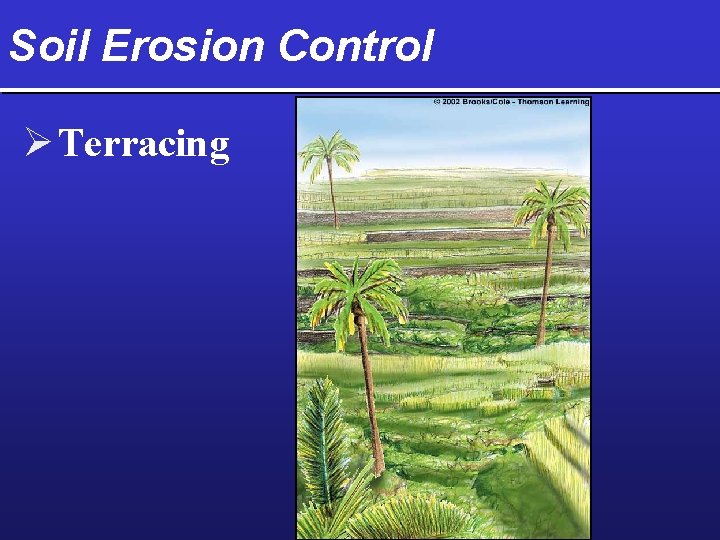
Soil Erosion Control Ø Terracing
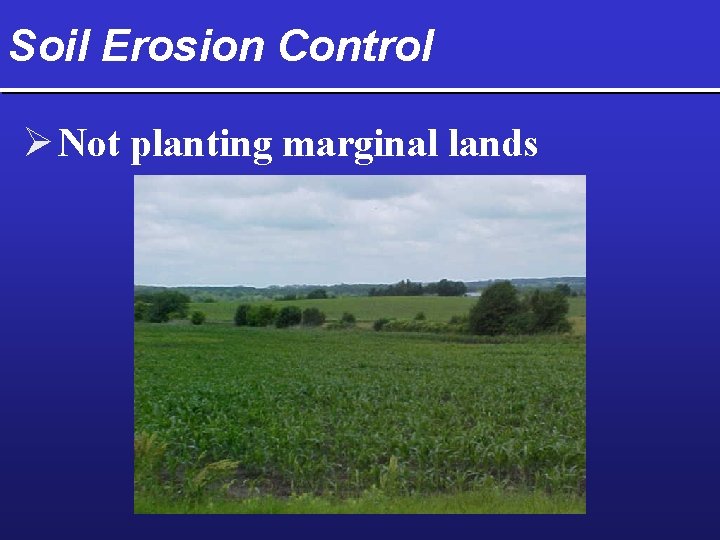
Soil Erosion Control Ø Not planting marginal lands
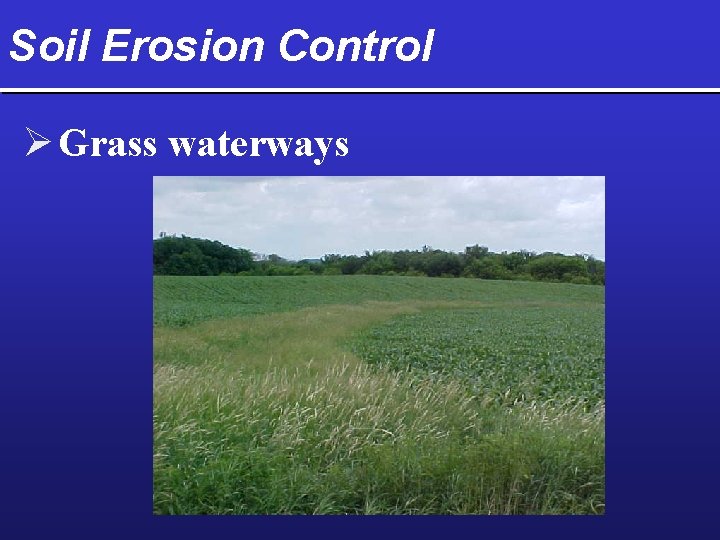
Soil Erosion Control Ø Grass waterways
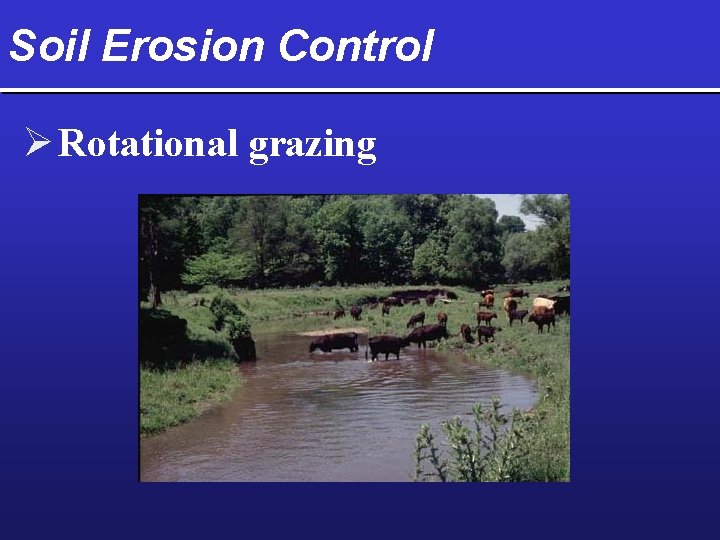
Soil Erosion Control Ø Rotational grazing
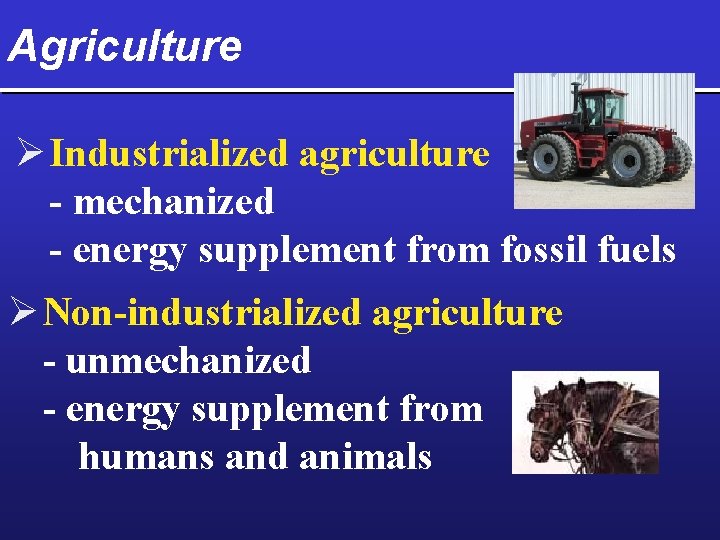
Agriculture Ø Industrialized agriculture - mechanized - energy supplement from fossil fuels Ø Non-industrialized agriculture - unmechanized - energy supplement from humans and animals
Industrialized Agriculture in U. S. Ø Nation’s largest industry - 20% of labor force - 1 person feeds 77 - reduces labor by 99% - yield 4 X higher - doubled food production in 150 years
Industrialized Agriculture in U. S. Ø Major problem - energy intensive - may require up to 9 units of supplemental energy to produce 1 unit of food energy - non-mechanized ag yields 3 units of food energy for each unit of supplemental energy (27 X better)
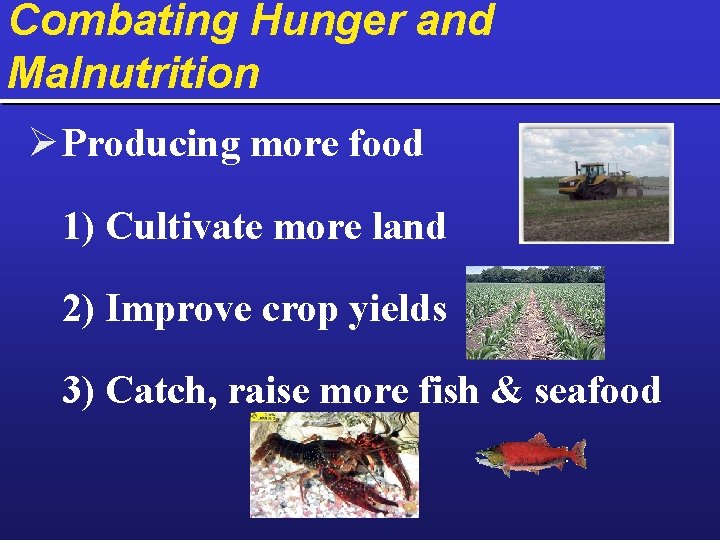
Combating Hunger and Malnutrition Ø Producing more food 1) Cultivate more land 2) Improve crop yields 3) Catch, raise more fish & seafood
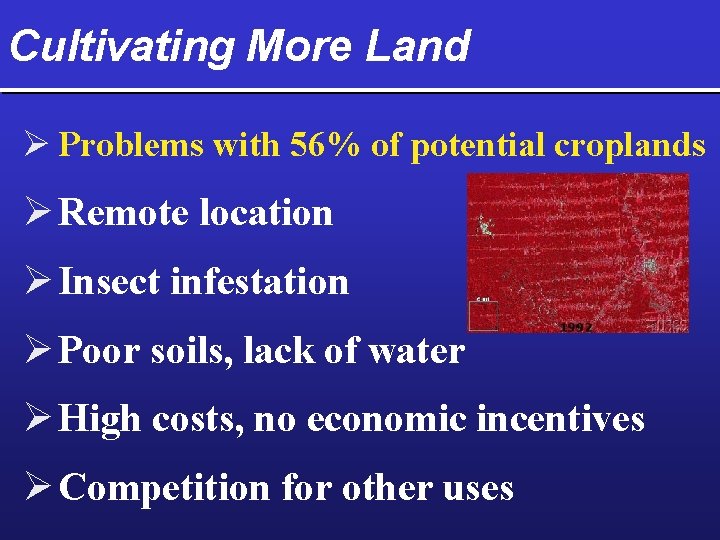
Cultivating More Land Ø Problems with 56% of potential croplands Ø Remote location Ø Insect infestation Ø Poor soils, lack of water Ø High costs, no economic incentives Ø Competition for other uses
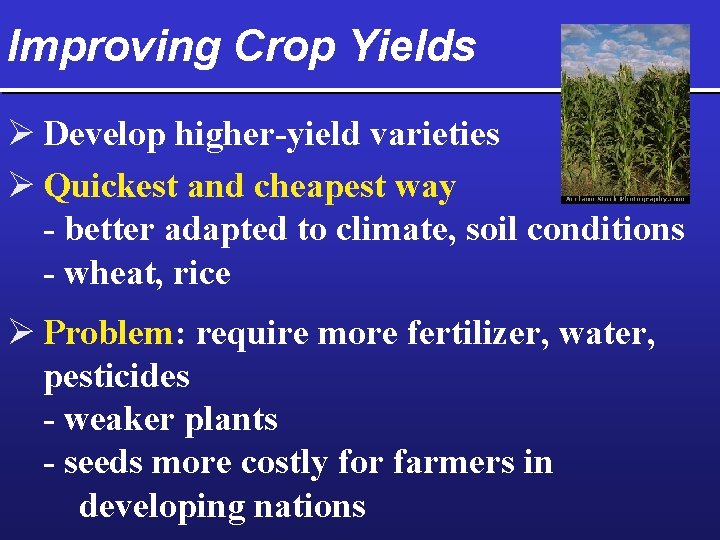
Improving Crop Yields Ø Develop higher-yield varieties Ø Quickest and cheapest way - better adapted to climate, soil conditions - wheat, rice Ø Problem: require more fertilizer, water, pesticides - weaker plants - seeds more costly for farmers in developing nations
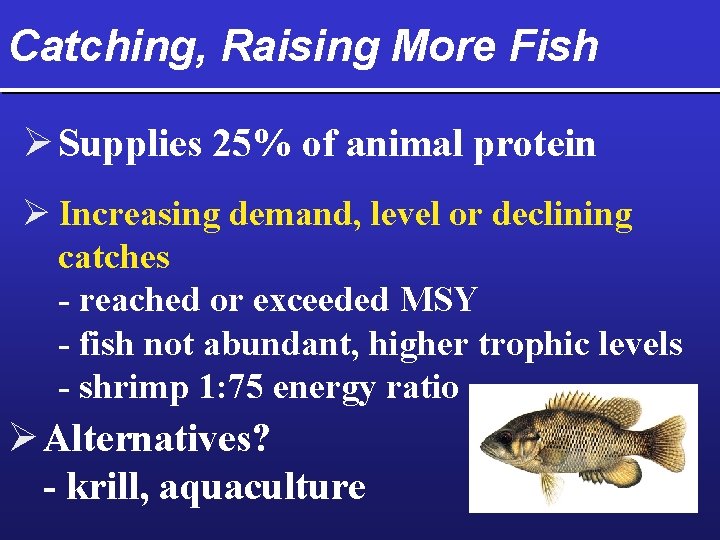
Catching, Raising More Fish Ø Supplies 25% of animal protein Ø Increasing demand, level or declining catches - reached or exceeded MSY - fish not abundant, higher trophic levels - shrimp 1: 75 energy ratio Ø Alternatives? - krill, aquaculture
Can simply producing more food solve the world’s hunger and malnutrition problem? 1) Poverty is chief cause of hunger, 2) malnutrition 2) Inadequate distribution system
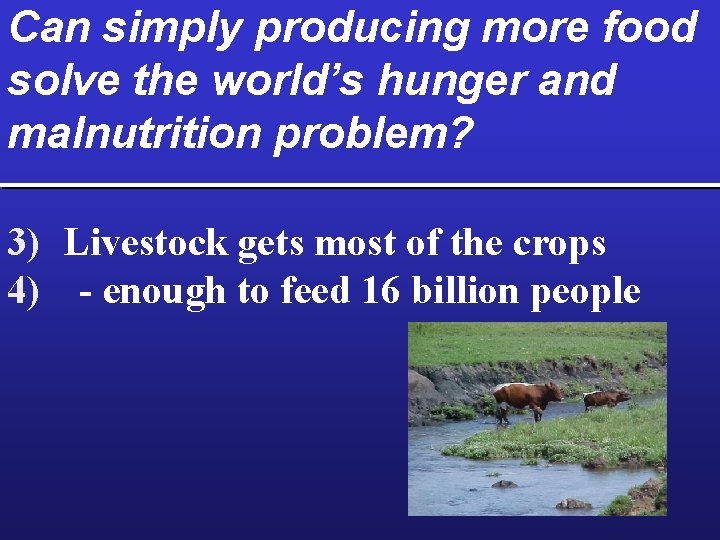
Can simply producing more food solve the world’s hunger and malnutrition problem? 3) Livestock gets most of the crops 4) - enough to feed 16 billion people
Can simply producing more food solve the world’s hunger and malnutrition problem? 4) Food must be of proper quality and 5) quantity 6) - marasmus - skinny, bloated belly 1. - diet low in calories and protein 2. - kwashiorkor - entire body bloated 3. - diet high in calories, low in prote
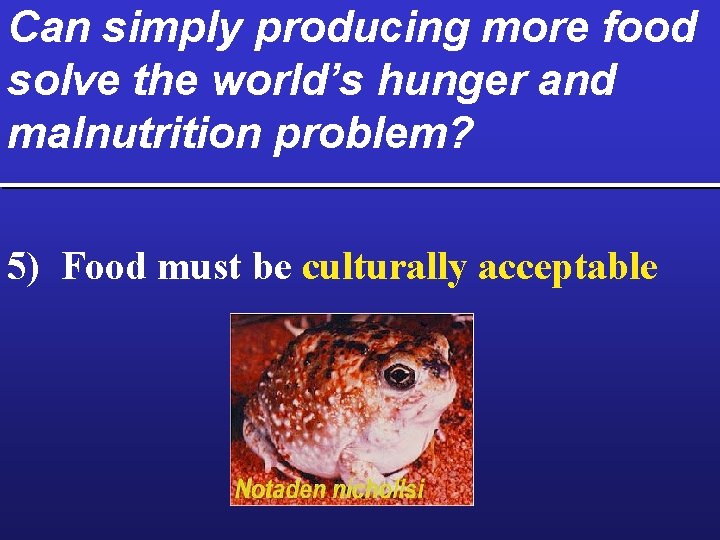
Can simply producing more food solve the world’s hunger and malnutrition problem? 5) Food must be culturally acceptable
Alternatives to producing more food 1) 2) 3) 4) 4) 5) Simplifying diets Use and waste less food, fertilizer Use new, unconventional, enriched, and fabricated foods Reduce crop losses from pests, diseases
Simplifying Diets Ø Eating lower on the food web Ø 1/3 of world grain production used to support meat diets of people in developed nations Ø U. S. citizens eat 25 X more meat than people in developing nations Ø 75% of N. Amer. grain goes to cattle (<5% in developing nations) Ø Eliminate U. S. feedlots - food for 400 million people Ø 10% meat reduction - 60 million people
Use, Waste Less Food Ø Wasted food - cafeterias, homes, etc. Ø Overnutrition - 30 -50% of adults, 10% of children Ø Fertilizer use on non-ag land - food for 65 million Ø Pets - food for 21 million
New, Unconventional, Enriched, Fabricated Foods Ø 80, 000 edible plants, 175 cultivated, - 16 important, 3 “biggies” - corn, wheat, rice Ø New crop plants - winged bean, ye-ed Ø Unconventional foods - insects! - high protein
New, Unconventional, Enriched, Fabricated Foods Ø Enriched foods - combat malnutrition, disease, by adding vitamins, minerals - salt with iodine - goiter - rice with vitamin B 1 - beri Ø Problem: added during processing, may be unavailable to those who grow your own
New, Unconventional, Enriched, Fabricated Foods Ø Fabricated foods - substitute plant products for animal - margarine for butter - veg. oil for lard - imitation bacon (soybeans, wheat) - soy burgers (soybeans, edible mold) - high protein
Reduce Crop Losses from Pests, Diseases Ø 45% of potential crops destroyed each year - 33% before harvest - 12% during storage Ø More use of pesticides needed? - similar losses in U. S. where pesticide use is high and other countries where use is low
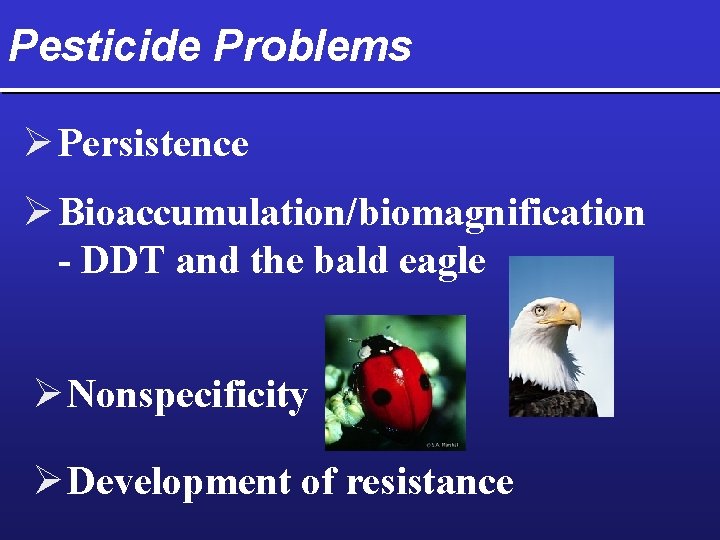
Pesticide Problems Ø Persistence Ø Bioaccumulation/biomagnification - DDT and the bald eagle Ø Nonspecificity Ø Development of resistance
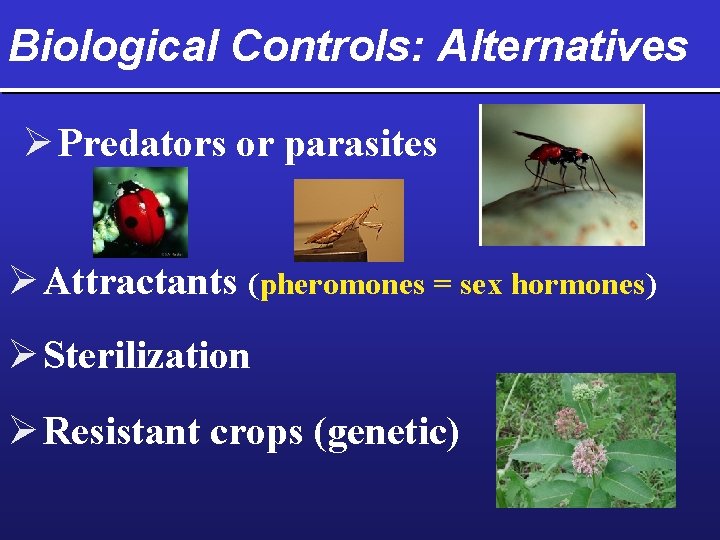
Biological Controls: Alternatives Ø Predators or parasites Ø Attractants (pheromones = sex hormones) Ø Sterilization Ø Resistant crops (genetic)
- Slides: 56