
Soil Aeration Why is soil aeration important n
- Slides: 64
Soil Aeration
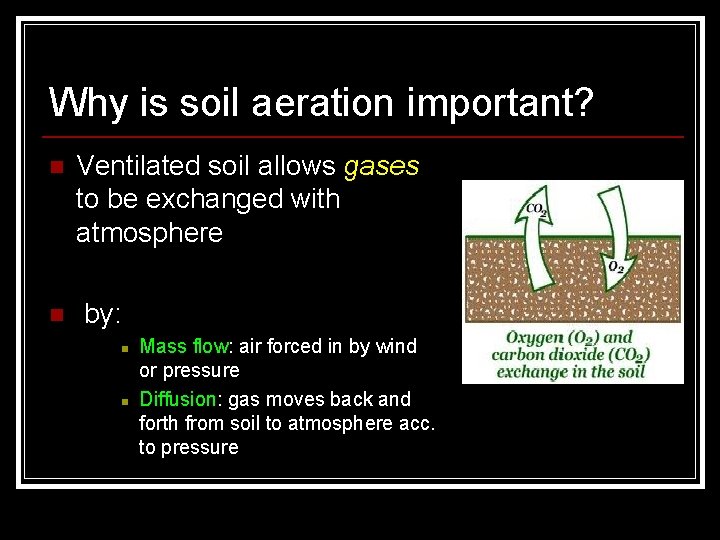
Why is soil aeration important? n n Ventilated soil allows gases to be exchanged with atmosphere by: n n Mass flow: air forced in by wind or pressure Diffusion: gas moves back and forth from soil to atmosphere acc. to pressure
n Aeration also allows water to move through soil n Allows roots to penetrate soil
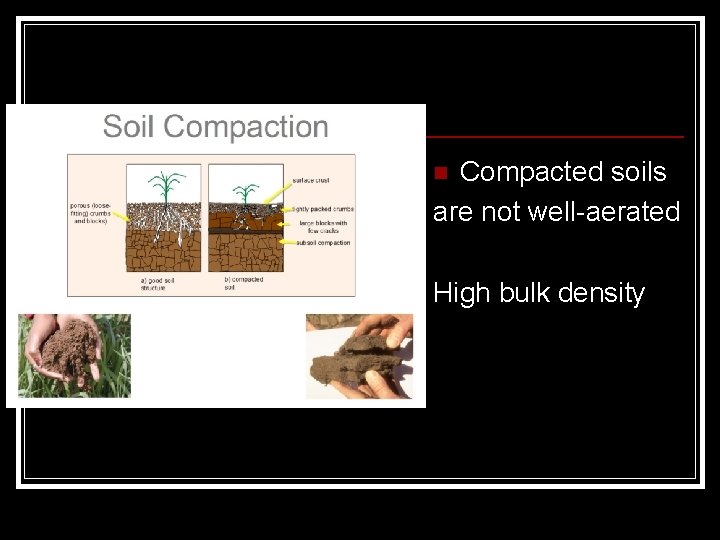
Compacted soils are not well-aerated n High bulk density
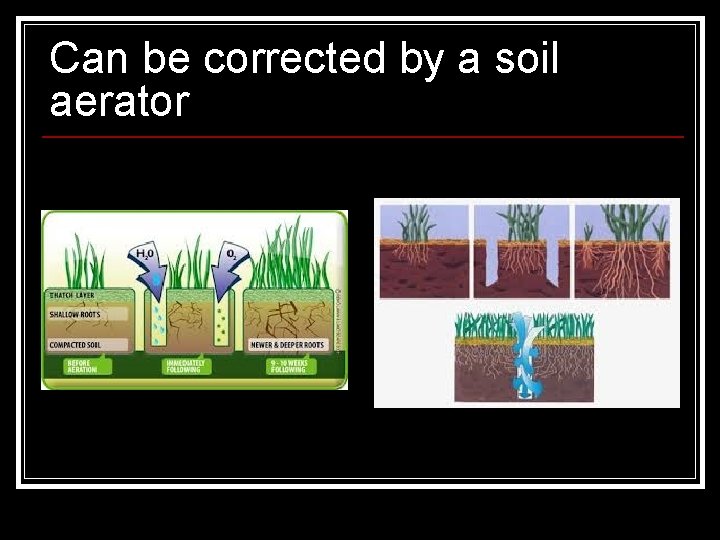
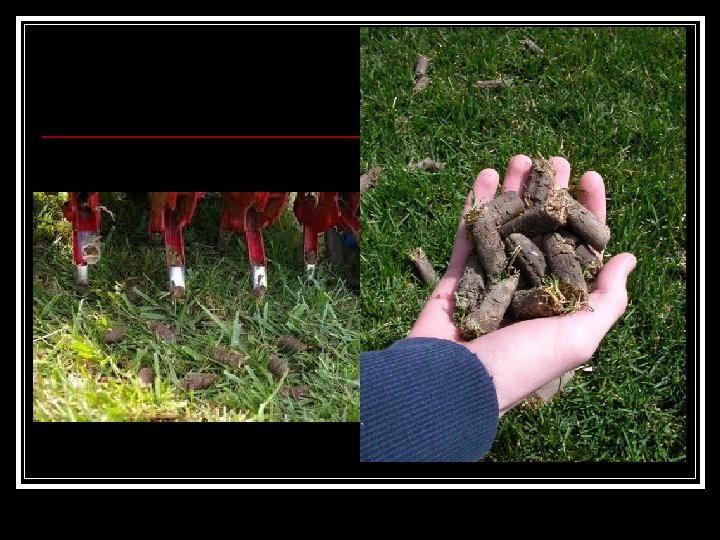
Can be corrected by a soil aerator
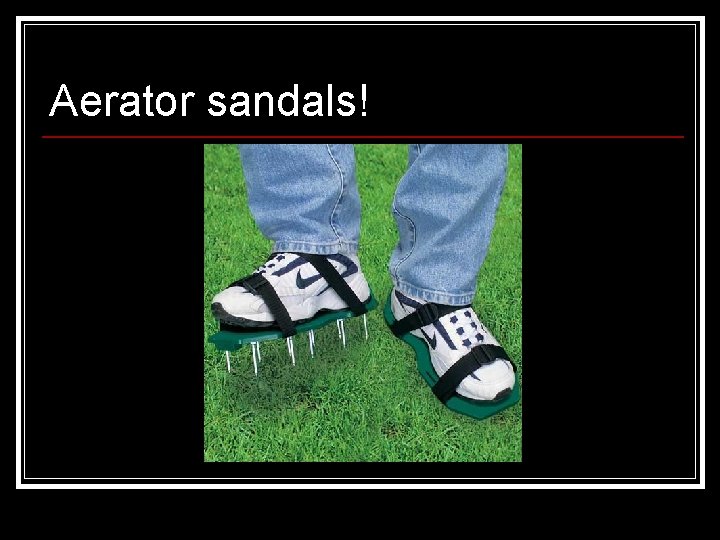
Aerator sandals!
Saturated soils are also not well -aerated Let’s consider the differences between aerated and saturated soils
n Can express how well-aerated a soil is by: n REDOX POTENTIAL n Eh
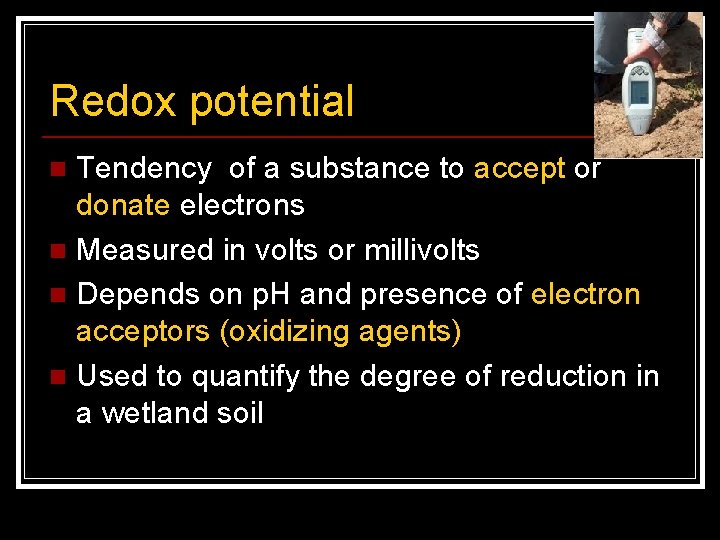
Redox potential n Tendency of a substance to accept or donate electrons n Reduction-Oxidation potential
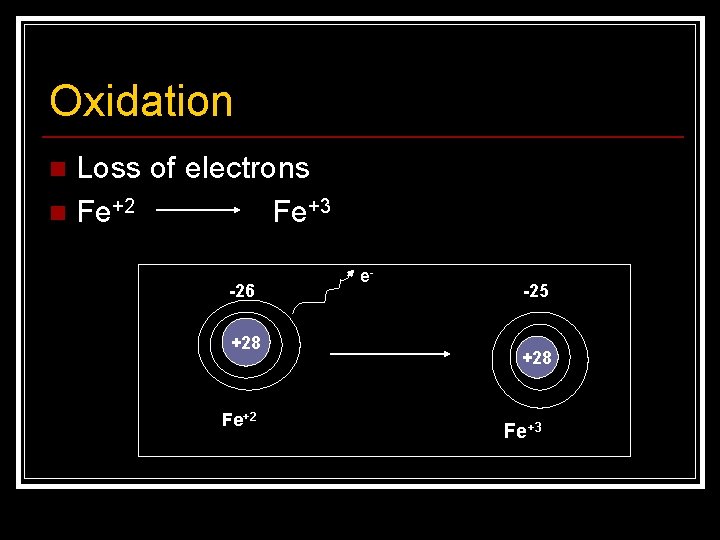
Oxidation Loss of electrons n Fe+2 Fe+3 n -26 +28 Fe+2 e- -25 +28 Fe+3
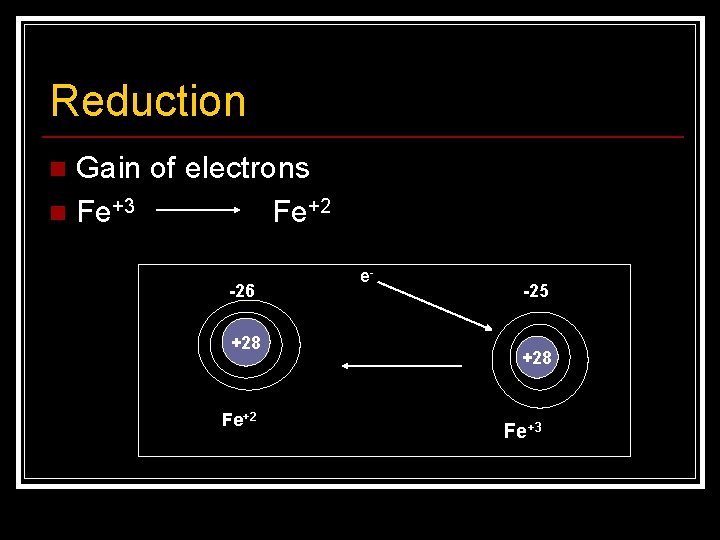
Reduction Gain of electrons n Fe+3 Fe+2 n -26 +28 Fe+2 e- -25 +28 Fe+3
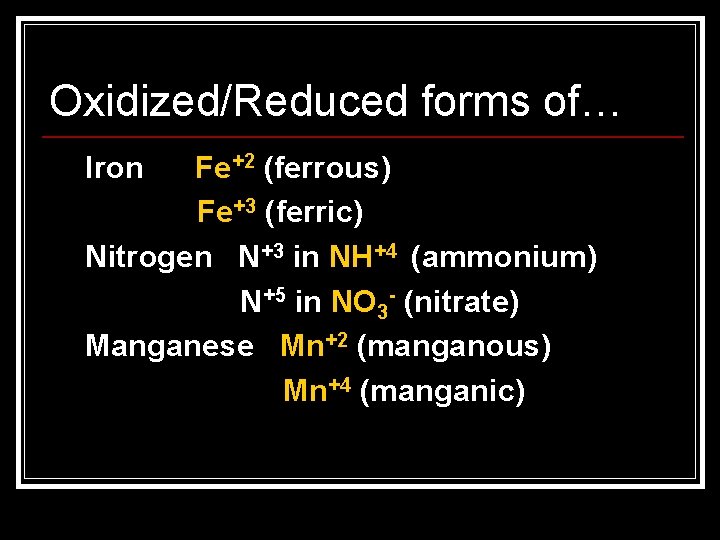
Oxidized/Reduced forms of… Iron Fe+2 (ferrous) Fe+3 (ferric) Nitrogen N+3 in NH+4 (ammonium) N+5 in NO 3 - (nitrate) Manganese Mn+2 (manganous) Mn+4 (manganic)
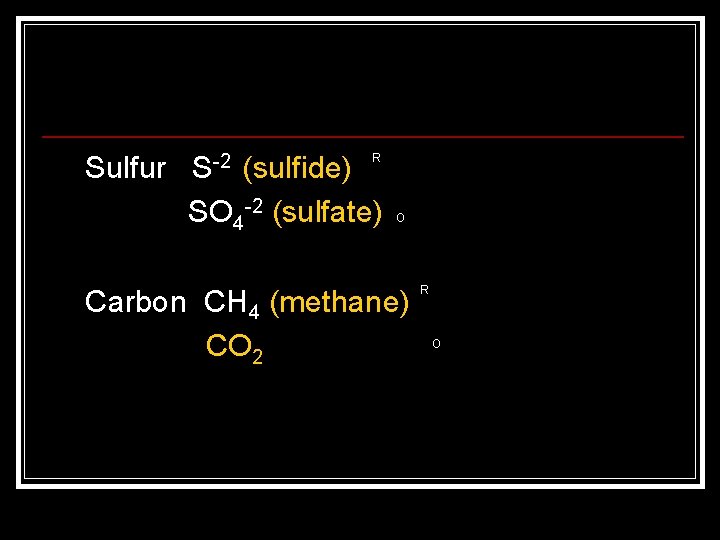
Sulfur S-2 (sulfide) SO 4 -2 (sulfate) R O Carbon CH 4 (methane) CO 2 R O
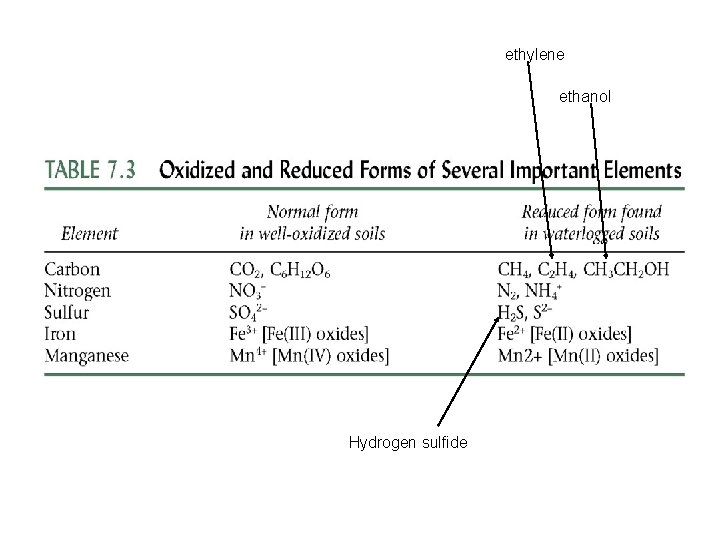
ethylene ethanol Hydrogen sulfide
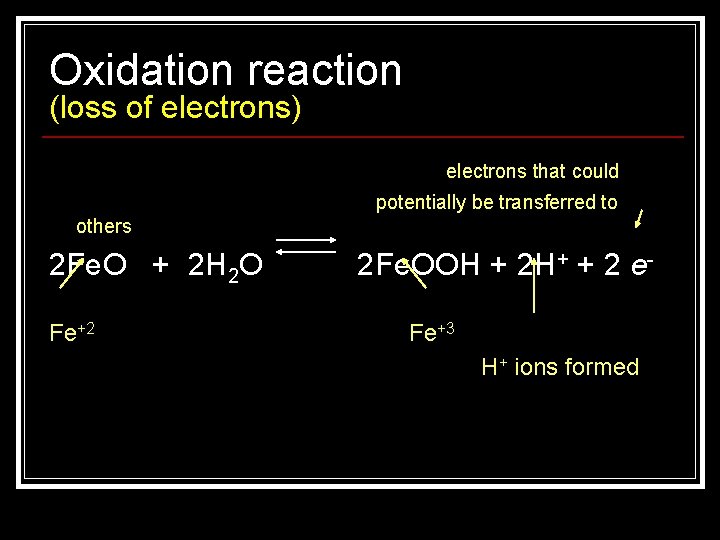
Oxidation reaction (loss of electrons) electrons that could potentially be transferred to others 2 Fe. O + 2 H 2 O Fe+2 2 Fe. OOH + 2 H+ + 2 e. Fe+3 H+ ions formed
Redox potential Tendency of a substance to accept or donate electrons n Measured in volts or millivolts n Depends on p. H and presence of electron acceptors (oxidizing agents) n Used to quantify the degree of reduction in a wetland soil n
Oxidizing agent n Substance accepts electrons easily n Oxygen is very strong electron acceptor, but in the absence of oxygen, other substances act as electron acceptors
Reducing agent n Substance donates electrons easily
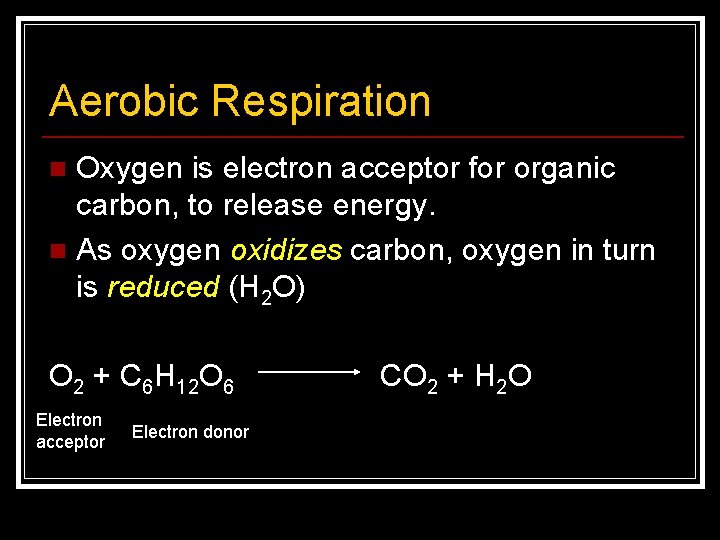
Aerobic Respiration Oxygen is electron acceptor for organic carbon, to release energy. n As oxygen oxidizes carbon, oxygen in turn is reduced (H 2 O) n O 2 + C 6 H 12 O 6 Electron acceptor Electron donor CO 2 + H 2 O
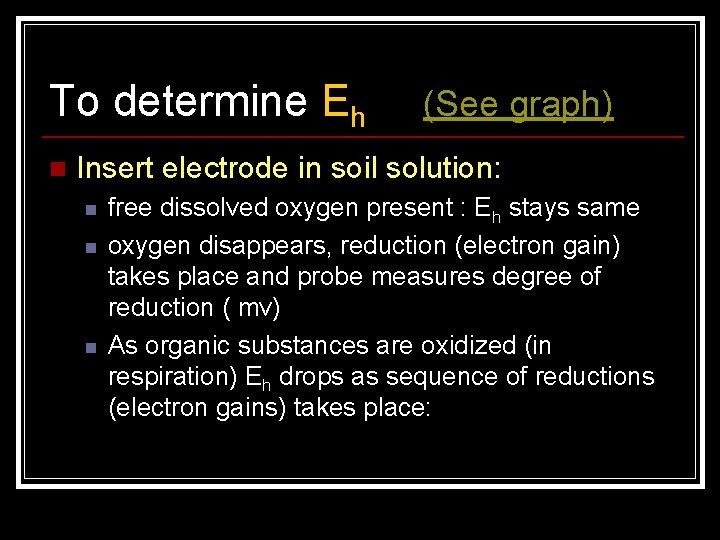
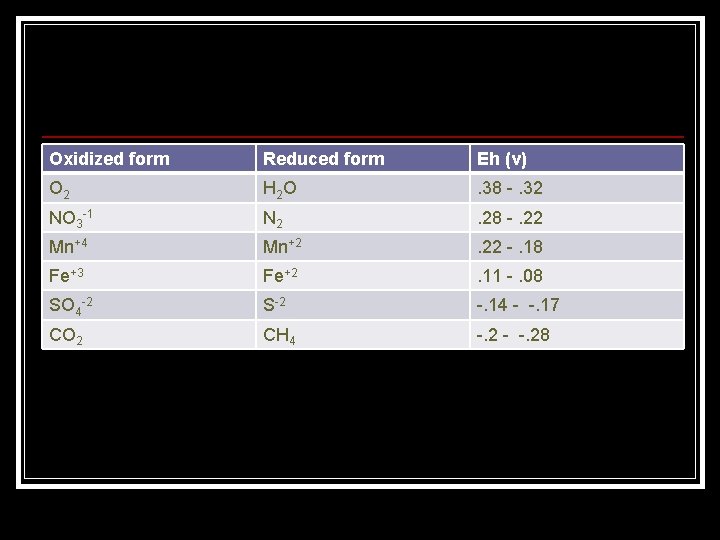
To determine Eh n (See graph) Insert electrode in soil solution: n n n free dissolved oxygen present : Eh stays same oxygen disappears, reduction (electron gain) takes place and probe measures degree of reduction ( mv) As organic substances are oxidized (in respiration) Eh drops as sequence of reductions (electron gains) takes place:
Oxidized form Reduced form Eh (v) O 2 H 2 O . 38 -. 32 NO 3 -1 N 2 . 28 -. 22 Mn+4 Mn+2 . 22 -. 18 Fe+3 Fe+2 . 11 -. 08 SO 4 -2 S-2 -. 14 - -. 17 CO 2 CH 4 -. 2 - -. 28
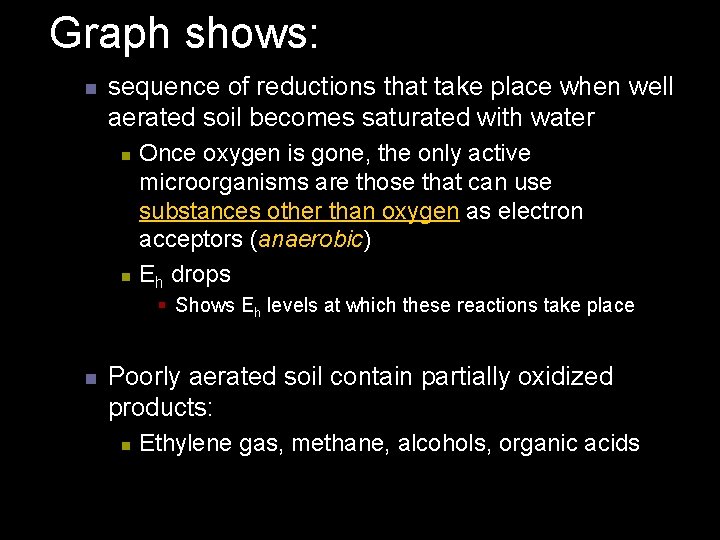
Graph shows: n sequence of reductions that take place when well aerated soil becomes saturated with water n n Once oxygen is gone, the only active microorganisms are those that can use substances other than oxygen as electron acceptors (anaerobic) Eh drops § Shows Eh levels at which these reactions take place n Poorly aerated soil contain partially oxidized products: n Ethylene gas, methane, alcohols, organic acids
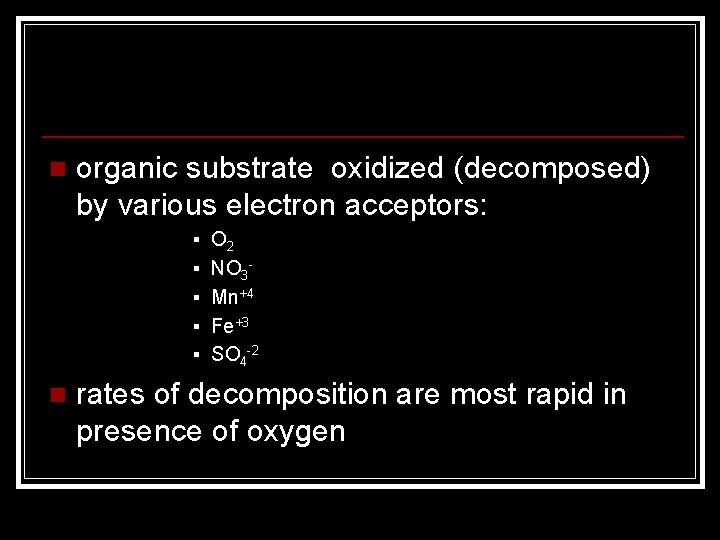
n organic substrate oxidized (decomposed) by various electron acceptors: § O 2 § NO 3§ Mn+4 § Fe+3 § SO 4 -2 n rates of decomposition are most rapid in presence of oxygen
Aeration affects microbial breakdown: n Poor aeration slows decay n Anaerobic organisms Poorly aerated soils may contain toxic, not oxidized products of decomposition: alcohols, organic acids n Organic matter accumulates n n Allows Histosol development
Some conclusions about aeration: Forms/mobility 1. 1. 2. 3. Redox colors Nutrient elements Roots Decomposition
Some conclusions about aeration: 1. Forms and Mobility Soil aeration determines which forms of chemicals are present and how mobile they are
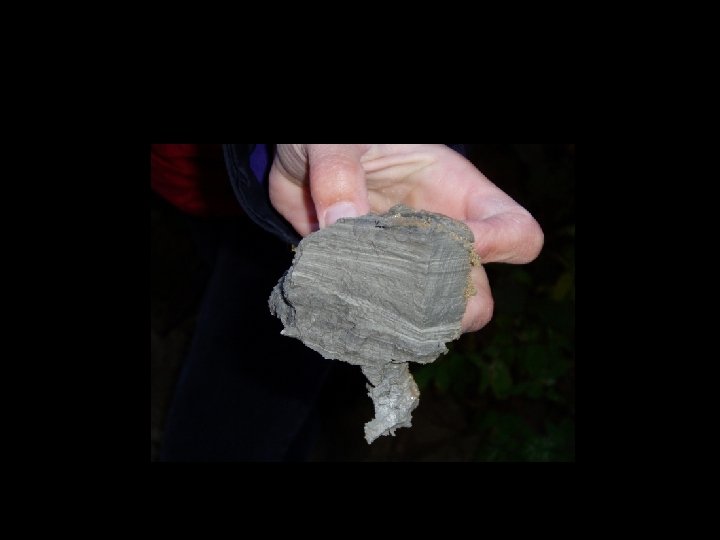
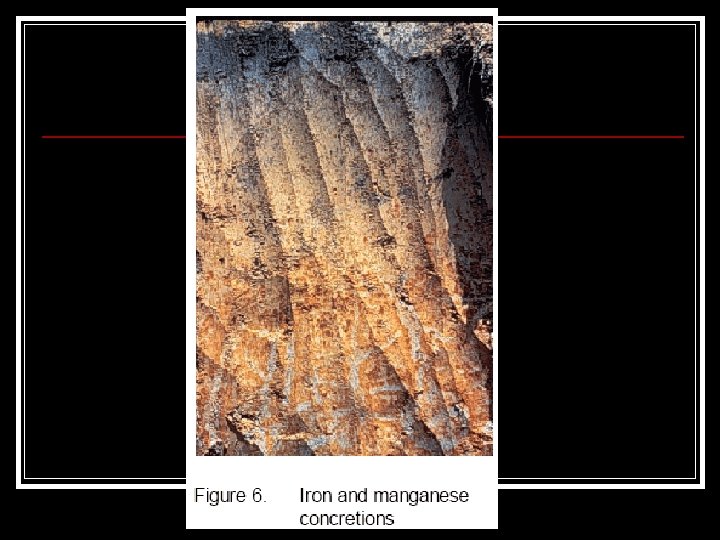
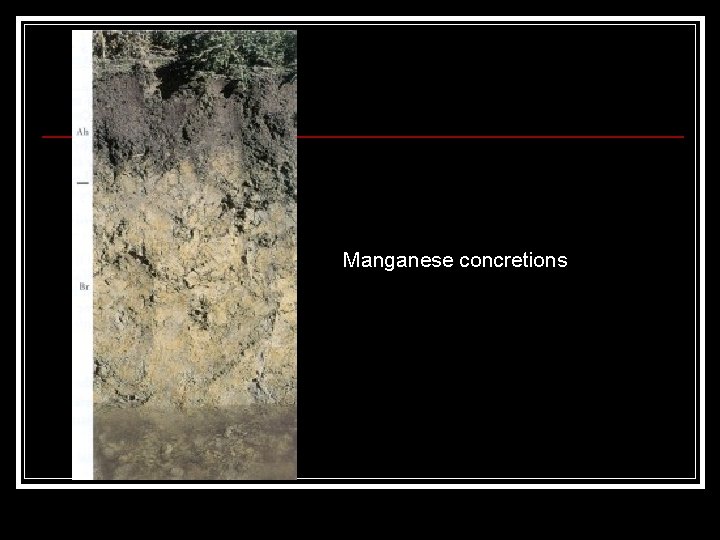
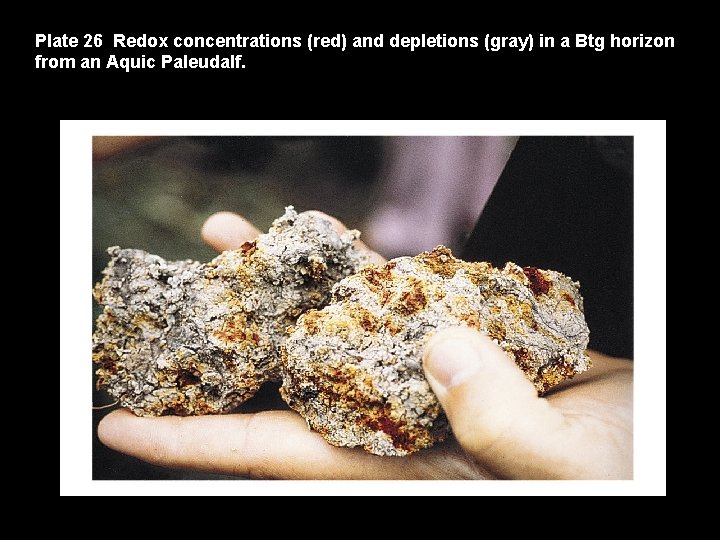
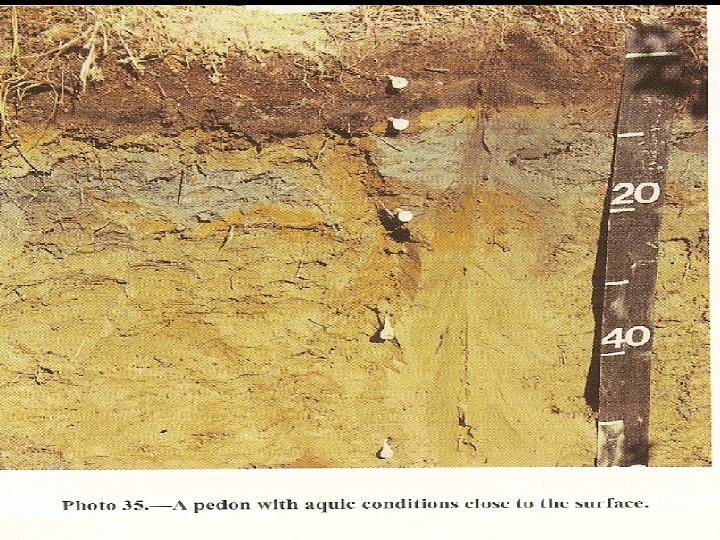
1. Forms and Mobility: A) Poorly aerated soils n reduced forms of iron and manganese Fe+2, Mn+2 n Reduced iron is soluble; moves through soil, removing red, leaving gray, low chroma colors (redox depletions) n Reduced manganese : hard black concretions
Manganese concretions
1. Forms and Mobility B) Well-aerated soils: n Oxidized forms of iron and manganese Fe+3 Mn+4 § Fe precipitates as Fe+3 in aerobic zones or during dry periods § Reddish brown to orange (redox concentrations)
Plate 26 Redox concentrations (red) and depletions (gray) in a Btg horizon from an Aquic Paleudalf.
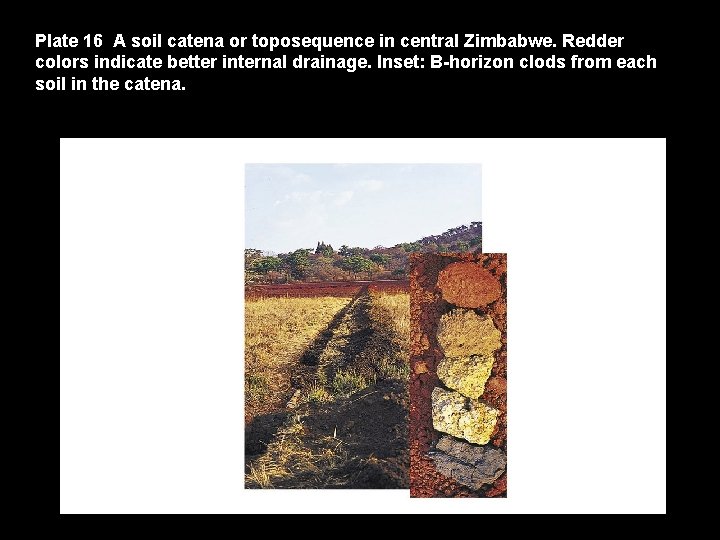
Plate 16 A soil catena or toposequence in central Zimbabwe. Redder colors indicate better internal drainage. Inset: B-horizon clods from each soil in the catena.
1. Forms and Mobility C. Nutrient Elements n Plants can use oxidized forms of nitrogen and sulfur n Reduced iron, manganese n n Soluble in alkaline soils More soluble in acid soils; can reach toxic levels
Some conclusions about aeration: 2. Root respiration Ø Good aeration promotes root respiration Ø Poor aeration: water-filled pores block oxygen diffusion into soil to replace what is used up in respiration
Some conclusions about aeration: 3. Decomposition In aerated soils, aerobic organisms rapidly oxidize organic material and decomposition is rapid In poor aeration, anaerobic decomposers take over and decomposition is slower
n n "In waters with high sulfate, we've struggled to find any wild rice, " Myrbo says of the latest research, all of which is being overseen by the Minnesota Pollution Control Agency. So far researchers have sampled a limited number of waters with sulfate levels higher than 10 parts per million n Pastor and other scientists say the damage to wild rice probably occurs when sulfate is converted to hydrogen sulfide. In an oxygen-starved environment such as the sediment under wild-rice beds, bacteria "breathe in" sulfate and "exhale" hydrogen sulfide, which can be toxic to plants, says Ed Swain, the PCA research scientist. n Pastor knows from previous research that the availability of adequate nitrogen is the biggest limiting factor for the growth of wild rice. Now he is seeing wild-rice plants exposed to high sulfate that "didn't look poisoned. They looked starved. " Pastor's hypothesis is that sulfate transformed to sulfides is affecting root growth and blocking nutrients from getting into plants. Now he will see if the research supports his hypothesis. n Scientists also will look at the role of iron in the sulfate-to-sulfide conversion and how sulfate can reduce the iron, copper, and zinc available to plants. "You don't just throw in sulfate and the plant dies, " Pastor says. "It's a whole ecosystem reaction that happens over years. " n
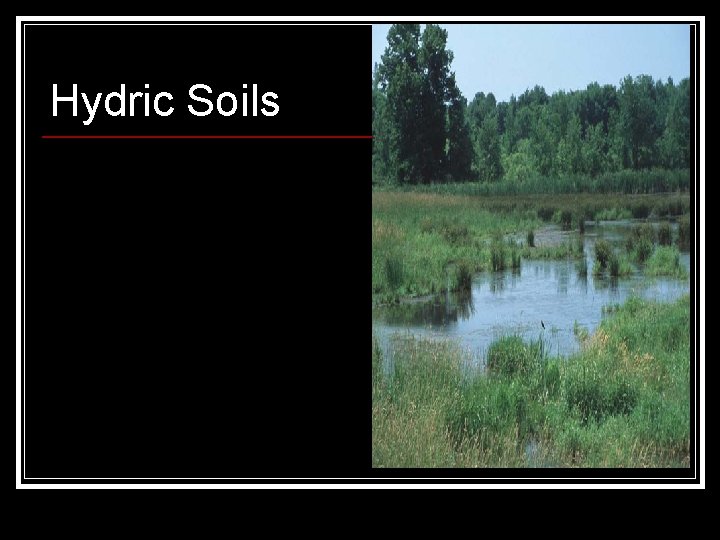
Hydric Soils
Wetland criteria : Hydrology n Hydric soils n Hydrophytic plants n
Hydric soil n soil that is saturated, flooded, or ponded long enough during the growing season to develop anaerobic conditions in the upper part. n n Oxygen is removed from groundwater by respiration of microbes, roots, soil fauna Biological zero = 5°C
Why is “during growing season” important part of definition? n If wet period is during COLD time of year (too cold for microbial growth and plant root respiration), might not have anaerobic conditions. n It is anaerobic conditions that cause a soil to be hydric, not just saturation!!!
How can a saturated soil be aerobic? n If water is flowing n If microbes and plant roots are not active
n Hydric soils support growth and regeneration of hydrophytic plants.
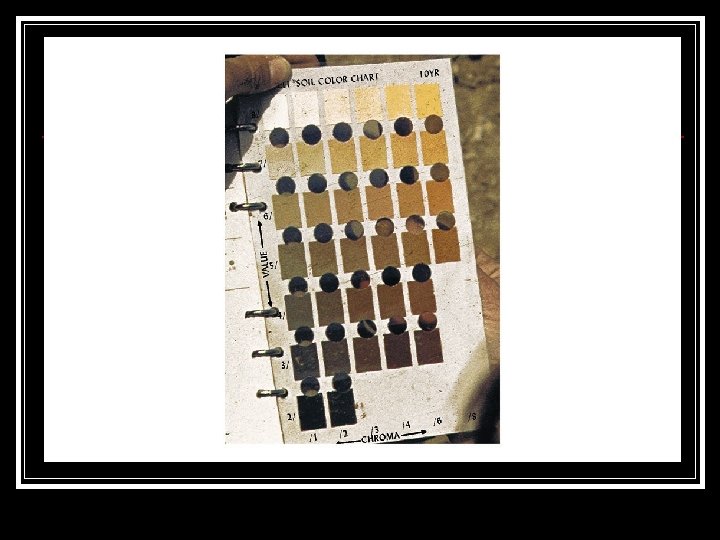
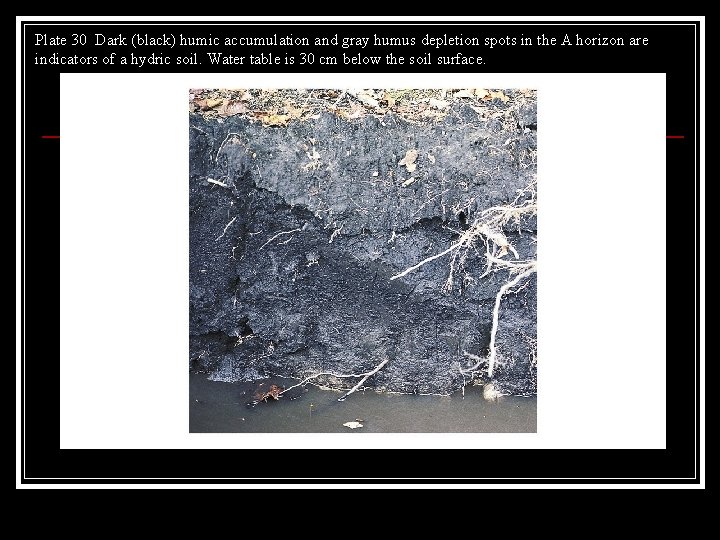
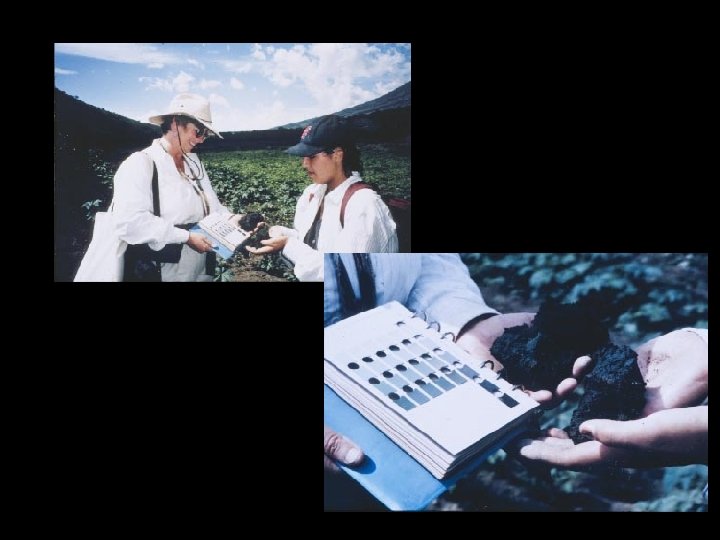
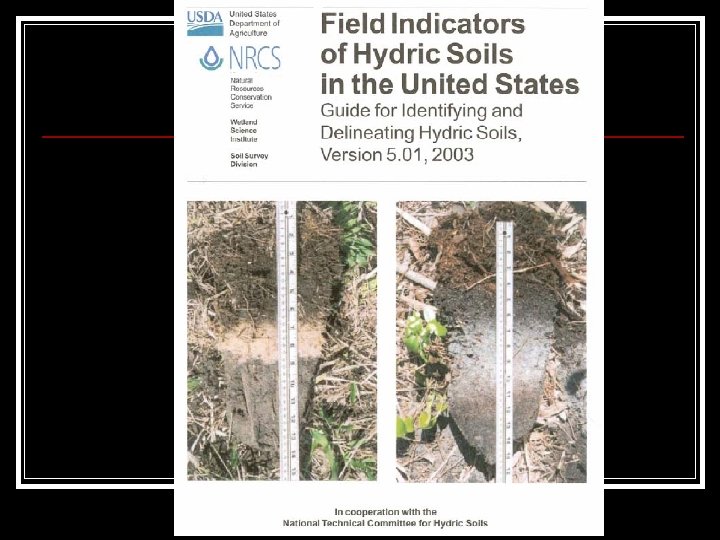
Hydric soil indicators: n Color n Chroma 1 or 2 or gley (Fe++2 grey or green) n May have redox concentrations or concretions n Sulfidic materials (odor of rotten eggs) n Sulfate reduction
Plate 30 Dark (black) humic accumulation and gray humus depletion spots in the A horizon are indicators of a hydric soil. Water table is 30 cm below the soil surface.
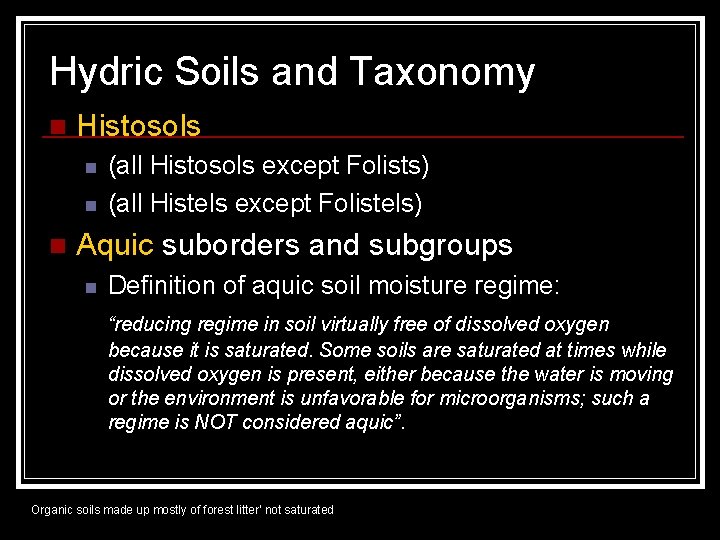
Hydric Soils and Taxonomy n Histosols n n n (all Histosols except Folists) (all Histels except Folistels) Aquic suborders and subgroups n Definition of aquic soil moisture regime: “reducing regime in soil virtually free of dissolved oxygen because it is saturated. Some soils are saturated at times while dissolved oxygen is present, either because the water is moving or the environment is unfavorable for microorganisms; such a regime is NOT considered aquic”. Organic soils made up mostly of forest litter’ not saturated
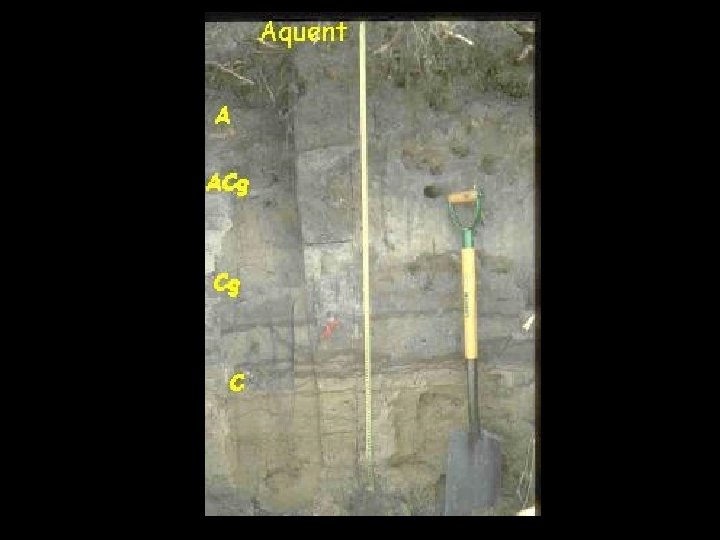
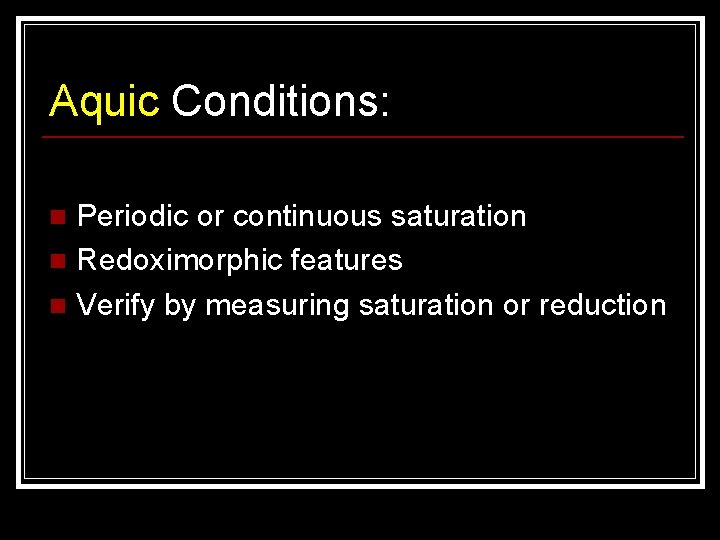
Aquic Conditions: Periodic or continuous saturation n Redoximorphic features n Verify by measuring saturation or reduction n
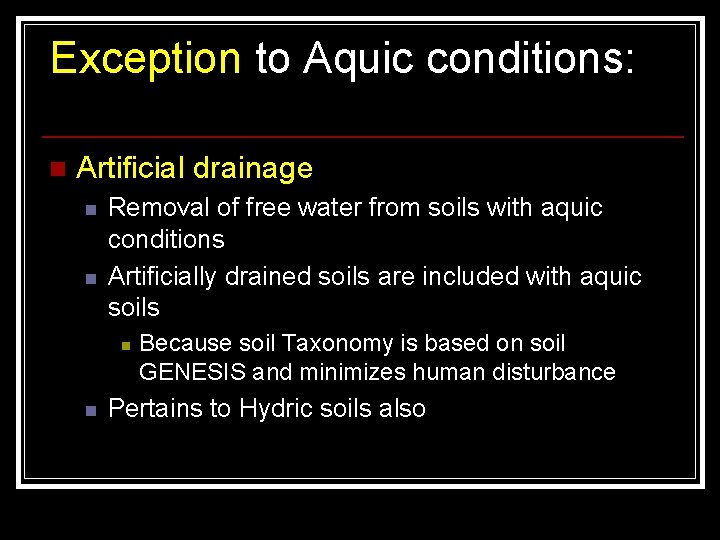
Exception to Aquic conditions: n Artificial drainage n n Removal of free water from soils with aquic conditions Artificially drained soils are included with aquic soils n n Because soil Taxonomy is based on soil GENESIS and minimizes human disturbance Pertains to Hydric soils also
n Artificially wet soils are considered hydric n Artificially “dry” (drained) soils are considered hydric
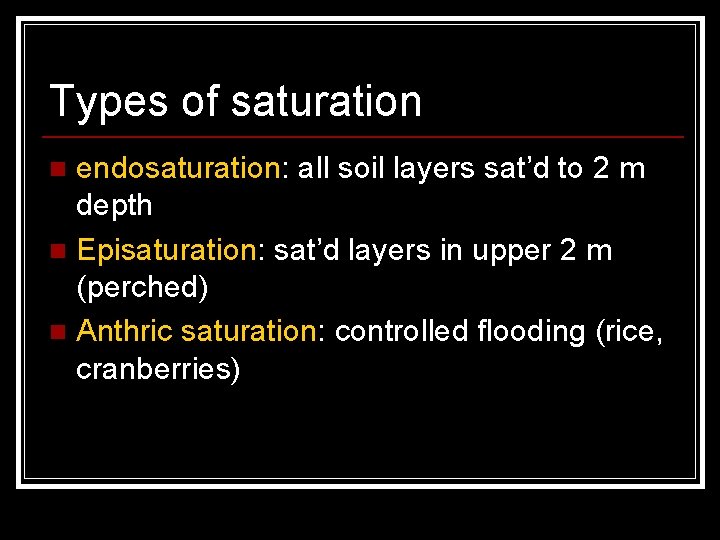
Types of saturation endosaturation: all soil layers sat’d to 2 m depth n Episaturation: sat’d layers in upper 2 m (perched) n Anthric saturation: controlled flooding (rice, cranberries) n
List of hydric soils http: //soils. usda. gov Click on hydric soils
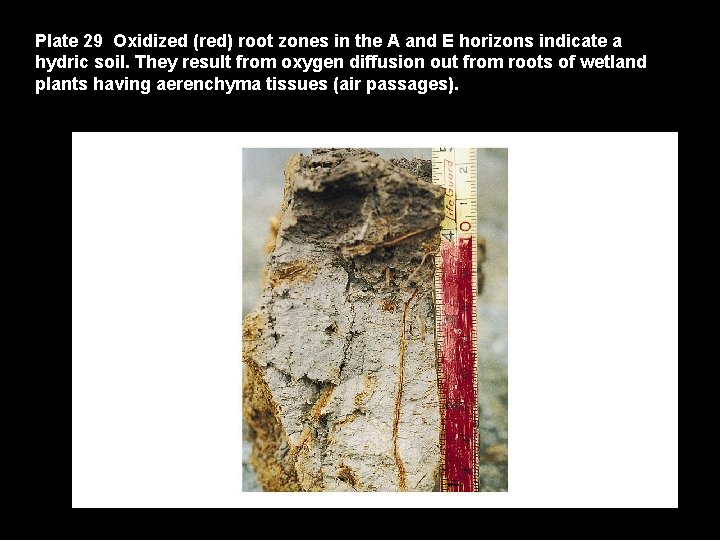
Oxidized rhizosphere n In some poorly aerated soils: n Red, oxidized iron in root channels n n Oxygen diffused out of plant roots Some plants transport oxygen through aerenchyma tissue in stems and leaves to roots (hydrophytic plants)
Plate 29 Oxidized (red) root zones in the A and E horizons indicate a hydric soil. They result from oxygen diffusion out from roots of wetland plants having aerenchyma tissues (air passages).
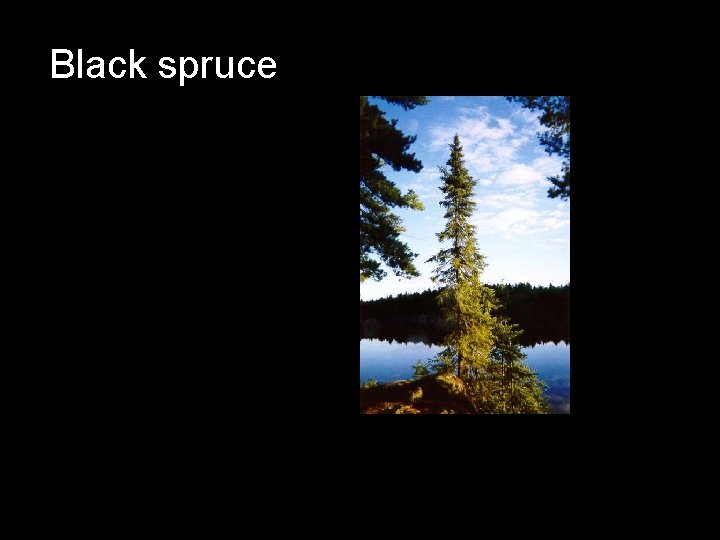
Black spruce
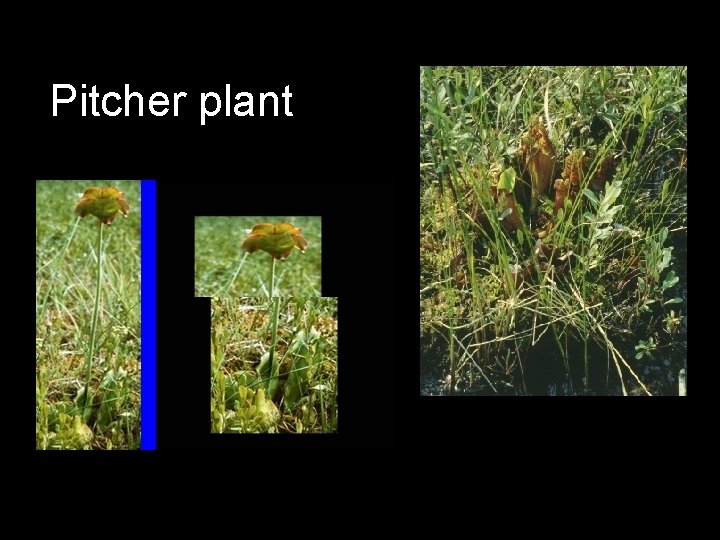
Pitcher plant