
Software Project Management Lecture 3 6 th Edition

- Slides: 20
Software Project Management Lecture 3 6 th Edition Process Groups Project Charter SOW Project Management Institute 1 ©The Mc. Graw-Hill Companies, 2005
Objectives – Lecture 3 p PMI Frame Work p PMI Process Groups p p p Initiating Process Group Planning Process Group Executing Process Group Monitoring & Controlling Process Group Closing Process Group p Project Charter p Statement of Work 2 ©The Mc. Graw-Hill Companies, 2005
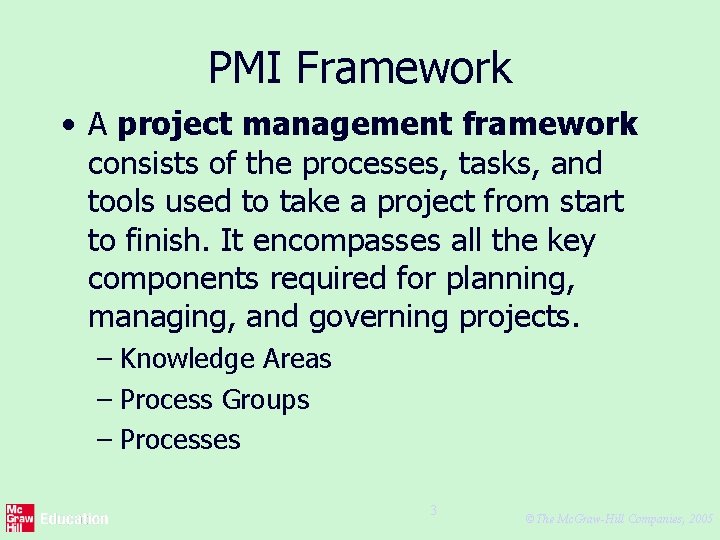
PMI Framework • A project management framework consists of the processes, tasks, and tools used to take a project from start to finish. It encompasses all the key components required for planning, managing, and governing projects. – Knowledge Areas – Process Groups – Processes 3 ©The Mc. Graw-Hill Companies, 2005
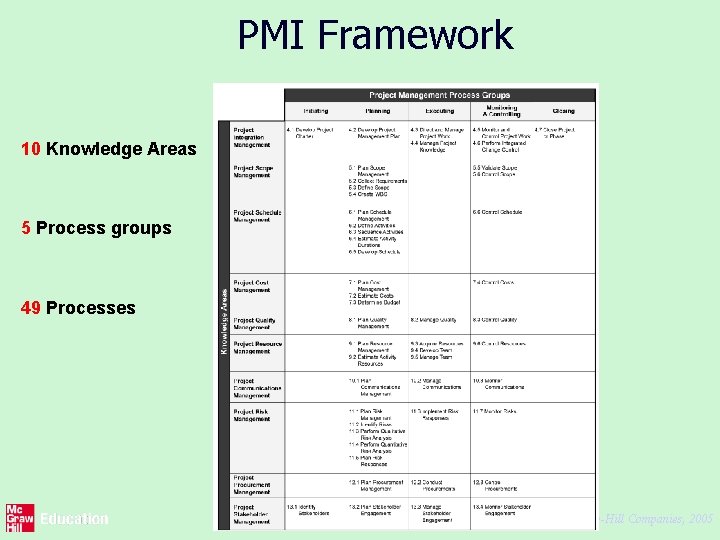
PMI Framework 10 Knowledge Areas 5 Process groups 49 Processes ©The Mc. Graw-Hill Companies, 2005
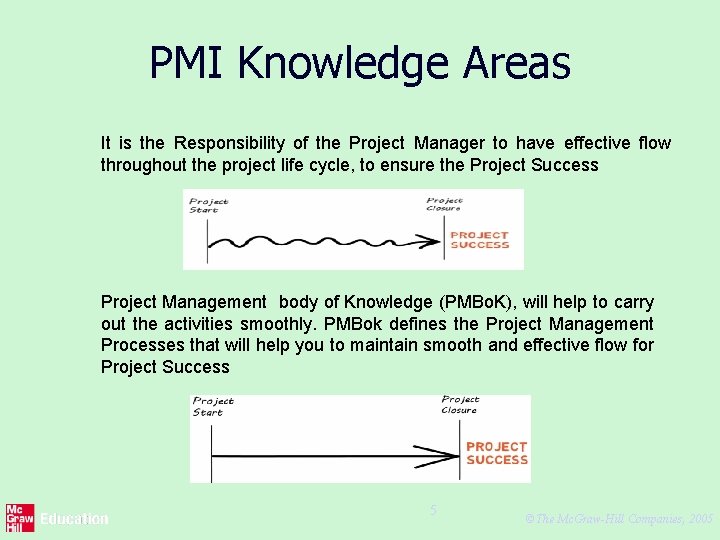
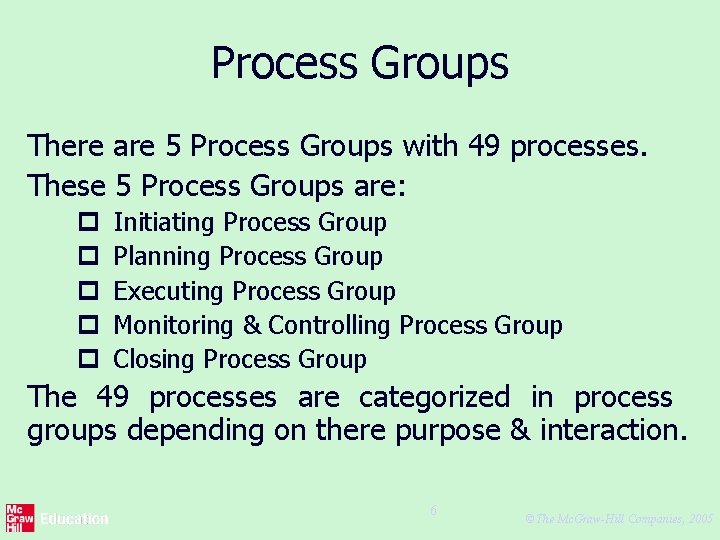
PMI Knowledge Areas It is the Responsibility of the Project Manager to have effective flow throughout the project life cycle, to ensure the Project Success Project Management body of Knowledge (PMBo. K), will help to carry out the activities smoothly. PMBok defines the Project Management Processes that will help you to maintain smooth and effective flow for Project Success 5 ©The Mc. Graw-Hill Companies, 2005
Process Groups There are 5 Process Groups with 49 processes. These 5 Process Groups are: p p p Initiating Process Group Planning Process Group Executing Process Group Monitoring & Controlling Process Group Closing Process Group The 49 processes are categorized in process groups depending on there purpose & interaction. 6 ©The Mc. Graw-Hill Companies, 2005
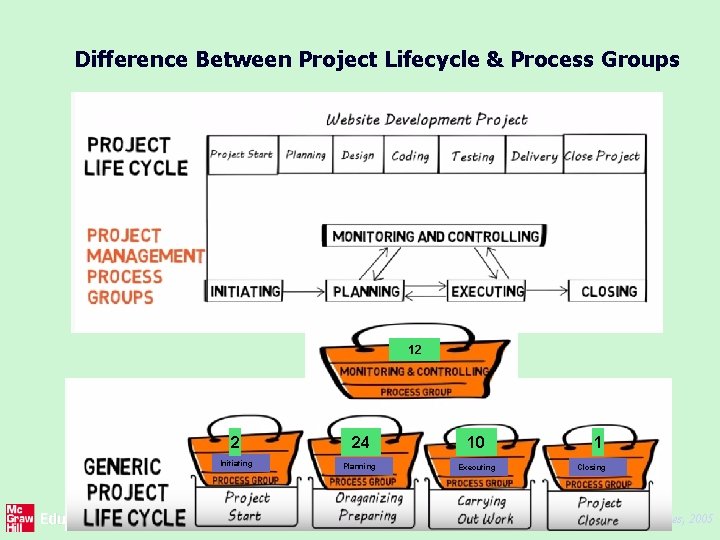
Difference Between Project Lifecycle & Process Groups 12 2 24 10 Initiating Planning Executing 1 Closing ©The Mc. Graw-Hill Companies, 2005
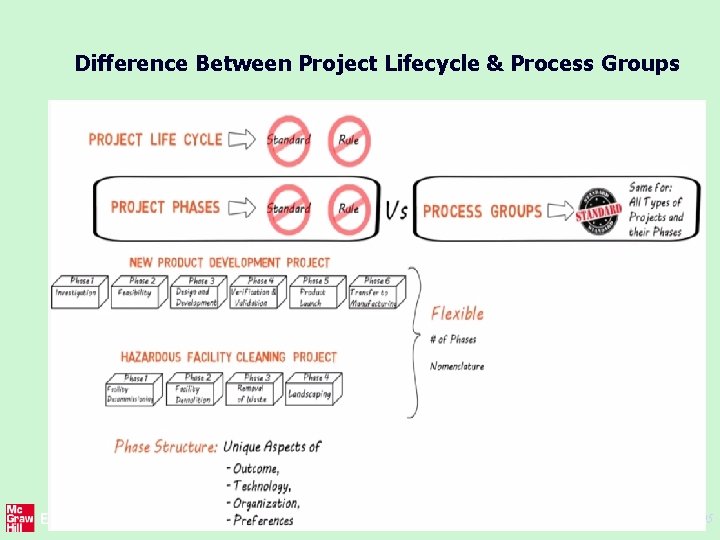
Difference Between Project Lifecycle & Process Groups ©The Mc. Graw-Hill Companies, 2005
Process Group: Initiating The Initiating Process Group consists of those processes performed to define a new project or a new phase of an existing project by obtaining authorization to start the project or phase. " – A Guide to the Project Management Body of Knowledge (PMBOK Guide) The Initiating process group has two processes: Develop Project Charter and Identify Stakeholders. After completing the processes in this group, a project manager has the authority to use organizational resources for project activities. The Project Charter and Stakeholder Register are used as inputs to processes in the other process groups, such as the Planning process group. ©The Mc. Graw-Hill Companies, 2005
Process Group: Planning “The Planning Process Group consists of those processes performed to establish the total scope of the effort, define and refine objectives, and develop the course of action required to attain those objectives. " – A Guide to the Project Management Body of Knowledge Unlike the other process groups, the Planning Process Group has processes from each knowledge area. 1. Project Management Plan 2. Schedule Management Plan 3. Cost Management Plan 4. Quality Management Plan 5. HR Management Plan 6. Communication Management Plan 7. Risk Management Plan 9. Stakeholder Management Plan 8. Procurement Management Plan 10. Scope Management Plan ©The Mc. Graw-Hill Companies, 2005
Process Group: Execution “The Executing Process Group consists of those processes performed to complete the work defined in the project management plan to satisfy the project specifications. " – A Guide to the Project Management Body of Knowledge (PMBOK Guide The Executing process group has several processes. These processes enable the completion of the work defined in the project management plan. During project execution, the project plans may change depending on the issue logs and change requests. The process in this process group can trigger processes in other process groups. Most of the project budget is used in this Execution process group. Outputs of this group are 1. Direct & manage Project work 2. Quality Assurance 3. Acquire, develop & Manage Team 4. Conduct Procurement 5. Implementing risk response 6. Manage communication 7. Manage Stakeholders ©The Mc. Graw-Hill Companies, 2005
Process Group: Monitoring & Control “The Monitoring and Controlling Process Group consists of those processes required to track, review, and orchestrate the progress and performance of a project; identify any areas in which changes to the plan are required; and initiate the corresponding changes. " – A Guide to the Project Management Body of Knowledge (PMBOK Guide) The Monitoring and Controlling process group has several processes. By using these processes, projects that are not going according to plan are brought back on track. The processes in this process group trigger processes in other process groups. For example, project plans may be tweaked based on the work performance information. Outputs of this group are 1. Monitor & Control Project work & perform Integrated Change Control 2. Validate & Control Scope 3. Control Schedule 4. Control Cost 5. Control Quality 6. Control Resources 7. Monitor Communication 8. Control Risk 9. Control Procurement 10. Monitor Stakeholder Engagement ©The Mc. Graw-Hill Companies, 2005
Process Group: Closing “The Closing Process Group consists of those processes performed to conclude all activities across all Project Management Process Groups to formally complete the project, phase, or contractual obligations. "– A Guide to the Project Management Body of Knowledge (PMBOK Guide) The outputs of this process are Final Product, Service or Result Transition, and Organizational Process Assets Update. While the former output can be deduced, the latter output is more complex. It involves capturing all project artifacts, such as the Project Management Plan, Risk Register, and Stakeholder Register. It’ll include formal documentation on the completion or termination of the project/phase. As a project manager, you will review the contract and the customer acceptance documentation. Lessons learned are documented and all activities related to project like procurement are closed. ©The Mc. Graw-Hill Companies, 2005
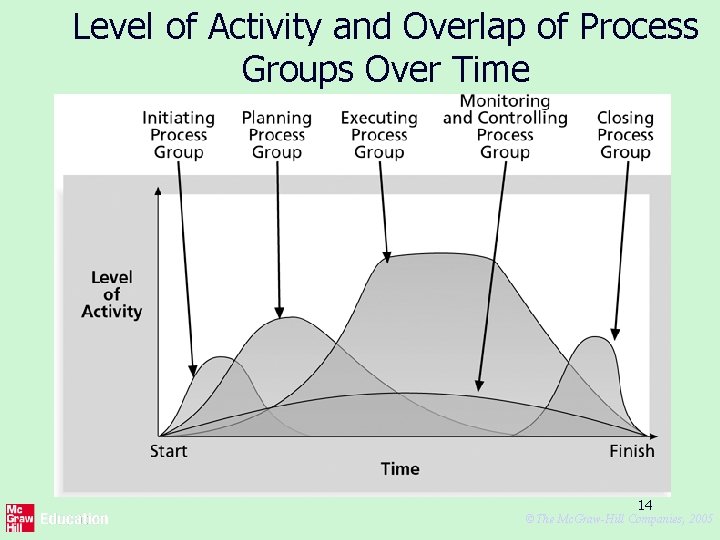
Level of Activity and Overlap of Process Groups Over Time 14 ©The Mc. Graw-Hill Companies, 2005
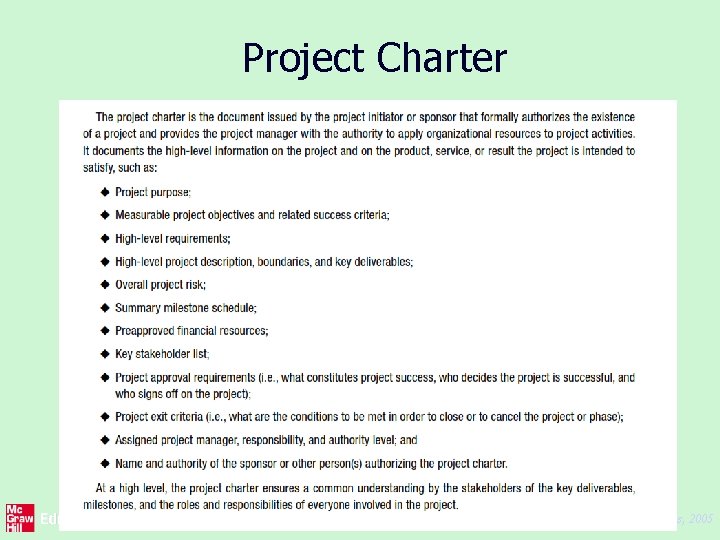
Project Charter ©The Mc. Graw-Hill Companies, 2005
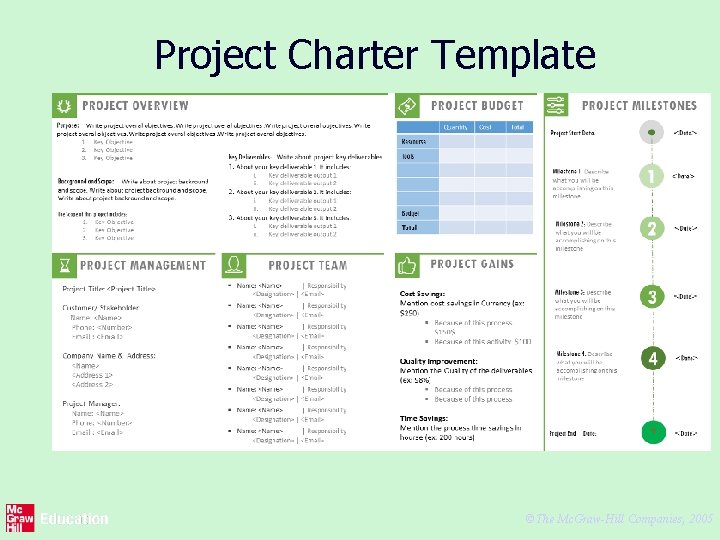
Project Charter Template ©The Mc. Graw-Hill Companies, 2005
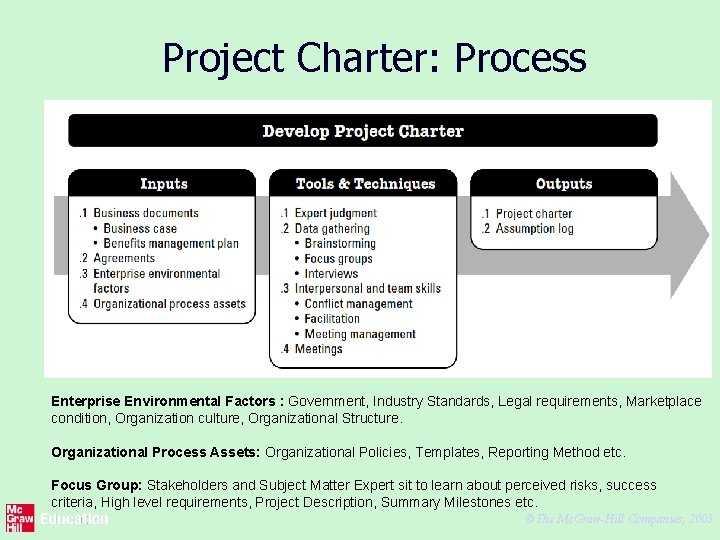
Project Charter: Process Enterprise Environmental Factors : Government, Industry Standards, Legal requirements, Marketplace condition, Organization culture, Organizational Structure. Organizational Process Assets: Organizational Policies, Templates, Reporting Method etc. Focus Group: Stakeholders and Subject Matter Expert sit to learn about perceived risks, success criteria, High level requirements, Project Description, Summary Milestones etc. ©The Mc. Graw-Hill Companies, 2005
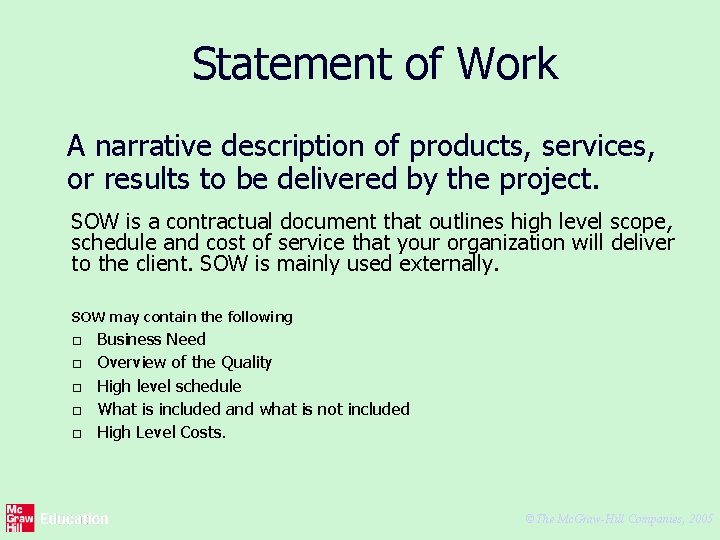
Statement of Work A narrative description of products, services, or results to be delivered by the project. SOW is a contractual document that outlines high level scope, schedule and cost of service that your organization will deliver to the client. SOW is mainly used externally. SOW may contain the following Business Need Overview of the Quality High level schedule What is included and what is not included High Level Costs. ©The Mc. Graw-Hill Companies, 2005
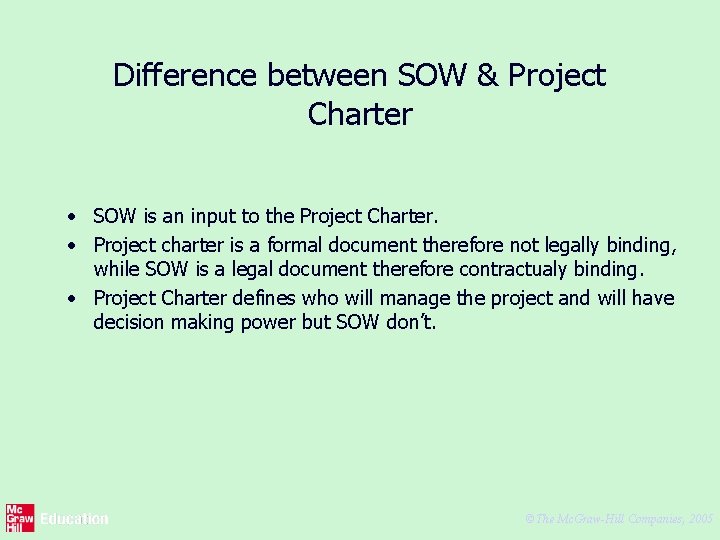
Difference between SOW & Project Charter • SOW is an input to the Project Charter. • Project charter is a formal document therefore not legally binding, while SOW is a legal document therefore contractualy binding. • Project Charter defines who will manage the project and will have decision making power but SOW don’t. ©The Mc. Graw-Hill Companies, 2005
THANK YOU ©The Mc. Graw-Hill Companies, 2005