
Software Evolution Ashima Wadhwa 1 Software change Software
- Slides: 15
Software Evolution Ashima Wadhwa 1
Software change ² Software change is inevitable § § § New requirements emerge when the software is used; The business environment changes; Errors must be repaired; New computers and equipment is added to the system; The performance or reliability of the system may have to be improved. ² A key problem for all organizations is implementing and managing change to their existing software systems. 2
Importance of evolution ² Organisations have huge investments in their software systems - they are critical business assets. ² To maintain the value of these assets to the business, they must be changed and updated. ² The majority of the software budget in large companies is devoted to changing and evolving existing software rather than developing new software. 3
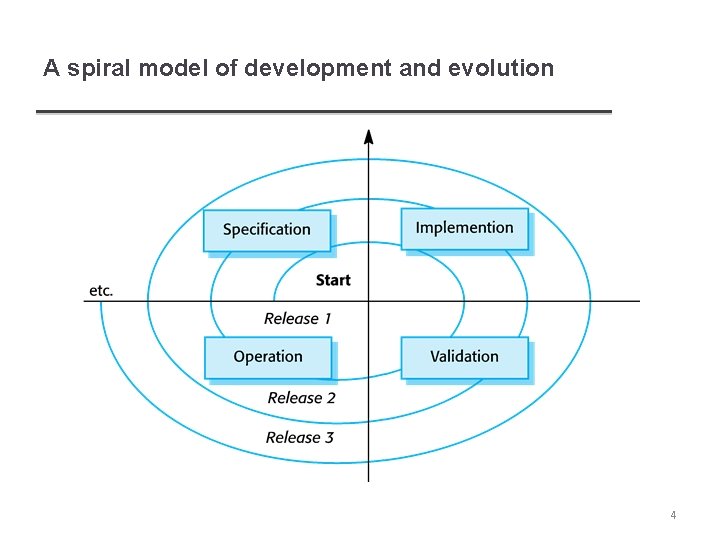
A spiral model of development and evolution 4
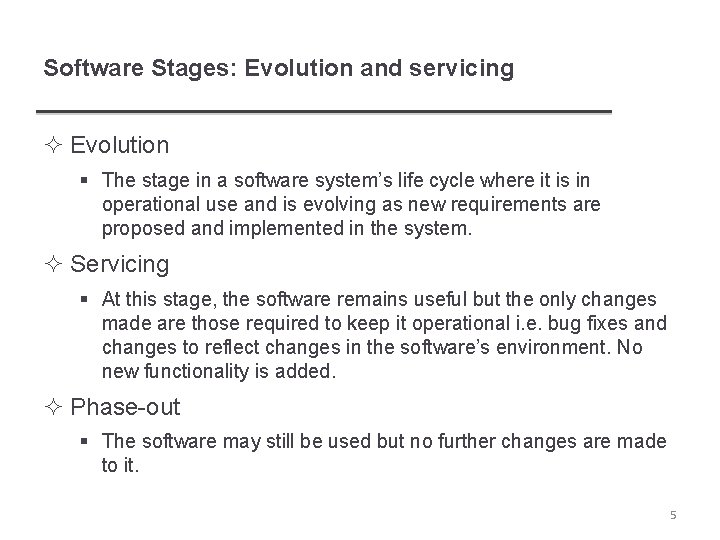
Software Stages: Evolution and servicing ² Evolution § The stage in a software system’s life cycle where it is in operational use and is evolving as new requirements are proposed and implemented in the system. ² Servicing § At this stage, the software remains useful but the only changes made are those required to keep it operational i. e. bug fixes and changes to reflect changes in the software’s environment. No new functionality is added. ² Phase-out § The software may still be used but no further changes are made to it. 5
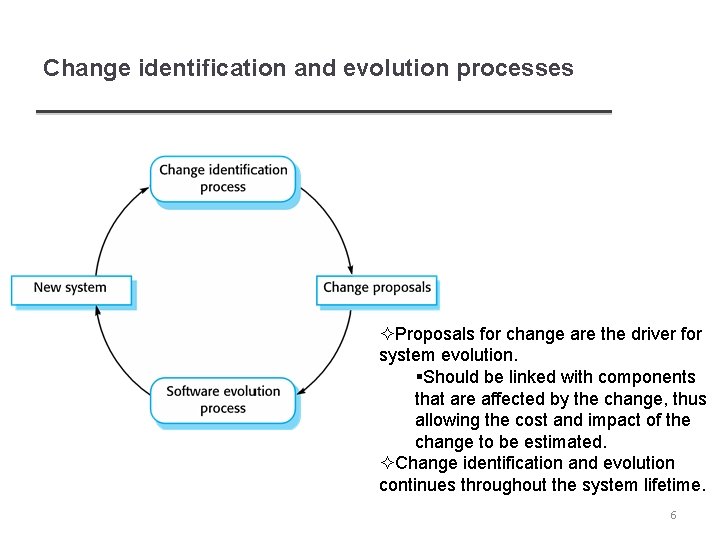
Change identification and evolution processes ²Proposals for change are the driver for system evolution. §Should be linked with components that are affected by the change, thus allowing the cost and impact of the change to be estimated. ²Change identification and evolution continues throughout the system lifetime. 6
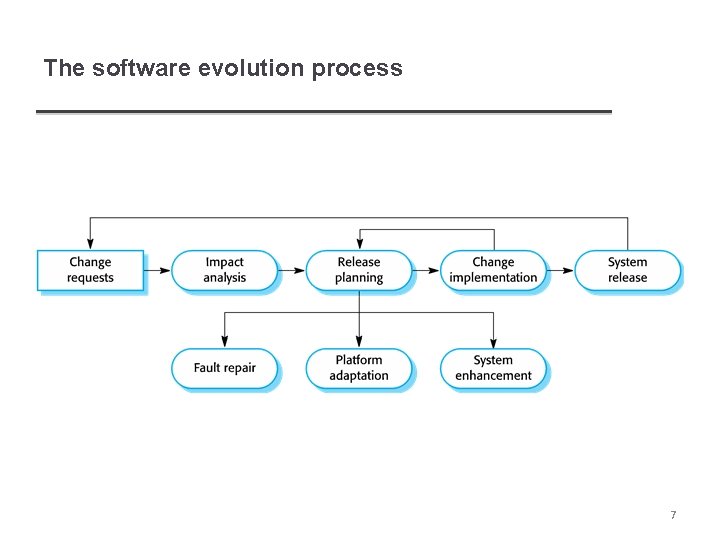
The software evolution process 7
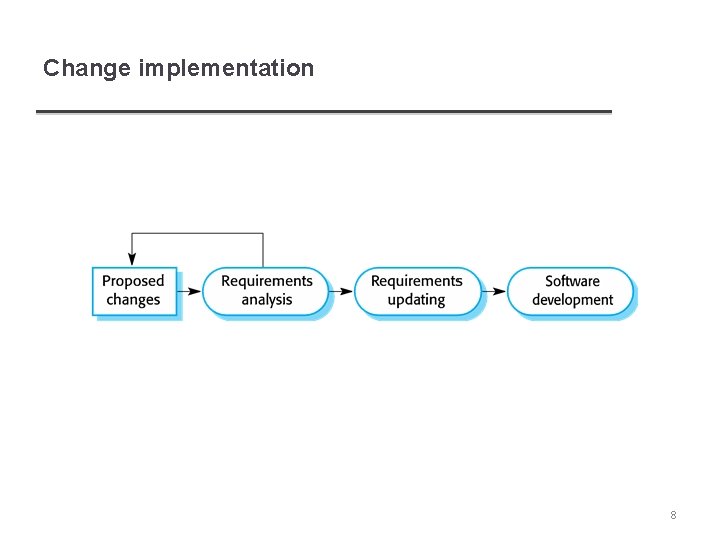
Change implementation 8
Change implementation ² Iteration of the development process where the revisions to the system are designed, implemented and tested. ² A critical difference is that the first stage of change implementation may involve program understanding, especially if the original system developers are not responsible for the change implementation. ² During the program understanding phase, you have to understand how the program is structured, how it delivers functionality and how the proposed change might affect the program. 9
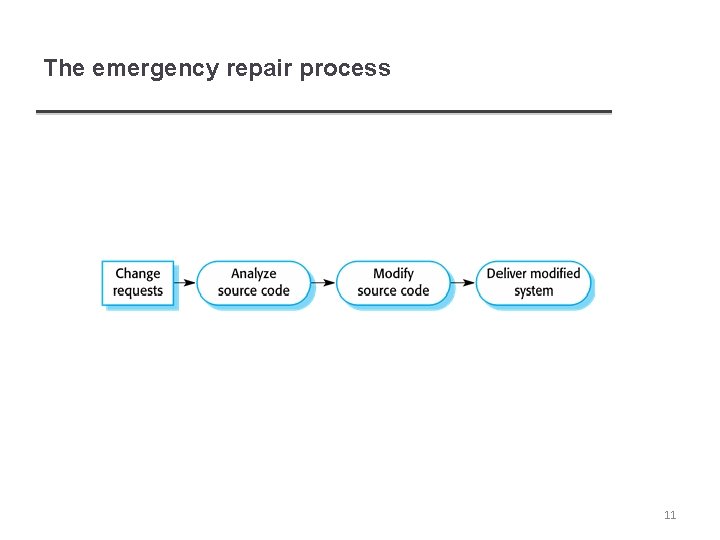
Urgent change requests ² Urgent changes may have to be implemented without going through all stages of the software engineering process § If a serious system fault has to be repaired to allow normal operation to continue; § If changes to the system’s environment (e. g. an OS upgrade) have unexpected effects; § If there are business changes that require a very rapid response (e. g. the release of a competing product). 10
The emergency repair process 11
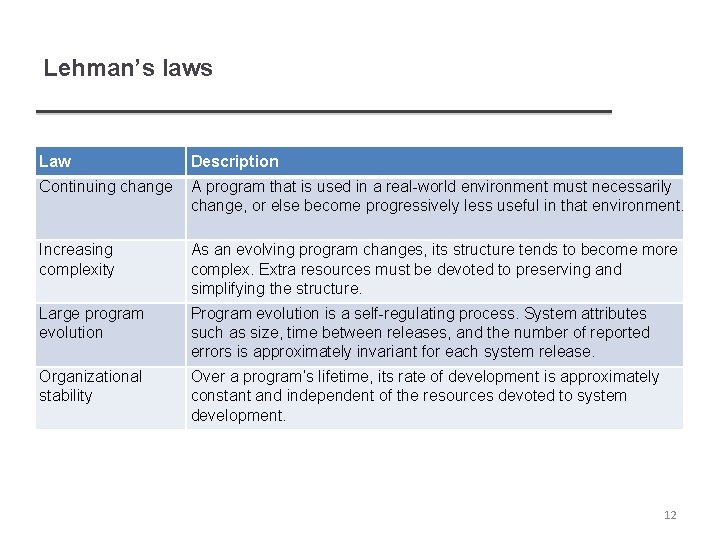
Lehman’s laws Law Description Continuing change A program that is used in a real-world environment must necessarily change, or else become progressively less useful in that environment. Increasing complexity As an evolving program changes, its structure tends to become more complex. Extra resources must be devoted to preserving and simplifying the structure. Large program evolution Program evolution is a self-regulating process. System attributes such as size, time between releases, and the number of reported errors is approximately invariant for each system release. Organizational stability Over a program’s lifetime, its rate of development is approximately constant and independent of the resources devoted to system development. 12
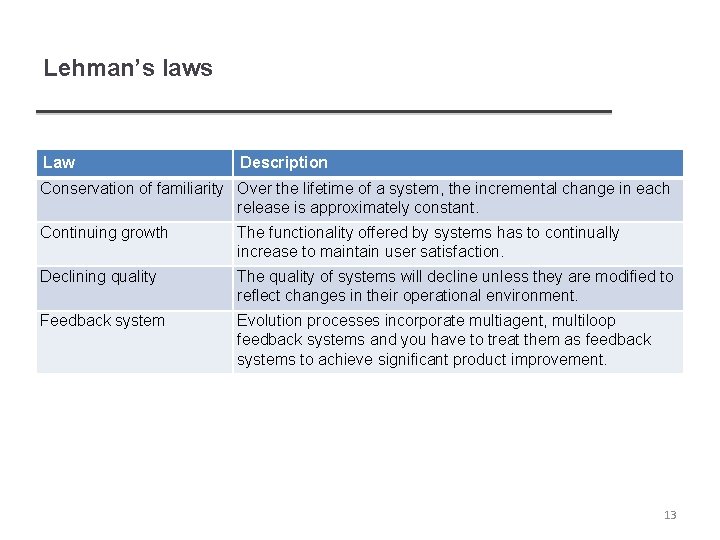
Lehman’s laws Law Description Conservation of familiarity Over the lifetime of a system, the incremental change in each release is approximately constant. Continuing growth The functionality offered by systems has to continually increase to maintain user satisfaction. Declining quality The quality of systems will decline unless they are modified to reflect changes in their operational environment. Feedback system Evolution processes incorporate multiagent, multiloop feedback systems and you have to treat them as feedback systems to achieve significant product improvement. 13
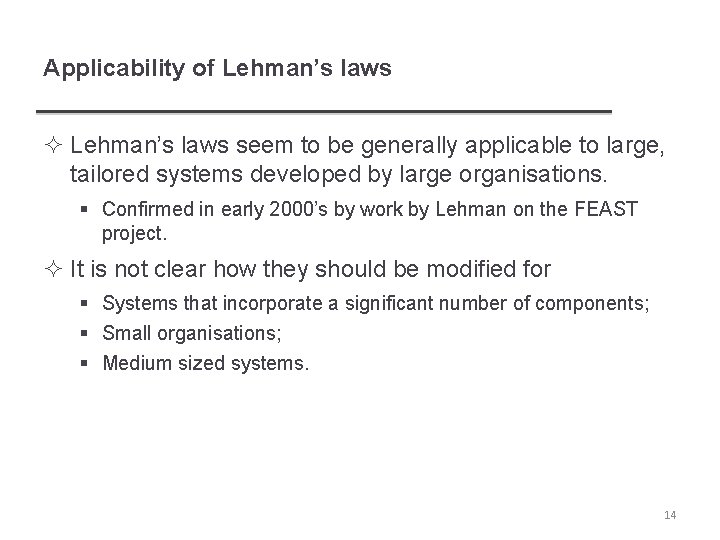
Applicability of Lehman’s laws ² Lehman’s laws seem to be generally applicable to large, tailored systems developed by large organisations. § Confirmed in early 2000’s by work by Lehman on the FEAST project. ² It is not clear how they should be modified for § Systems that incorporate a significant number of components; § Small organisations; § Medium sized systems. 14
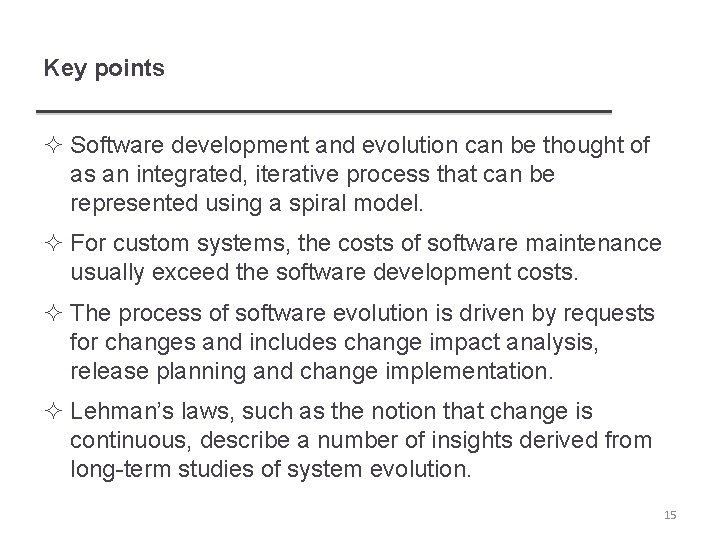
Key points ² Software development and evolution can be thought of as an integrated, iterative process that can be represented using a spiral model. ² For custom systems, the costs of software maintenance usually exceed the software development costs. ² The process of software evolution is driven by requests for changes and includes change impact analysis, release planning and change implementation. ² Lehman’s laws, such as the notion that change is continuous, describe a number of insights derived from long-term studies of system evolution. 15