
Software Analysis Tools Presented by Mr Shyam Raheja
Software Analysis Tools Presented by : - Mr. Shyam Raheja Depdt. of Computer Applications
Software Tools: Functions § § Planning tools » Cost / benefit analysis of alternative plans » Financial risk assessment » Feasibility of plans: identify potential operating disasters Operating tools » Engineering design » Operational procedure Data requirement Interactions of the tools

Interactions of Software Tools Planning tools: • Benefits - Economy - Environment • Investments • Risk Investment decisions Operation tools: • Performance analysis Schematic update -Stability • Control system design
Investment Decision Support § § § Investment costs » Fixed cost » Operating costs Calculating capital costs » Assumptions » Accounting practice Estimating operating costs » How the system operates – Plant availability – Merit order loading (Unit commitment and economic dispatch) » Production costing simulation

Production Simulation § § Simulate power system operation To calculate production cost § Load ØFrom each generator and for the whole system ØEnergy, fuel, pollution, etc. » Forecast load-A. § Generation » Existing generation A » Export to B » Merit order § § Load » Forecast load-B Generation » Existing generation B » Import from the interconnection. » Merit order
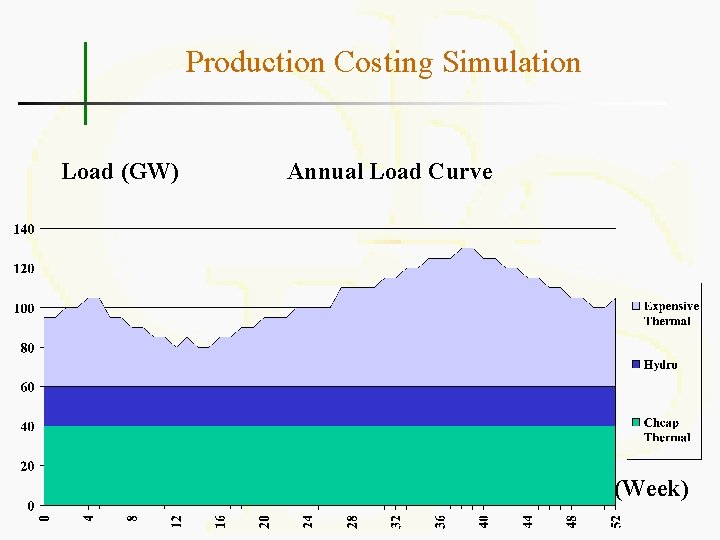
Production Costing Simulation Load (GW) Annual Load Curve (Week)
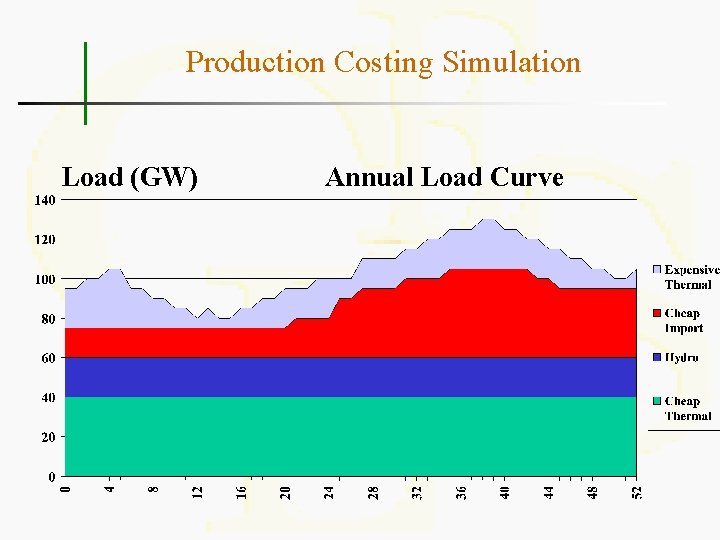
Production Costing Simulation Load (GW) Annual Load Curve
Probabilistic Production Costing § § § Taking into account of uncertainties in generator scheduling, forced outages, hydro availability, etc. Multi-year breaking down to a series of monthly or weekly simulations Output provides information of » » Fuel usage and cost Pollution generated Reliability level (Loss of load probability) System marginal cost Can be used to assess benefits (economical and environmental) of interconnection. Data requirements
Data § Input data » Load demand (peak load growth and load shape) » Generator capacity, availability, fuel type, heat rate, start-up/ shutdown cost, pollution generation » Fuel cost § Output data » System reliability » System and individual generator operating cost (fuel, O&M), emission…. . § Main tool in generation planning
Multi-area Production Costing § § Two approaches » Simultaneous simulation » External input » Determine transfer capability between areas – Rated and actual – Transmission planning tool » Estimate transfer schedule » Model import as generator and export as load in production costing – Deterministic or probabilistic modeling
Generation Planning § Requirement for generation addition » Reliability (Loss of load probability) § What, where, when and how much to add » Scenario study » Optimization approach § Production costing
Commercial Software Packages § PROSYM § UPLAN § EGEAS
PROSYM § § § Developed by Henwood Energy Services. More than 80% of utilities in the North American use it. Scenario modeling Stand-alone production costing or comprehensive optimal generation planning. Detailed representation of performance, cost and constraint characteristics of physical and financial resources
UPLAN § Developed by LCG Consulting § Advanced algorithms to simplify computations § PC based § Multi-area capability
EGEAS § Developed by Stone and Webster for EPRI (USA). § Advanced optimization techniques § Detailed production costing
Transmission Planning § Siting » Route selection » Capacity » Costing » Scenario generation § Performance analysis » Fixed configurations (snap shot) » Power flows, optimal power flows, stability
Data Requirements § Input data » Transmission network – Configuration – Parameters » Generation – configuration – Cost § » Load Output data » Power flow pattern » Constraint violations
Software Packages § PSAPAC (EPRI, USA) § DSA Power Tools (Power. Tech Labs, Canada) § PSS/E (Power Technologies, Inc. USA) § Euro. Stage (EDF) § Netomac (Siemans) § Power System Toolbox (Cherry Tree)
PSAPAC § Comprehensive modeling § Advanced algorithms § Accurate and reliable performance § Extensive data requirement § Elaborate output
Major Components of PSAPAC § INFLOW: Interactive power flow analysis § ETMSP: Extended transient and mid-term stability program § SSSP: Small signal stability program § VSTAB: Voltage stability analysis § DYREN: Dynamic reduction program
Power System Toolbox § Characteristics » A set of coordinated Matlab files » Source code availability § Capability » Designed for small to medium sized system (800 nodes, 200 generators) § Functions » Load flow » Transient stability » Small signal stability
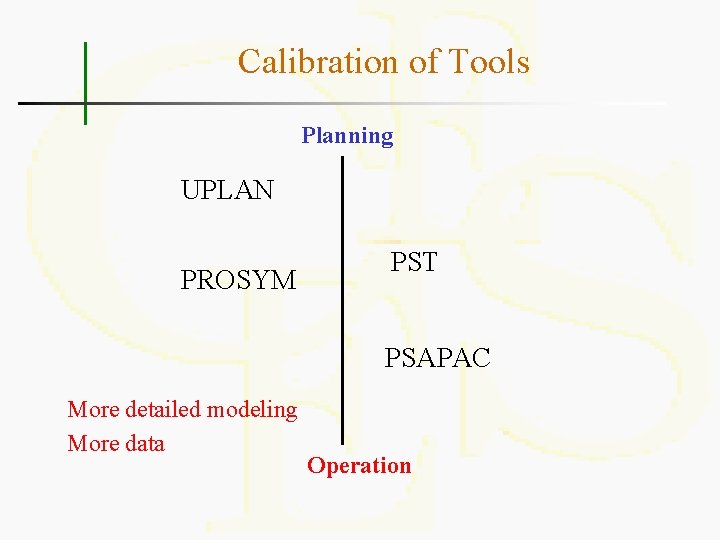
Calibration of Tools Planning UPLAN PROSYM PST PSAPAC More detailed modeling More data Operation
Conclusion § For the Northeast Asian Power Interconnection Study, the following factors should be considered in the selection of software tools » Achievement of objectives » Minimum data requirement » Commonly used » Transparent » Ease of use
Conclusion § For a preliminary study, we recommend that » For a particular analysis, a software is selected as the defacto standard » The interface between countries are specified according to the data requirement of that software » Each member country can use the standard software or their own software for their part of the analysis » The results are shared with the group » Nautilus conducts an overall study and also provides assistance to each member country.
Conclusion § We recommend that UPLAN and Matlab/PST be used initially for the preliminary study. More sophisticated tools may be used for future engineering analysis.
- Slides: 25