
Soft Tissue Injury Lutul D Farrow MD Assistant




- Slides: 62
Soft Tissue Injury Lutul D. Farrow, MD Assistant Professor, Clinical Orthopaedic Surgery University of Arizona College of Medicine Department of Orthopaedic Surgery
Disclosure Statement I have not received anything of value from or own stock in any commercial company or institution as it relates to this research study
Outline Introduction n Musculotendinous injury n Ligament injury n Treatment n Prevention n Conclusion n
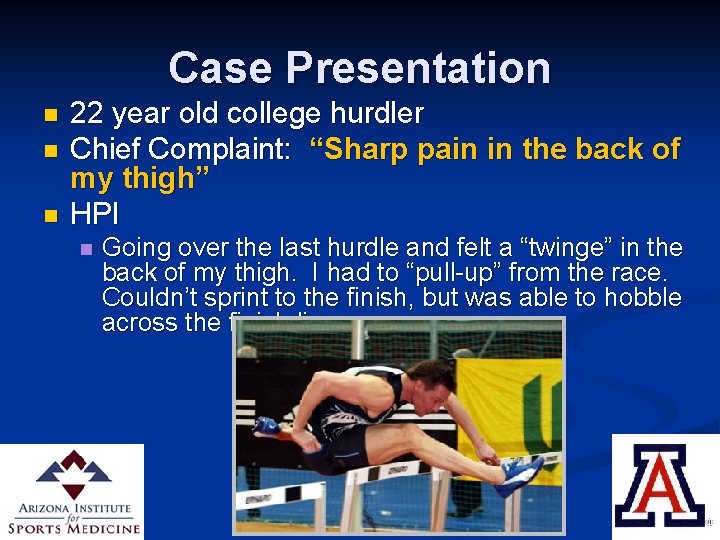
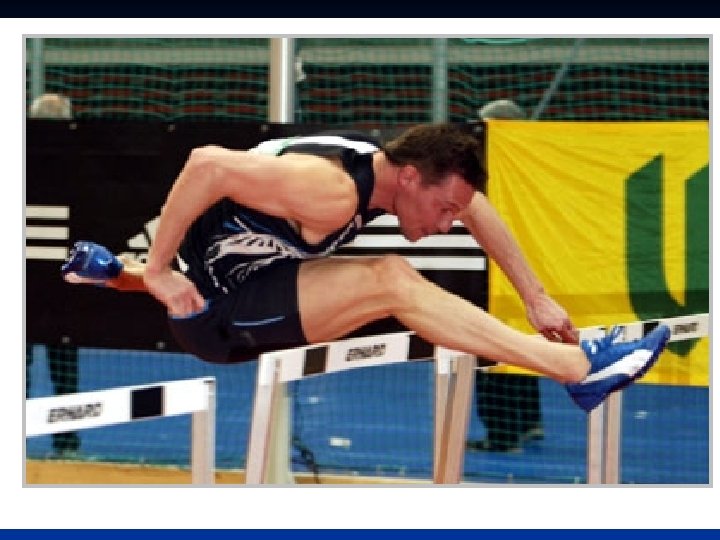
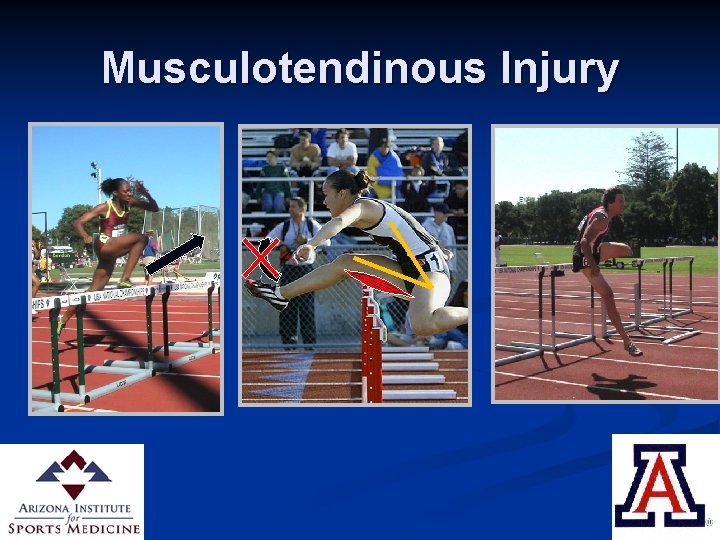
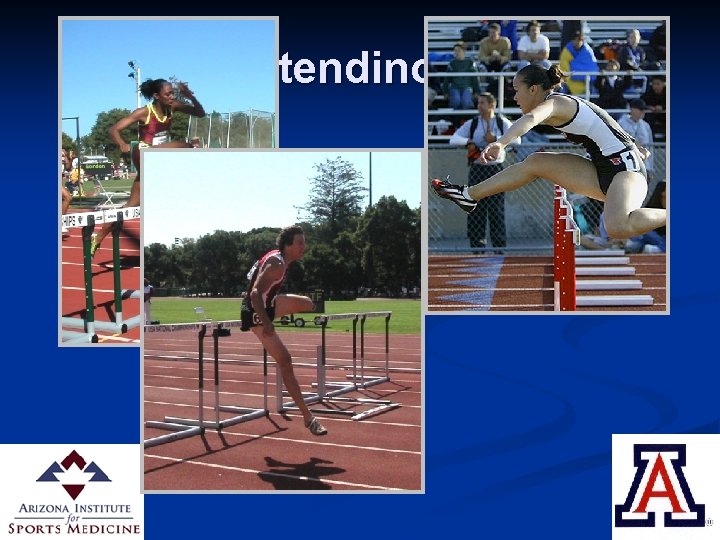
Case Presentation n 22 year old college hurdler Chief Complaint: “Sharp pain in the back of my thigh” HPI n Going over the last hurdle and felt a “twinge” in the back of my thigh. I had to “pull-up” from the race. Couldn’t sprint to the finish, but was able to hobble across the finish line.
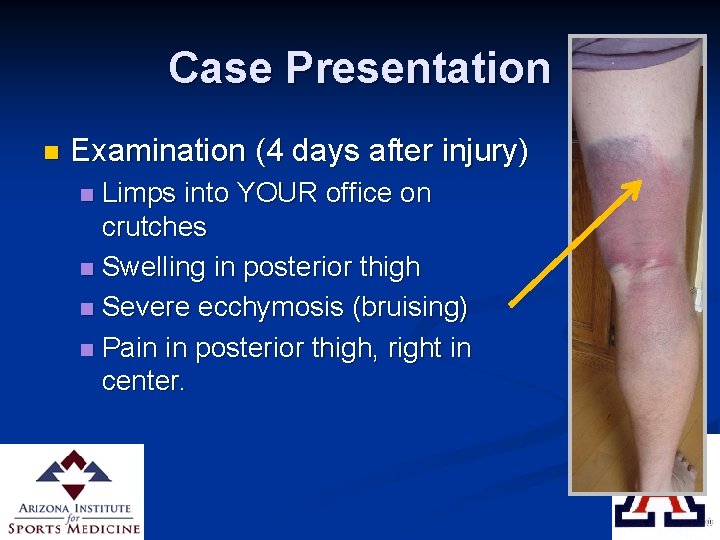
Case Presentation n Examination (4 days after injury) Limps into YOUR office on crutches n Swelling in posterior thigh n Severe ecchymosis (bruising) n Pain in posterior thigh, right in center. n
Musculotendinous Injury n Muscle injuries very common in active individuals n Up to 90% of sports injuries Can be painful/inconvenient injuries n Huge socioeconomic impact n Loss productivity n Loss income n Crisco JJ, Jokl P, Heinen GT, et al. A muscle contusion injury model. Am J Sports Med 1994; 22: 702 -10 Garrett Jr WE. Muscle strain injuries: clinical and basic aspects. Med Sci Sports Exerc 1990 Aug; 22 (4): 436 -43
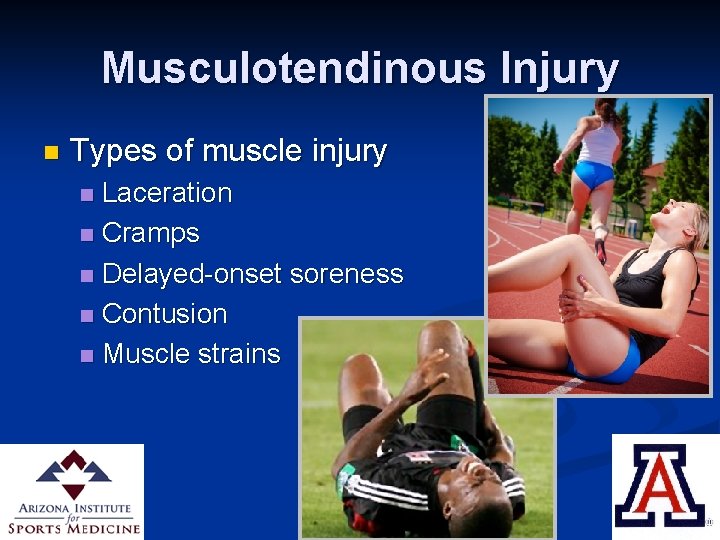
Musculotendinous Injury n Types of muscle injury Laceration n Cramps n Delayed-onset soreness n Contusion n Muscle strains n
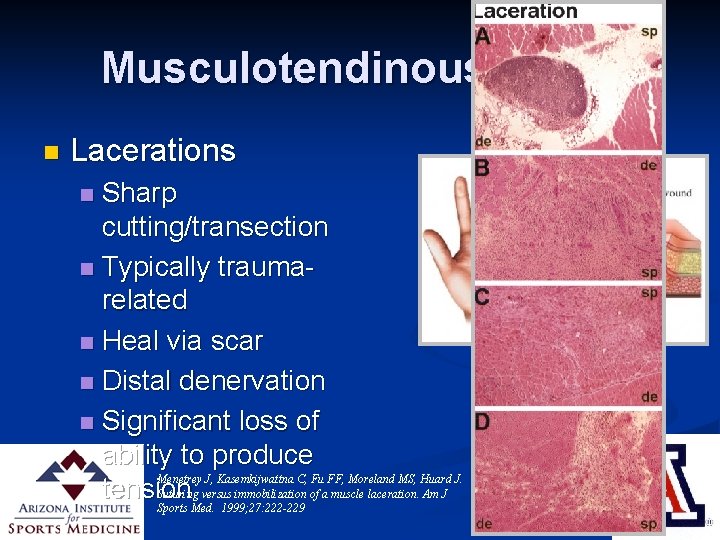
Musculotendinous Injury n Lacerations Sharp cutting/transection n Typically traumarelated n Heal via scar n Distal denervation n Significant loss of ability to produce Menetrey J, Kasemkijwattna C, Fu FF, Moreland MS, Huard J. Suturing versus immobilization of a muscle laceration. Am J tension Sports Med. 1999; 27: 222 -229 n
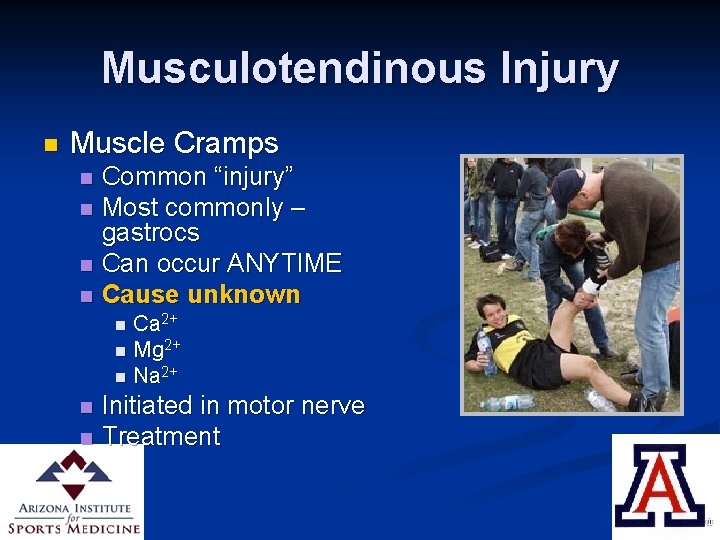
Musculotendinous Injury n Muscle Cramps n n Common “injury” Most commonly – gastrocs Can occur ANYTIME Cause unknown Ca 2+ n Mg 2+ n Na 2+ n n n Initiated in motor nerve Treatment
Musculotendinous Injury n Delayed-Onset Muscle Soreness Pain following unaccustomed vigorous activity n Delayed timing n Small ruptures in muscle n Connective tissue n
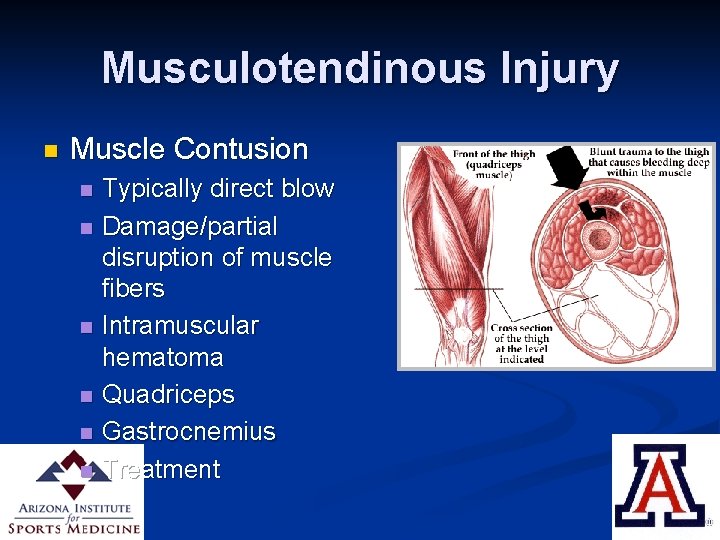
Musculotendinous Injury n Muscle Contusion n n n Typically direct blow Damage/partial disruption of muscle fibers Intramuscular hematoma Quadriceps Gastrocnemius Treatment
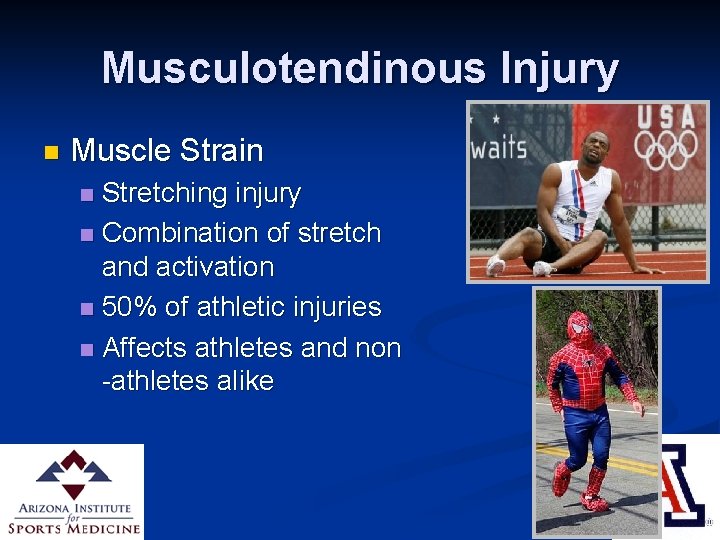
Musculotendinous Injury n Muscle Strain Stretching injury n Combination of stretch and activation n 50% of athletic injuries n Affects athletes and non -athletes alike n
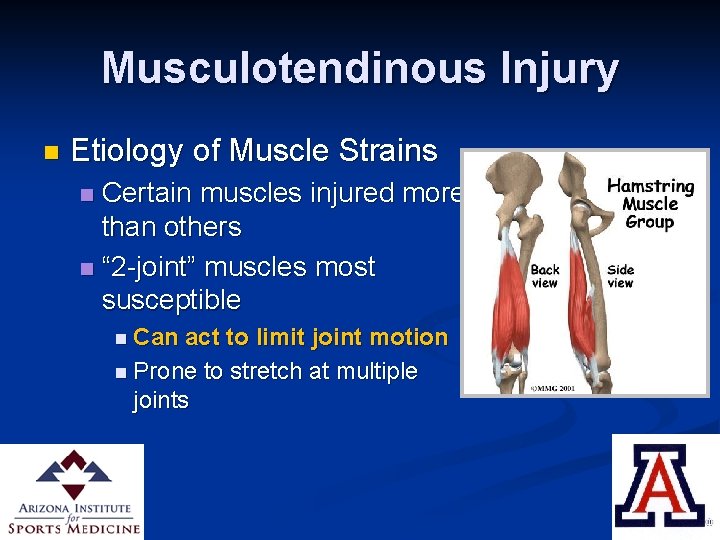
Musculotendinous Injury n Etiology of Muscle Strains Certain muscles injured more than others n “ 2 -joint” muscles most susceptible n n Can act to limit joint motion n Prone to stretch at multiple joints
Musculotendinous Injury n Common examples Biceps brachaii n Rectus femoris n “Hamstrings” n Gastrocnemius n n These are some of the more commonly strained muscles
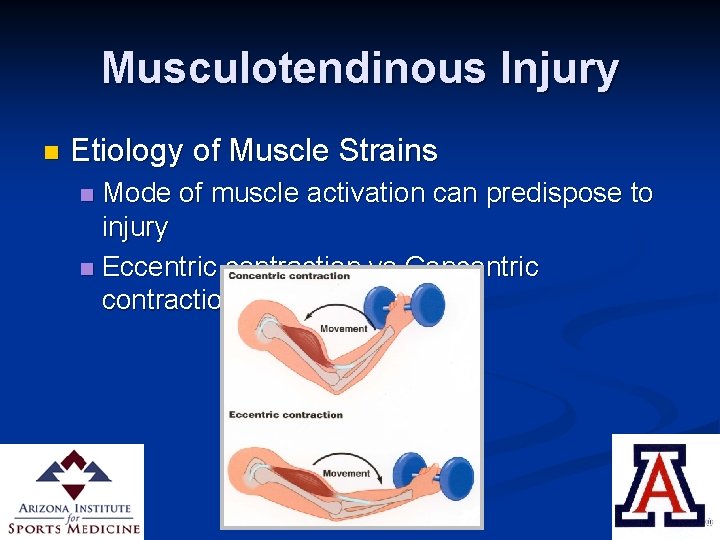
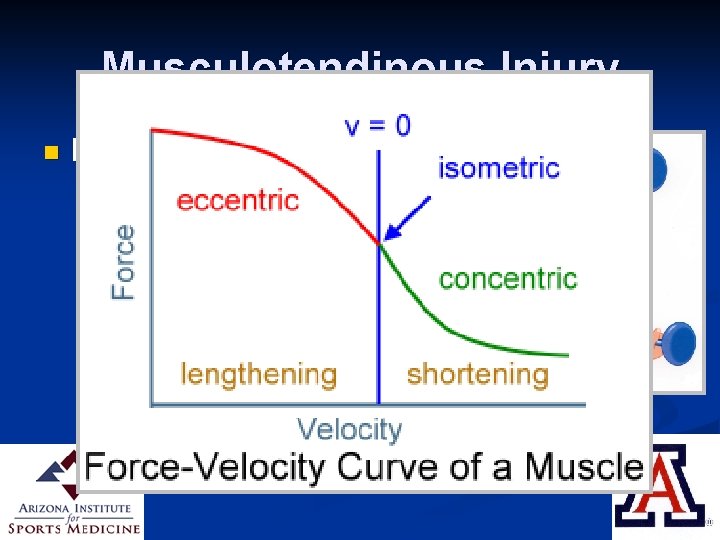
Musculotendinous Injury n Etiology of Muscle Strains Mode of muscle activation can predispose to injury n Eccentric contraction vs Concentric contraction n
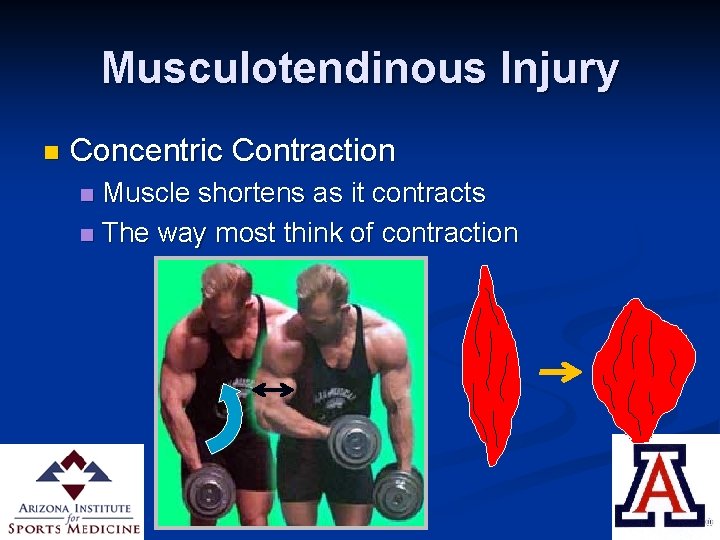
Musculotendinous Injury n Concentric Contraction Muscle shortens as it contracts n The way most think of contraction n
Musculotendinous Injury n Eccentric Contraction Muscle lengthens as it contracts n Typically to “slowdown” extremity n High potential for injury n Lots of internal energy created n
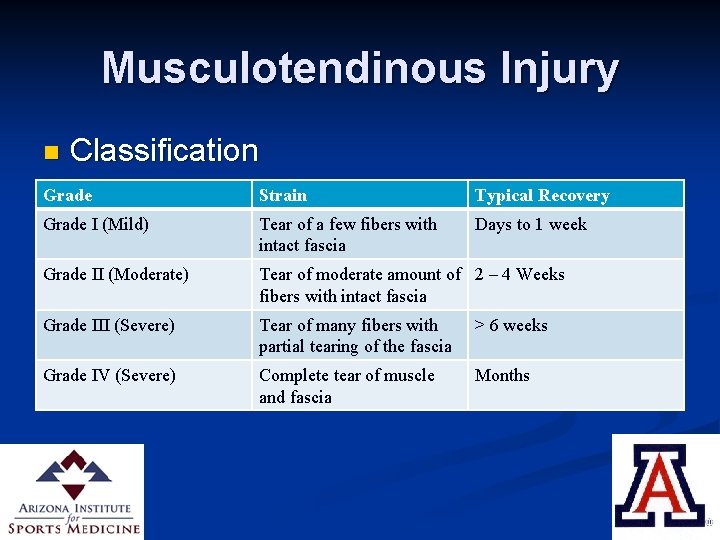
Musculotendinous Injury n Classification Grade Strain Typical Recovery Grade I (Mild) Tear of a few fibers with intact fascia Days to 1 week Grade II (Moderate) Tear of moderate amount of 2 – 4 Weeks fibers with intact fascia Grade III (Severe) Tear of many fibers with partial tearing of the fascia > 6 weeks Grade IV (Severe) Complete tear of muscle and fascia Months
Musculotendinous Injury
Musculotendinous Injury n This is your friend, what do you do?
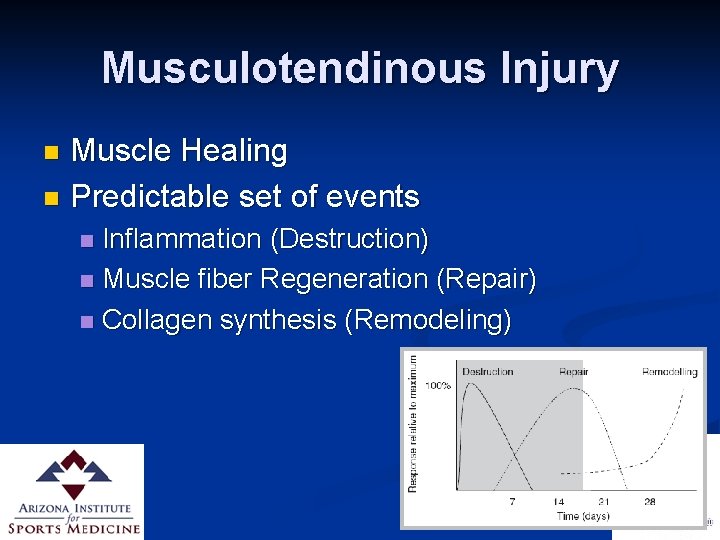
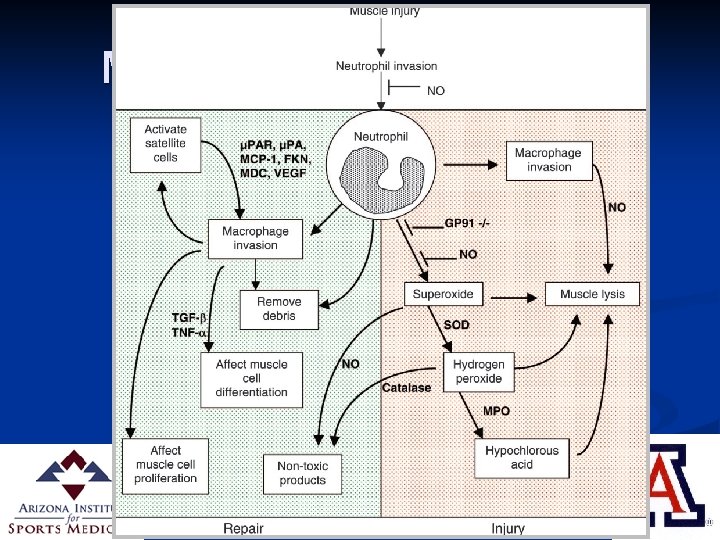
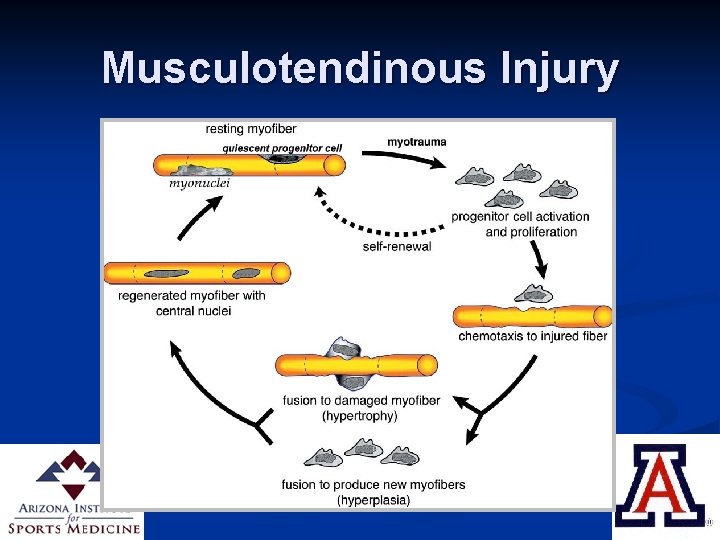
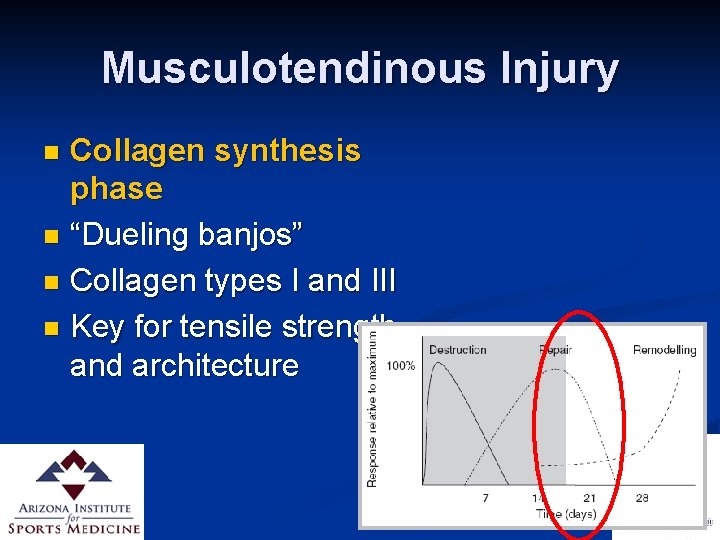
Musculotendinous Injury Muscle Healing n Predictable set of events n Inflammation (Destruction) n Muscle fiber Regeneration (Repair) n Collagen synthesis (Remodeling) n
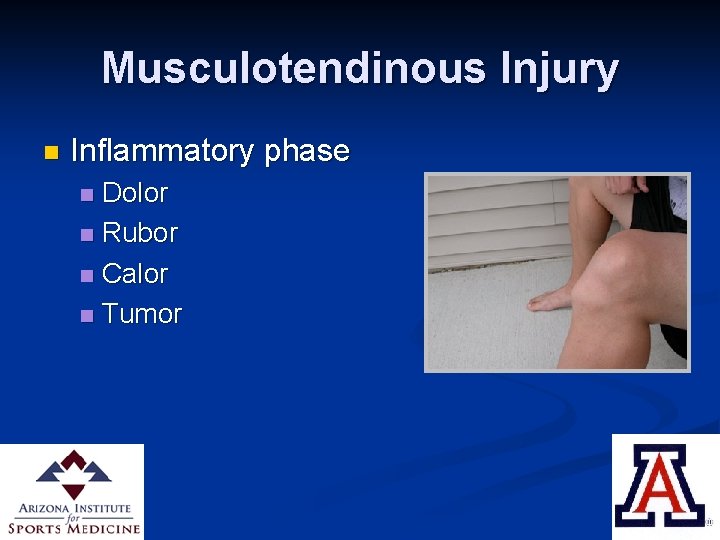
Musculotendinous Injury n Inflammatory phase Dolor n Rubor n Calor n Tumor n
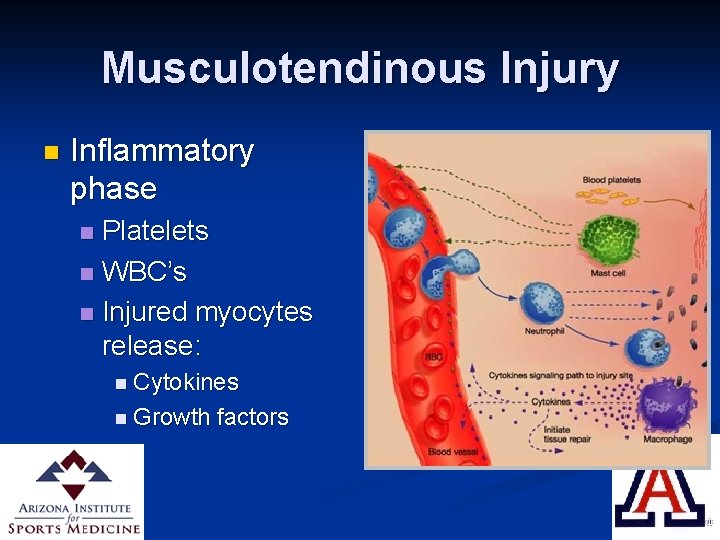
Musculotendinous Injury n Inflammatory phase Platelets n WBC’s n Injured myocytes release: n n Cytokines n Growth factors
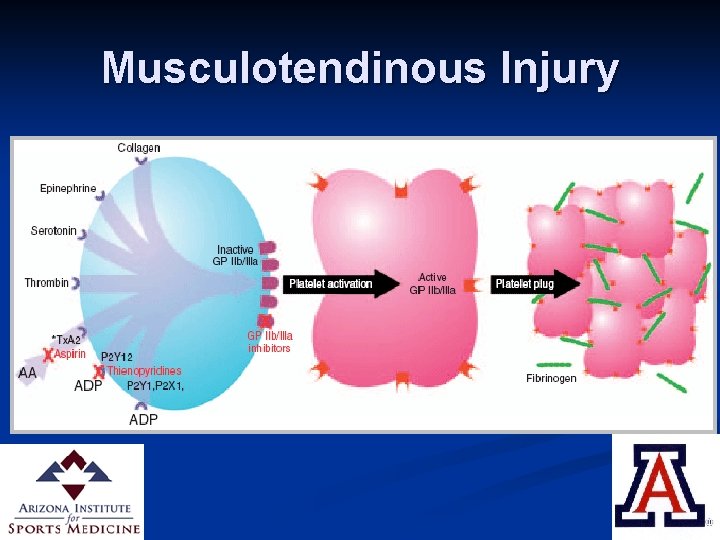
Musculotendinous Injury Inflammatory phase n Following muscle injury: n Disruption of vasculature n “Damage control” n Platelets n n Proinflammatory n mediators Vasodilation and increased permeability
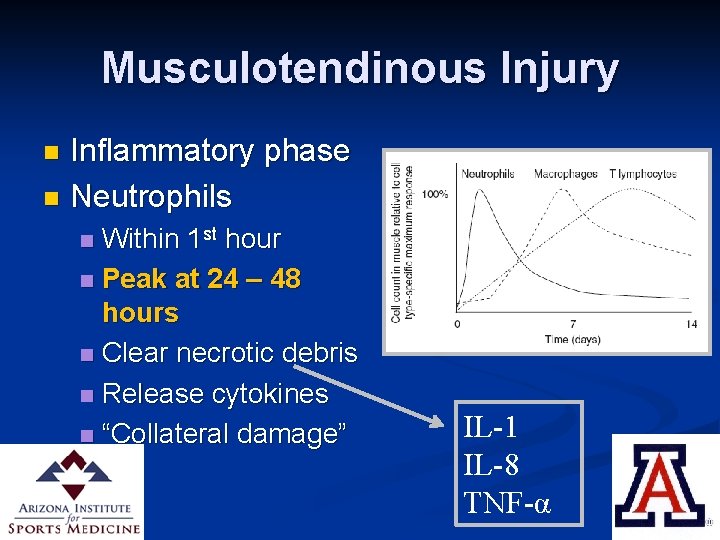
Musculotendinous Injury Inflammatory phase n Neutrophils n Within 1 st hour n Peak at 24 – 48 hours n Clear necrotic debris n Release cytokines n “Collateral damage” n IL-1 IL-8 TNF-α
Musculotendinous Injury
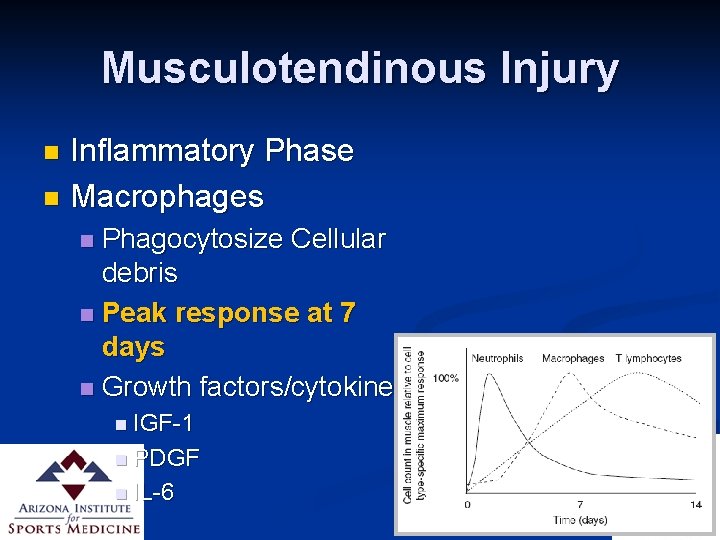
Musculotendinous Injury Inflammatory Phase n Macrophages n Phagocytosize Cellular debris n Peak response at 7 days n Growth factors/cytokines n n IGF-1 n PDGF n IL-6
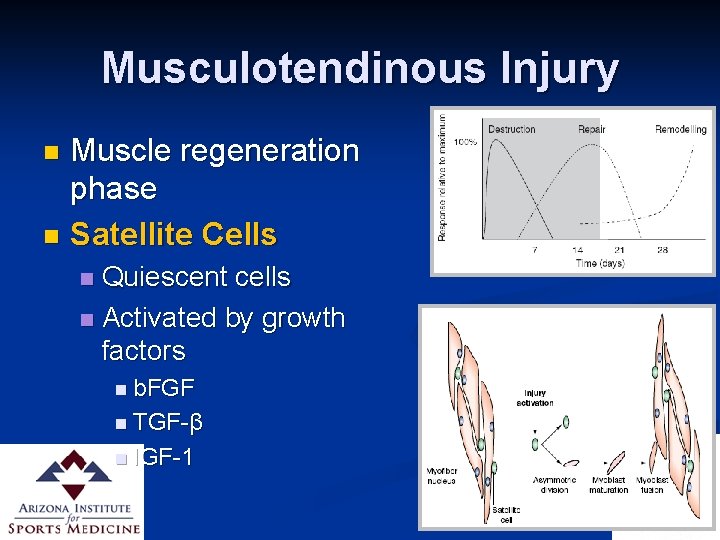
Musculotendinous Injury Muscle regeneration phase n Satellite Cells n Quiescent cells n Activated by growth factors n n b. FGF n TGF-β n IGF-1
Satellite Cells +
Musculotendinous Injury
Musculotendinous Injury Collagen synthesis phase n “Dueling banjos” n Collagen types I and III n Key for tensile strength and architecture n
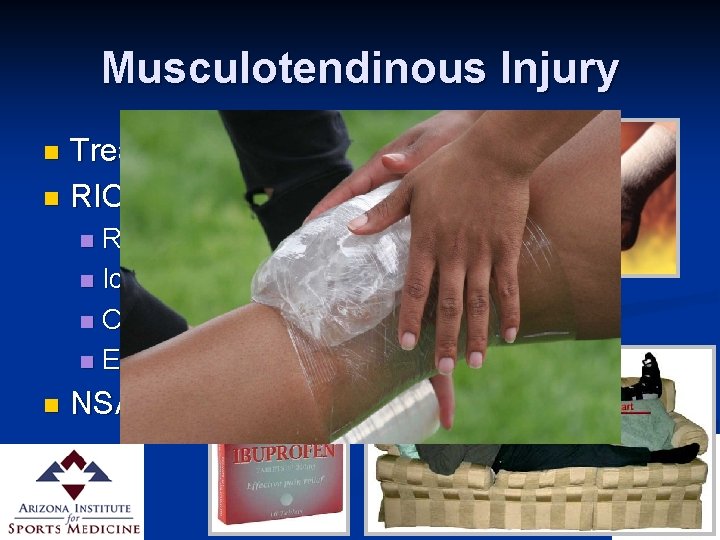
Musculotendinous Injury Treatment n RICE n Rest n Ice n Compression n Elevation n n NSAID’s
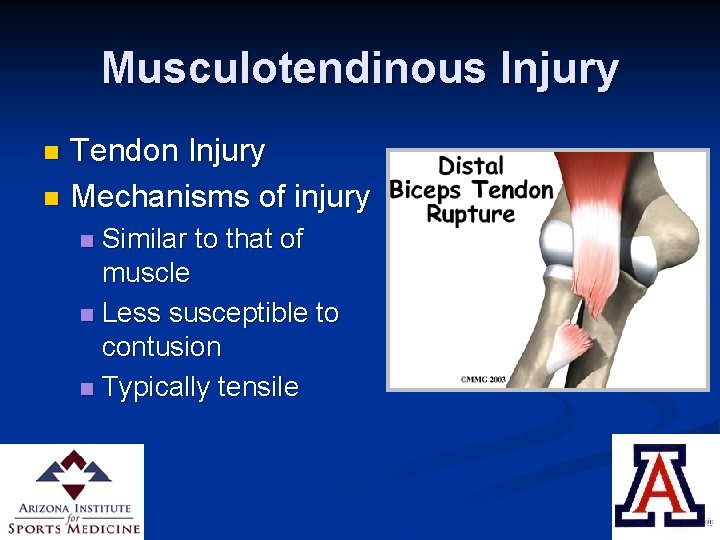
Musculotendinous Injury Tendon Injury n Mechanisms of injury n Similar to that of muscle n Less susceptible to contusion n Typically tensile n
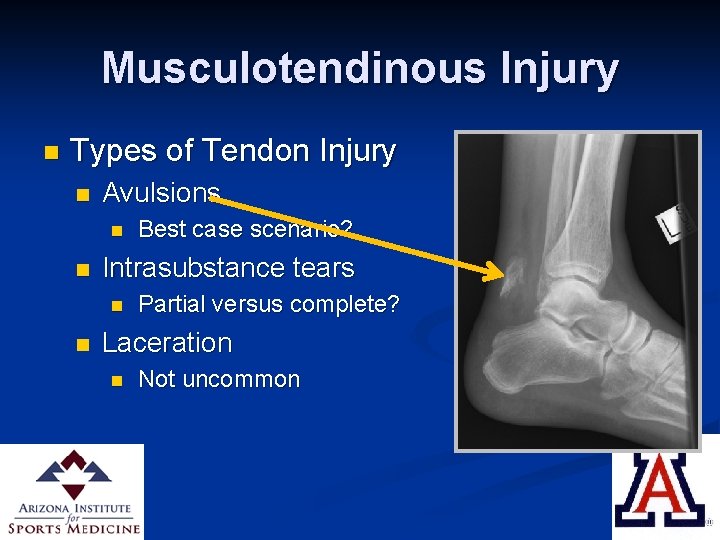
Musculotendinous Injury n Types of Tendon Injury n Avulsions n n Intrasubstance tears n n Best case scenario? Partial versus complete? Laceration n Not uncommon
Musculotendinous Healing n Tendon Healing n Three phases: n Inflammatory phase n Reparative phase n Remodeling phase
Musculotendinous Injury Tendon Healing n Inflammatory phase n Injury until 8 – 10 days n Blood clot forms n Inflammatory cells n Fibroblasts and capillary buds n
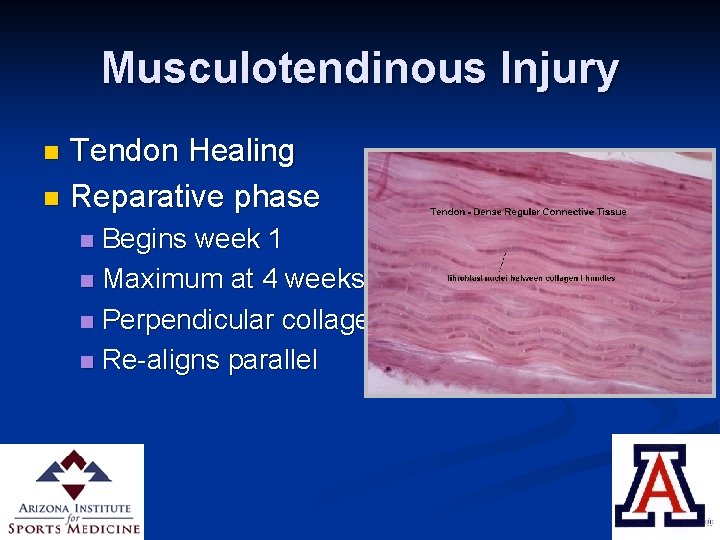
Musculotendinous Injury Tendon Healing n Reparative phase n Begins week 1 n Maximum at 4 weeks n Perpendicular collagen n Re-aligns parallel n
Musculotendinous Injury Tendon Healing n Remodeling phase n Begins at 15 th day n Lasts for up to 1 year n
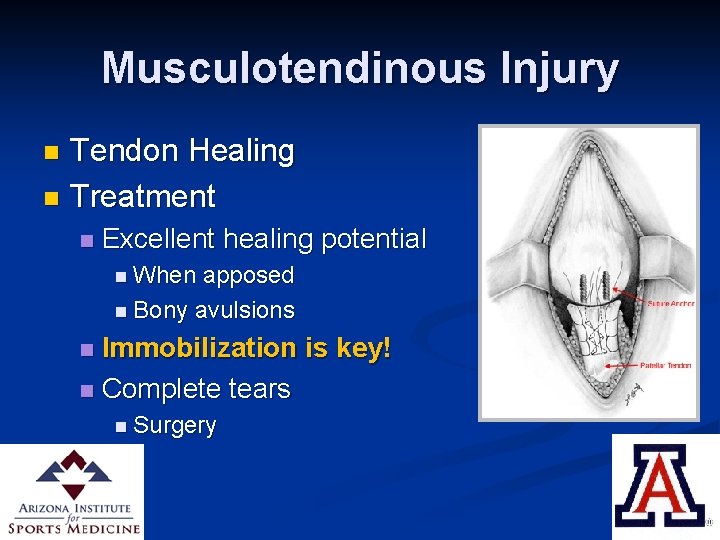
Musculotendinous Injury Tendon Healing n Treatment n n Excellent healing potential n When apposed n Bony avulsions Immobilization is key! n Complete tears n n Surgery
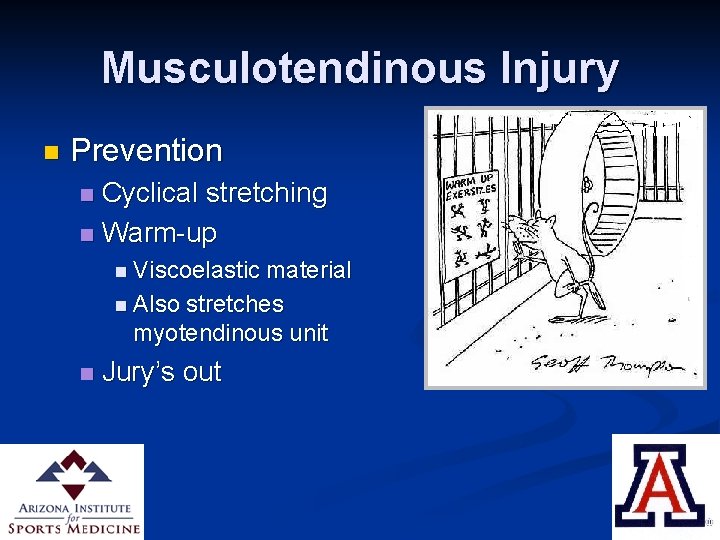
Musculotendinous Injury n Prevention Cyclical stretching n Warm-up n n Viscoelastic material n Also stretches myotendinous unit n Jury’s out
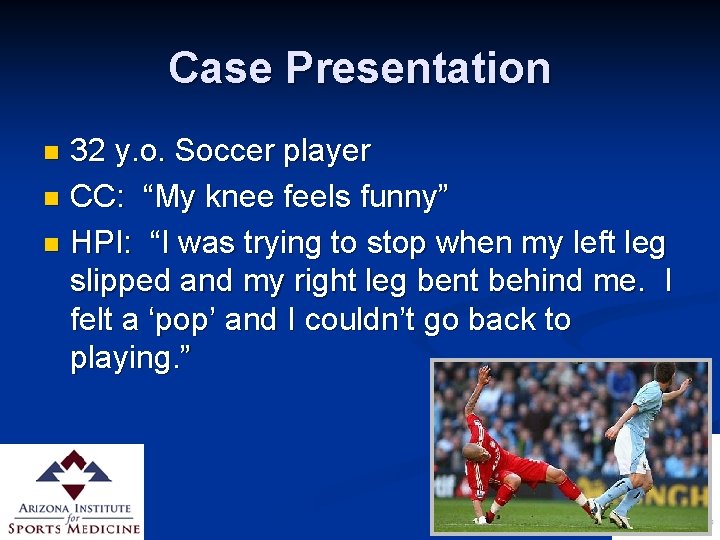
Case Presentation 32 y. o. Soccer player n CC: “My knee feels funny” n HPI: “I was trying to stop when my left leg slipped and my right leg bent behind me. I felt a ‘pop’ and I couldn’t go back to playing. ” n
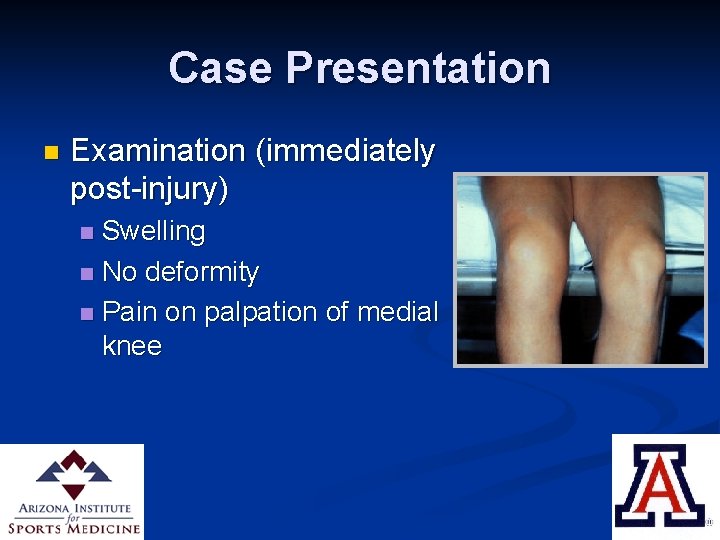
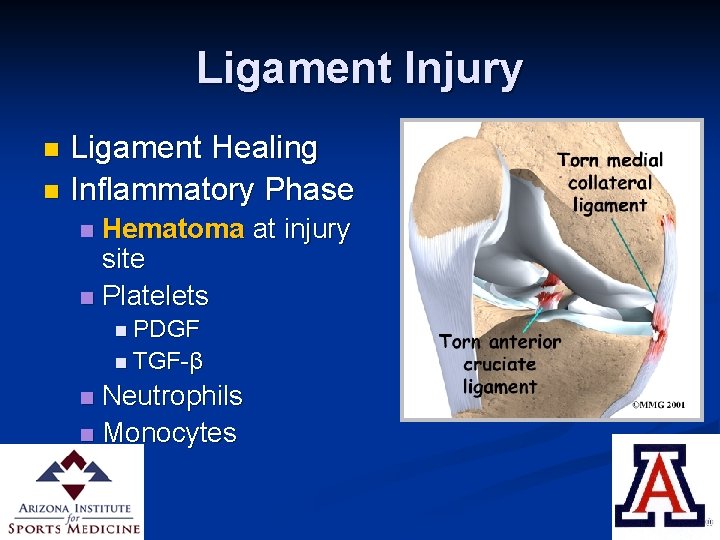
Case Presentation n Examination (immediately post-injury) Swelling n No deformity n Pain on palpation of medial knee n
Ligament Injury
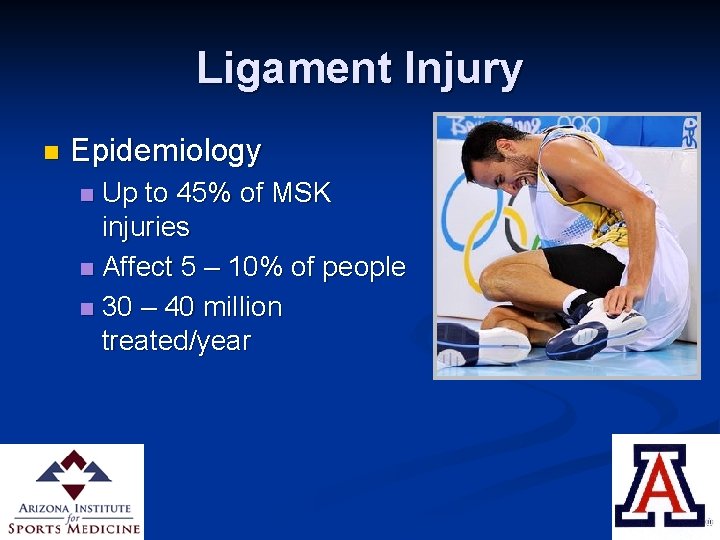
Ligament Injury n Epidemiology Up to 45% of MSK injuries n Affect 5 – 10% of people n 30 – 40 million treated/year n
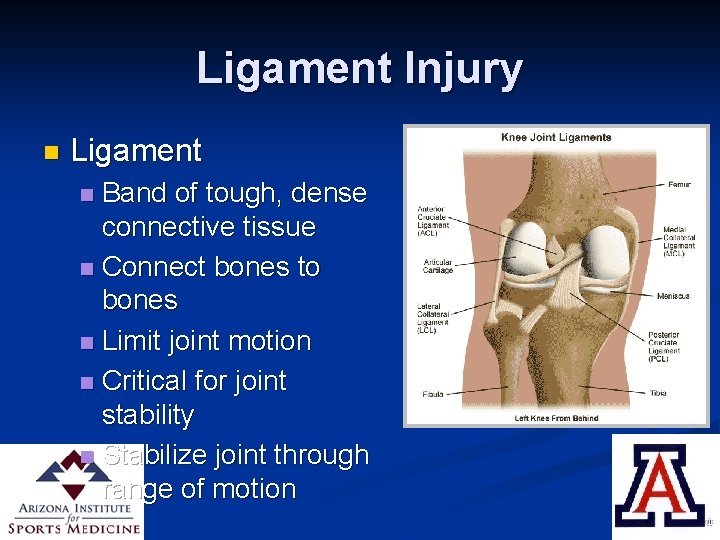
Ligament Injury n Ligament Band of tough, dense connective tissue n Connect bones to bones n Limit joint motion n Critical for joint stability n Stabilize joint through range of motion n
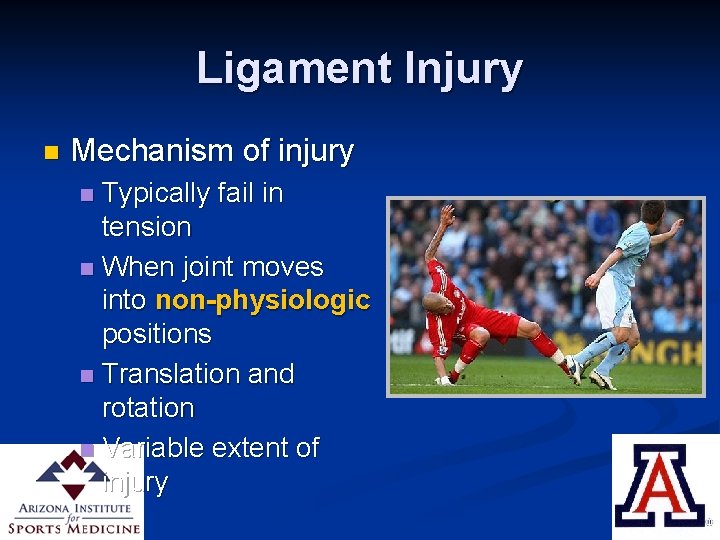
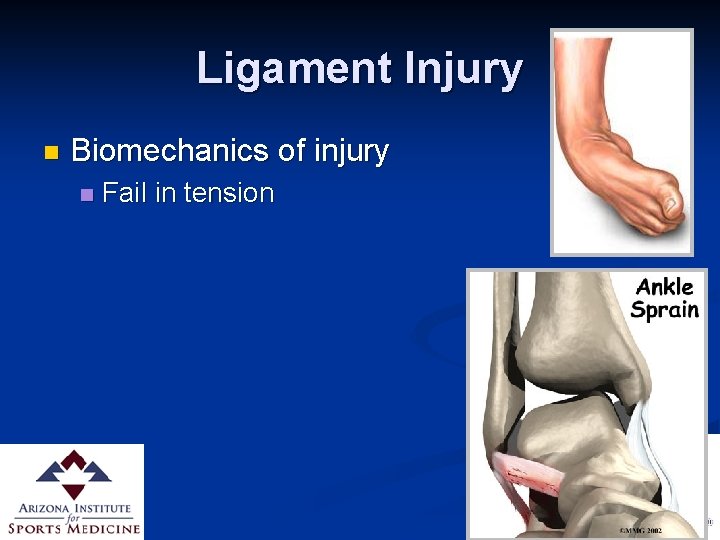
Ligament Injury n Mechanism of injury Typically fail in tension n When joint moves into non-physiologic positions n Translation and rotation n Variable extent of injury n
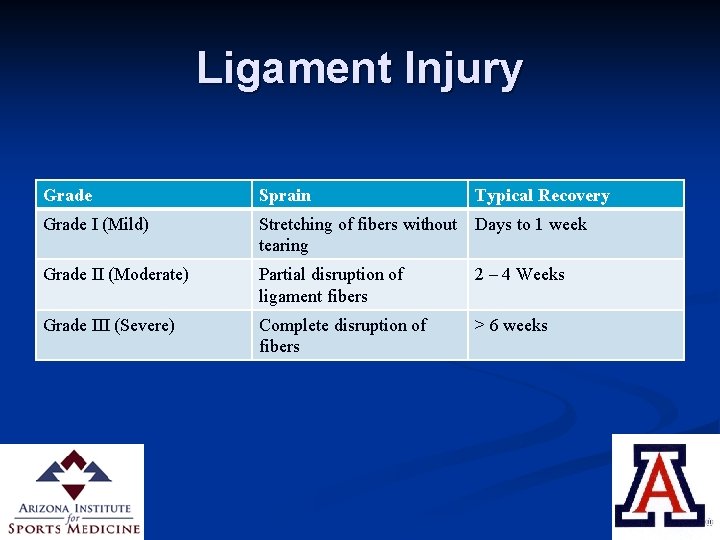
Ligament Injury Grade Sprain Typical Recovery Grade I (Mild) Stretching of fibers without Days to 1 week tearing Grade II (Moderate) Partial disruption of ligament fibers 2 – 4 Weeks Grade III (Severe) Complete disruption of fibers > 6 weeks
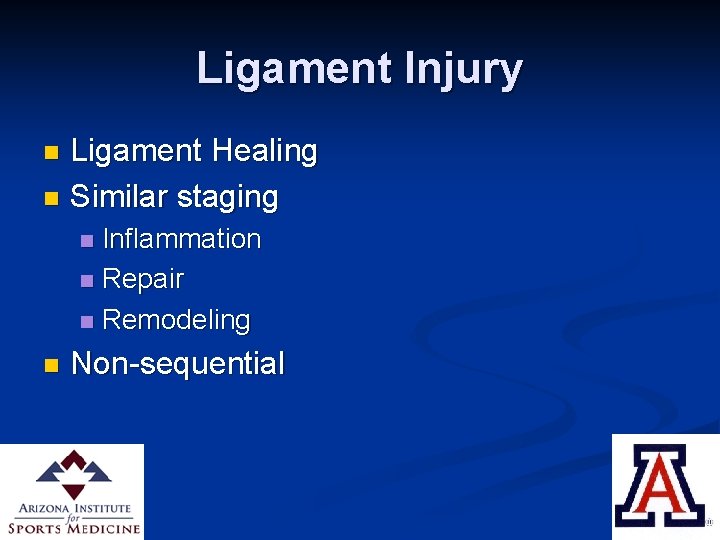
Ligament Injury Ligament Healing n Similar staging n Inflammation n Repair n Remodeling n n Non-sequential
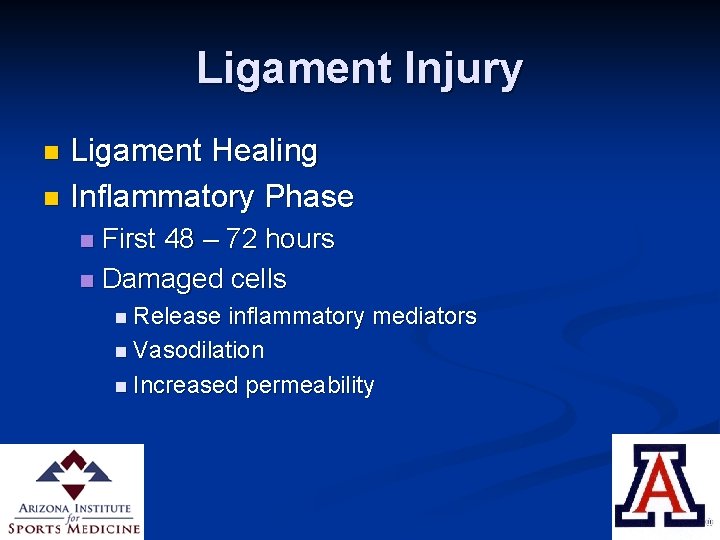
Ligament Injury Ligament Healing n Inflammatory Phase n First 48 – 72 hours n Damaged cells n n Release inflammatory mediators n Vasodilation n Increased permeability
Ligament Injury Ligament Healing n Inflammatory Phase n Hematoma at injury site n Platelets n n PDGF n TGF-β Neutrophils n Monocytes n
Ligament Injury Ligament Healing n Repair phase n Begins at day 2 – 3 n Replacement of necrotic tissue n Fibroblasts present n
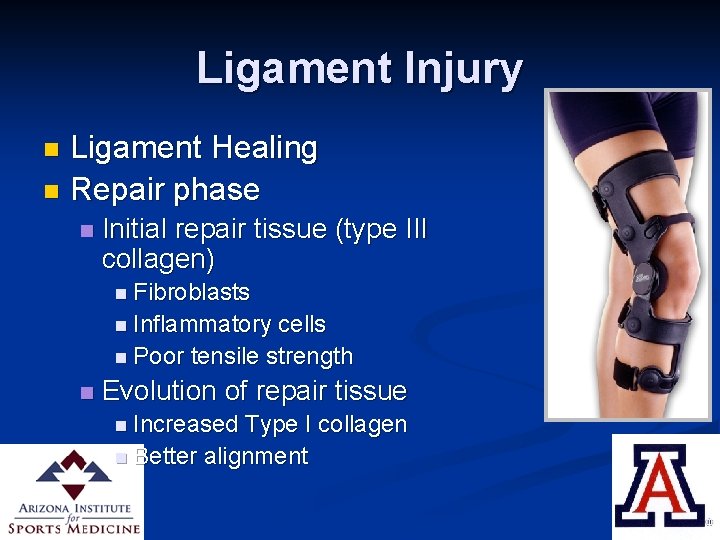
Ligament Injury Ligament Healing n Repair phase n n Initial repair tissue (type III collagen) n Fibroblasts n Inflammatory cells n Poor tensile strength n Evolution of repair tissue n Increased Type I collagen n Better alignment
Ligament Injury Ligament Healing n Remodeling phase n Begins several weeks following injury n More organized structure n Collagen: ↓ type III, ↑ type I n May continue for years n Ultimate tensile strength 50 – 70% n
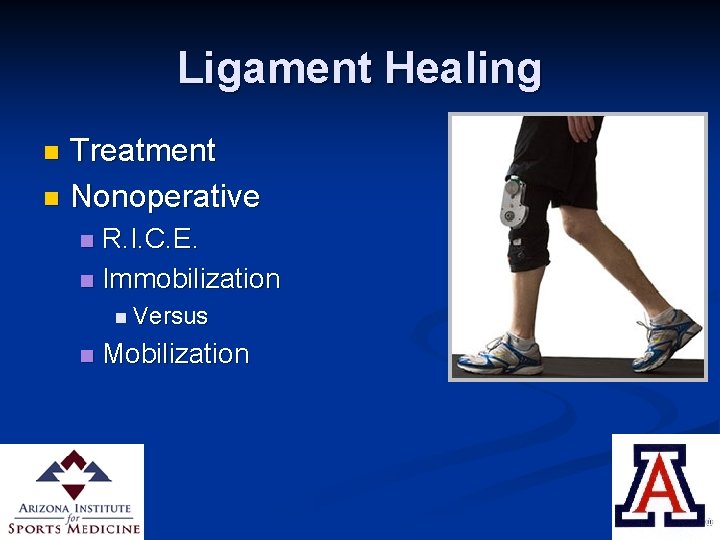
Ligament Healing Treatment n Nonoperative n R. I. C. E. n Immobilization n n Versus n Mobilization
Ligament Healing JBJS 1987 n Woo et al n Immobilization n Decreased load to failure n Less stiff n Bony resorption n
Ligament Injury Ligament Healing n Operative treatment n Grade III tears n Large gaps n May result in better strength at healing n
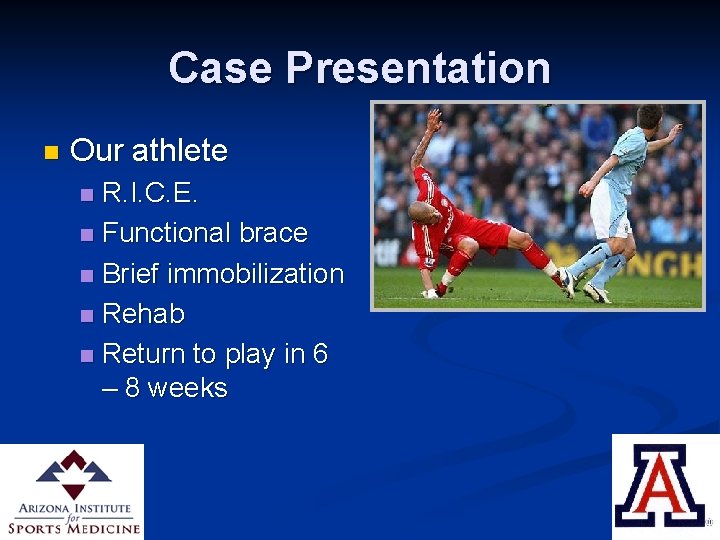
Case Presentation n Our athlete R. I. C. E. n Functional brace n Brief immobilization n Rehab n Return to play in 6 – 8 weeks n
Conclusions Soft tissue injuries are very common n Failure of soft tissue structures typically occur under tensile stress n Regardless of tissue type, an ordered process of healing ensues after injury n The R. I. C. E protocol is important for treatment of both operative and nonoperative injuries n
Thank You
Ligament Injury n Biomechanics of injury n Fail in tension
Musculotendinous Injury