
Soft Tissue Injuries 10242021 What are Soft Tissues
- Slides: 13
Soft Tissue Injuries 10/24/2021
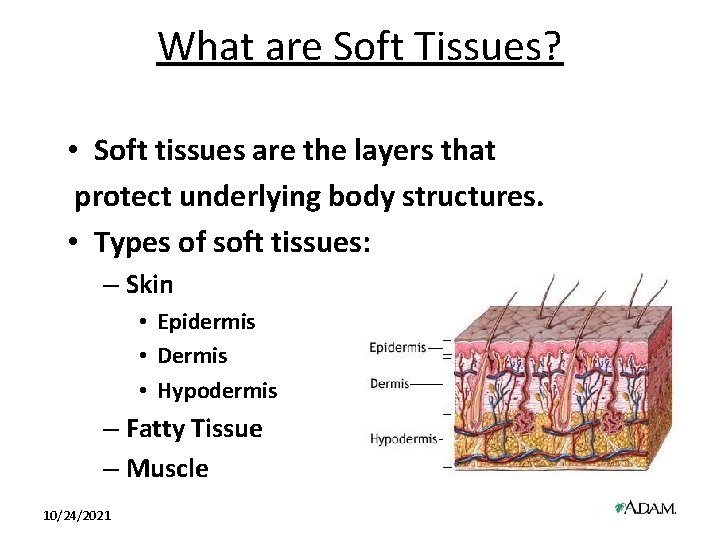
What are Soft Tissues? • Soft tissues are the layers that protect underlying body structures. • Types of soft tissues: – Skin • Epidermis • Dermis • Hypodermis – Fatty Tissue – Muscle 10/24/2021
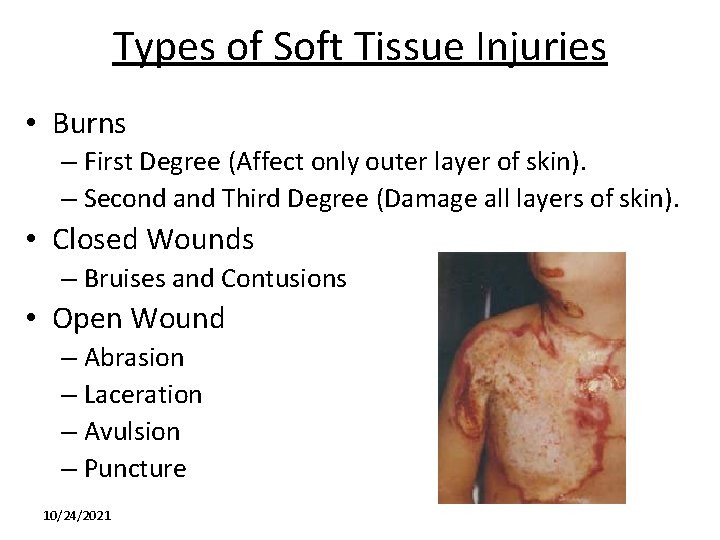
Types of Soft Tissue Injuries • Burns – First Degree (Affect only outer layer of skin). – Second and Third Degree (Damage all layers of skin). • Closed Wounds – Bruises and Contusions • Open Wound – Abrasion – Laceration – Avulsion – Puncture 10/24/2021
Caring for a Soft Tissue Injury • Preventing Infection – For minor wounds wash with soap and water. – Peroxide and Iodine – Immunization • Control Bleeding – http: //www. instructorscorner. org/media/resources/eccu_video s_201601/External_Bleeding_Adult_FINAL. mp 4 • Dressings – Occlusive Dressing • Bandages – Pressure – Adhesive Compress – Roller – Elastic Roller – Triangular 10/24/2021
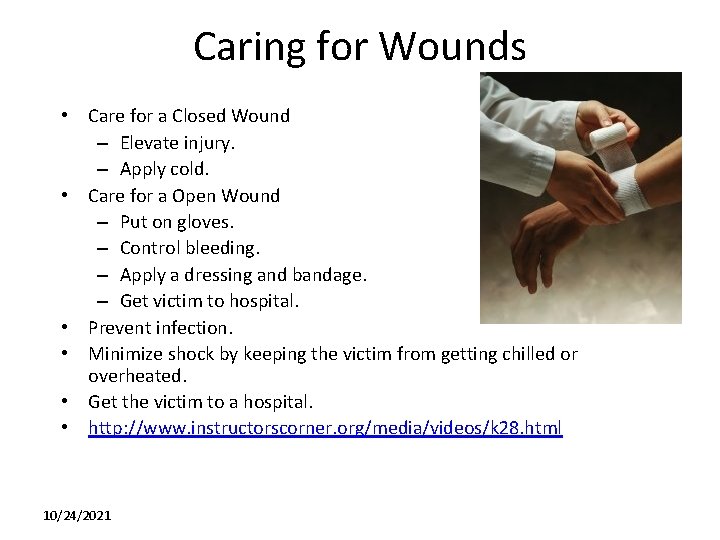
Caring for Wounds • Care for a Closed Wound – Elevate injury. – Apply cold. • Care for a Open Wound – Put on gloves. – Control bleeding. – Apply a dressing and bandage. – Get victim to hospital. • Prevent infection. • Minimize shock by keeping the victim from getting chilled or overheated. • Get the victim to a hospital. • http: //www. instructorscorner. org/media/videos/k 28. html 10/24/2021
Caring for a Burn • Updated 2016: Don’t apply ice directly to a burn; it can produce tissue ischemia • Updated 2016: Cool thermal burns with cool or cold potable water ASAP for 10 minutes • Updated 2016: If cool or cold water isn’t available, a clean cool or cold (not freezing) compress can be useful • Updated 2016: After cooling a burn, it may be reasonable to loosely cover the burn with a sterile, dry dressing • Updated 2016: Burns associated with or involving blistering/broken, difficulty breathing, etc. should see a medical professional. • http: //www. instructorscorner. org/media/videos/k 30. html 10/24/2021
Special Situations • Chemical Burns – Remove the chemicals from the body ASAP. – Call EMS • Electrical Burns – Updated 2016: Call EMS immediately – Updated 2016: turn off the power of the source – Electricity can make the heart and respiration stop. 10/24/2021
Summary • Caring for Wounds – Wear gloves. – Control bleeding and minimize risk of infection. – Get victim to hospital. • Caring for Burns – Heat, chemicals and electricity will cause burns. – Wear gloves, provide initial care, get victim to a hospital. 10/24/2021
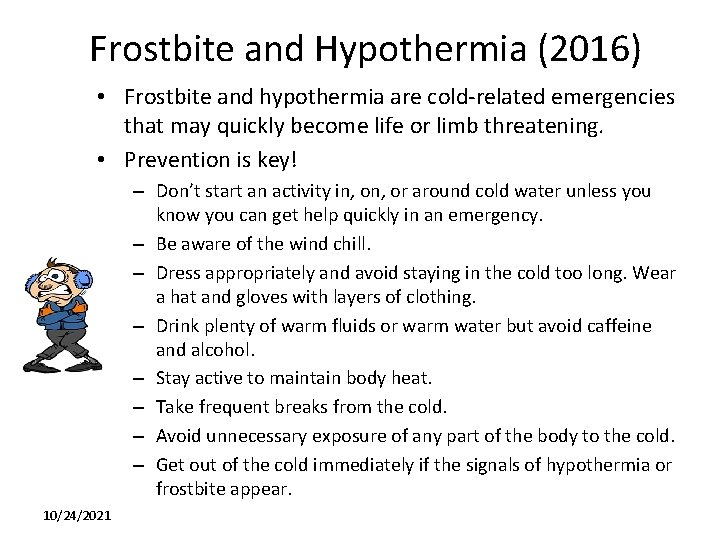
Frostbite and Hypothermia (2016) • Frostbite and hypothermia are cold-related emergencies that may quickly become life or limb threatening. • Prevention is key! – Don’t start an activity in, or around cold water unless you know you can get help quickly in an emergency. – Be aware of the wind chill. – Dress appropriately and avoid staying in the cold too long. Wear a hat and gloves with layers of clothing. – Drink plenty of warm fluids or warm water but avoid caffeine and alcohol. – Stay active to maintain body heat. – Take frequent breaks from the cold. – Avoid unnecessary exposure of any part of the body to the cold. – Get out of the cold immediately if the signals of hypothermia or frostbite appear. 10/24/2021
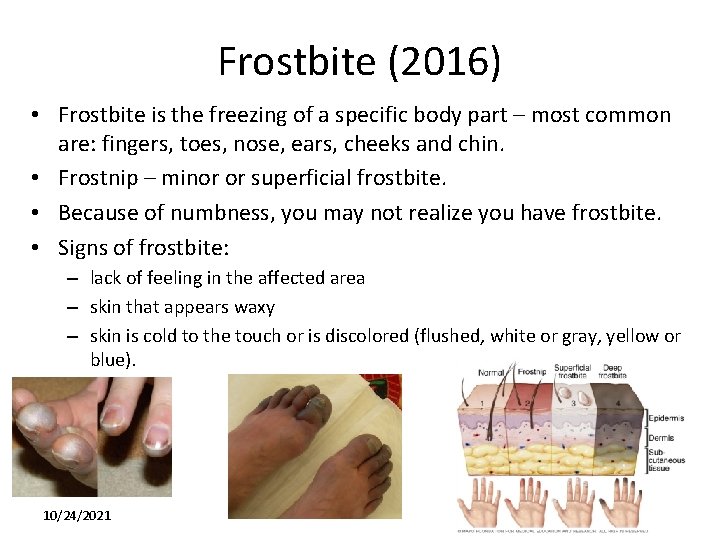
Frostbite (2016) • Frostbite is the freezing of a specific body part – most common are: fingers, toes, nose, ears, cheeks and chin. • Frostnip – minor or superficial frostbite. • Because of numbness, you may not realize you have frostbite. • Signs of frostbite: – lack of feeling in the affected area – skin that appears waxy – skin is cold to the touch or is discolored (flushed, white or gray, yellow or blue). 10/24/2021
Treating Frostbite/Frostnip (2016) • Move the person to a warm place. • Remove wet clothing; dry and cover victim (prevent hypothermia). • Handle the area gently; never rub the affected area. • Warm gently by soaking the affected area in warm water (100– 105 degrees F) until it appears red and feels warm. • DO NOT use chemical warmers – may cause burns. • Loosely bandage the area with dry, sterile dressings. 10/24/2021
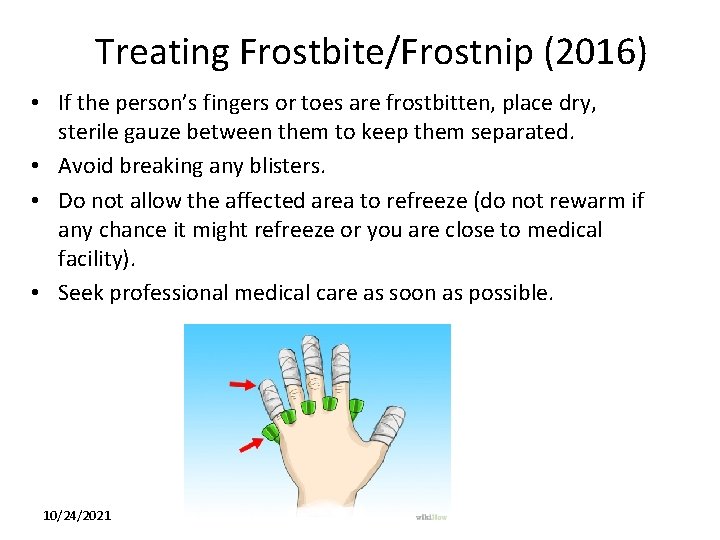
Treating Frostbite/Frostnip (2016) • If the person’s fingers or toes are frostbitten, place dry, sterile gauze between them to keep them separated. • Avoid breaking any blisters. • Do not allow the affected area to refreeze (do not rewarm if any chance it might refreeze or you are close to medical facility). • Seek professional medical care as soon as possible. 10/24/2021
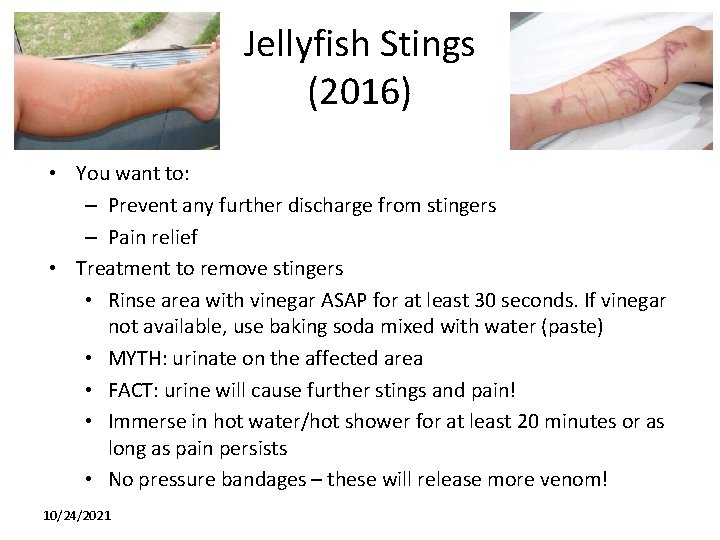
Jellyfish Stings (2016) • You want to: – Prevent any further discharge from stingers – Pain relief • Treatment to remove stingers • Rinse area with vinegar ASAP for at least 30 seconds. If vinegar not available, use baking soda mixed with water (paste) • MYTH: urinate on the affected area • FACT: urine will cause further stings and pain! • Immerse in hot water/hot shower for at least 20 minutes or as long as pain persists • No pressure bandages – these will release more venom! 10/24/2021