
soft systems and the enneagram methodology PROFESSOR ROBIN

soft systems and the enneagram methodology PROFESSOR ROBIN MATTHEWS KINGSTON UNIVERSITY BUSINESS SCHOOL LONDON RANEPA MOSCOW MOSI YOSHKAR-OLA ECONOMIC STRATEGIES PRESIDENT OF THE LEAGUE OF CORPORATE STRATEGY AND ACCOUNTING http/www. robindcmatthews. com http: //www. tcib. org. uk/about. html http: //kpp-russia. ru 12/7/2020 robindcmatthews. com 1
1. Problem situation is unstructured Identify a problem/issue and a review/improvement and preparing for decision(s) about change. Find out about the problem situation; problems/issues are perceptual tand perhaps there are many potential problems Need for research into the problem area. Who are the key players? How does the process currently work?
Rich pictures Represent structures, processes & organisational issues relevant to the problem/issue 2. Problem situation not the problem itself Provide a way of thinking creatively; using emotion instinct and intuition and the intellect. representation of how to look/think link key issues appreciate of the problem represent and communicate artistic individual many right ways
2. Problem situation not the problem itself Collect and sort information about the problem situation Organisational structure, processes transformations, path dependence. human factors gripes, perceptions, moods Specify echniques to be used employed assist (e. g. work observation, interviews, workshops) Express the problem/issue/situation with a rich picture - visual representation/communication The perhaps the meta model of the problem not the problem itself
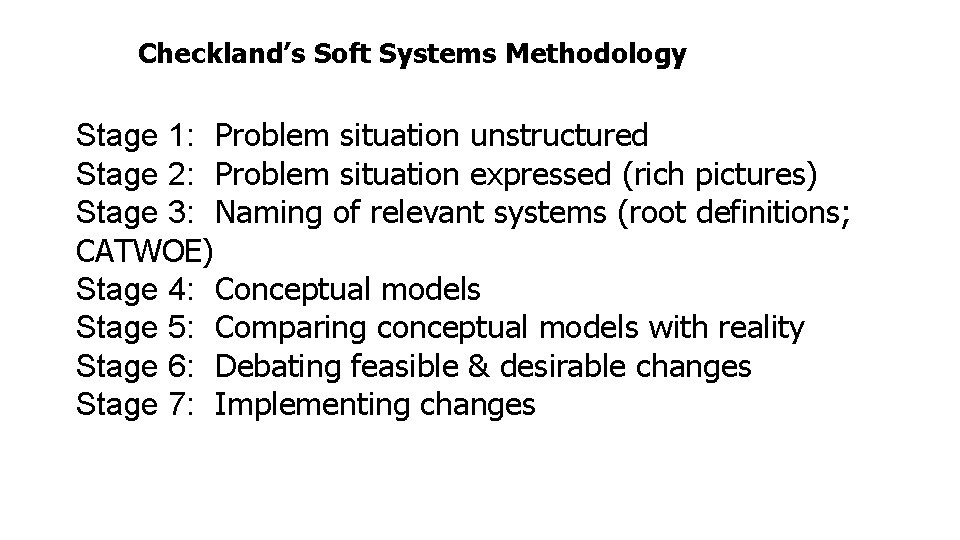
Checkland’s Soft Systems Methodology Stage 1: Problem situation unstructured Stage 2: Problem situation expressed (rich pictures) Stage 3: Naming of relevant systems (root definitions; CATWOE) Stage 4: Conceptual models Stage 5: Comparing conceptual models with reality Stage 6: Debating feasible & desirable changes Stage 7: Implementing changes
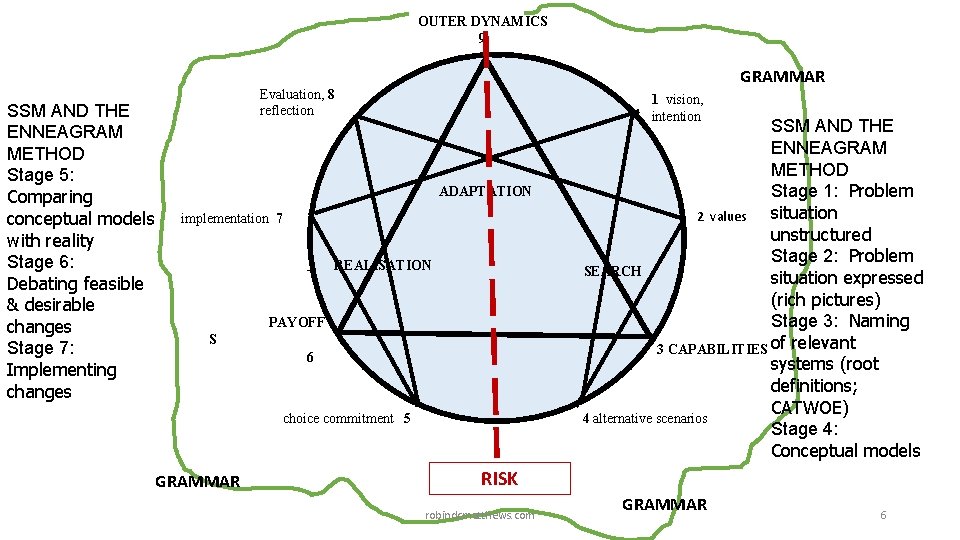
OUTER DYNAMICS 9 SSM AND THE ENNEAGRAM METHOD Stage 5: Comparing conceptual models with reality Stage 6: Debating feasible & desirable changes Stage 7: Implementing changes GRAMMAR Evaluation, 8 reflection 1 vision, intention ADAPTATION implementation 7 REALISATION PAYOFF S 6 choice commitment 5 GRAMMAR SSM AND THE ENNEAGRAM METHOD Stage 1: Problem situation 2 values unstructured Stage 2: Problem SEARCH situation expressed (rich pictures) Stage 3: Naming 3 CAPABILITIES of relevant systems (root definitions; CATWOE) 4 alternative scenarios Stage 4: Conceptual models RISK robindcmatthews. com GRAMMAR 6
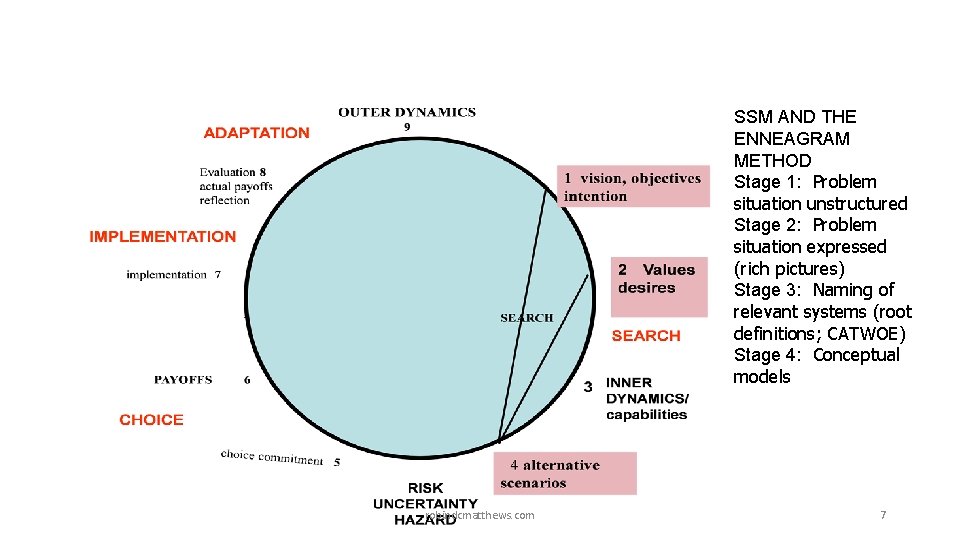
SSM AND THE ENNEAGRAM METHOD Stage 1: Problem situation unstructured Stage 2: Problem situation expressed (rich pictures) Stage 3: Naming of relevant systems (root definitions; CATWOE) Stage 4: Conceptual models robindcmatthews. com 7
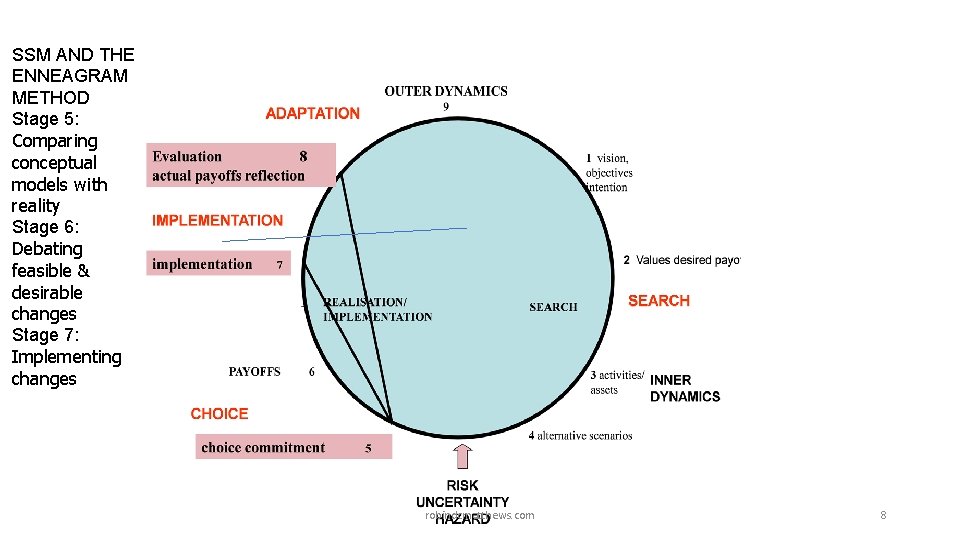
SSM AND THE ENNEAGRAM METHOD Stage 5: Comparing conceptual models with reality Stage 6: Debating feasible & desirable changes Stage 7: Implementing changes robindcmatthews. com 8
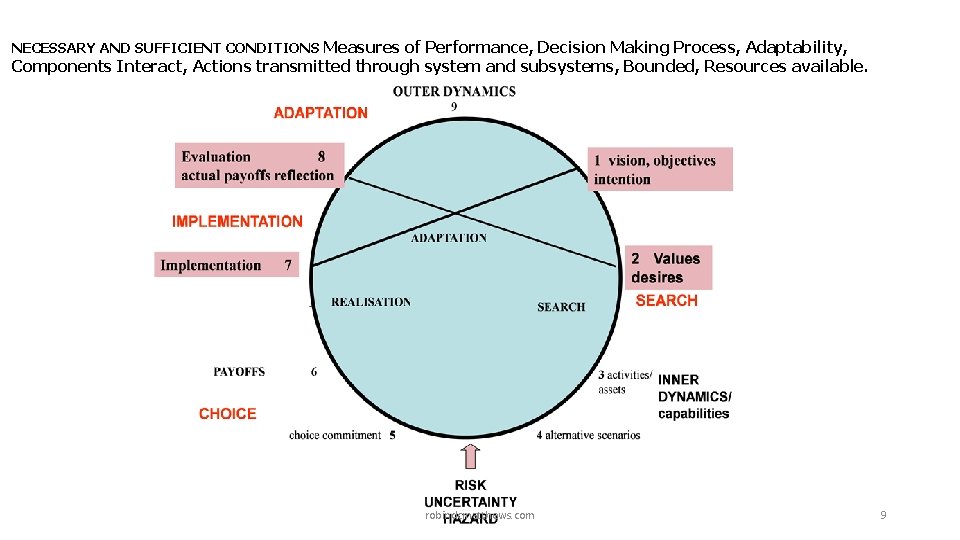
NECESSARY AND SUFFICIENT CONDITIONS Measures of Performance, Decision Making Process, Adaptability, Components Interact, Actions transmitted through system and subsystems, Bounded, Resources available. robindcmatthews. com 9
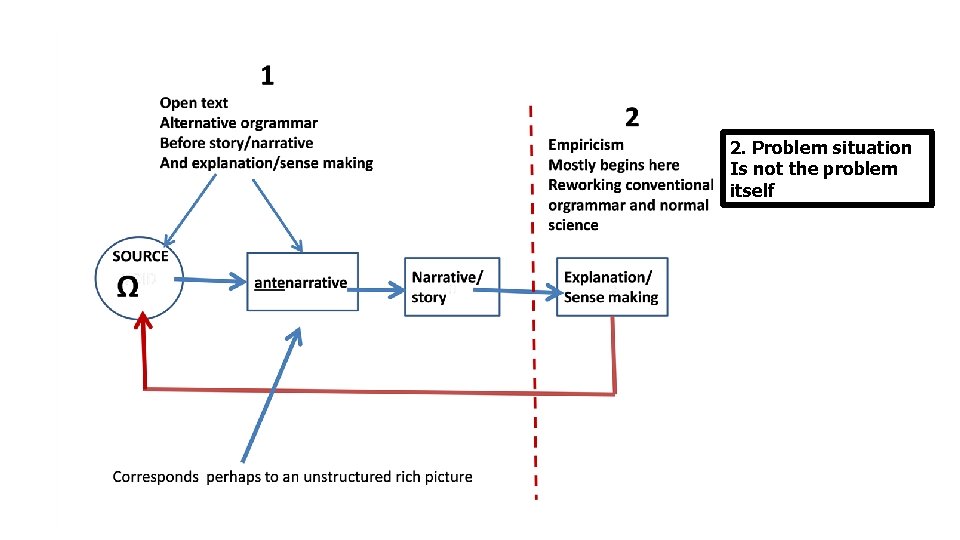
2. Problem situation Is not the problem itself
- Slides: 10