
Soft Active Materials I Dielectric Elastomers Zhigang Suo
- Slides: 66
Soft Active Materials I. Dielectric Elastomers Zhigang Suo Harvard University 1
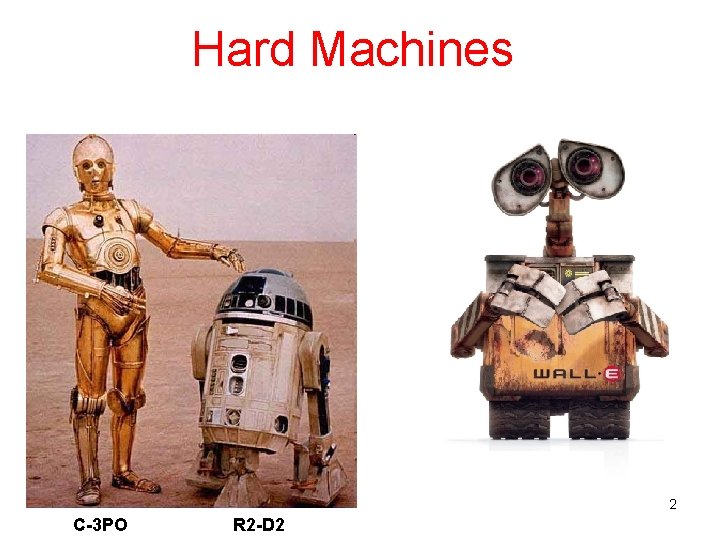
Hard Machines 2 C-3 PO R 2 -D 2
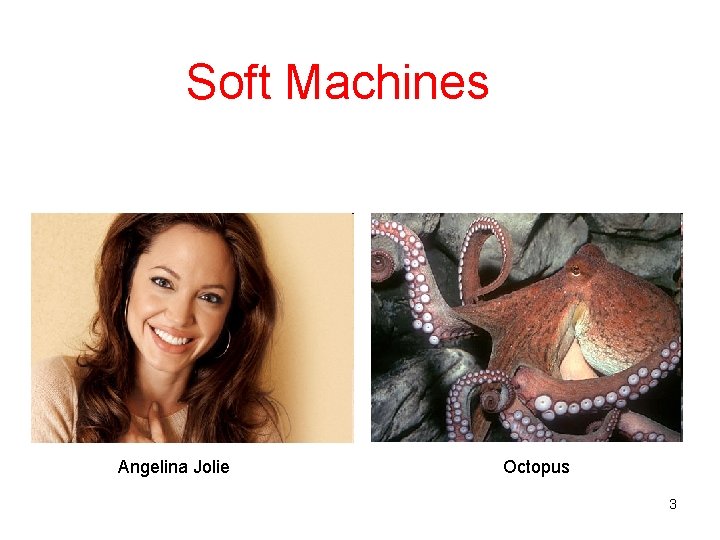
Soft Machines Angelina Jolie Octopus 3
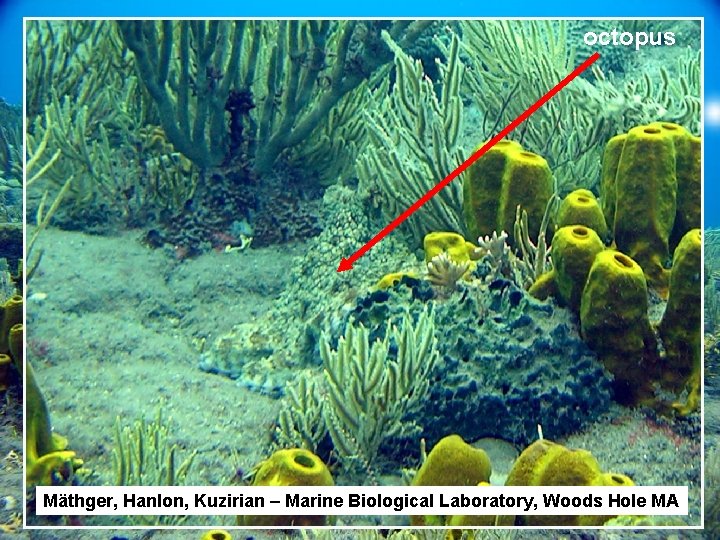
octopus Mäthger, Hanlon, Kuzirian – Marine Biological Laboratory, Woods Hole MA 4
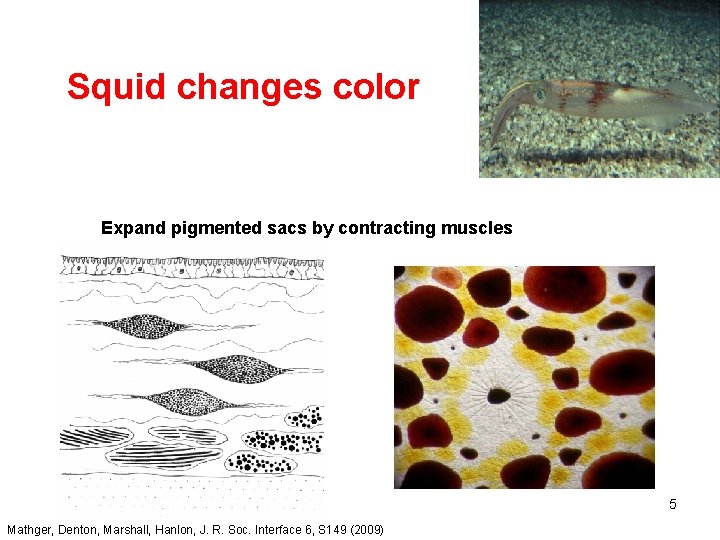
Squid changes color Expand pigmented sacs by contracting muscles 5 Mathger, Denton, Marshall, Hanlon, J. R. Soc. Interface 6, S 149 (2009)
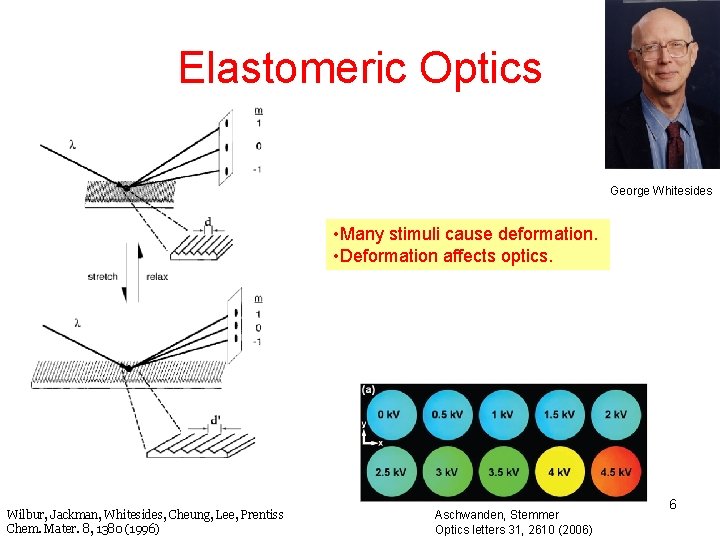
Elastomeric Optics George Whitesides • Many stimuli cause deformation. • Deformation affects optics. Wilbur, Jackman, Whitesides, Cheung, Lee, Prentiss Chem. Mater. 8, 1380 (1996) Aschwanden, Stemmer Optics letters 31, 2610 (2006) 6
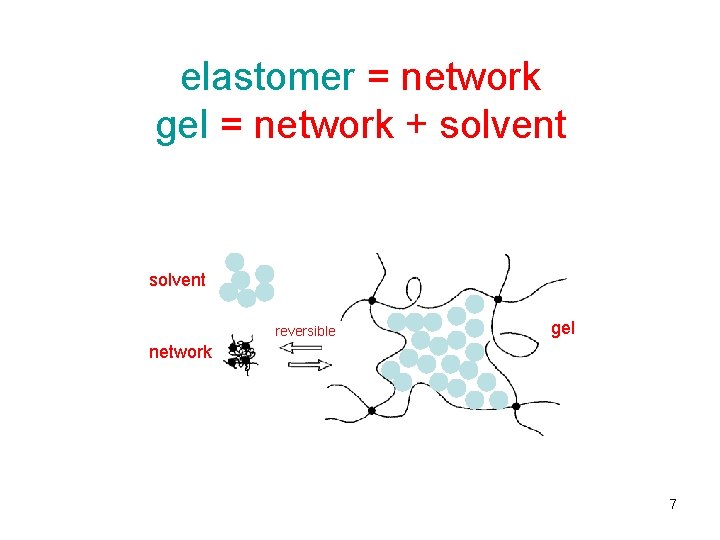
elastomer = network gel = network + solvent reversible gel network 7
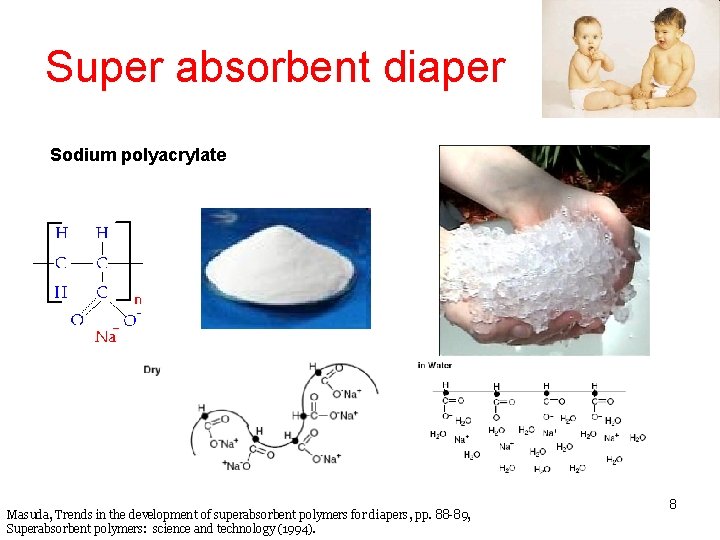
Super absorbent diaper Sodium polyacrylate Masuda, Trends in the development of superabsorbent polymers for diapers, pp. 88 -89, Superabsorbent polymers: science and technology (1994). 8
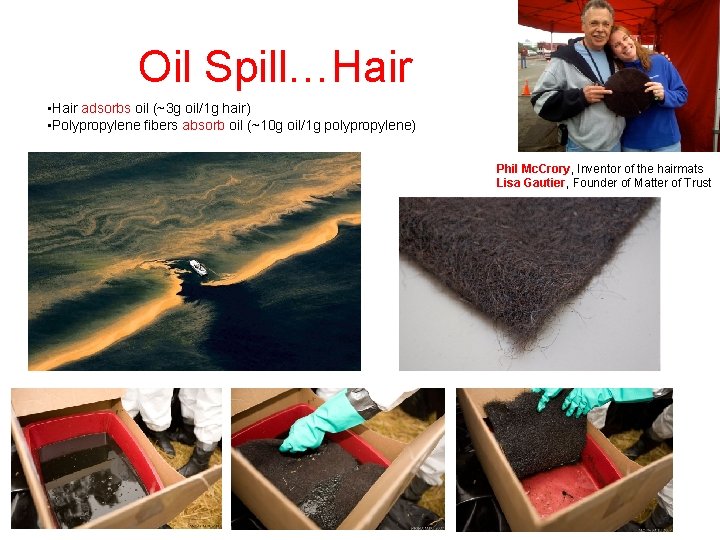
Oil Spill…Hair • Hair adsorbs oil (~3 g oil/1 g hair) • Polypropylene fibers absorb oil (~10 g oil/1 g polypropylene) Phil Mc. Crory, Inventor of the hairmats Lisa Gautier, Founder of Matter of Trust
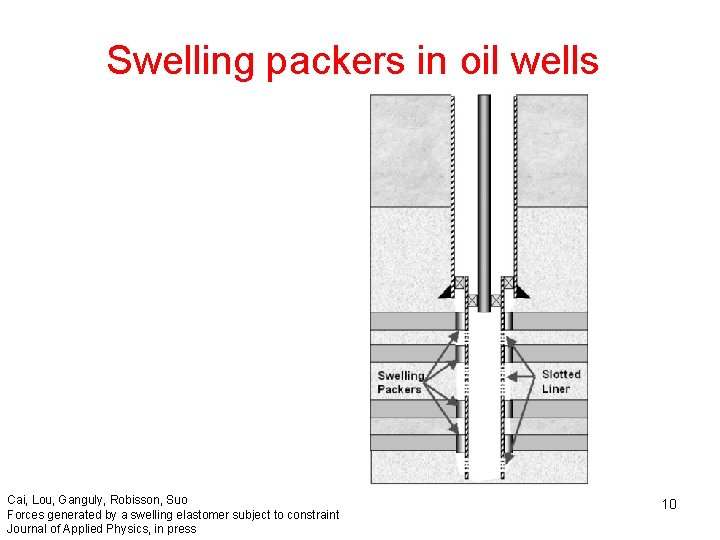
Swelling packers in oil wells Cai, Lou, Ganguly, Robisson, Suo Forces generated by a swelling elastomer subject to constraint Journal of Applied Physics, in press 10
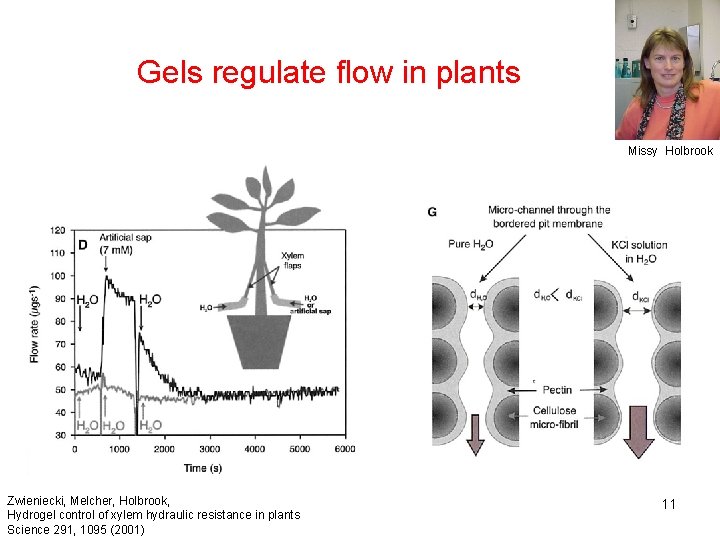
Gels regulate flow in plants Missy Holbrook Zwieniecki, Melcher, Holbrook, Hydrogel control of xylem hydraulic resistance in plants Science 291, 1095 (2001) 11
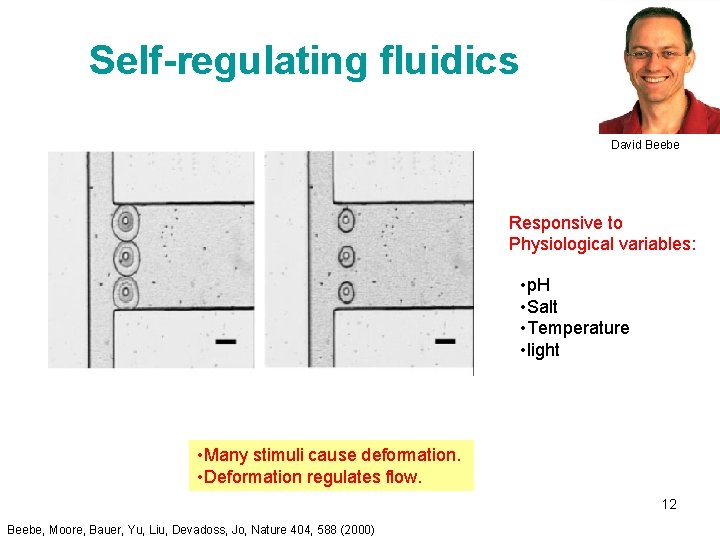
Self-regulating fluidics David Beebe Responsive to Physiological variables: • p. H • Salt • Temperature • light • Many stimuli cause deformation. • Deformation regulates flow. 12 Beebe, Moore, Bauer, Yu, Liu, Devadoss, Jo, Nature 404, 588 (2000)
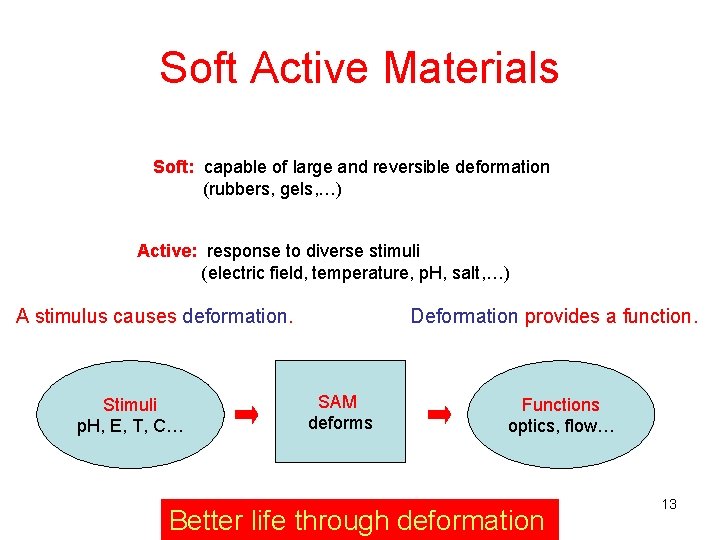
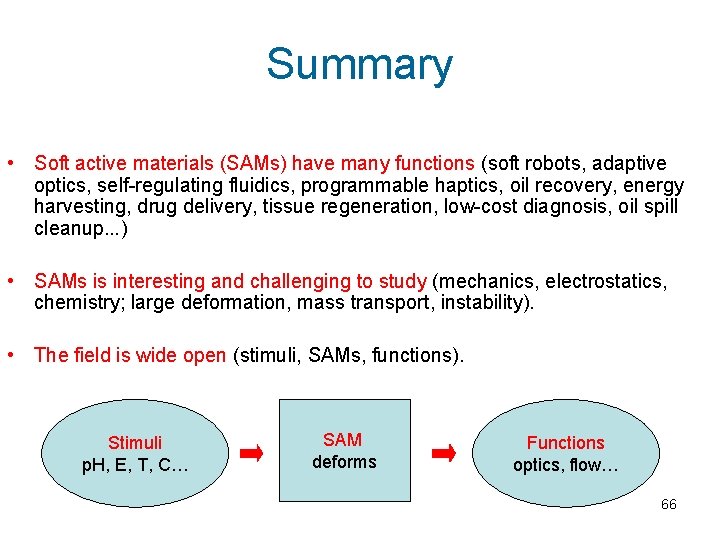
Soft Active Materials Soft: capable of large and reversible deformation (rubbers, gels, …) Active: response to diverse stimuli (electric field, temperature, p. H, salt, …) A stimulus causes deformation. Stimuli p. H, E, T, C… Deformation provides a function. SAM deforms Functions optics, flow… Better life through deformation 13
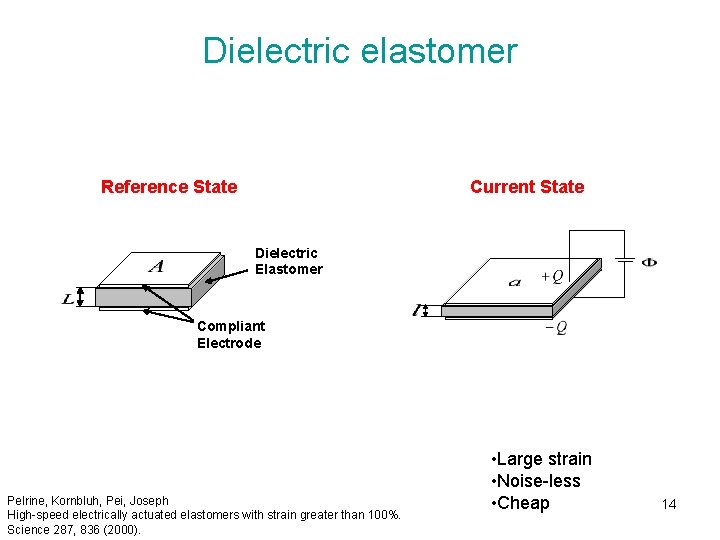
Dielectric elastomer Reference State Current State Dielectric Elastomer Compliant Electrode Pelrine, Kornbluh, Pei, Joseph High-speed electrically actuated elastomers with strain greater than 100%. Science 287, 836 (2000). • Large strain • Noise-less • Cheap 14
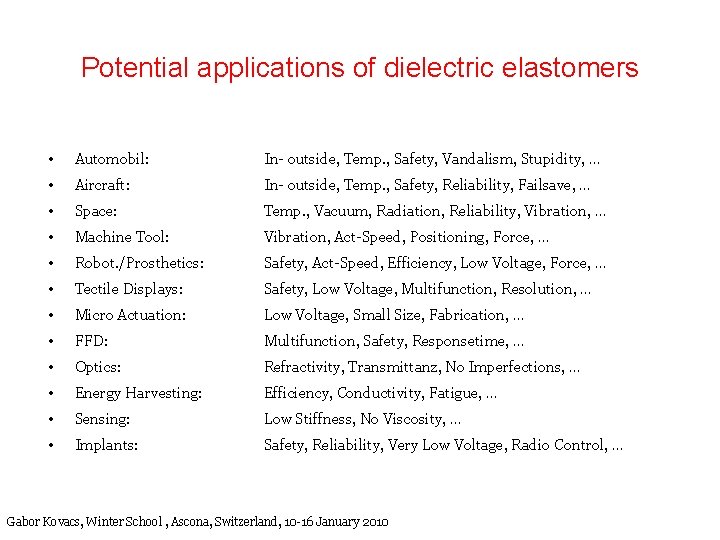
Potential applications of dielectric elastomers • Automobil: In- outside, Temp. , Safety, Vandalism, Stupidity, … • Aircraft: In- outside, Temp. , Safety, Reliability, Failsave, … • Space: Temp. , Vacuum, Radiation, Reliability, Vibration, … • Machine Tool: Vibration, Act-Speed, Positioning, Force, … • Robot. /Prosthetics: Safety, Act-Speed, Efficiency, Low Voltage, Force, … • Tectile Displays: Safety, Low Voltage, Multifunction, Resolution, … • Micro Actuation: Low Voltage, Small Size, Fabrication, … • FFD: Multifunction, Safety, Responsetime, … • Optics: Refractivity, Transmittanz, No Imperfections, … • Energy Harvesting: Efficiency, Conductivity, Fatigue, … • Sensing: Low Stiffness, No Viscosity, … • Implants: Safety, Reliability, Very Low Voltage, Radio Control, … Gabor Kovacs, Winter School , Ascona, Switzerland, 10 -16 January 2010
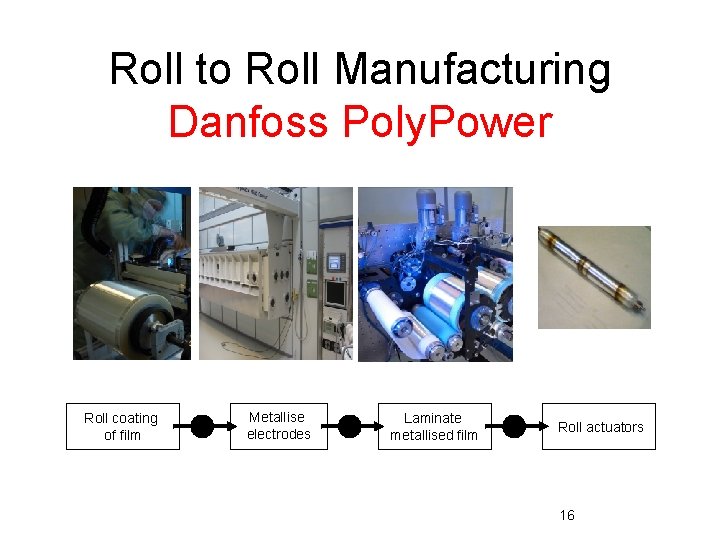
Roll to Roll Manufacturing Danfoss Poly. Power Roll coating of film Metallise electrodes Laminate metallised film Roll actuators 16
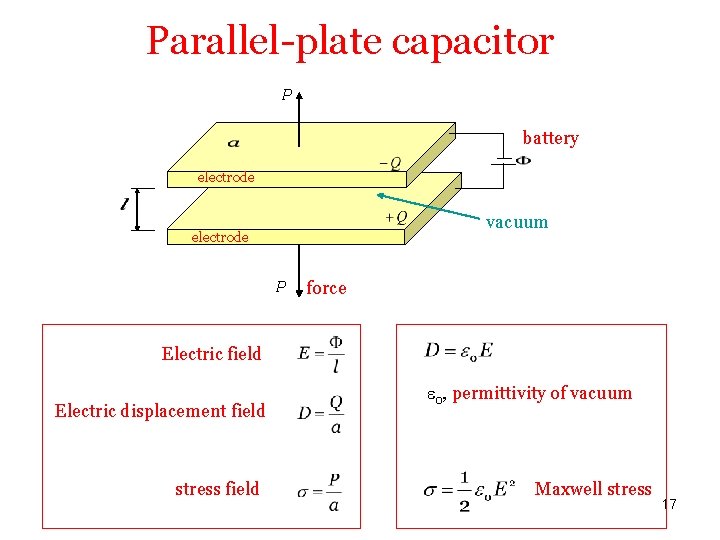
Parallel-plate capacitor P battery electrode vacuum electrode P force Electric field Electric displacement field stress field e 0, permittivity of vacuum Maxwell stress 17
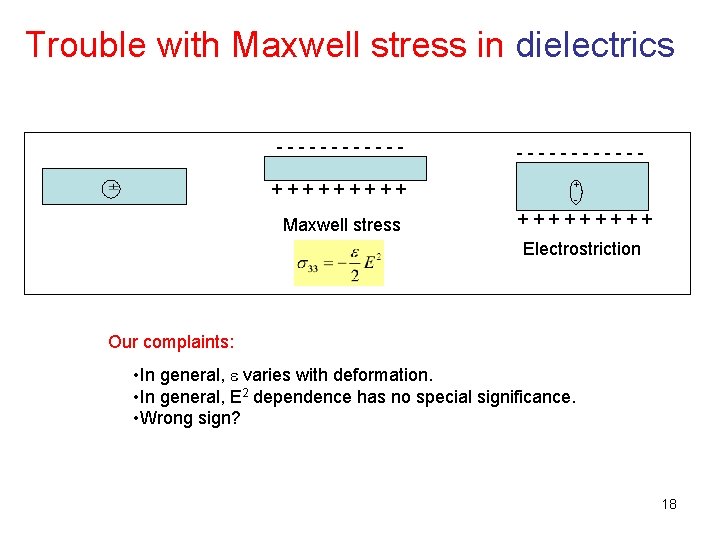
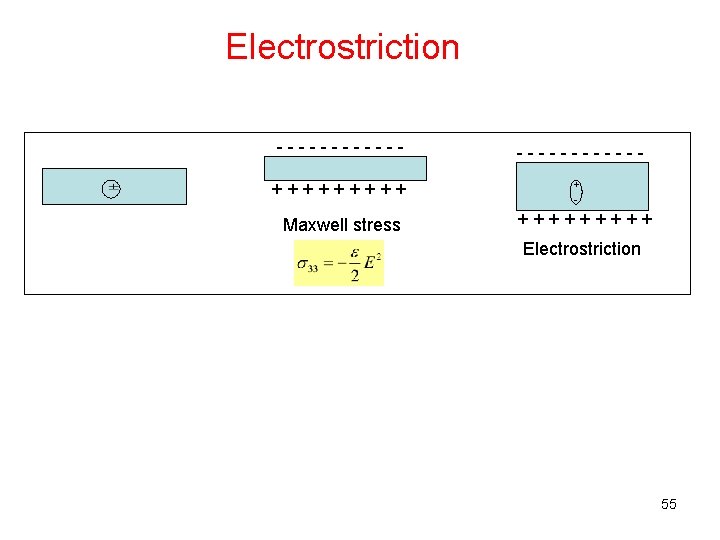
Trouble with Maxwell stress in dielectrics ------+++++ Maxwell stress ------+ - +++++ Electrostriction Our complaints: • In general, e varies with deformation. • In general, E 2 dependence has no special significance. • Wrong sign? 18
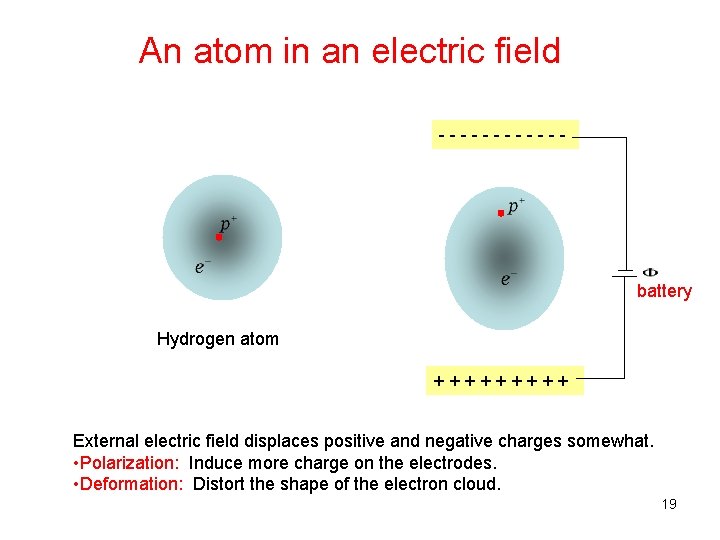
An atom in an electric field ------ battery Hydrogen atom +++++ External electric field displaces positive and negative charges somewhat. • Polarization: Induce more charge on the electrodes. • Deformation: Distort the shape of the electron cloud. 19
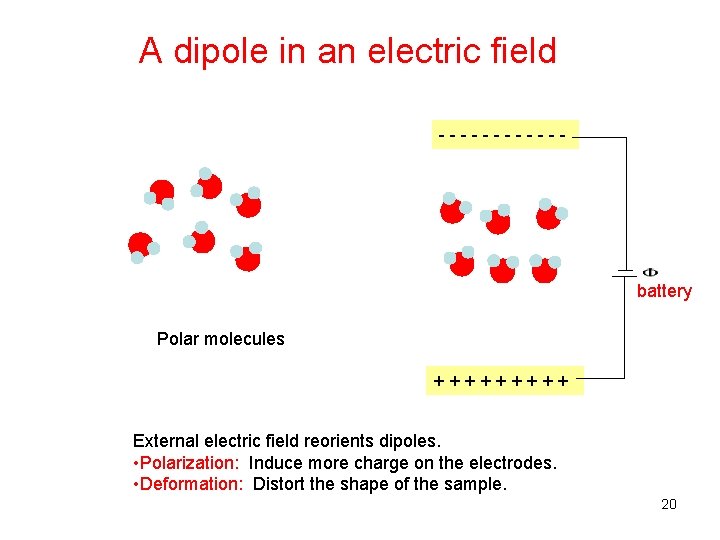
A dipole in an electric field ------ battery Polar molecules +++++ External electric field reorients dipoles. • Polarization: Induce more charge on the electrodes. • Deformation: Distort the shape of the sample. 20
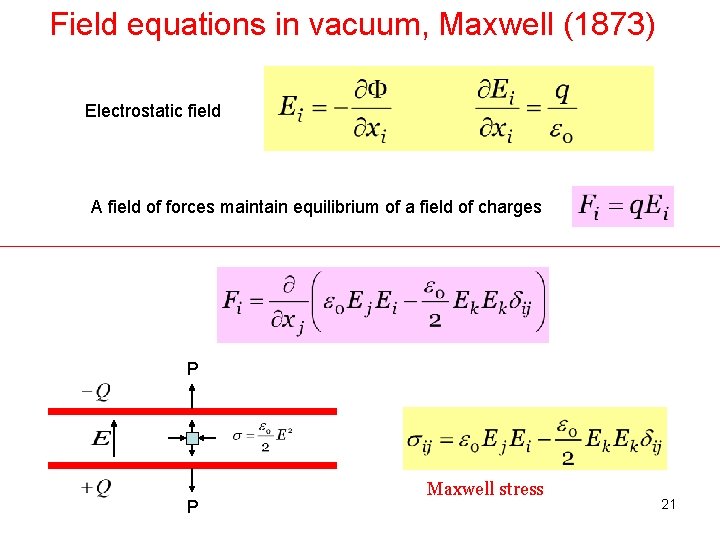
Field equations in vacuum, Maxwell (1873) Electrostatic field A field of forces maintain equilibrium of a field of charges P P Maxwell stress 21
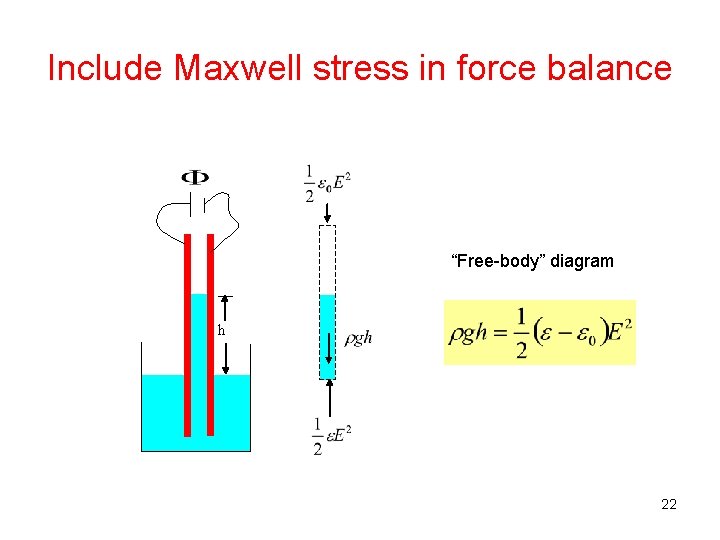
Include Maxwell stress in force balance “Free-body” diagram h 22
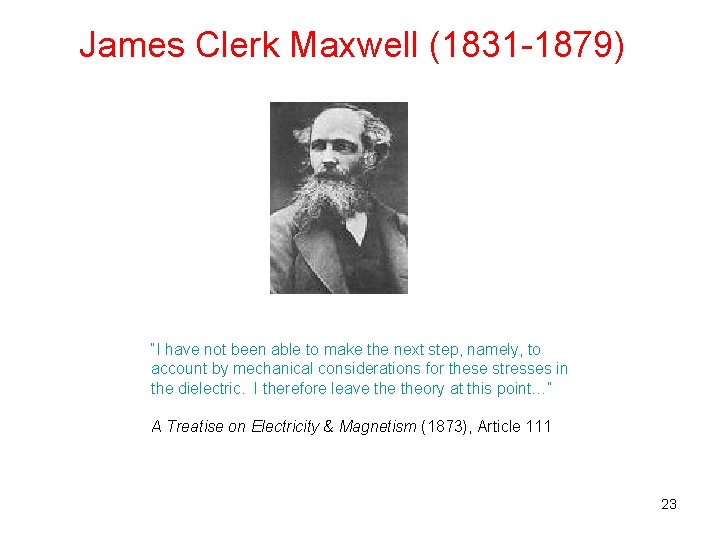
James Clerk Maxwell (1831 -1879) “I have not been able to make the next step, namely, to account by mechanical considerations for these stresses in the dielectric. I therefore leave theory at this point…” A Treatise on Electricity & Magnetism (1873), Article 111 23
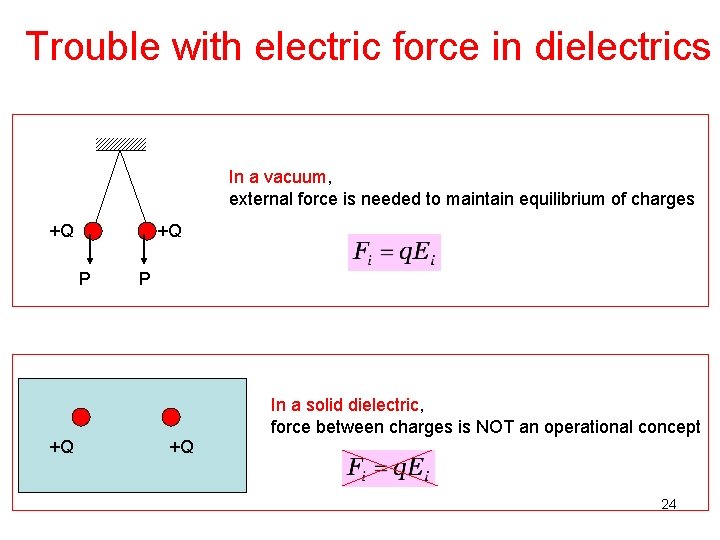
Trouble with electric force in dielectrics In a vacuum, external force is needed to maintain equilibrium of charges +Q +Q P P In a solid dielectric, force between charges is NOT an operational concept +Q +Q 24
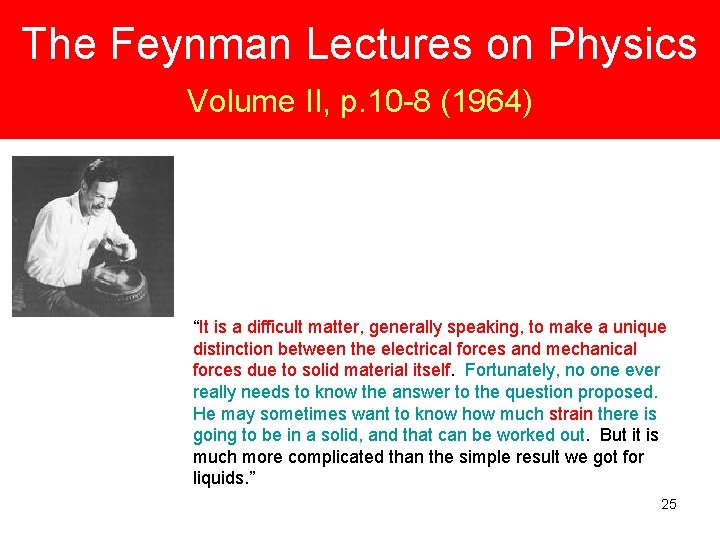
The Feynman Lectures on Physics Volume II, p. 10 -8 (1964) “It is a difficult matter, generally speaking, to make a unique distinction between the electrical forces and mechanical forces due to solid material itself. Fortunately, no one ever really needs to know the answer to the question proposed. He may sometimes want to know how much strain there is going to be in a solid, and that can be worked out. But it is much more complicated than the simple result we got for liquids. ” 25
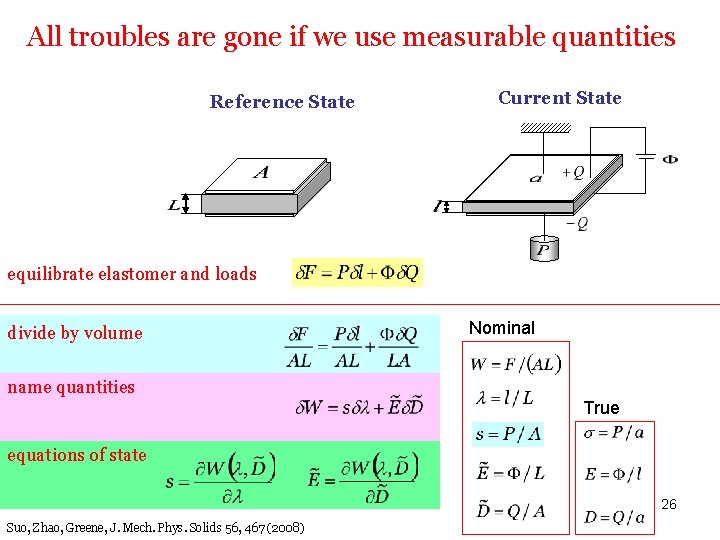
All troubles are gone if we use measurable quantities Reference State Current State equilibrate elastomer and loads divide by volume Nominal name quantities True equations of state 26 Suo, Zhao, Greene, J. Mech. Phys. Solids 56, 467 (2008)
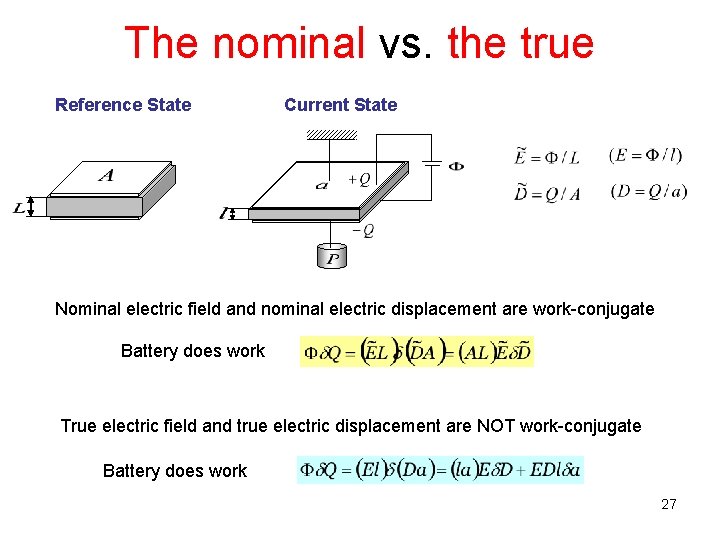
The nominal vs. the true Reference State Current State Nominal electric field and nominal electric displacement are work-conjugate Battery does work True electric field and true electric displacement are NOT work-conjugate Battery does work 27
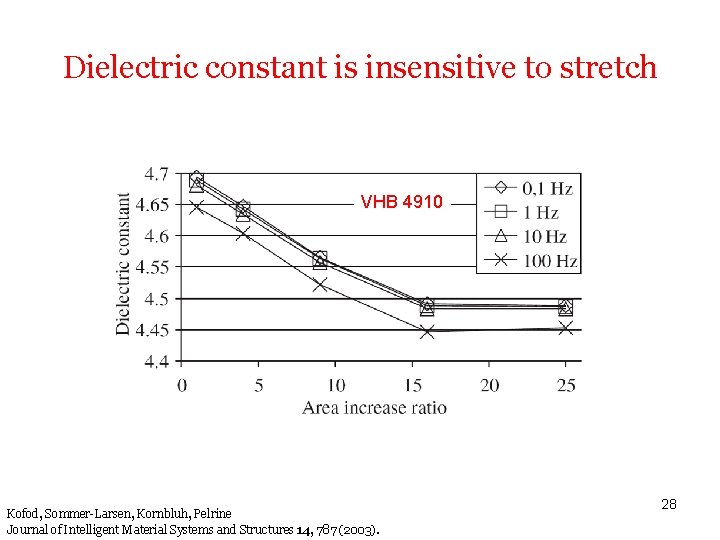
Dielectric constant is insensitive to stretch VHB 4910 Kofod, Sommer-Larsen, Kornbluh, Pelrine Journal of Intelligent Material Systems and Structures 14, 787 (2003). 28
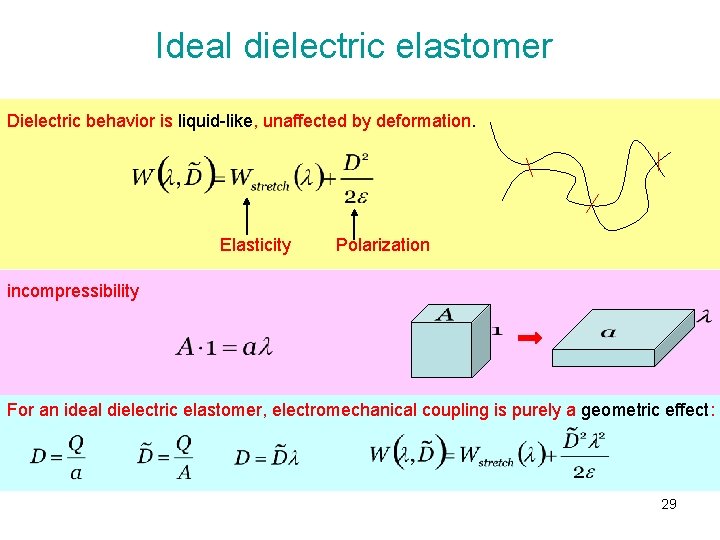
Ideal dielectric elastomer Dielectric behavior is liquid-like, unaffected by deformation. Elasticity Polarization incompressibility For an ideal dielectric elastomer, electromechanical coupling is purely a geometric effect: 29
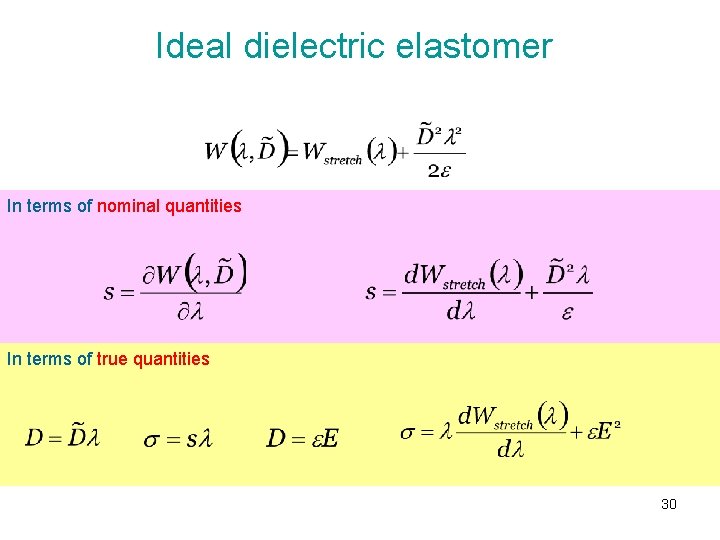
Ideal dielectric elastomer In terms of nominal quantities In terms of true quantities 30
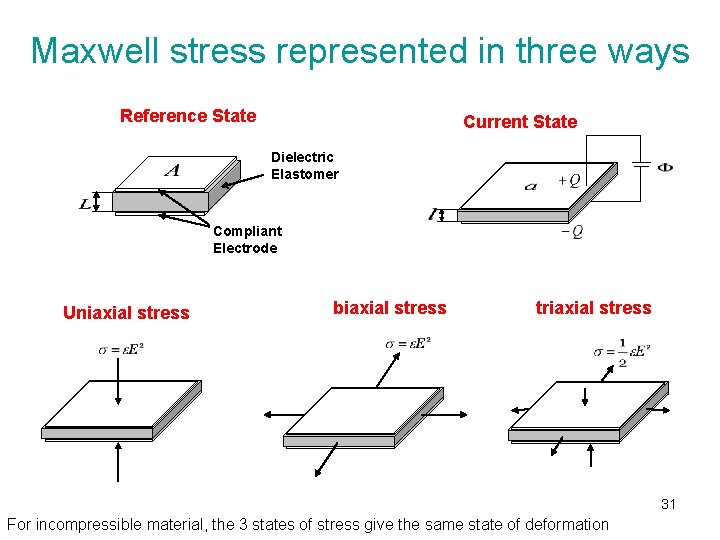
Maxwell stress represented in three ways Reference State Current State Dielectric Elastomer Compliant Electrode Uniaxial stress biaxial stress triaxial stress 31 For incompressible material, the 3 states of stress give the same state of deformation
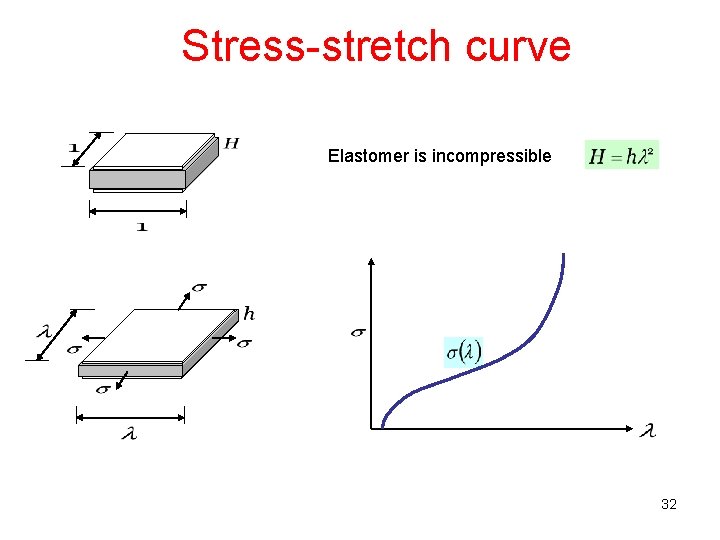
Stress-stretch curve Elastomer is incompressible 32
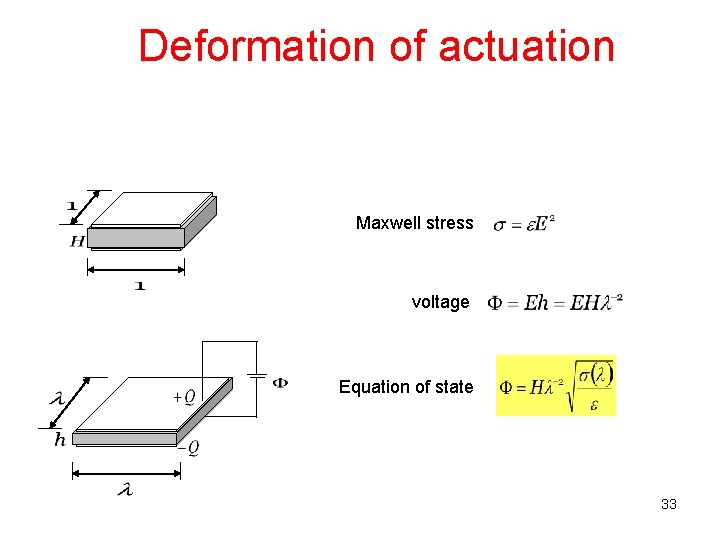
Deformation of actuation Maxwell stress voltage Equation of state 33
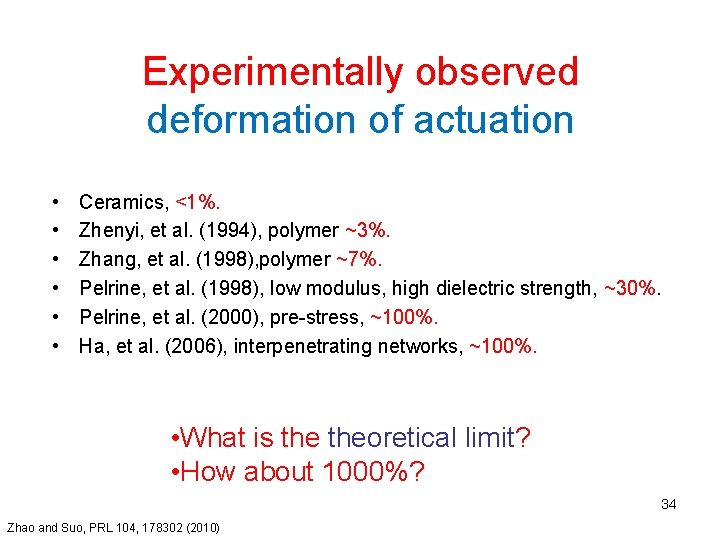
Experimentally observed deformation of actuation • • • Ceramics, <1%. Zhenyi, et al. (1994), polymer ~3%. Zhang, et al. (1998), polymer ~7%. Pelrine, et al. (1998), low modulus, high dielectric strength, ~30%. Pelrine, et al. (2000), pre-stress, ~100%. Ha, et al. (2006), interpenetrating networks, ~100%. • What is theoretical limit? • How about 1000%? 34 Zhao and Suo, PRL 104, 178302 (2010)
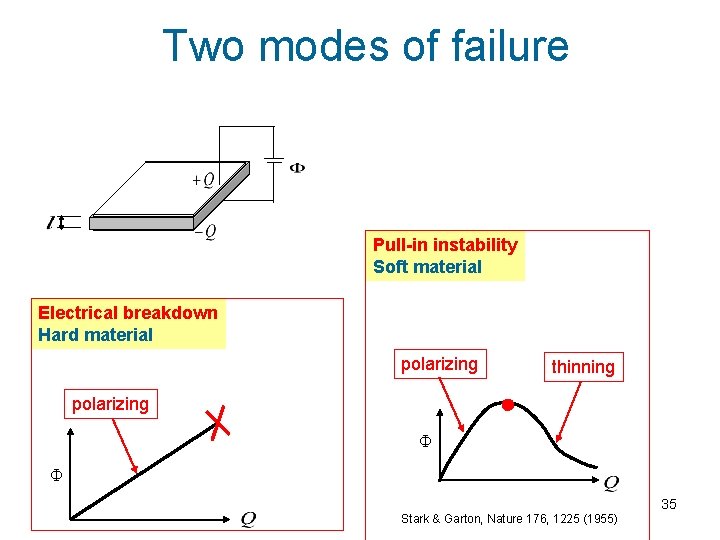
Two modes of failure Pull-in instability Soft material Electrical breakdown Hard material polarizing thinning polarizing F F 35 Stark & Garton, Nature 176, 1225 (1955)
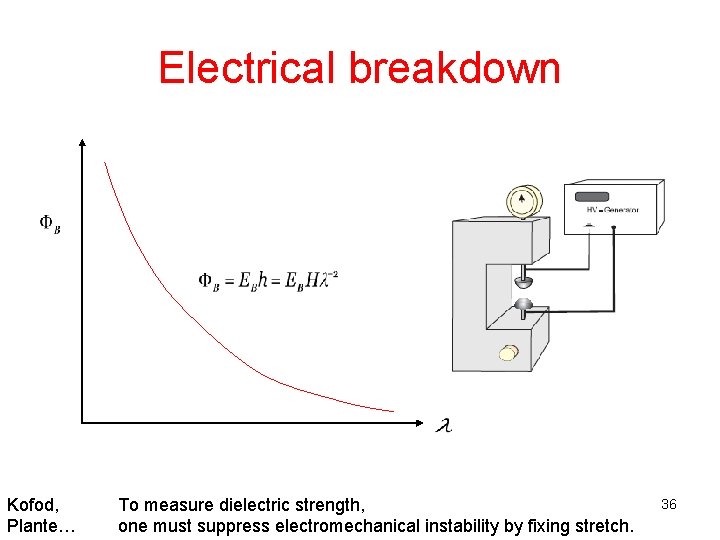
Electrical breakdown Kofod, Plante… To measure dielectric strength, one must suppress electromechanical instability by fixing stretch. 36
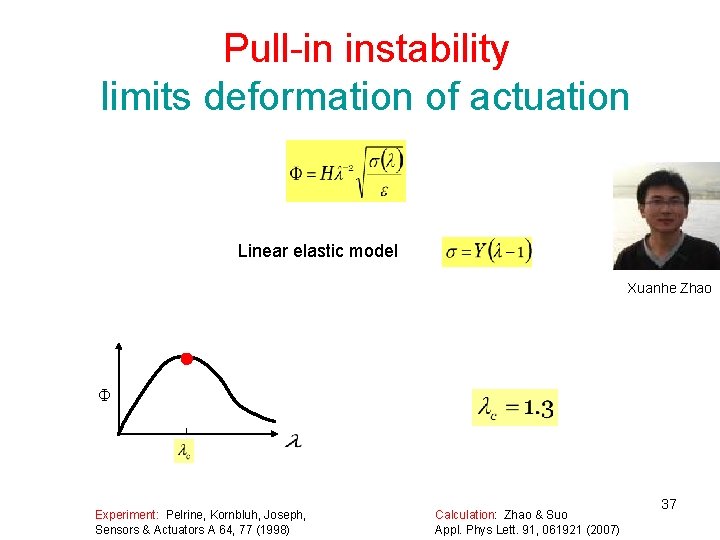
Pull-in instability limits deformation of actuation Linear elastic model Xuanhe Zhao F Experiment: Pelrine, Kornbluh, Joseph, Sensors & Actuators A 64, 77 (1998) Calculation: Zhao & Suo Appl. Phys Lett. 91, 061921 (2007) 37
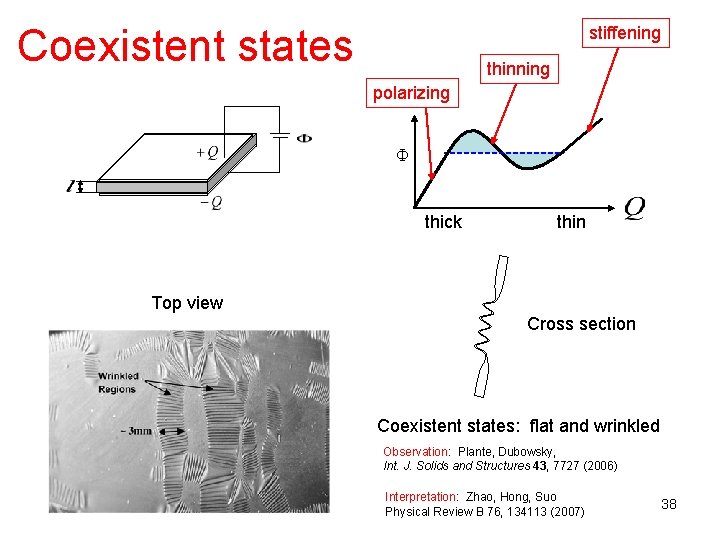
Coexistent states stiffening thinning polarizing F thick thin Top view Cross section Coexistent states: flat and wrinkled Observation: Plante, Dubowsky, Int. J. Solids and Structures 43, 7727 (2006) Interpretation: Zhao, Hong, Suo Physical Review B 76, 134113 (2007) 38
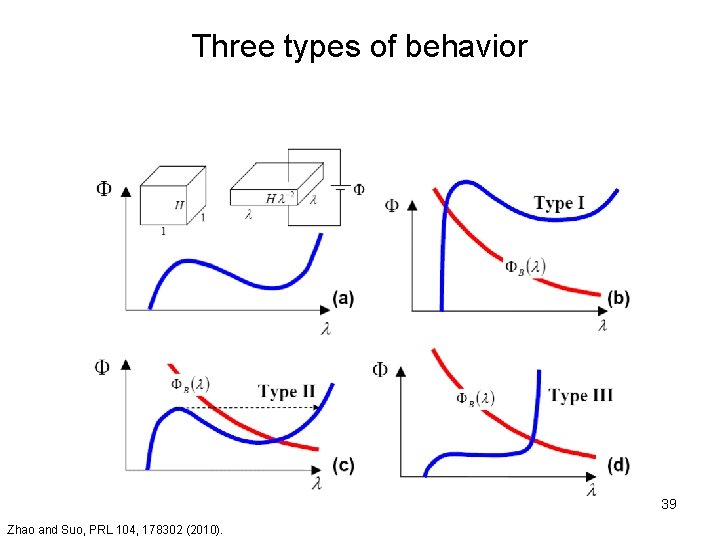
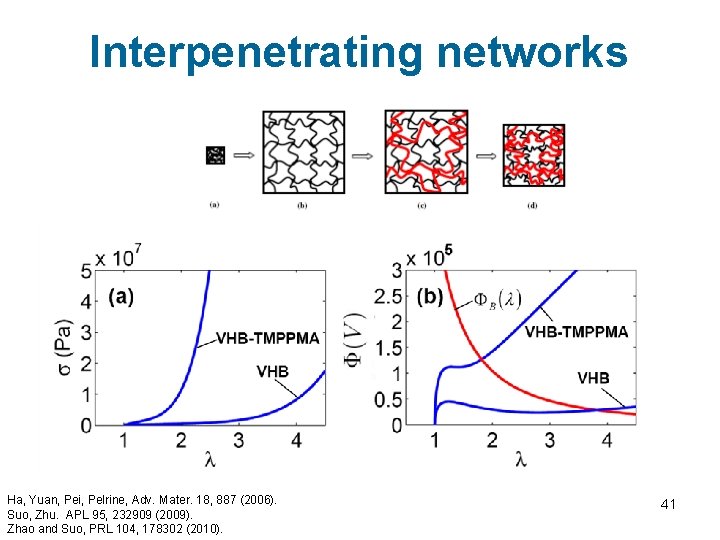
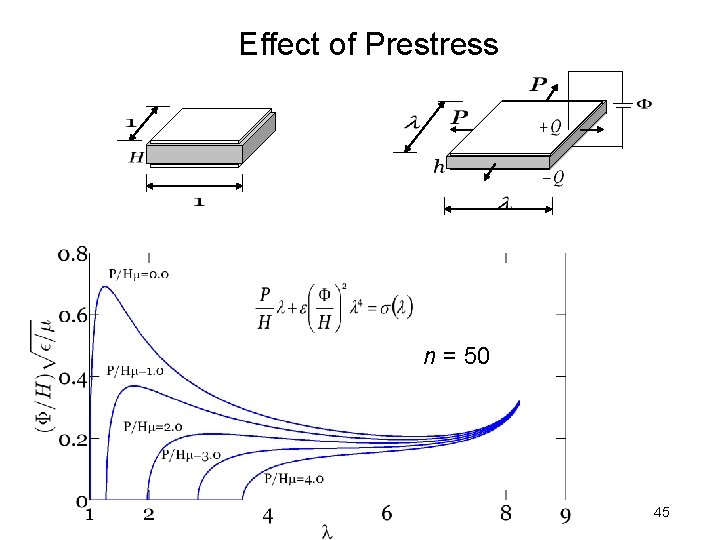
Three types of behavior 39 Zhao and Suo, PRL 104, 178302 (2010).
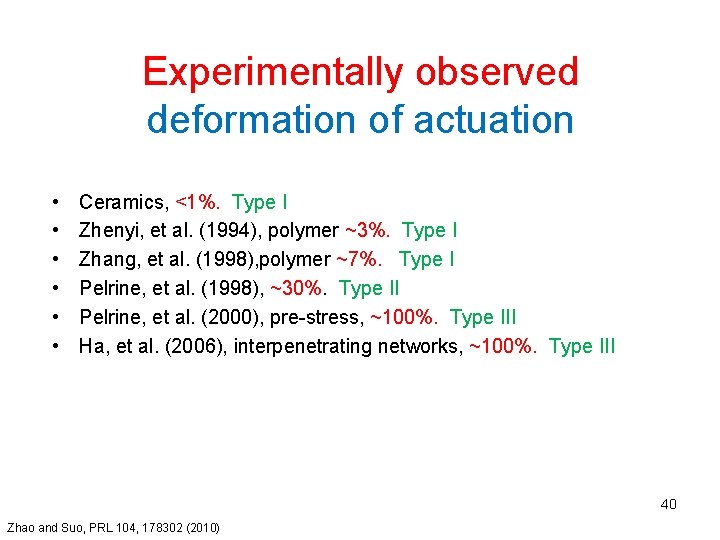
Experimentally observed deformation of actuation • • • Ceramics, <1%. Type I Zhenyi, et al. (1994), polymer ~3%. Type I Zhang, et al. (1998), polymer ~7%. Type I Pelrine, et al. (1998), ~30%. Type II Pelrine, et al. (2000), pre-stress, ~100%. Type III Ha, et al. (2006), interpenetrating networks, ~100%. Type III 40 Zhao and Suo, PRL 104, 178302 (2010)
Interpenetrating networks Ha, Yuan, Pei, Pelrine, Adv. Mater. 18, 887 (2006). Suo, Zhu. APL 95, 232909 (2009). Zhao and Suo, PRL 104, 178302 (2010). 41
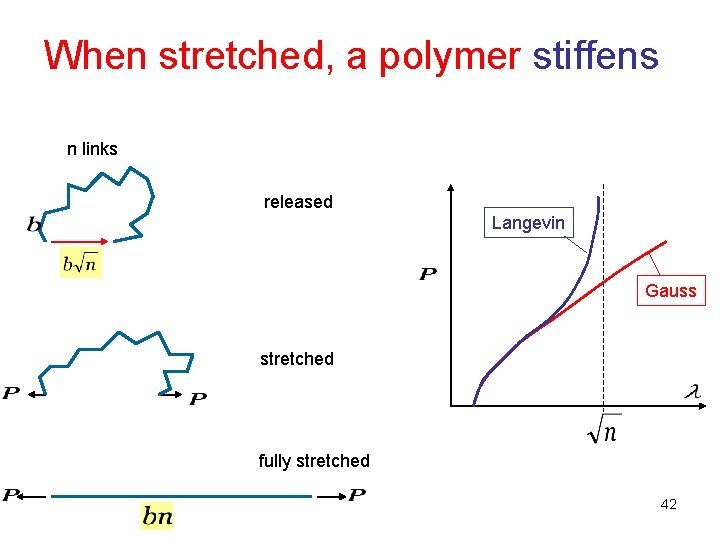
When stretched, a polymer stiffens n links released Langevin Gauss stretched fully stretched 42
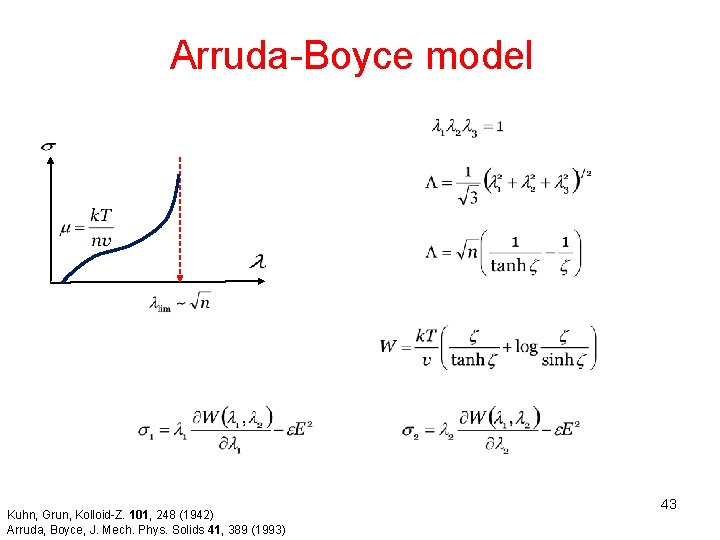
Arruda-Boyce model Kuhn, Grun, Kolloid-Z. 101, 248 (1942) Arruda, Boyce, J. Mech. Phys. Solids 41, 389 (1993) 43
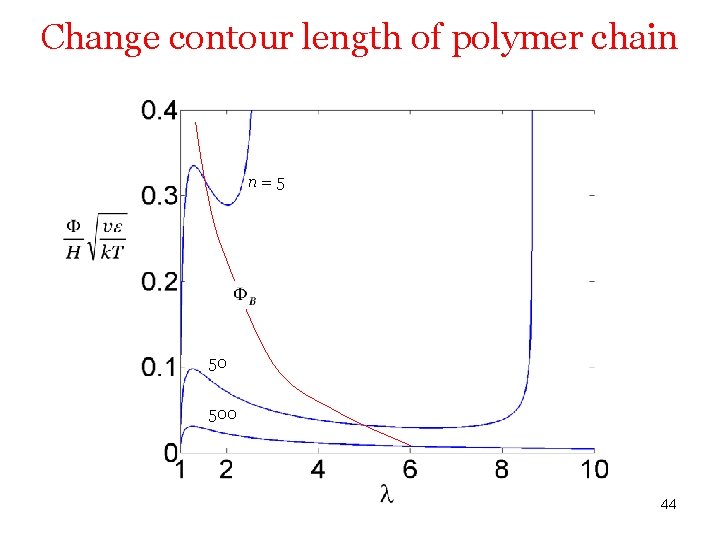
Change contour length of polymer chain n=5 50 500 44
Effect of Prestress n = 50 45
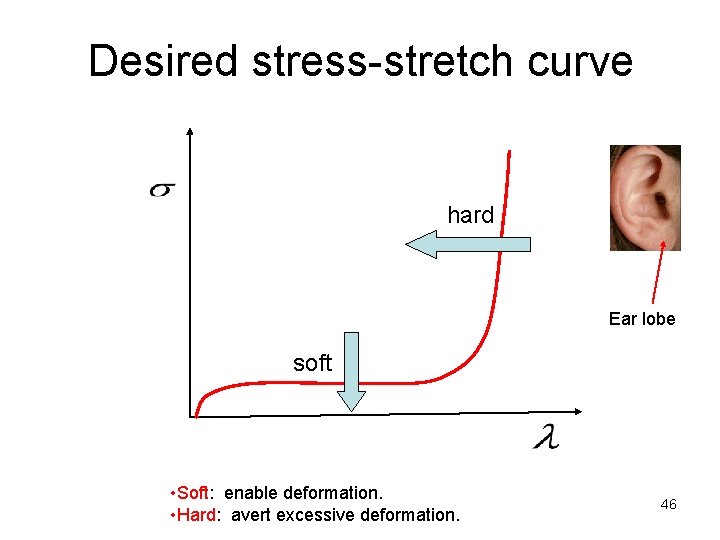
Desired stress-stretch curve hard Ear lobe soft • Soft: enable deformation. • Hard: avert excessive deformation. 46
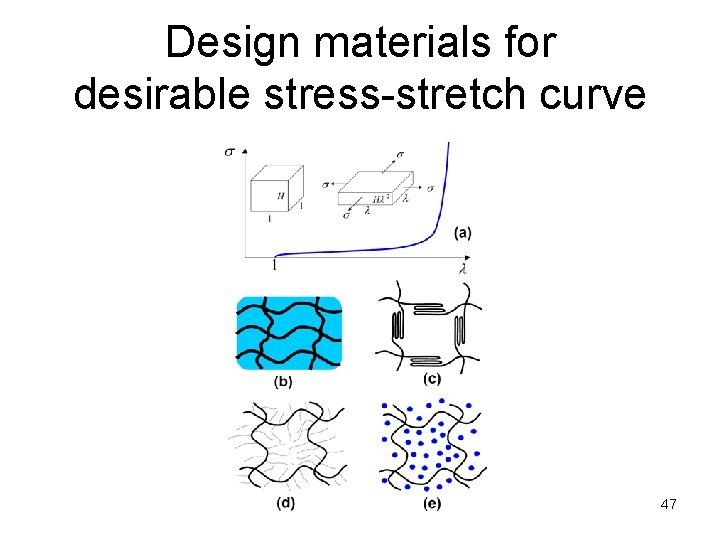
Design materials for desirable stress-stretch curve 47
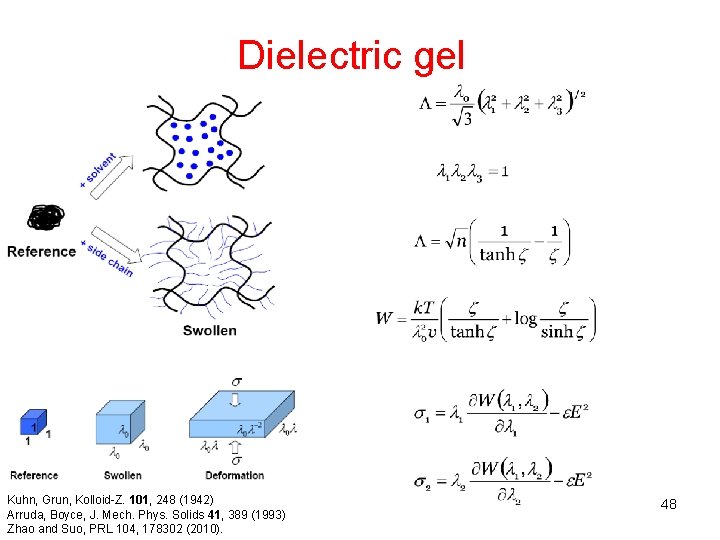
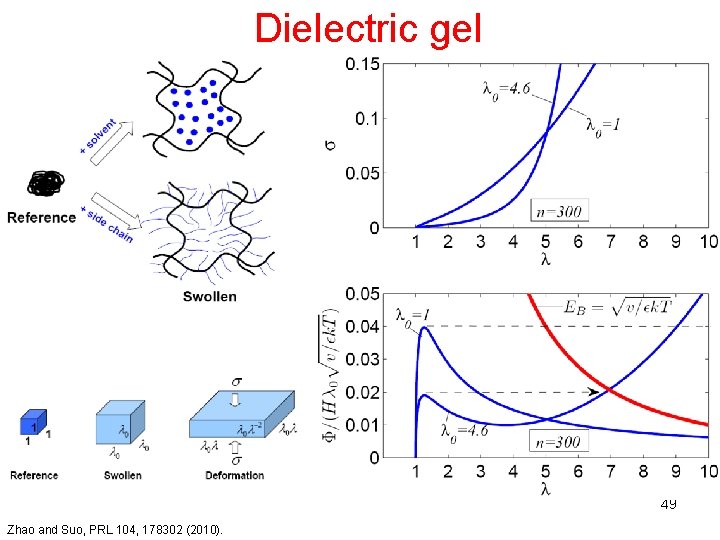
Dielectric gel Kuhn, Grun, Kolloid-Z. 101, 248 (1942) Arruda, Boyce, J. Mech. Phys. Solids 41, 389 (1993) Zhao and Suo, PRL 104, 178302 (2010). 48
Dielectric gel 49 Zhao and Suo, PRL 104, 178302 (2010).
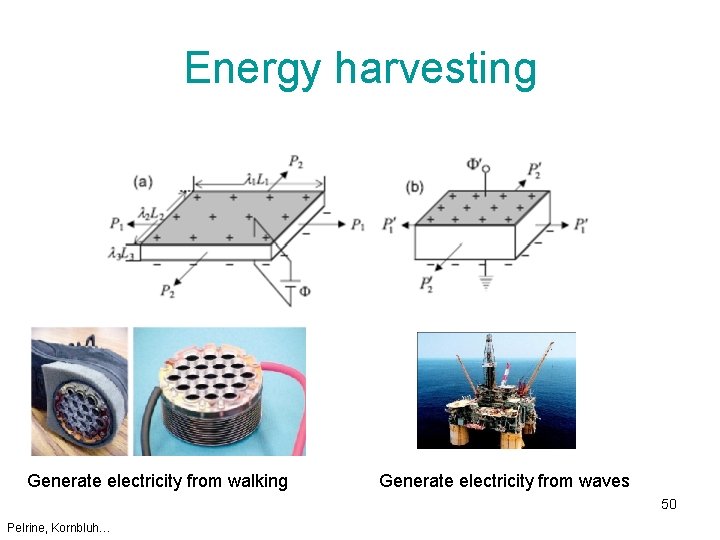
Energy harvesting Generate electricity from walking Generate electricity from waves 50 Pelrine, Kornbluh…
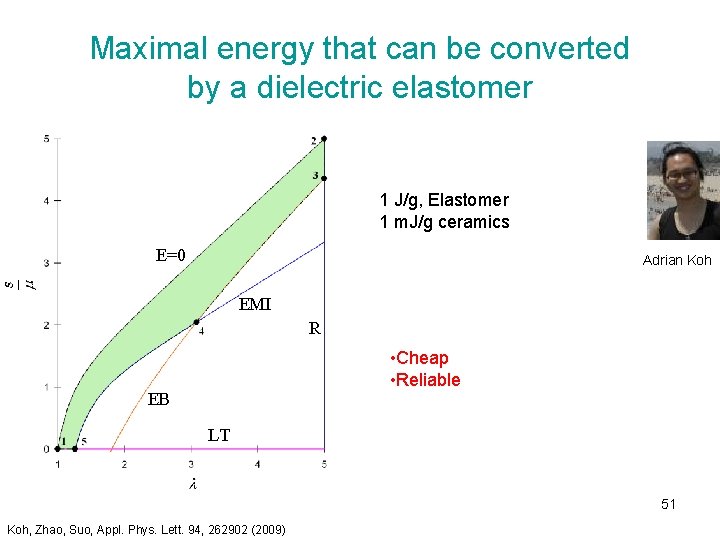
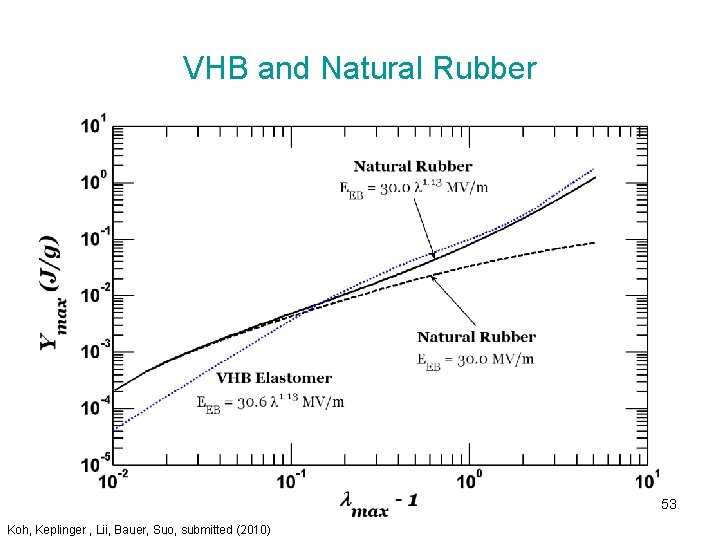
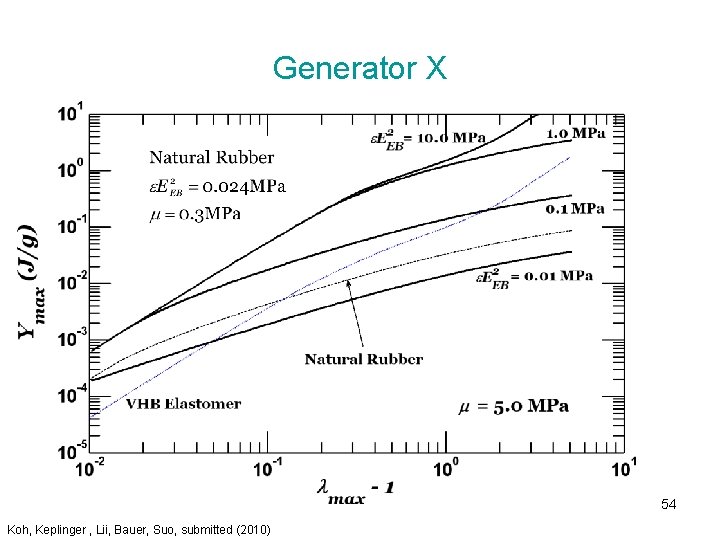
Maximal energy that can be converted by a dielectric elastomer 1 J/g, Elastomer 1 m. J/g ceramics E=0 Adrian Koh EMI R • Cheap • Reliable EB LT 51 Koh, Zhao, Suo, Appl. Phys. Lett. 94, 262902 (2009)
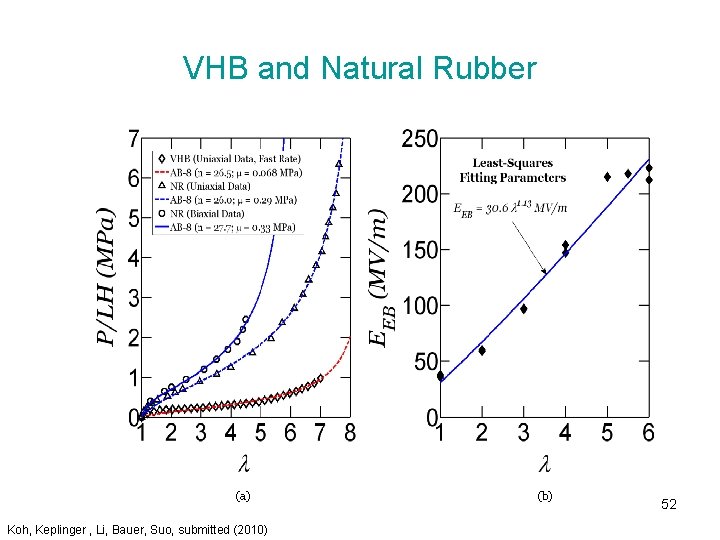
VHB and Natural Rubber (a) Koh, Keplinger , Li, Bauer, Suo, submitted (2010) (b) 52
VHB and Natural Rubber 53 Koh, Keplinger , Lii, Bauer, Suo, submitted (2010)
Generator X 54 Koh, Keplinger , Lii, Bauer, Suo, submitted (2010)
Electrostriction ------+++++ Maxwell stress ------+ - +++++ Electrostriction 55
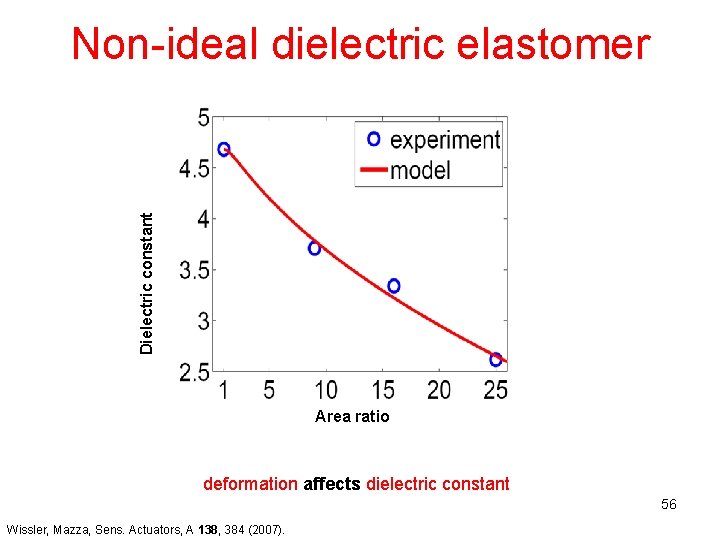
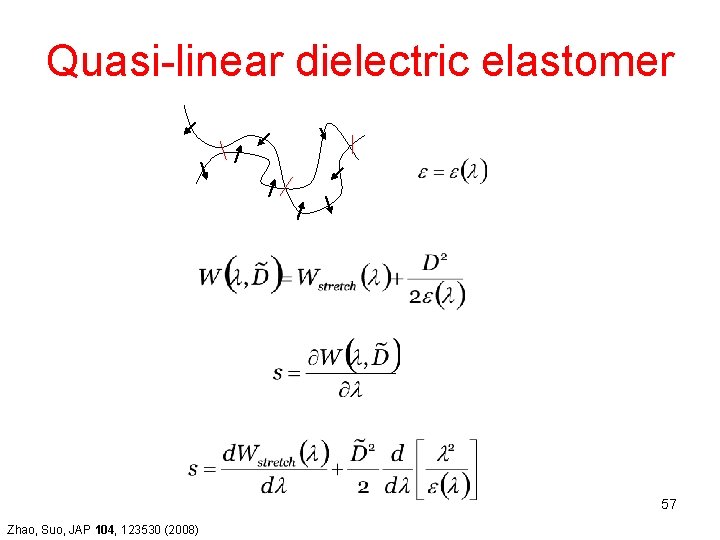
Dielectric constant Non-ideal dielectric elastomer Area ratio deformation affects dielectric constant 56 Wissler, Mazza, Sens. Actuators, A 138, 384 (2007).
Quasi-linear dielectric elastomer 57 Zhao, Suo, JAP 104, 123530 (2008)
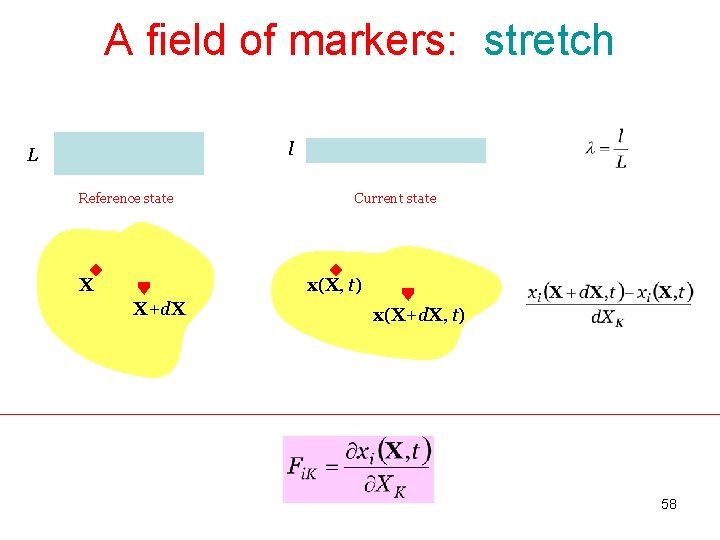
A field of markers: stretch l L Reference state X Current state x(X, t) X+d. X x(X+d. X, t) 58
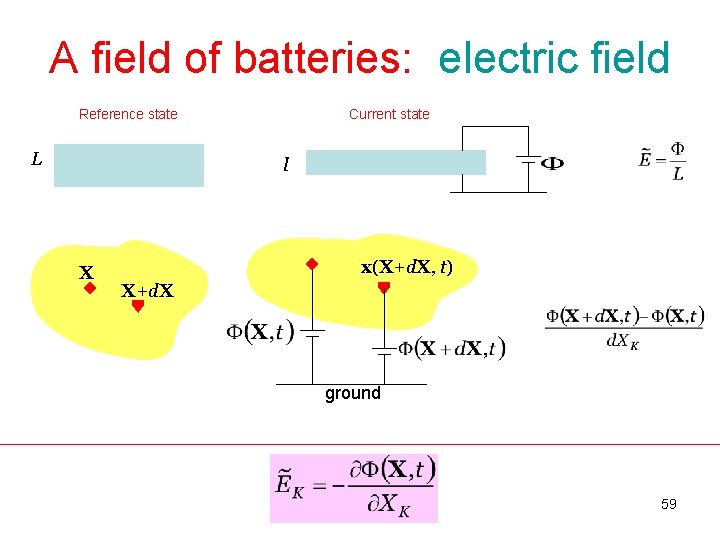
A field of batteries: electric field Reference state L Current state l X x(X, t) x(X+d. X, t) X+d. X ground 59
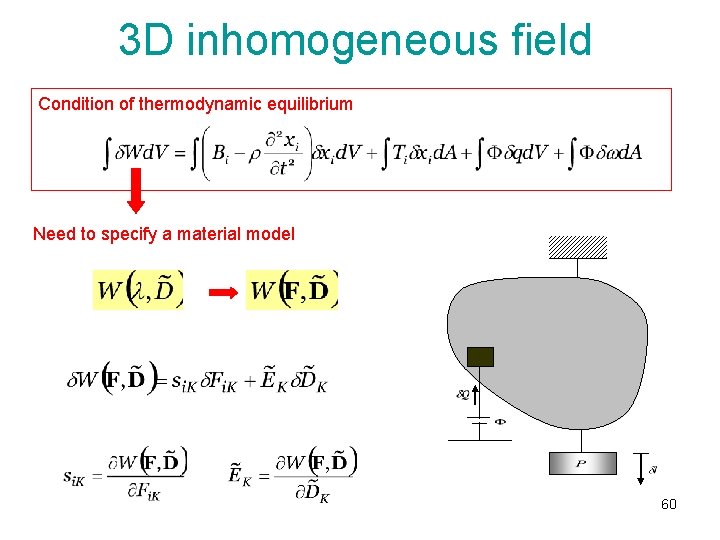
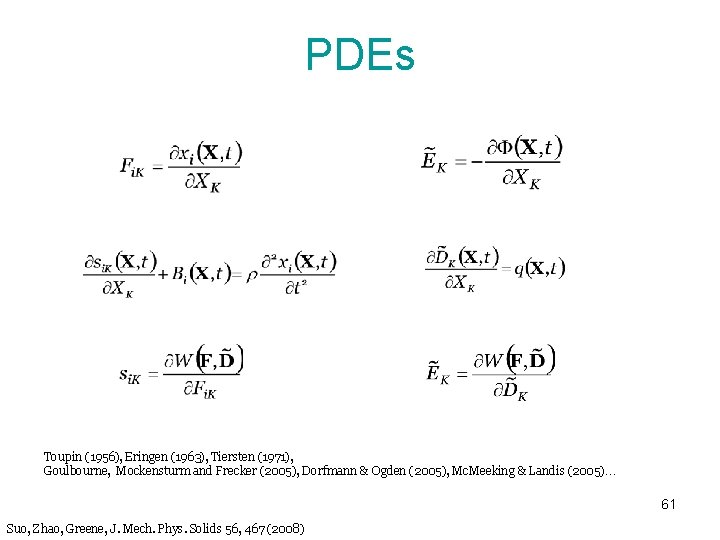
3 D inhomogeneous field Condition of thermodynamic equilibrium Need to specify a material model 60
PDEs Toupin (1956), Eringen (1963), Tiersten (1971), Goulbourne, Mockensturm and Frecker (2005), Dorfmann & Ogden (2005), Mc. Meeking & Landis (2005)… 61 Suo, Zhao, Greene, J. Mech. Phys. Solids 56, 467 (2008)
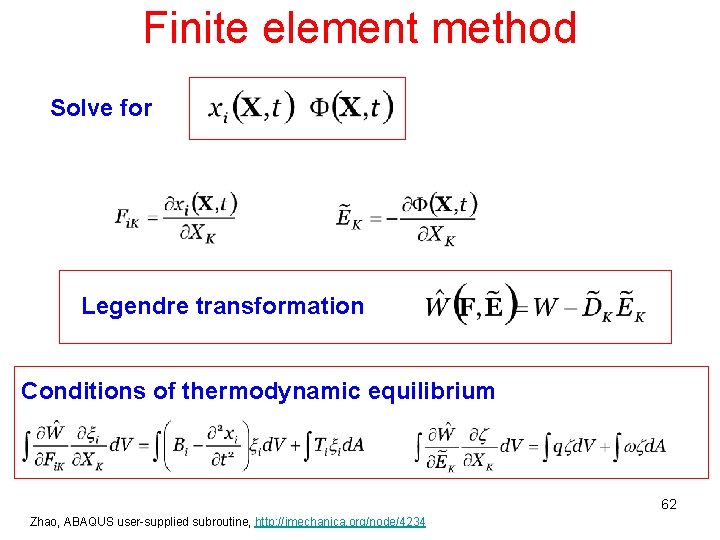
Finite element method Solve for Legendre transformation Conditions of thermodynamic equilibrium 62 Zhao, ABAQUS user-supplied subroutine, http: //imechanica. org/node/4234
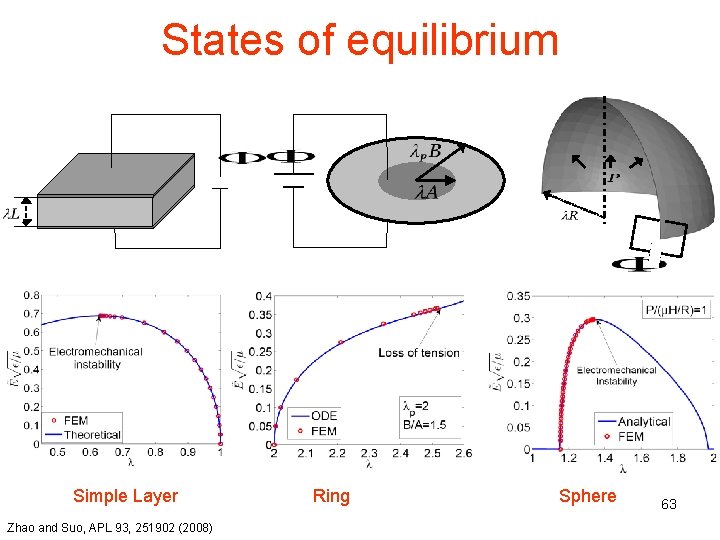
States of equilibrium Simple Layer Zhao and Suo, APL 93, 251902 (2008) Ring Sphere 63
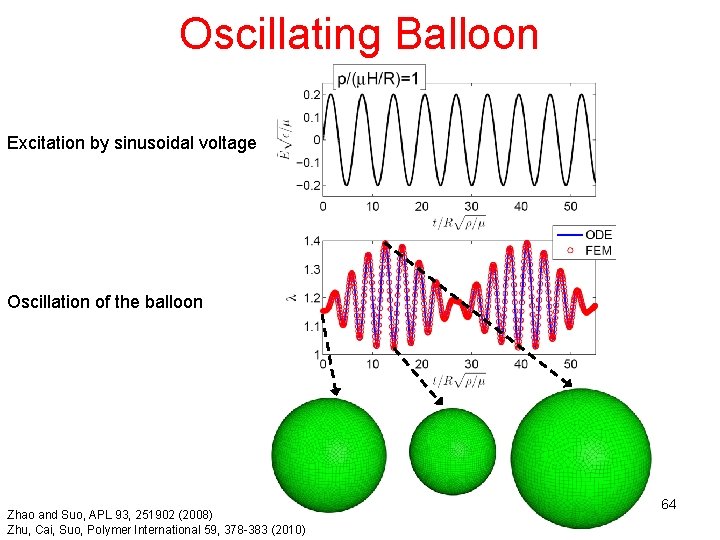
Oscillating Balloon Excitation by sinusoidal voltage Oscillation of the balloon Zhao and Suo, APL 93, 251902 (2008) Zhu, Cai, Suo, Polymer International 59, 378 -383 (2010) 64
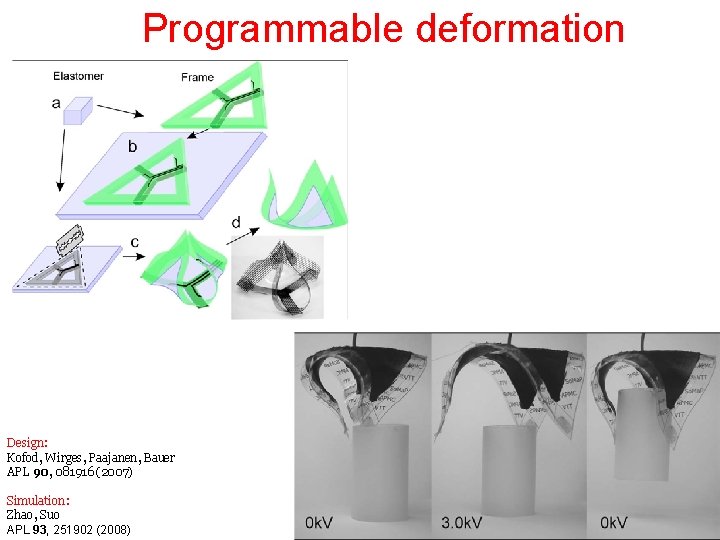
Programmable deformation Design: Kofod, Wirges, Paajanen, Bauer APL 90, 081916 (2007) Simulation: Zhao, Suo APL 93, 251902 (2008) 65
Summary • Soft active materials (SAMs) have many functions (soft robots, adaptive optics, self-regulating fluidics, programmable haptics, oil recovery, energy harvesting, drug delivery, tissue regeneration, low-cost diagnosis, oil spill cleanup…) • SAMs is interesting and challenging to study (mechanics, electrostatics, chemistry; large deformation, mass transport, instability). • The field is wide open (stimuli, SAMs, functions). Stimuli p. H, E, T, C… SAM deforms Functions optics, flow… 66