
Soda Pop Head Presented by Jacob Wolf District
Soda Pop Head Presented by Jacob Wolf District ED Program Facilitator September 29, 2017
"The goal of resolving conflict in a relationship is not victory or defeat. It's reaching understanding and letting go of our need to be right. "
Why has there been such a big change in recent years? Increased stress on families and students Financial Non-stop Busy stimulus schedules Academic Mental Long demands Health System Inadequacies wait periods for services Insurance Issues funding for therapy and medications with navigating the system
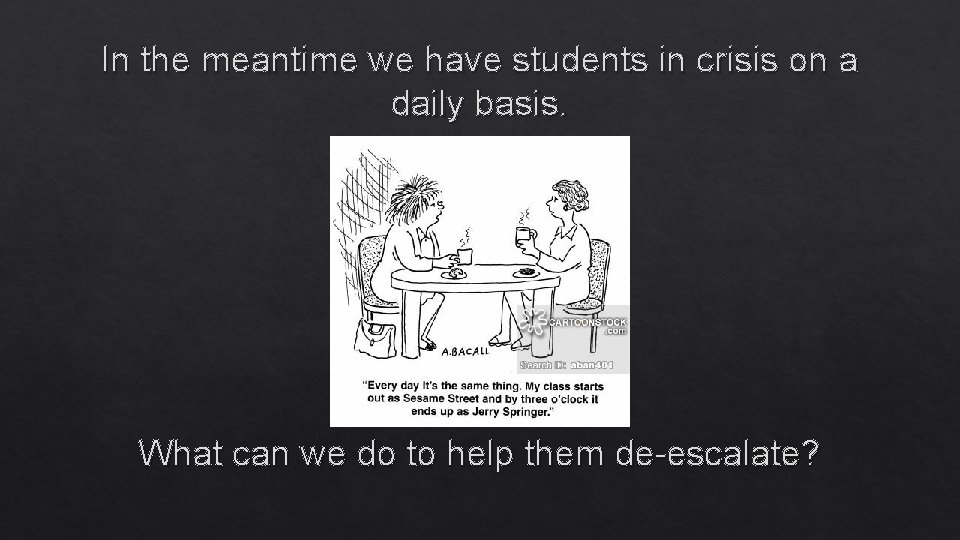
In the meantime we have students in crisis on a daily basis. What can we do to help them de-escalate?
De-Escalation Myth: The best staff in your building are able to quickly help a student de-escalate from a crisis FALSE
The best staff in your building are able to implementation strategies, techniques, and structure that lessen the number of times a student escalates in the first place.
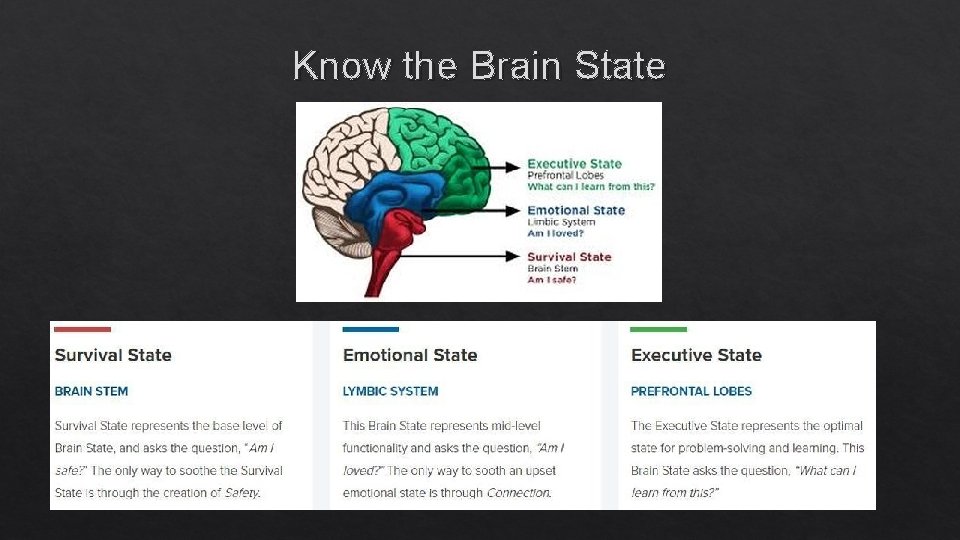
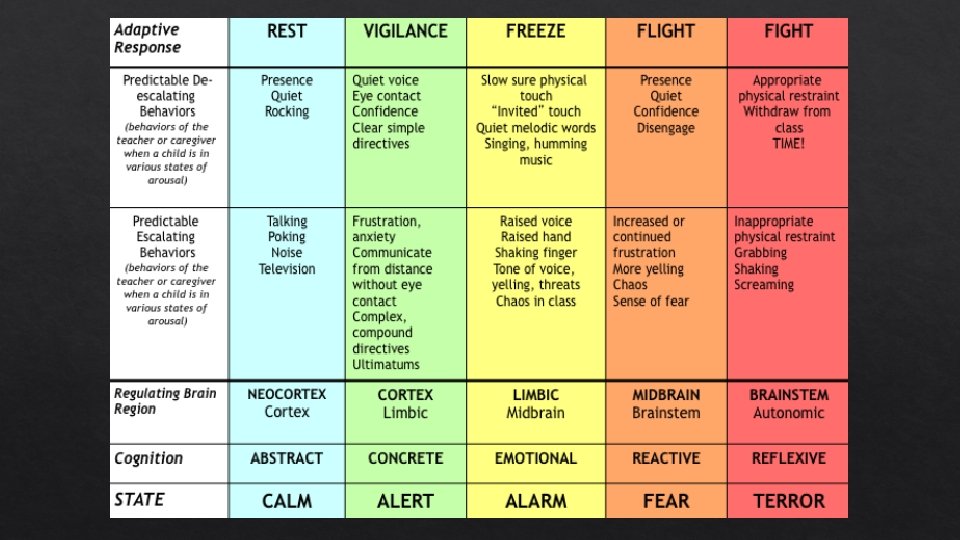
Know the Brain State
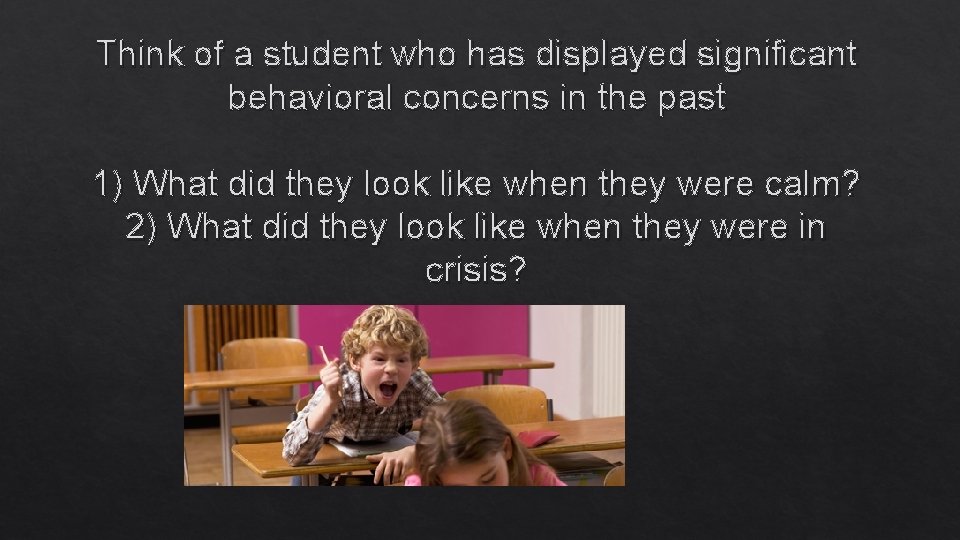
Think of a student who has displayed significant behavioral concerns in the past 1) What did they look like when they were calm? 2) What did they look like when they were in crisis?
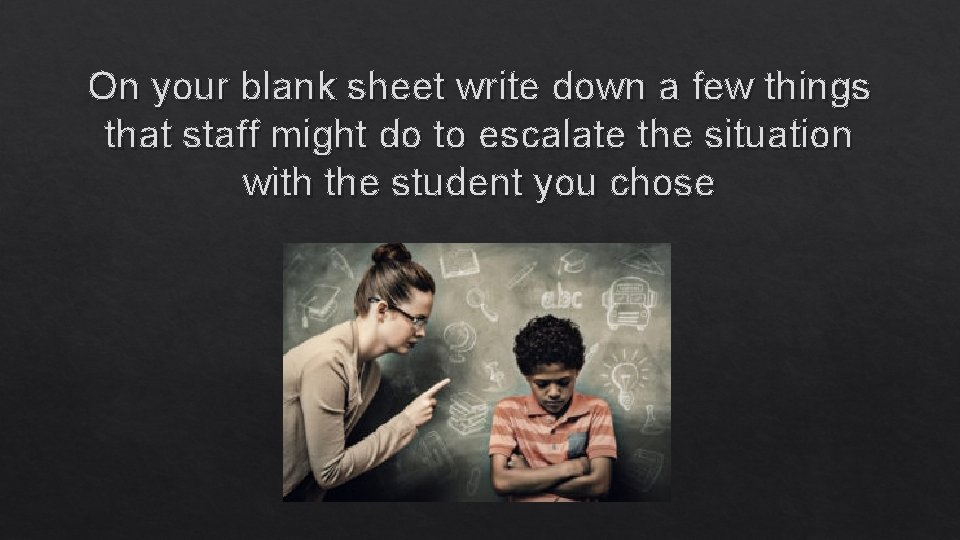
On your blank sheet write down a few things that staff might do to escalate the situation with the student you chose
De-Escalation Strategies As we go through these strategies, techniques, and tips record some that you think might assist the student you chose.
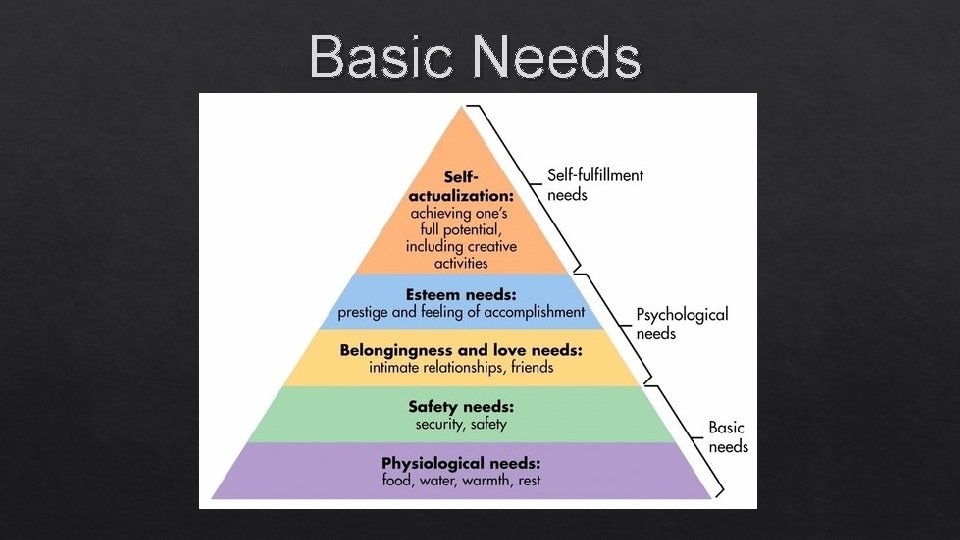
Basic Needs
Potential Impact on Student Basic Needs Breakfast, Snacks Lunch, and Dinner during the day Clean home Water and electricity Warmth Sleep in the fall and winter patterns Safety and security at home and at school Loving relationships
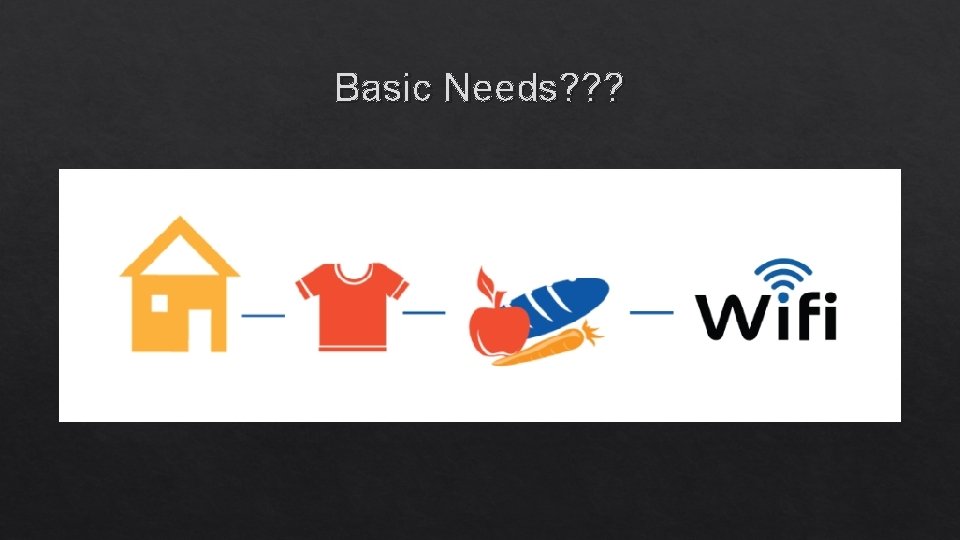
Basic Needs? ? ?
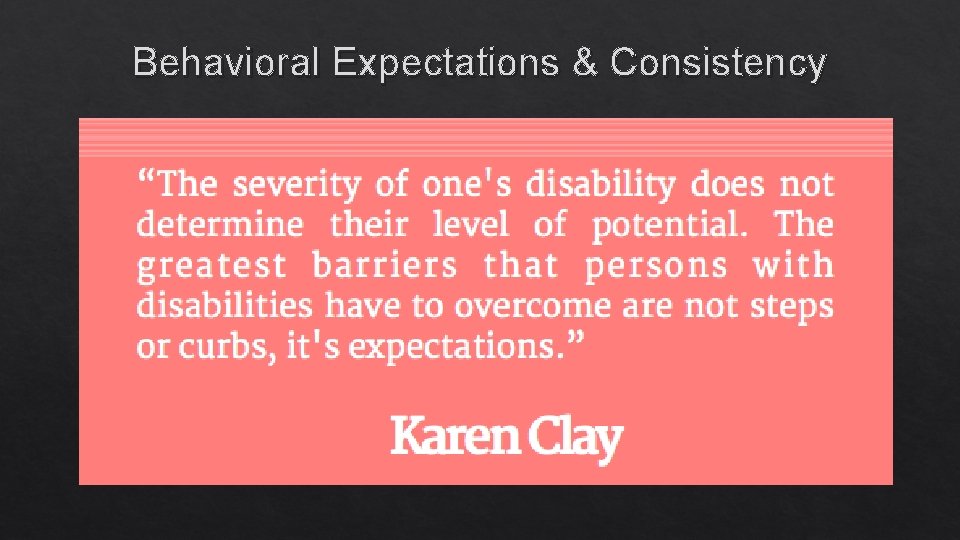
Behavioral Expectations & Consistency
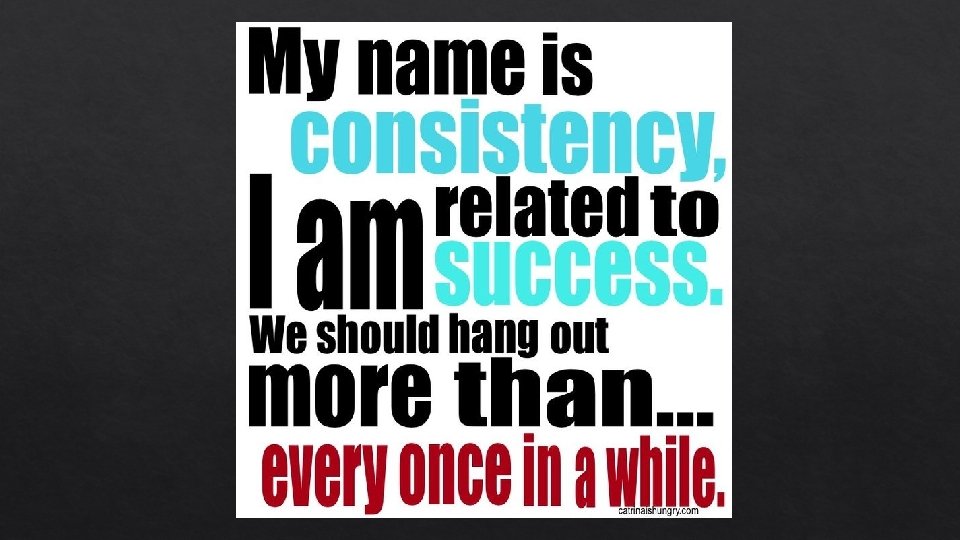
Consistency in Staff Response Staff who are inconsistent in their responses and interactions with students have a feeling of being unsafe and unpredictable to the student School crisis teams must be aware of each others’ actions: It would be better to check out before saying or doing something that would damage the safe relationship with the student
Community & Relationship Building Rarely can someone unfamiliar with a student be the one to help them calm down Crisis team staff members must take the time to develop a relationship with the student See http: //behaviorideas. weebly. com/de-escalationstrategies. html (Community Building Videos)
Community & Relationship Building Relationship Personal building might include: connection activities Check in/Check out Helper jobs PBIS reward activities with a staff member (feed fish, do hair) Provide Doing I clean clothes when needed an activity with the student and another student Love You Rituals
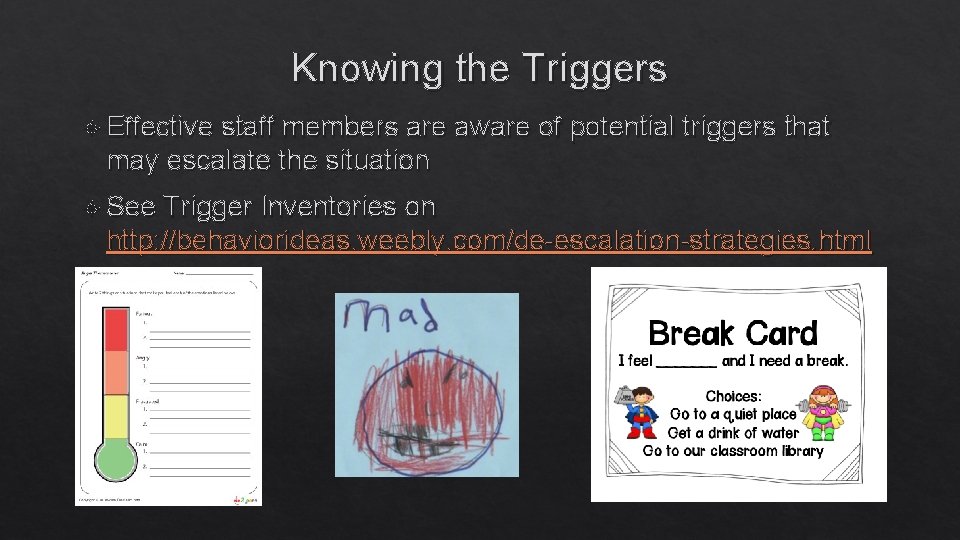
Knowing the Triggers Effective staff members are aware of potential triggers that may escalate the situation See Trigger Inventories on http: //behaviorideas. weebly. com/de-escalation-strategies. html
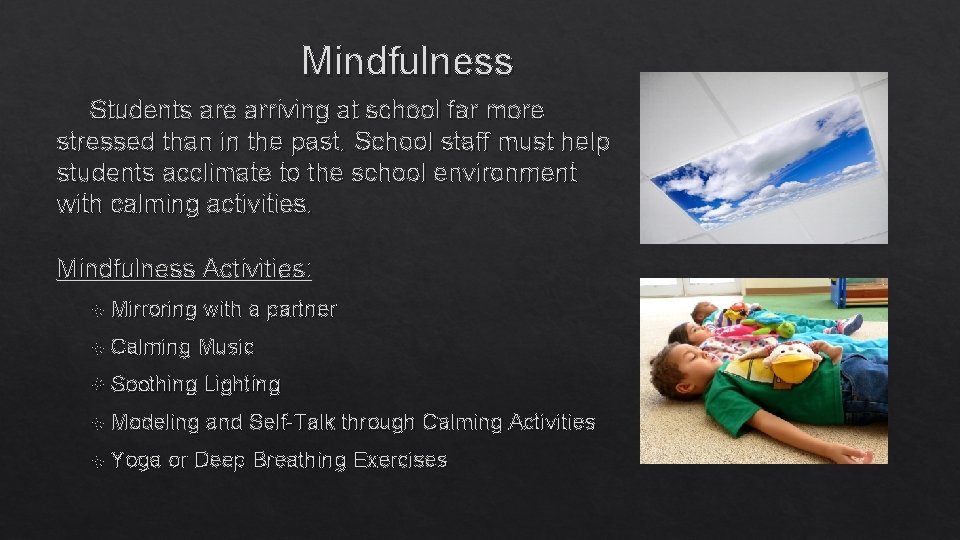
Mindfulness Students are arriving at school far more stressed than in the past. School staff must help students acclimate to the school environment with calming activities. Mindfulness Activities: Mirroring with a partner Calming Music Soothing Lighting Modeling and Self-Talk through Calming Activities Yoga or Deep Breathing Exercises
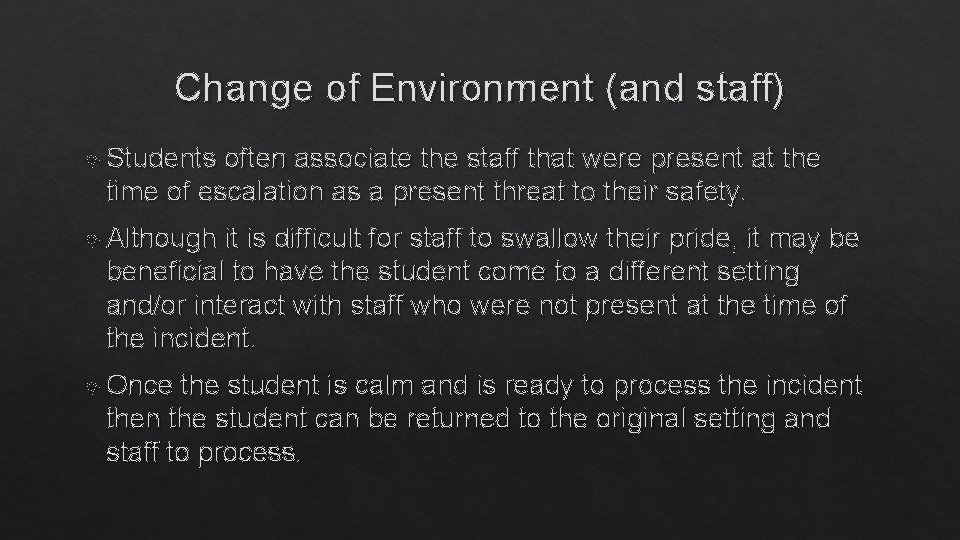
Change of Environment (and staff) Students often associate the staff that were present at the time of escalation as a present threat to their safety. Although it is difficult for staff to swallow their pride, it may be beneficial to have the student come to a different setting and/or interact with staff who were not present at the time of the incident. Once the student is calm and is ready to process the incident then the student can be returned to the original setting and staff to process.
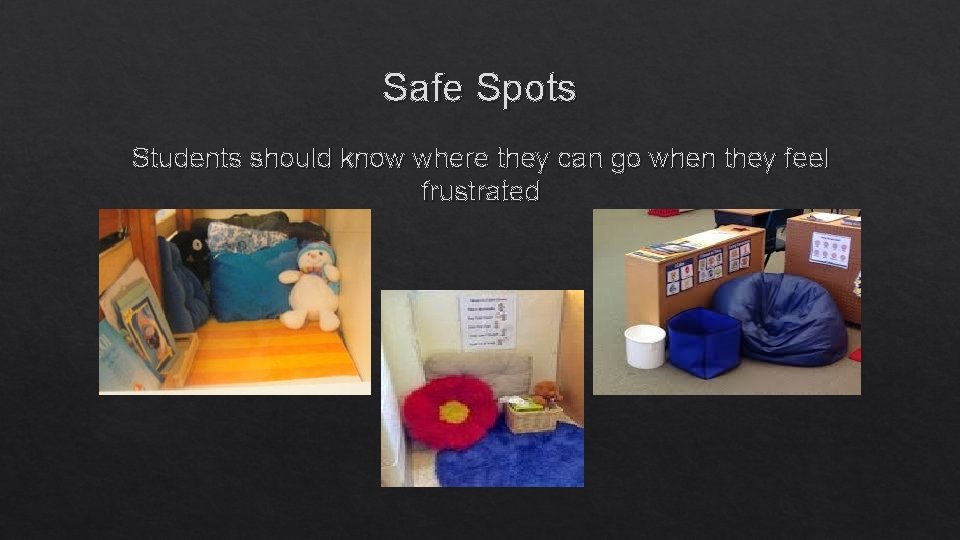
Safe Spots Students should know where they can go when they feel frustrated
Silence Too often adults try to talk too much when students just want silence to calm down We must learn when students want silence and when students are seeking assistance

Breathing Strategies My Calm Beat App
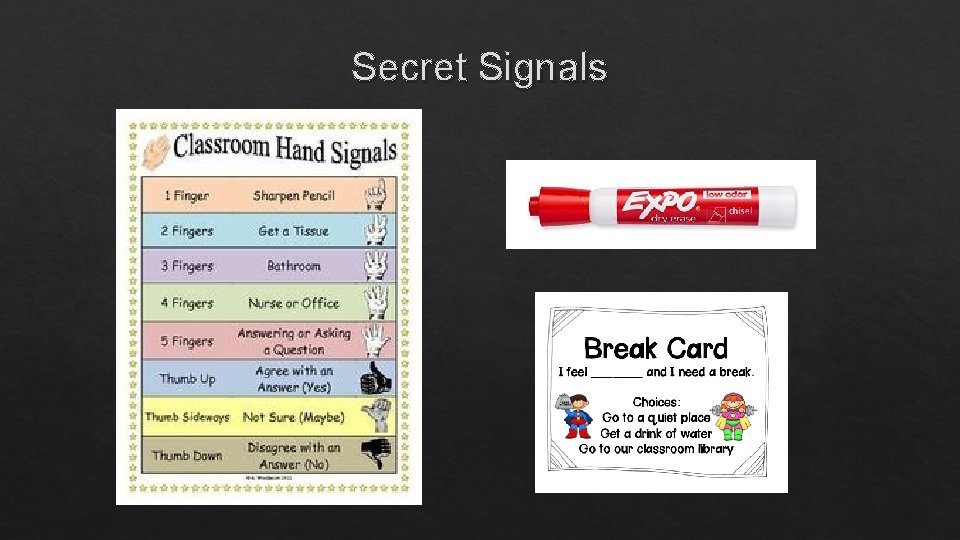
Secret Signals
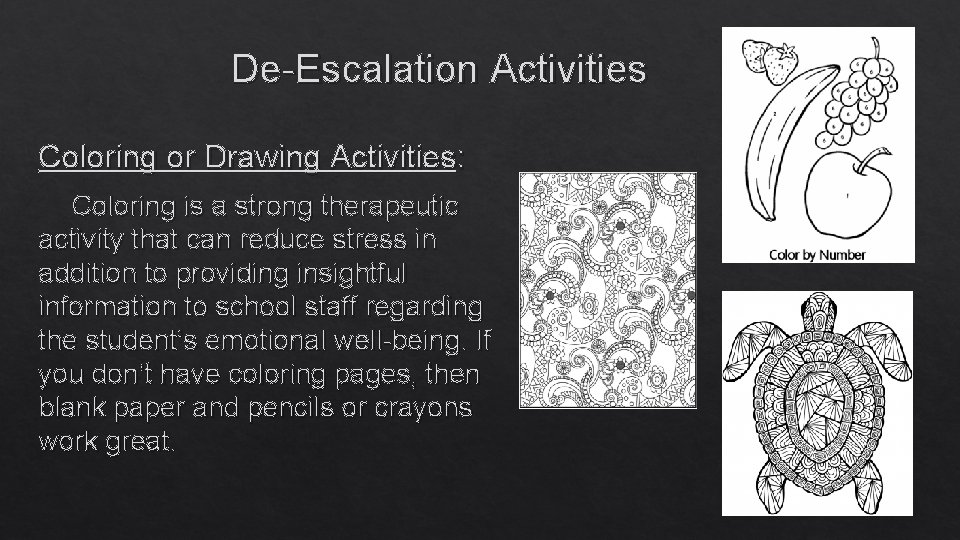
De-Escalation Activities Coloring or Drawing Activities: Coloring is a strong therapeutic activity that can reduce stress in addition to providing insightful information to school staff regarding the student’s emotional well-being. If you don’t have coloring pages, then blank paper and pencils or crayons work great.
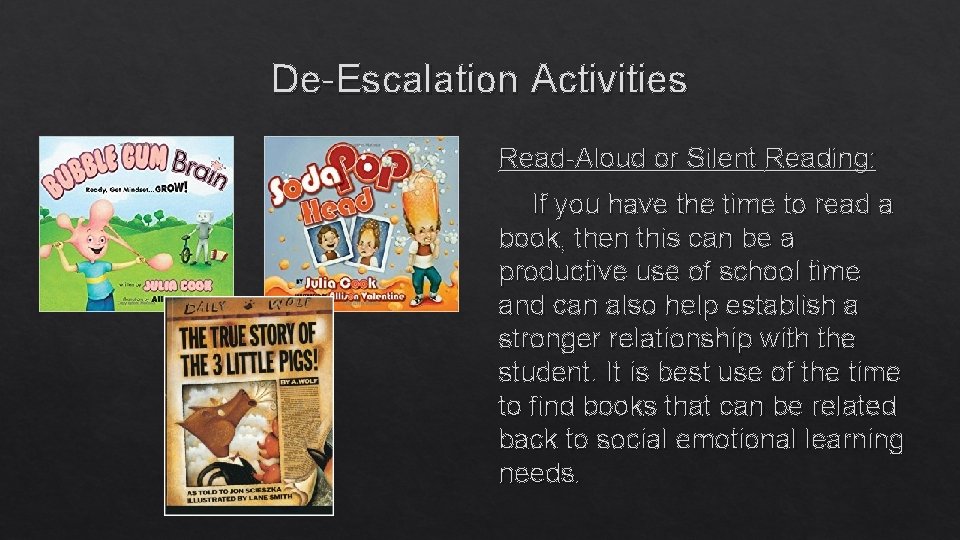
De-Escalation Activities Read-Aloud or Silent Reading: If you have the time to read a book, then this can be a productive use of school time and can also help establish a stronger relationship with the student. It is best use of the time to find books that can be related back to social emotional learning needs.
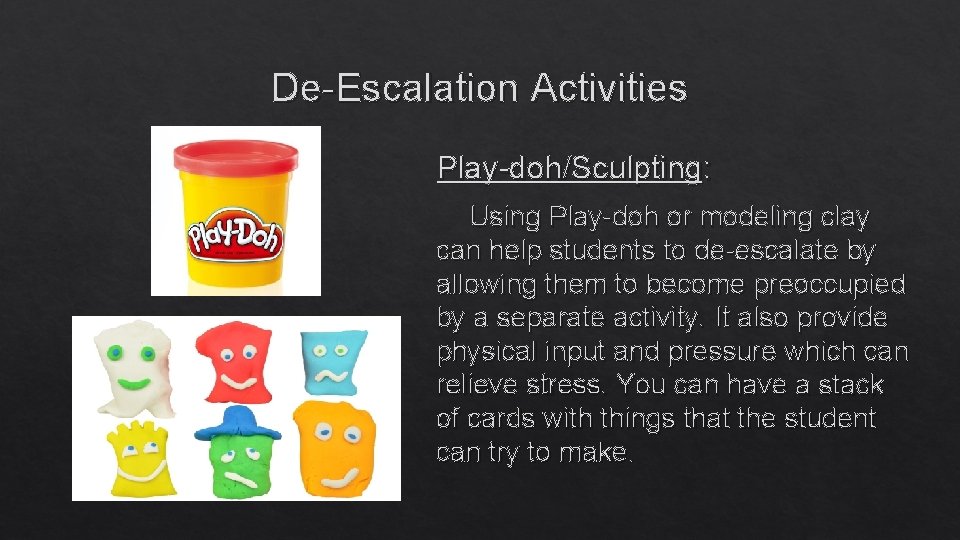
De-Escalation Activities Play-doh/Sculpting: Using Play-doh or modeling clay can help students to de-escalate by allowing them to become preoccupied by a separate activity. It also provide physical input and pressure which can relieve stress. You can have a stack of cards with things that the student can try to make.
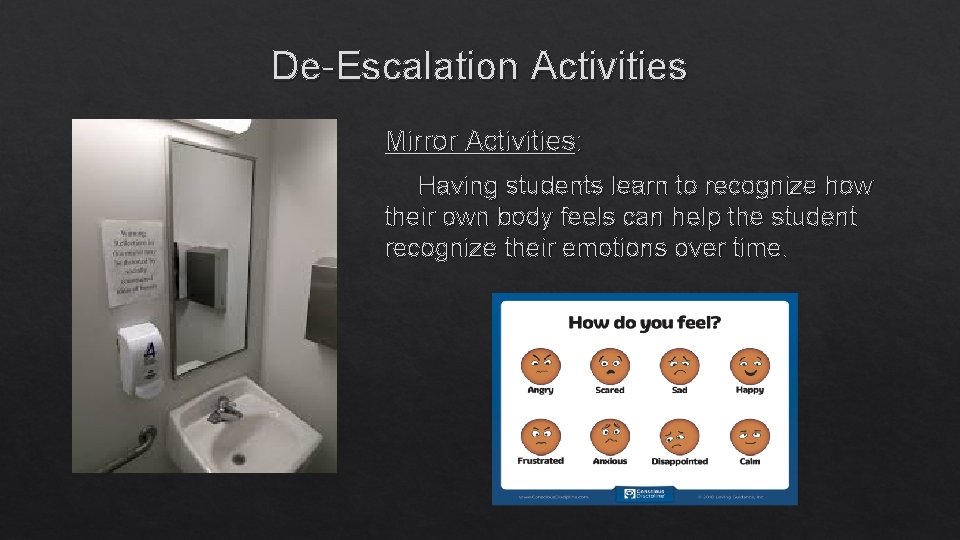
De-Escalation Activities Mirror Activities: Having students learn to recognize how their own body feels can help the student recognize their emotions over time.
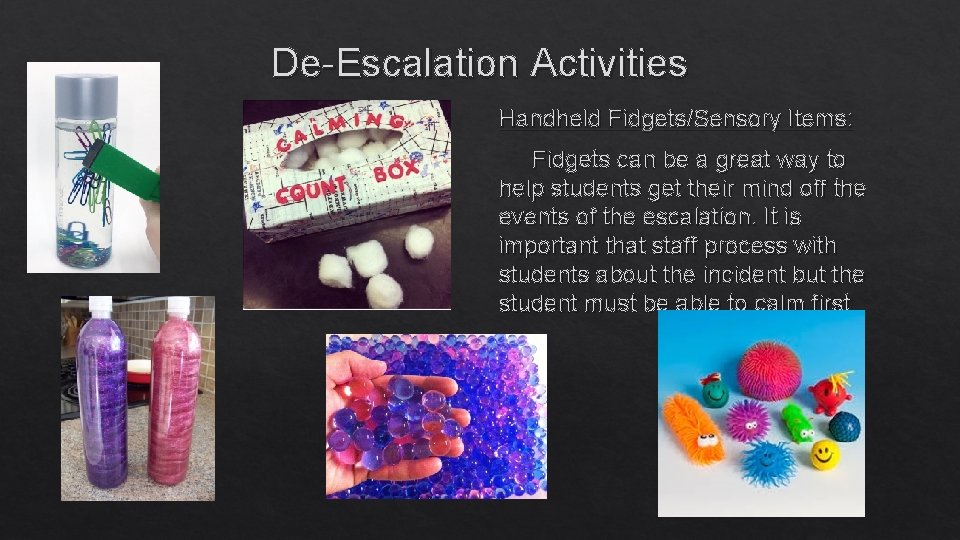
De-Escalation Activities Handheld Fidgets/Sensory Items: Fidgets can be a great way to help students get their mind off the events of the escalation. It is important that staff process with students about the incident but the student must be able to calm first.
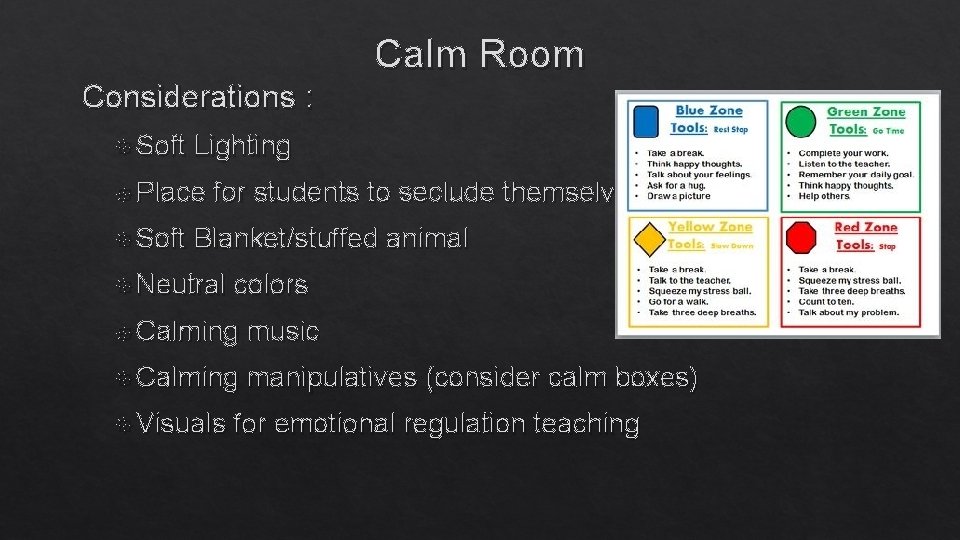
Calm Room Considerations : Soft Lighting Place Soft for students to seclude themselves Blanket/stuffed animal Neutral colors Calming music Calming manipulatives (consider calm boxes) Visuals for emotional regulation teaching
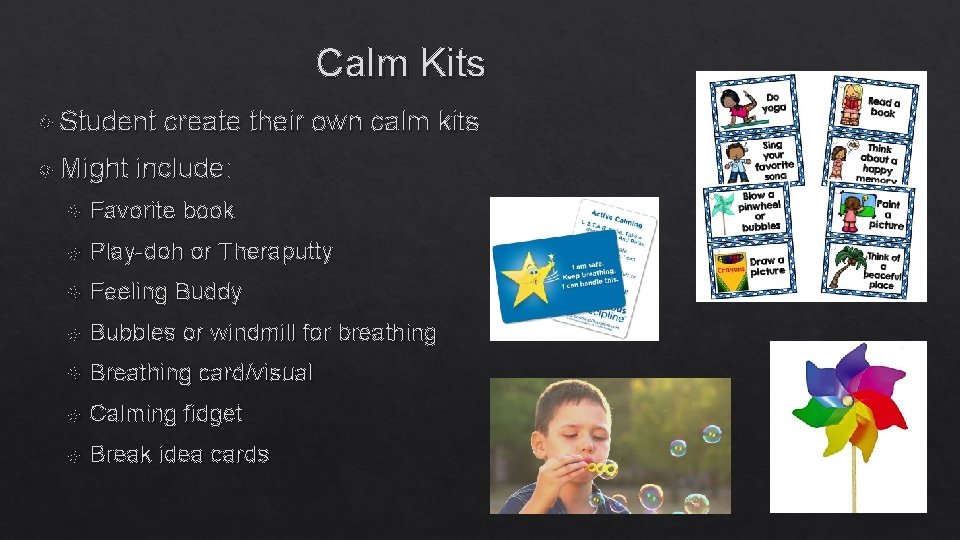
Calm Kits Student Might create their own calm kits include: Favorite book Play-doh Feeling or Theraputty Buddy Bubbles or windmill for breathing Breathing Calming Break card/visual fidget idea cards
Calm Room Need to be explicit about the expectations and procedures for calm room use Not a play room Students still need to be accountable for the work missed Not a place to get treats and prizes Keep data on student usage to determine behavioral trends Need to have a trusted, caring adult
What about the consequence?
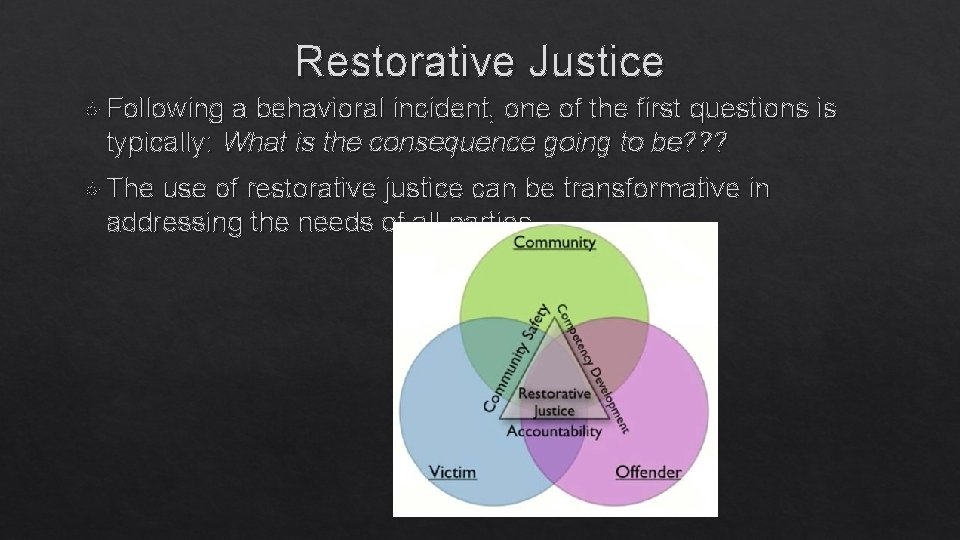
Restorative Justice Following a behavioral incident, one of the first questions is typically: What is the consequence going to be? ? ? The use of restorative justice can be transformative in addressing the needs of all parties
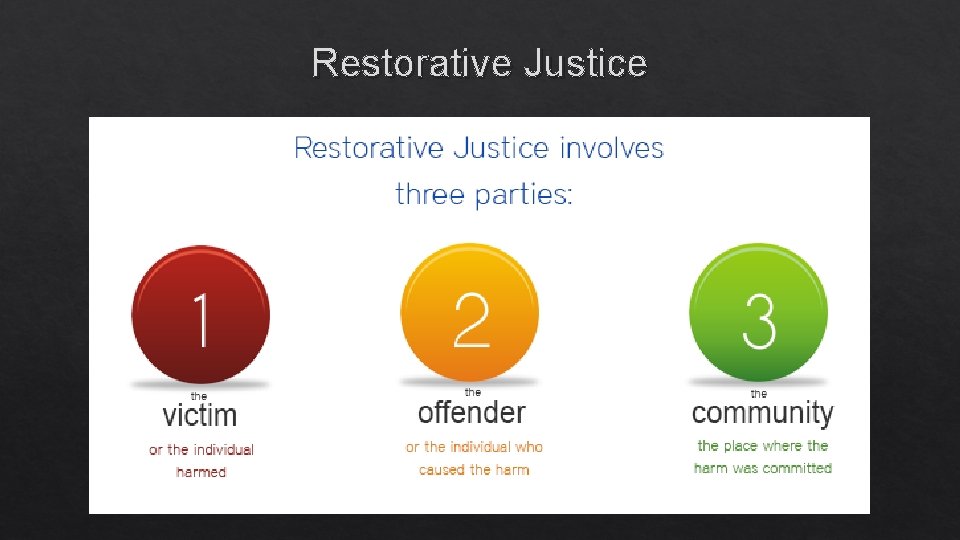
Restorative Justice
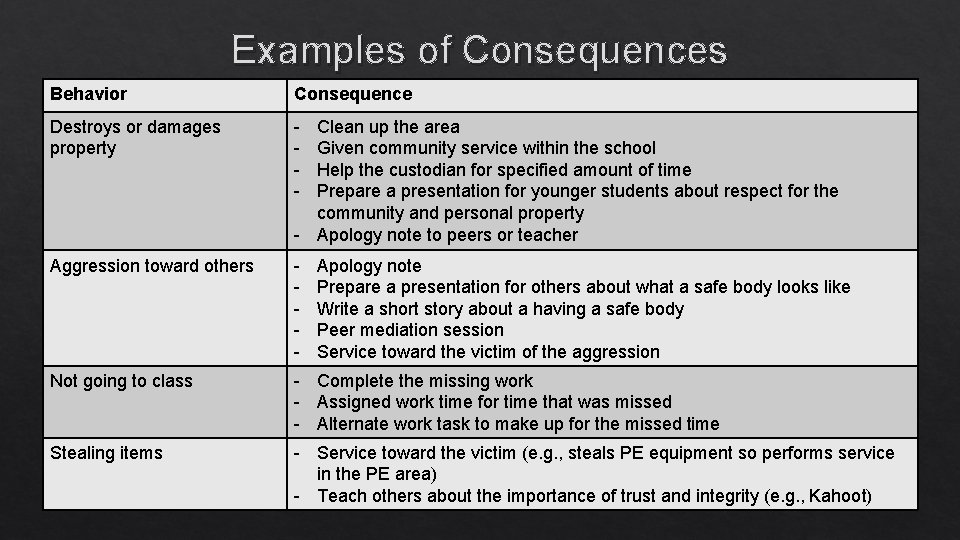
Examples of Consequences Behavior Consequence Destroys or damages property - Aggression toward others - Not going to class - Complete the missing work - Assigned work time for time that was missed - Alternate work task to make up for the missed time Stealing items - Service toward the victim (e. g. , steals PE equipment so performs service in the PE area) - Teach others about the importance of trust and integrity (e. g. , Kahoot) Clean up the area Given community service within the school Help the custodian for specified amount of time Prepare a presentation for younger students about respect for the community and personal property - Apology note to peers or teacher Apology note Prepare a presentation for others about what a safe body looks like Write a short story about a having a safe body Peer mediation session Service toward the victim of the aggression
Resources: https: //consciousdiscipline. com/ https: //www. samhsa. gov/topics http: //behaviorideas. weebly. com/ http: //traumaessentials. weebly. com/ http: //restorativejustice. org/#sthash. 34 FHRfxw. dpbs
Questions? ? ?
- Slides: 41