
SOCIOLOGY CHAPTER 8 SECTION 5 SOCIAL MOBILITY TYPES
SOCIOLOGY CHAPTER 8 SECTION 5 SOCIAL MOBILITY
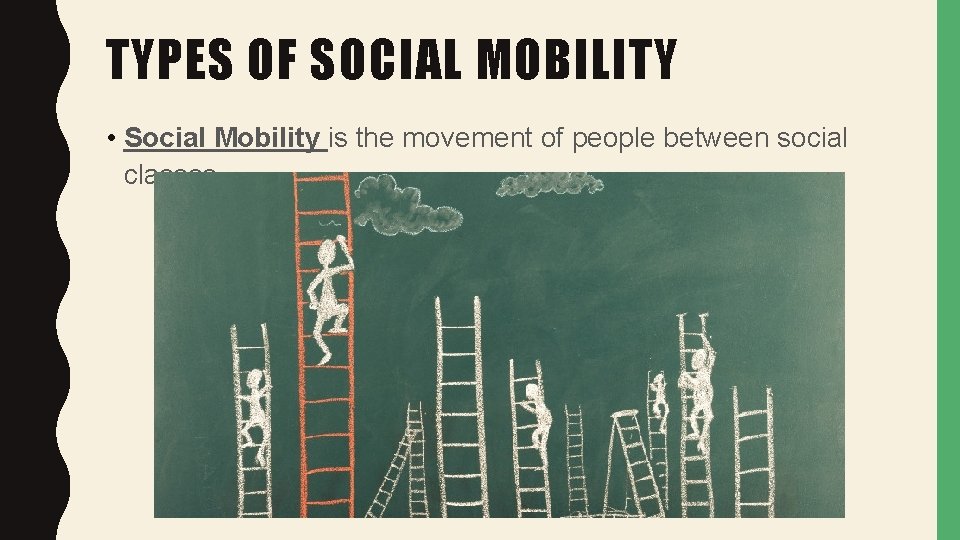
TYPES OF SOCIAL MOBILITY • Social Mobility is the movement of people between social classes.
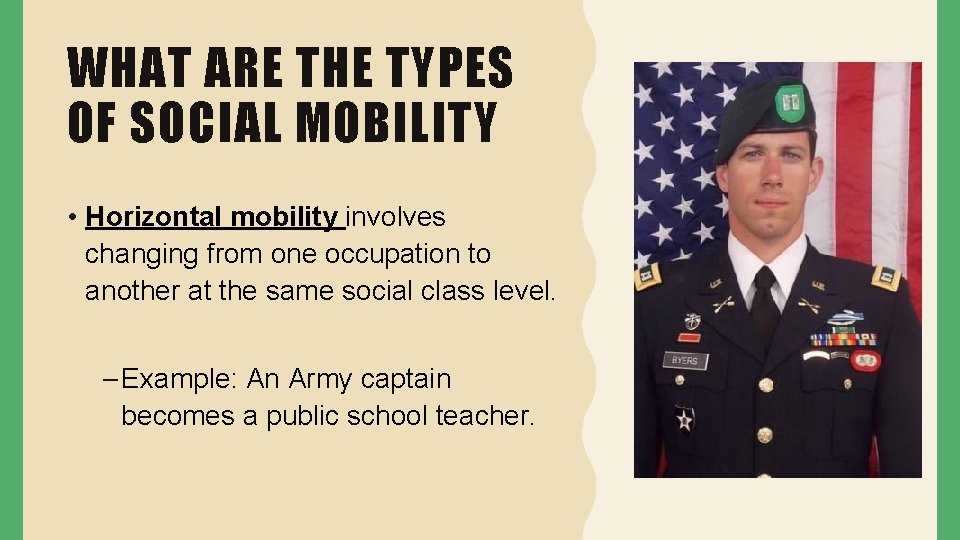
WHAT ARE THE TYPES OF SOCIAL MOBILITY • Horizontal mobility involves changing from one occupation to another at the same social class level. – Example: An Army captain becomes a public school teacher.
• Because horizontal mobility involves no real change in occupational status or social class, sociologists are not generally interested in investigating it.
• With vertical mobility, a person’s occupational status or social class moves upward or downward.

• When the change takes place over a generation, it is called intergenerational mobility. – Example: If a plumber’s daughter becomes a physician.

WHAT IS A CASTE SYSTEM? • In a caste system, there is no social mobility because social status is inherited and cannot be changed. • In a caste system, statuses (including occupations) are ascribed or assigned at birth. • Individuals cannot change their statuses through any efforts or their own. • By reason of religious, biological, superstitious, or legal justification.

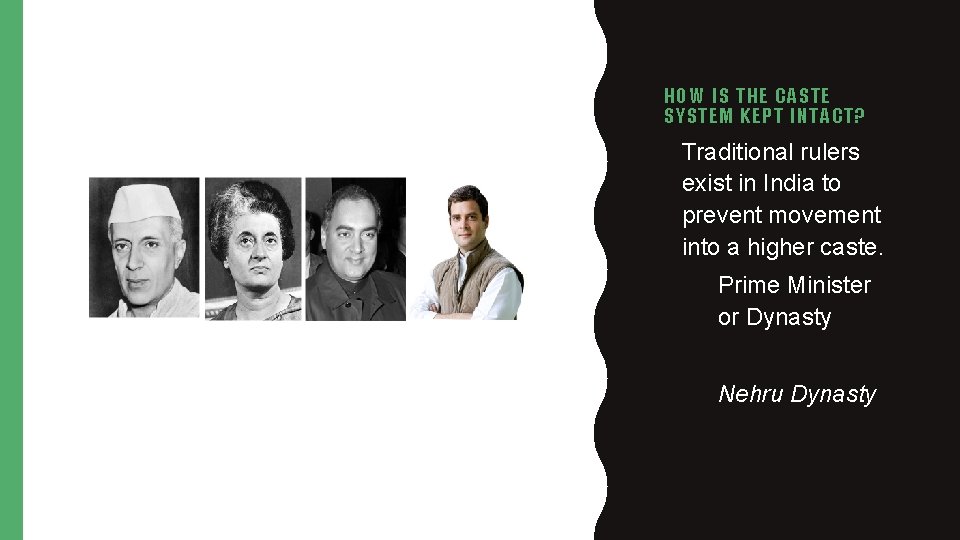
HOW IS THE CASTE SYSTEM KEPT INTACT? • Traditional rulers exist in India to prevent movement into a higher caste. – Prime Minister or Dynasty – Nehru Dynasty
WHAT IS AN OPEN-CLASS SYSTEM? • In an open-class system, an individual’s social class is based on merit and individual effort.

UPWARD AND DOWNWARD MOBILITY • Abraham Lincoln – While considerable upward mobility has occurred, great leaps in social-class levels are rare. – Upward mobility typically involves only a small improvement over the social class situation of one’s parents.

IS UPWARD MOBILITY INCREASING? • After World War II, an explosion in the availability of high-paying manufacturing jobs made it relatively easy for people to move upward. • However, with computer-driven production, improved means of communication, and better transportation, it is possible for U. S. companies seeking to lower their costs to move their manufacturing operations overseas.
• U. S. workers, then, who lack the education needed to perform the more technologically sophisticated jobs are being forced to take lower-paying jobs. – Downward mobility
WHAT ARE THE SOCIAL AND PSYCHOLOGICAL COSTS OF DOWNWARD MOBILITY? • Downwardly mobile people experience lowered selfesteem, despair, depression, feelings of powerlessness, and a loss of sense of honor.
- Slides: 14