
Sociology 364L 497L Statistical Methods and Social Research


- Slides: 31
Sociology 364/L & 497/L Statistical Methods and Social Research An Introduction and overview Professor Jerald Schutte
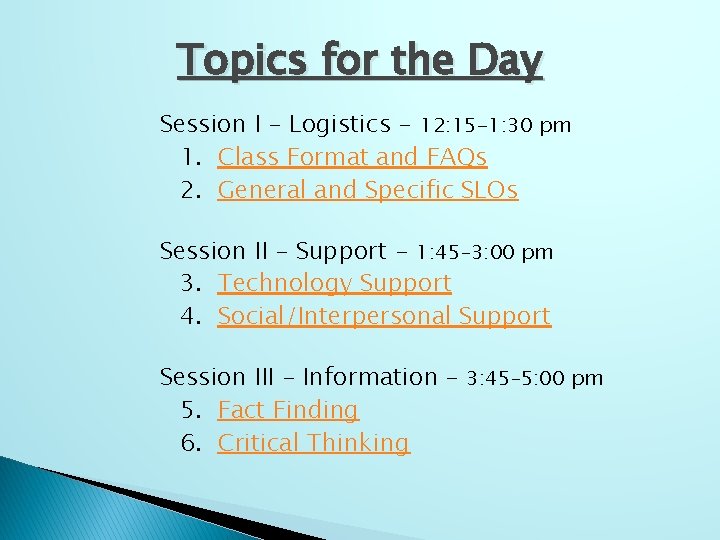
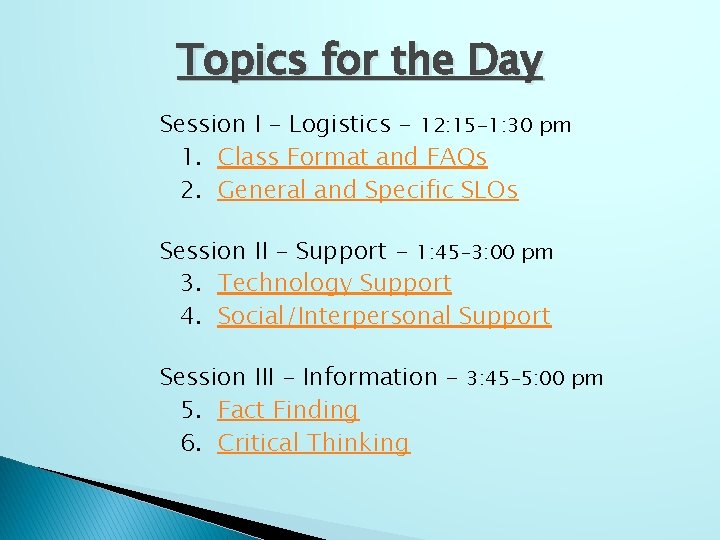
Topics for the Day Session I – Logistics - 12: 15 -1: 30 pm 1. Class Format and FAQs 2. General and Specific SLOs Session II – Support - 1: 45– 3: 00 pm 3. Technology Support 4. Social/Interpersonal Support Session III – Information – 3: 45– 5: 00 pm 5. Fact Finding 6. Critical Thinking
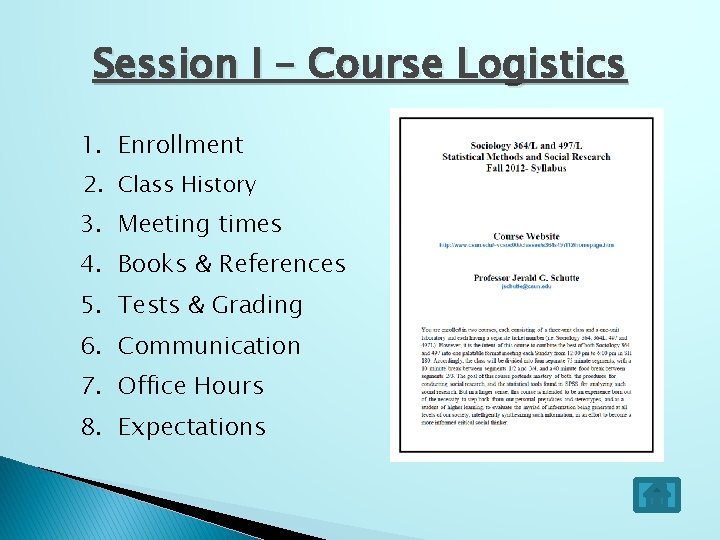
Session I – Course Logistics 1. Enrollment 2. Class History 3. Meeting times 4. Books & References 5. Tests & Grading 6. Communication 7. Office Hours 8. Expectations
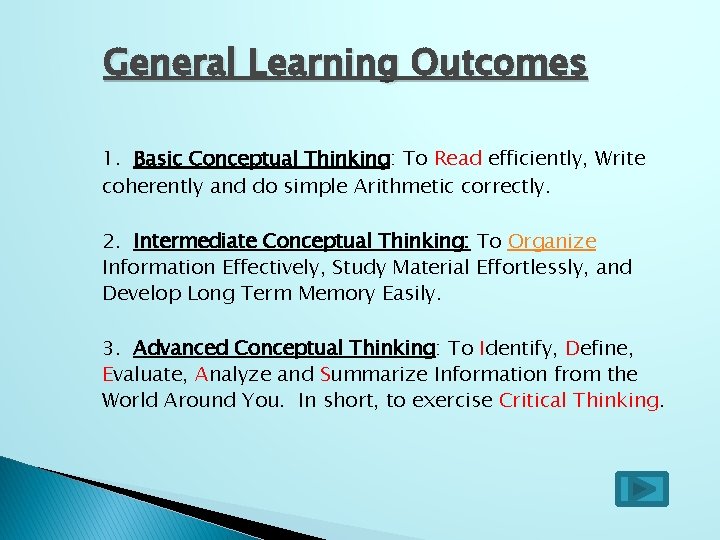
General Learning Outcomes 1. Basic Conceptual Thinking: To Read efficiently, Write coherently and do simple Arithmetic correctly. 2. Intermediate Conceptual Thinking: To Organize Information Effectively, Study Material Effortlessly, and Develop Long Term Memory Easily. 3. Advanced Conceptual Thinking: To Identify, Define, Evaluate, Analyze and Summarize Information from the World Around You. In short, to exercise Critical Thinking.
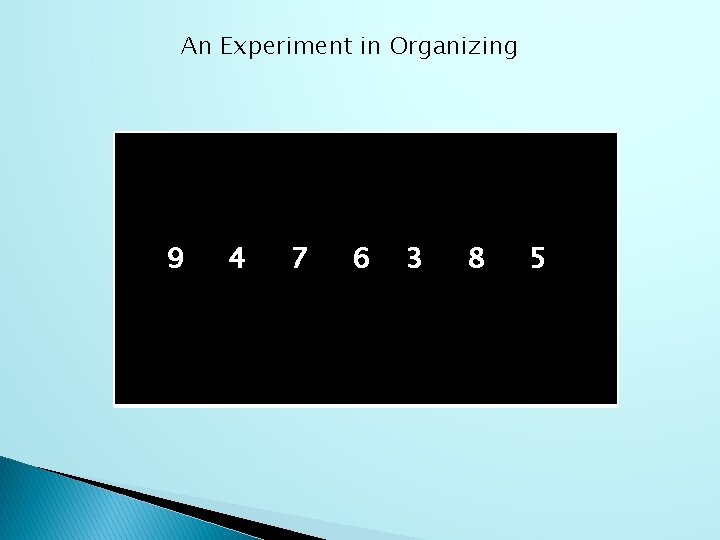
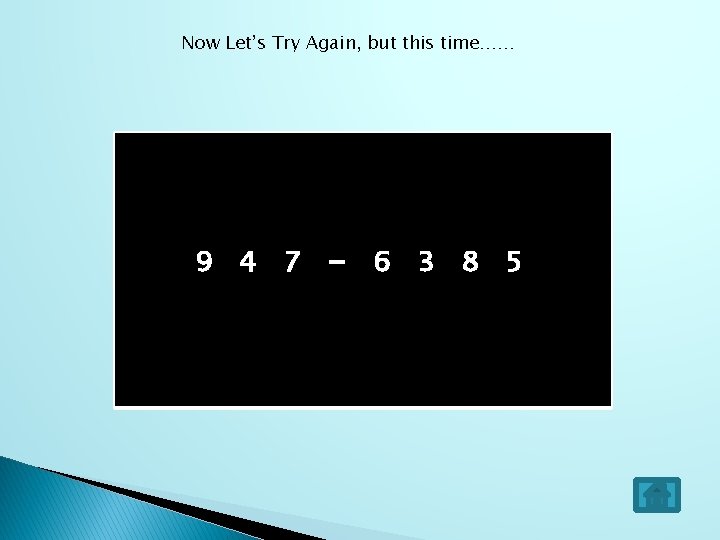
An Experiment in Organizing 9 4 7 6 3 8 5
Now Let’s Try Again, but this time…… 9 4 7 - 6 3 8 5
Specific Learning Outcomes (5 C’s) 1. Conceptualize: Identify, create and measure social concepts and generate hypotheses to test the resulting variables. 2. Control: Recognize and learn how to perform experimental and non-experimental procedures in conducting social research. 3. Collect: Identify where and how to collect data, write and conduct surveys, structure observational research, execute simulations and perform secondary analyses. 4. Calculate: Learn to summarize, analyze, reason and publish from descriptive and inferential statistical procedures via SPSS. 5. Communicate: Take command of reading and writing articles in research format. Course Outline First Break Now
Session II – Technology Support 1. Web-Based Repositories a. HTML Website / Moodle LMS b. Virtual Computer Lab (SPSS) c. Electronic databases (Jstor, etc) d. Lecture Podcasts (mp 3) 2. Web-Based Communication a. Virtual Private Network b. Twitter and Group Email c. Elluminate Virtual Class d. Forums / Chats / Polling
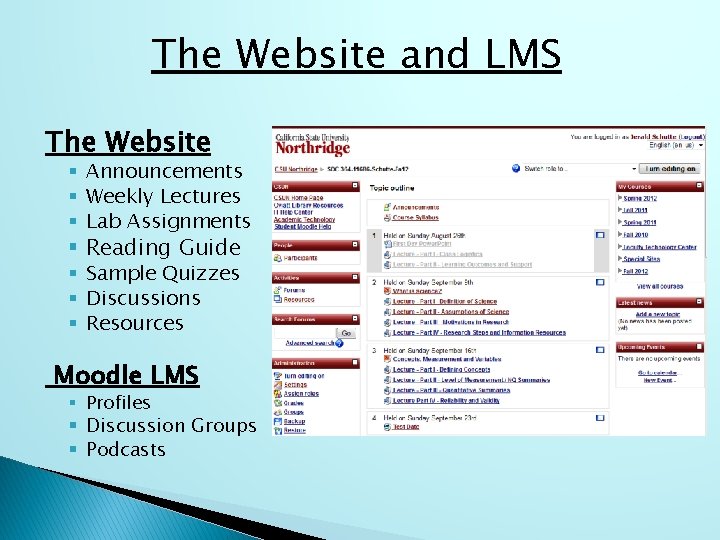
The Website and LMS The Website § Announcements § Weekly Lectures § Lab Assignments § Reading Guide § Sample Quizzes § Discussions § Resources Moodle LMS § Profiles § Discussion Groups § Podcasts
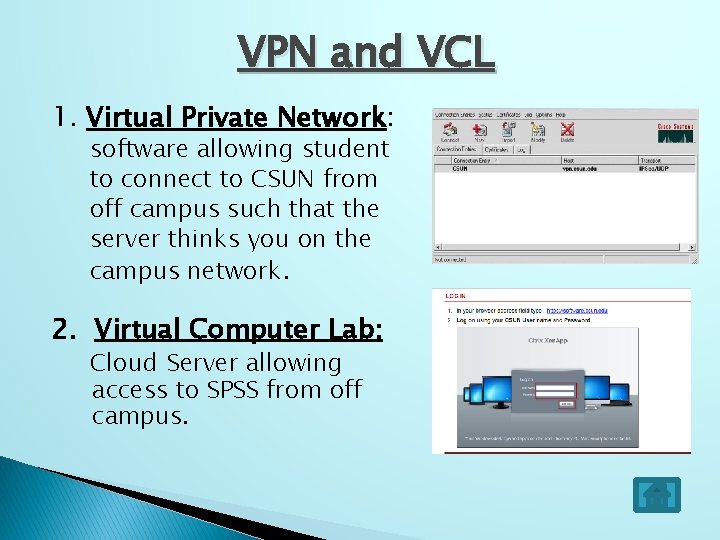
VPN and VCL 1. Virtual Private Network: software allowing student to connect to CSUN from off campus such that the server thinks you on the campus network. 2. Virtual Computer Lab: Cloud Server allowing access to SPSS from off campus.
Social/Interpersonal Support 1. Study Partners 2. Group Office Hours 3. Interpersonal Information 4. Moodle Profile References 5. Email, Web and Forums Posts 6. Virtual Polling / Examinations Second Break Now
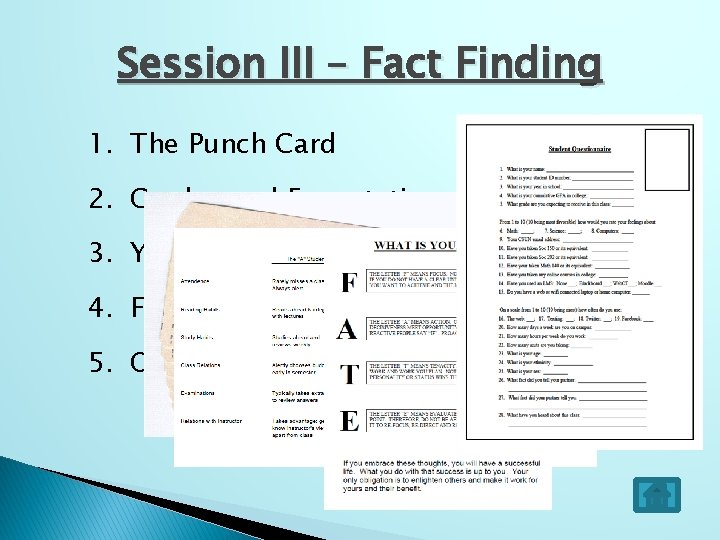
Session III – Fact Finding 1. The Punch Card 2. Grades and Expectations 3. Your FATE 4. Factual Revelations 5. Our First Questionnaire
Critical Thinking Exercises The Four Elements of Critical Thinking 1. Think outside the box 2. Pay attention to the Smallest Detail 3. Consider all variables in forming conclusions 4. Take prior information into account.
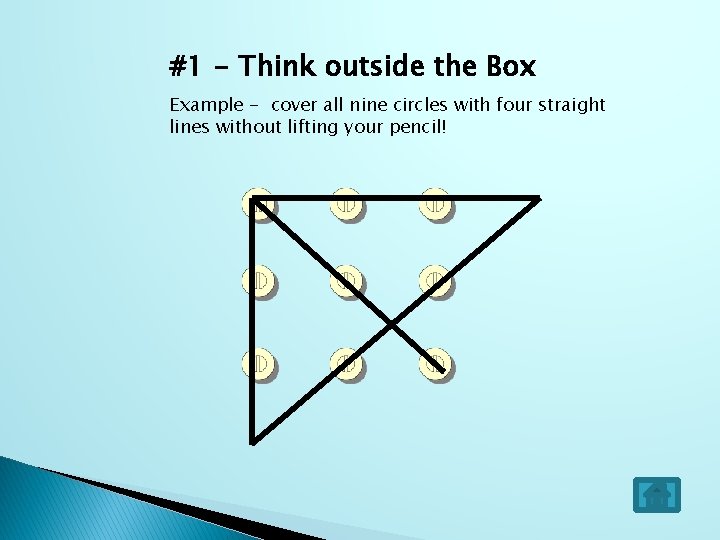
#1 - Think outside the Box Example - cover all nine circles with four straight lines without lifting your pencil!
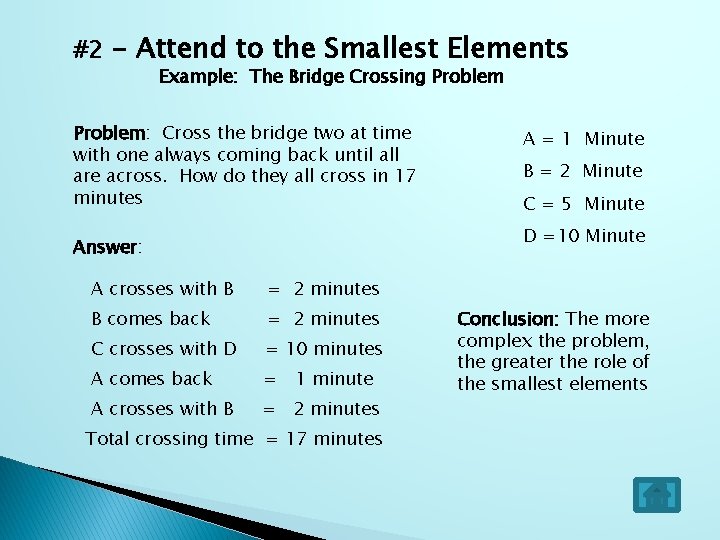
#2 - Attend to the Smallest Elements Example: The Bridge Crossing Problem: Cross the bridge two at time with one always coming back until all are across. How do they all cross in 17 minutes A = 1 Minute B = 2 Minute C = 5 Minute D =10 Minute Answer: A crosses with B = 2 minutes B comes back = 2 minutes C crosses with D = 10 minutes A comes back = 1 minute A crosses with B = 2 minutes Total crossing time = 17 minutes Conclusion: The more complex the problem, the greater the role of the smallest elements
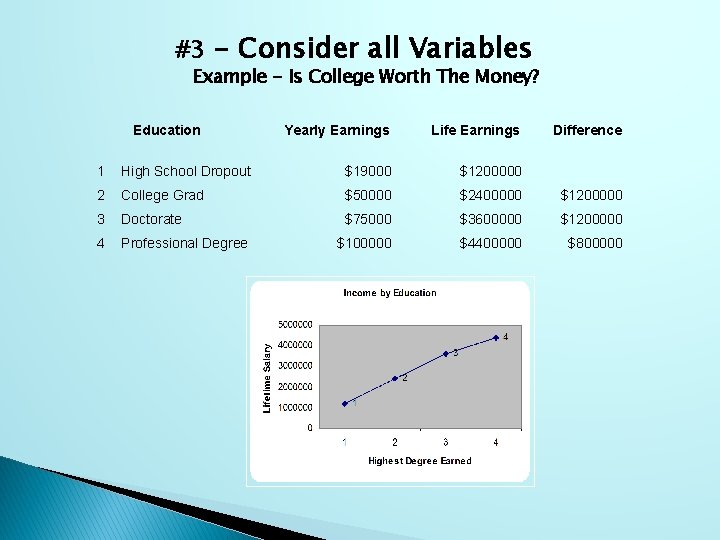
#3 - Consider all Variables Example - Is College Worth The Money? Education Yearly Earnings Life Earnings Difference 1 High School Dropout $19000 $1200000 2 College Grad $50000 $2400000 $1200000 3 Doctorate $75000 $3600000 $1200000 4 Professional Degree $100000 $4400000 $800000
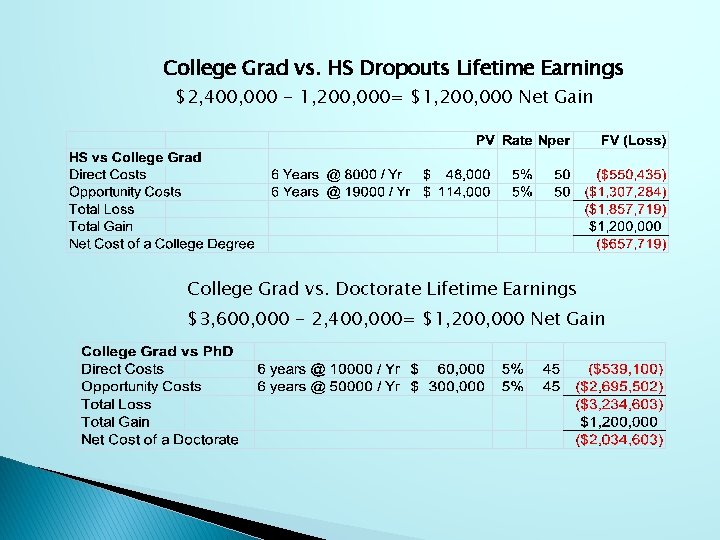
College Grad vs. HS Dropouts Lifetime Earnings $2, 400, 000 - 1, 200, 000= $1, 200, 000 Net Gain College Grad vs. Doctorate Lifetime Earnings $3, 600, 000 - 2, 400, 000= $1, 200, 000 Net Gain
College Grad vs. Professional Degree Lifetime Earnings $4, 400, 000 – 2, 400, 000= $2, 000 Net Gain Conclusion Never take at face value what you read or hear, no matter how “right” it sounds. The degree of “rightness” is simply a measure of how closely it corresponds to our values. Critical thinkers step back from their own values to assess the validity of assertions by examining all of possible variables’ effects.
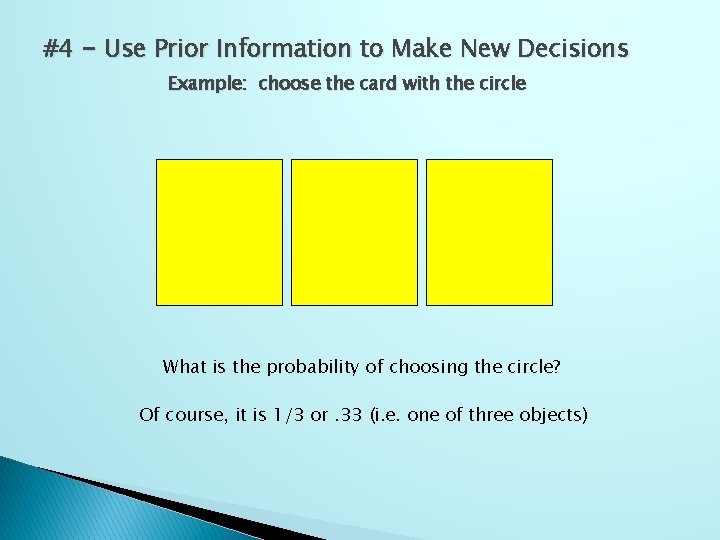
#4 - Use Prior Information to Make New Decisions Example: choose the card with the circle What is the probability of choosing the circle? Of course, it is 1/3 or. 33 (i. e. one of three objects)
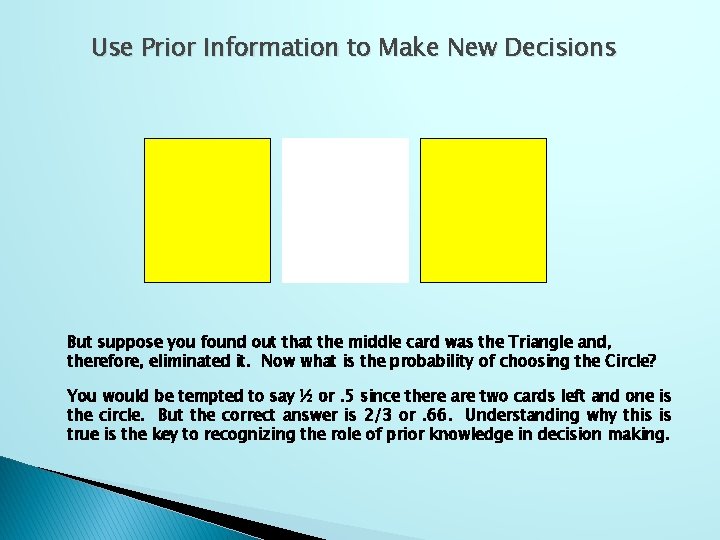
Use Prior Information to Make New Decisions But suppose you found out that the middle card was the Triangle and, therefore, eliminated it. Now what is the probability of choosing the Circle? You would be tempted to say ½ or. 5 since there are two cards left and one is the circle. But the correct answer is 2/3 or. 66. Understanding why this is true is the key to recognizing the role of prior knowledge in decision making.
Use Prior Information to Make New Decisions Think of the decision as having two trials. The probably of getting it wrong on the first trial is 2/3 or. 66 (i. e. 1 - the probability of getting it right). The probability of getting it wrong on the second trial is ½ or. 5 (again 1 – the probability of getting it right). Therefore, the probability of getting it right by the second trial is 1 – the probability of getting it wrong on both trials. Getting it wrong on the first trial is 2/3. Getting it wrong on the second trial is 1/2. Their product is the probability of getting it wrong on both trials (i. e. 2/3 x ½ = 1/3). Therefore the probability of getting in right by the second trial is 1 – 1/3, which is 2/3, not ½. Think about it. Moral to the story: Success is greater if you continue your efforts, taking into account your failure, than disregarding your failures and trying anew. Go to Quiz
Taking Stock of the Day A Short Quiz Please go to rwpoll. com and type in the number given to you in the box below. Polling Website Not Connected
This course is going to be Easy? 1. 2. 3. 4. Strongly Agree Disagree Strongly Disagree
I am going to get an A in this class 1. 2. 3. Agree Neutral Disagree
How many sessions did we have today? 1. 2. 3. 4. 5. Only one Two Three Four Five
How many sessions will we have each Sunday? 1. 2. 3. 4. 5. Just one Two Three Four Five
Is the Final Cumulative? 1. 2. 3. Yes No Don’t Know
How many hours / week are you expected to study for this class? 1. 2. 3. 4. 1 -5 5 -10 10 -15 15 -20
What is your year in school? 1. 2. 3. Junior Senior Grad Student
What is your sex? 1. 2. Female Male
Topics for the Day Session I – Logistics - 12: 15 -1: 30 pm 1. Class Format and FAQs 2. General and Specific SLOs Session II – Support - 1: 45– 3: 00 pm 3. Technology Support 4. Social/Interpersonal Support Session III – Information – 3: 45– 5: 00 pm 5. Fact Finding 6. Critical Thinking