
Sociological analysis of CC misunderstanding Politeness theory a
- Slides: 13
Sociological analysis of CC misunderstanding Politeness theory a) Face b) Positive face and negative face c) FTA’s 1
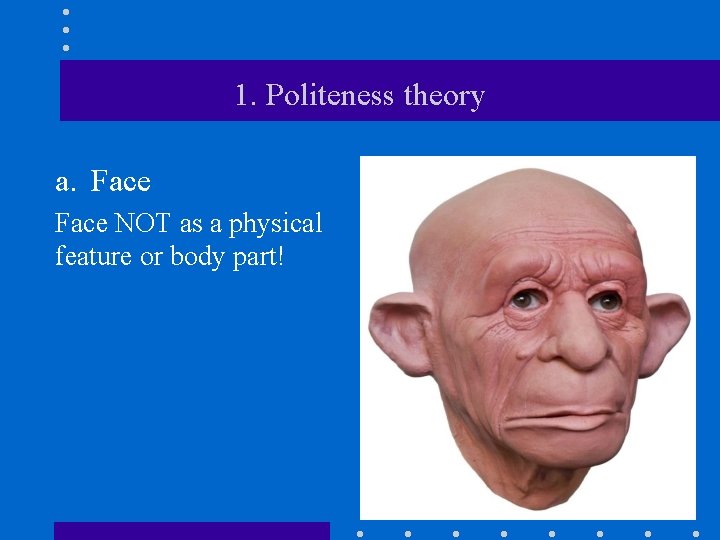
1. Politeness theory a. Face NOT as a physical feature or body part! 2
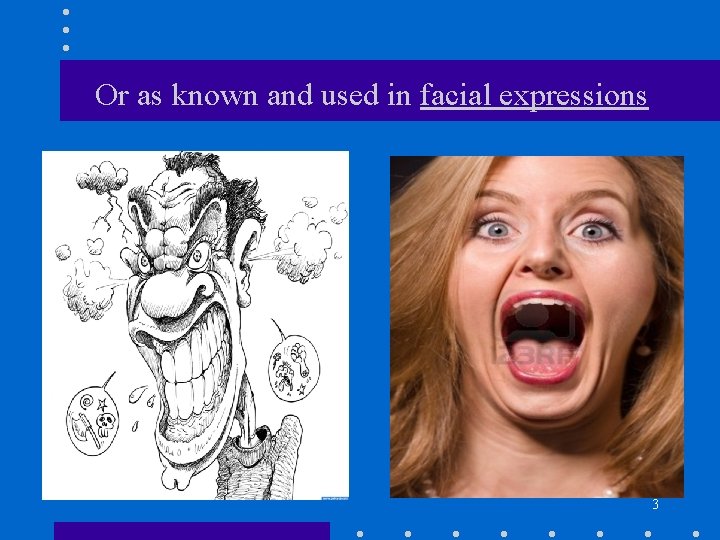
Or as known and used in facial expressions 3
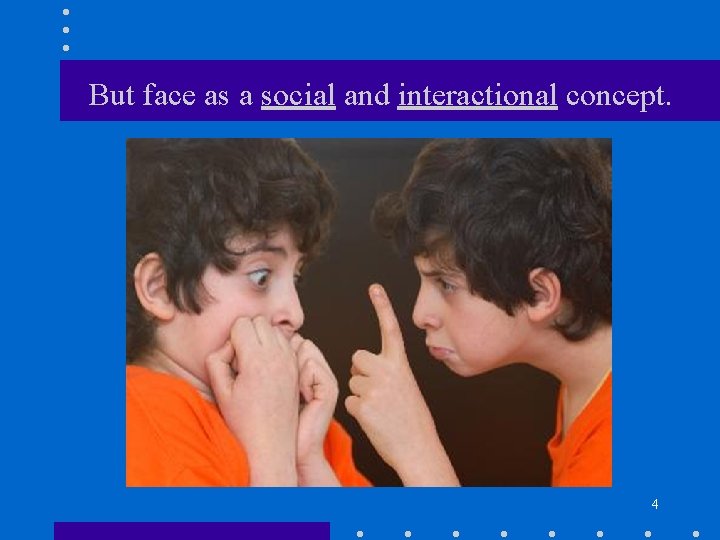
But face as a social and interactional concept. 4
Face and Face Maintenance • Face is defined as “the positive social value a person effectively claims for himself by the line others assume he has taken during a particular contact” (Goffman, 1959). • Face is “the public self-image that every member want to claim for himself” (Brown & Levinson, 1987). 5
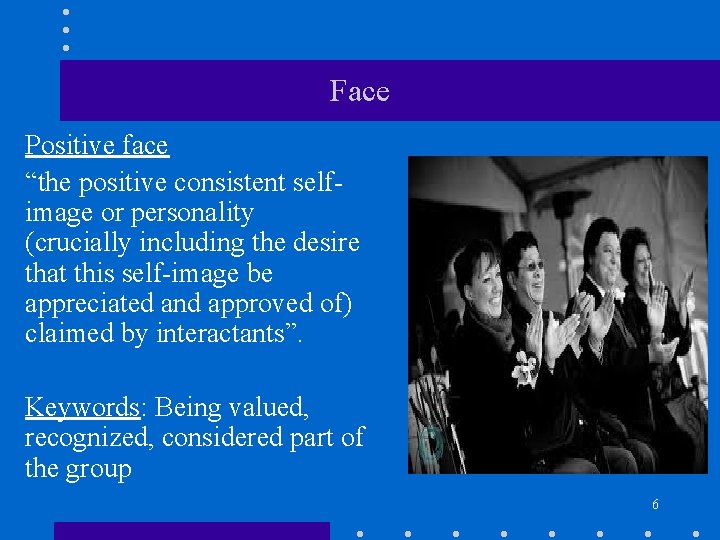
Face Positive face “the positive consistent selfimage or personality (crucially including the desire that this self-image be appreciated and approved of) claimed by interactants”. Keywords: Being valued, recognized, considered part of the group 6
Threats to positive face (H) • Expressions of approval, criticism, complains, reprimands, insults, accusations, • Contradictions or disagreements, challenges • Expression of violent emotion • Mention of taboo topics • Bringing bad news about hearer • Raising about dangerously emotional or divisive topics • Blatant non-cooperation in an activity 7
Threats to positive face (S) • • • Apologies Acceptance of compliment Breakdown of physical control over body Self-humiliation Confessions Emotion leakage 8
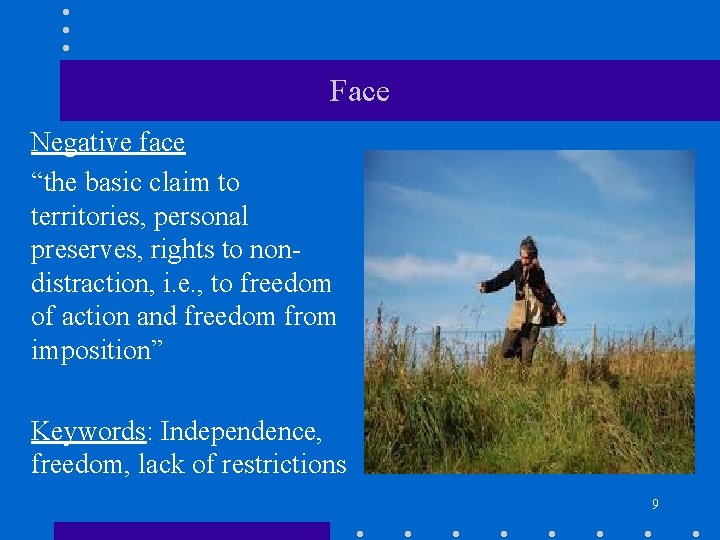
Face Negative face “the basic claim to territories, personal preserves, rights to nondistraction, i. e. , to freedom of action and freedom from imposition” Keywords: Independence, freedom, lack of restrictions 9
Threats to negative face (H) • • Orders and requests Suggestions, advice Remindings Threats, warnings, dares Offers Promises Compliments, expressions of envy or admiration Expression of strong emotions toward H 10
Threats to negative face (S) • • • Expressing thanks Acceptance of H’s thanks or apology Excuses Acceptance of offers Unwilling promises and offers 11
Maximizing both faces • When we are engaged in social encounters, we do face activities unavoidably. • Participants want both positive face and negative face to be maintained and mitigated. • We can damage not only our own positive face but negative face also. • Some acts can damage both positive face and negative 12 face.
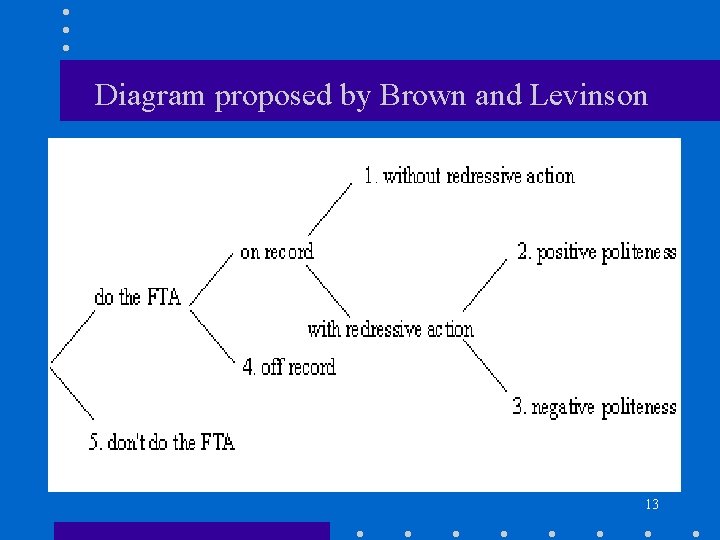
Diagram proposed by Brown and Levinson 13