
Socioemotional Development in Middle and Late Childhood Lecture





- Slides: 22
Socioemotional Development in Middle and Late Childhood Lecture Prepared by: Dr. M. Sawhney
Discussion topics �Emotional and Personality Development �The Self �Emotional Development �Moral Development �Gender �Families: �Developmental Changes in Parent child relationships �Stepfamilies �Peers �Schools
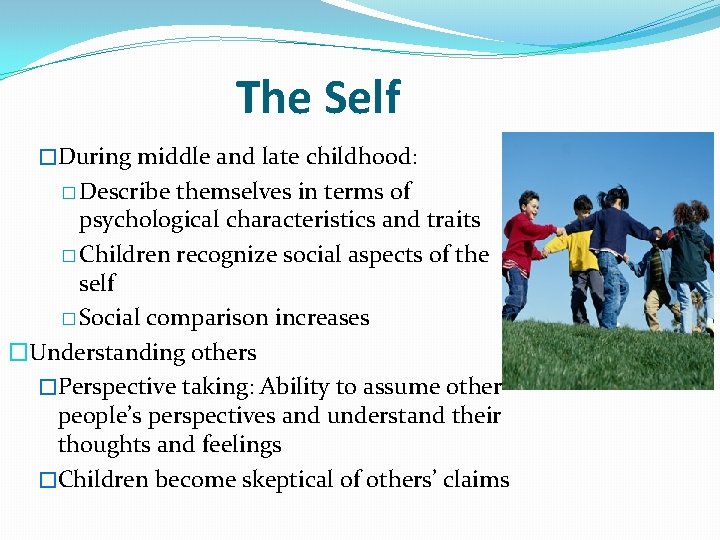
The Self �During middle and late childhood: � Describe themselves in terms of psychological characteristics and traits � Children recognize social aspects of the self � Social comparison increases �Understanding others �Perspective taking: Ability to assume other people’s perspectives and understand their thoughts and feelings �Children become skeptical of others’ claims
Self-esteem & self-concept �Self-esteem: Global evaluations of the self �Self-concept: Domain-specific evaluations of the self �Children with high self-esteem �Do not necessarily perform better in school �Have greater initiative (positive or negative)
The Self �Self-efficacy: Belief that one can master a situation and produce favorable outcomes �Self-regulation �Deliberate efforts to manage one’s behavior, emotions, and thoughts �Industry vs inferiority
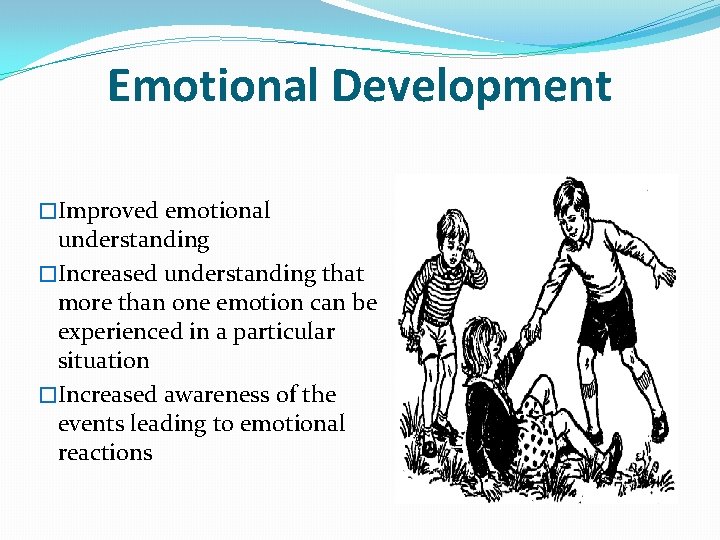
Emotional Development �Improved emotional understanding �Increased understanding that more than one emotion can be experienced in a particular situation �Increased awareness of the events leading to emotional reactions
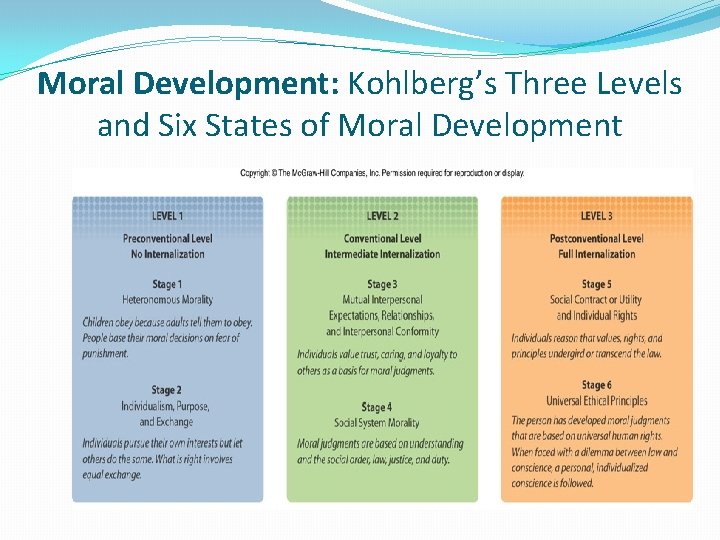
Moral Development: Kohlberg’s Three Levels and Six States of Moral Development
Moral Development In Europe a woman was near death from a special kind of cancer. There was one drug that the doctors thought might save her. It was a form of radium that a druggist in the same town had recently discovered. The drug was expensive to make, but the druggist was charging ten times what the drug cost him to make. He paid $200 for the radium and charged $2, 000 for a small dose of the drug. The sick woman's husband, Heinz, went to everyone he knew to borrow the money, but he could only get together $1, 000 which is half of what it cost. He told the druggist that his wife was dying and asked him to sell it cheaper or let him pay later. But the druggist said, “No, I discovered the drug, and I am going to make money from it. ” So Heinz got desperate and broke into the man's store to steal the drug for his wife. (Kohlberg, 1969, p. 379) �https: //www. youtube. com/watch? v=z. Y 4 et. XWYS 84
Influence and Criticism �Influences on Kohlberg’s stages �Cognitive development �Experiences dealing with moral questions/conflicts �Peer interaction and perspective taking are crucial �Kohlberg’s critics �Moral thought and behavior �Culture and moral reasoning �Families and moral development �Gender and the care perspective
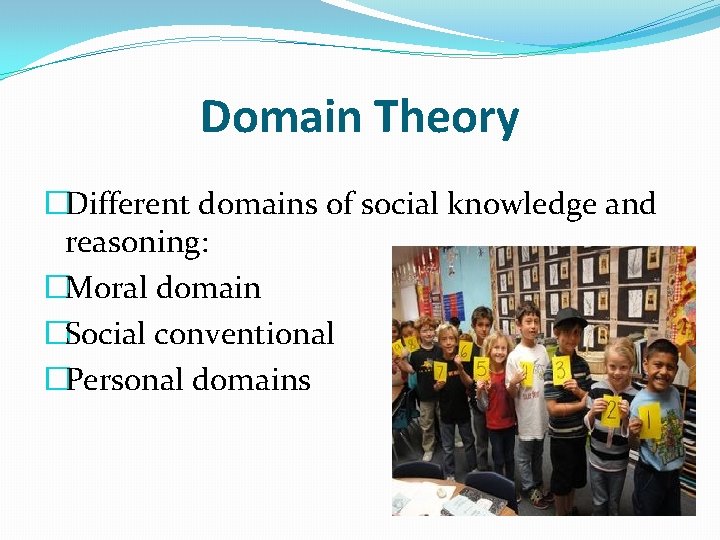
Domain Theory �Different domains of social knowledge and reasoning: �Moral domain �Social conventional �Personal domains
Gender �Gender stereotypes �Gender similarities and differences �Physical development �Cognitive development �Socioemotional development
Gender �Gender role classification � Androgyny �Gender in context � Traits people display may vary with the situation � Usually who is more helpful boys or girls?
Families �Developmental changes in parent-child relationships �Parents spend less time with children during middle and late childhood �Parents support and stimulate children’s academic achievement �Parents use less physical forms of punishment as children age
Stepfamilies �Remarriages involving children has grown in recent years �Types of stepfamily structure � Stepfather � Stepmother � Blended or complex
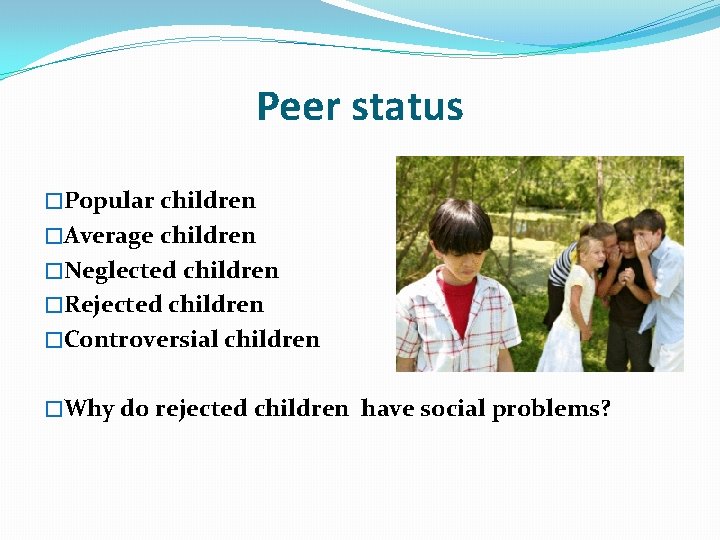
Peer status �Popular children �Average children �Neglected children �Rejected children �Controversial children �Why do rejected children have social problems?
Social Cognition �Social cognition - Thoughts about social matters �Important for understanding peer relationships � 6 steps in processing social information � Attend to social cues � Attribute intent � Generate goals � Access behavioral scripts from memory � Make decisions � Enact behavior
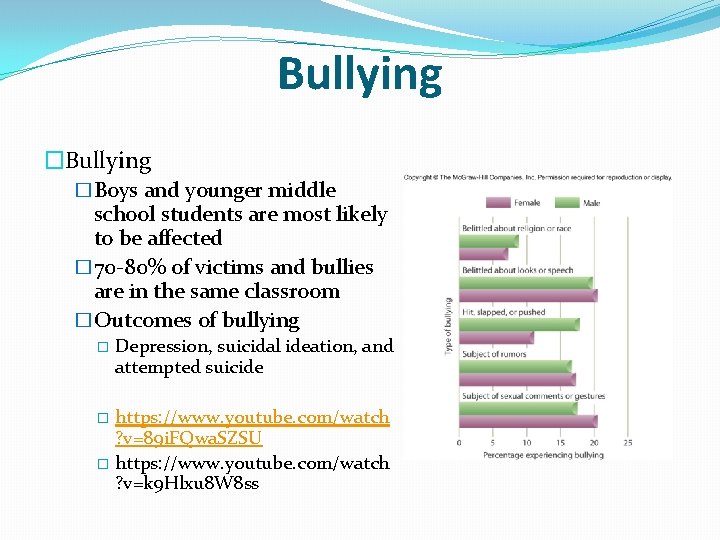
Bullying �Boys and younger middle school students are most likely to be affected � 70 -80% of victims and bullies are in the same classroom �Outcomes of bullying � Depression, suicidal ideation, and attempted suicide https: //www. youtube. com/watch ? v=89 i. FQwa. SZSU � https: //www. youtube. com/watch ? v=k 9 Hlxu 8 W 8 ss �
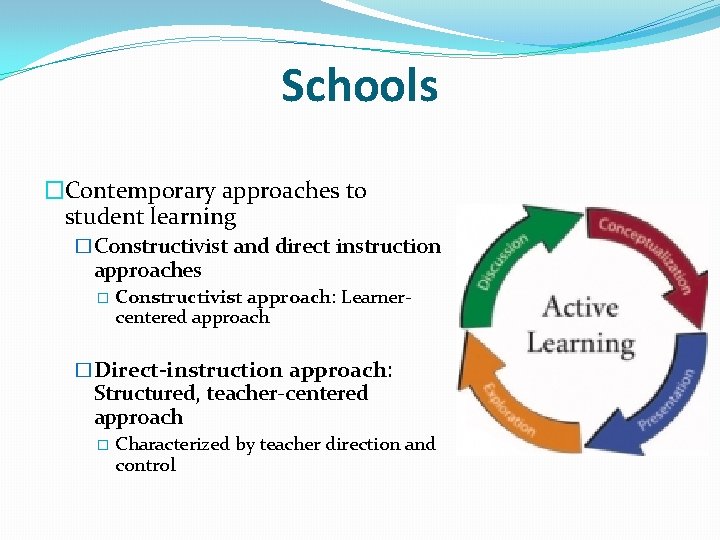
Schools �Contemporary approaches to student learning �Constructivist and direct instruction approaches � Constructivist approach: Learnercentered approach �Direct-instruction approach: Structured, teacher-centered approach � Characterized by teacher direction and control
Socioeconomic Status, Ethnicity, & Culture �Low-income, ethnic minority students have more difficulties in school �More barriers to learning � Parents education � Fewer resources
Ethnicity in Schools �Ethnicity in schools � Strategies for improving relationships among ethnically diverse students � Turn the class into a jigsaw classroom � Encourage students to have positive personal contact with diverse other students � Reduce bias � View the school and community as a team � Be a competent cultural mediator
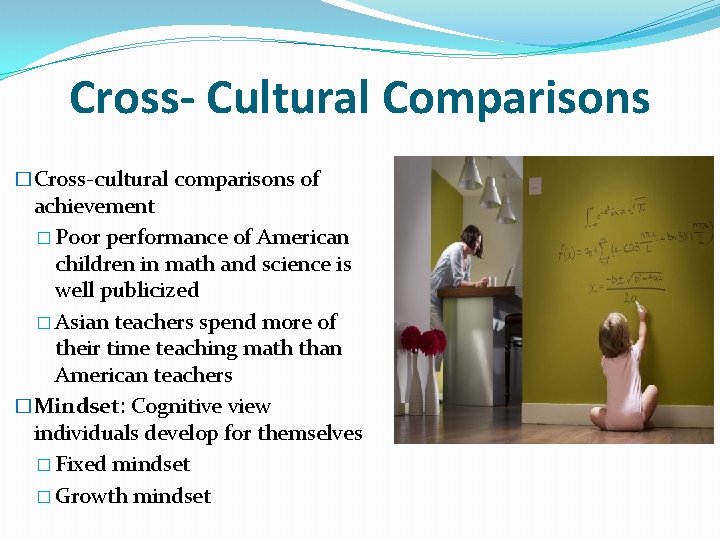
Cross- Cultural Comparisons �Cross-cultural comparisons of achievement � Poor performance of American children in math and science is well publicized � Asian teachers spend more of their time teaching math than American teachers �Mindset: Cognitive view individuals develop for themselves � Fixed mindset � Growth mindset
Mothers’ Beliefs About the Factors Responsible for Children’s Math Achievement in Three Countries