
SOCIOEMOTIONAL DEVELOPMENT IN ADOLESCENCE CH 12 Lecture Prepared
- Slides: 16
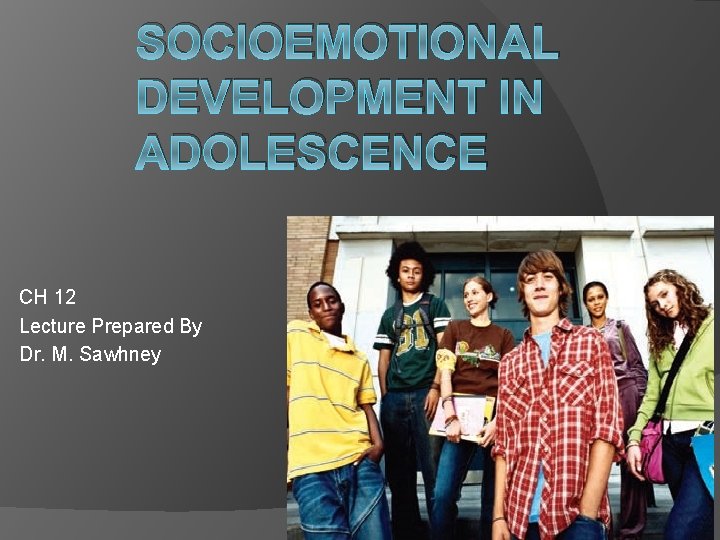
SOCIOEMOTIONAL DEVELOPMENT IN ADOLESCENCE CH 12 Lecture Prepared By Dr. M. Sawhney
Discussion Topics � The Self, Identity and Religious/Spiritual Development � Self esteem � Identity � Families � Parental Monitoring and Information Management � Parent-Adolescent Conflict � Peers � Friendships � Dating & Romantic Relationships � Culture and Adolescent Development � Cross cultural Comparisons � Adolescent Problems � Juvenile Delinquency � Depression and Suicide
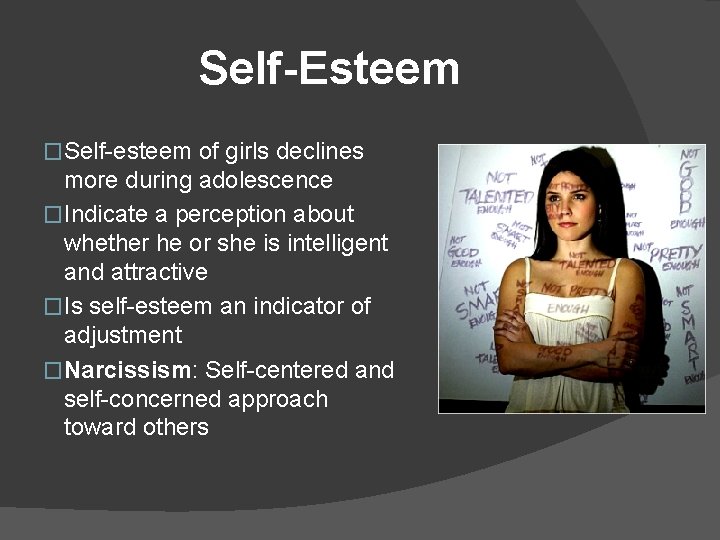
Self-Esteem �Self-esteem of girls declines more during adolescence �Indicate a perception about whether he or she is intelligent and attractive �Is self-esteem an indicator of adjustment �Narcissism: Self-centered and self-concerned approach toward others
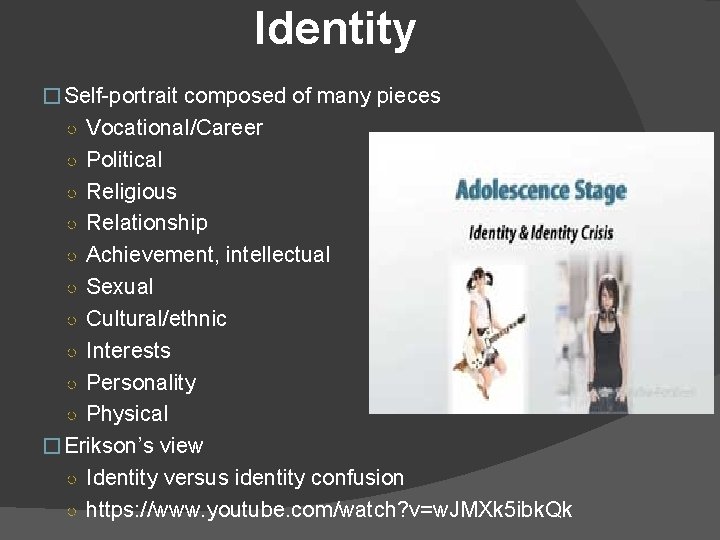
Identity � Self-portrait composed of many pieces ○ Vocational/Career ○ Political ○ Religious ○ Relationship ○ Achievement, intellectual ○ Sexual ○ Cultural/ethnic ○ Interests ○ Personality ○ Physical � Erikson’s view ○ Identity versus identity confusion ○ https: //www. youtube. com/watch? v=w. JMXk 5 ibk. Qk
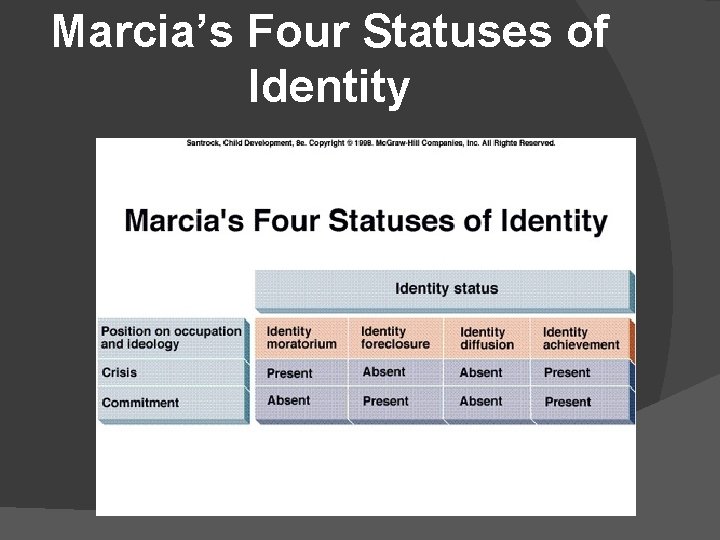
Marcia’s Four Statuses of Identity
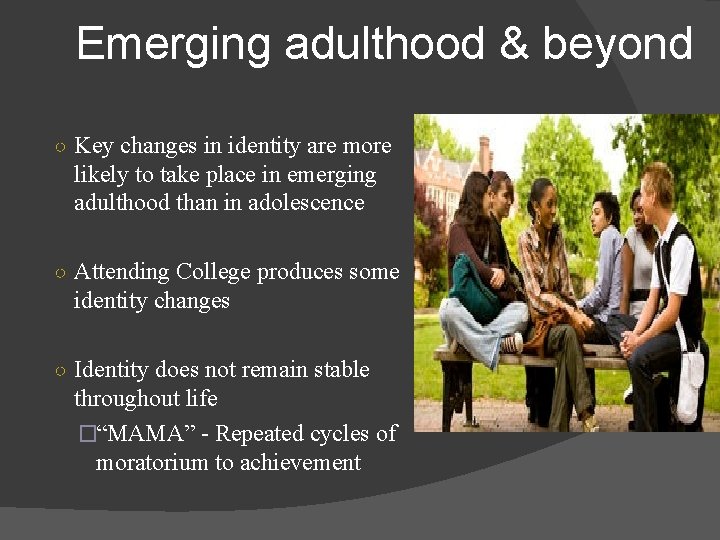
Emerging adulthood & beyond ○ Key changes in identity are more likely to take place in emerging adulthood than in adolescence ○ Attending College produces some identity changes ○ Identity does not remain stable throughout life �“MAMA” - Repeated cycles of moratorium to achievement
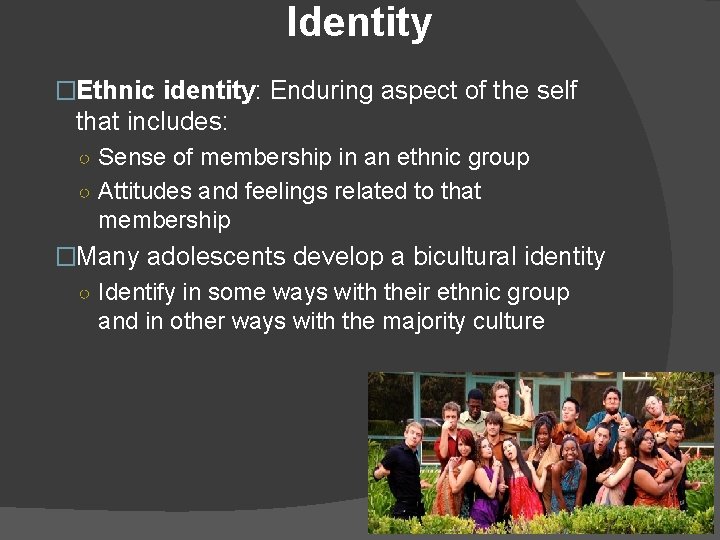
Identity �Ethnic identity: Enduring aspect of the self that includes: ○ Sense of membership in an ethnic group ○ Attitudes and feelings related to that membership �Many adolescents develop a bicultural identity ○ Identify in some ways with their ethnic group and in other ways with the majority culture
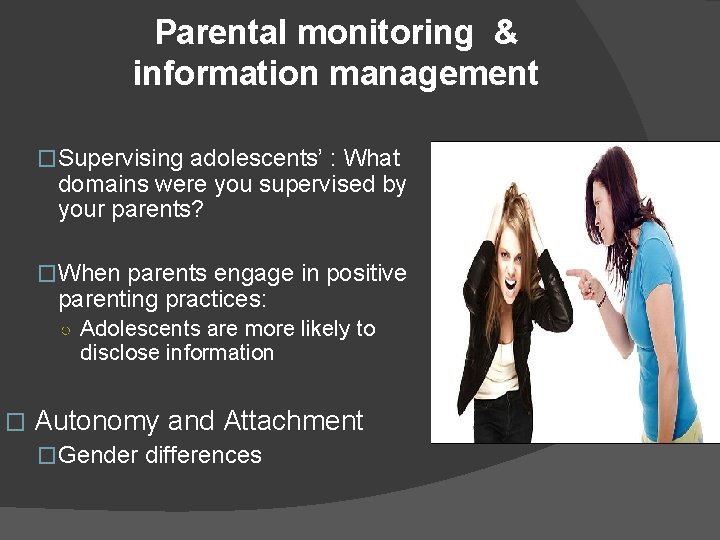
Parental monitoring & information management �Supervising adolescents’ : What domains were you supervised by your parents? �When parents engage in positive parenting practices: ○ Adolescents are more likely to disclose information � Autonomy and Attachment �Gender differences
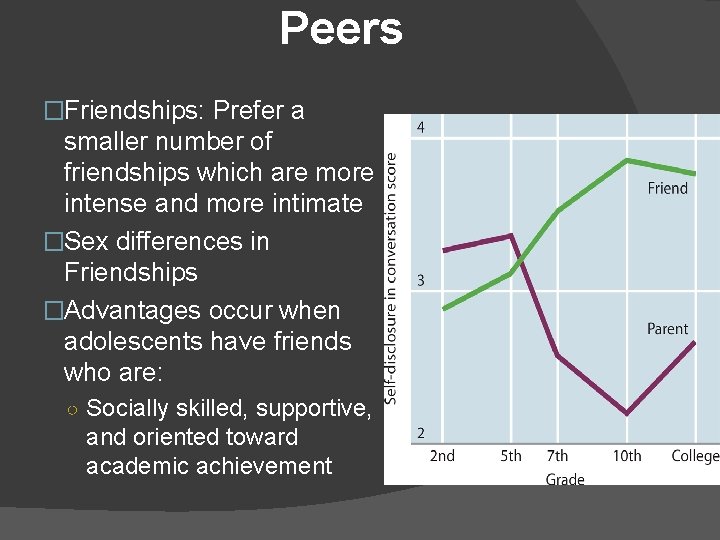
Peers �Friendships: Prefer a smaller number of friendships which are more intense and more intimate �Sex differences in Friendships �Advantages occur when adolescents have friends who are: ○ Socially skilled, supportive, and oriented toward academic achievement
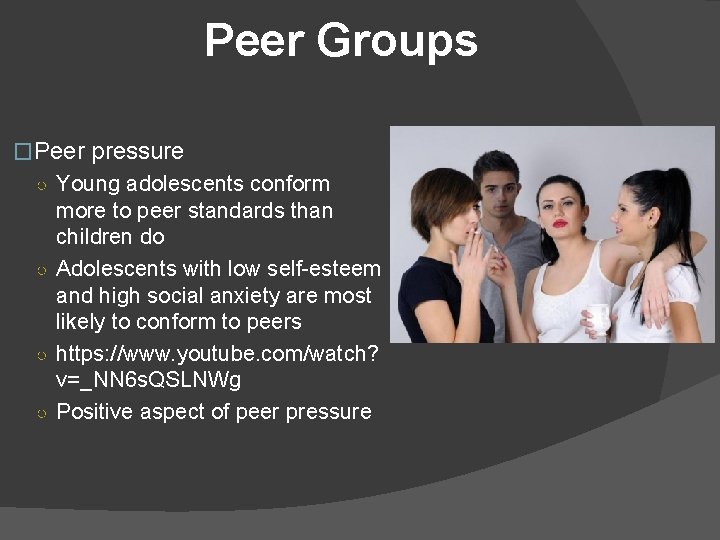
Peer Groups �Peer pressure ○ Young adolescents conform more to peer standards than children do ○ Adolescents with low self-esteem and high social anxiety are most likely to conform to peers ○ https: //www. youtube. com/watch? v=_NN 6 s. QSLNWg ○ Positive aspect of peer pressure
Dating & Romantic Relationships Three stages ○ Entry into romantic attractions and affiliations ○ Exploring romantic relationships ○ Consolidating dyadic romantic bonds Sociocultural contexts and Dating ○ Values, beliefs, and traditions dictate the age at which dating begins
Culture & Adolescent Development � Cross Cultural Comparisons �Health �Gender ○ Educational opportunities ○ https: //www. youtube. com/watch? v=Agj. N 0 h-N 7 WM ○ Career Choices ○ Sexual Expression � Family � Time Allocation to Different activities: �More discretionary time for US adolescents
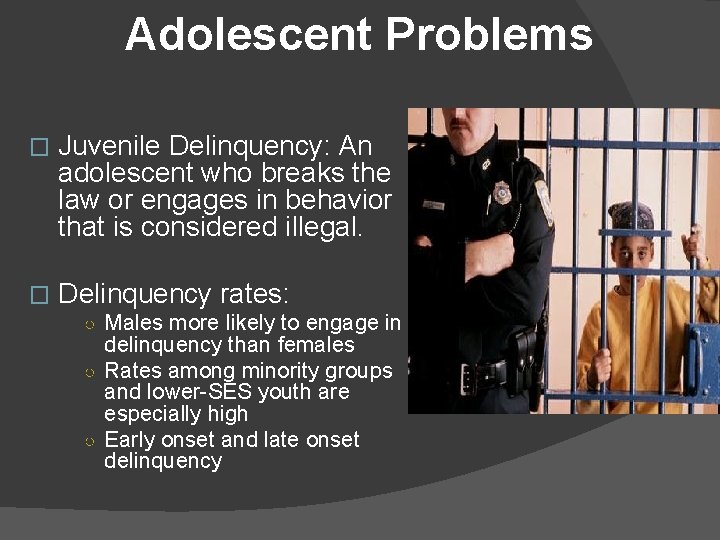
Adolescent Problems � Juvenile Delinquency: An adolescent who breaks the law or engages in behavior that is considered illegal. � Delinquency rates: ○ Males more likely to engage in delinquency than females ○ Rates among minority groups and lower-SES youth are especially high ○ Early onset and late onset delinquency
Delinquency… �Causes of delinquency ○ Lower class culture ○ Parents less skilled in discouraging antisocial behavior ○ Siblings and delinquent peers
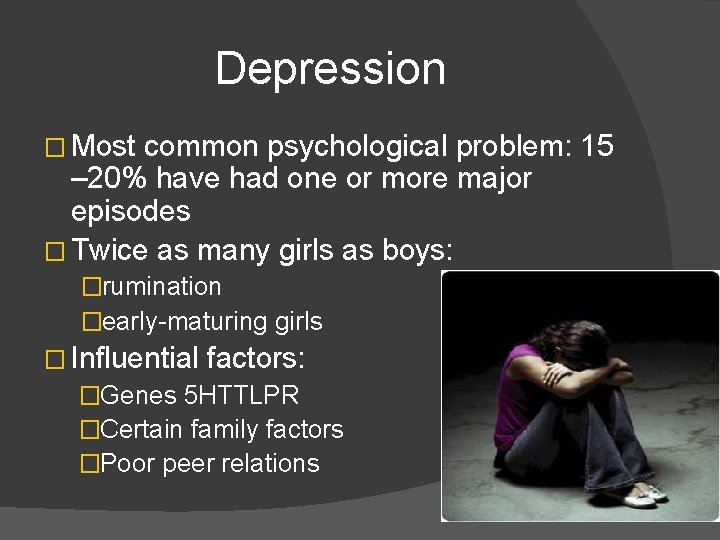
Depression � Most common psychological problem: 15 – 20% have had one or more major episodes � Twice as many girls as boys: �rumination �early-maturing girls � Influential factors: �Genes 5 HTTLPR �Certain family factors �Poor peer relations
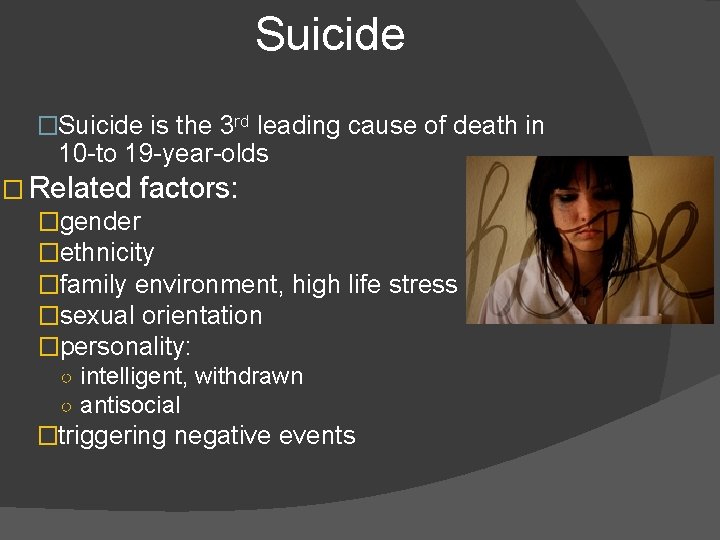
Suicide �Suicide is the 3 rd leading cause of death in 10 -to 19 -year-olds � Related factors: �gender �ethnicity �family environment, high life stress �sexual orientation �personality: ○ intelligent, withdrawn ○ antisocial �triggering negative events