
SocioEconomic Impacts of Natural Disasters A Livelihood analysis

- Slides: 24
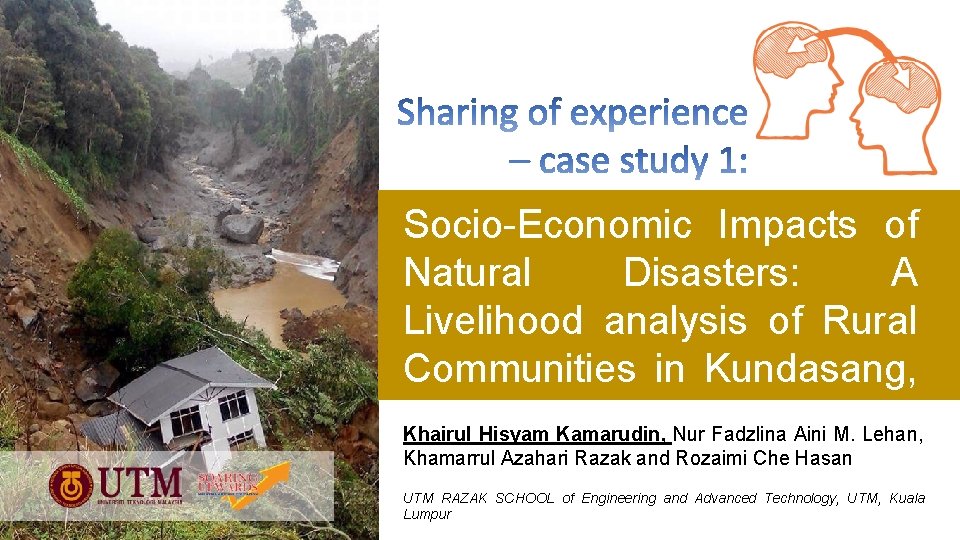
Socio-Economic Impacts of Natural Disasters: A Livelihood analysis of Rural Communities in Kundasang, Sabah Khairul Hisyam Kamarudin, Nur Fadzlina Aini M. Lehan, Khamarrul Azahari Razak and Rozaimi Che Hasan UTM RAZAK SCHOOL of Engineering and Advanced Technology, UTM, Kuala Lumpur
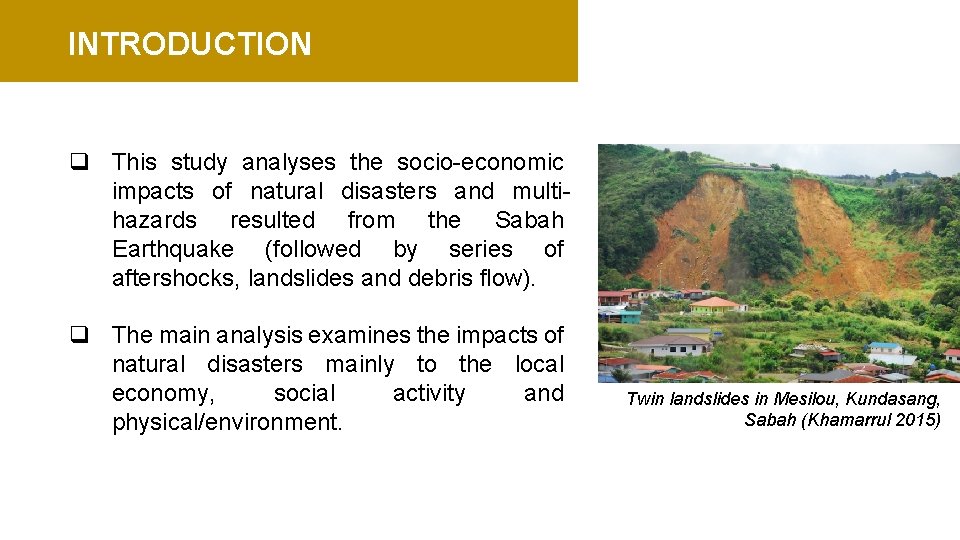
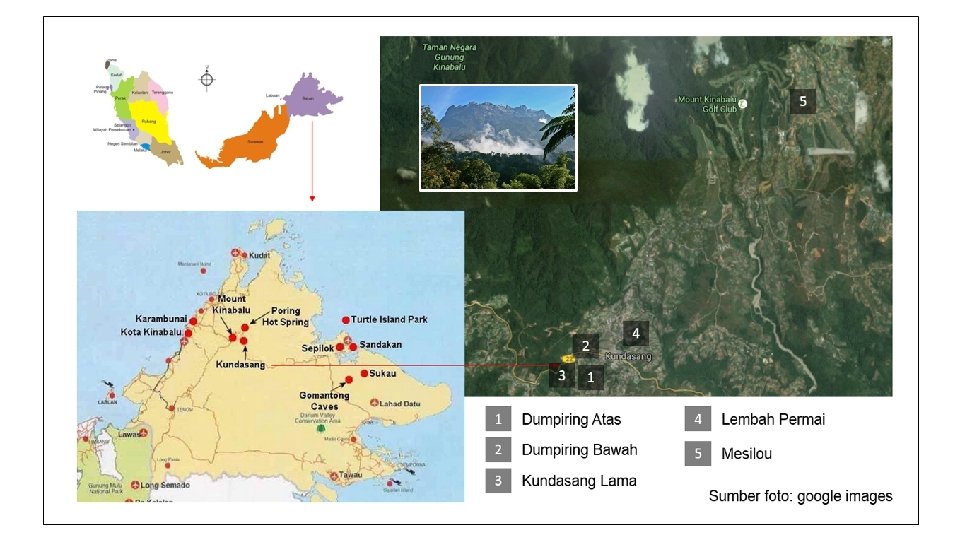
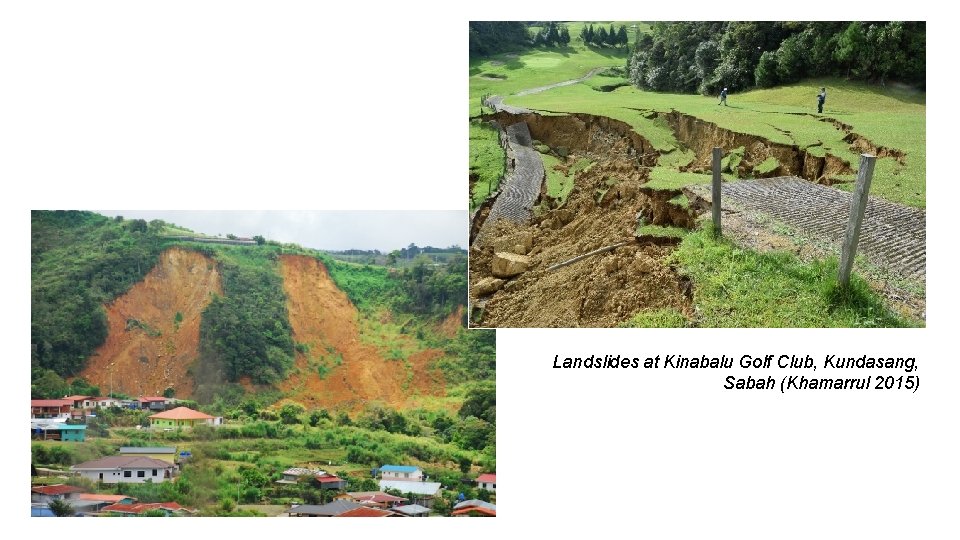
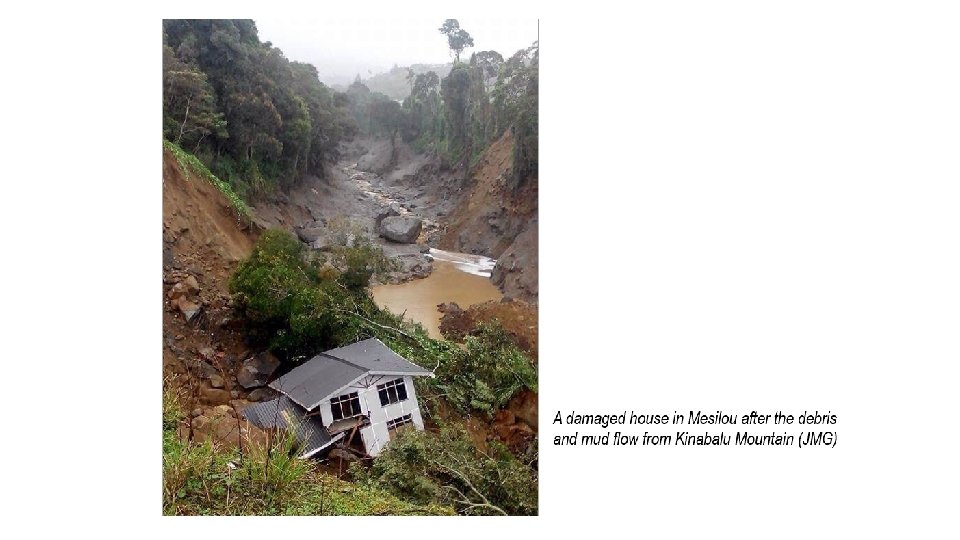
INTRODUCTION q This study analyses the socio-economic impacts of natural disasters and multihazards resulted from the Sabah Earthquake (followed by series of aftershocks, landslides and debris flow). q The main analysis examines the impacts of natural disasters mainly to the local economy, social activity and physical/environment. Twin landslides in Mesilou, Kundasang, Sabah (Khamarrul 2015)
Landslides at Kinabalu Golf Club, Kundasang, Sabah (Khamarrul 2015)
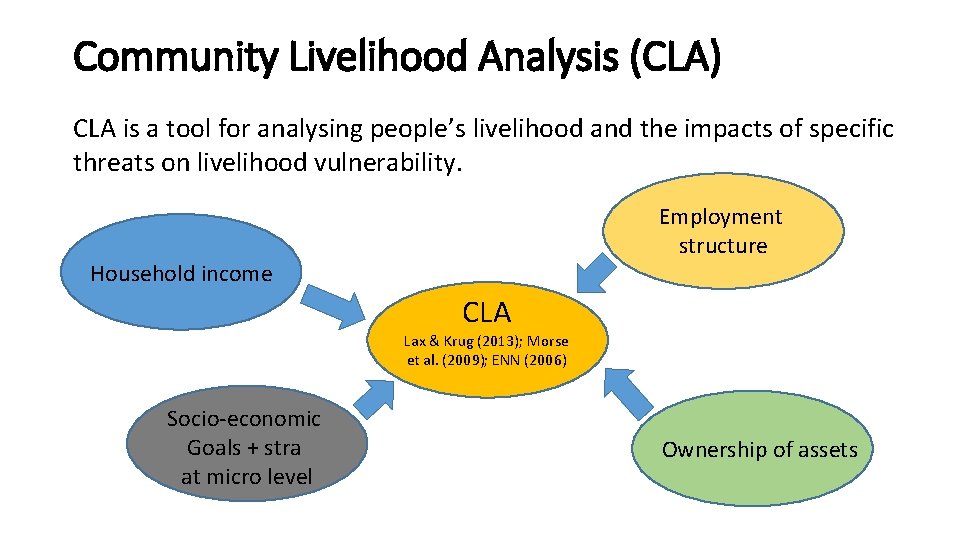
Community Livelihood Analysis (CLA) CLA is a tool for analysing people’s livelihood and the impacts of specific threats on livelihood vulnerability. Employment structure Household income CLA Lax & Krug (2013); Morse et al. (2009); ENN (2006) Socio-economic Goals + stra at micro level Ownership of assets
Community Livelihood Analysis (CLA) q Another crucial element of CLA is that it involves community participation to identify the economic, social and physical components of their livelihoods that are affected or vulnerable to a specific threat (or in this case, the multi-hazards and the aftermath of natural disasters) (Lax and Krug, 2013; ENN, 2006).
Relevant participatory methods for assessments are adopted such as household surveys using specifically-designed questionnaires and unstructured interviews in order to uncover local issues, problems or concerns and their perception and response towards reducing the risk or negative consequences, should multi-hazards and disasters occur in the future. The CLA might not serve as a basis for emergency assessments. However, some information gathered through CLA process could be useful especially to alert the community and local authorities regarding the socio-economic impacts of a disaster on the livelihoods of rural households.
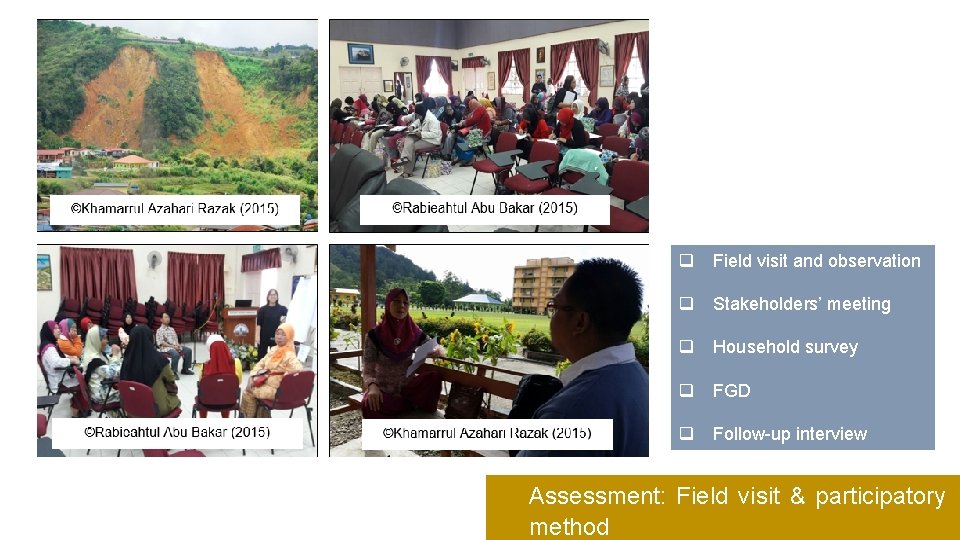
q Field visit and observation q Stakeholders’ meeting q Household survey q FGD q Follow-up interview Assessment: Field visit & participatory method
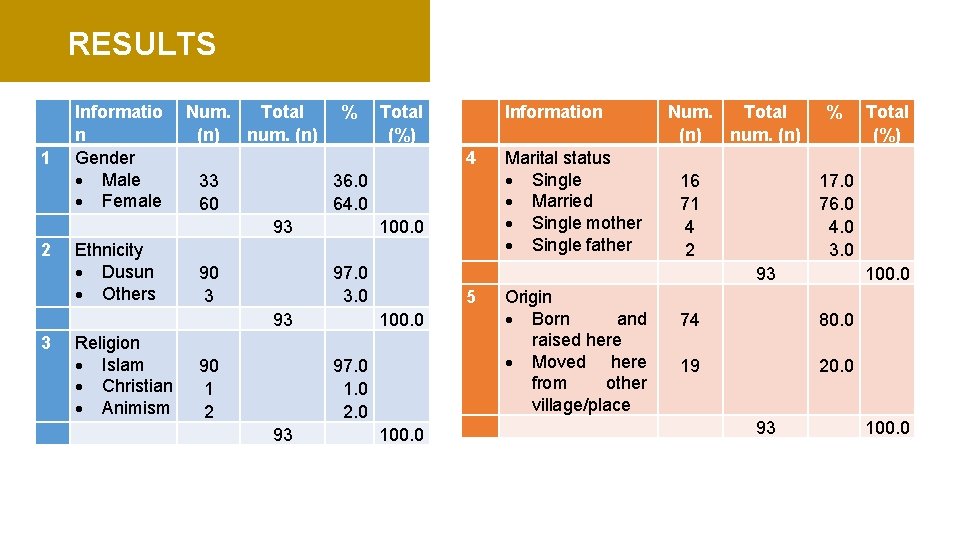
RESULTS 1 Informatio n Gender Male Female Num. Total (n) num. (n) % Ethnicity Dusun Others 33 60 36. 0 64. 0 90 3 100. 0 97. 0 3. 0 93 3 Religion Islam Christian Animism Information 4 93 2 Total (%) 90 1 2 16 71 4 2 % 5 100. 0 Origin Born and raised here Moved here from other village/place Total (%) 17. 0 76. 0 4. 0 3. 0 93 97. 0 1. 0 2. 0 93 Marital status Single Married Single mother Single father Num. Total (n) num. (n) 100. 0 74 80. 0 19 20. 0 93 100. 0
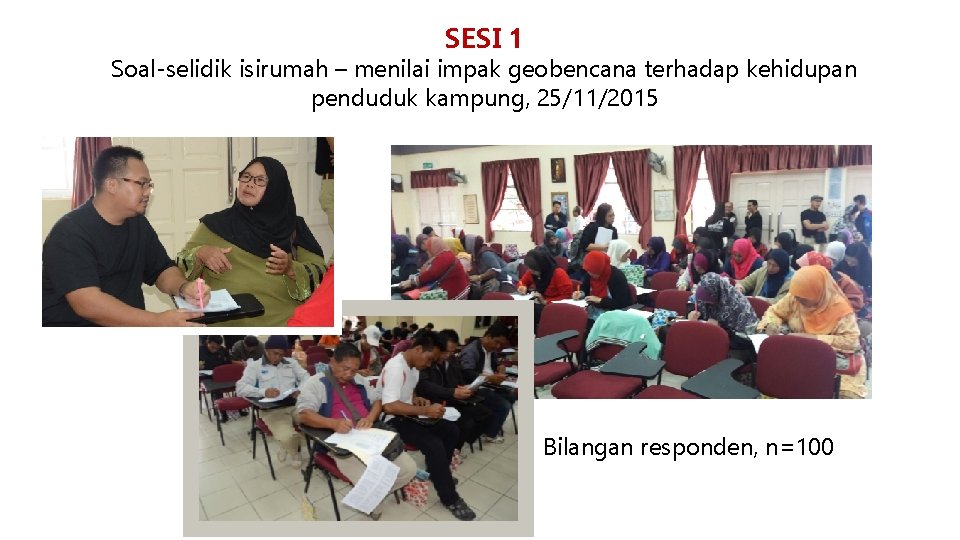
SESI 1 Soal-selidik isirumah – menilai impak geobencana terhadap kehidupan penduduk kampung, 25/11/2015 Bilangan responden, n=100
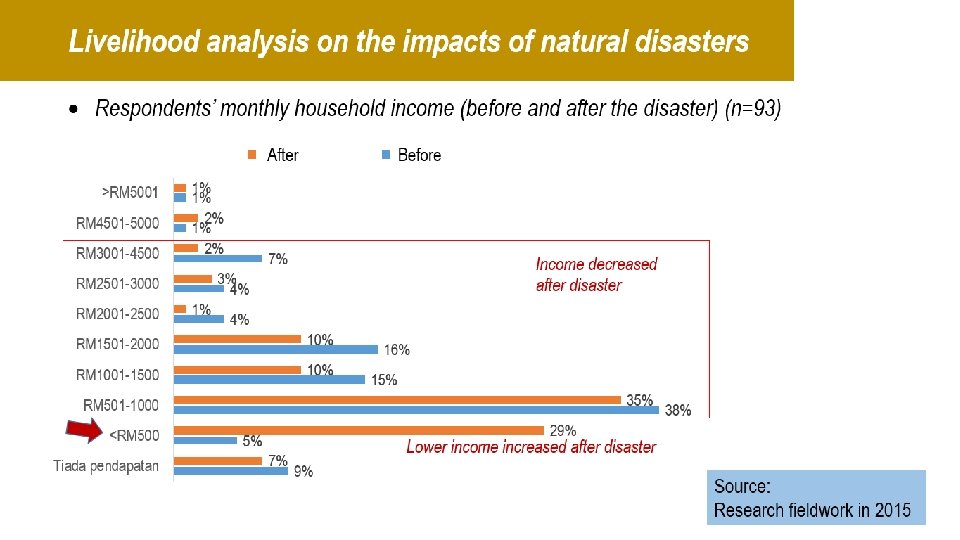
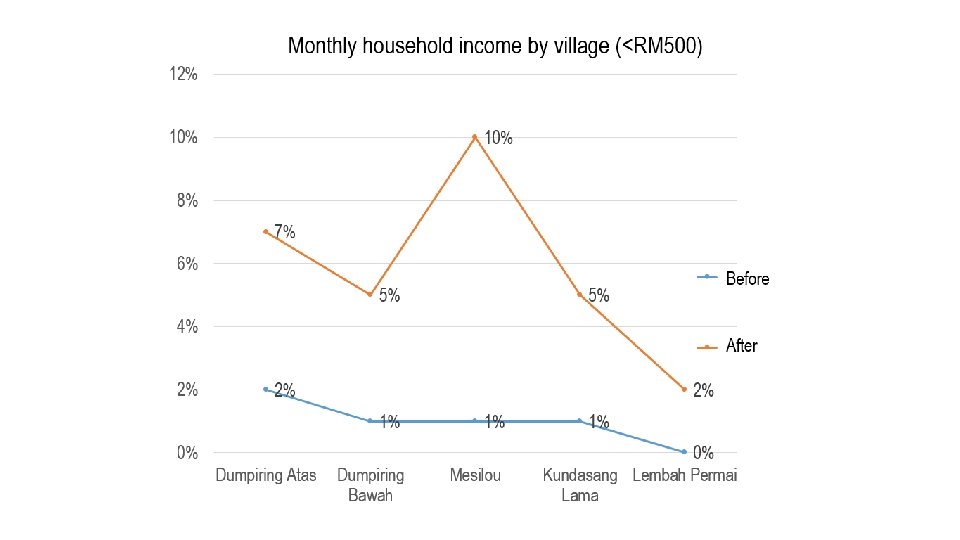
Conclusion q This study revealed an evidence that can be used to support the claim that monthly income of the villages was reduced after the disaster. The most significant evidence is the increase in the percentage of households with a monthly income below RM 500 in every village (which means more people have fallen into the “poor” category) which is then directly related to the decrease in households with a monthly income between RM 501 and RM 2500. q However, this study cannot confirm/conclude whether the poor people (income below RM 500/month) in the study area is attributed to the reduced revenue for categories other than under RM 500. q Thus, regular research should be conducted promptly to describe this relationship in greater depth and find out whether the decline in income was due to a disaster or otherwise