
Societal Ethical and Professional Issues Lecture I Ethics
- Slides: 30
Societal, Ethical and Professional Issues Lecture I Ethics, Professionalism and Data Hugh Lawson-Tancred Department of Philosophy 1
Regulation and Ethics § Regulation always lags behind technical change, creating a need for ethics § But how can we determine what is ethical? § Data intrinsically raises ethical questions; perimeter of relevance 2
GDPR § BCS among many groups working on data ethics § Serious data regulation began in France in 1978 § GDPR - most extensive regulatory package ever introduced § But even the GDPR does not remove the need for ethical assessment 3
Ethics about avoiding wrongdoing and 2. Ethics not about good and evil, but conflicting goods prioritising conflicting goods Charitable commitment versus family Friendship versus duty Moral dilemmas Should a military doctor kill the enemy general if he has the chance? • Bayer case • • 4
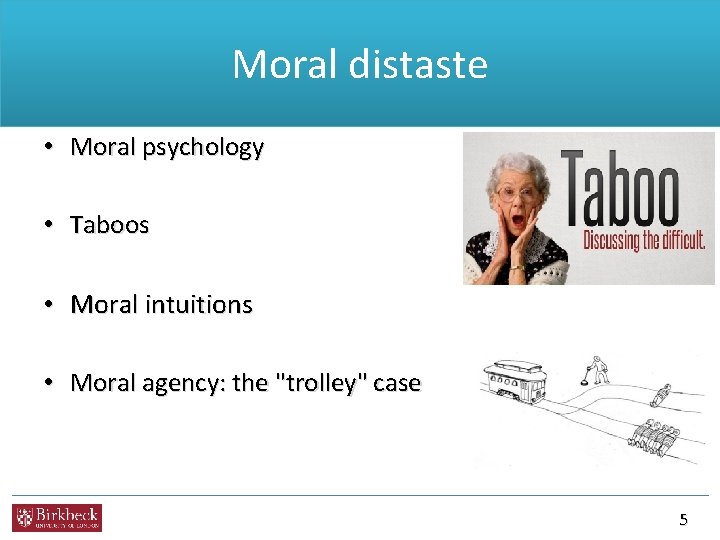
Moral distaste • Moral psychology • Taboos • Moral intuitions • Moral agency: the "trolley" case 5
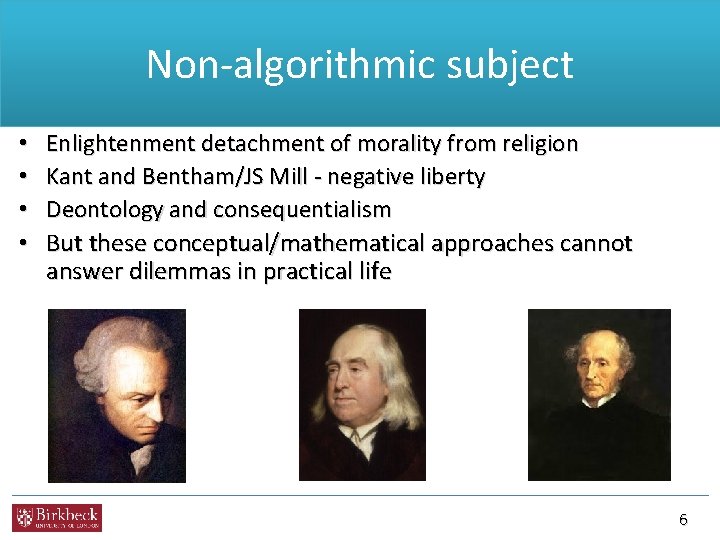
Non-algorithmic subject • • Enlightenment detachment of morality from religion Kant and Bentham/JS Mill - negative liberty Deontology and consequentialism But these conceptual/mathematical approaches cannot answer dilemmas in practical life 6
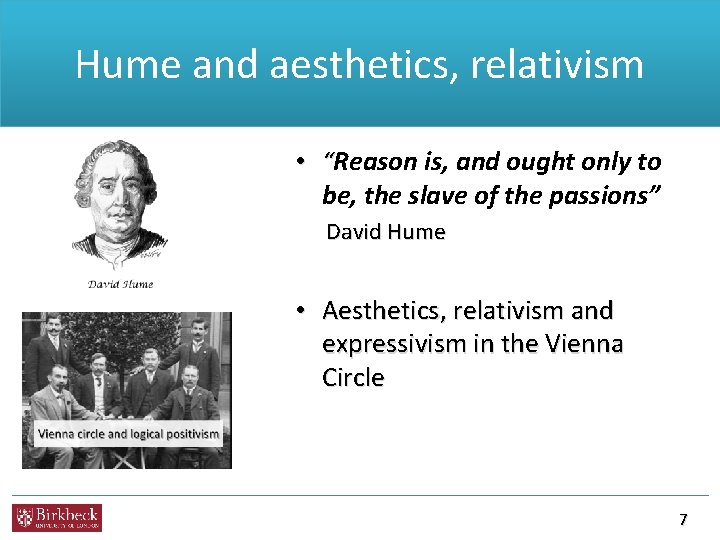
Hume and aesthetics, relativism • “Reason is, and ought only to be, the slave of the passions” David Hume • Aesthetics, relativism and expressivism in the Vienna Circle 7
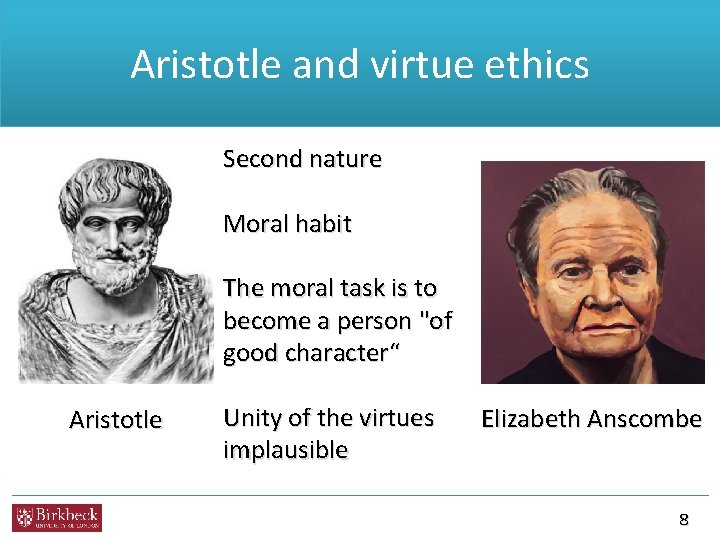
Aristotle and virtue ethics Second nature Moral habit The moral task is to become a person "of good character“ Aristotle Unity of the virtues implausible Elizabeth Anscombe 8
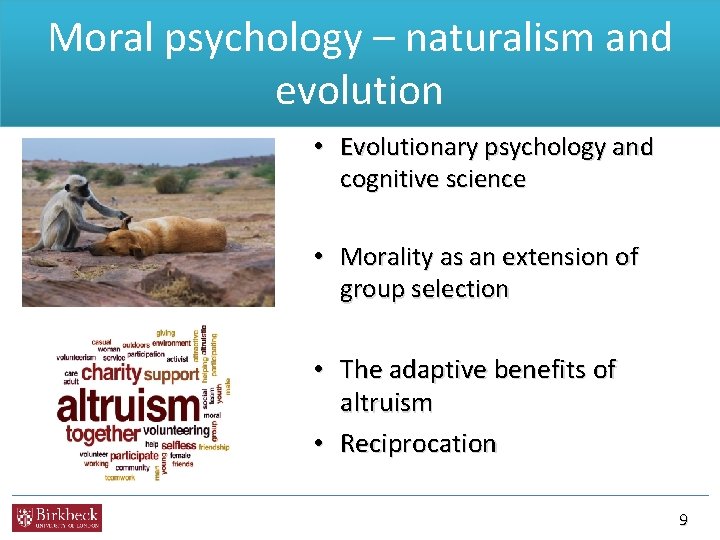
Moral psychology – naturalism and evolution • Evolutionary psychology and cognitive science • Morality as an extension of group selection • The adaptive benefits of altruism • Reciprocation 9
Moral imagination • Mark Johnson - heightened moral awareness • Snap moral judgements • Moral reasoning, moral change • Conscience 10
Distributed responsibility • Gyges’s ring • Faultless responsibility • Distinction between "distributed" and "diffused“ responsibility • Whistleblowing 11
Morality in practice • Compromise • Law of unintended consequences: Strava case • Bystander effect • Sunk costs • Milgram experiment • Weakness of the will 12
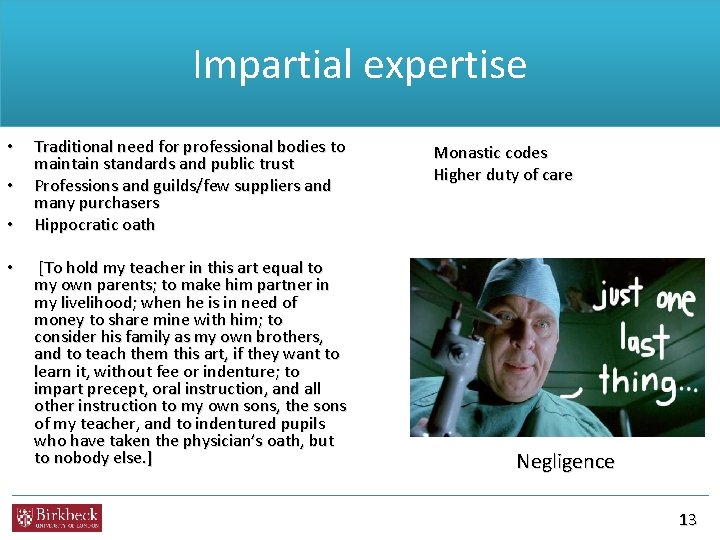
Impartial expertise • • Traditional need for professional bodies to maintain standards and public trust Professions and guilds/few suppliers and many purchasers Hippocratic oath [To hold my teacher in this art equal to my own parents; to make him partner in my livelihood; when he is in need of money to share mine with him; to consider his family as my own brothers, and to teach them this art, if they want to learn it, without fee or indenture; to impart precept, oral instruction, and all other instruction to my own sons, the sons of my teacher, and to indentured pupils who have taken the physician’s oath, but to nobody else. ] Monastic codes Higher duty of care Negligence 13
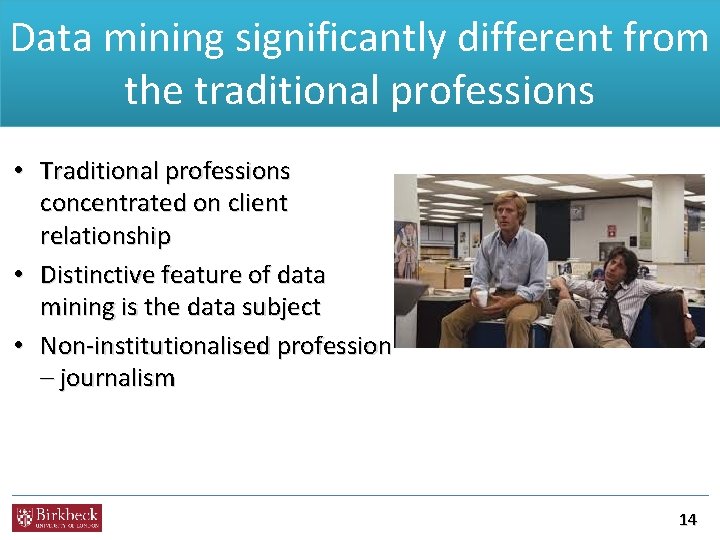
Data mining significantly different from the traditional professions • Traditional professions concentrated on client relationship • Distinctive feature of data mining is the data subject • Non-institutionalised profession – journalism 14
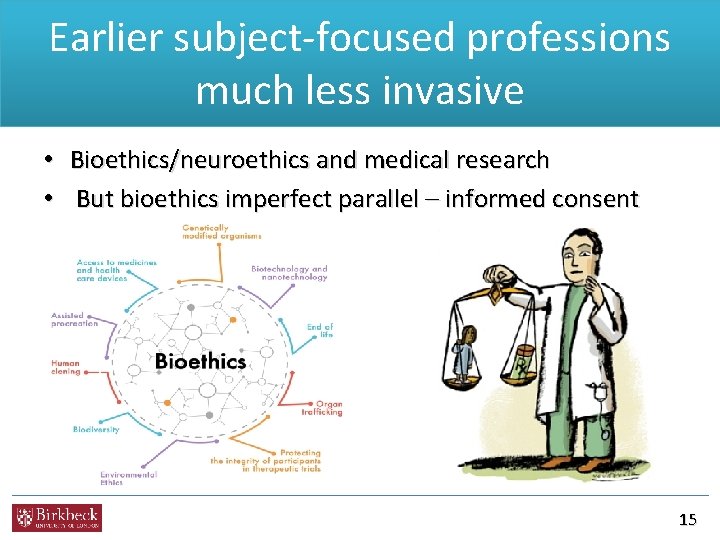
Earlier subject-focused professions much less invasive • Bioethics/neuroethics and medical research • But bioethics imperfect parallel – informed consent 15
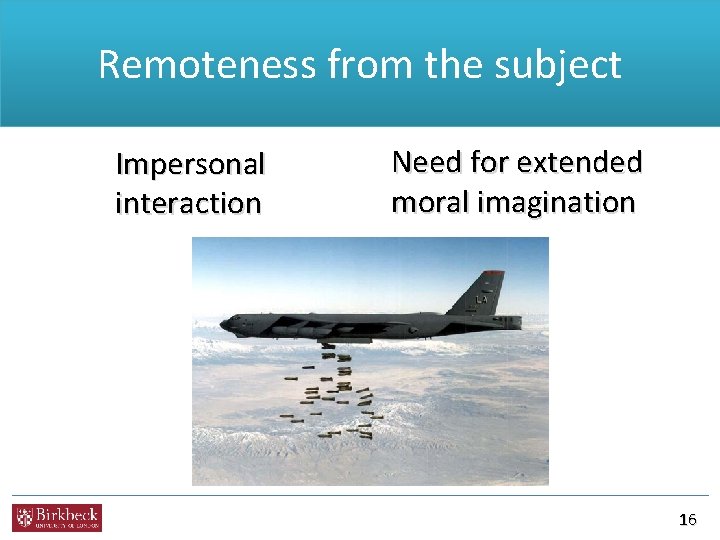
Remoteness from the subject Impersonal interaction Need for extended moral imagination 16
Should data ethics be distinct from general ethics? • • • Duty of care Knowledge asymmetry Quasi-monopoly 17
Data mining a decentralised activity • Soc. DM experience • Decentralised moral infrastructure • 3 domains of data ethics – – – Data Algorithms Practices 18
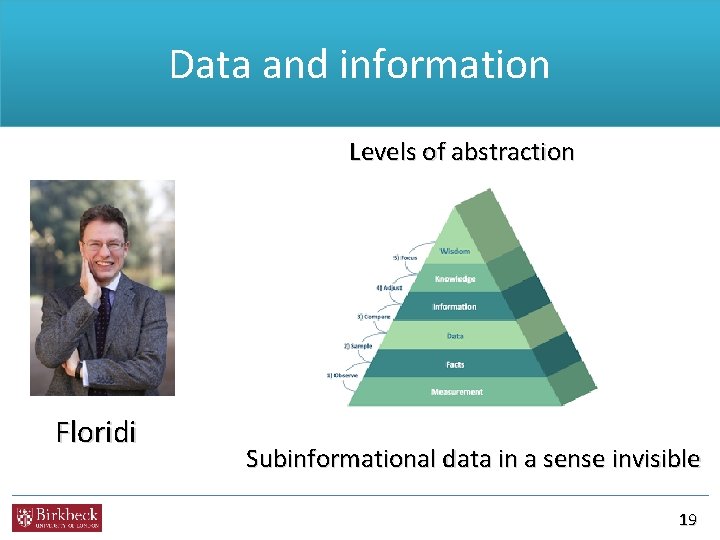
Data and information Levels of abstraction Floridi Subinformational data in a sense invisible 19
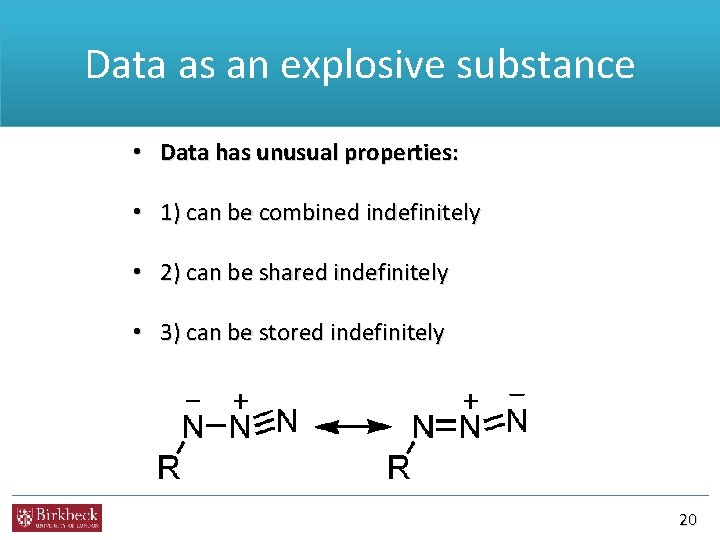
Data as an explosive substance • Data has unusual properties: • 1) can be combined indefinitely • 2) can be shared indefinitely • 3) can be stored indefinitely 20
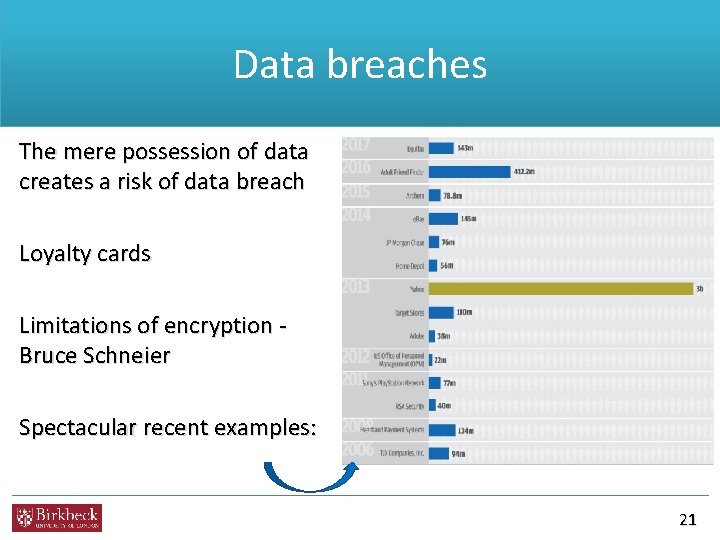
Data breaches The mere possession of data creates a risk of data breach Loyalty cards Limitations of encryption - Bruce Schneier Spectacular recent examples: 21
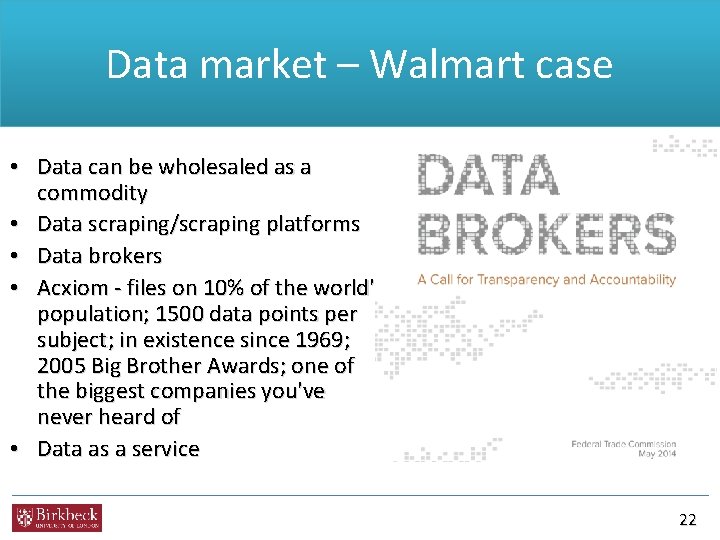
Data market – Walmart case • Data can be wholesaled as a commodity • Data scraping/scraping platforms • Data brokers • Acxiom - files on 10% of the world's population; 1500 data points per subject; in existence since 1969; 2005 Big Brother Awards; one of the biggest companies you've never heard of • Data as a service 22
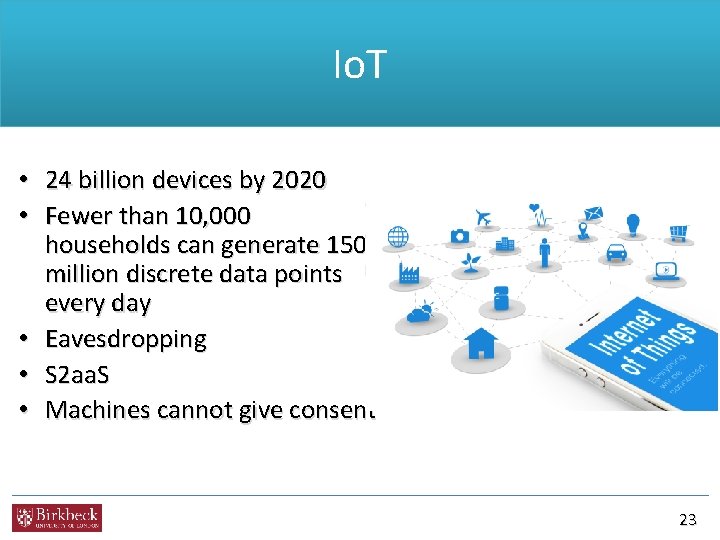
Io. T • 24 billion devices by 2020 • Fewer than 10, 000 households can generate 150 million discrete data points every day • Eavesdropping • S 2 aa. S • Machines cannot give consent 23
Recombination leading to deanonymisation • Ohm's law: Data can be either useful or perfectly anonymous but never both • Problem of aggregated microdata • Freedom of information • Pseudonymisation and ICO code 24
Netflix case • • • • • Netflix seeking to improve on Cinematch Released 100 million ratings by 20 million users of 27, 000 films Auxiliary information in the form in particular of IMDb public ratings made it possible to determine the identity of the 20 million users with high probability and thus discover their entire Netflix use Example: First, we can immediately find his political orientation based on his strong opinions about “Power and Terror: Noam Chomsky in Our Times” and “Fahrenheit 9/11. ” Strong guesses about his religious views can be made based on his ratings on “Jesus of Nazareth” and “The Gospel of John”. He did not like “Super Size Me” at all; perhaps this implies something about his physical size? Both items that we found with predominantly gay themes, “Bent” and “Queer as folk” were rated one star out of five. He is a cultish follower of “Mystery Science Theater 3000”. This is far from all we found about this one person, but having made our point, we will spare the reader further lurid details. Netflix pulled the proposed second offering of the prize. 25
Misuse of data contrary to consent: Snowden • Covert collection of data by the state • Freedom of information 26
Misuse of data contrary to consent: NHS/Deep. Mind • DM was given 1. 6 million identifiable personal medical records by the Royal Free NHS trust • They were used to test a smartphone app called Streams • It could help with early detection of kidney disease and the saving of lives • But explicit consent was not given to this use of the data and data was used even for patients with no kidney condition • DM have now set up a separate ethics and society unit 27
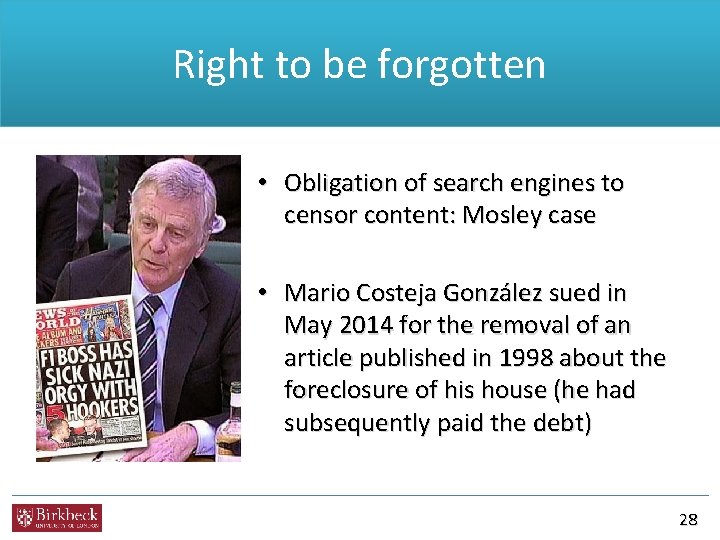
Right to be forgotten • Obligation of search engines to censor content: Mosley case • Mario Costeja González sued in May 2014 for the removal of an article published in 1998 about the foreclosure of his house (he had subsequently paid the debt) 28
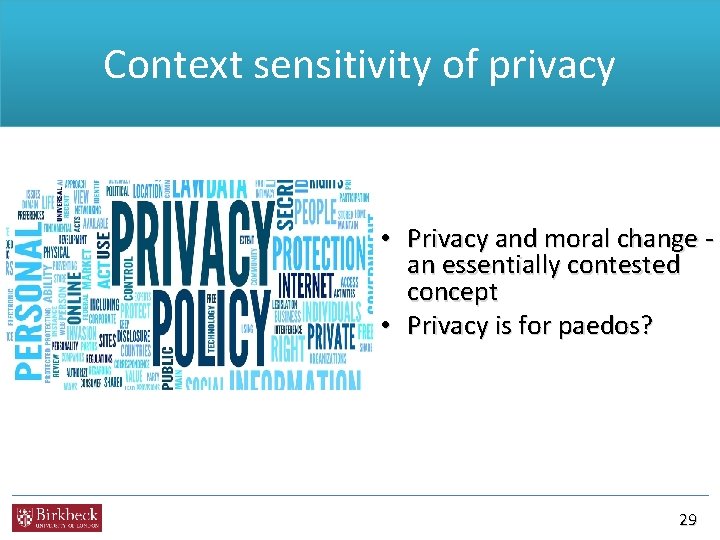
Context sensitivity of privacy • Privacy and moral change - an essentially contested concept • Privacy is for paedos? 29
Next week • Algorithms and data architecture • Good and bad data practice • The moral infrastructure of UK data analysis 30