
Socialization and the Life Cycle Chapter 5 Harlows

- Slides: 25
Socialization and the Life Cycle Chapter 5 Harlow’s Monkeys
Socialization and the Life Cycle • Which of the following is considered the “most important” value that parents in the United States should instill in their children today? • (a) Creativity • (b) Being responsible • (c) Religious faith • (d) Obedience 2
Basic Concepts 3
Basic Concepts • Socialization – Lifelong process through which people acquire norms and values and develop a sense of self • Social reproduction – Passage of norms, values, and social practices from one generation to another through socialization 4
Basic Concepts Socialization § establishes our social identity. § teaches us role taking. § controls our behavior. § transmits culture to the next generation. 5
Basic Concepts • Primary socialization – Socialization from infancy to early childhood (2 -3 yo) – most intense period of cultural learning – Most important socialization agent is family • Secondary socialization – Socialization from early childhood through adult life 6
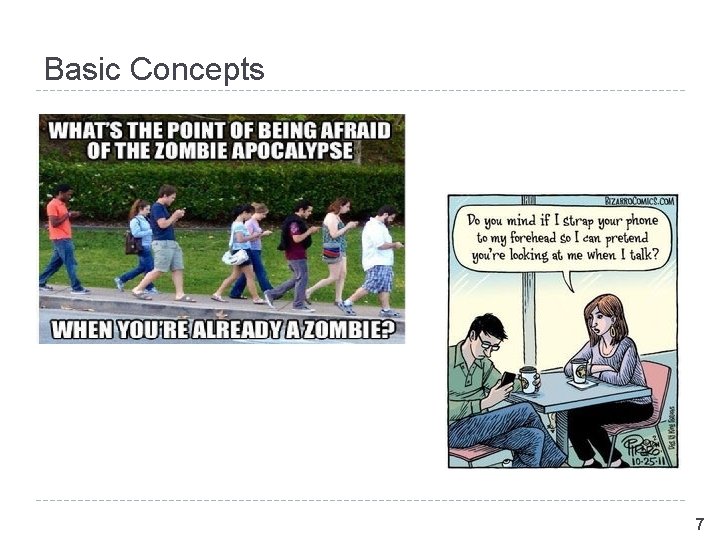
Basic Concepts 7
Basic Concepts • Agents of socialization – Groups or social contexts within which processes of socialization take place • • • The family Schools Peer relationships The mass media Work 8
Basic Concepts • Social Role – Set of socially defined expectations of behavior associated with a given status or social position – Socialization is not highly deterministic – Humans possess free will 9
Basic Concepts • Identity – Social identity-the characteristics that other people attribute to an individual – Self-identity-the process of self development through which we formulate a unique sense of ourselves and our relationship to the world. 10
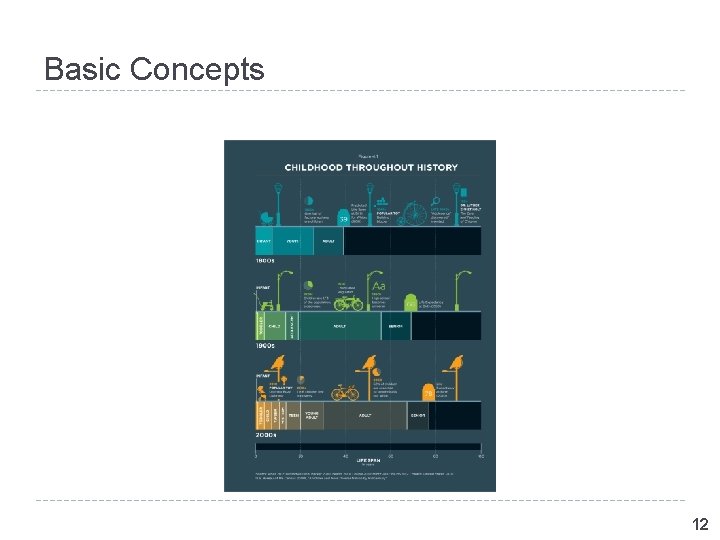
Basic Concepts • Socialization through the Life Course • Biologically fixed – Childhood – Teenage years – Young adulthood – Mature adulthood – Old age 11
Basic Concepts 12
Theories of Socialization The Story of Genie Wiley 13
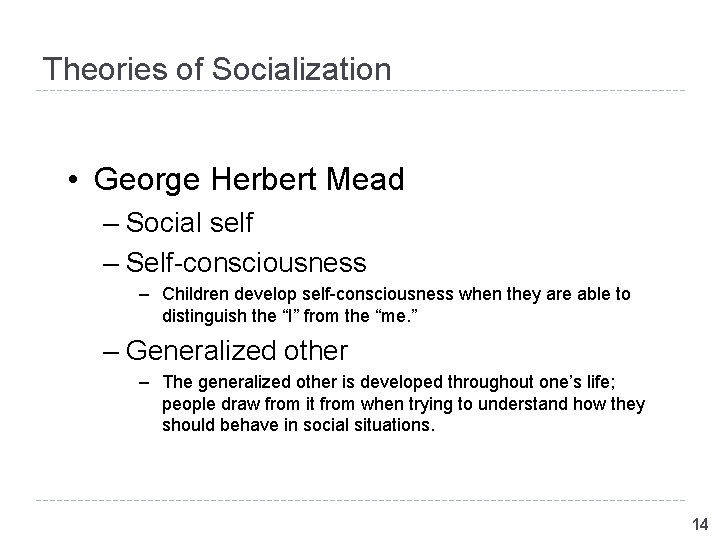
Theories of Socialization • George Herbert Mead – Social self – Self-consciousness – Children develop self-consciousness when they are able to distinguish the “I” from the “me. ” – Generalized other – The generalized other is developed throughout one’s life; people draw from it from when trying to understand how they should behave in social situations. 14
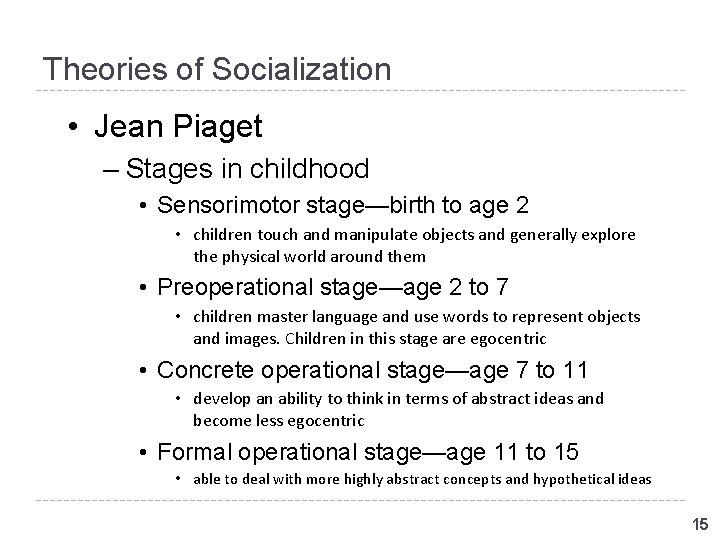
Theories of Socialization • Jean Piaget – Stages in childhood • Sensorimotor stage—birth to age 2 • children touch and manipulate objects and generally explore the physical world around them • Preoperational stage—age 2 to 7 • children master language and use words to represent objects and images. Children in this stage are egocentric • Concrete operational stage—age 7 to 11 • develop an ability to think in terms of abstract ideas and become less egocentric • Formal operational stage—age 11 to 15 • able to deal with more highly abstract concepts and hypothetical ideas 15
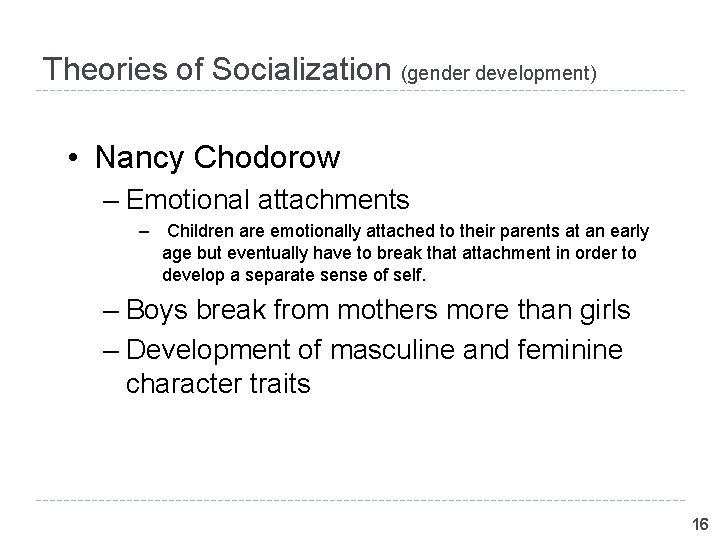
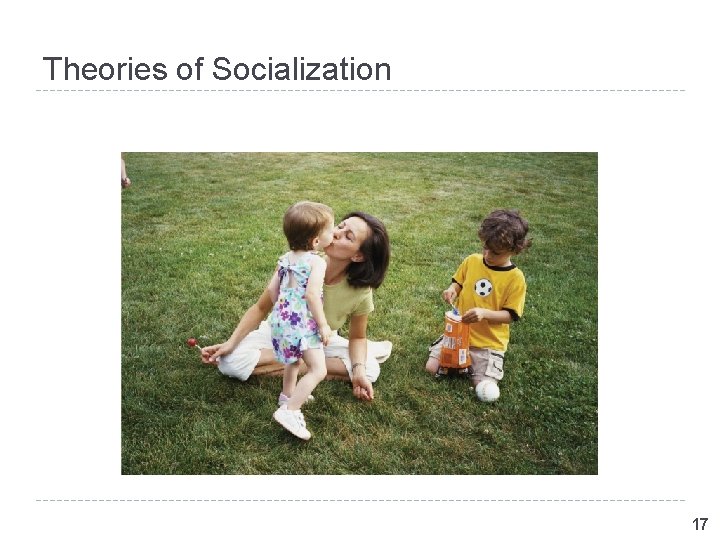
Theories of Socialization (gender development) • Nancy Chodorow – Emotional attachments – Children are emotionally attached to their parents at an early age but eventually have to break that attachment in order to develop a separate sense of self. – Boys break from mothers more than girls – Development of masculine and feminine character traits 16
Theories of Socialization 17
Theories of Socialization (gender development) • Carol Gilligan – Devaluation of women’s roles and feminine qualities – In many societies women and feminine qualities are associated with weakness whereas men and masculinity are associated with strength. – Others (people)-centered females – Outward (individual achievement) oriented males 18
Research on Socialization Today 19
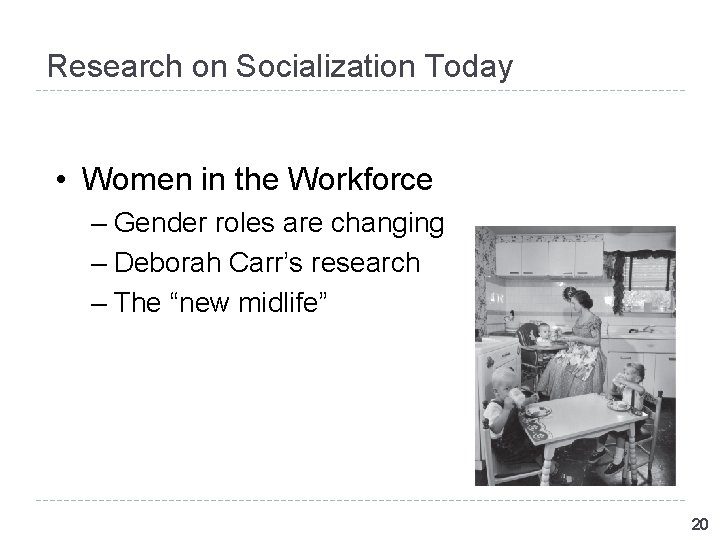
Research on Socialization Today • Women in the Workforce – Gender roles are changing – Deborah Carr’s research – The “new midlife” 20
Research on Socialization Today • Early Child Care and Youth Development – Should women pull their children out of day care and leave the workforce to stay with them? 21
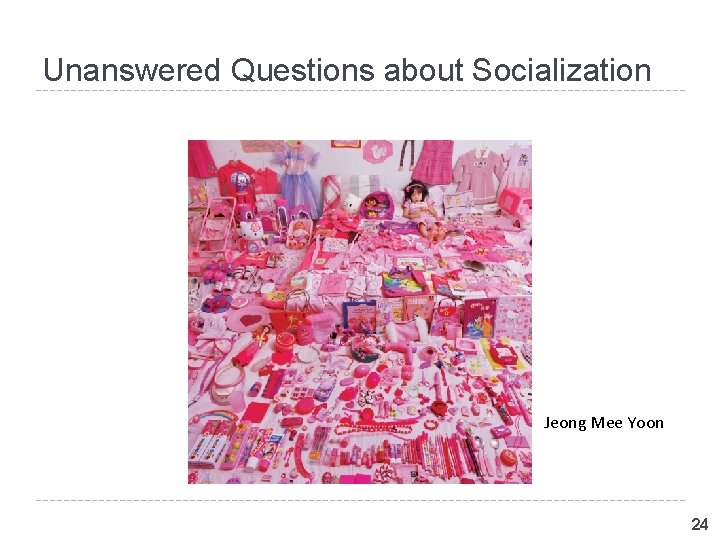
Unanswered Questions about Socialization • Gender socialization – Gender roles and learning – Influence of media 22
Unanswered Questions about Socialization • The question of video games – Does playing violent video games lead to physical violence? 23
Unanswered Questions about Socialization Jeong Mee Yoon 24
Discussion Question: Thinking Sociologically Consuming alcoholic beverages is one of many things we do as a result of socialization. Suggest how the family, peers, schools, and mass media help establish the desire to consume alcoholic drinks. Of these influences, which force is the most persuasive? Explain. 25