
Socialist Thought Emerges Review Chapter 5 Section 4
- Slides: 10
Socialist Thought Emerges Review: Chapter 5 Section 4
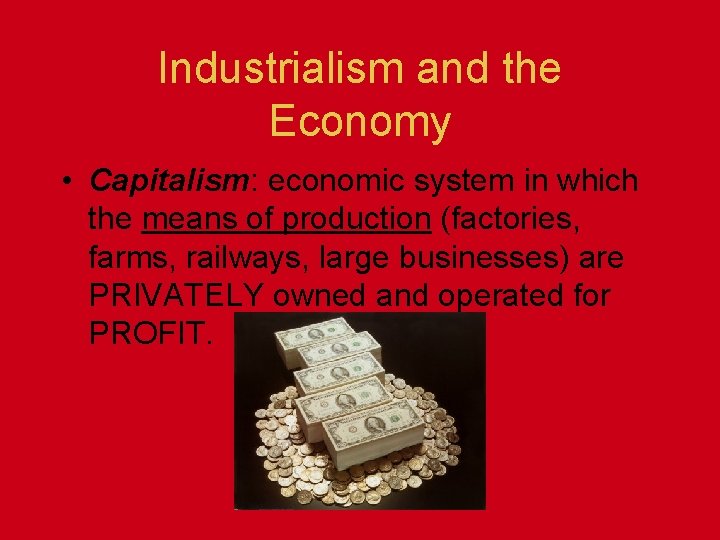
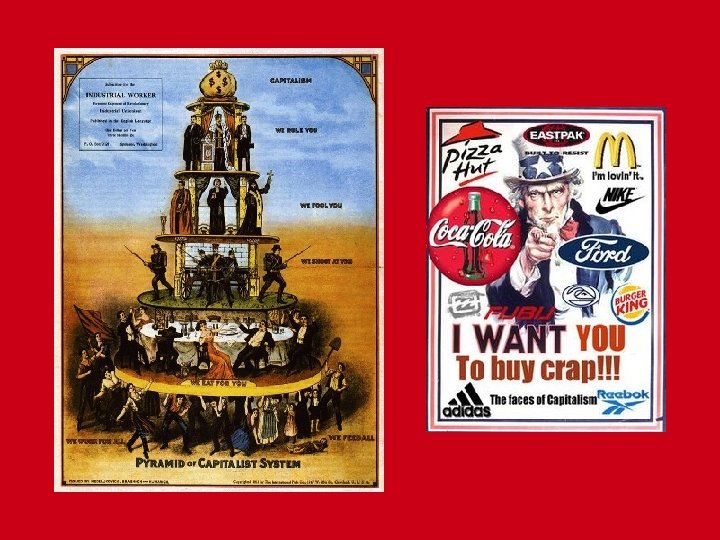
Industrialism and the Economy • Capitalism: economic system in which the means of production (factories, farms, railways, large businesses) are PRIVATELY owned and operated for PROFIT.
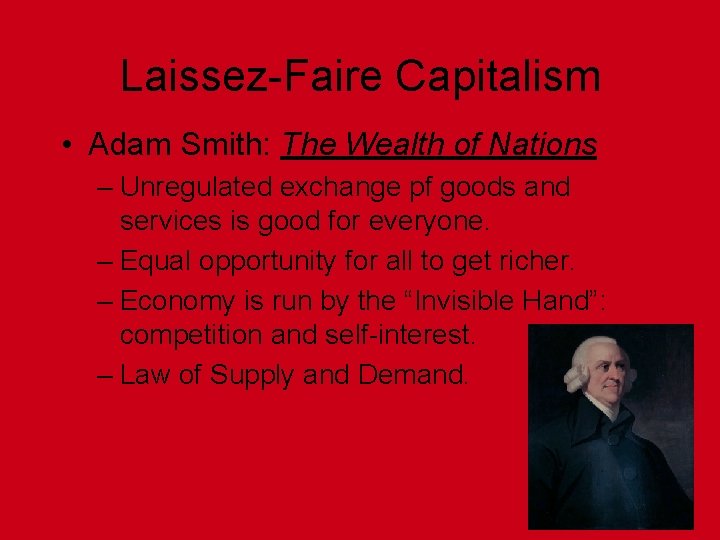
Laissez-Faire Capitalism • Adam Smith: The Wealth of Nations – Unregulated exchange pf goods and services is good for everyone. – Equal opportunity for all to get richer. – Economy is run by the “Invisible Hand”: competition and self-interest. – Law of Supply and Demand.
Laissez-Faire Capitalism • Thomas Malthus and David Ricardo: – Poor people will always be poor because they have too many kids. – Nature has a way of “taking care” of poverty through famine, war, disease. Therefore the government should not help the poor. (“Bleak view”) – Should not pay them more, because they will just have more kids. – Poor people should learn to help themselves through thrift, hard work, and having less kids.
Socialist Thought Emerges • Utilitarianism: “the greatest good for the greatest number”. (Jeremy Bentham) – Laws should be judged by their usefulness – Government should help and protect the poor. • Socialism: the people as a whole own the means of production instead of individuals. – Sharing of work and property. – Relies on basic goodness and cooperation of people.
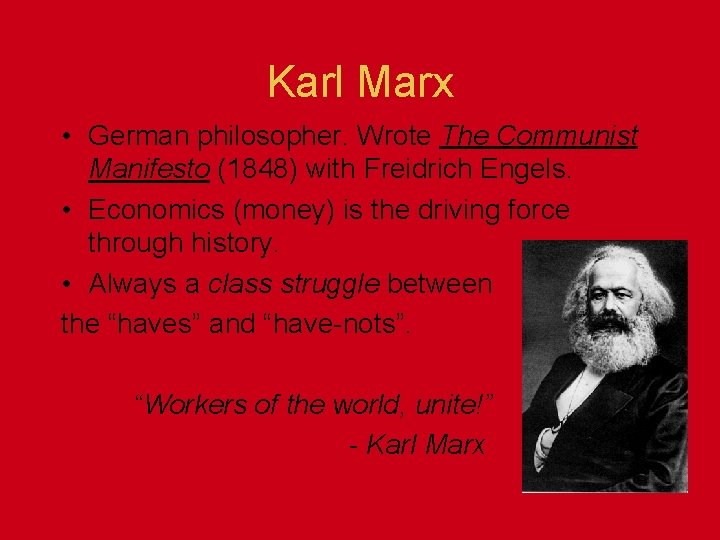
Karl Marx • German philosopher. Wrote The Communist Manifesto (1848) with Freidrich Engels. • Economics (money) is the driving force through history. • Always a class struggle between the “haves” and “have-nots”. “Workers of the world, unite!” - Karl Marx
Karl Marx • “Haves” = the bourgeoisie (upper class). • “Have-nots” = the proletariat (the working class). • Hated capitalism because it created prosperity for a few, and poverty for many. • This class struggle will eventually lead to communism.
Communism • A form of socialism where there is an inevitable class struggle; – The upper class is overthrown; – The proletariat (workers) take over and the means of production are owned by the whole community; – Government should be very small and limited. – No more rich, middle, or poor classes. In communism, wealth belongs to the community and everyone is equal.